
Posts Tagged With: future

Elul: Reclaiming Your Imagination

ID 139049699 © Benjavisa Ruangvaree | Dreamstime.com

“For me, reason is the natural organ of truth; but imagination is the organ of meaning. Imagination, producing new metaphors or revivifying old, is not the cause of truth, but its condition.” ― C.S. Lewis, Mere Christianity

Elul is a curious month because it invites us to look in two directions at once. We are nearing the end of one year while preparing for the beginning of another. Traditionally, much of the emphasis during Elul is directed toward what lies behind us. We practice cheshbon hanefesh, an accounting of the soul. We examine our lives, practice teshuvah, make amends where we can, and consider where we have wandered from God and from the people He created us to be as we prepare for the High Holy Days.

Most of us are familiar with this part of Elul. We know how to look back. But have you considered intentionally spending some of Elul looking ahead? Praying about and imagining what you would like to cultivate in the coming year?

Some believers are suspicious of practices involving imagination, yet we use imagination constantly. The brain is continually anticipating what may happen next, drawing upon past experience to make predictions about the future. Worry itself is an act of imagination: we picture what might happen, mentally rehearse conversations that have never occurred, and respond emotionally to outcomes that do not yet exist. The question, then, isn’t whether we will use our imagination, but how we will use it and what will direct it.

Jewish tradition associates the closing days of Elul with the days of creation, and this has also made the season a natural time for turning one’s attention toward the coming year. There is something fitting about engaging in a creative act as we remember the Creator bringing forth what had not existed before. Setting intentions, considering possibilities, and imagining what we would like to cultivate in the coming year can become part of that preparation. That will be the focus of this post.

But before we turn our attention toward the year ahead, take a moment to consider the year that is ending. Think about who you were as 5786 began and who you are now. Some things happened just as you expected, while others you never could have anticipated. Perhaps something became clearer. Perhaps you discovered a strength you didn’t know you possessed, learned something through difficulty, or grew in ways that were almost imperceptible while they were happening.

Not everything from this year needs to follow you into the next one. There may be disappointments, regrets, old ways of thinking, fears, expectations, or burdens that have reached the end of their usefulness. Some things may still require teshuvah or repair; others may simply need to be released.

But there are also things worth carrying with you. Perhaps this year gave you greater wisdom about relationships, boundaries, courage, forgiveness, rest, trust, or love. Perhaps you discovered something about Adonai or about yourself that you do not want to forget. Maybe you developed a capacity you didn’t have before or learned something you wish you had known a year ago.


Elul as a Refuge in Time


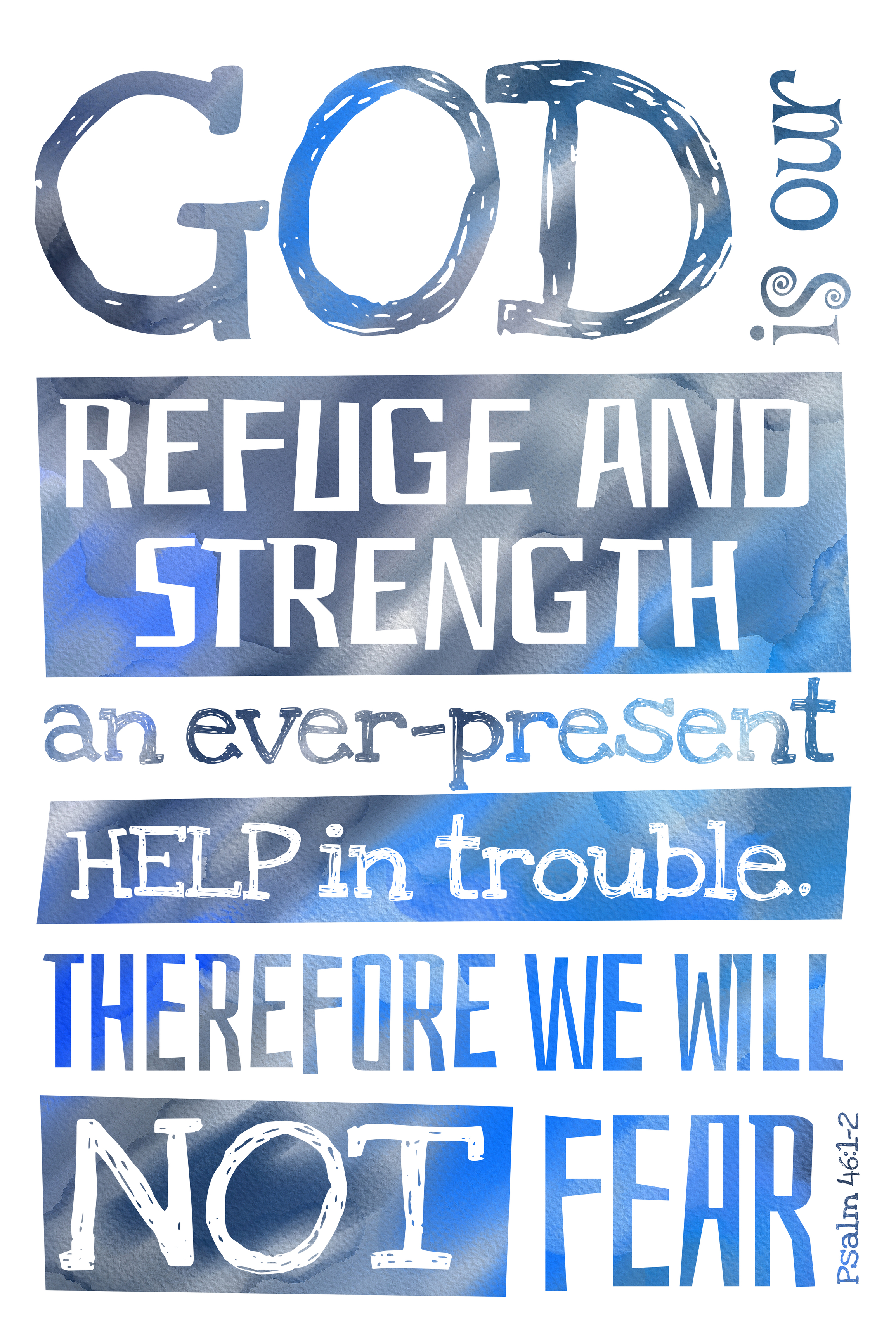
There is a beautiful traditional connection between Elul and the Levitical cities of refuge. The month of Elul is called a refuge in time, whereas the cities of refuge were a refuge in space. We live within both space and time, but what would be the purpose of a refuge in time?

Perhaps we need refuge not only from what threatens us physically, but from the places our minds can take us. We can live in a past that no longer exists, rehearsing regret, shame, hurt, and what we wish we had done differently. Or we can live in a future that does not yet exist, rehearsing everything we fear might happen. Elul invites us back into the present, the right now, where we can safely look in either direction because we are looking from the refuge of God’s presence.

Fear can hijack imagination and use it to create a future, then convince us that mentally rehearsing that future will somehow protect us from it. When we worry, we are often mentally living somewhere that does not yet exist. We imagine a conversation and hear what the other person might say. We picture ourselves failing at something we have not attempted or someone being disappointed in us. We imagine a diagnosis, loss, rejection, financial problem, conflict, or some other outcome we do not know will happen.

The imagined event may never occur, but our minds and bodies can begin responding to it as though it already has. Our minds have the capacity to anticipate danger, and that capacity can serve us well… until it doesn’t. Imagination helps us prepare, plan, solve problems, and recognize risk. But fear can recruit that same capacity and turn it into an endless attempt to create certainty where certainty is not possible. A gift designed partly to help us recognize danger was never intended to be owned by fear.
ID 152403951 © Hriana | Dreamstime.com

We are image bearers of the Elohim who is love, and His perfect love casts out fear. If God is my refuge, I do not need to know everything that will happen in order to be safe. I do not need to mentally solve every possible future before it arrives. I do not need to rehearse every possible conversation so that I will not be caught off guard. I do not need certainty about tomorrow in order to trust the One who will be there when tomorrow comes.

If fear can use imagination to rehearse what might go wrong, what might happen if we intentionally used it to rehearse courage, trust, growth, and faithfulness instead? As Elul draws us toward the remembrance of creation, it also invites us to look ahead and imagine what has not yet taken shape. Hope does that. It reminds us that what is now is not all that can be.


Elul Guided Reflection: Imagining the Year Ahead


“Everything that is real was imagined first.” — Velveteen Rabbit

We cannot know or predict the future, but we can become more intentional about what fills the unknown spaces in our minds. Fear is often quick to populate the future with loss, failure, rejection, conflict, and disappointment.

For this reflection, rather than allowing fear to decide what you see, begin from the knowledge that Adonai is your refuge and that you are already deeply loved.

Find a quiet place where you can think and write without rushing. Before answering anything, take a moment to become aware of God’s presence. You might remember the picture traditionally associated with Elul: the King has come into the field. You do not have to pass through palace walls or observe complicated protocols. He meets you in the ordinary landscape of your life.

Begin by looking back over the year with Him. Consider the good, the bad, the difficult, and the unfinished. Ask Him to help you see the year through eyes of both truth AND mercy.

  • What does He want you to recognize about the year you have lived?
  • Is there anything that still requires teshuvah, repair, gratitude, grief, or release?
  • Where can you now see growth that you may have overlooked while it was happening?

As you reflect, remember that you do not have to perform for His love. You cannot make Him love you more by getting the next year right. He is far more concerned with your relationship with Him and how you love the people around you than with your performance. The actions you have been trying so hard to master are meant to grow out of love, not fear or worry.

Now turn your attention toward the year ahead. Resist the urge to begin with everything you think you should accomplish. Instead, become curious.

  • What would you love to be different a year from now? Or, how would you like to be different?

Don’t think about whether your answer is realistic. Give yourself more possibilities than limitations. Then imagine an ordinary day in the future in which this change has begun to take root. See your future self:

  • What is different when you wake up that morning?
  • What occupies your thoughts?
  • How are you carrying yourself?
  • How are you relating to Adonai and to the people around you?
  • What are you doing differently?
  • What feels different within you?

Now imagine encountering an ordinary challenge in that future: a misunderstanding, an unexpected change, a mistake, a delayed answer, or a moment of uncertainty.

  • How does this version of you respond?
  • What strengths enable this response?

ID 4824489 © Madartists | Dreamstime.com

This is one of imagination’s most practical gifts. We can mentally rehearse fear, but we can also rehearse faithfulness. We can imagine pausing before reacting, speaking truthfully without becoming harsh, setting a boundary without overexplaining, resting without guilt, or remaining grounded when we do not know what someone else is thinking.

Then, consider another question:

  • What would you love to experience more of in the coming year?

Perhaps your answer is peace, joy, friendship, intimacy with God, creativity, rest, courage, meaningful work, adventure, or deeper connection with the people you love. Perhaps there is something you would love to learn, try, create, or explore. For the moment, do not explain why it could not happen. Discernment and practical planning will come later. For now, notice what becomes imaginable when fear is no longer directing the conversation. Then ask yourself:

  • Who am I becoming?

Do not answer with a role, title, achievement, or list of goals. Consider the person taking shape beneath those things.

  • What would you like to become stronger in you?
  • What are you learning to release?
  • What do you want to believe more deeply?
  • How would you like to love differently?
  • What would greater trust in Abba look like in your daily responses?

Now, bring what you have imagined into the present:

  • What is one small step I can take right now toward this future?

“Now faith is the substance of things hoped for, the evidence of things not seen. For by it the elders obtained a good testimony. By faith we understand that the worlds were framed by the word of God, so that the things which are seen were not made of things which are visible.” (Heb 11:1-3, NKJV)

Elul is like a threshold in time, the present now, where we review the past and look forward to the future grounded and grateful for this moment. What you imagined is neither a promise nor a prediction. The coming year will contain things you cannot anticipate. The year before us has not happened yet.

Before fear fills that unknown space with everything that might go wrong, or tells us what is and is not possible, we can remember where our refuge is and allow ourselves to freely imagine from the place of love and faith.

“What you imagine directly affects your perception and your behavior. But it also substantially impacts your brain and your biology.” – Dr. Cassandra Vieten, Imagine That: Transform How You Think, Feel, and Live with the Science of Imagination


Further Reflection

  • When you feel unsafe, where does your mind tend to run?
  • Where would you rather it go?
  • Name one way you can redirect wondering, anxious thoughts.
  • What future have you been rehearsing?
  • What stories about your past or future does your mind imagine?
  • When you are ruminating or worrying, what are you trying to prevent or protect yourself from?
  • If you knew that Abba would be your refuge regardless of what has happened or might happen, what would you no longer need to rehearse or worry about?

Categories: Ethics, new moon | Tags: , , , , , , | 3 Comments

The Biblical Role of Women Part X

Role of Women Main Page

In Part VIII and Part IX, we discovered that women (and men as the bride of Messiah) either build the House of Adonai or they tear it down. We also looked at how YHWH sovereignly chose to first entrust the Torah and the Gospel with His daughters. Again, this is about building His House. It is the mother who first teaches a child the Torah. Then later, as the child matures, the Father brings the stronger correction (mussar).

Hear, my son, your father’s instruction (mussar) And do not forsake your mother’s teaching (torah). (Pro. 1:8)

My son, observe the commandment (mitzvah) of your father And do not forsake the teaching (torah) of your mother. (Pro. 6:20)

In both of the proverbs mentioned above, the father is mentioned first, but it is the Torah of the mother that is not to be forsaken. To forsake is to abandon or forget – implying something that was learned beforehand. Infants begin life by receiving the nourishing milk of the mother in both the physical and in the spiritual through her teaching. In light of this simplicity, it is easy to understand why the women were the first to receive and proclaim the Torah and the Gospel. The tender mercies of a mother’s teaching are balanced by the stricter judgment/correction of the Father. Both are necessary to bring a child to maturity. (This is true physically and spiritually.)

The Hidden Woman and Time

I hope that you have noticed a common theme emerging throughout my posts on women. The woman is often “hidden” within the biblical narratives, much like she was once “hidden” within Adam. There is good reason for this when we take the whole of Scripture into account. Righteous women are a living representation of the Holy Spirit; and as such, they also portray the prophetic or what is future.

If that sounds too far fetched for your liking, let us first consider the Hebraic concept of time. Westerners typically view the past as being what is “behind” us, whereas the future is what is in “front” or ahead of us. Thus, to encourage someone to stop dwelling on past mistakes, we might tell them to “stop looking back” (past) or to “focus on what is ahead” (future). But in Hebraic thought, these expressions are reversed. The past is what you can see; it’s in front of you (and your eyes). The future (what you can’t see) is behind you. Perhaps the following illustration will flesh out this notion.

© Karel Noppe | Dreamstime.com

Imagine someone rowing a boat down a river. The river is time. In order to row a boat, a person must face backwards while rowing forward down the river. What the rower can see with his eyes is the area he has already travelled. (past) Because he doesn’t face in the direction he is headed, he cannot see what is ahead (future). This is truly how mankind experiences time. What has already happened (past) is clearly seen and understood, but the future is unclear and unknown. I know this totally reverses the definitions of hindsight and foresight, but I’ve found that most things in western thought compared with Hebraic thought are (sadly) reversed! Things like this shouldn’t surprise us any more.

Do you recall the function or role of the male from Part I? He is to remember (zakar). In order to remember or recall something, the thing being referred to would have already happened. In other words, it requires looking at what’s in front of you on the river of time. (Past) Everything that YHWH has said, the male is to remember and act on that Word. (This doesn’t excuse women from doing the same! The two become ONE flesh.) The man guards and protects all those things that are clearly “written.” Moreover, what is “past” is evident; there is no ambiguity. In other words, the past is firm or set in stone. Just like the written Word of God, it does not change. Can you see how this makes the male a picture of not only a firm foundation on which to build, but also associates him with time past? (Both are firm, set, solid, and reliable.)

As the male’s counter balance, the female should then represent the other side of this coin or what is “future.” Does Scripture indicate that this might be true? I believe that it does. Before we look at the Biblical text, let’s first consider the things that women do. They birth, nurture, and build the House or the future of God’s people. The stories involving women in the Bible are more hidden (or obscure) in the text. When we do encounter women in the Biblical record, prophetic (future) things are often being revealed. In the picture above, the woman is facing forward and looking ahead. She can see things that are coming, while the man in the boat sees where they have been.

In Part I, we looked at the neqevah or female as a protector and setter of of boundaries. But when we examine the context of this word in its further uses, something awesome is revealed. Often neqevah is juxtaposed with sound alike Hebrew words that deal with future expectation. For example, qevah without the nun prefix means to wait, expect, or hope. All of these words imply looking toward something that is future. [1] But even more interesting, if we add the nun back to qevah as a prefix, it indicates the collective future tense! Reread Jeremiah 31:22 with this in mind and the prophetic picture is heightened to include an expectation for a good future.

Jer. 31:22 (NASB) “How long will you go here and there, O faithless daughter? For the LORD has created a new thing in the earth—A woman will encompass a man.”

Sometimes, at first glance, the motives of women are uncertain. Women usually have a strong sense of “knowing” or great intuition into things that are hidden or concealed from plain sight. They can often pick up on things in the spiritual realm easier than men. This is why most of the great women referenced in the Bible are called “prophetesses.” [2] They represent the future and the prophetic. I could go on, but you get the point. It takes both a male and female to display the image of Elohim in the earth. And life cannot be understood separately from time.

© Adonis1969 | Dreamstime.com

The Most Holy Name of our Elohim, YHWH (yohd, hey, vav, hey), is the very essence of time. As a form of the verb “to be,” the I Am, He is the One who was, who is, and is to come. In other words, He is our past, our present, and our future. YHWH is time itself. Thus, it is no coincidence that mankind (male and female) as His image in the earth also typify time.

Men portray the past. Women picture the future. Together, as male and female, they build in the present with YHWH. Both men and women are equally important in displaying the image of God and His time clock. YHWH’s calendar masterfully weaves together both the past (remember) and the future (what is to come) in His holy moedim (feasts). Women are intrinsically connected to the rhythms and cycles of the Creator’s calendar. You can read more about this in my series entitled Moonbeams and the Moedim.

YHWH has plainly told us that His desire is to REVEAL Himself unto His people. Men, in the image of God, represent what YHWH has already revealed of Himself (past). Women represent how YHWH works behind the scenes of our lives and the many promises and plans He has for us (future). If we could just grasp the enormity of what will happen when the woman is revealed, then we’d all be screaming from the rooftops, “The Spirit and the Bride say, ‘Come!’”

Key #1 Men portray the past. Women picture the future. Together, 
as male and female, they build in the present with YHWH.


The Revealed Man and Time

For the most part, men (and their role) have stood out in the Biblical text, in history, and within marriages and families. This is to be expected since men are a picture of the past and what is REVEALED. We don’t have to “look” for the masculine. The role of the man stands out, just as they do physically. Nothing is hidden.

Conversely, women represent what is HIDDEN. If the role of women were easy to “see” or discern, there would be no need for this series. In the natural, this truth is likewise expressed to us in our most intimate parts that create life. I know this is rather crude, but consider that a woman’s reproductive organs are “hidden,” whereas a man’s reproductive organs stand out. Men are clearly revealed; women are concealed. Do you think this is just happenstance? Can this natural picture also be speaking a spiritual truth?

If so, why would we ever consider that one supersedes the other? It takes both male and female “parts” to create life in the natural. Do you suppose it is any different in the spiritual realm? I submit to you that it is not. The ideal function of both man and woman is to express the image of God in the earth. While their “parts” or roles are different, it takes both working together to create New Life. If one side of this coin is shunned, regulated, oppressed, usurped, or gagged Abundant Life cannot grow.

“The thief comes only to steal and kill and destroy; I came that they may have life, and have it abundantly.” John 10:10

Why Does This Matter?

Abundant life includes happy and healthy marriages. It also includes the entire Body of Messiah (men and women) being able to function within the full capacity of their roles in our assemblies. My hope in the remaining articles of this series is to emphasize the fact that YHWH’s ideal for men and women is to work together. Each is one half of the whole.

The problem is with our fallen natures or our evil inclinations. The old man operates from a place of fear rather than love. This is why we struggle greatly not only with the role of the sexes, but in every other area of life as well. But, our Redeemer beckons us to walk in New Life. May our marriages truly become the living parable of Messiah and His Assembly.


For past articles in this series, click here. For Part XI click here.

Key #1 Men portray the past. Women picture the future. Together,
as male and female, they build in the present with YHWH.


 [1] See The Scarlet Harlot and the Crimson Thread Workbook Four, page 140 (2012) by Dr. Hollisa Alewine. Also see Strong’s number H6960 (qevah or kavah). 

[2]  Examples include Miriam, Deborah, Huldah, and Anna.

See also Dr. Hollisa Alewine’s The Creation Gospel Workbook 3: The Spirit-Filled Family, p. 40


Categories: Women | Tags: , , , , , , , , , | 9 Comments

Tikvah Part II


© Stocksnapper | Dreamstime.com

Who doesn’t need more hope?

In Part I, we touched on the Hebrew word tikvah, hope, and trusting that in the end, God really will come through for us. Hope is an expectation for something FUTURE. It involves patience, waiting, and trusting.

Surely there is a future (aharit), and your hope (tikvah) will not be cut off. (Pr. 23:18)

Know that wisdom is thus for your soul; if you find it, then there will be a future (aharit), and your hope (tikvah) will not be cut off. (Pr. 24:14)

In Hebrew there is a play on words in these verses. Remember how hope or tikvah is also a bound rope or cord? The above verses paint a picture of hope being like a rope that is NOT cut off. It doesn’t snap, break, or unravel. Though the fiery trials of life might feel as if you are only hanging on by a thread, that thread is far stronger than we imagine. Tikvah or hope comes with the promise of a future. You can count on this “thread,” it leads someplace, which is the future.


Placing your hope in the LORD will not leave you wanting or disappointed as hard as the struggle might be in the moment. Adonai has a plan for you and He has not left you “hanging.”

“For I know the plans that I have for you,” declares the LORD, “Plans for welfare and not for calamity to give you a future (aharit) and a hope (tikvah).” (Jer. 29:11)

“There is hope (tikvah) for your future (aharit),” declares the LORD, “And your children will return to their own territory.” (Jer. 31:17)

Why do we struggle so much with getting this? We have a future. There is hope in every situation. This is true even in death.

“For this Elohim is our Elohim, forever and ever; He Himself leads us, even to death.” (Psalms 48:14, TS2009)

Though death seems so very final and scary to us, there is still hope. But even knowing this, we more often mope around and mutter along with the dry dead bones in Ezekiel these words:

… ‘Our bones are dried up and our hope (tikvah) has perished. We are completely cut off.‘ (Ezek. 37:11)

Notice how Adonai reverses this negative confession in the next few verses.

Therefore prophesy and say to them, “Thus says the Lord GOD, ‘Behold, I will open your graves and cause you to come up out of your graves, My people; and I will bring you into the land of Israel. Then you will know that I am the LORD, when I have opened your graves and caused you to come up out of your graves, My people. I will put My Spirit within you and you will come to life, and I will place you on your own land. Then you will know that I, the LORD, have spoken and done it,’ declares the LORD.” (Ezek. 37:12-14)

Do you ever feel as hopeless as an old bag of dry bones? Are you walking through the valley of the shadow of death right now? Are you so overwhelmed with the issues of life that you feel as if the marrow in your bones has dried up and crumbled? If Adonai can cause living flesh to grow anew on dead bones and raise one from the grave, how much more can He speak life and a future hope into our personal circumstances right now?

We must cling to our great hope and never give up! It is as real as the scarlet cord that saved the life of Rahab and her family. It is not a coincidence that our aharit (future) is so often mentioned with our tikvah (hope). It’s not a hope for the future. Our hope IS our future! Our Elohim (God) is no respecter of persons, He is faithful.

King David, whose life and livelihood was in peril many, many times, knew how to remind his soul of the truth when he was hanging by a thread.

Psalms 23:1-6 (NASB)
1 A Psalm of David. The LORD is my shepherd, I shall not want.
2 He makes me lie down in green pastures; He leads me beside quiet waters.
3 He restores my soul; He guides me in the paths of righteousness For His name’s sake.
4 Even though I walk through the valley of the shadow of death, I fear no evil, for You are with me; Your rod and Your staff, they comfort me.
5 You prepare a table before me in the presence of my enemies; You have anointed my head with oil; My cup overflows.
6 Surely goodness and lovingkindness will follow me all the days of my life, And I will dwell in the house of the LORD forever.

David trusted that God leads one like a shepherd. Adonai is the sovereign King of the Universe and not one single thing happens that He does not preside over. Therefore, because God is my shepherd, I shall not want, lack, or need despite what it “feels” like in the moment. He will, once again, give me rest in green pastures and drink from still waters, restoring my soul. The scary giants, obstacles, enemies, and circumstances that steal my breath and cause me to fear for my life or livelihood ARE the places where Adonai IS with me. These “places” are His rod of correction, His goads that teach me the things that I need to learn – they are for my good. In this, I can trust Him and be comforted. I have no need to fear evil or enemies because they can do nothing outside the good, loving will of my Savior.

This is also like the trust that Shadrach, Meshach, and Abednego had when faced with death. Rather than bow to the false image of Babylon, they offered up their bodies. They believed that Adonai was fully capable of saving them from the fiery furnace, but even if He chose to not save them, His will was for the good, and their hope in new life was not diminished.

“If it be so, our God whom we serve is able to deliver us from the furnace of blazing fire; and He will deliver us out of your hand, O king. But even if He does not, let it be known to you, O king, that we are not going to serve your gods or worship the golden image that you have set up.” (Daniel 3:17-18, NASB)

After turning up the heat seven times hotter than normal, they were tied up and cast into furnace. The king was astonished to see them untied and walking around in the flames. But there was a fourth one there with them!

“Look!” he answered, “I see four men loose, walking in the midst of the fire; and they are not hurt, and the form of the fourth is like the Son of God.” (Daniel 3:25, NKJV)

What did David say? “Even though I walk through the valley of the shadow of death, I fear no evil, for You are with me.” Beloved, no matter what you are facing, no matter how horrible your prognosis, the “fourth” one is with you in the very midst of this fiery trial. Your suffering is not in vain. Your pain and turmoil are producing something eternal. Stand on that and believe!

“For our trouble, light and momentary, is producing for us an eternal weight of glory far beyond all comparison, as we look not at what can be seen but at what cannot be seen. For what can be seen is temporary, but what cannot be seen is eternal.” (2 Corinthians 4:17-18, TLV)

Thus, Peter said:

Cast all your worries on Him, for He cares for you. Stay alert! Watch out! Your adversary the devil prowls around like a roaring lion, searching for someone to devour. Stand up against him, firm in your faith, knowing that the same kinds of suffering are being laid upon your brothers and sisters throughout the world. After you have suffered a little while, the God of all grace—who has called you into His eternal glory in Messiah—will Himself restore, support, strengthen, and establish you. All power to Him forever! Amen. (1 Peter 5:7-11 TLV)

The scarlet thread of hope, redemption, and salvation IS trustworthy. It is more real that a tangible rope you can grasp with your hands. Let go of anything that is preventing you from trusting and believing that God loves and cares for you. He is no respecter of persons. He WILL do for you what He does for others. You are not alone and you have not been forgotten. Release your fear, doubt, and unbelief and look toward the future.


Categories: Biblical Symbols, Ethics, Mussar | Tags: , , , , , , , , | 8 Comments

Blog at WordPress.com.