
Posts Tagged With: Cities of Refuge

Elul: Reclaiming Your Imagination

ID 139049699 © Benjavisa Ruangvaree | Dreamstime.com

“For me, reason is the natural organ of truth; but imagination is the organ of meaning. Imagination, producing new metaphors or revivifying old, is not the cause of truth, but its condition.” ― C.S. Lewis, Mere Christianity

Elul is a curious month because it invites us to look in two directions at once. We are nearing the end of one year while preparing for the beginning of another. Traditionally, much of the emphasis during Elul is directed toward what lies behind us. We practice cheshbon hanefesh, an accounting of the soul. We examine our lives, practice teshuvah, make amends where we can, and consider where we have wandered from God and from the people He created us to be as we prepare for the High Holy Days.

Most of us are familiar with this part of Elul. We know how to look back. But have you considered intentionally spending some of Elul looking ahead? Praying about and imagining what you would like to cultivate in the coming year?

Some believers are suspicious of practices involving imagination, yet we use imagination constantly. The brain is continually anticipating what may happen next, drawing upon past experience to make predictions about the future. Worry itself is an act of imagination: we picture what might happen, mentally rehearse conversations that have never occurred, and respond emotionally to outcomes that do not yet exist. The question, then, isn’t whether we will use our imagination, but how we will use it and what will direct it.

Jewish tradition associates the closing days of Elul with the days of creation, and this has also made the season a natural time for turning one’s attention toward the coming year. There is something fitting about engaging in a creative act as we remember the Creator bringing forth what had not existed before. Setting intentions, considering possibilities, and imagining what we would like to cultivate in the coming year can become part of that preparation. That will be the focus of this post.

But before we turn our attention toward the year ahead, take a moment to consider the year that is ending. Think about who you were as 5786 began and who you are now. Some things happened just as you expected, while others you never could have anticipated. Perhaps something became clearer. Perhaps you discovered a strength you didn’t know you possessed, learned something through difficulty, or grew in ways that were almost imperceptible while they were happening.

Not everything from this year needs to follow you into the next one. There may be disappointments, regrets, old ways of thinking, fears, expectations, or burdens that have reached the end of their usefulness. Some things may still require teshuvah or repair; others may simply need to be released.

But there are also things worth carrying with you. Perhaps this year gave you greater wisdom about relationships, boundaries, courage, forgiveness, rest, trust, or love. Perhaps you discovered something about Adonai or about yourself that you do not want to forget. Maybe you developed a capacity you didn’t have before or learned something you wish you had known a year ago.


Elul as a Refuge in Time


There is a beautiful traditional connection between Elul and the Levitical cities of refuge. The month of Elul is called a refuge in time, whereas the cities of refuge were a refuge in space. We live within both space and time, but what would be the purpose of a refuge in time?

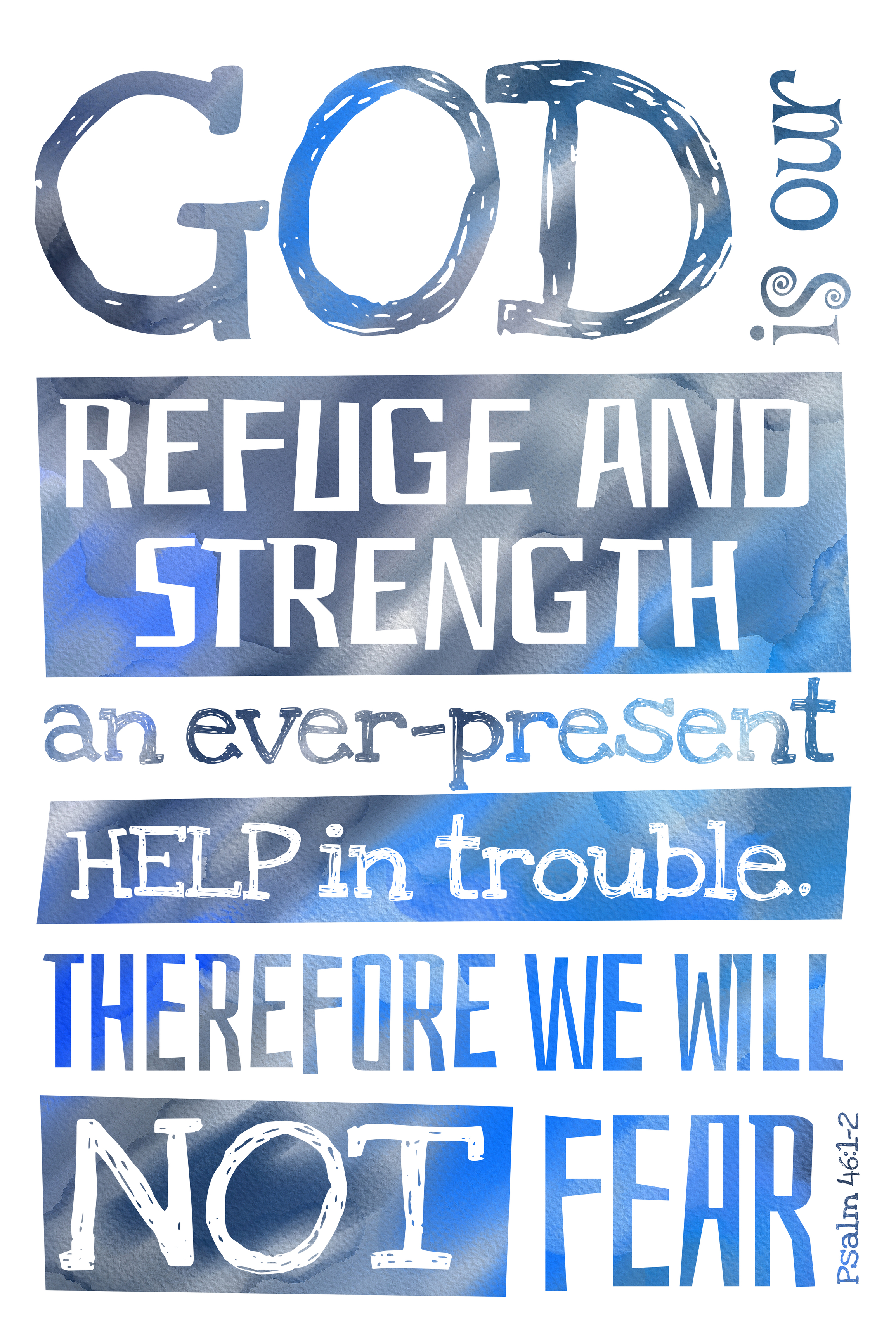
Perhaps we need refuge not only from what threatens us physically, but from the places our minds can take us. We can live in a past that no longer exists, rehearsing regret, shame, hurt, and what we wish we had done differently. Or we can live in a future that does not yet exist, rehearsing everything we fear might happen. Elul invites us back into the present, the right now, where we can safely look in either direction because we are looking from the refuge of God’s presence.

Fear can hijack imagination and use it to create a future, then convince us that mentally rehearsing that future will somehow protect us from it. When we worry, we are often mentally living somewhere that does not yet exist. We imagine a conversation and hear what the other person might say. We picture ourselves failing at something we have not attempted or someone being disappointed in us. We imagine a diagnosis, loss, rejection, financial problem, conflict, or some other outcome we do not know will happen.

The imagined event may never occur, but our minds and bodies can begin responding to it as though it already has. Our minds have the capacity to anticipate danger, and that capacity can serve us well… until it doesn’t. Imagination helps us prepare, plan, solve problems, and recognize risk. But fear can recruit that same capacity and turn it into an endless attempt to create certainty where certainty is not possible. A gift designed partly to help us recognize danger was never intended to be owned by fear.
ID 152403951 © Hriana | Dreamstime.com

We are image bearers of the Elohim who is love, and His perfect love casts out fear. If God is my refuge, I do not need to know everything that will happen in order to be safe. I do not need to mentally solve every possible future before it arrives. I do not need to rehearse every possible conversation so that I will not be caught off guard. I do not need certainty about tomorrow in order to trust the One who will be there when tomorrow comes.

If fear can use imagination to rehearse what might go wrong, what might happen if we intentionally used it to rehearse courage, trust, growth, and faithfulness instead? As Elul draws us toward the remembrance of creation, it also invites us to look ahead and imagine what has not yet taken shape. Hope does that. It reminds us that what is now is not all that can be.


Elul Guided Reflection: Imagining the Year Ahead


“Everything that is real was imagined first.” — Velveteen Rabbit

We cannot know or predict the future, but we can become more intentional about what fills the unknown spaces in our minds. Fear is often quick to populate the future with loss, failure, rejection, conflict, and disappointment.

For this reflection, rather than allowing fear to decide what you see, begin from the knowledge that Adonai is your refuge and that you are already deeply loved.

Find a quiet place where you can think and write without rushing. Before answering anything, take a moment to become aware of God’s presence. You might remember the picture traditionally associated with Elul: the King has come into the field. You do not have to pass through palace walls or observe complicated protocols. He meets you in the ordinary landscape of your life.

Begin by looking back over the year with Him. Consider the good, the bad, the difficult, and the unfinished. Ask Him to help you see the year through eyes of both truth AND mercy.

  • What does He want you to recognize about the year you have lived?
  • Is there anything that still requires teshuvah, repair, gratitude, grief, or release?
  • Where can you now see growth that you may have overlooked while it was happening?

As you reflect, remember that you do not have to perform for His love. You cannot make Him love you more by getting the next year right. He is far more concerned with your relationship with Him and how you love the people around you than with your performance. The actions you have been trying so hard to master are meant to grow out of love, not fear or worry.

Now turn your attention toward the year ahead. Resist the urge to begin with everything you think you should accomplish. Instead, become curious.

  • What would you love to be different a year from now? Or, how would you like to be different?

Don’t think about whether your answer is realistic. Give yourself more possibilities than limitations. Then imagine an ordinary day in the future in which this change has begun to take root. See your future self:

  • What is different when you wake up that morning?
  • What occupies your thoughts?
  • How are you carrying yourself?
  • How are you relating to Adonai and to the people around you?
  • What are you doing differently?
  • What feels different within you?

Now imagine encountering an ordinary challenge in that future: a misunderstanding, an unexpected change, a mistake, a delayed answer, or a moment of uncertainty.

  • How does this version of you respond?
  • What strengths enable this response?

ID 4824489 © Madartists | Dreamstime.com

This is one of imagination’s most practical gifts. We can mentally rehearse fear, but we can also rehearse faithfulness. We can imagine pausing before reacting, speaking truthfully without becoming harsh, setting a boundary without overexplaining, resting without guilt, or remaining grounded when we do not know what someone else is thinking.

Then, consider another question:

  • What would you love to experience more of in the coming year?

Perhaps your answer is peace, joy, friendship, intimacy with God, creativity, rest, courage, meaningful work, adventure, or deeper connection with the people you love. Perhaps there is something you would love to learn, try, create, or explore. For the moment, do not explain why it could not happen. Discernment and practical planning will come later. For now, notice what becomes imaginable when fear is no longer directing the conversation. Then ask yourself:

  • Who am I becoming?

Do not answer with a role, title, achievement, or list of goals. Consider the person taking shape beneath those things.

  • What would you like to become stronger in you?
  • What are you learning to release?
  • What do you want to believe more deeply?
  • How would you like to love differently?
  • What would greater trust in Abba look like in your daily responses?

Now, bring what you have imagined into the present:

  • What is one small step I can take right now toward this future?

“Now faith is the substance of things hoped for, the evidence of things not seen. For by it the elders obtained a good testimony. By faith we understand that the worlds were framed by the word of God, so that the things which are seen were not made of things which are visible.” (Heb 11:1-3, NKJV)

Elul is like a threshold in time, the present now, where we review the past and look forward to the future grounded and grateful for this moment. What you imagined is neither a promise nor a prediction. The coming year will contain things you cannot anticipate. The year before us has not happened yet.

Before fear fills that unknown space with everything that might go wrong, or tells us what is and is not possible, we can remember where our refuge is and allow ourselves to freely imagine from the place of love and faith.

“What you imagine directly affects your perception and your behavior. But it also substantially impacts your brain and your biology.” – Dr. Cassandra Vieten, Imagine That: Transform How You Think, Feel, and Live with the Science of Imagination


Further Reflection

  • When you feel unsafe, where does your mind tend to run?
  • Where would you rather it go?
  • Name one way you can redirect wondering, anxious thoughts.
  • What future have you been rehearsing?
  • What stories about your past or future does your mind imagine?
  • When you are ruminating or worrying, what are you trying to prevent or protect yourself from?
  • If you knew that Abba would be your refuge regardless of what has happened or might happen, what would you no longer need to rehearse or worry about?

Categories: Ethics, new moon | Tags: , , , , , , | 4 Comments

Chodesh Elul 2018

This post is a little early for the upcoming month of Elul, but I have already transitioned my notes into an article. I look forward to hearing what Abba is telling you this year!

  • © Kisha Gallagher

    Month 6 (12thor last month on civil calendar)

  • Tribe: Gad, meaning “an invading troop”
  • Mazel: Betulah or Woman, the Virgin or Virgo
  • Sense: Action To act requires both thought and deed. It connects the head (thought/speech) to the arm/hand (fruit/deeds) and the feet (one’s walk).

Questions to ponder from last month, Av:

  1. Did you fight major spiritual warfare from Tammuz 17th– Av 9th?
  2. Were these battles particularly to prevent some type of destruction in a family, assembly, physical body, or physical house (all types of the Temple)?
  3. Did you experience a shift or release after the 9thof Av (Tisha B’Av)?
  4. Have you experienced some comfort from the Father (doesn’t mean that the test or trial is over) on or after the 15thof Av (Tu B’Av)?
  5. Were you tested in “hearing”? (See this post for clarity.)

Chodesh Elul

As the sixth month, expect to see parallels to day six of creation, and other implications of six. See my post on numbers, for more themes that relate to the number six.

Just as Friday, the sixth day, is the preparation day for the coming seventh day Shabbat, Elul, the sixth month, is the preparation for the seventh month, Tishrei. Not surprisingly, the sense for the month of Elul is action. One needs to act. And, one acts out what they really believe. Preparation certainly requires action in thought, word, and deed.

© Pascal Deloche | Dreamstime.com

This is the month to prepare for the upcoming High Holy Days and Sukkot. While it is necessary to make physical arrangements to celebrate the fall festivals, the primary preparation is inward and spiritual, one of the heart.

The idea of organization and preparation correlates perfectly with the tribe of Elul: Gad. Gad was the seventh son born to Jacob. Seven is the letter zayin, which looks like a plowshare or a sword. Shabbat and other sevens are tools for harvest AND instruments of war. Gad means “an invading troop.” Compare the blessings of Jacob and Moses for this tribe:

Gen. 49:19 (TLV) Gad—attackers will attack him, but he will attack their heels.

Dt. 33:20-21 (TLV) For Gad he said, ‘Blessed is the one who enlarges Gad. Like a lion he crouches, and tears off an arm or even the crown of a head.  21 He chose the best for himself, for there a marked portion was reserved. He came with the heads of the people. He carried out Adonai’s justice and His judgments for Israel.’

Gad is tribe of war. 1 Chronicles 5:18 describes them as “men who bore shield and sword and shot with bow and were skillful in battle.” It requires great preparation and organization to amass a troop and train them for combat. Gadites know where to strike, because they have trained well. They attack the heel (lower nature/nephesh/appetites/ego), the arm (deeds/power/strength), and the head (the source, leader, authority). When David fled from King Saul, the mighty men of Gad joined him in the wilderness. 1 Chronicles 12:8 describes them this way:

From the Gadites there came over to David in the stronghold in the wilderness, mighty men of valor, men trained for war, who could handle shield and spear, and whose faces were like the faces of lions, and they were as swift as the gazelles on the mountains. (NASB)

How does the month of teshuvah or repentance relate to this aspect of the tribe of Gad? Each day of this month, leading up to Yom Kippur is a training day. There is a battle, but it is not necessarily with an external enemy. The preparation of Elul is a time to search the depths of one’s heel (nephesh), arm (power- intentions and actions), and head (are you at the helm or is Elohim?).

Such great battle tactics might seem excessive for searching or judging one’s self, but in my experience (both personal and observing others) SELF is the last place most people desire to search, examine, and judge. It’s much easier to point the finger and blame others or one’s circumstances for bad behavior. This is the question that six (especially day six of creation) asks of us. Are you a beast or are you a man/woman made in the image of Elohim? In the sixth month, the same question is posited as one prepares for the High Holy Days.

Banner of Gad © Pascal Deloche | Dreamstime.com

Last month (Av), we mourned the destruction of the Temple, the House of God. The second Temple was destroyed because of “baseless hatred among brothers.” The political climate in the U.S. is alarming. How people treat others in general is out of control. The golden rule has been left in the dust. It is time to consider what we say (or type) about other people, regardless of their actions or words. This isn’t a call to stick one’s head in the sand or to subvert justice; rather, it is a call to treat other people (even enemies) as those made in the image of Elohim. They are His shadow in the earth, even when they aren’t acting like it. We can speak of and to them with honor and respect, and do so without condoning a wicked behavior.

I’m working on a series about lashon hara, or proper speech. The mouth or tongue is an unruly member that can quickly send one on a spiral of chaos and destruction. With the tongue (or keyboard), we have become murderers, accusers of the brethren. During Elul, we have an opportunity to make amends with those we have offended before we reach the altar on Yom Kippur.

Mat. 5:21-24 (TLV) “You have heard it was said to those of old, ‘You shall not murder, and whoever commits murder shall be subject to judgment.’ 22 But I tell you that everyone who is angry with his brother shall be subject to judgment. And whoever says to his brother, ‘Raca’ shall be subject to the council; and whoever says, ‘You fool!’ shall be subject to fiery Gehenna. 23 “Therefore if you are presenting your offering upon the altar, and there remember that your brother has something against you, 24 leave your offering there before the altar and go. First be reconciled to your brother, and then come and present your offering.

Lamentations says, “Let us examine and test our ways, and let us return to Adonai.” (3:40 TLV) That is the heart of Elul. Self examination, deep introspection, and yes, judging one’s own heart, is the 40 step process during the days of teshuvah. I wonder if we can avoid looking at other’s sins for forty whole days while we clean our own house? This is true preparation for the seventh month, and also the “turn of the year[1]” on the civil calendar. It’s as if one is getting ready to enter a new time, a new realm, a new day… that’s because beginning with Rosh Hashanah (the Hidden Day), the head of the year[2], we are!

The Torah portions that fall during the month of Elul mirror this conclusion. They are Shoftim (Judges), Ki Tetze (When You Go Forth), Ki Tavo (When You Come In), and Nitzavim (Standing). Judges, when you go forth, when you come in, stand. These portions give disciples instruction for the Season of Teshuvah. (Collectively, this is Deuteronomy 16:18 – 30:20) The highlights from each section or portion[3], will inform a careful eye with the themes for the month Elul. These are things that you will battle with and walk through as you prepare for the fall feasts. Here is a sample:

  1. Adonai expects His people to set up righteous judges that will execute righteous judgement. The people are expected to obey their rulings.
  2. A prophet like unto Moses will arise, look for Him, but also beware of false prophets.
  3. Laws for cities of refuge and the accidental man slayer. (More on this below.)
  4. How to deal with false witnesses.
  5. Rules of warfare, mind the fruit trees (people), and respect the female captives.
  6. Laws concerning sexual immorality, and falsely accusing one’s virgin bride.
  7. Laws concerning divorce and levirate marriage.
  8. Offering firstfruits and tithes.
  9. Mount Ebal – curses and blessings.
  10. Covenant renewed at Moab.
  11. Repentance & Forgiveness
  12. Choice of Life or Death.

These portions cover a lot of territory, but if you look closely, they are a microcosm of our journey! The cities of refuge jumped out this year in relation to Elul. Three cities are to be in the Land He is giving them to possess and three more when He expands their territory for a total of six. Elul is the sixth month. In Chassidic teachings, Elul is the city of refuge in the yearly cycle. The thinking behind this is that we are ALL guilty of being a “man-slayer.” (Didn’t Yeshua say as much in Matthew 5:43-48? See also Proverbs 18:21) Whether we realize it or not, we have killed ourselves and others… with words. (Action)

It is in this season, a space in time if you will, that we contemplate past thoughts, words, and deeds, and rectify wrong doing through heartfelt repentance. In this safe place (in time), a city of refuge, one can truly get to know what is in their heart– the good, the bad, and the ugly. In tradition, the King is said to be in the field during Elul. This implies that He is approachable and near, not as a harsh judge on the throne, but as a loving and compassionate Father ready to receive His prodigal child. Thus, Elul is also called the month of mercy and the month of forgiveness.

What to Expect in Elul

© Artur Szczybylo | Dreamstime.com

There is warfare in Elul, but it should be with your own heart. Outside enemies (spirits) will seek to distract or divert one’s attention away from self-examination. This will be especially true on “social media.” Every year at this season, hot debates pop up with people making strong judgments (shoftim) about the “correct” calendar, the names, proper observance, fasting or not fasting on Yom Kippur, and more. Whether or not the intention is to flare up flesh and emotions, the result is the same. Be a Gadite! Don’t fall for it! The focus of these issues is NOT one’s heart and repentance or making amends between brothers. It is a deception. Reread the highlights of the Torah portions. The chaos will fall into one of those categories, and the portion teaches you how to deal with it.

In reality, the many outside distractions are a flimsy fig leave trying to cover the thing we all hate to deal with – self. The root problem is the same issue the first Adam had: Fear. Hearing the voice of Adonai walking in the garden strikes fear in the heart of those that know they are naked before Him. Don’t listen to the voice of fear.

Is. 54:4-5 (NASB) “Fear not, for you will not be put to shame; And do not feel humiliated, for you will not be disgraced; But you will forget the shame of your youth, And the reproach of your widowhood you will remember no more. 5 “For your husband is your Maker, Whose name is the LORD of hosts; And your Redeemer is the Holy One of Israel, Who is called the God of all the earth.

It’s the season to exchange the fig leave with a new garment provided by Adonai. Let the Holy Spirit do the work of refining, even with fire.

2 Cor. 5:1-5, 10 (NASB) For we know that if the earthly tent which is our house is torn down, we have a building from God, a house not made with hands, eternal in the heavens. 2 For indeed in this house we groan, longing to be clothed with our dwelling from heaven, 3 inasmuch as we, having put it on, will not be found naked. 4 For indeed while we are in this tent, we groan, being burdened, because we do not want to be unclothed but to be clothed, so that what is mortal will be swallowed up by life. 5 Now He who prepared us for this very purpose is God, who gave to us the Spirit as a pledge… 10 For we must all appear before the judgment seat of Christ, so that each one may be recompensed for his deeds in the body, according to what he has done, whether good or bad.

Who doesn’t want to be washed and renewed to don fine white linen garments, like a virgin bride? Perhaps, this is why Adonai placed the betulah or virgin as the mazel to appear in the heavens at this season. The Bride makes herself ready (preparation) before the coming scales of justice in Tishrei (Libra).

© Moshe Chaim Katz | Dreamstime.com

In the Torah portions this month, there is a warning to those that falsely accuse a virgin bride. She has a cloth garment with the evidence of blood that proves she is innocent. Beloved, if you are Messiah’s, so do you. BUT, so is your believing/faithful neighbor, even if you disagree on certain points of halachah. Be careful with your accusations. It is the duty of the Ruach HaKodesh to bring each to the place of groaning as He refines one as heavenly gold. No one gets to escape His process of sanctification, which is the point of the festivals. Have compassion for one another as we travail together.

Virgin daughters of Zion, your King is Coming to you! May your righteous acts, the sense for the month of Elul, be bright and clean fine linen at His return at the fall feasts!

Rev. 19:6-9 (NASB) Then I heard something like the voice of a great multitude and like the sound of many waters and like the sound of mighty peals of thunder, saying, “Hallelujah! For the Lord our God, the Almighty, reigns. 7 “Let us rejoice and be glad and give the glory to Him, for the marriage of the Lamb has come and His bride has made herself ready.”  8 It was given to her to clothe herself in fine linen, bright and clean; for the fine linen is the righteous acts of the saints.  9 Then he *said to me, “Write, ‘Blessed are those who are invited to the marriage supper of the Lamb.'” And he *said to me, “These are true words of God.”

For more on Elul:

Elul

The Vinedresser, the True Vine, and the Branches

A Woman Will Encompass (Eclipse) a Man


[1]How do we know that the turn or change of the year occurs in the fall? Ask Moses. He gives at least five witnesses (see 5thone in footnote 2):

Ex. 23:16 (KJV)  And the feast of harvest, the firstfruits of thy labours, which thou hast sown in the field: and the feast of ingathering, which is in the end of the year, when thou hast gathered in thy labours out of the field.

Ex. 34:22 (TLV) “You are to observe the Feast of Shavuot, which is the firstfruits of the wheat harvest, as well as the Feast of Ingathering at the turn of the year.

Dt. 14:28 (NASB)  “At the end of every third year you shall bring out all the tithe of your produce in that year, and shall deposit it in your town. (Context of previous verses places this in the fall.)

Dt. 31:10-11 (NASB)  Then Moses commanded them, saying, “At the end of every seven years, at the time of the year of remission of debts, at the Feast of Booths,  11  when all Israel comes to appear before the LORD your God at the place which He will choose, you shall read this law in front of all Israel in their hearing.

[2]For those that take issue with the use of the Rabbinical idea of the Feast of Trumpets being dubbed Rosh Hashanah, please see the above footnote. Two of the quotes are from the book of Exodus, which also tells us:

Ex. 12:1-2 (KJV) And the LORD spake unto Moses and Aaron in the land of Egypt, saying, 2 This month shall be unto you the beginning of months: it shall be the first month of the year to you.

Verse two doesn’t call Nisan or Aviv the “Head of the Year” or “Rosh Hashanah.” Instead, it calls Nisan the “Head of the Months” or “Rosh Chodeshim.” It shall be the first (rishon) month (chodesh) of the year (shana) to you. I know this irks the Greek, western mindset. I know this because it used to irk me too, lol. But Abba has broadened my understanding, especially with seeming paradoxes such as this. Regardless of your stance on this topic, it is perfectly acceptable in Hebraic thought and in Biblical interpretation to believe (like classic Judaism) that Adonai continued to mark the “year’s” turn or change in the fall, as Moses goes on to do in Exodus 23 and 34 and in Deuteronomy 14 and 31. One can believe this and yet still believe that He marked the head or start for the months in the spring. The four verses in footnote 1 and the Yovel (Jubliee –Lev. 25:8-11) beginning on Yom Kippur, all point to the change and renewal of the shanim (years) in the fall, or seventh month. The question isn’t which is it, spring or fall; rather the answer is yes – both! I love Hebrew thought! It’s so freeing! If this is struggle for you, I pray that your heart and mind are enlarged like Gad.

[3]I love the outline that First Fruits of Zion creates for the weekly Torah portions: https://torahportions.ffoz.org/torah-portions/. (If you use their outline, there is a mistake/typo with Nitzavim as of this writing. The outline listed is actually for the following portion, Vayelech.)


Categories: Moedim, new moon, Torah Portions | Tags: , , , , , , , , , , | 12 Comments

Blog at WordPress.com.