Posts Tagged With: Wisdom

The Biblical Role of Women Part VIII

IMG_2794

Role of Women Main Page

It’s been a while since I’ve written under this title. Actually, I had planned to leave the original series with seven posts; but further study and the popularity of this series, has led me to conclude two things:

  1. The Creator, in these latter days, is restoring the role of women to HIS original design.
  2. Women are desperately seeking the freedom to live out their God-given purpose within the perfect and holy boundaries of the Torah (Bible).

I’ve received many emails in regard to my original seven posts. Some were cries of elation and jubilation at the prospect of real freedom and balance. Others were notes of skepticism or a fear of women taking over the assemblies. And a few were a mixture of both, but with a heart set on openness — a sort of  “let’s wait and see.”

In light of this, I am compelled to continue with this series. While I certainly don’t have all the answers (in fact, I have more questions than anything else) I do have a heart to share my journey with you.

Woman, Builder of the House

 The wise woman builds her house, But the foolish tears it down with her own hands. (Pr. 14:1)

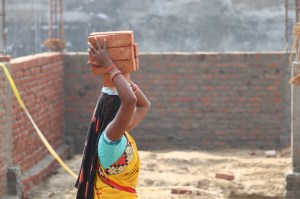
 Have you ever thought of yourself or the women in your life as “builders?” I imagine that most of us naturally think of men when construction comes to mind. After all, they are usually our contractors, carpenters, plumbers, and electricians. But, in Biblical and Hebraic thought, it is the women that build the House of Israel. Let’s once again consider the story of Ruth. Notice the words that the people and the elders at the city gate use when they bless the union of Ruth and Boaz:

 All the people who were in the court (gate), and the elders, said, “[We are] witnesses. May the LORD make the woman who is coming into your home like Rachel and Leah, both of whom built the house of Israel; and may you achieve wealth in Ephrathah and become famous in Bethlehem. (Ruth 4:11)
© Harshit Srivastava
| Dreamstime.com

While men may be the primary builders of physical houses, women build the house of their husbands and the House of the LORD. Obviously, men play a very important role in this process as well, but our focus is to explore how it is that women build. Do you recall how YHWH created the woman? In Part I, we looked at how YHWH formed/molded Adam. (He literally came from the dust of the earth.) In the beginning, both man and woman were within the one Adam.

In the eyes of the Creator, this wasn’t good or tov. So, you know the story, He took a rib from Adam and built (banah) Chavah (Eve). As a quick aside, notice that she came from his SIDE, not his feet where she would be “beneath” him. Nor did she come from his head, implying that she would be “above” him. She came forth from Adam’s side (tsala) as a perfect and coequal partner.

YHWH built Chavah. This Hebrew word for build, banah, is the same word used in both of the verses I quoted above in Proverbs and Ruth. The one who was built is the one who builds. She does this in several ways that I will enumerate shortly. But in order to grasp why this is true, we must first remember God’s design and function for women. In Part V, we discussed that women are a living parable of the Holy Spirit. Likewise, men will reflect the characteristics of our Heavenly Father. Together, they are conformed into the image of Yeshua. But as I’ve mentioned multiple times, God is One. Thus, we are NOT trying divide God into male and female. However, the ONE God did sovereignly choose to reveal Himself in ways that our little peon brains can understand.

What do we see in the witness of Creation? Nearly every creature on earth comes together as male and female to produce life. The natural things are meant to teach spiritual truths. (I Cor. 15:46) Therefore, it should not be surprising that in Hebrew, the Holy Spirit and all of His manifestations are in the feminine. Likewise, all the references to God being our Father and Husband are masculine. The One true God is neither male or female, He is a Spirit. But in order for finite humans to reflect His magnificence, it takes both a male and female.

I only belabor this point because there are some that think it is evil or some type of goddess worship to refer to God in the feminine. This is a result of ignorance of the Hebrew language. People fear what they do not understand and they like to throw stones at those that challenge the high places of their minds (tradition). Many false gods are male; does this make referring to God in the masculine something akin to Baal worship? Of course not, but the converse is also true.

To take a line from Brad Scott, if we would just look outside our window to see the natural everyday things of Creation, many of our theological debates could finally be put to rest. The natural IS a picture of the spiritual. Moreover, Scripture declares that God’s Creation does indeed testify of His power and divine nature:

For since the creation of the world His invisible attributes, His eternal power and divine nature, have been clearly seen, being understood through what has been made, so that they are without excuse. (Rom 1:20)

 In order to build and not “tear down,” a woman must walk in the Seven Spirits of God (Is.11:2). Wisdom is the first of the seven, which implies raw materials, innocence, immaturity, and potential. English speakers usually think of knowledge as the building blocks to wisdom; but in Hebrew, wisdom comes before knowledge. Wisdom leads one to the maturity of knowledge. Knowledge (da’at) is self-sacrificing, intimate, and capable of reproduction. (See the Creation Gospel for a more in depth analysis of the Seven Spirits of Adonai. Or click here for an audio introduction)

The second Spirit is binah or understanding. (Is. 11:2) Binah takes the raw materials of wisdom and begins to separate and distinguish like kind. In other words, binah begins to banah (build). As you’ve probably guessed, the Hebrew root of banah has the same consonants as the word binah. You can think of binah as organizing and counting the costs for a home construction. It is in this spirit that a woman builds.

 Key 1: A woman begins to build with the spirit of binah,
 -- the spirit that separates and discerns.

Upon What Does She Build?

Pro 4:5-9 (NASB) Acquire wisdom! Acquire understanding! Do not forget nor turn away from the words of my mouth. 6 Do not forsake her, and she will guard you; love her, and she will watch over you. 7 The beginning of wisdom is: acquire wisdom; and with all your acquiring, get understanding. 8 Prize her, and she will exalt you; she will honor you if you embrace her. 9 She will place on your head a garland of grace; she will present you with a crown of beauty.

© Stephen Coburn
| Dreamstime.com

The Spirit of Binah compels a righteous woman to discern between good and evil. But without a strong foundation, she cannot expand the House. This is where her counterbalance (the male) becomes a necessity. Men and women were meant to work and labor together in marriage and in the assembly. Each is a part of the whole. The man, being the image of the Father, is like the woman’s rock or foundation stone.

Consider the Hebrew word for rock, eben. This word is pictographically the Father (av) and the Son (ben) put together. There is no firmer foundation than that! Any other foundation would be like building upon sand.[1] Upon this foundation, a woman begins to build the home of her husband. She guards the home against evil and expands the tent with fruit (children). She is a nurturer, comforter, encourager, teacher, and revealer – all qualities of the Holy Spirit.

In Biblical thought, the tent is expanded with the birth of sons. It is sons that go forth and carry on the name of their father. But the daughters are what build upon these firm foundations. We can see this in the natural with an analogy of human reproduction. A man provides the seed (Word). The seed finds the egg (pierced heart) and once united, life begins to grow or “build” inside the womb. Both the “works” of the male and the female are necessary for life. Dr. Alewine has some brilliant insight into the “choosiness” of women in this process. It seems as though the woman’s body uses the Spirit of Binah to discern whether and if an embryo will be carried to full term. (All without the conscious knowledge of the woman!)

To carry this analogy a step further, consider the millions of seeds (words) a man gives a woman to choose from. Out of what seems to be an infinite number of possibilities, she (usually) only picks one seed (idea/word) at a time. She then devotes her full attention to see it nourished, protected, and brought to maturity. Are you beginning to see how the Spirit of Binah operates?

A woman takes the unlimited possibilities and potential of a man and surrounds it like the Holy Spirit. She is the container for his strength, his seed. Together they build their house and the House of Adonai.

Dr. Diana Dye also has some great teachings on how a “woman builds.” You can find them here and here. She uses the imagery of the Tabernacle and Temple to further the analogy we’ve been building upon (pun intended). It’s quite a fascinating prospect. The very first letter of the Bible is an enlarged bet, the pictograph for a tent or house. From the very first letter of the Bible, the Creator has made known His intent and purpose in creating us and giving us His Word.

His top desire is to enlarge, expand, and BUILD His House. In my Father’s house are MANY mansions. The Holy Spirit went through great pains to carefully delineate how the Father’s House is to be constructed. Studying the Tabernacle and the Temple gives one a foretaste in not only how to approach the King, but in how to build (or rebuild) one’s body, family, and assembly. It’s really powerful.

For our purposes here, consider the fact that the House must be carefully maintained, repaired, cleaned, and at times, even rebuilt from the foundation up. This teaches one that our homes and our temples (bodies) will require this same diligent care. This might manifest in various areas and stages of child rearing, marriage building/counsel, financial/support/growth, or even physical/spiritual cleansing. Think of all the areas that are the “house.” Working from the inside out, this is your physical body, your family, your assembly, and the greater body of God’s people. Sometimes a demolition is what is necessary in order to rebuild upon the Rock. Do you need a fresh start? A clean slate? Remove everything that offends and rebuild; it’s never too late. Rebuild your marriage. Rebuild your relationship with that family member, coworker, or assembly leader. Restore the House.

Key 2: A woman builds upon the firm foundation 
of the man (especially the Son of Man).
Key 3: Sometimes the house must be rebuilt.

What Fills the House?

As a living example of the Holy Spirit, a woman will (usually) be what sets the tone for the atmosphere of the home, assembly, and workplace. Far more than men, women determine whether the house is filled with shalom or has a lack thereof. “If mama ain’t happy, ain’t nobody happy” is a saying that speaks a truth that has not escaped the masses. As a picture of the Holy Spirit, women are called to be long-suffering with their husbands, children, and the greater assembly. They are meant to be the ones that can bring correction and instruction with tenderness, sensitivity, and gentleness. This is the very reason that YHWH entrusts women with the most fragile of all human lives: infants.

Women are designed to lead, guide, and teach the immature with patience, love, and mercy. This physical picture is also true in the spiritual realm (think: spiritual babies). The lost, seekers, new believers, and those that haven’t grown past the formative years of the faith usually respond with growth (building) when the message is delivered with the tender mercies of the feminine aspect of God. Obviously, both men and women can operate with this quality through the empowerment of the Holy Spirit. However, the natural representation of this is revealed in the female.

The Holy Spirit is commonly said to be the “wooer” of our souls. It is gentle, merciful, and tender.[2] From the heart of the Most Holy Place, the Presence of God would fill the Tabernacle/Temple of God. This “Presence” is often referred to as the “Shekinah Glory,” another feminine term that expresses the One True God. We will look more closely at the Shekinah and other feminine aspects of Elohim in a later post. For now, let’s think of the correlation between the Holy Spirit filling God’s House and a woman filling her home with her presence. There is a reason that we say “a woman is the heart of the home.” Consider the Temple:

 Now when Solomon had finished praying, fire came down from heaven and consumed the burnt offering and the sacrifices, and the glory of the LORD filled the house. (2 Chron. 7:1)

 In a similar way, a woman will fill her house, but she will be tested in the matter of what “spirit” she fills it with. Will it be the Ruach HaKodesh or will it be another spirit? A woman must choose (it’s always a choice!) to walk as a victor over her nephesh (flesh), emotions, hormones, and circumstances. When you choose to be the “victim” instead of the “victor,” you are in effect stepping on the blood of Messiah. He has either provided the Way or He hasn’t. His grace is sufficient or it isn’t. I know it doesn’t always “feel” this simple. But the truth is that we always have a choice even in areas where we feel completely out of control.

Every time a woman is able to exercise self-control over her lower nature (flesh/nephesh), she reflects the image of God as she was designed. She becomes a holy witness to her husband, children, family, friends, and assembly. Like the Holy Spirit, her presence “woos” people to the Father. Under her tender care, the immature feel safe to explore, learn, and prosper. This stage is necessary for every believer in the God of Israel to grow into maturity. If they are built up as strong panels in the house by the Spirit, they understand (binah) why the flesh must be put on the altar (death). The Father’s instructions require maturity in the Spirit, because the letter kills (the flesh). This is liberty! And it produces humble and gracious vessels that desire to set other captives free.

 The Torah is spiritual, but we are carnal. (Rom. 7:14) In order to bring liberty to the captives, we must be free from bondage. Prisoners only propagate more prisoners. Thus, allowing the letter of the law to kill anything and everything but the flesh only leads to bondage or a “Torah Terrorist.” Flesh focuses on flesh, not the Spirit.

In order to be a (spiritual) light, one must allow people the freedom to grow into the Father’s commandments. This spiritual work of the Spirit is uniquely portrayed in the natural by the nurturing aspect of women. A woman builds the House…

 That our sons may be as plants grown up in their youth; that our daughters may be as corner stones, polished after the similitude of a palace. (Ps. 144:12 KJV)


Key 4: The Holy Spirit fills the House of Adonai. 
The woman fills her house with a “spirit” as well. 
A wise woman will build with the Holy Spirit 
which brings the liberty needed to grow and mature.

 The Voice of Wisdom

 Wisdom shouts in the street, She lifts her voice in the square; At the head of the noisy [streets] she cries out; At the entrance of the gates in the city she utters her sayings: “How long , O naive ones, will you love being simple-minded? And scoffers delight themselves in scoffing And fools hate knowledge? Turn to my reproof, Behold, I will pour out my spirit on you; I will make my words known to you. (Pr. 1:20-23)

  Turning toward the feminine voice of God (as manifested through His daughters) enables one to be filled with the Spirit. And, it makes the Father’s words to be made known unto us. In other words, there is intimacy, not just rules. The sixth Spirit of God is knowledge (Da’at). (Is. 11:2) It is a mature spirit of sacrificial love. No longer is the focus on what the Lamb has done for me, but what I am willing to do for the Lamb. In order to reach this place of maturity, a person must first learn to move through and with the first Spirit of Adonai, Wisdom (chokhmah).[3] Da’at is so intimate that it causes reproduction (both physical and spiritual). Knowing this should give one a deeper understanding (binah) of Yeshua’s words in Matthew.

 “Not everyone who says to Me, `Lord, Lord,’ will enter the kingdom of heaven, but he who does the will of My Father who is in heaven will enter. “Many will say to Me on that day, `Lord, Lord, did we not prophesy in Your name, and in Your name cast out demons, and in Your name perform many miracles?’ “And then I will declare to them, `I never knew you; DEPART FROM ME, YOU WHO PRACTICE LAWLESSNESS.’ “Therefore everyone who hears these words of Mine and acts on them, may be compared to a wise man who built his house on the rock.” (Mt. 7:20-24)

 Can you see both the masculine and the feminine clues in these verses? Look at these keys words.

Masculine:                         Feminine:

  • Fruit (seed inside)             Prophesy
  • Words                                  Hears
  • Action                                  Casting out demons
  • Father                                  Performing Miracles
  • Heaven                                Wisdom
  • Lord                                     Building
  • Rock                                     House

These verses strongly hint at how the House of the LORD is built with strength. How will it remain when the storms come? The House must be operating with both the masculine and the feminine working together. Only together, as one, can the true image of Elohim be displayed in the natural realm. That is where life comes forth. This is a House of Strength. The above example in Matthew is just one testimony of the truth that was birthed in the beginning.

 God created man in His own image, in the image of God He created him; male and female He created them. God blessed them; and God said to them, “Be fruitful and multiply, and fill the earth, and subdue it; and rule over the fish of the sea and over the birds of the sky and over every living thing that moves on the earth,” (Gen. 1:27-28)

Key 5: A woman filled with the Holy Spirit enables 
the immature to hear (know) the Words of Adonai.


Have you ever noticed that most of the denominations that are leery of (or against) the Spirit’s activity such as gifts and miracles are also usually against women operating in any “seen/outward” role in the home or assembly? Do you believe that this is a coincidence? The Holy Spirit is THE feminine expression of God. If natural women are silenced, is it surprising that the supernatural Spirit is also quenched? The Spirit (feminine) is what brings the intimacy of “I know you.” She is shouting from every corner; will we heed her voice?

But the converse is also true. Those that forsake the masculine, forget that the foundation IS the Word, the Rock. The Spirit doesn’t supersede the written Word. Ignoring what has been solidly penned beforehand for our instruction (Torah) is just as detrimental to “building.” Without the hard and firm masculine foundation, one builds on sand, as a mere “hearer” only. This is what it means to be a practicer of “lawlessness.” How many assemblies do you know of that embrace the works of the Holy Spirit on the one hand, but speak evil of the law (Torah) on the other?

Without the balance of the Father’s instructions, one can become intimate with an unholy spirit. This spirit may imitate what is holy unto YHWH, but in reality only comes to steal, kill, and destroy. Only by building upon the foundation of “it is written,” will one be able to discern (binah) the difference between the harlot and the righteous woman.

 Balance is the answer. Working SIDE by SIDE as male and female, we reflect the image of Elohim. Real godly fruit increases and the tent (House) expands. The WISE woman (Bride) builds her house…

In Part IX, we will take this building aspect of women one step further by looking at those that FIRST received the Torah and the Gospel.

Here is a recap of the  5 Keys:

 Key 1: A woman begins to build with the spirit of binah — the spirit that separates and discerns.

 Key 2: A woman builds upon the firm foundation of the man (especially the Son of Man).

Key 3: Sometimes the house must be rebuilt.

Key 4: The Holy Spirit fills the House of Adonai. The woman fills her house with a “spirit” as well. A wise woman will build with the Holy Spirit which brings the liberty needed to grow and mature.

Key 5: A woman filled with the Holy Spirit enables the immature to hear (know) the Words of Adonai. Like the Holy Spirit, she brings intimacy to the relationship.


For previous articles click here; the next article in this series is Part IX.


[1] Mt. 7 and Lk. 6. Interestingly, the context of Yeshua’s parable is about being both a hearer and a DOER of His Word. This same message is repeated in the Proverbs 4 chapter that I suggested for you to read.

[2] But like a concerned mother, the Holy Spirit can also manifest with great power and fierceness. We will look at this aspect of the Spirit in a later post.

[3] See Isaiah 11:2 and The Creation Gospel workbook one by Dr. Hollisa Alewine.

Categories: Women | Tags: , , , , , , , , | 10 Comments

Miriam’s Cup Part III

For the best context, read Part I and Part II of Miriam’s Cup. This little study on water, the heavens, the Holy Spirit, Miriam, Baptism, and Pesach can only take us to one place: the fountain of Living Waters found in our Messiah! Please join me in drinking deeply from this wonderful well of life.

© Kevin Carden | Dreamstime.com

Before we proceed to the Living Waters and the Messiah, I would like to revisit Baptism or immersing in a Mikvah. While many believe that this ritual began in the New Testament, it actually began long before the first century. Genesis begins with water and Revelation ends with a river. The Spirit broods over the Creation waters and the angel shows John (Rev. 22: 1-2) “A river of water of life, clear as crystal, coming from the throne of God and of the Lamb.” Notice that it is the Spirit AND the Bride that say, “Come!” They call to the thirsty and freely allow them to partake of the waters of life (Rev. 22:17). This calling action echoes the woman of wisdom in the Book of Proverbs. Later Solomon compares this woman to a precious fountain.[1]

The words of a man’s mouth are deep waters; the fountain of wisdom is a bubbling brook. (Pr. 18:4)

From the beginning, water has been associated with Adonai’s Spirit. What better imagery is there for the Spirit of God than that which causes all plant life to grow, nourishes all livestock, cleanses our bodies and garments, and sustains our overall well-being? Aryeh Kaplan, in his book Waters of Eden, states that, “Water is the primary connection that we have with the Garden of Eden.”[2] We seem to have been given a mystical link to this truth in the Genesis narrative. (Gen. 2) This story is strangely interrupted by an account of a river that is sourced in Eden. It breaks off into 4 tributaries that surround and water the entire garden. There may be a scarlet thread that runs throughout the Bible, but there is also a river of life,  for those that look for it.

There is an old Midrash that says fallen Adam repented by sitting in a river. Whether or not this is literally true is not the point. The emphasis is on the cleansing power of water. The waters of Eden are the waters that flow from the throne of God. Therefore, physical water is both literally and figuratively a cleanser. This is the same imagery used with Baptism’s washing away sins.[3] We repent because we desire to return to a clean state. Ultimately, our hope is resurrection unto eternal life and a permanent residence in the Kingdom from which crystal waters flow.

Water, Water, Everywhere, but Not a Drop to Drink

Have you ever been on a ship in the ocean so far from shore that you can no longer see land? It’s quite an eerie feeling the first time you experience this wonder. There is an overwhelming sense of smallness and vulnerability. The fear of what would happen if you became stranded is daunting. Perhaps you’ve watched movies or read books where this happened to someone. Not long ago, I watched the Life of Pi where an Indian boy is trapped for weeks on a small life boat with a tiger (he had been travelling with zoo animals on a ship that sank). Though he was surrounded by water, there was not a drop to drink. Dependence on condensation and rain water became a very real source of life for the boy and the tiger.

I think we often feel as spiritually thirsty as this unlikely pair. We perceive that the waters of salvation are everywhere, yet here we are dying from dehydration. We scramble to suck up the little bit of condensation we find and pray for rain. What we wouldn’t give to have a river of fresh water to quench our insatiable thirst!

Now, you may believe I’ve described an unbeliever or a lost person, but if you’re like me (human), then you too know this “dry soul” feeling even after coming to Messiah. Whether you find yourself in this place because of sin or because of testing, it is a very real campsite for the people of Adonai.[4] But the good news is that it is a temporary stop along the journey. Once we repent or learn the lesson, He refreshes us with the only thing that can really satisfy our souls, which is the Springs of Salvation, the Living Waters.

Is. 12:1-6  Then you will say on that day, “I will give thanks to You, O LORD; For although You were angry with me, Your anger is turned away, And You comfort me.  (2)  “Behold, God is my salvation, I will trust and not be afraid; For the LORD GOD is my strength and song, And He has become my salvation.”  (3)  Therefore you will joyously draw water From the springs of salvation.  (4)  And in that day you will say, “Give thanks to the LORD, call on His name. Make known His deeds among the peoples; Make them remember that His name is exalted.”  (5)  Praise the LORD in song, for He has done excellent things; Let this be known throughout the earth.  (6)  Cry aloud and shout for joy, O inhabitant of Zion, For great in your midst is the Holy One of Israel.

Women and Wells

             © Inmicco | Dreamstime.com

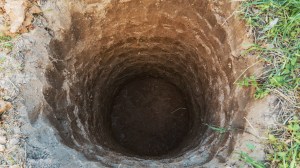
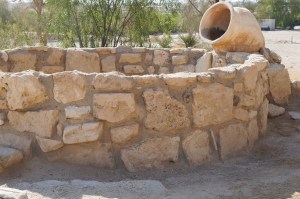
We live in a world of chaos. The waters offered by the world and false religion leaves us dry and thirsty. But the Father knew this from the very beginning. His Spirit brings order and Living Waters to our chaos if only we will drink. In Genesis, these waters are brooded over by the “woman” of the Holy Spirit. Therefore, we would expect a significant amount of prophetic testimonies to occur at wells (especially with women). Consider the most famous Biblical woman at a well, the Samaritan. Speaking to her, Yeshua says:

John 4:10-14  Jesus answered and said to her, “If you knew the gift of God, and who it is who says to you, ‘Give Me a drink,’ you would have asked Him, and He would have given you living water.”  (11)  She *said to Him, “Sir, You have nothing to draw with and the well is deep; where then do You get that living water?  (12)  “You are not greater than our father Jacob, are You, who gave us the well, and drank of it himself and his sons and his cattle?”  (13)  Jesus answered and said to her, “Everyone who drinks of this water will thirst again;  (14)  but whoever drinks of the water that I will give him shall never thirst; but the water that I will give him will become in him a well of water springing up to eternal life.

The Samaritan woman gets all the press as being the “woman at the well” because Yeshua spoke very plainly to her about not only who she was, but who He is! However, that doesn’t mean that her story is the only story of a woman at a well that we should appreciate. In fact, I don’t believe we can fully grasp the Samaritan’s encounter unless we first understand her predecessors. The first century people that heard the testimony of this woman or even those that had just heard a retelling of these events would have had a very specific paradigm in which they would filter this story. That paradigm was the Torah of Moses.

Yeshua’s encounter with this woman is meant to remind you of other stories of women at wells. Have you ever considered that Isaac, Jacob, and Moses all found their WIVES at a WELL of WATER? We’ve already looked at Miriam’s connection to water and wells. I don’t think this repetitive theme is arbitrary. If you are the Bride of Yeshua, He will meet you at a well also. Perhaps this is why so many have a hard time separating Baptism and Salvation.


© Bakusova | Dreamstime.com

Yeshua tells the Samaritan woman that He can give her “living water”. What makes water “living”? And why and how does this water become a “well that springs up eternal life” once it is ingested? In order for waters to be considered “living”, they must be moving or flowing. Stagnant or still pools do not have “life” in Hebraic thought. Mayim Chayim (living waters) are characterized by MOVEMENT. Does this remind you of the Spirit of Elohim in Genesis?

We looked at the Song of Songs in the Biblical Role of Women Part III. As we discovered in that post, the imagery in this book is of both a complete and restored MAN and WOMAN. Both are functioning in their purpose and living righteously in the Garden (of Eden). Notice in the verse below that there is yet another association of a woman and life giving water. This is one of the godly functions of the female. A holy and restored woman will reflect the Holy Spirit by giving “water” and nurture to the seed that promotes growth and maturity.[5] Speaking of the woman, the man calls her:

A fountain of gardens, a well of living waters, and streams from Lebanon. (SOS 4:15)

Since the Song of Songs portrays a redeemed man and woman, we could say that both men and women as Yeshua’s Bride are a well of Living Waters. This is, in fact, exactly what Yeshua tells the Samaritan woman. We are often so focused on receiving Living Waters, that we forget that we are to be Living Waters! We water YHWH’s people just as the matriarchs gave drink to the patriarchs and watered the livestock. You are a Spring of Salvation and a fountain of Living Waters, because you belong to Messiah. We already have everything we need, but we still have a choice to make. Will we live it out, today? The choice is ours.

“He who believes in Me, as the Scripture said, ‘From his innermost being will flow rivers of living water.'” But this He spoke of the Spirit, whom those who believed in Him were to receive; for the Spirit was not yet given, because Jesus was not yet glorified. (John 7:38-39) 

This truth is why both blood and water gushed from the “side” of Messiah as He hung on the tree. Like the first Adam, Messiah’s Bride comes forth from His side.

But one of the soldiers pierced His side with a spear, and immediately blood and water came out. (John 19:34) 

John later describes three things that testify who Messiah is.

It is the Spirit who testifies, because the Spirit is the truth.  (7)  For there are three that testify:  (8)  the Spirit and the water and the blood; and the three are in agreement. (1Jn 5:6b-8) 

Since Messiah is returning for a Bride of like kind, we also will have these three witnesses: spirit, water, and blood. He meets us at well. We drink from the fountain. Like the Samaritan woman, we drop our water pots and run and witness to as many as we can about Messiah; thus, we become the springs leading others to Salvation. This theme is repeated again and again. We can see it in the Creation Days. We can see it in the Moedim (Feast Days). We can see it in the movement of the 7 Spirits of Elohim (Is. 11:2). The ancient matriarchs teach us how to be His Majesty’s Bride. We first give water to the patriarchs (minister to YHWH), and then we water the livestock (YHWH’s people). This is the essence of the Cup of Miriam.

Applying the Cup

Miriam’s Cup is filled with WATER, not wine. Wine can represent joy, judgment, or even the blood of Messiah. But there are three that testify. Water symbolizes both mayim and the Holy Spirit. By incorporating the Cup of Miriam into our Seder or even our weekly kiddush, we partake of all three symbols. Since the Cup of Elijah comes near the end of the Seder, we include the Cup of Miriam just after the candle lighting. This way, our four cups of wine will be flanked by the prophetess Miriam and the prophet Elijah. Miriam will represent the presence of the Holy Spirit in our lives as we are continually watered and washed by the Word as we journey throughout this life, and Elijah will remind us of our coming complete redemption at the Messianic Age.

Hopefully, Miriam’s Cup will be a spring board for you to do more study. I would love to hear your thoughts on this tradition and any “connections” you may find. What does Miriam mean to you? How will can Miriam contribute to your families’ understanding of the Exodus?

Haggadah Ideas

  • After the women (or a woman) lights the Shabbat Candles, Have everyone partake of the WATER of Miriam’s Cup. Explain all the wonderful imagery in the patriarchs meeting their brides at wells.
  • Correlate this with the Holy Spirit, Baptism, the Springs of Salvation, Yeshua’s pierced side, the 3 that testify, and the Living Waters.
  • Relate all of this imagery with Pesach and Sukkot (The beginning and the end).
  • Praise YHWH for the women at your Seder and their contribution in rebelling at Pharaoh’s evil decrees.
  • Praise Yeshua for choosing you to be a spotless Bride.


[1] Proverbs 9:1-6

[2] Kaplan, Aryeh, Waters of Eden, New York (2003) p. 35

[3] ‘Now why do you delay? Get up and be baptized, and wash away your sins, calling on His name.’ (Acts 22:16)

[4] Remember the bitter waters at Marah? They were to test the people.

[5] Dr. Skip Moen teaches that the “living waters” provided by the woman are also a picture of her role as the ezer kenegdo: http://skipmoen.com/2009/11/28/connections/


Categories: Moedim, Women | Tags: , , , , , , , , , , , , , , , , | 7 Comments

Miriam’s Cup Part II

In Miriam’s Cup Part I, we looked at the rather new custom of drinking WATER from a goblet inscribed with Miriam’s name during the Passover Seder. We explored where this tradition originated and why it may be important to incorporate into your own Seder. We also discovered the strong connection of Miriam with water. In this post, we will look at how the Holy Spirit is also linked to the imagery of water, wisdom, Pesach, and women.

The Three Leaders of Israel and the Godhead

“Indeed, I brought you up from the land of Egypt And ransomed you from the house of slavery, And I sent before you Moses, Aaron and Miriam. (Micah 6:4)

The rabbis teach us that there are three good gifts that were extended to the children of Israel– the well, the clouds, and the manna.  The well was provided due to the merit of Miriam, the clouds of glory because of Aaron, and the manna on account of Moses.[1]

The link between the clouds of glory and Aaron is understandable when considering his specific role. Aaron officiated as High Priest in the Mishkan (Tabernacle) that was perpetually covered with the protective pillar of cloud that shielded it by day.  He also ministered daily at the burning altar, just as the parallel pillar of fire hovered over the Mishkan at night.[2] Moses’ association with the heavenly manna is equally fathomable. He was the lawgiver and became synonymous with the Torah or Word of God. Bread (manna) has long been a symbol for the Torah and the Word.

© Jdanne | Dreamstime.com

What might not be immediately apparent is why the rabbis attribute the well or rock that gushed forth water in the wilderness with Miriam. In the Brit Chadashah (N.T.), we learn that the rock that followed them was in fact, Messiah.

For I do not want you to be unaware, brethren, that our fathers were all under the cloud and all passed through the sea; and all were baptized into Moses in the cloud and in the sea; and all ate the same spiritual food; and all drank the same spiritual drink, for they were drinking from a spiritual rock which followed them; and the rock was Christ. (1Cor. 10:1-4)

Is there a contradiction between what Paul teaches in 1 Corinthians and what the rabbi’s say about this “rock” or “well”? I hope to show you the harmony in their teachings with all three leaders (Moses, Aaron, and Miriam) and the glorious gifts (clouds, manna, and the well). In Part I, we started building the foundation as to why Miriam is linked to water. I hope to continue with this premise here. In the Book of Numbers, the water from the rock dries up immediately following Miriam’s death.

Then the sons of Israel, the whole congregation, came to the wilderness of Zin in the first month; and the people stayed at Kadesh. Now Miriam died there and was buried there. And there was no water for the congregation, and they assembled themselves against Moses and Aaron. (Num. 20:1-2)

The Torah seems to beg one to ask the question as to why the congregation had no water immediately following the death of Miriam. In Hebrew, these thoughts run together with a rhythmic flow. Indeed, the people viewed her as a source of life giving waters. Hopefully, you too can make this connection after reading Part I.

Moses, Aaron, and Miriam represented the King of the Universe on the earth. Is it not fitting that there were 3 of them? Isn’t the godhead most often manifested in 3 (Father, Son, Holy Spirit)? Perhaps what may be eating at you is that Elohim would choose a female to represent one of His roles. Moses is clearly the strong father figure to Israel (as Law giver), Aaron is clearly a mediator and priest (like the Son, Yeshua), so Miriam and the life giving waters must represent the Holy Spirit. If you’ve read the Role of Women, this idea isn’t as threatening as it may first appear.

Hebrew students are fully aware that the Spirit of Elohim is always in the feminine form. (This is true of all spirits.) Thus, its not surprising to find God’s Spirit paired with feminine attributes or given to feminine metaphors quite frequently in the Bible. YHWH is neither male nor female, yet He has qualities that we would associate with each sex. This is why it takes BOTH a male and a female to display the image of Elohim in the natural.

The Ruach Hakodesh in Heaven and Earth

To better understand how Miriam, water, and the Holy Spirit can be equivalent expressions, review the first occurrence of Elohim’s Spirit is in Genesis.

The earth was formless and void, and darkness was over the surface of the deep, and the Spirit of God was moving over the surface of the waters. (Gen. 1:2)

What is the Spirit of Elohim doing in the beginning? It is hovering or moving over the WATERS. Thus, our first association of the Ruach Hakodesh is with water. The primordial waters are separated into earthly waters (mayim) and heavenly waters (shamayim). Did you notice how waters and heavens sound alike in Hebrew? Can you see mayim in the shamayim?

Interestingly, the word for heavens, shamayim, denotes “fire waters” as it is a compound of the word water (mayim) and fire (esh).[4] We will explore this idea some more in a moment. But first,  look at the word for Spirit in Hebrew: ruach. Most of you already know that ruach is also the word for wind or breath. What might not be immediately obvious is that the air and wind are the heavenly counterparts to the earthly water currents. Wind powers most ocean and air currents. In Hebraic thought these “currents” of the mayim and shamayim reflect one another. Or you could say that “it is on earth as it is in heaven”.

Consider how the birds and fish move, migrate, school, or flock as they follow these currents across the globe — carrying seed. If you find these connections fascinating, I urge you to study Dr. Hollisa Alewine’s Creation Gospel.[5] You’ll never look at creation week or the whole of scripture again without noticing these often repeated themes. Waters and heavens are mirrors of one another; therefore, the notion that the Holy Spirit is both like wind and water is natural in Hebraic thought.

In the Gen. 1:2 verse above, God’s Spirit is moving, hovering, or brooding over the waters. Indeed, the Spirit of YHWH is active like the wind/birds and the water/fish. The Hebrew verb used is rachaph; the AHLB[6] defines it as the following:

Strongs #7363: AHLB#: 2763 (V) Flutter: The stirrings and shakings of a bird in the nest – Flutter: [freq. 3] (vf: Paal, Piel) |KJV: shake, move, flutter| {str: 7363}

Did you notice the tangible picture of a mother bird fluttering, shaking, and stirring her nest? Does this bring other verses to mind about Elohim being a protective mother bird?

“Like an eagle that stirs up its nest, That hovers over its young, He spread His wings and caught them, He carried them on His pinions. (Dt. 32:11)

Like flying birds so the LORD of hosts will protect Jerusalem. He will protect and deliver it; He will pass over and rescue it. (Is. 31:5)

“Jerusalem, Jerusalem, who kills the prophets and stones those who are sent to her! How often I wanted to gather your children together, the way a hen gathers her chicks under her wings, and you were unwilling. (Mt. 23:37)

These movements are mimicked in the word for Passover, Pesach. It is a derivative of the protective fluttering actions of a mother bird.[7] [8] Indeed, our Great Elohim moves, flutters, leaps, and hovers over His Creation and His people like a mother protecting her precious chicks. This nurturing aspect of YHWH is divinely displayed in the female creatures of His creation. The Exodus story and the original Passover speak to our initial redemption, which is the Father calling us out for Himself. The “immature” state of the people (and us!) at this initial point of salvation necessitates the tenderness that can only be offered by a mother. Thus, we see YHWH’s Spirit pesach(ing) over the homes of His newborn chicks in Israel.

Pesach and Baptism

By carefully examining what happened when the “death angel” came through Egypt, we see that the same Spirit of YHWH that protected the Israelites also killed the first born of Egypt.

‘The blood shall be a sign for you on the houses where you live; and when I see the blood I will pass over you, and no plague will befall you to destroy you when I strike the land of Egypt. (Ex. 12:13)

Now it came about at midnight that the LORD struck all the firstborn in the land of Egypt, from the firstborn of Pharaoh who sat on his throne to the firstborn of the captive who was in the dungeon, and all the firstborn of cattle. (Ex. 12:29)

The Ruach HaKodesh can nurture and protect and at the same time bring destruction on His enemies. The Spirit is truly like the “waters” that we discussed in Part I. The difference is that the Holy Spirit is always acting with righteousness, even in judgment. After the Children of Israel are released from the grip of Pharaoh, they flee to the wilderness. Without a constant and considerable food and water source, the fledgling nation would be sure to die.

What happens is follows:

  • After 3 days without water, they reach Marah. The waters are bitter (undrinkable). Moses casts a branch in the waters and they are “sweetened”. (Ex. 15) This was YHWH testing the people.
  • They then find an oasis at Elim where 12 streams water the 12 tribes. (Ex. 15)
  • The people begin to cry out for food. YHWH provides them with the heavenly manna. (Ex. 16)
  • They reach Rephidim and again cry out for water. YHWH instructs Moses to strike the rock at Mt. Horeb and water gushes out for the people. (Ex. 17)

A person can live far longer without food than water. The beginning of Israel’s wilderness journey seems to center around issues of water. Miracles and judgments happen with water. Rejoicing and praise are performed by the edge of water. Bitter water is sweetened as a test. The twelve tribes each find their own refreshing stream at Elim. A miraculous “rock” becomes a well that can sustain millions. That same rock FOLLOWS them!

Water, water everywhere! Though the children can’t see it in the natural, they are surrounded with life giving water. (Does this remind you of the Rivers of Eden?) Is this not just like the Holy Spirit? We can’t see the “Spirit”, yet it is everywhere. One connection to the Spirit and water that is tangible to most all Believers is Baptism (or immersing in a Mikveh).

© Gijsvdabeele
| Dreamstime.com

Baptism is a natural picture of the work of the Holy Spirit in the very beginning. The movement and separation of the mayim (water) and shamayim (fire waters) is the same moving and separating that happens when we experience this ritual.[9] It may be an outward symbol of an inward work, but to assume the Holy Spirit isn’t directly involved (and often in a very visible way) is not true. The washing and filling is pictured by both the water and the holy fire! Sometimes these are simultaneous experiences, and sometimes they are separate. Nevertheless, they reflect one another like the waters and the heavens and like the pillar of cloud and the pillar of fire. Unlike some, I fully believe this process is in continual motion and cyclical even in our individual lives.

But this still leaves us with our original question. Why are Messiah and Miriam both equated to the rock or well of water in the wilderness? Speaking of Messiah, Paul also has this to say:

  For in him dwelleth all the fulness of the Godhead bodily. (Col. 2:9 KJV)

Elohim is One (Shema Dt. 6:4). When Yeshua walked the earth, He was the tangible form of the fullness of YHWH. Thus, we see Him in numerous places attributing an action to Himself and then declaring that the same action is really from the Holy Spirit or the Father.

Yeshua will not leave us comfortless, He will come to us, yet the comforter is the Holy Spirit.[10] Yeshua gives us Living Waters, but then proclaims that these waters are the Holy Spirit.[11] Just as Moses and even Aaron were prefigures of the Messiah, so is Miriam. The analogies are similar to both Moses and Yeshua being the Law giver. Or both Aaron and Yeshua being the High Priest. Why would it be any different for both Miriam and Yeshua to be the well in the rock?  Therefore, who is right? The rabbis or Paul? The answer is both!

Stay tuned for one last post in this series. My hope is to conclude by filling Miriam’s Cup with the Living Waters and the Mashiach in Part III.


[1] Talmud Bavli (Babylonian Talmud), Tractate Ta’anit 9a:  R. Jose the son of R. Judah says: Three good leaders had arisen for Israel … Moshe, Aaron and Miriam, and for their sake three good things were conferred [upon Israel], namely, the Well, the Pillar of Cloud and the Manna; the Well, for the merit of Miriam; the Pillar of Cloud for the merit of Aaron; the Manna for the merit of Moshe.

[2] Exodus 40:38

[3] See my post The Biblical Role of Women Part V for more on the feminine aspects of the Holy Spirit.

[4] The roots of the word shamayim are אש (esh, fire) and מים (mayim, water) The beginning letter א (aleph) is a silent stand-in for a beginning consonant, nothing more. Dropping it does not change the meaning of the two-letter word. So the Hebrew שמים literally means fire in water. The great Jewish commentator Rashi  says this about Genesis 1:8: The word shamayim is a contraction of [a word for] carrying of water, also [a word meaning] there is water, also esh and mayim, [meaning] fire and water. He blended them with one another and made the heavens from them. For more imagery of fire, see The Biblical Role of Women Part XI.

[5] Thecreationgospel.com

[6] Ancient Hebrew Lexicon of the Bible by Jeff Benner

[7] They share the two letter parent root chet, pey; which means to cover (in protective action).

[8] See my post on the Meaning of Passover.

[9] John answered and said to them all, “As for me, I baptize you with water; but One is coming who is mightier than I, and I am not fit to untie the thong of His sandals; He will baptize you with the Holy Spirit and fire. (Luke 3:16)

[10] John 14

[11] John 7:38-39

Categories: Moedim, Women | Tags: , , , , , , , , , , , , , , , | 7 Comments

Miriam’s Cup Part I


          © Daniel Million | Dreamstime.com

This Passover season, I have given an often overlooked custom a second glance — well more like a long hard stare! Many of you incorporate the mystical and prophetic Cup of Elijah in your Passover Seders. For Believers in Messiah, this cup takes on even more significance because of John the Baptist. He truly paved the Way for Messiah at His first coming. Since we have already seen this “cyclical” prophecy fulfilled once, hopefully we will better be able to discern the spirit of Elijah in these last days.

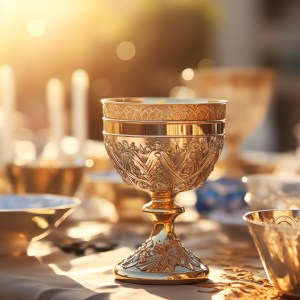
If you’ve purchased a special goblet with Elijah’s name written on it to use at your Passover Seder, you may have noticed another more obscure goblet inscribed with Miriam’s name. What is this cup for? Is it just to satiate liberals and feminists? Does this “new” ritual have any redeeming value? My hope is to show you the richness and beauty that this tradition can bring to your Passover table, and perhaps even to your weekly Kiddush.

The Cup of Miriam is not part of a traditional Seder, and I can find no mention of it in any of the feast books that I own. (But, don’t let that deter you from reading on!) According to Risa Borsykowsky[1] , the practice of drinking WATER from a special kiddush cup called Kos Miriam, began with Stephanie Loo Ritari and her Rosh Chodesh Boston group in the late 1980s. Reading through the Exodus, one can find numerous righteous women that played significant roles that led up to the redemption of Israel from Egypt.[2] Mrs. Ritari decided to bring these “hidden” women into the “retelling” of the Passover story to not only honor the matriarchs, but as a tool to make the Seder more comprehensive for women and girls. The most prominent woman of the Exodus story is Moses’ sister, Miriam. Therefore, she will be our focus in this study.

The Bible calls Miriam a prophetess of Israel.[3] She alone ensured that baby Moses would live by following him as he floated down the treacherous Nile River.[4] She watched as Pharaoh’s daughter drew Moses from the water, and then cunningly secured Moses’ own mother as his wet-nurse. She helped sustain the Israelites during their trek across the wilderness and she led them in joyous song and dance to praise YHWH for the miracle of parting the Red Sea. Upon her death, the Israelites grumbled against Moses and Aaron for a lack of life giving water.[5]

Did you notice the many connections of Miriam with water?[6]

Though her name can mean bitterness or even rebellion, the Hebrew also reveals that there is another (positive) side to Miriam. This should give hope to us all, as we each have both a good and evil inclination that wars for supremacy. To learn the duality of Miriam is to understand the ancient contradiction of what it is to be human. We all share the life long struggle between spirit and flesh.

Moreover, we would be wise to consider that other than one bad instance, Miriam’s portrayal of rebellion and bitterness was toward the anti-torah decrees of Pharaoh.[7] She and her family risked their lives by rebelling against Pharaoh. The midwives Puah and Shifrah acted similarly by defying Pharaoh’s edict to kill Hebrew male babies. It is interesting that it was the fearlessness of WOMEN that initially ignited the courage of all Israel. These brave lionesses stood firm and earned a spot forever in the Torah of our Elohim. Why would we leave their stories out of our maggid (retelling of the Passover story)?  Would our daughters not be strengthened to hear year after year that they too have this great potential residing within them?

Miriam and Water

As I was studying the many links between Miriam, water, wells, fountains, the Holy Spirit, the Word, Yeshua, and Living Waters, I could hardly contain my excitement! Miriam is spelled mem, resh, yod, mem. Water is spelled mem, yod, mem.

Did you notice how similar these words are in Hebrew? Miriam is water with an added resh, which is pictographically a head. Thus, her name is literally head or lead waters. This meaning can also be demonstrated another way in Hebrew by looking at Miriam as a compound of two words: mar and yam. These words mean bitter/strong and sea (waters) respectively. Hence again, Miriam is associated with the idea of strong (head) waters.

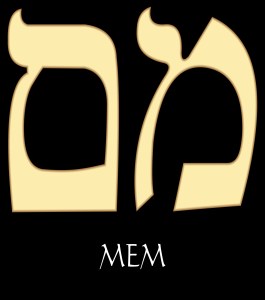
But what do strong waters imply and what are we to learn from this association? In order to get the full impact of Miriam’s role and name, we must first understand WATER from a Hebraic perspective. Mayim (mem, yod, mem) is a word bookended with two mem(s). The Hebrew letter mem is likened to water, a womb (it’s full of water), strength (as in gushing waters), chaos (again like an ocean), and as a preposition “to come forth from or out of”. This letter is one of a handful that has a sofit or final form when it is written at the end of a Hebrew word. A regular mem is open on the bottom, whereas the final form is closed.

    © Shalom3 | Dreamstime.com

Rabbi Michael L. Munk, in his book The Wisdom of the Hebrew Alphabet on the letter mem, states, “The word mayim, water, with its initial and end mem, one open and one closed, depicts the accessible and the inaccessible – an allusion to the waters at Creation.” Thus, mem also illustrates what is revealed and what is concealed. Add to that the letter at the heart of mayim, yod (a hand, work, or deed), and the Creation waters (and all water thereafter) become the same contradiction that we see in Miriam’s name: a work or deed that has the potential for life (strong living waters) or death (bitterness and rebellion).

Water is a place of darkness and yet, great potential in Creation and in a woman’s womb. It can be as powerful and destructive as a roaring ocean and as gentle and satisfying as a trickling stream. It is at the same time both a life giving necessity and a place where chaos and death reign (like at sea). If you read my posts on Crate Trained Believers and The Devouring Lion, you may have noticed the similar imagery. Gentle AND Fierce.

Interestingly, the Hebrew word for mother, em (aleph, mem), also has the pictographic meaning of strong waters.[8] It seems as though the very fact that women have a womb that can fill with life giving waters connects them to Miriam.[9] Females made in the image of Elohim are “mothers” of all living. However, like our sisters Chavah (Eve) and Miriam, we also have the potential to bring chaos and death. (Like a tumultuous ocean.) One must learn to turn life’s bitter unruly waters into sweet waters of refreshing. By the way, this is also something men need to learn as well, for both men and women are revealed in the woman as the wife and bride of the Lamb.

This is the real Biblical portrayal of Miriam, the sister of Moses. She is truly a mother to the Israelites and a leader of her people.[10] Since the force and strength of her name is better understood, does this lend fresh insight about Mary (Miriam), mother of Yeshua? Isn’t it fitting that Yeshua should come forth from a womb such as this? How about the many other “Mary’s” mentioned in the Brit Chadashah (N.T.)? Will their stories speak a little louder the next time you read them?

There has been a tendency for us to forget that the Body needs both masculine and feminine leadership to keep us in balance and to display the whole image of Elohim (God). It is females that bring qualities such as comfort, nurture, protection, and mothering to the Body of Messiah. They are fierce AND gentle. Without these essentials, we raise nothing more than Devouring Lions.

Miriam is a representation of strength, the womb, mercy, prophecy, and praise. The ancient sages recognized the vital role of women in the Exodus in the Babylonian Talmud, Sotah 9b:

“If it wasn’t for the righteousness of women of that generation we would not have been redeemed from Egypt”

The rabbis recognized the very thing examined above: women were the progenitors of Israel’s redemption from Egypt.[11] I hope that you will include Miriam’s Cup in your Seder or even in your weekly Kiddush as a commemoration of her vital role in the Exodus and as a role model to your daughters, sisters, mothers, and wives. But, if this isn’t enough to convince you, there is so much more! In Part II, we will look at how water is associated with the rock in the wilderness, the Holy Spirit, Wisdom, and Pesach.


[2] There is Yocheved, the brave midwives (Puah & Shifrah), Miriam, and Tzipporah. See also footnote 6.

[3] Ex. 15:20

[4] Obviously, the Holy Spirit is what provoked Miriam to do this!

[5] Num. 20:1-2  Then the sons of Israel, the whole congregation, came to the wilderness of Zin in the first month; and the people stayed at Kadesh. Now Miriam died there and was buried there.  (2)  There was no water for the congregation, and they assembled themselves against Moses and Aaron.

[6] D. Hollisa Alewine’s Workbook 5 The Torah Portions Volume 2 –Shemot p.7-21 (2013) offers an interesting perspective on the women of the Exodus and Miriam in particular. If you’re ready to dig deep, buy this series and uncover a multitude of treasures.

[7] Numbers Chapter 12.

[8] See Hebrew Word Pictures by Frank T. Seekins (2003) p. 62

[9] The Hebrew word for womb, racham, ends with the letter mem. This is the same Hebrew word for mercy or compassion. Indeed the watery womb is a place of protection, growth, maturity, and nurture. This word shares the resh and mem with Miriam only adding a chet, which is a fence or boundary that protects.

[10] Micah 6:4  “Indeed, I brought you up from the land of Egypt And ransomed you from the house of slavery, And I sent before you Moses, Aaron and Miriam.

[11] This makes perfect sense considering the “birthing” nature of women.


Categories: Moedim, Women | Tags: , , , , , , , , , , , , , , , | 9 Comments

Blog at WordPress.com.