Posts Tagged With: Love

What Do You Want to Make Today?

Recently, I was looking for a simple Christian teaching comparing the Japanese art of kintsugi with the healing power of the Gospel to share with a Creation Gospel Workbook 4 class. (Email me at kisha@graceintorah.net or creationgospeltrainers@gmail.com to learn about classes.)

© Gualtiero Boffi | Dreamstime.com

In my search, I found a video by a Japanese artist and believer named Makoto Fujimura. Kintsugi is the process where a broken vessel is mended back together with an epoxy mixed with a metal, usually gold, which acts like a glue and a filler, even filling in for a missing piece of pottery. The vessel, once useless in its broken state, is transformed into a unique and beautiful piece of art. Beauty for ashes. That’s precisely what Yeshua does for us. He takes these jars of clay and transforms us into the good gold of the Kingdom. He takes our brokenness, pain, sorrow, and trauma, and through His grace, He transforms these things into a vessel of honor that gives Him glory.

I was so moved by Makoto – maybe as an amateur artist I related deeply with how he teaches the good news – that I watched a few more videos of him. Back in May of 2012, he gave a commencement speech at Biola University. The title is the same as the title of this post:


What do you want to make today?”


This question, which he heard asked by a high school art teacher, was meant to invoke the imagination of students beginning their high school journey. The question was a metaphor. It wasn’t really about physical art, but their lives. As image bearers of the Creator of the Universe, every human being is “creative.” We are “makers,” like our God. Every single day we have a choice about “what we will make.” Will it be love or war? Will we be a peacemaker or one who stirs up strife? We will choose to make something beautiful and beneficial for others, or will we destroy and burn what is around us to ashes? Will we compete with others or cooperate with them? Will we be the hero or the villain? We will choose life or death?

I used to work for a company that had the slogan, “Make a Great Day.” There is no “it” in the sentence. You are not making “it,” you are making “a day,” great. The implication is that a great day is not something that happens “to you”; rather, it is something you choose, something “you make.” Even when bad things happen, or when a day is simply rote and mundane, one has a choice as to how they will “see” it  and how they will react or respond. “What will you make?”

We are so used to just doing what we are expected to do that we get tangled up in things that are not eternal. This is true even in circles of faith because we tend to mirror the earthy realm. The secular world boils down our creative energy to mere usefulness and profitability, assessed through the lens of competition with others. (Who hasn’t seen this occur in the “church?”) This isn’t true creativity, but cunningness. It’s the lie of the serpent. It makes us a taker and user of others, not creative givers and lovers. Mr. Fugimura says that this changes the fundamental question above to, “What can I take from others?” Or, “How little can I do to get the maximum results?”

© Yevhenii Tryfonov | Dreamstime.com

How different these questions are from, “What do you want to make today?” Imagine sitting in an art room filled with blank canvases, brushes, and paint in every possible color at your disposal when you are asked that question. All the “have-to’s” fall away and one’s mind/heart is free to go to an entirely different place where competition transforms into creativity. The jail cell of striving becomes an open field of dreams and new creations. We’ve had some “art days” with our local women and kids – and all, no matter their skill level, have enjoyed them and found them to be cathartic and spiritual experiences.

Creating is therapeutic whether it is music, art, writing, designing, constructing, fashioning, refurbishing, sewing, etc. Adonai fills His people with His Spirit to build His House.[1] But this same gift of creativity can be used for the enemy’s kingdom. Even Believers struggle with the inward war that Paul speaks of in Romans 7. We want to make love, peace, and unity, but often fail, and instead “do” the works of the flesh. A review of Romans 8 is helpful. In Messiah, the Spirit helps our weakness so we can persevere and choose to put to death the works of the flesh, and walk in the freedom of the Spirit of God.

In the video, Mr. Fugimura recounted the events of 9/11 and how a few people chose “to make” vengeance and destruction and death. As I listened, I couldn’t help but to think back to the more recent events of October 7th, 2023 when others made the same horrid choices. He also spoke of the negativity that pervades our culture, which I would say is even worse now than when he gave this commencement speech in 2012.

Knowing that some, perhaps many, choose to use their creative imagination for evil, destruction, and death is depressing. The question, “What do you want to make today?” can seem like an naïve dream when compared to our present reality. But is it?

The brilliant artist and Gospel teacher, Makoto Fujimura says this question is NOT an idealist escape from reality. Rather, it is a quiet resistance against the deadly fears dominating our world today. It’s a refusal to submit to destructive ideologies, and to instead make a grand use of one’s creative imagination.

The creative power given to us by God is capable of inspiring hearts who seek ways to protect and save lives, and develop new ways to lift people from poverty and from oppressive rulers who demand and teach hate and murder. In the end, it is these things, not the evil wrought by man, that will go on into eternity. The devices or imaginations of evil hearts will not go on. ALL things will be renewed with the kintsugi of the Master Artist.

Meanwhile, we can choose to remake what is broken, to build new things for the glory of God and His Kingdom. The Spirit of the Living God resides within us, and His transformative power has not been cut short by the mere antics of man’s fleshly nature. Maybe you don’t know how to use a paint brush or even draw a good stick figure. You are still creative and have a God given imagination! Your art doesn’t have to be on canvas or in the form of poetry, song, or music.

The greatest art of all is LOVE. But to be an artist, a maker, a creator, or a master architect one must practice their trade. Not every piece will be perfect. In fact, more will end up in the trash heap of trial and error than on public display. Sometimes things need to be erased or painted over. But like kintsugi, do-overs, things remade, can be far more valuable and glorious than the original. And if it weren’t for those mistakes or brokenness, or traumas, the piece wouldn’t hold any value at all. This is the beauty of Grace and the work of love.

Many of my personal paintings have an “underpainting” beneath my final work. Sometimes it is the mistake that inspired the new work that I am happy to display. We shouldn’t feel condemnation for what came before. Messiah is the greatest artist of all, and you are one of His vessels. He can transform your feeble, childish brush strokes into a masterpiece. In fact, He promises to do so![2]

No matter who you are, today you can choose to make something beautiful. You can “make a great day.” Even a smile at a stranger can lift their spirits and make them feel valued. We can choose to be a maker and not a taker. We can choose to beautify what others have broken, left for rot, or destroyed.

It’s all a matter of perspective. Sight is the sense for the fourth month of Tammuz, which is what leads to transformation. “I was blind, but now I see.” A transformation is a thorough or dramatic change in form or appearance. One’s speech, thought, walk, and vision have been radically altered (senses of the first four months). That’s what the spring feasts, culminating on Shavuot at the Mountain are meant to do. They spiritual recreate us every year, transforming and conforming us more and more into the image of Messiah. This enables us to go through the hot, dry summer months without making the same mistakes as our ancestors.

Another way of saying this is “focus.” What are you focusing on? One’s focus requires great creative energy. Take every thought captive to Messiah. And then ask yourself:


What do I want to make today?


[1] For example, see Exodus 35:30-35. Also consider building Adonai’s House is also building up His people, and expanding His Kingdom.

[2] “I am sure of this very thing—that He who began a good work in you will carry it on to completion until the Day of Messiah Yeshua.” (Philippians 1:6, TLV)

Categories: Creation Gospel, Ethics, new moon | Tags: , , , , , | 5 Comments

The Unforgiving Servant

The vast mercy, grace, and abounding chesed (lovingkindness) of our Father and King culminates in His willingness to forgive. So, as recipients of His lavish love, why do we often prefer vengeance, pay back, and punishment when wrongs have been committed against us? The parable of the unforgiving servant demonstrates this truth perfectly; and yet, I wonder if we really can see just how much we resemble this servant in our attitudes towards others who have hurt, wronged, or insulted us.

© Kevin Carden | Dreamstime.com

The more the Father has had me revisit this parable and other related passages, the more I am convicted when I look into the perfect law of liberty and see how distorted my reflection is in comparison to the Master. My nephesh (flesh) desires vindication, damages, and justice when I have been wronged, slighted, misunderstood, hurt, taken advantage of, misrepresented, slandered, wounded, stolen from, or even when I am simply offended. It feels like righteous anger, but is it?

When I think about what Messiah endured for lost, unrepentant, and even degenerate souls, my anger dissolves into a puddle of shame and conviction. Can I embody this kind of mercy, empathy, and forgiveness towards those who have deeply wounded me or one of my children? In my flesh, it is futile. But praise Adonai, we are given His Spirit, so the impossible IS possible. Hear the parable from the Literal Standard Version[1]:

Matthew 18:21-35 (LSV)

21 Then Peter having come near to Him, said, “Lord, how often will my brother sin against me, and I forgive him—until seven times?”

22 Jesus says to him, “I do not say to you until seven times, but until seventy times seven.

23 Because of this was the kingdom of the heavens likened to a man, a king, who willed to take reckoning with his servants,

24 and he having begun to take account, there was brought near to him one debtor of a myriad of talents,

25 and he having nothing to pay, his lord commanded him to be sold, and his wife, and the children, and all, whatever he had, and payment to be made.

26 The servant then, having fallen down, was prostrating to him, saying, Lord, have patience with me, and I will pay you all;

27 and the lord of that servant having been moved with compassion released him, and the debt he forgave him.

28 And that servant having come forth, found one of his fellow-servants who was owing him one hundred denarii, and having laid hold, he took him by the throat, saying, Pay me that which you owe.

29 His fellow-servant then, having fallen down at his feet, was calling on him, saying, Have patience with me, and I will pay you all;

30 and he would not, but having gone away, he cast him into prison, until he might pay that which was owing.

31 And his fellow-servants having seen the things that were done, were grieved exceedingly, and having come, showed fully to their lord all the things that were done;

32 then having called him, his lord says to him, Evil servant! All that debt I forgave you, seeing you called on me,

33 did it not seem necessary to you to have dealt kindly with your fellow servant, as I also dealt kindly with you?

34 And having been angry, his lord delivered him to the inquisitors, until he might pay all that was owing to him;

35 so also My heavenly Father will do to you, if you may not forgive each one his brother from your hearts their trespasses.”


If you have been deeply wounded, hurt, manipulated, oppressed, or worse by another person, Peter’s query of forgiving up to seven times seems very generous. How many times does God expect one to “put up with” a person who continues to transgress against them? Isn’t this actually dangerous in some cases?

As a quick aside, consider that forgiveness is NOT a feeling. Forgiving someone does NOT mean that one must put themselves at risk physically, mentally, emotionally, or financially. Forgiveness doesn’t mean you have to give the “weapon” back to the one who assaulted you. This fallacy of belief prevents a lot of people from truly forgiving, because it seems to ask too much. True forgiveness is choosing to release the debt another person owes you. It doesn’t erase what happened. It doesn’t condone their behavior or words. You don’t have to become bedfellows with your betrayer (or even have warm, fuzzy feelings about them), but you do have to forgive the debt they owe you. Let it go and entrust them to Adonai. This releases you from the “torturers,” which will be explained later in this post.

Seven, being the number of completion and rest, was a reasonable, and even a Biblical, deduction made by Peter in regards to forgiveness. But Messiah says something shocking to our human sensibilities in response – we are to forgive our brothers/sisters up to seven times seventy! Rather than this being a clever way of saying 490, Yeshua is hinting back to a story that involved brothers and unforgiveness. When we fail to forgive, we are actually going the “way of Cain.”[2]


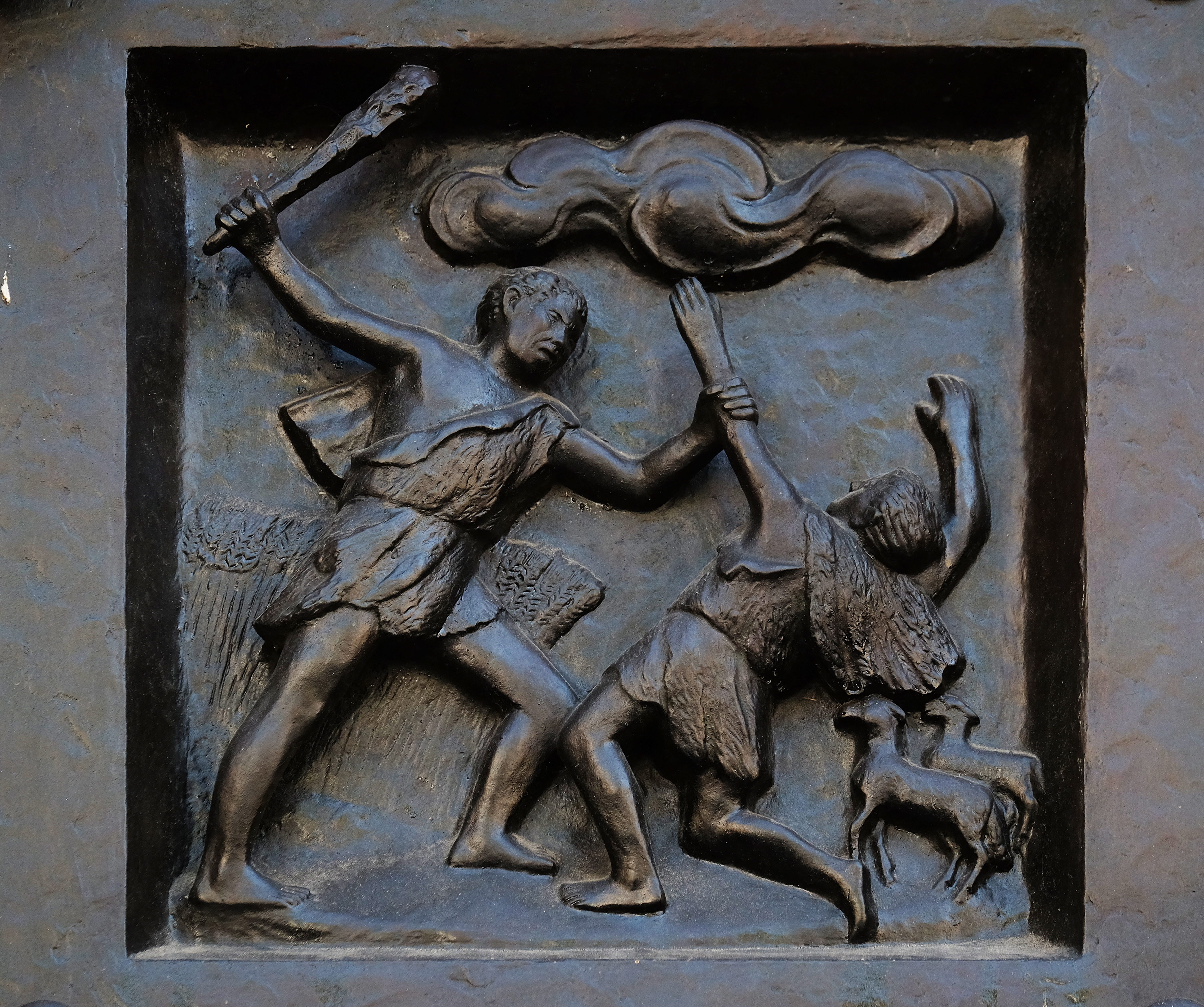
Cain & Lamech

In Genesis 4, Cain was offended and hurt that Adonai accepted the offering of his brother Abel, but not his. It is noteworthy to point out that by faith Abel offered firstfruits, his best, which is a better sacrifice.[3]  Though Cain also made an offering, it was not from his firstfruits. He cared more about himself than his brother. Cain’s hurt turned into jealous anger towards his brother. Adonai warned him that he needed to master these emotions or sin would overtake him, and encouraged him that if he did well (in the future), it would go well with him too. But Cain did not listen. He didn’t “hear” the Word from Adonai and his anger resulted with the first murder in human history. Afterwards, Adonai asked Cain:

Genesis 4:9-10 (TLV) 9 “Where is Abel, your brother?” “I don’t know,” he said. “Am I my brother’s keeper?”10 Then He said, “What have you done? The voice of your brother’s blood is crying out to Me from the ground.”
© Zatletic | Dreamstime.com

Rather than repenting for murdering his brother, Cain smugly replies, “Am I my brother’s keeper?” In the eyes of Adonai, yes, you are your brother’s keeper! In Hebrew, keeper is הֲשֹׁמֵ֥ר, ha-shomer, from shamar, a verb meaning to watch, to keep, to preserve, to guard, to be careful, to watch carefully over.

This is true for you and me too. We should keep, guard, and carefully watch over our brothers and sisters despite how we feel about them. What is most telling about the character of Adonai in this episode is that despite Cain’s unwillingness to repent, God still chooses to exercise long-suffering (patience) towards him. Even though Cain was only concerned about himself and only had remorse for the consequences/punishment of his actions, God protected him.

Genesis 4:13-15 (TLV) 13 Cain said to Adonai, “My iniquity is too great to bear! 14 Since You expelled me today from the face of the ground and I must be hidden from Your presence, then I will be a restless wanderer on the earth—anyone who finds me will kill me!” 15 But Adonai said to him, “In that case, anyone who kills Cain is to be avenged seven times over.” So Adonai put a mark on Cain, so that anyone who found him would not strike him down.

There are several ways the sevenfold vengeance is interpreted. Some suggest that this was a reference to seven generations, implying that the slayer of Cain should not only be punished in his own person, but in his posterity, even unto seven generations (Targum Onkelos). Others like Rashi and Ibn Ezra interpret it to mean that God deferred his vengeance on Cain unto seven generations, and at the end of them took vengeance on him by Lamech (Gill).[4] Whichever way one views it, in the seventh generation, Cain’s grandson Lamech says something interesting:

Genesis 4:23-24 (JPS) 23 And Lamech said unto his wives: Adah and Zillah, hear my voice; ye wives of Lamech, hearken unto my speech; for I have slain a man for wounding me, and a young man for bruising me; 24 If Cain shall be avenged sevenfold, truly Lamech seventy and sevenfold.

The phrase seventy and sevenfold is what Messiah said in Matthew 18, but the difference is striking. While Cain and Lamech demonstrated lack of concern for those whom they had wounded or killed, were never noted as being repentant, and were very “I” centered, Yeshua used these same numbers to highlight patience and radical forgiveness towards one that has transgressed. Instead of sevenfold vengeance or vindication, one lays down this right to bring about something far more profound: repentance.

“Or do you think lightly of the riches of His kindness and tolerance and patience, not knowing that the kindness of God leads you to repentance?” (Romans 2:4, NASB)

In this sense, Cain and Lamech represent the elder, firstborn (like Esau), who is one’s flesh (old nature or old man.) Flesh can never please Adonai, for the mind set on the flesh is death.[5] Knowing this, the chesed, mercy, and compassion of God reserves His wrath, and even immediate justice, because above all, His desire is for no one to perish.[6]

In the parable in Matthew 18, the “King” has compassion upon the servant when he pleads for “patience,” which is longsuffering. He forgives a debt so enormous that the man would never have been able to repay it in his lifetime. Instead of expressing gratitude through the trait of chesed (lovingkindness given to one who doesn’t deserve it), the man immediately finds a fellow slave who owes him a tiny debt and grabs him by the throat demanding repayment.

If we think we aren’t just like 
this servant, we are lying to ourselves.

Shepherd

© Maria Dryfhout | Dreamstime.com

The role of “shepherd” might not appear to be connected to these stories at first glance. But recall that Abel was a shepherd and Yeshua’s hint back to Genesis 4 would have been apparent to a first century hearer. Perhaps this is why Yeshua prefaces the command to forgive one’s brother and the parable of the unforgiving servant with a message about shepherding:

Matthew 18:10-14 (NASB) 10 “See that you do not despise one of these little ones, for I say to you that their angels in heaven continually see the face of My Father who is in heaven. 11 [For the Son of Man has come to save that which was lost.] 12 What do you think? If any man has a hundred sheep, and one of them has gone astray, does he not leave the ninety-nine on the mountains and go and search for the one that is straying? 13 If it turns out that he finds it, truly I say to you, he rejoices over it more than over the ninety-nine which have not gone astray. 14 So it is not the will of your Father who is in heaven that one of these little ones perish.”

A wayward sheep is one that has wandered off from the righteous Way, like Cain. While God certainly cares about the pain and devastation that we experience at the hands of others, He is also concerned with “finding” the perpetrators who have went astray. His will is for them to repent and be reconciled to Himself and the other sheep. When we are told to pray for our enemies, this should be our prayer for them too.[7] It is the heart of our King. We are not to “despise” one of these “little ones,” as Messiah, the Good Shepherd, calls them.

Matthew 5:43-48 (NASB) 43 “You have heard that it was said, ‘YOU SHALL LOVE YOUR NEIGHBOR and hate your enemy.’ 44 But I say to you, love your enemies and pray for those who persecute you. 45 so that you may be sons of your Father who is in heaven; for He causes His sun to rise on the evil and the good, and sends rain on the righteous and the unrighteous. 46 For if you love those who love you, what reward do you have? Do not even the tax collectors do the same? 47 If you greet only your brothers, what more are you doing than others? Do not even the Gentiles do the same? 48 Therefore you are to be perfect, as your heavenly Father is perfect.”

This is not easily accomplished, and is impossible without the Spirit of the Living God residing in one’s heart. God knows this all too well. Longsuffering or patience means to “bear a burden.” It is a burden to bear the sins of others. It is afflicting to bear the emotional weight of our own pain. But this is precisely what Messiah did for us. And He tells us: “If anyone wishes to come after Me, he must deny himself, and take up his cross and follow Me (Mt. 16:24).

According to 1 Corinthians 13:1-3, one can speak the tongue of angels, know all mysteries and knowledge, have faith to move mountains, give all of their money to the poor, willing give their body over to be burned, but if they don’t have love – all of it, even their faith, is useless. This passage goes on to list the attributes of love. The first listed trait is patience. I don’t think this is a coincidence.

Webster’s 1828 defines patience as “the suffering of afflictions, pain, toil, calamity, provocation or other evil, with a calm, unruffled temper; endurance without murmuring or fretfulness. The act or quality of waiting long for justice or expected good without discontent. The quality of bearing offenses and injuries without anger or revenge.”

Are these the traits of a good shepherd? I certainly see Yeshua the Messiah in each aspect![8] Many times I’ve witnessed people demean, condemn, shame, and harass other Believers for not believing, thinking or doing exactly what they do, and when confronted about their behavior, rather than repent, they say, “I’m just speaking the truth in love.” No. They aren’t. Love does not behave that way. Period. The phrase “speaking the truth in love,” comes from Ephesians 4:15. The context of that chapter is about unity in the Body and “growing up,” maturing and becoming like Messiah. It begins with:

Ephesians 4:1-3 (NASB) 1 Therefore I, the prisoner of the Lord, implore you to walk in a manner worthy of the calling with which you have been called, 2 with all humility and gentleness, with patience, showing tolerance for one another in love, 3 being diligent to preserve the unity of the Spirit in the bond of peace.

Ephesians 4 concludes with a few reminders about anger. “Be angry, but sin not.” The furious conduct I see on social media must make Adonai sick to His stomach (figuratively) as He continues to suffer on our wayward behalf. Most believers do not approach their fellowman with humility, gentleness, patience, or tolerance. Instead, they do what is right in their own eyes and seethe with anger, aggression, sarcasm, and passive aggressive behavior and say that they are “speaking the truth in love.” But their anger is dangerous. It has deluded many, and has its root in the way of Cain. Anger, according to verse 27, gives the enemy a “place” in our lives.

Ephesians 4:31-32 (NASB) 31 Let all bitterness and wrath and anger and clamor and slander be put away from you, along with all malice. 32 Be kind to one another, tender-hearted, forgiving each other, just as God in Christ also has forgiven you.

The next time you feel the need to “speak the truth in love,” ask yourself if you can do so while also being kind, tender-hearted, and without bitterness, anger, clamor, and malice. If you are angry, have been hurt, or are bitter toward a particular group, denomination, sect, or person, you are part of the problem. The rotten fruit that comes forth causes more damage and gives the impression (because you are claiming to be and image bearer of Adonai) that He is like you – when He is NOT.

Yonah

Forgiveness is major theme in the Book of Jonah that is read during Yom Kippur. In many ways, the days of counting the omer mirror the days of repentance during the month of Elul and the High Holy Days. Have you ever wondered why Jonah is read on the holiest day of the year? Jonah means dove (the bird), a figure of the Holy Spirit and carrying the Seed of the Good News.

© Biblebox | Dreamstime.com


But Yom Kippur is also the Day of Judgment. It reflects the question of day six of creation – are you a man (the image of Elohim) or are you a mere beast of the field (image of the beast)? Many think that Jonah is read on this day to represent a nation repenting, and it is. But there is a deeper reason that relates directly to the parable of the unforgiving servant and even the stories of Cain and Lamech. Though Jonah knew what He was called to do, he didn’t want to obey, because he despised the Ninevites. Nineveh was the capital city of Assyria – an aggressor of Israel and Judah. Jonah tried to run, but that landed him in the belly of a great fish. Jonah cried out the LORD in his distress and God delivered him; the fish vomited him out on dry land (a hint back to day 3).

Afterwards, Jonah reluctantly went and preached to Nineveh with great success. The people listened and repented, so God relented and didn’t destroy the city. Their repentance and God’s pardon infuriated Jonah. Even though he had enjoyed the mercy and grace of God, he resented it when God extended it to his enemies. The final chapter of Jonah is vital for every Believer to wrestle with – and every Yom Kippur we need to know if our heart is aligned with Adonai or has become like Jonah, who would rather die than see God show mercy and forgive one’s adversary.

Jonah 4:1-11 (NASB)

1 But it greatly displeased Jonah and he became angry.

2 He prayed to the LORD and said, “Please LORD, was not this what I said while I was still in my own country? Therefore in order to forestall this I fled to Tarshish, for I knew that You are a gracious and compassionate God, slow to anger and abundant in lovingkindness, and one who relents concerning calamity.

3 Therefore now, O LORD, please take my life from me, for death is better to me than life.”

4 The LORD said, “Do you have good reason to be angry?”

5 Then Jonah went out from the city and sat east of it. There he made a shelter for himself and sat under it in the shade until he could see what would happen in the city.

6 So the LORD God appointed a plant and it grew up over Jonah to be a shade over his head to deliver him from his discomfort. And Jonah was extremely happy about the plant.

7 But God appointed a worm when dawn came the next day and it attacked the plant and it withered.

8 When the sun came up God appointed a scorching east wind, and the sun beat down on Jonah’s head so that he became faint and begged with all his soul to die, saying, “Death is better to me than life.”

9 Then God said to Jonah, “Do you have good reason to be angry about the plant?” And he said, “I have good reason to be angry, even to death.”

10 Then the LORD said, “You had compassion on the plant for which you did not work and which you did not cause to grow, which came up overnight and perished overnight.

11 Should I not have compassion on Nineveh, the great city in which there are more than 120,000 persons who do not know the difference between their right and left hand, as well as many animals?”

Jonah understood God’s mercy and compassion – that’s why he didn’t want to go to Nineveh. He knew God would be gracious and forgiving if they repented. Even a successful prophet of Adonai can prefer death over life. Three times Jonah says this is his preference. Notice how many times anger is mentioned. Anger is an emotion of the soul/nephesh/flesh, and is NOT of the Spirit of Adonai. This makes Jonah’s name quite ironic. One who should typify the Ruach and Good News, chose death (the flesh).

“For the mind set on the flesh is death, but the mind set on the Spirit is life and peace, [7] because the mind set on the flesh is hostile toward God; for it does not subject itself to the law of God, for it is not even able to do so, [8] and those who are in the flesh cannot please God.” (Romans 8:6-8 NASB)

When we hold resentment, bitterness, grudges, and contempt against other human beings (even if they have deeply wounded us by unspeakable means), we are like Jonah, Cain, and Lamech. Jonah wanted to sit back and watch Nineveh burn to the ground. Isn’t that often our desire towards our enemies? He even built himself a sukkah in hopes that Adonai would change His mind and smite them all. A true sukkah is a covering akin to love; it conceals the sins and faults of others and brings reconciliation and unity. Rather than having compassion for those who “know not what they are doing,” Jonah was more upset over a plant dying because it gave him physical comfort.

The Release

© Psychoshadowmaker | Dreamstime.com

What an awful prison Jonah made for himself. How many jail cells have we built and locked ourselves in? Humans are stubborn. It’s easy to read these stories and see “their” problem. But can we see that these examples were written for our own correction (mussar)? That we embody their selfish, ungrateful, and self-righteous attitudes? I recently listened to a Bema podcast with Marty Solomon and Brent Billings called “The Key to Your Own Prison.” Near the forty-two minute mark, they point out a nuance with the Greek pronouns of the following verse in Matthew 18:

“And his lord, moved with anger, handed him over to the torturers until he should repay all that was owed him.” (Matthew 18:34, NASB)

Did the King who was compassionate and gracious revoke His forgiveness? Does God go back on His Word? Did he forgive an insurmountable debt and then change His mind and have “torturers” wring every last cent from the first slave? If so, that’s a terrifying god. And yet, that’s how most of us read the story, because the truth is that this IS something we would do to, and desire for, someone who was ungrateful for our kindness. But the Greek showcases another possibility that does not compromise the nature of Adonai. What if (and the Greek easily allows this) the Lord handed the first slave over to the torturers until he repaid all that the second slave owed him?

In other words, what if the King required the first slave to be “tortured” until he forgave the second slave’s debt? The next verse implies this too: “My heavenly Father will also do the same to you, if each of you does not forgive his brother from your heart.” When we are in a state of unforgiveness, who is imprisoned? Who is tortured, embittered, and in turmoil? The one we haven’t forgiven, or us? Marty Solomon said we are “given the key to our own prison,” but will we use the key (forgiveness)?

The word “torturers” conjures visions of the Greek god Hades and his hellhound Cerberus. But the Greek word actually means a prison keeper or jailer. Unforgiveness is a jailer, and forgiveness opens the door to the cell. God is not fickle or sadistic. He is not Hades. His attributes of mercy haven’t changed. The main reason we struggle so much with forgiving with the willingness of our Master is because we are afraid. We fear that our oppressor or aggressor is not going to get what they deserve (Jonah).[9] We are afraid that our pain doesn’t matter to God, but it does. We hurt so bad that we no longer can see the “other” as human. We deem them unworthy of God’s grace (the height of haughtiness, which blinds us to the truth).

But those are all feelings. Fear is a liar. The truth is that Adonai will not let the guilty go unpunished. But that punishment will be perfect. It will not be too little or too much. His justice is righteous. It is precisely middah keneged middah – measure for measure. Thus, we can freely forgive, have patience and compassion, and entrust them to Adonai.

Exodus 34:6-7 (TLV) 6 Then Adonai passed before him, and proclaimed, “Adonai, Adonai, the compassionate and gracious God, slow to anger, and abundant in lovingkindness and truth, 7 showing mercy to a thousand generations, forgiving iniquity and transgression and sin, yet by no means leaving the guilty unpunished, but bringing the iniquity of the fathers upon the children, and upon the children’s children, to the third and fourth generation.”

Erekh Apayim

There are two Hebrew words that comprise the English word for longsuffering. Literally, it means a long nose (nostrils). This is an idiom for taking in a long deep breath. It is a pause, a refrain from the short pants and flaring nostrils that anger invokes. Physically, taking long deep breaths calms one’s heart rate, relieves stress, and can even alleviate anxiety. In the west, when we say, “I need a breather,” it refers to removing ourselves from a stressful situation so we don’t make a hasty decision born from anger, frustration, exhaustion, or panic. We need a break, a reset.

When the Bible refers to God as having a long nose or nostrils, it means that it takes a long time for Him to take in a breath. He is calm and patient with us, and that means He suffers on our account when we are wayward and obstinate. Breath is associated with life, not death.  God breathed the breath of life into the nostrils of man and he became a living soul. Adonai’s deep, longsuffering breath is also what allows our life to continue despite our wickedness, rebellion, and sin. Praise His Holy and Merciful Name! On the other hand, anger’s rapid, short breaths figures the opposite.

When being tested, try some deep breathing exercises to separate yourself from your emotions, and to realign yourself with the Spirit of God. Pray the Lord’s Prayer, which reminds us to forgive the debts and trespasses of others because Adonai has forgiven us. This also reminds one of our proper place and position before the King – that is a place of humility and submission.

Matthew 6:9-13 (NASB) 9 Pray, then, in this way: “Our Father who is in heaven, Hallowed be Your name. 10 Your kingdom come. Your will be done, On earth as it is in heaven. 11 Give us this day our daily bread. 12 And forgive us our debts, as we also have forgiven our debtors. 13 And do not lead us into temptation, but deliver us from evil. For Yours is the kingdom and the power and the glory forever. Amen.”

In closing, I leave you with Graham Cooke, who has an excellent podcast episode on patience called “The Patience Advantage.” In it, he outlines patience as fruit that:

  • Guards us from negatives.
  • Acts as an entry point to encounter with God.
  • And is a critical component in walking from where we are today, into the outcomes God has planned for our tomorrows.

As you count the omer this year, may the leaven of unforgiveness be replaced with the New Grain, the New Bread that is our Messiah who was stripped, beaten, spit upon, mocked, and nailed to a tree, and instead of demanding justice or calling down fire from heaven upon the guilty, He said, “Father, forgive them; for they do not know what they are doing.”


“Sooner or later all the people of the world will have to discover a way to live together in peace, and thereby transform this pending cosmic elegy into a creative psalm of brotherhood. If this is to be achieved, man must evolve for all human conflict a method which rejects revenge, aggression and retaliation. The foundation of such a method is love.”  Martin Luther King Jr. – Acceptance Speech, on the occasion of the award of the Nobel Peace Prize in Oslo, 10 December 1964


[1] https://biblehub.com/lsv/matthew/18.htm

[2] Jude 1 – read the attributes/traits/actions of those on this path.

[3] Firstfruits require faith because they are the first to come up from the ground or be birthed in the flock. There is no earthly guarantee of more to come. Hebrews 11:4 (NASB) By faith Abel offered to God a better sacrifice than Cain, through which he obtained the testimony that he was righteous, God testifying about his gifts, and through faith, though he is dead, he still speaks.

[4] https://www.biblestudytools.com/commentaries/gills-exposition-of-the-bible/genesis-4-15.html

[5] Romans 8:6-8 (NASB) For the mind set on the flesh is death, but the mind set on the Spirit is life and peace, [7] because the mind set on the flesh is hostile toward God; for it does not subject itself to the law of God, for it is not even able to do so, [8] and those who are in the flesh cannot please God.

[6] John 3:16 (NASB) “For God so loved the world, that He gave His only begotten Son, that whoever believes in Him shall not perish, but have eternal life.”

[7] See also Luke 6:27-36.

[8] As a contrast, review the actions of wicked shepherds and “fat” selfish sheep in Ezekiel 34.

[9] Later, Nineveh reverted to their wayward ways and God destroyed the city. It wasn’t in Jonah’s timing, but according to the Sovereign King of Universe and the future actions of the Assyrians.


Categories: Ethics, Mussar | Tags: , , , , , , , , , , , , , , | 8 Comments

The Perfect Bond of Unity HNR

© Bimarto Sasri | Dreamstime.com

In preparation for Elul and the Women of Valor conference last weekend, I delivered a message called “The Perfect Bond of Unity.” That message was both audio and video recorded, and I will share them soon on Grace in Torah. But today, I had the pleasure of joining Dr. Deb Wiley Gold and Miriam Stalsworth on their Hebrew Nation Radio program: Faith in Focus. We discussed the month of Elul and the perfect bond of unity and had a lively discussion.

You can listen here:

Categories: Moedim, Mussar, new moon | Tags: , , , , , , , | 7 Comments

Submission and Authority Part I

This particular series began as answers to emails, so if they read a little odd, that’s why. (: 

Ezer Kenegdo and Submission (1 Peter 3:1)

How do we reconcile the role of the ezer kenegdo as a helper 
that opposes with 1 Peter 3:1?

“Wives, likewise, be submissive to your own husbands, that even if some do not obey the word, they, without a word, may be won by the conduct of their wives.”

© Wavebreakmedia Ltd | Dreamstime.com

One of the points of proper Biblical hermeneutics is called “The Synthesis Principle.” This method explains that the best interpreter of scripture is scripture itself. A passage must be examined in relation to its immediate context (the verses surrounding it), its wider context (the book it’s found in), and its complete context (the whole Bible). The Bible does not contradict itself. In other words, good Bible interpretation relates any one passage to the total content of scripture. This careful process ensures that one has the “whole story.” This lessens the possibility of someone taking a verse or verses out of context to make them fit into a biased paradigm or a preconceived doctrinal framework.

Does submission mean never questioning and always agreeing or going along with another person or authority? Or does submission mean having a heart that is willing to yield to another person out of love and respect? Which type of submission does the Bible teach?

The context for the verses in chapter 3 begins back in chapter 2. This is why Peter begins with the Greek adverb homoios, which means, “likewise/similarly/so.” He’s making a comparison. The second part of chapter 2 deals with general submissiveness to an authority. The character of those that follow the true G-d of Israel should be marked by good behavior or “well-doing” (1 Pet. 2:15). Peter’s discourse on this begins with the directive to “submit yourselves to every ordinance of man for the Lord’s sake…” (1 Peter 2:13) In other words, we (men and women) are to be obedient to the authorities that govern us.

If we are to submit to every ordinance of those that govern us, what do we do when those ordinances oppose the Word of YHWH? Is Peter saying to submit anyway— no matter what? If we answer in the affirmative, there are many scriptural examples that must be ignored or redefined with some pretty fantastic theological gymnastics, and one of those examples is from Peter himself!

“But Peter and the other apostles answered and said: “We ought to obey God rather than men.” (Acts 5:29)

Peter was not double minded. He was discerning, Spirit-filled, and used plenty of common sense in his application of the Torah as he taught others. A heart that is set on serving and loving YHWH will go the distance to be a good witness, a loving neighbor, and even a good citizen. But, that doesn’t make a servant of the Most High a doormat for wicked tyrants. Nor does it mean that one must submit to evil decrees, governors, headships, or kings. While a child of YHWH shouldn’t be known for being rebellious, sometimes rebellion is necessary in order to be obedient! That may sound like an oxymoron, but there are plenty of examples of this in the Bible.

Consider the midwives that rebelled against Pharaoh’s decree to kill the male Hebrew babies. Or, Moses’ parents that hid him as a child in spite of Pharaoh’s decree. Or, Abigail going behind her husband’s back to meet David. Or, Daniel praying to/petitioning YHWH even though it broke the law of the Medes and Persians. Or, the Maccabees rebelling against the Seleucid rulers. Or, the disciples ignoring the Sanhedrin’s authority and mandate to not preach in the name of Yeshua.

Obviously, there is a HUGE difference between outright rebellion and opposing the laws of men that are contrary to the Word of YHWH. The Scriptures are clear on this. We are to submit to those in authority over us because YHWH is the one that placed them in these positions in the first place. Disagreeing with or disliking the way a government operates or rules isn’t rebellion. If these authorities do not force one to abandon the Law of G-d, then one should submit to their authority. However, YHWH is not a sadist. He in no way expects one to obey laws or decrees that are contrary to His Word, knowing it will bring curses or severe consequences. If the government demands you kill your child or desecrate His Temple, you ought to obey YHWH rather than men. Otherwise, you are in outright rebellion to YHWH.

Peter relates these thoughts to “wives, be submissive to your husbands.” Wives are to submit in order that an unbelieving or disobedient husband may become convicted by their chaste conduct, behavior, and conversation. People that use this verse as a blanket statement for women to submit – no matter what – fail to point out the context. Peter is referring to an unbelieving or disobedient husband. Sadly, many equate submission to never questioning or disagreeing with the man. But, this isn’t what Peter says.

Disagreeing with or questioning an authority, ruler, king, or even YHWH is NOT rebellion, nor does it negate submission. You might not understand, agree, or like a certain Torah commandment, but you can submit and obey out of reverence for YHWH. You are even free to question Him and ask, “why?” He may or may not answer, but at least we can rest in the fact that He is perfect and infallible. We can trust Him completely.

Humans, however, are fallible, even those in authority. A man (or other authority) that will not be questioned or counseled has a major issue with pride (which is rooted in ungodly fear.) They are not YHWH. They need accountability. A man that believes he is the mediator between his wife and YHWH has grossly misunderstood Biblical authority and submission.

To assume that a man’s actions, words, or decisions cannot be questioned by a woman (especially one’s other half/wife – the one that should know him best) is mind-boggling. Absolute power corrupts absolutely. YHWH placed checks and balances to ensure that all people, men and women, have culpability.

Not performing an ordinance, request, or law of an authority that violates YHWH’s laws is NOT rebellion. In fact, it is actually submitting to an even higher authority — YHWH. This is true for husbands and wives too. If a husband directs his wife to violate a commandment of YHWH, whom should she obey? Obviously, I’m not condoning an attitude of strife, bitterness, or hatred towards a wayward spouse. There are wrong ways and right ways to deal with the most important human relationship on earth. We can be so right that we are wrong. The way we speak to others — especially our spouses— DOES matter greatly. Nevertheless, we need to obey YHWH and not man. We must prayerfully consider how to approach one another in humility and love.

With YHWH’s help, one can oppose their spouse when they are wrong. In fact, we SHOULD oppose our spouses when they are wrong. This is a big part of what marriage is about. We learn and grow together as ONE flesh. Iron sharpens iron. If both spouses are believers and serving YHWH, then this is the ideal. Biblical submission between humans is not a weaker party serving a higher or stronger party. Submitting to one another is an act of service and is expected by both men and women. We are here to SERVE one another as Messiah served us.

But they kept silent, for on the way they had discussed with one another which of them was the greatest. Sitting down, He called the twelve and said to them, “If anyone wants to be first, he shall be last of all and servant of all.” (Mark 9:34-35)

YHWH gave both men and women the capacity to think and reason. The motives of our hearts will determine how we view, interpret, and act upon the many scriptural examples of biblical submission and servanthood. If we have a relationship where there is complete trust and no fear, but real respect and love, then a verse like this won’t throw us for a loop or cause us to wonder about our “proper role.”

A man and wife will seek to please and serve one another in earnest. There is no “power” struggle because respect and love reside at the heart of the marriage, which casts out fear (pride). When issues do arise, they are dealt with peaceably. When one is called out for disobedience to the Word or for a poor decision, there is no fear that someone will get hurt. The guilty party knows that the correction comes from a place of great love and it is received as divine instruction. When a person feels loved (as a woman) or respected (as a man), submission is natural. No one must tell you to “submit to one another.” (Eph. 5:21)

But, what about Ephesians 5:22-33?

Wives, be subject to your own husbands, as to the Lord. (Eph. 5:22)

This plucked verse seems to be about women being submissive to their husbands. At least that’s why this passage is usually quoted. Rarely is it used to teach Paul’s main idea. Paul claims that the entire point of his discourse is to show us a mystery. In other words, he is using the natural institution of marriage to teach something spiritual about Messiah and His assembly:

This mystery is great; but I am speaking with reference to Christ and the church. (Eph. 5:32)

       © William Wise | Dreamstime.com

Marriage is used as a parable for Messiah and His Body (Assembly). The most intimate relationship on earth between a man and woman is meant to teach us about our relationship with the Messiah. No marriage is perfect and therefore cannot properly reflect this reality. Yet, we can imagine it. We can also strive for this great intimacy not only with Messiah but also within our own marriage covenants. The “how to do this” is the real question and is the reason for so many marriage self-help books, counselors, and retreats.

The answer is found in love and respect. We just don’t know how to “DO” love and respect very well.

Nevertheless, each individual among you also is to love his own wife even as himself, and the wife must see to it that she respects her husband. (Eph. 5:33)

Paul reiterates this in Colossians:

Wives, be subject to your husbands, as is fitting in the Lord. Husbands, love your wives and do not be embittered against them. (Col. 3:18-19)

People get hurt in marriage relationships when they don’t feel loved or respected. Thus, the human tendency is to build walls around the heart to protect these wounds. Symptoms of this malady include indifference, contentiousness, nagging, silence, argumentativeness, apathy, jealously, suspicion, depression, oppression, aggression, and even abuse. The more one experiences these emotions and actions from their spouse, the thicker the walls around one’s heart becomes.

Sometimes past hurts from familial or other personal relationships are brought into the marriage covenant, which can incite the emotions and actions above, creating a vicious cycle. Nearly all relationships suffer from this condition and will continue to be a problem until deliverance has taken place. We live in a fallen and broken world that is in desperate need of the Messiah of Israel. Each of us has areas that need improvement or that needs to be completely rebuilt upon the Rock (YHWH).

If marriage is supposed to mirror our relationship with the King of the Universe, then your bond with your spouse is designed to build up and bind up these wounds, so that you can walk as ONE overcoming flesh. But this cannot happen without TWO participants that are willing to get completely naked with one another emotionally, mentally, spiritually, and physically. This is real Biblical marriage serving YHWH as ONE flesh. It requires the complete vulnerability of both the man and the woman.

But, this side of the World to Come, we each have a common enemy: the nephesh/flesh. Since the fall in Gan Eden, our flesh would much rather run and hide than deal with nakedness, shame, and vulnerability. Nephesh hates exposure. It despises looking at “the man (woman) in the mirror.” It’s so much easier to look outward than inward. The fig leaves of denial, blaming, shaming, and oppressing others are preferred to the death of the animal (human) flesh that YHWH provides for those that SUBMIT to Him.

A man should love a woman as Messiah does, but he isn’t perfect. He will fail. A woman should respect and reverence her husband like the Assembly does Messiah, but a woman is also human. She will fail. We must have mercy, patience, and long-suffering attitudes with one another or our marriages are doomed. Redeemed marriages require us to RISK our pride and our hearts (become vulnerable) with Adonai and each other.

Becoming ONE flesh isn’t easy. It requires constant work and service from both partners.  Your spouse wasn’t given to you so you can “fix” them (fix their brokenness/weaknesses). Disciples of Messiah give their weaknesses and shortcomings to the Messiah. While others can help and encourage a broken person, ultimately YHWH is the only one that can offer a maligned soul true freedom. This is why it is so very vital that we carefully choose our marriage partners. It is also why a proper marriage Ketuvah (contract/vows) needs to be in place and agreed upon before the covenant is made.

© David Pereiras Villagra | Dreamstime.com

Without clear covenant parameters, expectations, and boundaries, spouses hopelessly stumble from one folly to the next. Blame is placed and misplaced in an endless cycle of misery and bondage. Hurting people hurt people and relationships as close as man and wife cut the deepest. Violations are intentionally and unintentionally imposed on one another mentally, emotionally, financially, physically, and spiritually. All of these things TAKE from the other. It is the opposite of GIVING oneself to the service of their spouse. It is the opposite of sacrificial love and respect. It is contrary to Biblical submission.

Poor Biblical hermeneutics and translations of the Bible escalate the destruction of marriages. For example, the roles of men and women are contorted to fit inside the framework of fallen and sinful humans. Divorce is deemed a sin, when it is a solution to the sin of breaking the Ketuvah.[1] Authority and submission in marriage mirror the instincts of the herds, packs, and prides of the beasts of the field rather than the male and female created to be the image of Elohim in the earth. Abuse and domination are often justified with a veneer of false holiness or superiority. You get the idea. Marriage is hard; and sadly, religious spirits and the doctrines of men only make it harder.

The truth is that we can’t change another person. The ONLY person you have control over is yourself. The only person that you CAN change is yourself. No man has the power to change a woman; no woman has the power to change a man. Now, a man can physically overpower a woman. She might physically fear him after this and conform to something he demands, but her heart has not changed — at least not for the better (tov). Deliverance doesn’t originate from abuse; rather abuse creates a need for deliverance.

Thus, when Paul urges a woman to submit to her husband, he is not insinuating that she become his slave. She is not “lessor” than the man. She is not his child and shouldn’t be treated as such. A woman wasn’t made in the image of Elohim to hang on a man’s every word and whim and never question his actions, motives, or decisions. The Hebrew of Genesis literally places her face to face with the man like a mirror. Together they reflect the image of Elohim (or they should).

Woman came from the side of a man as an equal co-ruler of YHWH’s creation. She is bone of his bone and flesh of his flesh. This is WHY the man is admonished to LOVE her like his own BODY. Because that’s what she is. They are one. He protects her one way and she protects him another way. It’s a relationship of reciprocity and mutuality.

The man is also commanded to love his wife as Messiah loves the Assembly— to be willing to die for her. This is sacrificial love at its finest and I don’t know any woman that wouldn’t greatly respect a man willing to die for her. This kind of love cannot be faked, and engenders a reverence like no other. You don’t have to be perfect to love or respect the way Paul is suggesting.

So, what is real submissiveness?

Messiah doesn’t rule over us with an iron fist. He never abused women (or men). He wasn’t a narcissist. He didn’t have a “power-trip.” He never forced anyone to follow Him. He LISTENED to others. He answered questions. He exercised EXTREME mercy. He healed the broken and the sick. He was gentle with sinners. Rather than punish the disobedient —- He DIED for them, taking their death penalty upon Himself.

Men are to emulate Messiah, but they are NOT the Messiah. The parable or metaphor Paul used can only be taken so far. Women are NOT to worship their husbands or replace their relationship with the Messiah with their husband. Husbands were never meant to be the mediator between their wives and YHWH. Man is not the god of woman, no more than woman is the god of man. Either extreme is idolatry, not Biblical submission.

The conclusion is that a woman is to submit to a man as far he emulates Messiah. So long as the man walks and follows in the steps of Yeshua, then the woman follows also. But the minute the man follows his own flesh, a lying spirit, or veers to the left or to the right, a woman is not required to blindly follow or submit to the man. Else, they both will fall into the ditch. But, this type of submission is a reciprocal mandate. We are to submit to one another. (Eph. 5:21)

Sadly, I ‘ve witnessed well-meaning women blindly follow their husbands. Believing they were being Biblically “submissive,” these women failed to hold their husbands accountable to grave sin, knew their decisions were costly, and they tumbled down a path of destruction together. The sad part is that these poor women believed that by following their husbands they were doing YHWH’s will. In their mind, they had no right or authority to say anything about the behavior and decisions of their man, so they remained silent and the entire family paid in spades. The shackles of man’s traditions and doctrines can be very heavy and the price can be immense. But where the Spirit of the Lord is, there is liberty! (2 Cor. 3:17)

I’m so very thankful that Queen Esther didn’t remain silent.[2] Or Deborah. Or Abigail. Or the daughters of Zelophehad. Or Ruth. Or Yael. Or Hannah. Or Mary Magdalene. Or Priscilla. Or Lydia. Or Huldah. Just to name a few.

I hope our understanding of real Biblical submissiveness and authority continues to grow. The more I study the Bible, the more I am amazed by just HOW much YHWH values women. This theme runs in the background behind nearly every story. And, why wouldn’t this be the case? Isn’t the whole Book about Him and His Bride?

Submission & Authority Part II

For more information, see The Biblical Role of Women


[1] Divorce is a viable solution to the “hardness of men’s hearts” according to the Torah. (Dt. 24) Yeshua didn’t change this law in Matthew 5 if you read the text in Greek. Please look up and learn the difference between “putting away” and a “writ of divorce”. They are two separate, but related actions. Yeshua didn’t change any of YHWH’s laws, even about divorce, for that is the work of an antichrist.

People love to proclaim that adultery is the only “Biblical” reason for divorce, but the Torah says the penalty for adultery was death (stoning), not divorce. Moreover, God doesn’t hate divorce; He is a divorcee Himself! (Jer. 3:8, Mal. 2:16) Rather, what YHWH hates, per the Hebrew of Malachi 2:16, is when a man “puts away” his wife without giving a writ of divorce. This selfish act left the woman in limbo with no support and without the option to remarry. Torah requires BOTH “putting away” and a “Writ of Divorcement”, and then the woman is free to marry another. (Dt. 24) Until mankind is completely redeemed, men and women will continue to have hard hearts and sin. Hence, divorce will be allowed until that day comes because YHWH is merciful.

Please read fellow BEKY Book author, Dr. Robin Gould’s, book on Divorce and Remarriage in the Bible. Let the Word set you free!

[2] Queen Esther acted the very day that she heard of her husband’s rash VOW to destroy her people. This was a blatant role reversal from the Torah’s discourse on vows in Numbers 30. To remain silent was akin to agreeing to a rash vow and taking the guilt upon oneself (vs. 14-15). Mordechai used the language of Deuteronomy 30 to persuade Esther (even though she was a woman) to step up and speak to her husband.

Est 4:14  For if you remain completely silent at this time, relief and deliverance will arise for the Jews from another place, but you and your father’s house will perish. Yet who knows whether you have come to the kingdom for such a time as this?”

For Part II, click here.

Categories: Messianic Issues, Women | Tags: , , , , , , , , , , | 12 Comments

Blog at WordPress.com.