Posts Tagged With: glory

Tishrei: From Dust to Glory

Earth and Water

“But a mist came up from the land and watered the whole surface of the ground. Then Adonai Elohim formed the man out of the dust from the ground and He breathed into his nostrils a breath of life—so the man became a living being.” (Gen 2:6-7, TLV)[1]

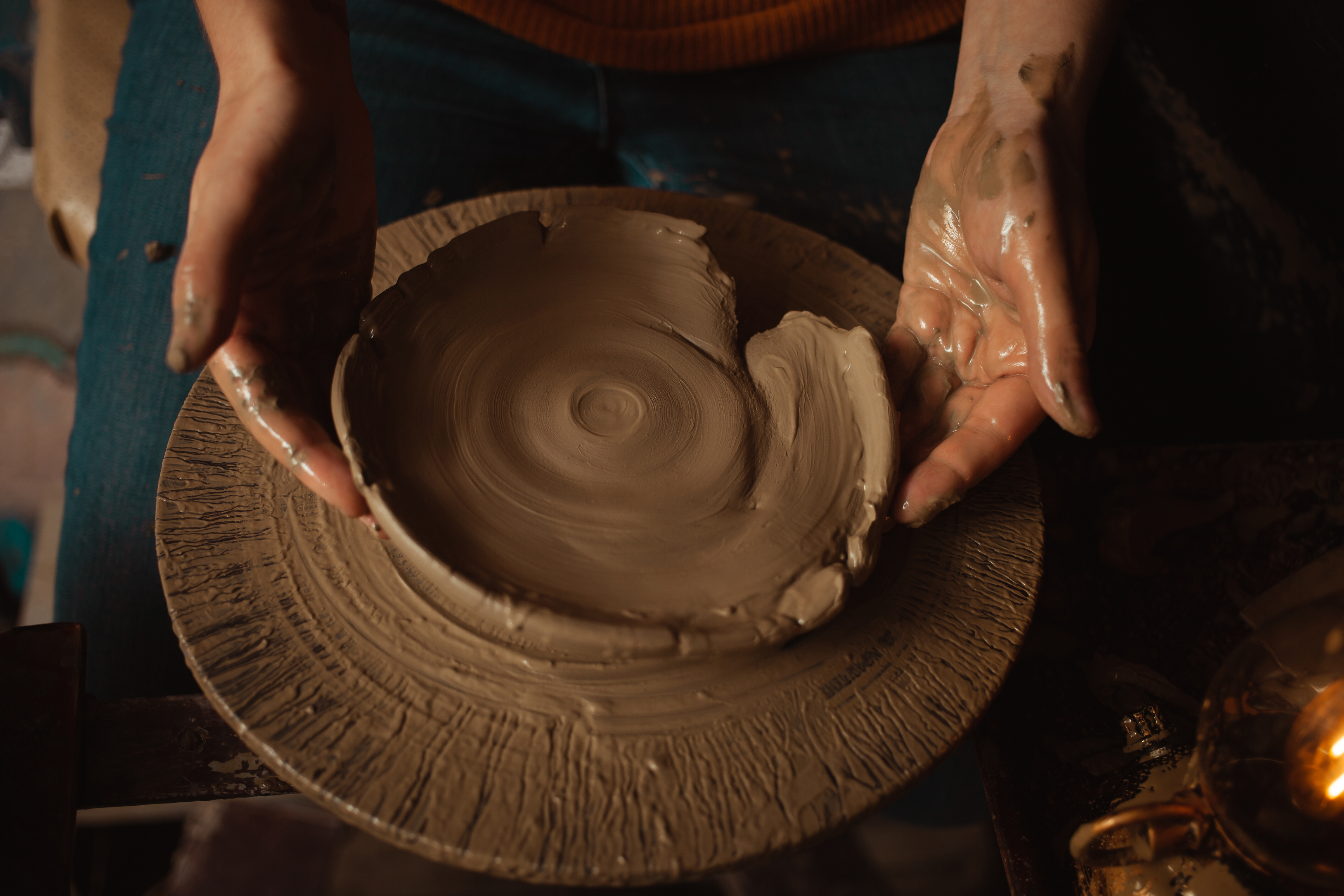
A potter begins with earth and water. He takes a weight of clay into his hands, kneading and pressing it until hidden pockets of air are released and the whole mass becomes pliable beneath his touch. The sense of touch is traditionally associated with the month of Tishri. He places the clay at the center of the wheel, wets his palms, and sets the wheel in motion. As the clay turns, his hands remain steady. One braces the outer wall while the other presses inward, opening a hollow at the heart of the vessel.

ID 36696413 © Dimaberkut | Dreamstime.com

Water glistens across his fingers, allowing them to move without tearing what is still forming. With each revolution, he senses what the eye cannot yet see: where the clay is uneven, where it resists, where the wall is thinning, and where it can be drawn higher. To an observer, the wheel appears to be traveling the same circle again and again. Beneath the potter’s hands, however, the clay is not merely going in circles. It is being transformed.

Water is not an incidental part of this process. Dry earth will not yield to the potter’s hands. Water makes it responsive, allowing it to be pressed, opened, raised, and reshaped without breaking apart. The water does not determine the form of the vessel, and the clay does not shape itself. The potter uses water to work with the clay according to the form already held within his intention.

This gives us a fitting picture for the seventh month, Tishrei. Scripture calls the seventh month yerach ha’etanim, “the month of Etanim,” when Solomon gathered Israel to dedicate the Temple during the feast (1 Kings 8:2). Etanim evokes that which is enduring or continually flowing and has traditionally been associated with streams that do not dry up, alluding to the Living Waters of eternity. During Sukkot, water was drawn from the Pool of Siloam and carried to the Temple in the joyful water pouring ceremony.[2] As the agricultural year turned, changed, or ended in the seventh month,[3] Israel looked toward heaven for the early rains upon which the next harvest depended. The Mishnah says that during the festival the world is judged concerning water.[4]

The month also returns us to the waters of creation. According to the tradition we considered last month for Elul, the original creation week began on the twenty-fifth day of that month.[5] This makes Tishri 1, Yom Teruah, align with the sixth day of creation, when Adonai formed the human from the ground and then blew the breath of life into Adam. In this sense, the first day of the seventh month is the birthday of mankind.[6]

Yom Teruah is called a zikkaron in Leviticus 23:24, a remembrance or memorial accompanied by the sound of the teruah – a shouting or great cry. [7] When Adonai speaks to Job from the whirlwind, He asks, “Where were you when I laid the foundation of the earth?” He then recalls the morning stars singing together and the sons of God shouting for joy (Job 38:4–7).[8] The verb translated “shouted” comes from the same root as teruah. The sound that marks the beginning of Tishri carries an echo of creation and the joy that accompanied it.[9]

Genesis 2:6–7 brings water and earth together in the formation of humanity. Water rises and moistens the face of the adamah. Then Adonai forms the adam from its dust. The text does not explicitly describe God mixing clay at a wheel, but the rest of Scripture repeatedly interprets human formation through the work of a potter.

Job says, “I, too, have been formed out of the clay” (Job 33:6). Isaiah addresses Adonai directly: “We are the clay, and You our potter; and all of us are the work of Your hand” (Isaiah 64:8). Jeremiah is sent to the potter’s house to watch a spoiled vessel being worked again in the potter’s hands (Jeremiah 18:1–6). We are earth that has been made responsive by water and then animated by divine breath. Our bodies carry the substance of the ground (adamah), yet our life depends upon what comes from God from the heavens above.

Jewish tradition draws the altar into this scene of human formation. According to Genesis Rabbah 14:8, Adam was created “from the place of his atonement,” an interpretation grounded in the command, “An altar of earth you shall make for Me” (Exodus 20:24).[10] Rashi makes the location explicit, explaining that God took Adam’s dust from the place where the altar would stand so that he might receive atonement and be able to endure.

Adam was formed from the adamah, and Israel later built a mizbach adamah, an altar of earth. In this reading, Adonai’s provision for human frailty was already present within the story of our formation. He knew the mercy Adam and his children would need in order to stand before Him.

Every human body still carries the testimony of that beginning. We are animated dust, both resilient and vulnerable, capable of bearing glory while remaining dependent upon the breath and provision of our Creator. According to the tradition, our clay also carries a memory of the altar, the place where sin is answered by mercy and the fallen are enabled to stand. The water imagery of Tishrei brings us back to the place of our first formation and prepares us to consider what the Potter intends for the clay.

Two Formations

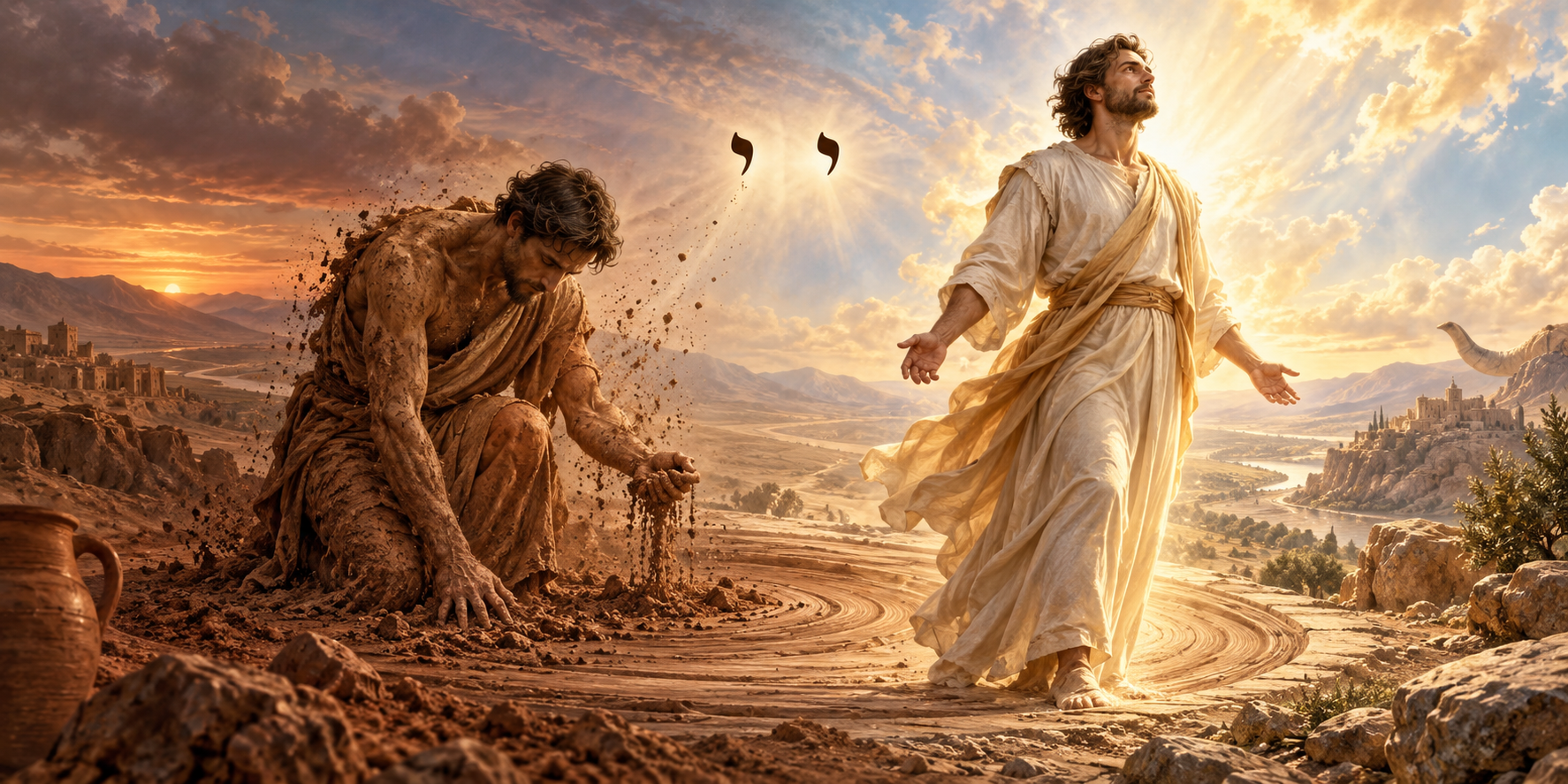
The Hebrew text of Genesis 2:7 preserves a unique spelling that gives this reflection prophetic depth. The word translated “and He formed” is vayyitzer, from the verb yatsar, which is often used for the shaping work of a potter. Only here, in the account of Adonai forming the human, is vayyitzer written וַיִּיצֶר with two yods. Everywhere else this form of the verb is written with one yod. The unique spelling invited the sages to ask what the second yod might reveal about humanity’s formation.

Rashi interprets the two yods as two formations appointed for the mankind: one for this present world and another for the resurrection of the dead. The first is described in Genesis, where Adam receives breath and becomes a living being. The second looks beyond mortal life toward resurrection. According to Rashi and Bereshit Rabbah, the unusual spelling carries both the origin and destiny of humanity.[11]
Created with AI

The Potter who formed Adam from the dust has another formation in view. This is especially striking in Tishrei. The month begins on the anniversary of humanity’s first formation, while its appointed times reach toward the second (and last) formation of man in Messiah, the last Adam, at the resurrection.

“So also it is written, ‘The first man, Adam, became a living soul.’ The last Adam became a life-giving spirit. However, the spiritual is not first, but the natural; then the spiritual. The first man is from the earth, earthy; the second man is from heaven… Just as we have borne the image of the earthy, we will also bear the image of the heavenly.” (1 Corinthians 15:45-47, 49, NAS95)

The first Adam was formed from the dust and received life, while the Last Adam is from heaven and became a giver of life. All humanity is descended from the earthly Adam and remains subject to corruption and death. In Yeshua, however, the destiny of Adam’s children is no longer confined to the dust.

“For as in Adam all die, so also in Messiah will all be made alive.” (1Co 15:22, TLV)

Though Rashi was not reading through a New Testament lens, his understanding of two formations based upon the doubled yod in humanity’s creation aligns remarkably well with the Pharisaic Rabbi Paul’s argument concerning the two Adams. Only a few verses later, Paul connects humanity’s promised transformation with the sound of the last trumpet:

“Behold, I tell you a mystery; we will not all sleep, but we will all be changed, in a moment, in the twinkling of an eye, at the last trumpet; for the trumpet will sound, and the dead will be raised imperishable, and we will be changed.” (1 Corinthians 15:51-52, NAS95)

1 Corinthians 15 is one of Scripture’s clearest summaries of the Gospel proclaimed through the moedim (feast days). Paul begins with Messiah’s death, burial, and resurrection, identifies Him as the Firstfruits of those who sleep, and carries the reader forward to the last trumpet and the resurrection harvest. The chapter gathers the redemptive pattern of the appointed times into one sweeping movement, from death to life and from the image of the earthly man to the image of the heavenly.

This promised change is especially fitting at the turn of the year. The Hebrew root shanah means “year,” while the root carries the sense of repetition or change. Paul wrote in Greek, but his promise that “we will all be changed” resonates beautifully with this Hebrew wordplay. Each shanah returns us to the appointed cycle, yet the Potter’s wheel does not return the clay unchanged. He continues drawing His work toward completion.

Tishrei holds the beginning and end of this mystery together. The month begins on the traditional anniversary of the first Adam’s formation and sounds the shofar that anticipates humanity’s final transformation in the Last Adam, Messiah Yeshua. The seventh month remembers the dust from which we came while announcing the glory we are destined to bear.

The In-between Space

For now, we live between the two formations represented by the doubled yod. We bear the image of our Creator while remaining subject to corruption and death. Genesis 3 shows the adam hiding from the One whose breath gives him life. The man and woman become ashamed of the bodies God fashioned, turn against one another through accusation, and find themselves estranged from the ground from which they were taken. The dust that received God’s breath now fears His voice.

Every generation enters the world within that fracture. We add our own choices to its damage and receive impressions from histories already bent by the fall. Human clay is shaped by other human clay; we bear marks we did not choose and inflict marks we do not fully understand. Even so, we remain image-bearers, and the Potter has not relinquished His claim upon the clay.
ID 246367216 © Valeria Titarenco | Dreamstime.com

Jeremiah encountered this mystery at a potter’s house. He watched a vessel become marred in the potter’s hand and then saw the potter work it again “into another vessel, as it seemed good to the potter to make” (Jeremiah 18:4, NAS95). The image warns Israel that Adonai retains the right to uproot or rebuild according to their response, yet the warning itself is a mercy.

When we encounter malformation, we often begin by searching for someone to blame. We examine the damaged place, decide why it happened, and begin identifying the person with whatever has gone wrong. A failure becomes an identity. A wound becomes a destiny. Once the label has been applied, it becomes difficult to imagine another form. The Potter sees the damage more clearly than any observer ever could, but He also sees what the clay may yet become. This difference in perception becomes especially clear in the Gospel of John.

The Last Adam Stoops to the Dust

There is a moving description of formative mercy in the account of the woman caught in adultery in John 8. As the story stands in the traditional text of John, it unfolds in the atmosphere of Sukkot in the seventh month. The religious leaders place the woman before Yeshua and demand a judgment that would return her body to the dust.

David Stern locates the encounter more specifically within the final day of the feast: “The interchange with the woman caught in adultery took place after daybreak (Jhn 8:2) the next day, which was still Hoshana Rabbah (7:37), since Jewish days begin at sunset. Later the same day he said, ‘I am the light of the world,’ which relates to Hoshana Rabbah customs (Jhn 8:12).”[12]
Created with AI

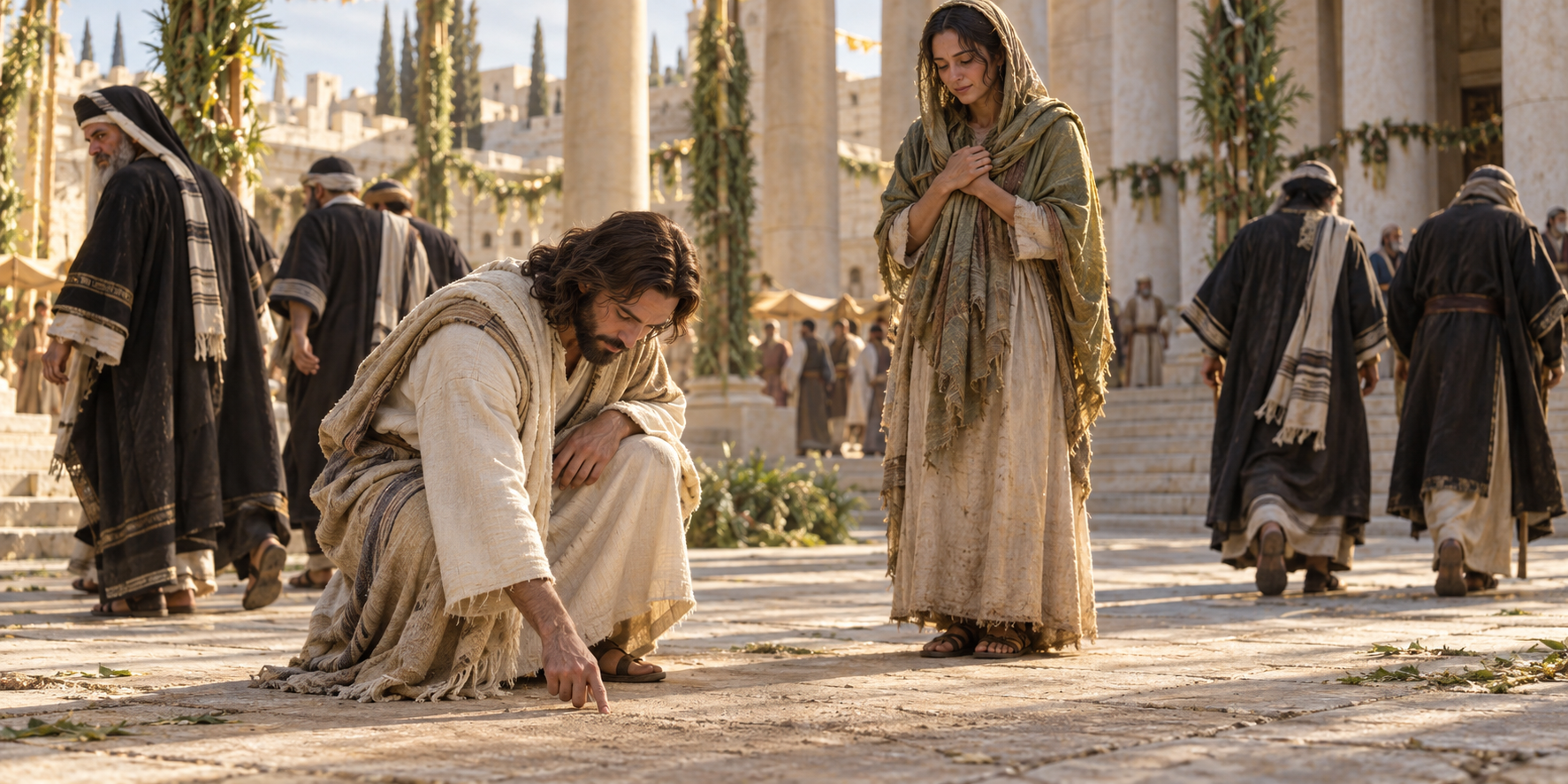
Yeshua responds by stooping toward the ground and writing with His finger. The text never tells us what He wrote, yet the gesture itself invites us to linger. The One who formed humanity from the ground bends toward that same earth while a daughter of Adam stands threatened with destruction. The finger that inscribed the covenant upon tablets of stone now traces words in the dust. And those who invoke Torah against the woman suddenly find its light turned upon their own hearts.

Yeshua rises and says, “He who is without sin among you, let him be the first to throw a stone at her.” Then He stoops again. One by one, her accusers leave. When Yeshua rises the second time, the woman discovers that the One who knows the truth about her does not expose her further or ask her to defend herself. Instead, He asks where her accusers have gone, and then speaks the words that return her life to her:

“Straightening up, Yeshua said to her, ‘Woman, where are they? Has no one condemned you?’ ‘No one, Master,’ she said. Then Yeshua said, ‘Neither do I condemn you. Go, and sin no more.'” (John 8:10-11, TLV)

 His words recall the tradition that Adam was formed from the place of the altar so that atonement might enable him to stand. The woman had been made to stand in the midst of her accusers, and she remains standing after they have gone. Yeshua takes her sin seriously without allowing it to become her final form. His mercy preserves her future, while His instruction gives that future direction.

Many of us know what it is to stand inwardly accused. We remember what we have done, where we have failed, and whom our choices have wounded. Shame tells us that the marred place has revealed our truest identity and that nothing new can be made from us.  This woman allows us to see with better eyes. When she looks up from the dust, the only One qualified to condemn her remains, and He has made room for her to walk forward.

Immediately afterward, Yeshua declares, “I am the Light of the world. The one who follows Me will no longer walk in darkness, but will have the light of life” (John 8:12, TLV). Then the ground (adamah) appears again in the next chapter, where the Light of the world encounters a man who has been blind since birth (John 9:1).

The disciples ask, “Rabbi, who sinned, this man or his parents, that he would be born blind?” Their question reveals the human impulse to explain visible brokenness by locating guilt. Yeshua refuses to interpret the man’s blindness through blame. While the disciples search for the sin that explains his condition, He directs their attention toward the work God is about to reveal in him: “It was so that the works of God might be displayed in him” (John 9:3, NAS95).

Then Yeshua repeats His declaration from before: “While I am in the world, I am the Light of the world” (John 9:5, TLV). Afterwards, he spits on the ground, makes clay, and applies it to the man’s eyes. The action is startlingly physical. The One through whom all things came into being[13] bends toward the earth again, joins moisture to dust, and works the substance into clay. Genesis described the ground being watered before Adonai formed the human. In John 9, moistened earth is again worked by the hands of the Creator, and a human body is brought closer to wholeness.

Yeshua tells the man to wash in the Pool of Siloam. John pauses to explain that Siloam means “Sent.” The location carries particular significance in the atmosphere of Sukkot.[14] Only a short time earlier in John’s account, Yeshua had stood on the last great day of Sukkot and cried, “If anyone is thirsty, let him come to Me and drink” (John 7:37, NAS95). Now the One sent from the Father sends a man bearing clay upon his eyes to those same waters. The man goes, washes, and returns seeing.

The accounts in John 8 and 9 mirror one another. Both encounters begin with people trying to interpret another person through sin, but Yeshua redirects their attention from assigning guilt to revealing “the works of God” in a human life. He refuses to treat either person as a theological problem to be solved. While we become preoccupied with the malformation of our neighbors, Yeshua remains concerned with their transformation.

As the people continue interrogating the healed man, another kind of sight opens within him. At first, he refers to “the man who is called Yeshua.” Later, he calls Him a prophet and argues that He must be from God. Finally, when Yeshua finds him after he has been cast out, the man addresses Him as Lord and bows before Him. His healing continues beyond physical sight as courage, testimony, and spiritual perception take form within him. Meanwhile, the leaders who are certain that they can see become increasingly unable to recognize the One standing before them.

“Yeshua said, ‘For judgment I came into this world, so that those who don’t see may see, and the ones who do see may become blind.’” (Jhn 9:39, TLV)

This is the sharp irony running through the two chapters. During the season when everyone should be “altogether joyful,” people remain occupied with judgment, blame, and traps. Yeshua continues into the next chapter by contrasting the one who destroys life with the purpose for which He came: “I have come that they might have life, and have it abundantly!” (John 10:10, TLV)

The haftarah reading for Yom Kippur confronts us with a similar irony. Jonah, whose name means “dove,” knows that Adonai is “a gracious and compassionate God, slow to anger and full of kindness, and relenting over calamity” (Jonah 4:2, TLV). Yet he sits beneath his shelter awaiting Nineveh’s destruction and becomes angry when malformed people receive mercy.

His response raises an uncomfortable question during the season of judgment: Can we rejoice when the mercy that preserved us is extended to someone else? We may sit with Jonah and watch for the destruction of the world, or we may stand beside the woman and the man who received room to live, see, and change. The Last Adam stoops toward the dust because He still sees the potential within the clay.
Created with AI

Treasure in Jars of Clay

Paul gathers the images of light, sight, glory, and human clay into one remarkable passage:

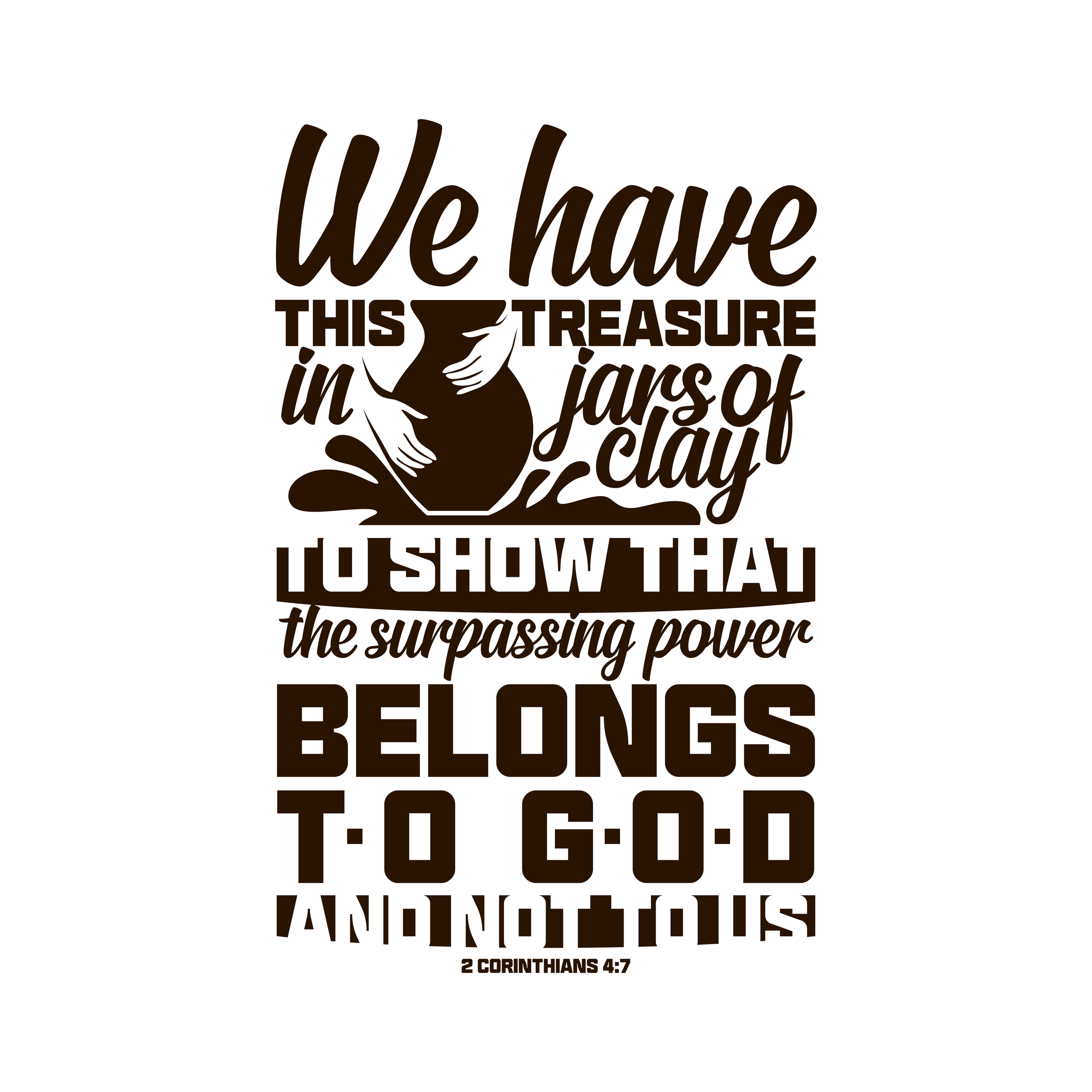
“For God, who said, ‘Let light shine out of darkness,’ is the One who has shone in our hearts, to give the light of the knowledge of the glory of God in the face of Messiah. But we have this treasure in jars of clay, so that the surpassing greatness of the power may be from God and not from ourselves.” (2 Corinthians 4:6–7, TLV)

 The imagery closely follows what we have seen in John. Yeshua, the Light of the world, works clay with His hands and opens the eyes of a man who has never seen. Paul takes those elements inward: the light of Messiah gives spiritual sight to an earthen vessel. The work of new creation has already begun within bodies that still bear the frailty of the first Adam.
ID 150712673 © Biblebox | Dreamstime.com

Paul does not speak of that frailty with shame. An earthen vessel is vulnerable to pressure and easily damaged, but its weakness makes the source of the treasure unmistakable. The life within the vessel does not arise from the strength of the clay. It comes from the One who inhabits it. Even where mortality remains visible, the resurrection life of Yeshua is already at work.

This is why Paul can describe himself as “hard pressed in every way, yet not crushed; perplexed, yet not in despair; persecuted, yet not forsaken; struck down, yet not destroyed” (2 Corinthians 4:8–9, TLV). His sufferings do not mean that the Potter has discarded him. They reveal the sustaining presence of Yeshua within a vessel that could not preserve itself by its own strength. Paul says that he carries the dying of Yeshua in his body “so that the life of Yeshua may also be revealed in our mortal body” (verse 11).

Formation into the image of Messiah occurs within this tension. Our bodies remain mortal, our histories remain part of us, and places within us still need healing. At the same time, the Spirit is renewing the inner person and making the life of Yeshua increasingly visible through the vessel. Paul speaks of Messiah being formed in us (Galatians 4:19), of our being conformed to the image of God’s Son (Romans 8:29), and of our transformation into that same image “from glory to glory” (2 Corinthians 3:18).

Paul carries this work toward resurrection. “We know that the One who raised the Lord Yeshua will raise us also with Yeshua and bring us along with you into His presence” (2 Corinthians 4:14, TLV). For now, the outer person experiences the weakness and decay of mortal clay while the inner person is “being renewed day by day.” Beyond this present formation waits “an eternal weight of glory far beyond all comparison” (verses 16–17).

Until the Vessel Is Complete

Tishri gives us courage to look honestly at what has taken shape within us. The seventh month may reveal places where the clay has hardened, collapsed, or become misshapen beneath the pressures of life. Our assessment remains incomplete if it accounts for the damage without accounting for the Potter. He sees what has become marred, remembers what He intended, and knows how to continue working with the clay in His hands.

Those hands formed Adam from dust taken from the holy altar as a testimony that He will complete the work. Yeshua knows what we have done and what has happened to us without confusing the marred place with the finished vessel. The dust is real, but it is not our final destiny.

We presently bear the frailty and mortality of the first Adam while the Spirit renews us inwardly, forming the life of the Last Adam within us. When the last trumpet sounds, the Potter’s intention for humanity will be revealed in fullness. Those who have borne the image of the earthly man will also bear the image of the heavenly.

Until that complete redemption, we can yield without fear to the hands that know us. The pressure we feel is not evidence that we have been abandoned, and the places still unfinished are not proof that His work has failed. The Potter has not lost sight of the glory for which your clay was formed.

I pray you have a blessed seventh month. As the Potter searches and shapes our hearts during the High Holy Days and Sukkot, may our attention be drawn toward what He desires to form within us. May we repent and receive His mercy without begrudging that same mercy to our neighbors. May we become more like Yeshua most especially in the ability to see the potential that still remains in other jars of clay.

“I am sure of this very thing—that He who began a good work in you will carry it on to completion until the Day of Messiah Yeshua.” (Philippians 1:6, TLV)

I’ll leave you with this song by David Crowder (one of my favorites!):

Glory Glory (God Is Able)


[1] Bereshit, the first Torah portion of the new reading cycle, is read during the seventh month on the Shabbat after Simchat Torah. This will fall on October 7th in the year 2026. The verses quoted are part of the Bereshit portion, which is Genesis 1:1-6:8.

[2] Sukkah 4:9 describes the water libation and the drawing of water from Siloam.

[3] See Exodus 23:16; 34:22, Deuteronomy 14:28; 31:10-11.

[4] Rosh Hashanah 1:2 associates Sukkot with judgment concerning water.

[5] See Rosh Hashanah 11:10b -11:1a and 11:3a or check out this article.

[6] Vayikra Rabbah 29:1.

[7] Complete Word Study Dictionary: OT and NT for e-Sword: H2146 זִכָּרוֹן zikkārôn: A masculine noun meaning memorial, remembrance, record, reminder. This word conveys the essential quality of remembering something in the past that has a particular significance. H8643 תְּרוּעָה terû‛āh: A feminine noun indicating a shout of joy; a shout of alarm, a battle cry.

[8] “Then the LORD answered Job from the whirlwind and said, “Who is this who darkens the divine plan By words without knowledge? “Now tighten the belt on your waist like a man, And I shall ask you, and you inform Me! “Where were you when I laid the foundation of the earth? Tell Me, if you have understanding, Who set its measurements? Since you know. Or who stretched the measuring line over it? “On what were its bases sunk? Or who laid its cornerstone, When the morning stars sang together And all the sons of God shouted for joy?” (Job 38:1-7, NASB)

[9] A few examples: Leviticus 23:40 – Rejoice before Adonai for seven days. Deuteronomy 16:14 – You shall rejoice in your feast.Deuteronomy 16:15 – You shall be altogether joyful.

[10] Bereshit Rabbah 14:8.

[11] Rashi on Genesis 2:7. See also Genesis Rabbah 14:5.

[12] David H. Stern, Jewish New Testament Commentary, commentary on John 8:2 and 8:12.

[13] Colossians 1:16-17

[14] The Mishnah describes water being drawn from Siloam in a golden flask and carried through the Water Gate with blasts of the shofar before it was poured at the altar during the feast. (Sukkah 4:9)
Categories: Moedim, new moon | Tags: , , , , , , , , | 3 Comments

Sukkot: Hidden in the Shade of God

Col. 2:16-17 (LITV) Then do not let anyone judge you in eating, or in drinking, or in part of a feast, or of a new moon, or of sabbaths, 17 which are a shadow of coming things, but the body is of Christ.

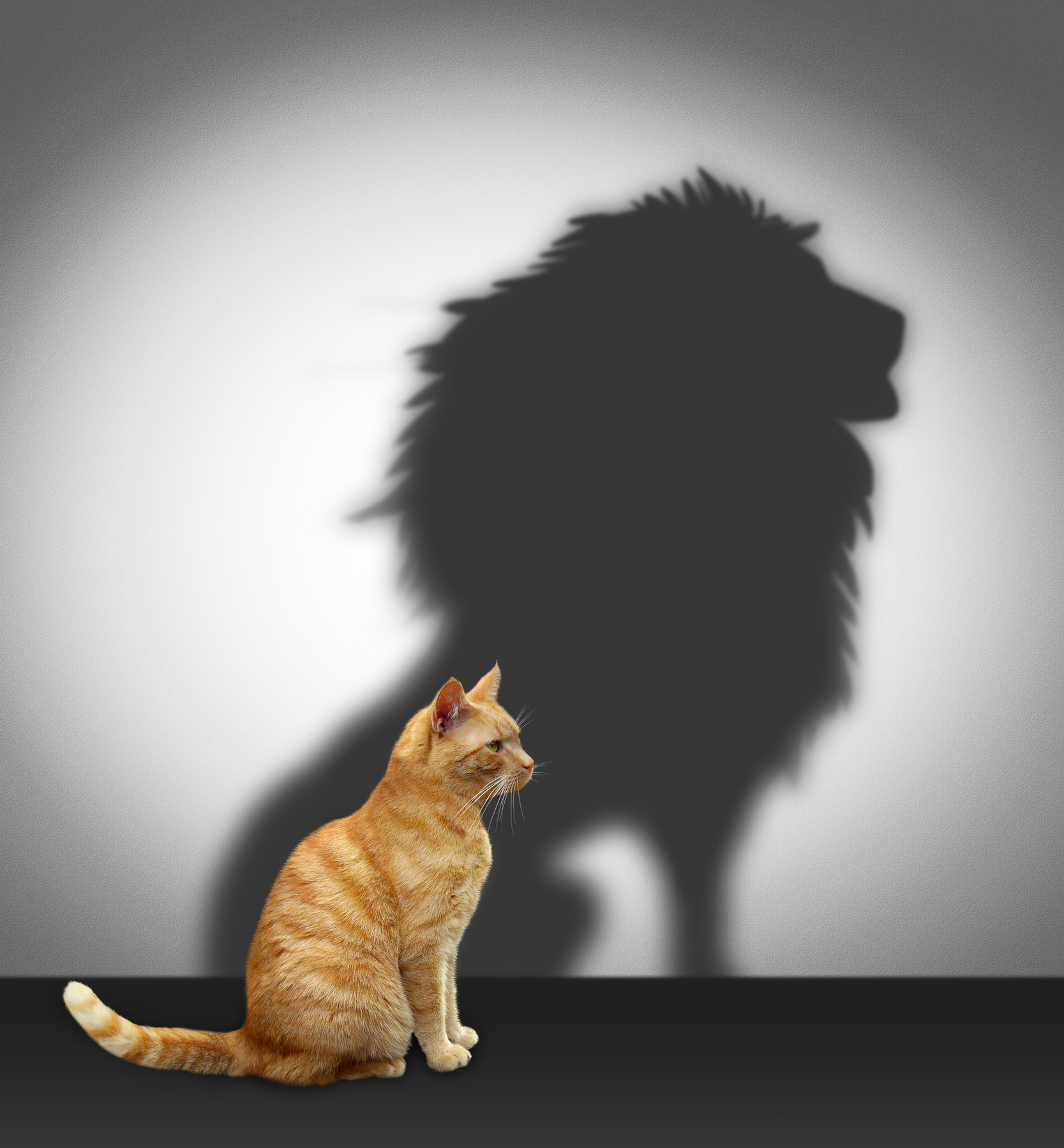
In my last post, I tried to help the reader to understand that not all darkness is evil. Sometimes darkness simply implies what is hidden from our natural (and spiritual) sight. A shadow, like Paul mentions above, falls into that same category. In a godly sense, the shadow is cast by the heavenly reality. The last thing one would desire to do is to speak evil of the shadow, for that shadow is the testimony of heaven.

© Torian Dixon | Dreamstime.com

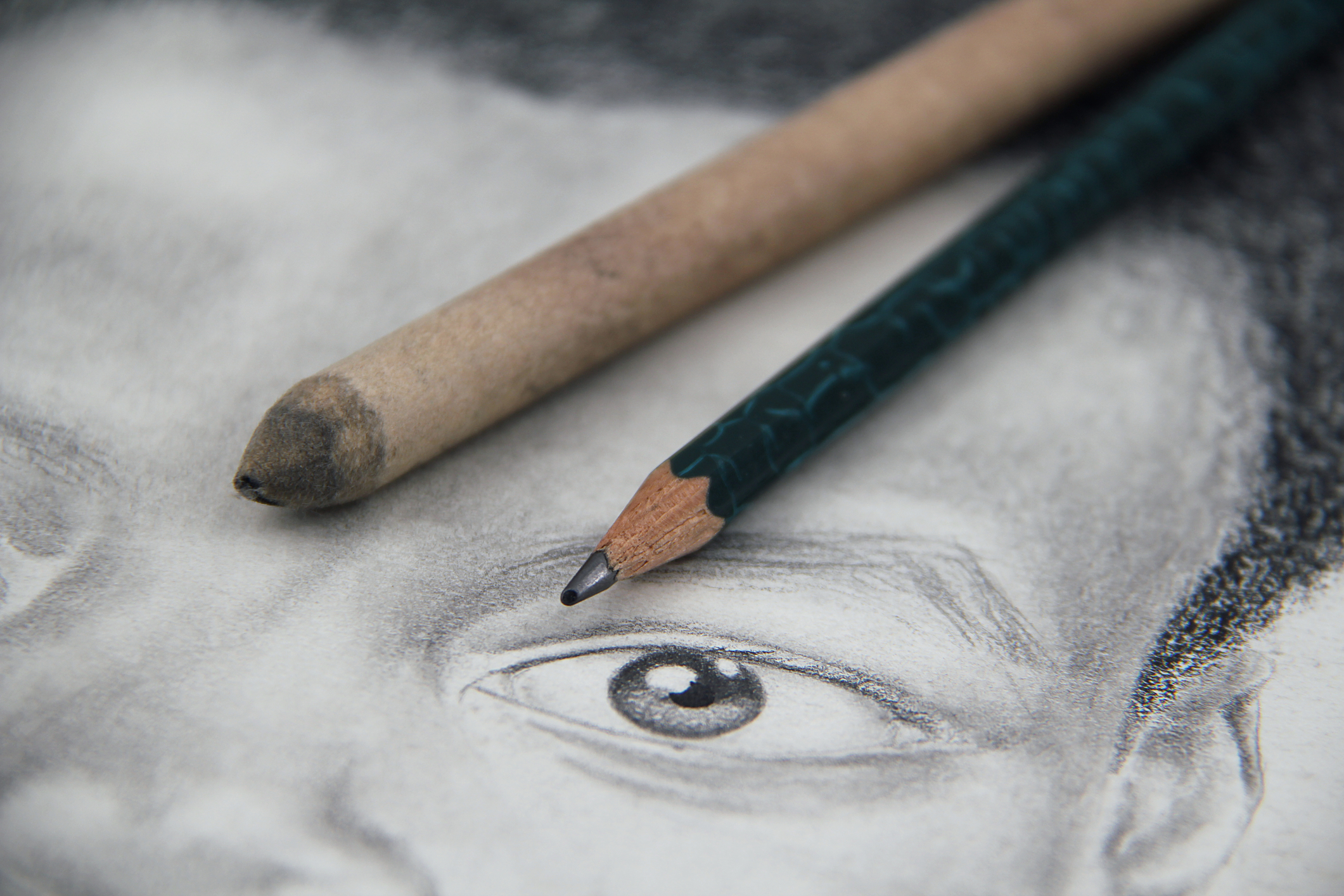
Ironically, that’s exactly what many well-meaning Believers do when they read the above verses from Colossians. They seek to do away with the shadow because they think it detracts from the reality. I am an amateur artist. Proper shading turns a 2-D piece of art into something that appears 3-D. It gives the piece depth, making it a more realistic representation of the actual figure. Shadows are vital to help one see the reality.

My good friend, Dr. Robin Gould, wrote an excellent BEKY Book explaining the context and culture of Colossae called Colossal Controversies. I urge you to get a copy and give it to those that are perplexed by your obedience to Torah, especially if they’ve been taught that verses such as Colossians 2:16-17 imply that the shadow is useless.

What was the Biblical context of the word “shadow” for a first century Torah observant Jewish Pharisee? After all, that’s how Paul described himself.[1] When he spoke of one’s eating, drinking, partaking of feasts, new moons, and Sabbaths, and connected them to both a shadow and Messiah, this was no small matter. When we understand this significance, we too, will joyfully set our sights on “the things above,” the reality… by following the earthly shadow given by Adonai.

Col. 3:1-4 (TLV) Therefore, if you have been raised up with Messiah, keep seeking the things above—where Messiah is, sitting at the right hand of God. 2 Focus your mind on things above, not on things on the earth. 3 For you have died, and your life is hidden with Messiah in God. 4 When Messiah, who is your life, is revealed, then you also will be revealed with Him, in glory!

Rather than denigrating the dietary laws, feasts, Sabbaths, and new moons, Paul’s message to the Colossians was a powerful testimony of their eternal benefit and protection. To fully appreciate the portrait that He paints, let’s start with the beginning.

The First Shadows

The first Adam, male and female, were created in the image of God. Their mandate was to fill the earth, take dominion, and rule over all its creatures.

Gen. 1:27-28 (NASB) God created man in His own image, in the image of God He created him; male and female He created them. 28 God blessed them; and God said to them, “Be fruitful and multiply, and fill the earth, and subdue it; and rule over the fish of the sea and over the birds of the sky and over every living thing that moves on the earth.”

Man and woman were created in HIS image. The Hebrew word for image is tzelem. The following is The Complete Word Study Dictionary’s entry[2] for tzelem:

H6754

צֶלֶם ṣelem: A masculine noun meaning an image, a likeness, a statue, a model, a drawing, a shadow.The word means image or likeness; its most celebrated theological and anthropological use was to depict human beings as made in God’s own image (Gen 1:26-27; Gen 5:3). People continue to be in His image even after the fall, although the image is marred (Gen 9:6), and still serves as the basis of the prohibition not to kill human beings.

It is used metaphorically to depict persons as shadows, phantoms, or unknowing, senseless, fleeting beings carrying out the motions of life (Psa 39:6 [7]); unless they have hope in God (see Psa 39:7 [8]). In a similar vein, the wicked before the Lord are considered as mere dreams or fantasies (Psa 73:20).

The word is also used in a concrete sense to depict images cut out of or molded from various materials. The word describes the images or idols of foreign or strange gods (2Ki 11:18; Amo 5:26). The people of Israel produced images used as idols from their own jewelry (Eze 7:20; Eze 16:17). Israel was, on its entrance into Canaan, to destroy all the molten images of the heathen (Num 33:52). In Eze 23:14, this word refers to pictures of Babylonians that enticed the people of Israel into apostasy when they saw them (Eze 23:14).

© Veremer | Dreamstime.com

Mankind is the shadow of Elohim. In Hebrew thought, this isn’t about one’s appearance, rather it one’s purpose and actions. YHWH placed within mankind (both male and female) a shadow or likeness of His character and will. We are His representatives in the earth, His image or shadow bearers. Shadows mimic the reality. Thus, one’s words, deeds, actions, and fruit will either confirm or profane His image. This is why tzelem can also mean a graven image or an idol:

Ex. 20:4 (NASB) “You shall not make for yourself an idol (tzelem), or any likeness of what is in heaven above or on the earth beneath or in the water under the earth. (See also Lev. 26:1, Ezek. 16:17, etc.)

The common Hebrew word for shadow is tzel. It is just like the word for image above without the mem.

H6738 צלtsêl  Brown, Driver, Briggs Definition: 1) shadow, shade 1a) shadow (on dial) 1b) shadow, shade (as protection) 1c) shadow (symbolic of transitoriness of life) Part of Speech: noun masculine A Related Word by BDB/Strong’s Number: from H6751

Tzel can be a literal shadow or shade, but just as in English, it can be figurative. It is in this sense that David and other Psalmist speak of God’s shadow being a place of refuge and protection:

Ps. 91:1-2 (NKJV) He who dwells in the secret place of the Most High Shall abide under the shadow of the Almighty. 2 I will say of the LORD, “He is my refuge and my fortress; My God, in Him I will trust.”

Ps. 36:7 (NASB) How precious is Your lovingkindness, O God! And the children of men take refuge in the shadow of Your wings.

It is vital to understand what is and isn’t Adonai’s shadow. If His shadow is a secret place of refuge, like the wings of a mother bird, who wouldn’t want to run and hide there? I wouldn’t call this a “mere” thing. Isaiah, speaking of the future of Zion, makes some interesting connections in Hebrew between God’s House and His shadow:

Is. 4:4-6 (NKJV) When the Lord has washed away the filth of the daughters of Zion, and purged the blood of Jerusalem from her midst, by the spirit of judgment and by the spirit of burning, 5 then the LORD will create above every dwelling place (makon, like mishkan) of Mount Zion, and above her assemblies, a cloud and smoke by day and the shining of a flaming fire by night. For over all the glory there will be a covering (chuppah). 6 And there will be a tabernacle (sukkah) for shade (tzel –shadow) in the daytime from the heat, for a place of refuge, and for a shelter from storm and rain.

God’s Tabernacle, Sukkah, and Chuppah are all shadows of protection. His sukkah is the shadow that protects one from the heat; it is a refuge and shelter in the storm. This passage also recalls when the children of Israel faithfully followed their Husband in the wilderness[3] as He was a cloud by day and a pillar fire by night. These shadowy pillars protected, led, and covered the people.

The reason one is commanded to dwell in booths or sukkot during the Feast of Sukkot is so that all future generations will know that YHWH made the Children of Israel dwell in sukkot when He brought them out of Egypt. He doesn’t want His people in any generation to forget, so there is something very important about this appointment.

Lev. 23:42-43 (NKJV) You shall dwell in booths for seven days. All who are native Israelites shall dwell in booths, 43 that your generations may know that I made the children of Israel dwell in booths when I brought them out of the land of Egypt: I am the LORD your God.’ “

Oddly, the “tents” that Israel dwelt in while in the wilderness are never called sukkot. They are called ohalim, literally tents, or a mishkan, a tabernacle/dwelling place. (For example, see Exodus 18:7; 33:10, Numbers 33:10; 16:27, etc.) This peculiarity has sparked some interesting explanations by the sages. Rabbi Eliezer believed that the sukkot that HaShem made Israel dwell in was His “clouds of glory,” the Ananei HaKavod. Rabbi Akiva disagreed and said that the sukkot were the literal tents that Israel set up in the wilderness. (Sukkah 11b)

Perhaps they are both right. The word sukkah comes from the following root[4]:

H5526 ךּכַסָsāḵaḵ: I. A verb meaning to cover. It means to hide something or to shield something: the mercy seat on the ark of the covenant was covered by the wings of cherubim (Exo 25:20); God’s hand covered and protected Moses (Exo 33:22). It is used of separating off an area with a curtain or hanging (Exo 40:3, Exo 40:21). Figuratively, it shows God shielding those who trust Him (Psa 5:11 [12]; Psa 91:4); He covers Himself in anger (Lam 3:43) or with a cloud(Lam 3:44) II. A verb meaning to stir, to excite. It means to rouse up, to spur on in the context of the Lord’s action (Isa 9:11 [10]; Isa 19:2). III. A verb meaning to weave together. It describes the Lord’s activity in creating a child’s fetus within the womb (Job 10:11; Psa 139:13).

Sukkot is also the name of a place. In fact, the first stop Israel made after leaving Egypt was Sukkot.[5] Inherent in the meaning of this word is the idea of covering, concealing, hiding, and protecting. Paul says that our lives are “hidden in Messiah,” but will one day be revealed when He is revealed in glory (kavod). When the resurrected Messiah left the earth, it was a “cloud” that received Him. Two angels told the disciples that when He returns, it will be in the same manner.

Acts 1:9-11 (NASB) And after He had said these things, He was lifted up while they were looking on, and a cloud received Him out of their sight. 10 And as they were gazing intently into the sky while He was going, behold, two men in white clothing stood beside them. 11 They also said, “Men of Galilee, why do you stand looking into the sky? This Jesus, who has been taken up from you into heaven, will come in just the same way as you have watched Him go into heaven.”

Mark 13:26 (NASB) “Then they will see THE SON OF MAN COMING IN CLOUDS with great power and glory.

Shadows and clouds are equivalent expressions in many cases. They both cover, hide, conceal, and protect. Hebrews 12 calls those that had faith and trust in Adonai a great “cloud of witnesses.” In Isaiah 4 above, it is specifically the sukkah that is called a shadow (tzel). To further this connection, Adonai chose a specific person to be the craftsman or builder of His Tabernacle in the wilderness.

Betzalel

Ex. 31:1-5 (NASB) Now the LORD spoke to Moses, saying, 2 “See, I have called by name Bezalel, the son of Uri, the son of Hur, of the tribe of Judah. 3 “I have filled him with the Spirit of God in wisdom, in understanding, in knowledge, and in all kinds of craftsmanship, 4 to make artistic designs for work in gold, in silver, and in bronze, 5 and in the cutting of stones for settings, and in the carving of wood, that he may work in all kinds of craftsmanship.

Betzalel’s name means, “in the shadow of El/God.” His father, Uri, means fiery and Hur means white textiles.[6] Like Messiah, he was from the tribe of Judah. The names of his father and grandfather (fiery and white) also connects Betzalel with Yeshua, the one with blazing white robes and fiery eyes. His was filled with the Spirit of God, and was called to be a craftsman or builder of the House of God. Betzalel is certainly a “shadow” of Yeshua, the son of a carpenter, the spirit-filled builder of Adonai’s House.

Betzalel, the one in the shadow of God, built the earthly shadow of the Heavenly Temple. Ponder that for a moment. The shadow built or created the shadow, so that the people could draw near to God. The pattern of the Tabernacle was shown to Moses on the Mountain top. He was instructed to carefully make it after the heavenly pattern. (Ex. 25:40; 26:30; 27:8) Shadows should mimic the reality perfectly. If we are the shadow or the Temple of God on the earth, then Betzalel has much to teach us. Paul uses this imagery in the following passage.

1 Cor. 3:9-17 (NASB) For we are God’s fellow workers; you are God’s field, God’s building. 10 According to the grace of God which was given to me, like a wise master builder I laid a foundation, and another is building on it. But each man must be careful how he builds on it. 11 For no man can lay a foundation other than the one which is laid, which is Jesus Christ. 12 Now if any man builds on the foundation with gold, silver, precious stones, wood, hay, straw, 13 each man’s work will become evident;for the day will show it because it is to be revealed with fire, and the fire itself will test the quality of each man’s work. 14 If any man’s work which he has built on it remains, he will receive a reward. 15 If any man’s work is burned up, he will suffer loss; but he himself will be saved, yet so as through fire. 16 Do you not know that you are a temple of God and that the Spirit of God dwells in you? 17 If any man destroys the temple of God, God will destroy him, for the temple of God is holy, and that is what you are.

If we are the shadow or image of Messiah in the earth, then like Paul, we too, should look at our lives, walk, and ministry[7]as if we are builders of His House and Kingdom. As I’ve written previously, if we aren’t building, we are tearing down.

Pr. 14:1 (NASB) The wise woman builds her house, But the foolish tears it down with her own hands.

At the Jerusalem Council in Acts 15, the Apostles and Elders gathered together to consider what should be done with the Gentiles that were joining their ranks. Peter reminds them that God’s choice was to use his mouth to declare the Gospel to the Gentiles. (This is what Peter’s Vision in Acts 10 was about.) Then, Barnabas and Paul gave testimony of all they had witnessed among the Gentiles. After careful consideration, James gives his answer or judgment on the matter by quoting Amos 9.

Acts 15:14-17 (NKJV) Simon has declared how God at the first visited the Gentiles to take out of them a people for His name. 15 And with this the words of the prophets agree, just as it is written: 16 ‘AFTER THIS I WILL RETURN AND WILL REBUILD THE TABERNACLE OF DAVID, WHICH HAS FALLEN DOWN; I WILL REBUILD ITS RUINS, AND I WILL SET IT UP;  17  SO THAT THE REST OF MANKIND MAY SEEK THE LORD, EVEN ALL THE GENTILES WHO ARE CALLED BY MY NAME, SAYS THE LORD WHO DOES ALL THESE THINGS.’

© Stockillustration | Dreamstime.com

Notice that Amos and James, by the inspiration of the Holy Spirit, prophesy that the nations turn to HaShem BECAUSE He is rebuilding the Tabernacle of David. This is what Mashiach, the Builder, does. Adonai’s desire all along has been for His House (Tent/Tabernacle/Temple) to be a House of Prayer for ALL nations.

Is. 56:6-7 (NKJV) “Also the sons of the foreigner Who join themselves to the LORD, to serve Him, and to love the name of the LORD, to be His servants—Everyone who keeps from defiling the Sabbath, and holds fast My covenant— 7 Even them I will bring to My holy mountain, and make them joyful in My house of prayer. Their burnt offerings and their sacrifices Will be accepted on My altar; For My house shall be called a house of prayer for all nations.”

 “For God so loved the whole world,” has been true from the beginning. When King Solomon (another shadow of Yeshua) dedicated the House of Adonai, he did not forget the foreigners.

1 Ki. 8:41-43 (NKJV) “Moreover, concerning a foreigner, who is not of Your people Israel, but has come from a far country for Your name’s sake 42 (for they will hear of Your great name and Your strong hand and Your outstretched arm), when he comes and prays toward this temple,  43  hear in heaven Your dwelling place, and do according to all for which the foreigner calls to You, that all peoples of the earth may know Your name and fear You, as do Your people Israel, and that they may know that this temple which I have built is called by Your name.

When we understand that the mountain, the holy hill, the tent, Tabernacle, Temple, House, the Cloud, the Smoke, His Wings, Dwelling Place, Messiah, and many other beautiful analogies are all speaking about the same thing, and have from the very beginning, and that their purpose and function all teach the same message as a shadow of the heavenly reality, the Bible makes so much more sense.

Sometimes Adonai does something spectacular with His shadowy wings and the realm of heaven kisses the realm of earth. Interestingly, the writers of the Apostolic scriptures call this “to overshadow.”

Overshadow

While studying Torah Portion Ki Tisa (Exodus 30:11–34:35) last year, I had the pleasure of learning from Rabbi Sariella Creeger. In the message, she mentioned Betzalel and connected his name with the message given to Miriam (Mary) before conceiving Yeshua.

Luke 1:35 (NASB) The angel answered and said to her, “The Holy Spirit will come upon you, and the power of the Most High will overshadow you; and for that reason the holy Child shall be called the Son of God. 

© Soldem2 | Dreamstime.com

What happened to Miriam when God “overshadowed” her was not unlike what happened when He filled Betzalel with His Ruach. Both were given the heavenly pattern to build the Tabernacle or Dwelling Place of God among His people. They were both “builders” of the House of Adonai. Both Houses were a shadow of the heavenly reality. Both Houses or Temples made a way for the people to draw near to God.

As a side note, I should mention that there are numerous correlations between the womb, the Tabernacle, and intimacy with YHWH. This is true even in the definition of sakak, the root of sukkah, outlined above. Author, teacher, and pastor John Diffenderfer, delivered an amazing message to Mercy Collective in Nashville, TN on Shavuot 2017 called God’s Womb, the Tabernacle, the Bride, and the FeastsI encourage you to watch it; the metaphor is stunning!

A son (ben) and a house (beit) in Hebrew both come from the same root, banah, which means “to build.” Understanding, as in the Spirit of Understanding (Ex. 31:3, Is. 11:2), also derives from the root banah. Do you see the connection? Building a house and building a son (a people) are the same thing. Neither can be accomplished without the Holy Spirit of Binah.

When training someone to perform a new job or task, we often have them “shadow” a seasoned or experienced person in that trade or field. This is how one learns. If we skip the training, it will affect our job knowledge and performance in a negative way. But if we shadow (mimic/mirror) the successful, experienced employee or boss, we too, will prosper.

This reminds me of young girl watching her mother care for her younger sibling or a young boy watching his father build their house. Innate in each is the compulsion to imitate their parent. The young girl likely has baby dolls with toy milk bottles, diapers, and changes of clothes. This is her “shadow nursery” where she practices caring for her future family. Without the reality of her mother’s faithfulness to care for the next generation, this young girl would have nothing (good) to imitate. Either she wouldn’t have a shadow nursery, or her nursery would be distorted by a lack of understanding of what a mother actually does.

The young boy likely has a toy carpenter station with plastic hammers and nails, fake wood planks, and rubber saws. This is his “shadow woodshop” where he learns to care for his future family. Like the young girl, he can only be the shadow of what he sees. If the father is absent, he might think the hammer is used to hurt others. On the other hand, if the reality is a good father, the boy might grow to not only build the house of his family, but many others.

We might laugh at this analogy, but this whole world is a shadow of the heavenly reality. The shadow is the proof or evidence of what we cannot yet see.

Heb. 11:1-3 (NKJV) Now faith is the substance of things hoped for, the evidence of things not seen. 2 For by it the elders obtained a good testimony. 3 By faith we understand that the worlds were framed by the word of God, so that the things which are seen were not made of things which are visible.

When the Ruach HaKodesh overshadowed Miriam, the Greek word used was episkiazō. This word comes from the Greek word skia, shadow. Skia is equivalent to the Hebrew word tzelem. Thayer’s defines it below.

G4639 σκία, skia

1) shadow 1a) shade caused by the interception of light 1b) an image cast by an object and representing the form of that object 1c) a sketch, outline, adumbration. Part of Speech: noun feminine

© Jon Schulte | Dreamstime.com

Visualize standing outside with your back to the afternoon sun. Your body blocks the light in front of you, producing a dark, phantom-like representation of your form. If you raise your hands, so does your shadow. If you squat, so does this shady figure. While the shadow mimics your actions and outline, it cannot convey or capture the many colors, textures, and other things that truly make you, you. It cannot move or act of its own accord. And, as long as the light shines on you, you can’t escape or out run your shadow. It is connected to you completely.

Have you ever tried to touch your shadow? There is nothing there. Yet it is proof that something is there… you. This is how the Spirit realm appears to humans (most of the time). Other things in nature give a similar parable, like wind and clouds, both of which are used in the Bible to describe the Holy Spirit. The creation week, the Tabernacle, the Temple, and Yeshua are all a type of “shadow” expressing the reality of Elohim (God) and His Throne. They are proof that there is indeed another realm, far more real and tangible than the world in which we live and breathe. They are the pattern one is meant to learn in order to know YHWH, and discern between the truth and a lie. This enables one to be the true shadow of God. (Ezek. 43:10)

YHWH, speaking through Isaiah, compared Israel to the precious building materials of the Temple and Jerusalem. Yeshua, the son of God, compared Himself to the Temple. Paul compared our bodies to the Temple, and John describes the Bride, Adonai’s people, as the New Jerusalem. All are true and none supersede the others. Each of these shadows is vital to the complete picture of the heavenly.

John 2:19-22 (NASB) Jesus answered them, “Destroy this temple, and in three days I will raise it up.”  20 The Jews then said, “It took forty-six years to build this temple, and will You raise it up in three days?”  21 But He was speaking of the temple of His body.  22 So when He was raised from the dead, His disciples remembered that He said this; and they believed the Scripture and the word which Jesus had spoken.

Is. 54:10-12 (NASB) “For the mountains may be removed and the hills may shake, But My lovingkindness will not be removed from you, And My covenant of peace will not be shaken,” Says the LORD who has compassion on you. 11 “O afflicted one, storm-tossed, and not comforted, Behold, I will set your stones in antimony, and your foundations I will lay in sapphires. 12 “Moreover, I will make your battlements of rubies, And your gates of crystal, And your entire wall of precious stones.

 The Overshadowing Cloud

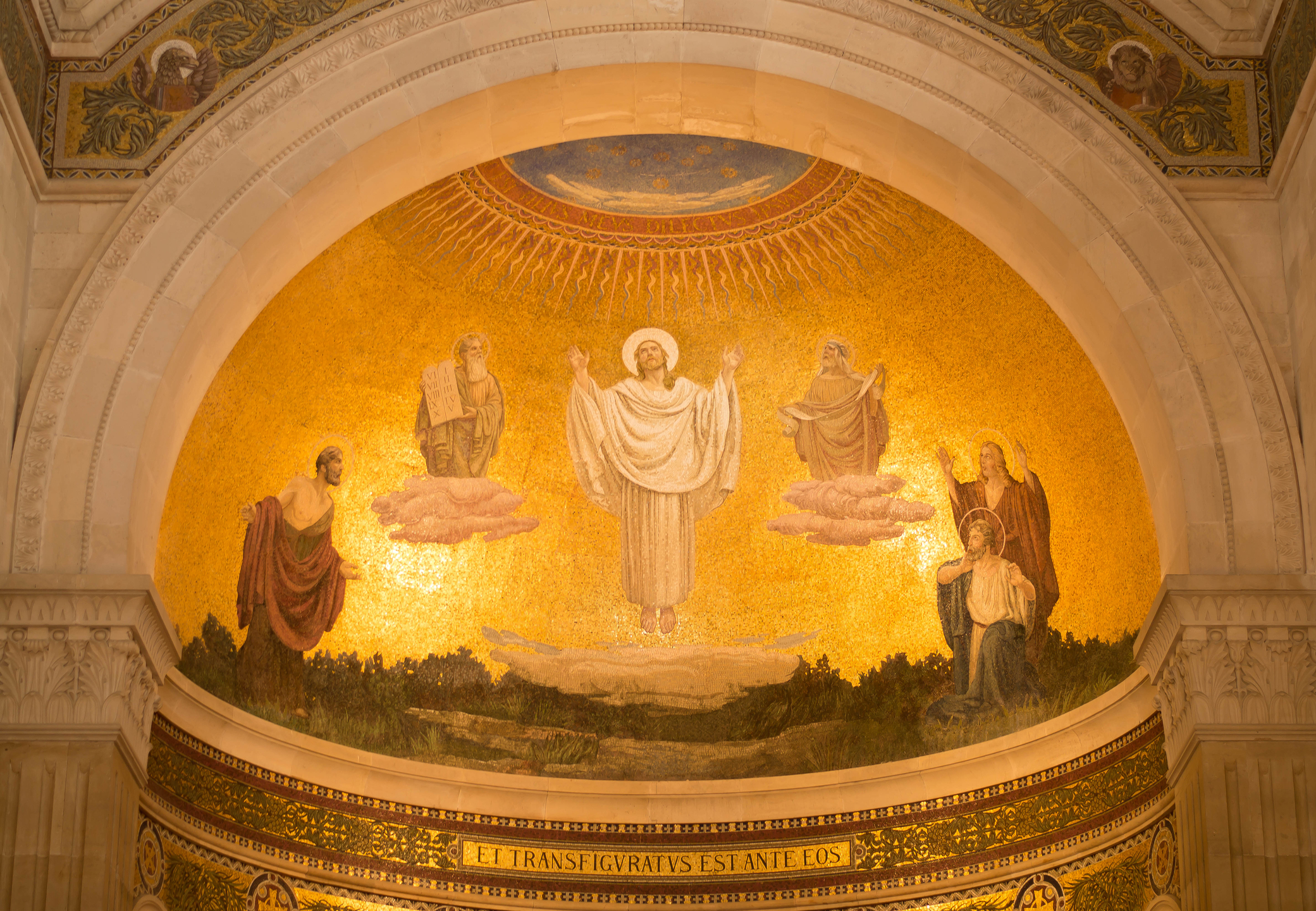
Overshadowing occurs in a different, yet similar fashion at the Mount of Transfiguration. In the following account, look for the themes of Sukkot, and key words such as mountain, cloud, a voice, glory, overshadow, build/make, revelation (awake), etc. Where have we read about these things before? Is it a coincidence that this occurred on the “eighth day”?

© Thinkart | Dreamstime.com

Luke 9:28-36 (NASB) Some eight days after these sayings, He took along Peter and John and James, and went up on the mountain to pray.  29 And while He was praying, the appearance of His face became different, and His clothing became white and gleaming.  30 And behold, two men were talking with Him; and they were Moses and Elijah, 31 who, appearing in glory, were speaking of His departure which He was about to accomplish at Jerusalem. 32 Now Peter and his companions had been overcome with sleep; but when they were fully awake, they saw His glory and the two men standing with Him. 33 And as these were leaving Him, Peter said to Jesus, “Master, it is good for us to be here; let us make three tabernacles: one for You, and one for Moses, and one for Elijah”—not realizing what he was saying. 34 While he was saying this, a cloud formed and began to overshadow them; and they were afraid as they entered the cloud. 35 Then a voice came out of the cloud, saying, “This is My Son, My Chosen One; listen to Him!” 36 And when the voice had spoken, Jesus was found alone. And they kept silent, and reported to no one in those days any of the things which they had seen. (Compare with Mat. 17:1-13, Mark 9:2-13)

The cloud that formed and “overshadowed” the disciples is the same Greek word used in the account of the Holy Spirit overshadowing Miriam (Mary). In the transfiguration, Yeshua is the bright light that casts a shadow of glory visible to Peter, James, and John. They “see” into the Spirit realm, the reality of Who Yeshua is (revelation). Time as we (and they know it) no longer applies, as even Moses and Elijah (Torah and the Prophets) are standing and talking with Yeshua on the mountaintop.

The disciples had two responses to this glorious vision. Peter speaks up and offers to BUILD or make three tabernacles or dwelling places for them, not realizing what he was actually seeing. It is Sukkot, but what he sees is the reality, not the shadow. While he’s speaking, a cloud overshadows them, which brings about their second response: FEAR. They were afraid. (Aren’t we always afraid, since the garden?) Then, a voice speaks from the cloud. As Rabbi David Fohrman would ask, “Where have we seen these words before?”

Ex. 19:9 (NASB) The LORD said to Moses, “Behold, I will come to you in a thick cloud, so that the people may hear when I speak with you and may also believe in you forever.” Then Moses told the words of the people to the LORD.

Ex. 19:16-19 (NASB) So it came about on the third day, when it was morning, that there were thunder (voices) and lightning flashes and a thick cloud upon the mountain and a very loud trumpet sound, so that all the people who were in the camp trembled.  17 And Moses brought the people out of the camp to meet God, and they stood at the foot of the mountain.  18 Now Mount Sinai was all in smoke because the LORD descended upon it in fire; and its smoke ascended like the smoke of a furnace, and the whole mountain quaked violently.  19 When the sound of the trumpet grew louder and louder, Moses spoke and God answered him with thunder (a voice).

Ex. 24:15-16 (NASB) Then Moses went up to the mountain, and the cloud covered the mountain. 16 The glory of the LORD rested on Mount Sinai, and the cloud covered it for six days; and on the seventh day He called to Moses from the midst of the cloud.

Dt. 18:15-16 (NASB) “The LORD your God will raise up for you a prophet like me from among you, from your countrymen, you shall listen to him. 16 “This is according to all that you asked of the LORD your God in Horeb on the day of the assembly, saying, ‘Let me not hear again the voice of the LORD my God, let me not see this great fire anymore, or I will die.’

In Jewish thought and teachings, the “revelation” is Mount Sinai, because that is where God revealed Himself to the entire nation of Israel.[8] Mountain tops are images or shadows of the Temple or Throne of Adonai, the place where He dwells and speaks to His people. Mount Zion is the Temple Mount in the natural, though there is still a heavenly reality. God’s Presence (Shekinah) is likened to clouds, smoke, and fire. His voice is compared to thunder, a loud shofar or trumpet blast, and even the sound of rushing water.[9] Experiencing His majesty causes mortal man to tremble.

In a sense, the entire nation was overshadowed by Adonai’s awesome Presence, Cloud, and Glory at Mount Sinai. Peter, James, and John experienced a similar preternatural revelation as they were overshadowed on the mountain of Transfiguration by Adonai’s Cloud. Like ancient Israel, they too, heard a Voice that reminded them of Deuteronomy 18:15-16 (listed above). But this wasn’t the first time that a voice spoke of the Son in the hearing of the disciples, nor would it be the last.

Mat. 3:16-17 (TLV) After being immersed, Yeshua rose up out of the water; and behold, the heavens were opened to Him, and He saw the Ruach Elohim descending like a dove and coming upon Him. 17 And behold, a voice from the heavens said, “This is My Son, whom I love; with Him I am well pleased!”

Just after His triumphal entry, but before His death, John records this account:

John 12:27-30 (NASB) “Now My soul has become troubled; and what shall I say, ‘Father, save Me from this hour’? But for this purpose I came to this hour. 28 “Father, glorify Your name.” Then a voice came out of heaven: “I have both glorified it, and will glorify it again.” 29 So the crowd of people who stood by and heard it were saying that it had thundered; others were saying, “An angel has spoken to Him.” 30 Jesus answered and said, “This voice has not come for My sake, but for your sakes.”

Glory in Hebrew is the word kavod. It means weighty or heavy, and often manifests as a cloud (or smoke). Yeshua’s prayer was for Father’s Name to be glorified. In Hebrew thought, it’s not the pronunciation of His Name that brings Him glory; rather, He (and His Name) are glorified when one obeys Him completely, no matter the cost. When the glory of YHWH filled the Tabernacle and Temple, it was a Presence so weighty that Moses, the priests, and the people couldn’t enter the space or stand to perform their services. One day, the whole earth will be filled with the holy glory of Adonai.

Num. 14:21 (NASB) But indeed, as I live, all the earth will be filled with the glory of the LORD.

This will be a time when the shadow and the reality are One, the fulfillment of Yeshua’s prayer. This is the New Jerusalem, the heavenly, coming to earth, the display of Adonai’s splendor and glory. When His glory is revealed marvelous things happen. Even our shadows can cause miracles, and it’s not by our power or might, but the glory and power of the Ruach HaKodesh.

Acts 5:15-16 (KJV) Insomuch that they brought forth the sick into the streets, and laid them on beds and couches, that at the least the shadow of Peter passing by might overshadow some of them. 16 There came also a multitude out of the cities round about unto Jerusalem, bringing sick folks, and them which were vexed with unclean spirits: and they were healed every one.

© Indiansummer | Dreamstime.com

Peter, in this instance, was truly walking in the image of Elohim as even his skia, tzelem, or shadow was full of the Holy Spirit that healed the people, the House of God. I believe that is the desire of all that follow Adonai in Spirit and Truth. A true disciple wants to be the shadow of Yeshua as He is the shadow of YHWH. When He raises His right arm, we mimic His action, just like a shadow. When He speaks, we speak. We He is silent, we are silent. Where He goes, we go. That is the way of shadows.

It might seem odd at first to think of yourself as a shadow of Yeshua. It might seem odder still that he desires a shadow to build His House by making even more disciples after His image. But that is the calling, beloved.

Mat. 28:16-20 (TLV) Now the eleven disciples went to the Galilee, to the mountain Yeshua had designated. 17 When they saw Him, they worshiped; but some wavered. 18 And Yeshua came up to them and spoke to them, saying, “All authority in heaven and on earth has been given to Me. 19 Go therefore and make disciples of all nations, immersing them in the name of the Father and the Son and the Ruach ha-Kodesh, 20 teaching them to observe all I have commanded you. And remember! I am with you always, even to the end of the age.”

Everyone needs a mountaintop revelation of Adonai. That is what the pilgrimage festivals lead one to – Zion, the Temple, the House, and the Throne of Elohim. His mountain (Spirit) overshadows, envelops, and fills faithful hearts with the heavenly pattern. It is the blueprint upon which His Kingdom is built.

Paul specifically calls eating, drinking, partaking of the feasts, new moons, and Sabbaths a shadow of the Body of Messiah. In other words, these are the things His Body does, because they reflect the heavenly reality. They keep one attached to the Head, Yeshua. The world hates the shadow and the reality, preferring a false light, the precepts of men, things that decay rather than the eternal.

Col. 2:18-23 (TLV) Let no one disqualify you by insisting on false humility and worship of angels—going into detail about what he has seen, puffed up without cause by his fleshly mind. 19 He is not holding fast to the Head. It is from Him that the whole body, nourished and held together by its joints and tendons, grows with a godly increase. 20 If you died with Messiah to the basic principles of the world, why—as though living in the world—do you subject yourselves to their rules? 21 Don’t handle! Don’t taste! Don’t touch!” 22 These all lead to decay with use, based as they are on man-made commands and teachings. 23 Indeed, these are matters that have an appearance of wisdom in self-made religion and humility and self-denial of the body—yet none are of any value for stopping indulgence of the flesh.

“The Seven Shepherds” Painting by Kisha Gallagher 2018

So, what are the sabbaths, new moons, and feasts a shadow of? What are they concealing and protecting?

Is it the body or reality of Messiah? The Gospel? The Kingdom? The Temple? The Mountain? God’s Throne? The Revelation? The Clouds of Glory? The Day of the LORD? Us?

The answer is YES! So, definitely do not let anyone judge you for doing the very things the Master taught and did. He is a good, good, shepherd.

Be like Betzalel, the son of white garments, a master builder of Adonai’s House. And, be like Miriam filled with the Seed of God, a builder of the Kingdom. Experience the fullness of the Transfiguration at the end of days (Sukkot), by following the cloud, His shadow, keeping the appointments (feasts), which are the cycles that take your feet to Jerusalem, so you can learn the pattern shown by Moses and Yeshua on the Mountain. And lastly, remember that you are hidden in Messiah (the House – Heavenly Jerusalem) as His tezelem or shadow. He is with us always even unto the end of the age.


[1]Philippians 3:5-6, see also Acts 23:6; 26:5

[2]The Complete Word Study Dictionary: Old Testament by Warren Baker. Retrieved using Strong’s number H6754 on E-Sword Bible software.

[3]Jer. 2:2 (NASB) “Go and proclaim in the ears of Jerusalem, saying, ‘Thus says the LORD, “I remember concerning you the devotion of your youth, The love of your betrothals, Your following after Me in the wilderness, Through a land not sown.”

[4]The Complete Word Study Dictionary: Old Testament by Warren Baker. Retrieved using Strong’s number H5526 on E-Sword Bible software.

[5]Ex. 12:37 (NASB) Now the sons of Israel journeyed from Rameses to Succoth, about six hundred thousand men on foot, aside from children.

[6]The actual meaning of Hur is unclear as there are several root words of which it could be derived. These roots deal with burning – literally or in anger, growing or making white – literally with textiles or pale in the face, or it could mean a hole or cavern. Based on (the man) Hur’s history in the Biblical text, I chose the meaning “white textiles.” Hur and Aaron helped Moses hold his hands up when Israel battled Amalek (Ex. 17:12), and he turns out to be the grandfather of the man that would be endowed to work in many crafts, including textiles. You can see chur or Hur translated as white fabric in Esther 1:6 and 8:15.

[7]All Believers have a ministry. Ministry is service and serving Adonai and His people. Everyone does this in some capacity as they are part of His Body, His House.

[8]Hopefully, this will inspire you to read the Book of Revelation with an adjusted perspective.

[9]I think it’s interesting that one of the Hebrew words for thunder is the same word as voice, kol. Some of the crowd in John 12 perceived the heavenly voice as thunder. Revelation, the mountain of God, the heavens, and His Throne are also accompanied by voices and thunder:

Rev. 11:19 (NASB) And the temple of God which is in heaven was opened; and the ark of His covenant appeared in His temple, and there were flashes of lightning and sounds and peals of thunderand an earthquake and a great hailstorm.

Rev. 14:2 (NASB) And I heard a voice from heaven, like the sound of many waters and like the sound of loud thunder, and the voice which I heard was like the sound of harpists playing on their harps.

Categories: Biblical Symbols, Moedim | Tags: , , , , , , , , , , , , , | 9 Comments

Overcome by a Rainbow

© Kelly Headrick
| Dreamstime.com

I can’t help myself. I have to explore the glorious rainbow a little further. I stumbled across a video on YouTube that left me speechless. The man’s reaction in the video is… contagious. His unbridled emotions upon seeing, or better yet, EXPERIENCING a double rainbow moved me so deeply that I have to extend this topic. PLEASE take the time to watch this 3 minute video and ask yourself if you’ve ever been so completely overwhelmed by God’s creation. I think the only time I’ve ever came this close was with the birth of a child.

Here is the link: http://www.youtube.com/watch?v=OQSNhk5ICTI

Did you notice his question? While overcome with the majesty of God’s bow, he kept repeating, “What does it mean?” This man realizes that the rainbow was placed in the heavens just for him. He is humbled and awed to TEARS. The wonderment he experiences overcomes him completely.

While I couldn’t see this double bow in all its vividness and glory due to the camera’s limitations, this man’s response was so passionate, so worshipful, that tears poured down my face as well. While my research has deeply affected my thoughts on rainbows, this man’s response will forever be etched into my soul.

We know what the rainbow “means.” It is the sign of Adonai’s covenant with us. It is a picture of God’s glory, His majesty, His essence. But perhaps even more striking is that it is the closest thing on earth to standing in His presence at His throne!

What will our response be when we stand in His presence? I think it will be similar to this man’s reaction to the rainbow, with one exception. Our response will be far more exuberant… wow. Even those that never knew the King of Glory in this life will buckle to the ground in awe and adoration. And they will be pierced through with what it all “means” and will also be screaming, “OH MY GOD!”

Categories: Biblical Symbols, Musings | Tags: , , | 6 Comments

Blog at WordPress.com.