Rosh Chodesh Kislev 5782 (2021)
There is something about Kislev.
© Spiroview Inc. | Dreamstime.com
It’s the ninth month, the month of dreams, and the month of dedication (Chanukah). But, if one counts the months from the civil year beginning with Tishrei, then Kislev is the third month. In other words, Kislev has attributes that are associated with the number three such as trees, gathering, new life, and resurrection. Darkness, figurative death, and chaos come before any renewal. The themes and historical events that occurred during Kislev such as light overcoming darkness, defeating the enemy against insurmountable odds, and renewing and rededicating the House of Adonai all echo the resurrection power expressed in the number three.
It is in that sense of newness and renewal, which manifests in gathering and unity, that I aim to focus on this year. The twelve months mirror the twelve tribes of Israel. The moonths are like us, reflectors of light. But also like us, they can reflect something they were never meant to mirror: a lower, earthy, or even demonic realm. It’s not a coincidence that the enemy has perverted things associated with the luminaries and time, such as months, to the point that Believers are often leery of their purposes.
In The Creation Gospel Workbook One, Dr. Alewine says, “Pagan worship deifies the sun and moon, for even in ignorance, pagans can identify signs of spiritual authority. The problem is in turning the sign into the actual authority.” (p. 69)
© Alain Lacroix | Dreamstime.com
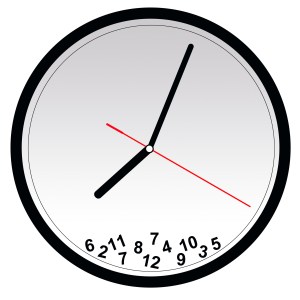
As a Creation Gospel trainer, I’ve read that passage many times. This year, it struck me differently. I could not help but wonder if Believers have made the same mistake. We are notorious for having “calendar” controversies, varying dates for first fruit festivals, and arguments of when new months should begin. The lack of unity (oneness) in the Body gets rather frustrating, and is especially confusing for those just coming to the Torah. Are these indicators of losing one’s sense of time, rather than gaining it? For the most part, individuals and groups do what is right in their own eyes when it comes to “times and seasons.” Some are contentious in this area, and others emphasize respecting other’s opinions.
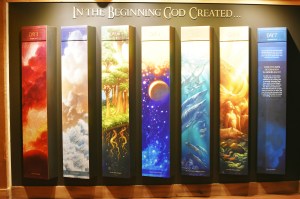
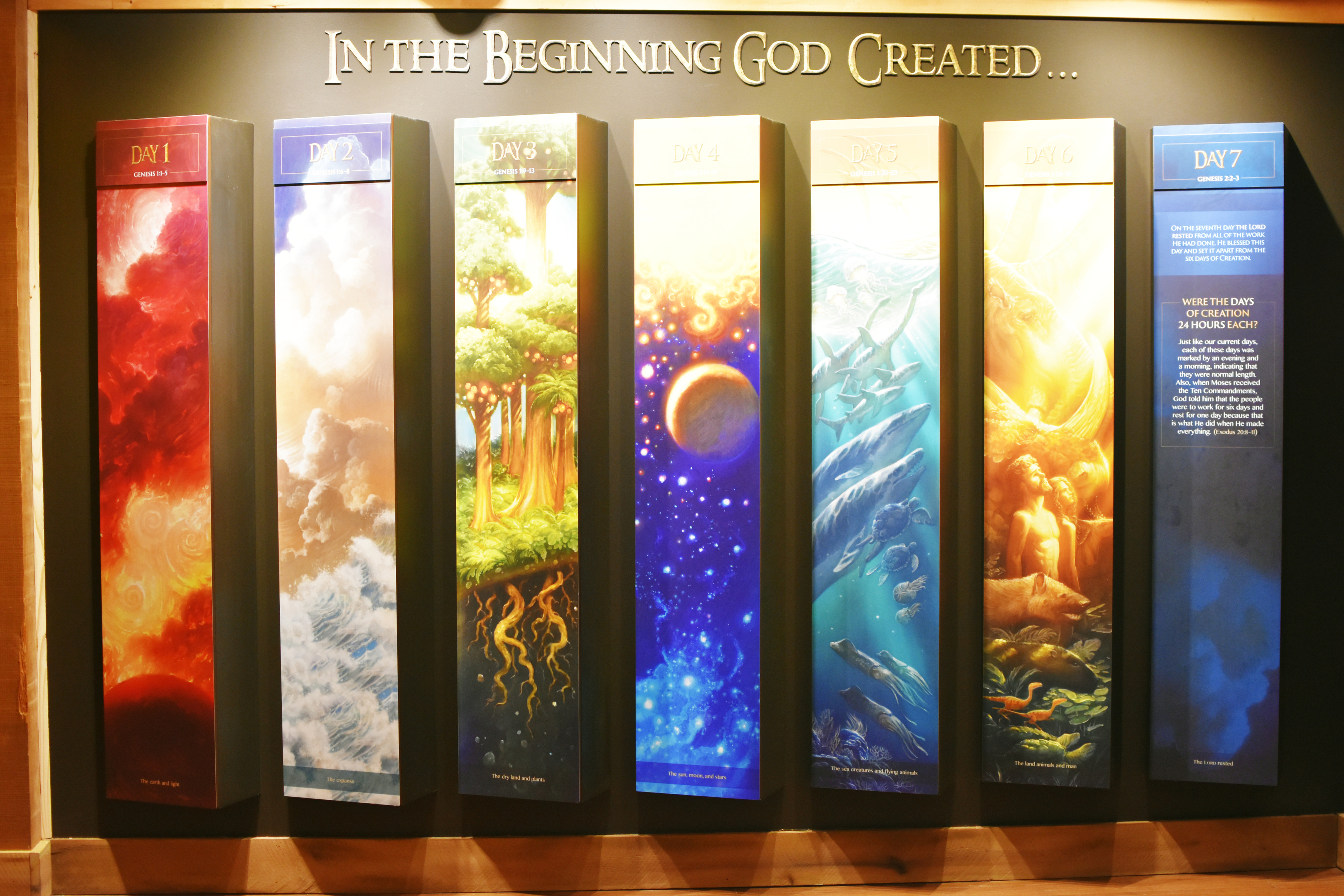
But, are our endless debates about the timing of the appointed times and months a symptom of “turning the sign into the actual authority?” There is test for Believers on Day Four. It is based in the action words of that day. For example, light separates, gives, and governs. Action is akin to one’s deeds or fruit. If natural light separates from darkness, gives light to the earth, and governs the days, months, years, and moedim, then so will those that follow the Creator of the luminaries. But there will be a constant need for discernment, because the heart of man is deceptive.
Jeremiah 17:9-10 (NASB) The heart is more deceitful than all else and is desperately sick; who can understand it? 10 I, the LORD, search the heart, I test the mind, even to give to each man according to his ways, according to the results of his deeds.
The discernment key is fruit. Because we are natural, earthy beings, we must look at physical fruit, deeds, and results to truly know or discern from which “tree” an idea, doctrine, teaching, or theory originates. In the New Jerusalem, the moedim and new moons will NOT be determined by the physical lights of day four. Instead, the “trees” will know when and how to produce fruit with only the Light of the Lamb.
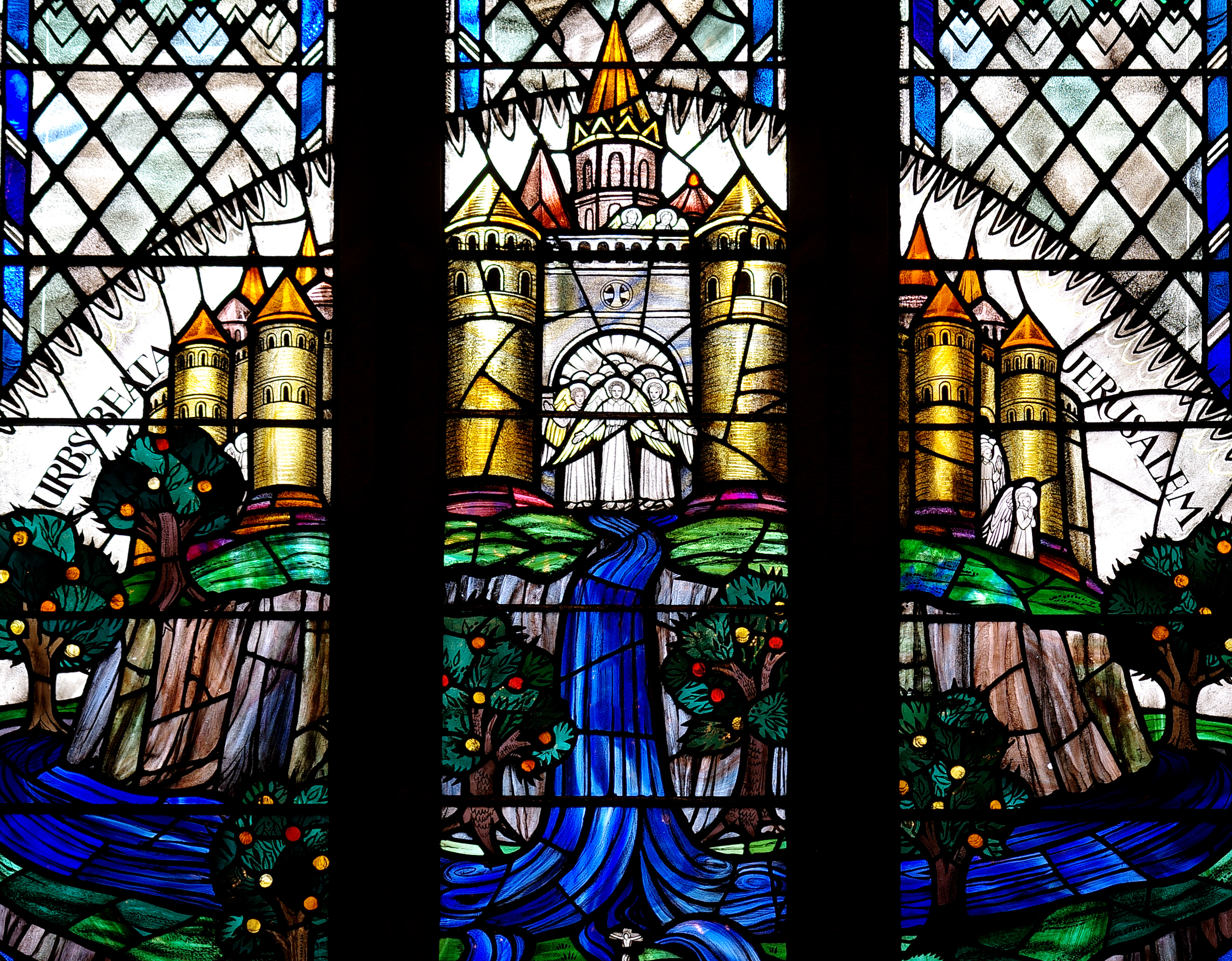
Revelation 21:23 (NASB) And the city has no need of the sun or of the moon to shine on it, for the glory of God has illumined it, and its lamp is the Lamb.
© Jozef Sedmak | Dreamstime.com
John continues into chapter twenty-two describing the glorious City, the wife of the Lamb:
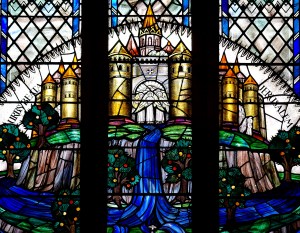
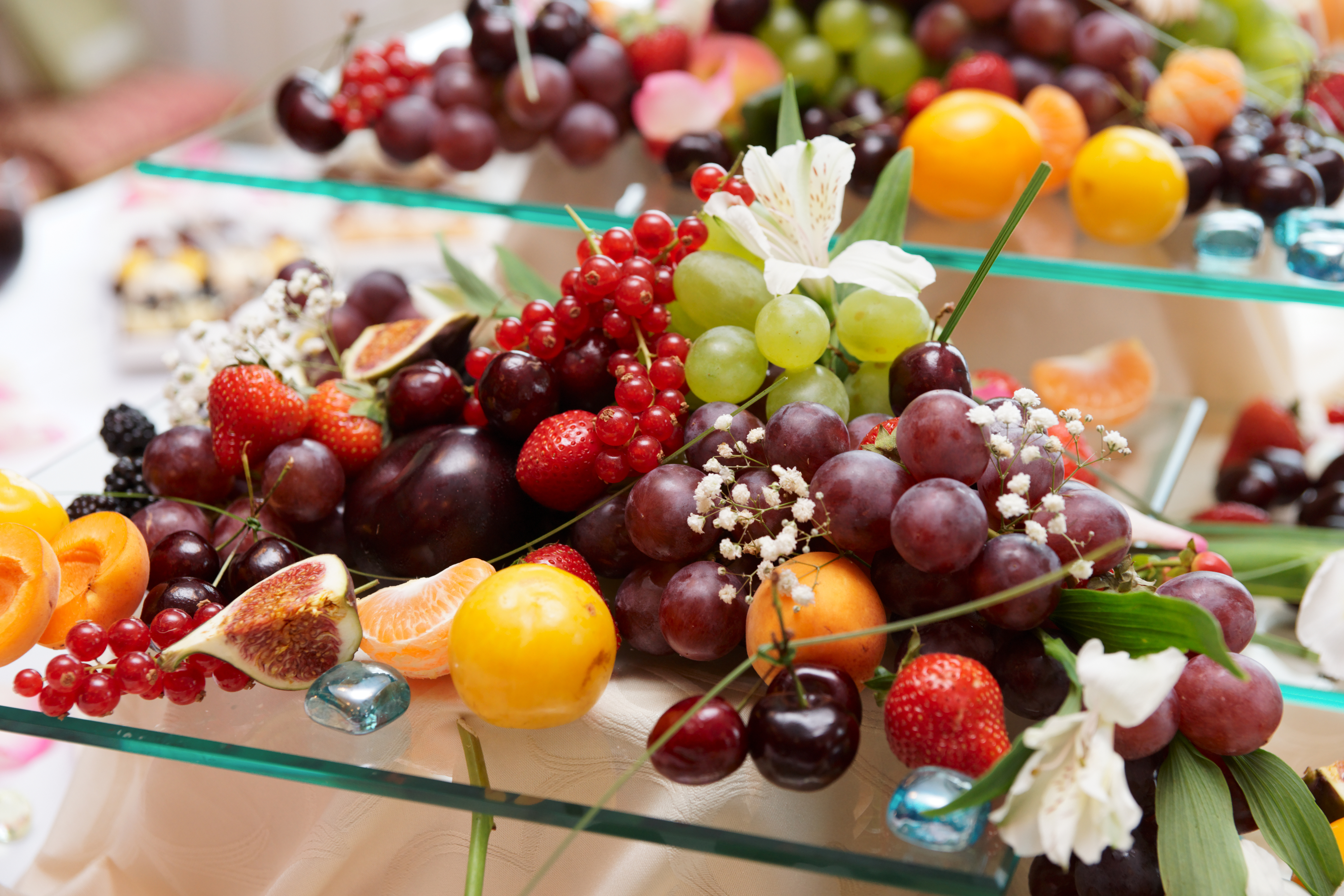
Revelation 22:1-2 (NASB) Then he showed me a river of the water of life, clear as crystal, coming from the throne of God and of the Lamb, 2 in the middle of its street. On either side of the river was the tree of life, bearing twelve kinds of fruit, yielding its fruit every month; and the leaves of the tree were for the healing of the nations.
Revelation 22:5 (NKJV) There shall be no night there: they need no lamp nor light of the sun, for the Lord God gives them light. And they shall reign forever and ever.
Revelation 21:23 says that the city is illuminated by the glory of the Lord, and it’s lamp (vessel that gives light) is the Lamb. This is a return to One Day, when the first spoken words of God in the Bible are, “Light be” or “Let there be light.” The light of One Day (day one) was not the physical lights placed in the rakiah or expanse; rather, it is the same light mentioned at the end with New Jerusalem. It is Spiritual.
Kislev is the last of the three autumn months on the Jewish calendar. It signals colder days, less daylight, and the coming winter. This makes it an opportune time to meditate on death that leads to new life, a type of darkness, and then Light. Winter, then spring. Seed, then sprouts and fruit. And, eventually, a time when those cycles will cease, and will become all light, and ever-bearing fruit.
Ezekiel 47:12 (NASB) By the river on its bank, on one side and on the other, will grow all kinds of trees for food. Their leaves will not wither and their fruit will not fail. They will bear every month because their water flows from the sanctuary, and their fruit will be for food and their leaves for healing (medicine).
© Waamel | Dreamstime.com
What or who are these trees?
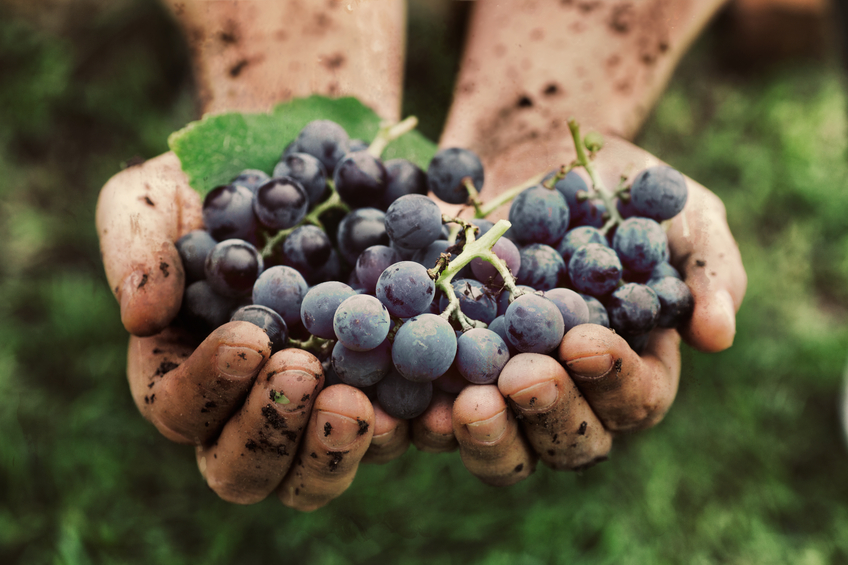
In Hebrew, the fruit that the trees bear is a “first fruit,” just as Messiah, and you and I, are a type of firstfruits of the Kingdom. Rosh Chodesh is the feast of the born again, or of those born from above, the first fruits of the earth. The renewal of the moonths testify of this heavenly reality. The “head” of the month is a picture of the whole, just as Messiah is the head, and we are His Body.
There is a reason that God chose to use the particular time frame of “months” to describe when the tree of life bears fruit in Jerusalem above.[1]
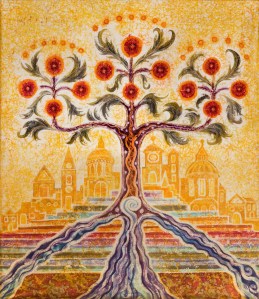
The trees are plural in Ezekiel. They refer not only to Messiah, but to His Body, who are grafted into Him and one another. His people partake of and abide in Him and the Word, and become echad, a perfect unity, like the menorah tree. Trees are common idioms for people in Scripture, and both are designed to produce fruit.
Psalms 1:1-3 (NASB) How blessed is the man who does not walk in the counsel of the wicked, nor stand in the path of sinners, nor sit in the seat of scoffers! 2 But his delight is in the law of the LORD, and in His law he meditates day and night. 3 He will be like a tree firmly planted by streams of water, which yields its fruit in its season and its leaf does not wither; and in whatever he does, he prospers.
Proverbs 11:30 (NASB) The fruit of the righteous is a tree of life, and he who is wise wins souls.
Living in the realm of Jerusalem above, with only the Light of the Lamb, one knows the months and the moedim without the sun and moon. The result is abundant fruit, and the ability to bear that fruit every month in the Spirit of Adonai. If that’s true above, can it be true below, here in the earthly realm? If yes, what will it require from us?
© K. Gallagher
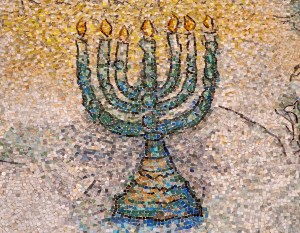
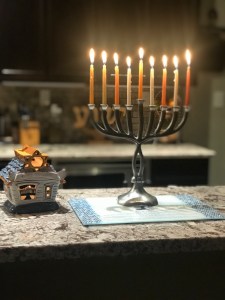
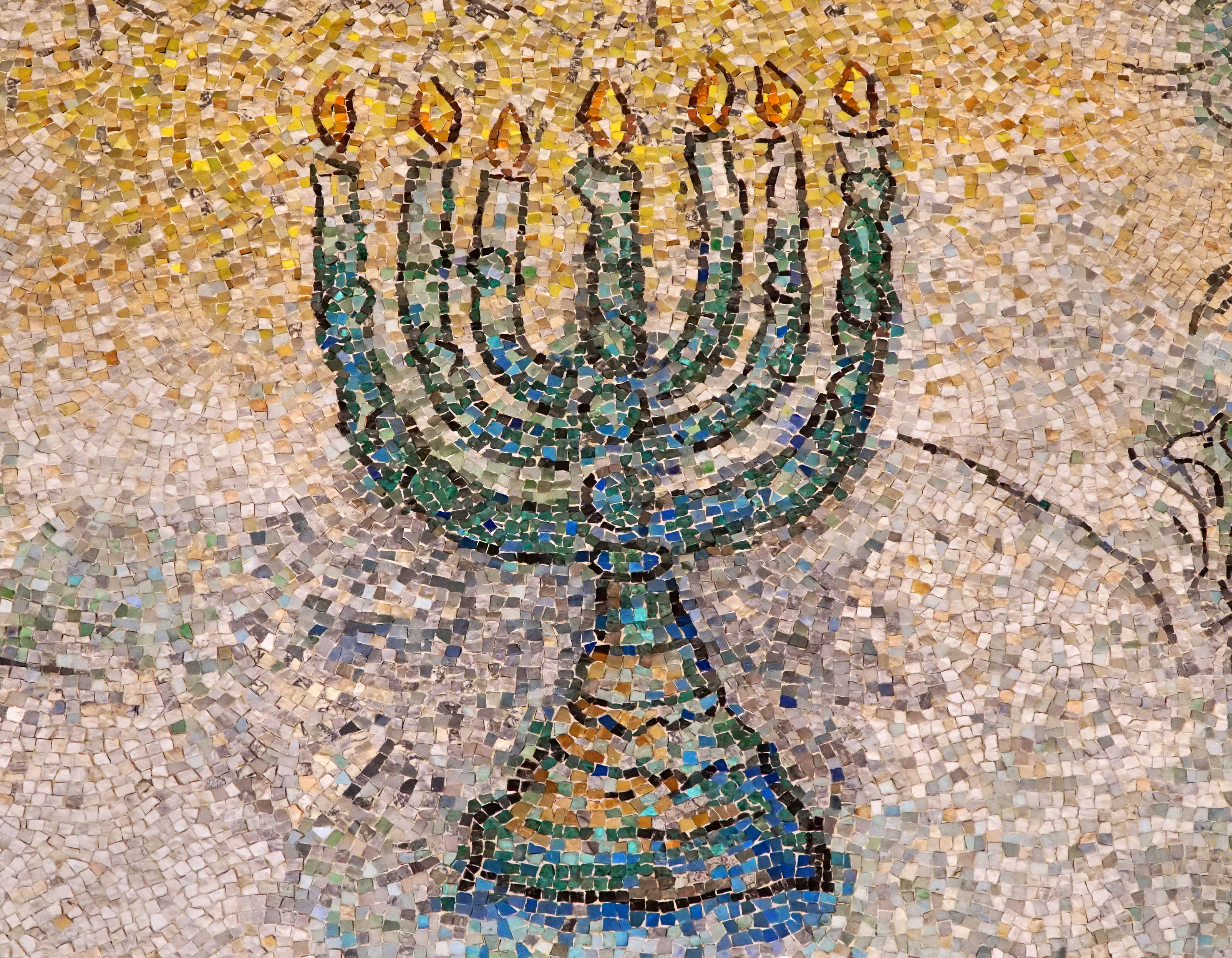
During Kislev, Chanukah is celebrated with a menorah, a lamp, or a vessel that gives light.[2] In the Torah, the menorah was fashioned after the almond tree.[3] A menorah is a tree with LIGHTS. It represents Resurrection, Woman Wisdom, the Spirit of God, and the Tree of Life. Yeshua chose the menorah to represent His assemblies (churches) in the Book of Revelation, because He is figured as the One in the midst of this “tree” or lamp. He is the root and stem of Jesse, full of the seven fiery spirits of God.[4] We are One with Him, and should produce His light and fruit. The light of the menorah was to be an ever-burning flame. Spiritual light burns continually, but does not consume. This hidden light separates in order to gather in unity.
Exodus 27:20 (NASB) You shall charge the sons of Israel, that they bring you clear oil of beaten olives for the light, to make a lamp burn continually.
Believers all look to the same physical lights and earthly evidence and make judgments, to obediently meet the Creator at His appointed times. But, we don’t all come to the same conclusions. Rather than being unified in the calendar, which is the testimony of God’s authority in the earth, we are greatly divided. A lot of rotten fruit (false light) results from our endless debates.

© Fedor Kondratenko | Dreamstime.com
In the Heavenly City, of which we are a citizen, the trees manage to do something no earthly tree can: they produce twelve fruits every month. This is enough for ALL twelve tribes of united Israel. They are all in one accord when they do not depend solely upon the shadow world’s earthly luminaries.
One Day the natural luminaries will fail, decay, and be no more.[5] In fact, like us, they are fading even now. It occurred to me this Kislev, that if our eyes trust only in the natural light (something decaying), we will never be unified, because death is a separation, not a gathering. Our new life in Messiah includes gathering with one’s brothers and sisters. Anything that works to their exclusion, especially private interpretations of prophecy (the feasts are prophecy!), is not a tree of life (or light) capable of yielding twelve kinds of fruit.
2 Peter 1:18-21 (NKJV) And we heard this voice which came from heaven when we were with Him on the holy mountain. 19 And so we have the prophetic word confirmed, which you do well to heed as a light that shines in a dark place, until the day dawns and the morning star rises in your hearts; 20 knowing this first, that no prophecy of Scripture is of any private interpretation, 21 for prophecy never came by the will of man, but holy men of God spoke as they were moved by the Holy Spirit.
Being echad (one) is not possible without God and His Spiritual light. I believe that the calendar of God is intentionally ambiguous, because it is a test of authority in the hearts of mankind, especially Believers. I am not suggesting that we toss out the physical luminaries as the markers of Adonai’s set times. They are, in our natural realm, needed governors.[6] However, there remains a much greater reality, that cannot be ignored in our calculations.
© Hannah Babiak | Dreamstime.com
Kislev ends within the days of (re)dedication or Chaunkah every year. Since we are a type of Temple, it’s always a good idea to cleanse and rededicate our hearts to Adonai. Sometimes things creep in while we are unaware, distracted with the cares of life, sleeping, sick, grieving, or when we’ve been under attack. At this season, while the feast cycle is dormant during the darkness of winter, reconsider God’s prophetic calendar. It should produce a harvest, not havoc in one’s life and the lives of fellow Believers. As a tree in the Kingdom, carefully inspect the fruit you have produced, and are producing, for the feast days center around these very things. May we continue to grow in fruit and love for the brethren. May we dream of being Echad!
Questions for Reflection:
- Why do you think the tree of life in Jerusalem above produces twelve kinds of fruit every month?
- Why did Adonai choose to use a “monthly” timeframe in Ezekiel and Revelation’s depiction of the fruit of the Tree of Life?
- If the leaves of the tree are for the healing of the nations, what or who are the twelve fruits for? (See footnote 1.)
- Can one keep the moedim and new moons without relying on the signs of the physical luminaries?
- Did the Maccabees have the authority to celebrate a late Sukkot in the form of Chanukah? Do you think the Spirit of God was pleased or displeased with their reasoning?
- Did Chanukah unify or divide the House of Adonai?
- Why did the sages choose to use a menorah to commemorate the days of dedication? Do you think their custom is spiritually valid? Why or why not?
- How does the symbolism of the menorah fit into the theme of trees, light, and Chanukah? Give at least two answers.
- According to John 13:35, will Yeshua’s disciples be known by their perfect calendars, or by their love for one another?
- What is the purpose of the months and the moedim?
- If the moedim prophetically figure the eternal oneness of Adonai, Messiah, His Body, and how God accomplishes this in and for us, what is disunity a testimony of?
Ephesians 4:1-6 (NASB) Therefore I, the prisoner of the Lord, implore you to walk in a manner worthy of the calling with which you have been called, 2 with all humility and gentleness, with patience, showing tolerance for one another in love, 3 being diligent to preserve the unity of the Spirit in the bond of peace. 4 There is one body and one Spirit, just as also you were called in one hope of your calling; 5 one Lord, one faith, one baptism, 6 one God and Father of all who is over all and through all and in all.
12. Based on the passage above, how important is unity?
[1] To help see this, consider these questions: Who do we produce fruit for? Is it for ourselves or for others? To put it another way, who benefits when we keep commandments such as the feast days? Do we obey for ourselves or for others? If one says they do so for Adonai, why do so many mitzvot deal with how one treats their neighbor? Have we missed something vital that the Tree of Life teaches in Revelation 22:2? Who is reflected in the months? Adonai or His people?
[2] The Hanukkiah has eight branches and one shamash or servant candle, for a total of nine branches. The eight branches represent the eight days of Dedication or Chanukah, and the menorah itself figures the seven branched menorah in the Tabernacle/Temple that GIVES light. The ninth branch on the Hanukkiah is the servant light that ignites the other branches.
[3] Exodus 25
[4] Isaiah 11:1-3; Revelation 1:4; 3:1; 4:5; 5:6
[5] 2 Peter 3:10-13
[6] Genesis 1:14-19





 GRACE in TORAH
