15th of Shevat (eleventh month)
February 11th, 2017 (begins at sundown on the 10th)
Rosh HaShannah La’ilanot
© K. Gallagher
As of late, I’ve been reading a very interesting book called, The Hidden Life of Trees by Peter Wohlleben. While this isn’t a spiritual book, I cannot help but notice once again how the natural things teach spiritual truths. In the book, Mr. Wohlleben explains the marvelous activities of trees in life, death, and regeneration. Trees (in forests) live, communicate, support, and tend to one another. They detect and warn others of parasites and insects that cause harm, and can even release toxins to kill such threats. Deep in the soil, their roots work with fungi, creating a biological internet to communicate and share vital nutrients with sick trees and even the stumps of fallen family members, keeping them alive. However, trees can also shun other trees, robbing them of nutrients and sunlight. They tend to share only with those that are direct family members.
Interestingly, humans could not survive on earth without trees. They produce most of the oxygen that people and animals breathe. There would be no rain without trees, since trees absorb water from the soil and release it through evapotranspiration back into the air in the form of clouds. Forests are earth’s air filters, without which, we’d all die from pollutants. Trees prevent topsoil erosion, break the force of wind and rain, and their decaying leaves enrich the soil for other trees and plants.
In the Bible, trees (etz) were created on the third day, linking them with the Spirit of Counsel (Etzah), the Feast of early Firstfruits, and resurrection. The Biblical imagery of trees and their direct comparison to people is astounding. In fact, the only person that required a second touch from Yeshua for healing exclaimed, “I see men like trees, walking.” (Mark 8:24 NKJV) Yeshua actually spit in this blind man’s eyes. I am of the opinion that Yeshua’s saliva “over-healed” this man, if you will, and he saw too well (spiritual), requiring an additional touch (a tamping down) to see as a man.
People have trunks and limbs. They grow roots, have seeds, and produce fruit. Trees and people feel pain and bleed when wounded. Both breathe and sway (move) when the wind (ruach) blows upon them. The growth of trees and people are deeply affected by the type of soil, the volume of water, and the amount of sunlight that they receive. Even the House (Temple) of YHWH is built with both trees and people. (2 Chron. 2, 1 Cor. 6:19) Thus, it is no wonder that the Scriptures abound with analogies, metaphors, similes, and puns that compare mankind to the majestic trees of the forest.
In this post, I hope to illuminate the surprising connections between the month of Shevat, trees (seed to fruit), Messiah, resurrection, water, and Torah. My hope is that you will be inspired to explore Judaism’s traditional New Year for Trees with fresh eyes, like the healed blind man. Tu B’Shevat or Shevat 15th is not mentioned in the Torah. However, it is mentioned in the Mishnah, where it is called the New Year for Trees.[1] Why in the world do trees need a new year and what benefit is this for a follower of Messiah?
First, it is helpful to understand the four different Rosh Hashanim[2] or New Years celebrated in Judaism. They are the following:
- Nisan 1st is Rosh Hashanah for the months and the festival or feast calendar. (Ex. 12:2) It is also Rosh Hashanah for calculating the years of the reign of the Kings of Israel. No matter when a king was crowned, his first year ended and his second year began on that day. Thus, if a king was anointed in the month of Adar, the following month of Nissan would be the beginning of the second year of his reign.
- Elul 1st is Rosh Hashanah for the tithing of animals. A farmer is obligated to tithe his livestock, consecrating every tenth animal. The 1st of Elul became the mark to separate the year for tithing cattle.
- Tishrei 1st is Rosh Hashanah for years, Sabbatical years, and Jubilees. It is also marks the “change,” and judgment of mankind.
- Shevat 15th or Tu b’Shevat is Rosh Hashanah for trees. The sages designated the fifteenth of Shevat as the boundary between one year and another regarding fruit trees for tithing purposes. All fruits which blossom before Shevat 15 are a product of the rains of the previous year, and are tithed together with the crops of the previous year. Fruits that grow after this date are produce of the new year. Like Elul 1st and the new year for cattle, this demarcation was instituted so one could tithe without confusion. This also helps one determine whether it is a permissible year to consume fruit from a tree (the first three years a tree produces, the fruit may not be eaten[3].
© K. Gallagher
Below, we will briefly examine the following relationships:
- The Early and Latter Rains (Water and Torah)
- Pesach and Sukkot (Trees, People, and Torah)
- Celebrating Tu B’Shevat (Seder: Wine, Seeds/Nuts, & Fruit)
Early and Latter Rains
The roots for Tu B’Shevat are found four months prior when Sukkot is celebrated. One of the major themes for the Feast of Tabernacles is water, especially in the form of rain. Prayers are offered up for rains in their season, which is a direct reference to the early rains in Israel.
“It shall come about, if you listen obediently to my commandments which I am commanding you today, to love the LORD your God and to serve Him with all your heart and all your soul, that He will give the rain (matar) for your land in its season, the early (yoreh) and late rain (malqosh), that you may gather in your grain and your new wine and your oil. (Dt. 11:13-14)
Rain in season is essential for trees that will bloom in spring. Thus, the prayers and water ceremonies from Sukkot look forward to the future feast and harvest cycles of the coming festival New Year of Nisan. The timing of the early and latter rains in Israel can be confusing to a westerner. We tend to associate the early part of the year with January or spring, but in Hebraic thought the civil year begins in the fall with the 1st of Tishrei. Thus, when the Bible speaks of the early rains, it is implying the time just after Sukkot in the fall. The latter rains fall near Pesach (Passover).
So rejoice, O sons of Zion, And be glad in the LORD your God; For He has given you the early rain for your vindication. And He has poured down for you the rain, The early and latter rain as before. (Joel 2:23 NASB)
In Hebrew, the word for “early rain” in the underlined phrase above is moreh (H4175). This is also the word for TEACHER. The actual word for early rain is yoreh as used in Deuteronomy above. However, Joel chose to use one of its cognates, moreh, to ensure that we didn’t miss his connection between rain and teaching. They both share the Hebrew root yarah, meaning to cast or throw (like an arrow). This is also the root word for Torah.
The Torah of Adonai is like an arrow being shot at its target. It delivers precise information from teacher to student. It is also like the gentle rains that fall from heaven to soften up the soil (hearts) to receive His Seed.
“Let my teaching drop as the rain, My speech distill as the dew, As the droplets on the fresh grass And as the showers on the herb. (Dt. 32:2)
The NASB of Joel 2:23 states that YHWH gives the Teacher or early rains for our vindication, but the Hebrew texts actually says it is for our tzedakah or righteousness. Perhaps Young’s Literal Translation of this verse will put this into perspective:
And ye sons of Zion, joy and rejoice, In Jehovah your God, For He hath given to you the Teacher for righteousness, And causeth to come down to you a shower, Sprinkling and gathered—in the beginning. (Joel 2:23 YLT)
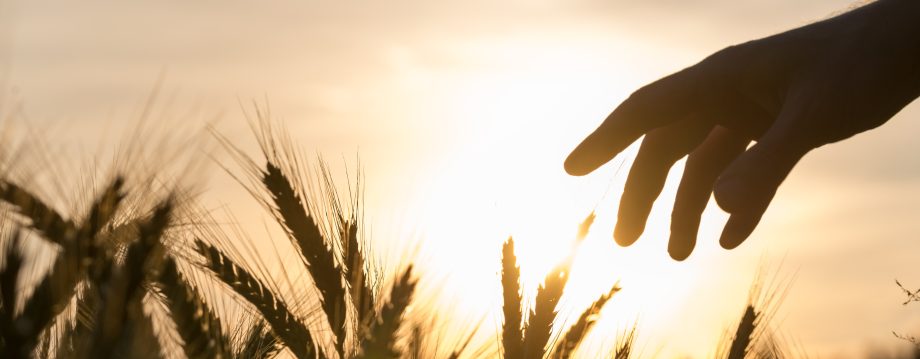
Very simply, the early rains are associated with the Teacher of Righteousness and His Word, the Torah. Why? Because the Word is a Seed and seeds require rain or water to sprout and grow and eventually produce fruit that has more of the same seed within it. The early rains (Torah) also soften the hard earth after a long, hot summer, allowing seeds to be planted in favorable soil.
Tu B’Shevat occurs between the early and latter rains. At this point, sap begins to rise through the veins of trees, pricking them to awaken from their winter sleep. This mirrors resurrection, new life, and renewal. Dormant seeds know that the time to spring from their earthly graves is near. Thus, the month of Shevat, the time between Sukkot and Pesach, is pregnant with the energy of new life. In fact, the sages teach that on the 15th of Shevat, a unique wave of Divine energy flows through all of creation as a forerunner to restoration and rebirth (in spring).
© K. Gallagher
It was on the first day of the Hebrew month of Shevat that Moses recited the book of Deuteronomy to the people of Israel. Once again, this links Shevat with receiving the Seed and the Rain, YHWH’s divine instructions:
These are the words which Moses spoke to all Israel across the Jordan in the wilderness, in the Arabah opposite Suph, between Paran and Tophel and Laban and Hazeroth and Dizahab. It is eleven days’ journey from Horeb by the way of Mount Seir to Kadesh-barnea. In the fortieth year, on the first day of the eleventh month, Moses spoke to the children of Israel, according to all that the LORD had commanded him to give to them. (Dt. 1”1-3)
Sukkot and Pesach
The Teacher of Righteousness (Messiah) was given to Israel in the season of the early rains, as He was born during Sukkot. He was also the Living Waters and the Lamb needed at Passover in the spring when the latter rains saturate Israel. If this still seems a little backwards to you, consider that time is a cycle or circle in Hebraic thought and that Passover and Sukkot mirror one another.
For example, Pesach and Sukkot are exactly six months apart and like Tu B’Shevat they always occur on the 15th of their respective month. This means that all three dates occur on the full moon when there is the most physical and spiritual light in the darkness. Both Passover and Sukkot commemorate the exodus from Egypt, slavery, and bondage. Moreover, they are the only two festivals that the Torah specifically calls a chag rather than a moed in Leviticus 23. The Hebrew word chag means to make a cycle or circle with your feet.[4]
© Dreamstimelirika
| Dreamstime.com
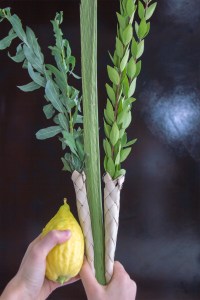
One of the most astounding links between Tu B’Shevat and Sukkot are the commanded four species that are waved during the festival.
On the first day you are to take choice fruit of trees, branches of palm trees, boughs of leafy trees, and willows of the brook, and rejoice before Adonai your God for seven days. (Lev. 23:40 TLV)
Have you ever wondered why trees are used to commemorate the Israelite’s trek through the desert? We know that their diet consisted of manna from Heaven and water from a Rock. Could it be that the trees (Lulav and Etrog) that are waved at Sukkot represent the people? The Torah asks us a rather odd question in Deuteronomy 20:19, “Is the tree of the field a man?” While the context deals with war and is meant to define which trees can be cut down as tools to besiege a city, the association with men and trees are found elsewhere. Consider these verses:
But I—I am like an olive tree flourishing in the House of God. I trust in God’s lovingkindness forever and ever. (Ps. 52:10 TLV)
The righteous man will flourish like the palm tree, He will grow like a cedar in Lebanon. Planted in the house of the LORD, They will flourish in the courts of our God. They will still yield fruit in old age; They shall be full of sap and very green. (Ps. 92:12-14 NASB)
“They will not build and another inhabit, They will not plant and another eat; For as the lifetime of a tree, so will be the days of My people, And My chosen ones will wear out the work of their hands. (Is. 65:22)
Does Sukkot’s mirror, Passover, have any associations with trees? Yes! The people were to take hyssop branches to apply the blood of the lamb upon their doorposts and lintels. (Ex.12:22) Many centuries later, on another Passover, Yeshua was crucified on a tree. When death was nearly upon him, he said, “I thirst.” They took a hyssop branch with a sponge on the end of it and soaked it in vinegar and myrrh. They lifted it up to his mouth, but Yeshua refused it. (Mt. 27:34, Mark 15:23, John 19:29) The hyssop tree is also mentioned along with the Torah, water, people and the blood of the covenant:
For when every commandment had been spoken by Moses to all the people according to the Law, he took the blood of the calves and the goats, with water and scarlet wool and hyssop, and sprinkled both the book itself and all the people, saying, “THIS IS THE BLOOD OF THE COVENANT WHICH GOD COMMANDED YOU.” (Heb. 9:19-20)
Trees are intrinsic to both the beginning and the end. In Genesis, we see both the Tree of Life and the Tree of Knowledge of Good and Evil. In Revelation, Trees of Life line the banks of the River of Life. In Proverbs 3, the Spirit of Wisdom is a Tree of Life to those that cling to her. In Jewish tradition, the large spindles that carry Torah scrolls are called Trees of Life and the many sections of parchment are called its leaves.
The holy seven-branched menorah is also a Tree of Life, and is modeled after the almond tree. Interestingly, almond trees are the first trees to “wake-up” and bloom in Israel. The imagery of light, oil, buds, blossoms, and, eyes all add to the heavenly pattern of the menorah/tree being a symbol of resurrection and the power of the Holy Spirit. Moreover, the Hebrew word for tree, etz, is the same word for counsel, etzah. Thus, we find wise counselors like Abraham and Deborah near trees.
© K. Gallagher
Messiah compares our ability to understand and discern His truth with four different types of soil receiving Seed[5], which are amazingly similar to the four-species waved at Sukkot. According to Yeshua, it is entirely possible to hear and see and not understand. Understanding is another Spirit of G-d, Binah.
Our good works and outward treatment of others is likened to fruit. Since we cannot possibly know the heart of another person, Yeshua reminds us that a tree is known by its fruit, for it reveals the seed from which it sprouted. (Mt. 12:33-37) YHWH even gave specific instructions for fruit trees in the Torah:
‘When you come into the land, and have planted all kinds of trees for food, then you shall count their fruit as uncircumcised. Three years it shall be as uncircumcised to you. It shall not be eaten. But in the fourth year all its fruit shall be holy, a praise to the LORD. And in the fifth year you may eat its fruit, that it may yield to you its increase: I am the LORD your God. (Lev. 19:23-25 NKJV)
Thus, discernment is key. For even if the fruit we see and taste came from good seed, it can still be uncircumcised and unfit for consumption in its sour immaturity. People are inherently connected with seeds, trees, and fruit. Hopefully, the tree we choose to partake of is the Tree of Life and not the one that simply makes one wise with the knowledge of good and evil. We must choose life.
The counterfeit tree is deceitful and its fruit enticing. Nebuchadnezzar had a dream of himself and his kingdom that YHWH equated to a mighty tree. (Dan. 4:10-16) Moreover, the wicked are planted in the earth like tree:
I have seen a wicked, violent man Spreading himself like a luxuriant tree in its native soil. (Ps. 37:35)
Israel is to be like the precious fruit trees that grow from the Seed of the Torah (Messiah) into a flourishing plant that gives sustenance and shade to others. Birds, like the sweet dove of the Holy Spirit, will nest in such branches. (Mt. 13:31-32) Notice the imagery and links between counsel, Torah, water, trees, leaves, and fruit that the psalmist uses in Psalm 1:
How blessed is the man who does not walk in the counsel of the wicked, Nor stand in the path of sinners, Nor sit in the seat of scoffers! But his delight is in the law of the LORD, And in His law he meditates day and night. He will be like a tree firmly planted by streams of water, Which yields its fruit in its season And its leaf does not wither; And in whatever he does, he prospers. The wicked are not so, But they are like chaff which the wind drives away. Therefore the wicked will not stand in the judgment, Nor sinners in the assembly of the righteous. For the LORD knows the way of the righteous, But the way of the wicked will perish. (Psalm 1)
In Romans 11, the Jewish people are called the holy, natural branches of an olive tree. Those of the nations are grafted into this tree and receive the same rich sap from its Root. Paul warns the grafted-in wild branches to not become arrogant against the natural branches, but rather to FEAR. Judah indeed holds a scepter of authority over the House of YHWH.[6] Not coincidently, the Hebrew word for scepter is shevet, the very name of this month (Shevat)![7] It also means a scion (graft), branch, rod, shepherd’s staff, and even a tribe.
In modern times, Jews have been planting trees in the land of Israel to honor righteous Gentiles such as Oscar Schindler and Corrie ten Boom, who helped save Jewish lives during the Holocaust.[8] These trees are planted in Jerusalem at the Holocaust museum in the Garden of the Righteous at Yad Vashem.
As you can see, the connections with people and trees are many. I have only briefly explored this concept. If nothing else, I hope you are inspired to research trees in Scripture during this season of transition. I pray that you bloom in the rich soil in which Adonai has planted you and that you continue to draw life giving nutrients from our Root, Yeshua.
Trees

By Joyce Kilmer

I think that I shall never see
 A poem lovely as a tree.
 A tree whose hungry mouth is prest
 Against the earth's sweet flowing breast;
 A tree that looks at God all day,
 And lifts her leafy arms to pray;
 A tree that may in summer wear
 A nest of robins in her hair;
 Upon whose bosom snow has lain;
 Who intimately lives with rain.
 Poems are made by fools like me,
 But only God can make a tree.
Celebrating Tu B’Shevat
How can we make Tu B’Shevat meaningful? Consider some of the following activities:
- Plant a tree! Or start some seeds for the spring.
- Give the gift of fruit (or money) to the needy. Or volunteer to help feed or nurture them.
- Study trees, tithing and/or the seven species of Israel in the Bible (Dt. 8:8)
- Prepare a meal that includes various seeds, leaves, and fruit. Discuss with your family.
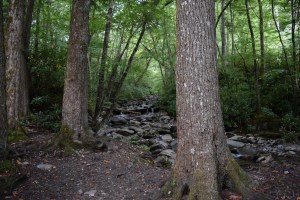
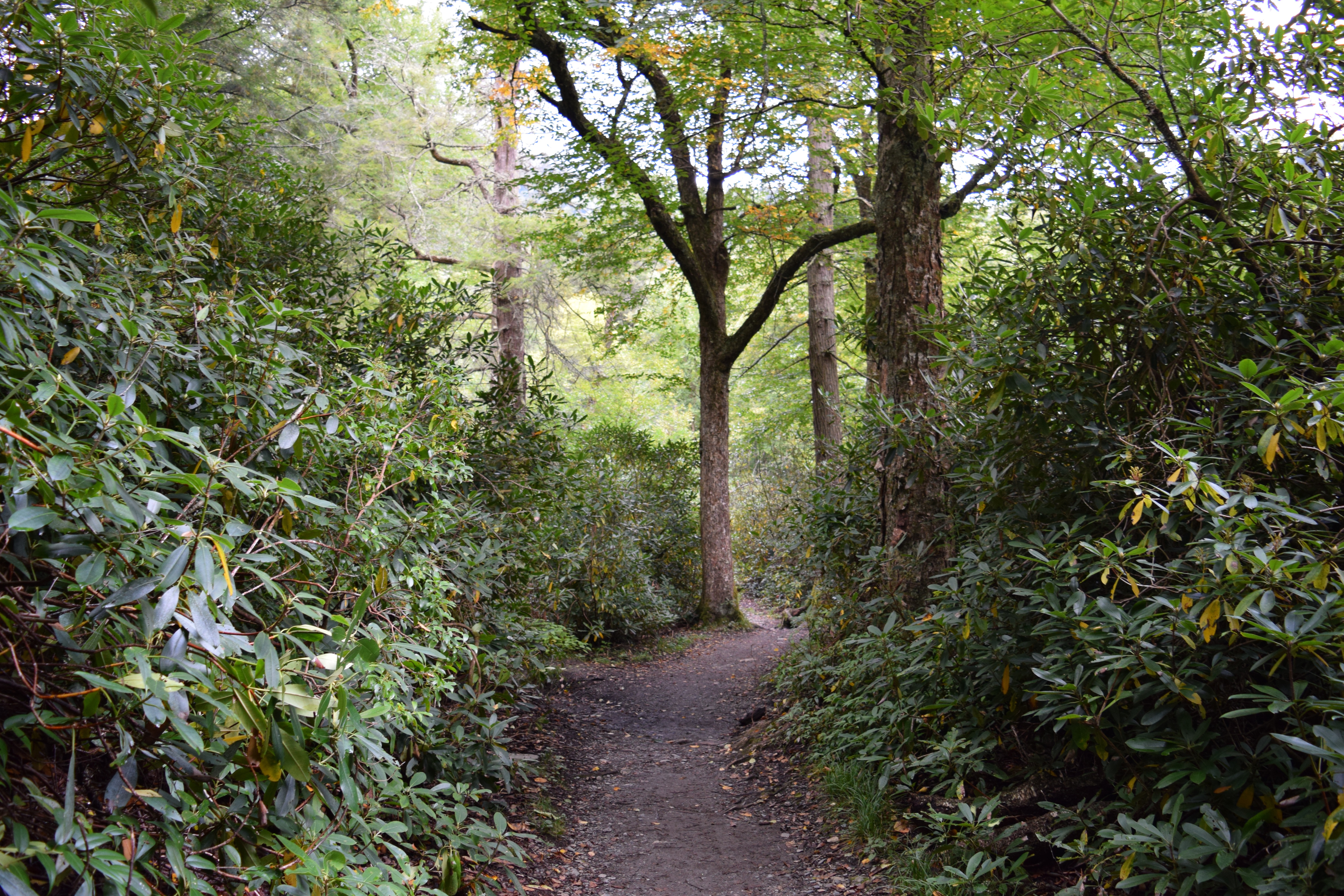
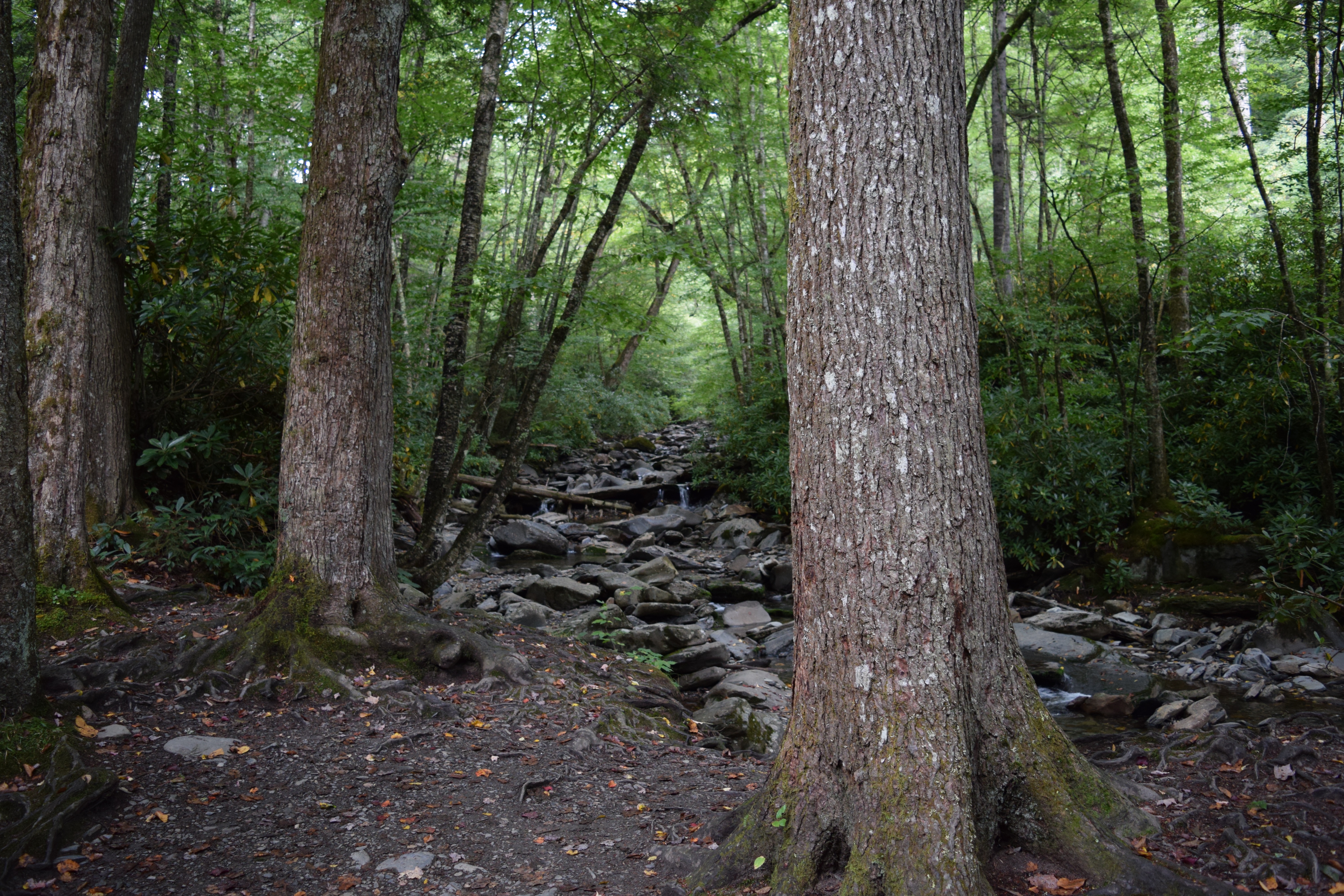
- Take a walk or hike through forested land and thank the Creator for the mighty trees.
- Recite Psalm 104.[9] Or the Psalms of Accent (120-134).
- Host a Tu B’Shevat Seder. (Explained below.)
Intriguingly, the rabbis have developed a seder, complete with haggadah, to lead the family through the new year for trees, further linking Tu B’Shevat to Passover. Like the Passover haggadah, there many versions to choose from. A basic outline is as follows:
The service often begins by singing Psalm 133 or the “Hinei Ma Tov”. This song recalls our familial connections to Israel’s family TREE. During the ceremony, each participant will drink 4 cups of wine (or juice), starting with white wine, mixing increasing amounts of red wine with white, ending with a glass of red wine. YHWH is blessed before each cup by reciting Kiddush. These four cups symbolize the cycle of life in four seasons:
- Pure White —represents the winter and the (seeming) void of life. It also symbolizes Day One of creation when divine light is separated from darkness.
- Pale Pink (white with a few drops of red) —represents the approach of spring, and the splash of red signifies the emergence of color. It also symbolizes Day Two of creation when the earthly (red) and heavenly (white/fire) waters are separated from one another.
- Dark Pink (a mixture of white and red) —represents the progression of spring. The ground has warmed to allow the seeds to take root, and the plants have started to grow. It also symbolizes Day Three when the waters (white) are gathered and dry land (red) appears with the life of seeds, trees, and fruit.
- Pure Red (or with drops of white) —represents the arrival of summer. The trees are in full bloom and filled with fruit, ready for harvest. It also symbolizes Day Four when the sun, moon, and stars were given to govern our clocks and calendars to worship the King in proper seasons (moedim).
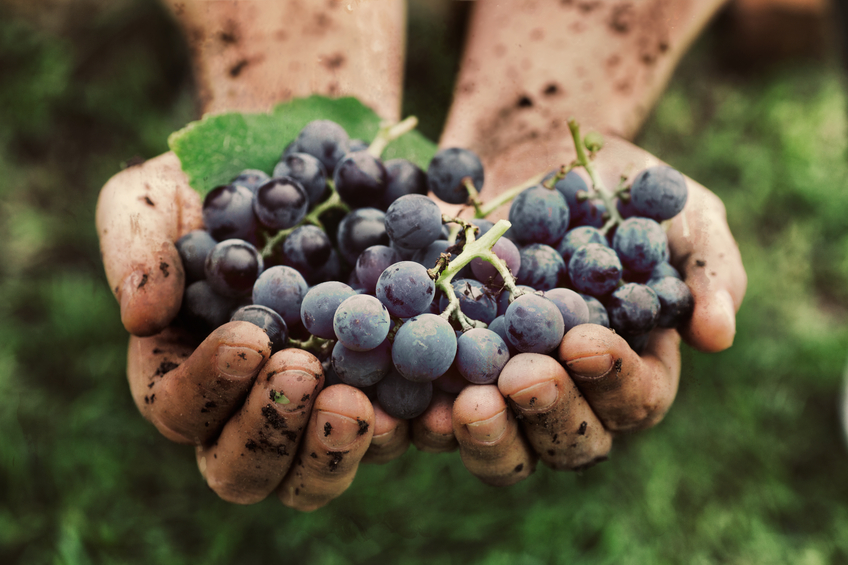
In between the cups of wine, participants eat a total of fifteen (or seven) types of nuts and fruits from three categories: fruits/nuts with shells, fruits with pits, and fruits edible inside and out. (Recall the Lulav and Etrog and the Parable of the Sower.) Each type of fruit represents a type of person and is intended to stimulate discussion around the table. The fourth element or fruit is spiritual and is not eaten. To represent the spiritual fourth fruit (Holy Spirit), the fragrance from cloves, cinnamon, rosemary or any other pleasant spice is inhaled by the participants. The entire seder is meant to increase awareness of Tu B’Shevat through nature, prayer, song, story, and dialogue.
The following links may be helpful in creating a meaningful Tu B’Shevat Seder.[10]
My jewish Learning
The Coalition on the Environment and Jewish Life (COEJL)
“My beloved responded and said to me, ‘Arise, my darling, my beautiful one, And come along. ‘For behold, the winter is past, The rain is over and gone. ‘The flowers have already appeared in the land; The time has arrived for pruning the vines, And the voice of the turtledove has been heard in our land. ‘The fig tree has ripened its figs, And the vines in blossom have given forth their fragrance. Arise, my darling, my beautiful one, And come along!'” (SOS 2:10-13 NASB)
[1] Rosh HaShana 2a: Chapter I, Mishnah. “There are four new years. On the first of Nissan is new year for kings and for festivals. On the first of Elul is new year for the tithe of cattle. R. Eleazar and R. Simeon, however, place this on the first of Tishri. On the first of Tishri is new year for years, for release and Jubilee years, for plantation and for [tithe of] vegetables. On the first of Shevat is new year for trees, according to the ruling of Beth Shammai; Beth Hillel, however, place it on the fifteenth of that month.”
[2] Shanah, the Hebrew word for year, is a feminine noun. It is one of the “rule breakers” in Hebrew grammar. In the plural, shanah takes the masculine ‘im ending rather than the usual feminine ‘ot.
[3] Lev. 19:23-25
[4] We use our feet to make cyclical pilgrimages to the mountain of YHWH in Jerusalem, hence they are called “foot-festivals.” Chag is also related to the circle dancing or whirling of worship.
[5] And He *said to them, “Do you not understand this parable? How will you understand all the parables? (Mark 4:13 NASB)
[6] Gen 49:10 “The scepter shall not depart from Judah, Nor the ruler’s staff from between his feet, Until Shiloh comes, And to him shall be the obedience of the peoples.
[7] H7626 שֵׁבֶט shêveṭ From an unused root probably meaning to branch off; a scion, that is, (literally) a stick (for punishing, writing, fighting, ruling, walking, etc.) or (figuratively) a clan: – X correction, dart, rod, sceptre, staff, tribe.
[8] Moody, Valerie. The Feasts of Adonai: Why Christians Should Look at the Biblical Feasts. Lubbock, TX: Gibbora Productions, 2009. Print. p.143
[9] Psalm 104 is traditionally read on Rosh Chodesh (the new moon), but it’s filled with all the rich imagery we just explored.
[10] Linking to these sites does not suggest that I agree with all their content.






 GRACE in TORAH