Taking Refuge in the Fall Feast Days
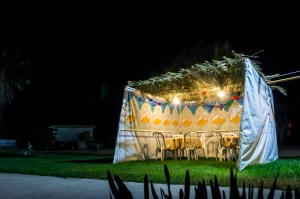
© Alefbet26 | Dreamstime.com
“The LORD is my rock and my fortress and my deliverer, My God, my rock, in whom I take refuge; My shield and the horn of my salvation, my stronghold.” Psalm 18:2
All quotes taken from the NASB unless otherwise noted.
One thing that all people have in common is the desire to feel safe, secure, protected, and sheltered. As a matter of fact, one of our strongest survival instincts is to find or build a shelter. We desire a covering to protect us from the wind, rain, cold, wild beasts, and other elements of nature. Our Creator placed these instincts within each one of us. These desires prolong our lives and ensure the survival of mankind. If the natural world, including our innate instincts, is to teach us spiritual truths[1], then what do these most basic drives teach us about our relationship to God?
When do we desire to be “covered”? Is it not when we are cold, sick, tired, frightened, distressed, or even depressed? Conversely, we may desire to be “covered” when we are praying and worshipping, and when we are nursing a child or being intimate with our spouse. Ironically, all of these instances are related when we look into the Word of God. Certain aspects of our emotional, spiritual, and physical lives require a shield of protection. Whether the “covering” protects us from danger, comforts our ailments, or covers our nakedness, it is a type of shield, hedge, and defense. In other words, it is the protection that we all need and desire. Abraham, our father in faith, was assured that this “shield” he desired would be provided.
After these things the word of the LORD came to Abram in a vision, saying, “Do not fear, Abram, I am a shield to you; Your reward shall be very great. (Gen. 15:1)
The Hebrew word for shield in this verse is magen (mem, gimel, nun) and it does indeed mean a shield of protection. What is fascinating is that it comes from the same root as garden or gan (gimel, nun). The Ancient Hebrew Lexicon of the Bible describes this word pictographically as “a gathering of seeds”. This is easy to relate to a garden, but how does it relate to a shield and other cognates like protection and a basin? A garden, such as the Garden of Eden, is a protected place; it is surrounded on all sides. Likewise, a basin has a ledge or hedge about it. These concrete images give us a vivid picture of what it means for Adonai to “shield” or protect us.
You see, it is not that there is no danger, predators, or enemies; rather, it is that there is a covering of protection that surrounds us. This shield is clearly depicted when HaSatan observes the life of Job.
Then Satan answered the LORD, “Does Job fear God for nothing? “Have You not made a hedge about him and his house and all that he has, on every side? You have blessed the work of his hands, and his possessions have increased in the land. (Job 1:9-10)
The Hebrew word for hedge in this verse is suk, the root for sukkah (booth, shelter, covering). Our gracious Father had placed a “spiritual” sukkah around Job and all that was his. Since we are in the Season of our Joy, the Feast of Tabernacles or Sukkot, I find that it is most appropriate that we understand how the moedim (particularly the fall feasts) portray this heavenly covering that Adonai provides for us.
Tight Places
Before we explore the heavenly hedge of Adonai, it is imperative that we understand what is outside the protected place. Nowhere in the Bible are we promised a life without trials, tribulations, and hardships. While some naïvely teach the contrary, the truth is that without the proverbial “thorn in our side” we would never learn to rely on God’s grace and mercy. Sadly, our trust would be nothing more than self-reliance which would result in an empty, anxious, and lifeless walk.
The Hebrew word tsar is usually translated as enemy(-ies), adversaries, trouble, distress, affliction, and tribulation. But what it really implies is a “tight place.” It is literally something that presses or weighs upon you. In fact, it is the root word for Mitzrayim (Egypt). Egypt was certainly a place where the Israelites had heavy burdens laid upon them. Adonai redeemed them from this bondage with a mighty hand and brought them into the wilderness with a promise: a land flowing with milk and honey.
This is what happens to us when the LORD redeems us from the bondage of sin and death. We, like our ancient Israelite counterparts, have the promise of the “Land” that flows with milk and honey. What we tend to skip over in our theology and in our thinking is the wilderness. Once we are “saved”, we assume all is well — heaven awaits our arrival. But this isn’t the end of the story; it is the beginning! We must first endure the wild and dangerous wilderness. It is harsh, hot, and dry. It is treacherous. It is uncultivated and infertile. It will require us to relinquish everything over to a holy God just to survive. And the testimony of our ancient brethren proves that not everyone endures the trials of the desert.
The seemingly broadness of the wilderness becomes a tight place of pressing. But this “pressing” isn’t like the bondage of Egypt, sin, or death (though sometimes it may feel that way). Instead, we find ourselves being squeezed and molded by the Potter’s Hands into the image of the Son. While we may have left Egypt, we discover that Egypt is still in us. And so we have similar adages even in English to express this all too painful truth: “You can take the girl out of the country, but you can’t take the country out of the girl”. But our Great Elohim sets out to do what we consider impossible. He not only removes us physically from the bondage of Egypt, He also removes Egypt from within us.
If we pay close attention, it becomes evident that while it is amazingly miraculous how He redeems a whole nation from the bondage of slavery, it is even more amazing how He removes Egypt from us! This is the lesson of the wilderness. And this is the reason we celebrate Sukkot, the last pilgrimage festival on YHWH’s holy calendar.
‘You shall thus celebrate it as a feast to the LORD for seven days in the year. It shall be a perpetual statute throughout your generations; you shall celebrate it in the seventh month. ‘You shall live in booths for seven days; all the native-born in Israel shall live in booths, so that your generations may know that I had the sons of Israel live in booths when I brought them out from the land of Egypt. I am the LORD your God.'” (Lev. 23:41-43)
By yearly walking out Adonai’s cycle of divine appointment times (feast days), we are reminded not only of our past and present, but of our future hope. These guideposts encourage and strengthen us; thus, providing the coverings and shelters that protect us from the scorching heat of the desert. They press us to be sure, but they also shield us as we are molded into the image of Yeshua.
Those of you that have committed to follow our Holy Elohim and walk in His “ancient paths” have most likely discovered that while there is great joy and fulfillment in meeting the Creator at His appointed times, there is also great testing, pressing, and often distress. It is hard! Our immaturity may cause us to assume that perhaps the difficulty is a sign that we are on the “wrong” path. But Yeshua reminds us that the true path is “narrow”; it is a tight place! We must expect to be pressed. We learn that the easy way is in reality the “broad” path.
“Enter through the narrow gate; for the gate is wide and the way is broad that leads to destruction, and there are many who enter through it. “For the gate is small and the way is narrow that leads to life, and there are few who find it. (Mat. 7:13-14)
I am always baffled by the multitudes that teach the opposite of what Yeshua and Scripture clearly reveals. Therefore, if you find yourself being pressed in on all sides when Adonai’s appointments come around, rejoice! You are indeed on the narrow and tight path! Consider that the Father is pruning and shaping you into the image of Yeshua and at the same time He is expelling the Egypt that remains in your members. This brings new meaning to the phrase, “It hurts so good!”
The Hedge
Our tight places cause us to cry out to the Most High and He becomes the Strong Tower of Refuge that satisfies our distressed souls.
To the chief Musician on Neginoth, A Psalm of David. Hear me when I call, O God of my righteousness: thou hast enlarged me when I was in distress (tzar); have mercy upon me, and hear my prayer. (Ps. 4:1 KJV)
The above verse depicts David crying out to God when he finds himself in a tzar (a tight place of pressing). Many translations simply say God brings “relief” to his distress, but the King James Version actually captures the Hebrew much better. Notice it says that God enlarges or broadens David. This is exactly what Adonai does for you and me. Just when we think we can take no more, He broadens us just enough that we sigh with relief. The Refiner’s Fire is hot, but it is fueled by the cool spiritual heat of heaven. Unlike the pressing of sin and death, the hot coals of heaven’s altar only burns our impurities. There is a promise of Life, not death.
The hedges found in the fall moedim (feast days) teach us all about the cool heat of the shamayim (heavens in Hebrew, but literally “fire-waters”). These fires burn wickedness and flesh in righteous judgment. When we are covered by the blood of the Lamb, we can withstand these fiery trials.
Now if any man builds on the foundation with gold, silver, precious stones, wood, hay, straw, each man’s work will become evident; for the day will show it because it is to be revealed with fire, and the fire itself will test the quality of each man’s work. If any man’s work which he has built on it remains, he will receive a reward. If any man’s work is burned up, he will suffer loss; but he himself will be saved, yet so as through fire. Do you not know that you are a temple of God and that the Spirit of God dwells in you? (1Cor. 3:12-16)
Thus, we must learn to rejoice when we find ourselves in the heavenly fire. If you have heard the great blast from the heavenly shofar and eternity burns in your heart, you are already aware that the Feast of Trumpets (Yom Teruah) has awakened you to the approaching bridegroom. But, in order to have enough oil, you will be pressed and crushed like the olives that fuel our lamps. Therefore, rejoice Bat Tzion (Daughter of Zion)!
Though it may seem odd that part of our covering is in fact heavenly fire, and that it sometimes hurts, we know that it cleanses us so we may eventually enter the bridal chamber. This brings us to the most solemn and holy day on Adonai’s calendar, the Day of Atonements. This is judgment day. If you are burning in a holy fire right now, rejoice, for your judgment day will also be your wedding day. Like the High Priest, you are covered and clothed in the red blood of the slain Lamb that appears as pure white light. Anointed with precious oil, enveloped with rich, sweet clouds of incense, eyes illuminated with only the holy seven tongues of fire of the golden menorah of the LORD’s Spirit, the bride is brought under the heavenly chuppah[2] and is forever bound in matrimony to her King. This hope is why we endure. And there is more to this promise; Sukkot awaits us.
The Sukkah
The fragile and flimsy appearance of the sukkah is the epitome of weakness to the natural man. See through walls and a leaky roof do not scream comfort or security — the thing we most long for. But, this is the structure that God beckons us to enter. Outside there are real threats, real enemies, and real elements. When we look at the sukkah, we cannot possibly see how this rickety thing is going to protect us from so many dangers. Surely the more permanent house we’ve built with our own hands offers more protection.
“Not everyone who says to Me, ‘Lord, Lord,’ will enter the kingdom of heaven, but he who does the will of My Father who is in heaven will enter. “Many will say to Me on that day, ‘Lord, Lord, did we not prophesy in Your name, and in Your name cast out demons, and in Your name perform many miracles?’ “And then I will declare to them, ‘I never knew you; DEPART FROM ME, YOU WHO PRACTICE LAWLESSNESS.’ “Therefore everyone who hears these words of Mine and acts on them, may be compared to a wise man who built his house on the rock. “And the rain fell, and the floods came, and the winds blew and slammed against that house; and yet it did not fall, for it had been founded on the rock. “Everyone who hears these words of Mine and does not act on them, will be like a foolish man who built his house on the sand. “The rain fell, and the floods came, and the winds blew and slammed against that house; and it fell–and great was its fall.” (Mat. 7:21-27)
Only the House that Adonai builds is founded upon the Rock. All other structures are built on sand. When testing, trials, and storms arise (and they always do), only Adonai’s sukkah will remain standing. Thus, we are faced with a seeming paradox. What appears strong to us is in fact weak, and what appears weak is strong!
We must be willing to leave the “appearance” of security and embark on a treacherous journey through the wild with our bridegroom. He is mysterious and magnificent. He isn’t safe or tame. The real question is, “Do you trust Him anyway?” His promise isn’t a life sheltered from life itself. No, the promise is abundant life. An abundant life is abundantly full. But full of what?
It’s not full of worldly riches and things that will pass away. It’s full of experiences, challenges, and well… life. The Hebrew letter nun means life and its pictograph is a fish in movement. The journey is wild and rushing like a river. It tosses you here and there. Up and down. Side to side. Are you afraid? Don’t be. Adonai’s love is relentless and constantly moving. It is exciting, but it is not comfortable. Comfort is complacent and lifeless.
Our natural man and instincts hates this “uncontrolled” God that we serve. It is foolishness to them. Yet, this reckless abandon is exactly what YHWH desires from us. He calls us into the wilderness, the great unknown wild. It is there He speaks tenderly to us — in the midst of our vulnerability.
“Go and proclaim in the ears of Jerusalem, saying, ‘Thus says the LORD, “I remember concerning you the devotion of your youth, The love of your betrothals, Your following after Me in the wilderness, Through a land not sown. (Jer. 2:2)
This is our covering at Sukkot. Following Adonai in the wilderness, through a land not sown. If we love Him, we will follow. Though we are vulnerable to the wildness, our little movable shelter sustains us with the promise that One day, we will have a permanent home with our Beloved.
Is this not what real faith (trust) is all about? Are we not called to be strong and courageous in the face of life’s many uncertainties? Do you trust Him…anyway? In light of all this, the sukkah becomes a beacon, a landmark for what faith actually is! When you sit in your sukkah this year, look at its flimsy walls, partially thatched roof, and open door. It may look like it offers little protection and is anything but secure, yet we know the LORD’s sukkah is the perfect shelter for the wild world He created. Experience it with Him. The promise isn’t a life without danger; the promise is that He will walk through it with you. Follow wherever He goes, for there is a special prize for those that serve and follow Him with reckless abandonment.
And I heard a voice from heaven, like the sound of many waters and like the sound of loud thunder, and the voice which I heard was like the sound of harpists playing on their harps. And they *sang a new song before the throne and before the four living creatures and the elders; and no one could learn the song except the one hundred and forty-four thousand who had been purchased from the earth. These are the ones who have not been defiled with women, for they have kept themselves chaste. These are the ones who follow the Lamb wherever He goes. These have been purchased from among men as first fruits to God and to the Lamb. (Rev. 14:2-4)
Oh dear one, don’t you want to learn this song and serenade the King of Kings? It will cost you everything, but you will be given all. The sukkah will be replaced with the New Jerusalem. Enjoy it while you can. Experience the wild and untamed King that we serve. Do hard things. Be stubborn in only one thing: in your reckless abandon to the Most High. Run into the flapping tents walls and snuggle up under the canopy of the stars and palm branches. Smell the sweet incense and look for the golden glow of the menorah. It’s all here—right now. Just open your eyes and ears. When the bottom drops out from under you, know that you are simply moving onto a new and exciting adventure with Adonai. Our duty is to remain steadfast, period. We don’t have to understand all the “whys” of life; we must simply trust Him like a child.
There is good news. Jerusalem of Gold awaits the pitter-pat of your precious little feet! Every tear will be wiped away! Then those things that are hidden will be revealed; we will realize that the LORD had every second, every circumstance, and every nuance under His direction and control. And we will know that all along we were indeed covered in perfect security with His heavenly pinions.
Fear not son or daughter of Abraham, for I, Adonai, am a shield and a covering sukkah to you. Your reward for walking through the tight places and trusting me even when your circumstances appeared bleak will be great. For you will see my sukkah with new spiritual eyes and know that no other earthly structure could have ever sustained you. — my paraphrase of Gen. 15:1


 GRACE in TORAH