Posts Tagged With: Tongue

Holy Conversation

Dear Reader,

The following article is the written version of the teaching I gave at Women of Valor this weekend. Below that, you will find the audio recording of my message along with the handouts I gave the women, and some additional helpful pdfs you are welcome to print or download. 

Holy Conversation

“Be ye holy in all manner of conversation.” (1 Peter 1:15)

The Mussar masters teach that humility (anavah) is the foundation of all the middot — the ethical traits that shape godly character. Without humility, the other traits lose their balance: patience can turn into avoidance, generosity into control, truthfulness into cruelty.

385611147 | © Tanakrit Khangrang

Humility is more than thinking less of ourselves; it’s knowing our proper space before God and others. It allows us to speak truth without arrogance, and to listen without defensiveness. This is why humility is the key to reconciliation — especially in moments of disagreement or misunderstanding.

Conflict has a way of tempting us out of humility. We want to win the point, protect ourselves, or correct the other person. But humility changes the question we ask. Instead of “How can I make them understand me?” humility asks, “How can I better understand them?” This shift is impossible without empathy — the ability to truly see and feel what another person is experiencing.

Empathy is central to humility because it keeps our hearts soft. It guards us from assuming motives, making quick judgments, or treating others as less than ourselves. When humility and empathy work together, even hard conversations can become opportunities for connection and growth.

“People with good sense are slow to anger, and it is their glory to overlook an offense.” (Pro 19:11, CJB)

That’s why in this teaching, we will explore Nonviolent Communication (NVC),[1] a conflict resolution framework developed by Dr. Marshall Rosenberg, for practicing humility in our day-to-day conversations. NVC slows us down and helps us speak in a way that honors both our own needs and the needs of others — without judgment or accusation.

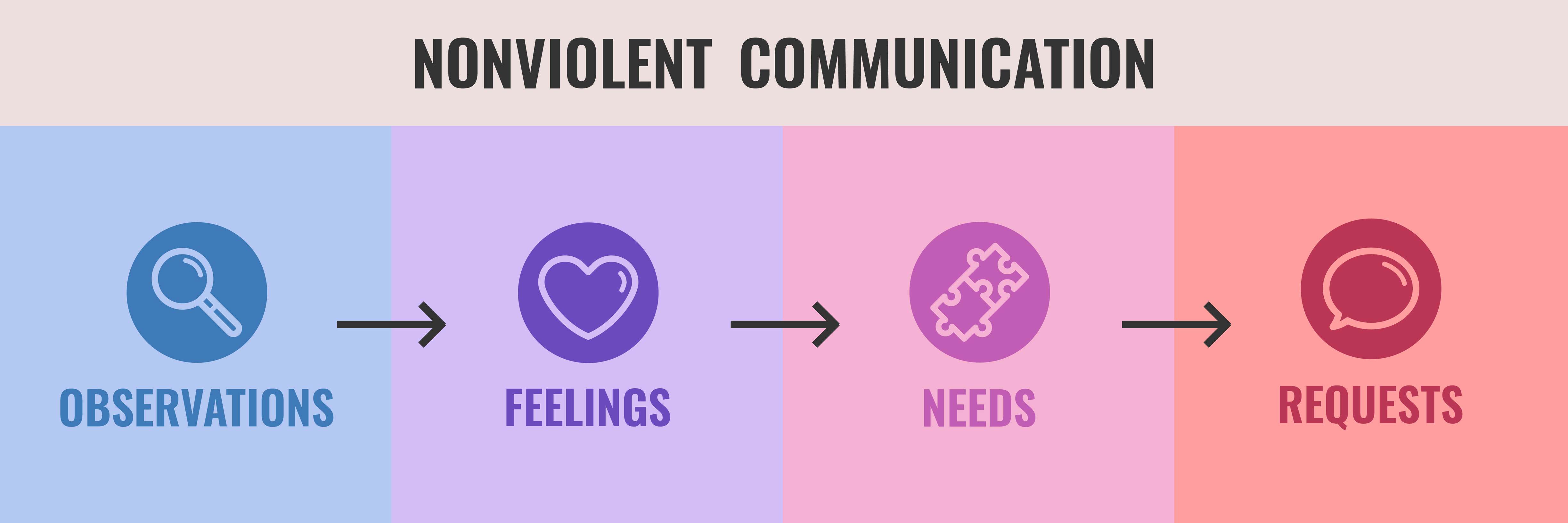
NVC works through four interconnected components:

  1. Observation – Describing what happened without judgment or interpretation.
  2. Feeling – Naming the emotion we’re experiencing in response to the observation.
  3. Need – Identifying the universal human value or longing connected to that feeling.
  4. Request – Asking for a specific action that could help meet that need.

When we approach conversations — especially conflict — with these four steps, we practice humility by refusing to assume we know it all, and we practice empathy by truly considering the other person’s reality. Together, they turn ordinary moments of tension into holy conversations.

“But the things that proceed out of the mouth come forth from the heart, and those things make the man unholy. For out of the heart come evil thoughts, murder, adultery, sexual immorality, theft, false witness, and slander. These are the things that make the man unholy; but to eat with unwashed hands does not make the man unholy.” (Mat 15:18-20, TLV)

Component 1: Observation – Seeing Without Judgment

“Set a guard, Adonai, over my mouth. Keep watch over the door of my lips.” (Psa 141:3, TLV)

Humility in conversation begins with the courage to see what’s happening without assigning blame, moral verdicts, or hidden motives. This first component of Nonviolent Communication (NVC) is deceptively simple: describe what you actually see or hear without judgment, evaluation, or interpretation.

An observation is a simple, verifiable description — what could be captured on camera or heard in an audio recording. A judgment or evaluation adds interpretation, assumption, and often a moral verdict.

“Do not judge according to appearance, but judge with righteous judgment.” (Jhn 7:24, NAS95)

Not all judgments are the same. While Adonai charges us to practice righteous judgment, most of the judgments people make about others are unrighteous. NVC makes an important distinction:

  • Value Judgments express the qualities we believe serve life—honesty, freedom, kindness, peace. These reflect our beliefs for how life can best flourish.
  • Moralistic Judgments are about labeling people as right or wrong, good or bad, based on whether they meet our values. They often imply that someone is “less than” or deserving of punishment if they fall short. Example: “He is lazy.” “She is selfish.”

Value judgments can lead to honest conversation about needs. Moralistic judgments usually lead to blame, insults, comparisons, and criticism — all of which close the door to empathy.

“A fool takes no pleasure in understanding, but only in expressing his opinion.” (Pro 18:2, ESV)

File ID 43372985 | © Igor Zakowski

The Jackal Voice – Our Inner Interpreter

Moralistic judgments or evaluations can feel righteous, protective, even discerning, but it’s often fear, pride, or pain in disguise. Something triggers us—anger, anxiety, a sense of betrayal—and instead of naming our feelings or seeking understanding, we start constructing a story.

This is where unholy conversation begins:

  • We label, classify, and interpret the other person’s behavior.
  • We fill in the blanks about their motives and intentions.
  • We replace observation with assumption or unvoiced expectations.

In NVC, the jackal symbolizes life-alienating communication. As an animal, the jackal is low to the ground, a scavenger, competitive, and fierce. As a metaphor, it represents the reactive voice inside us that views the world through right/wrong, good/bad dualities and seeks to control through fear, guilt, and shame.

“Therefore you have no excuse, O man, every one of you who judges. For in passing judgment on another you condemn yourself, because you, the judge, practice the very same things.” (Rom 2:1, ESV)

The Bible presents a morality rooted in love, not merely rules. True compassion flows from deep connection and empathy, not from obligation or fear of breaking the Law. Yeshua acted out of heartfelt compassion—sharing in people’s pain—not because He “should.” Rules can restrain behavior, but love transforms it.

Dr. Henry Cloud, in Changes That Heal, illustrates this difference with a simple analogy. Imagine I hand you a baseball bat and give you permission to hit me. One

File ID 301014786 | © Andrey Pakhomov

person says, “I wouldn’t because it’s wrong.” Another says, “I wouldn’t because I don’t want to hurt you.” Which would you trust more? The one motivated by empathy. When we care how our actions affect someone we’re connected to, love—not fear of punishment—guides us toward life-giving choices.

By contrast, the jackal mindset—comparable to the lower nature or ego—is far more self-focused. When offended or in conflict, it often shows up as an “inner interpreter” that jumps to conclusions, usually without evidence. It may sound like:

  • A defense attorney– “I have every right to feel this way.”
  • A mind reader– “She said that because she thinks I’m incompetent.”
  • A spiritual judge– “The Spirit showed me their true heart.”
  • A historian– “They always do this; they never change.”
  • A director– “I know where this is going; I’ve seen it before.”

“Now flee from youthful lusts and pursue righteousness, faith, love and peace, with those who call on the Lord from a pure heart. But refuse foolish and ignorant speculations, knowing that they produce quarrels.” (2Ti 2:22-23, NAS95)

“Do not be quickly provoked in your spirit, for anger settles in the bosom of fools.” (Ecc 7:9, TLV)

This voice is not neutral. It draws from our fears, wounds, and ego. The most dangerous false narratives are not those in today’s media, but the stories we create in our minds about the heart and motives of others. We tell ourselves what their words really meant, how they must feel about us, and who they must be, deep down. This sort of judgment belongs to God alone.

“Do not speak against one another, brethren. He who speaks against a brother or judges his brother, speaks against the law and judges the law; but if you judge the law, you are not a doer of the law but a judge of it. There is only one Lawgiver and Judge, the One who is able to save and to destroy; but who are you who judge your neighbor?” (Jas 4:11-12, NAS95)

The Four D’s – How the Jackal Speaks

The jackal’s inner interpreter tends to communicate in four main ways—what NVC calls the Four D’s of Disconnection:

  1. Deserving – Sorting people into those who deserve reward and those who deserve punishment. “She doesn’t deserve my trust after what she did.”
  2. Diagnosing – Judging, labeling, and making assumptions about motives.
    “The problem with you is that you’re selfish.”
  3. Denying Choice – Using guilt and blame to avoid responsibility.
    “I have to do it because you won’t.” or “You made me so angry.”
  4. Demanding – Pushing compliance through fear or control.
    “You’d better do this if you know what’s good for you.”

In each case, the jackal focuses on accusing or controlling the other person instead of seeking to understand or connect.

“A single witness shall not rise up against a man on account of any iniquity or any sin which he has committed; on the evidence of two or three witnesses a matter shall be confirmed. If a malicious witness rises up against a man to accuse him of wrongdoing, then both the men who have the dispute shall stand before the LORD, before the priests and the judges who will be in office in those days. The judges shall investigate thoroughly, and if the witness is a false witness and he has accused his brother falsely, then you shall do to him just as he had intended to do to his brother. Thus you shall purge the evil from among you.” (Deu 19:15-19, NAS95)

The Four R’s – How the Giraffe Speaks

File ID 47754952 | © Amphetamine500mg

By contrast, the giraffe represents life-serving communication. With the largest heart of any land animal and the longest neck for perspective, the giraffe reminds us to speak from the heart and keep the bigger picture in view.

The Four R’s of the giraffe guide us toward humility and empathy:

  1. Remembering – We are all unique, interconnected, and interdependent.
  2. Respecting – Ourselves and others, knowing we’re all trying to meet legitimate needs.
  3. Taking Responsibility – For our beliefs, feelings, thoughts, and actions.
  4. Requesting – Inviting, not demanding, and accepting “yes” or “no” as a step toward dialogue.

Righteous judgment begins with clarity, and clarity begins with what we have actually observed. The clearest way to silence the jackal and speak giraffe is to start with an observation. An observation is a simple, verifiable description. Ask: Could this be recorded on video or audio exactly as I’m describing it? If not, it’s probably a judgment.

  • Judgment/Evaluation: “You’ve been ignoring me.”
  • Observation: “We haven’t spoken in two months.”

The first closes the door to dialogue; the second leaves room for the other person’s perspective. Making observations without judgment slows us down. It creates a pause in which God can work in us and in the relationship. It honors truth, preserves dignity, and keeps conflict as an opportunity for reconciliation rather than a catalyst for division.

So take care how you listen; for whoever has, to him more shall be given; and whoever does not have, even what he thinks he has shall be taken away from him.” (Luk 8:18, NAS95)

Humility keeps us from usurping God’s role as the Judge of hearts. Observation keeps us tethered to truth instead of imagination. And empathy—rooted in humility—keeps our hearts open long enough for reconciliation to be possible.

“Be merciful, just as your Father is merciful. Do not judge, and you will not be judged; and do not condemn, and you will not be condemned; pardon, and you will be pardoned. Give, and it will be given to you. They will pour into your lap a good measure—pressed down, shaken together, and running over. For by your standard of measure it will be measured to you in return.” (Luk 6:36-38, NAS95)

When we replace the Four D’s with the Four R’s, we move from reactive, fear-based communication to relational, heart-centered conversation. This is the ground where the rest of NVC—and the work of the Spirit—can take root.

“Put away from you a deceitful mouth and put devious speech far from you. Let your eyes look directly ahead and let your gaze be fixed straight in front of you.” (Pro 4:24-25, NAS95)

Component 2: Naming Our Feelings

Taking responsibility for our own feelings is central to holy conversation. “No matter what has happened, we are all responsible for how we feel one hundred percent of the time. How we feel is a direct reflection of our thoughts, [beliefs, and values]. Change your perspective about an incident and you will change how you feel.”[2]

This shifts the focus from, “You made me feel…” to, “When this happened, I felt…” That small change keeps us from assigning blame for our emotional state and instead allows us to own our internal experience. In relationships, people often say things like, “You’re annoying me,” “That really hurt my feelings,” or “You’re driving me crazy.” This is blame language—it attributes our feelings to someone else’s behavior and makes them “wrong or bad” for making us feel unpleasant. In reality, the other person’s words or actions are the stimulus for our feelings, not the cause.

“Brothers and sisters, do not be children in your thinking; yet in evil be infants, but in your thinking be mature.” (1 Co 14:20, NASB)

Taking responsibility for emotions doesn’t mean pretending not to hurt—it means owning what is ours to steward and refusing to hand that responsibility over to someone else. It also doesn’t excuse harmful behavior in others. Instead, it ensures that our own response is governed by the Spirit rather than by emotional reactivity.

“He who restrains his words has knowledge, and he who has a cool spirit is a man of understanding.” (Pro 17:27, NAS95)
File ID 249134795 | © Alain Lacroix

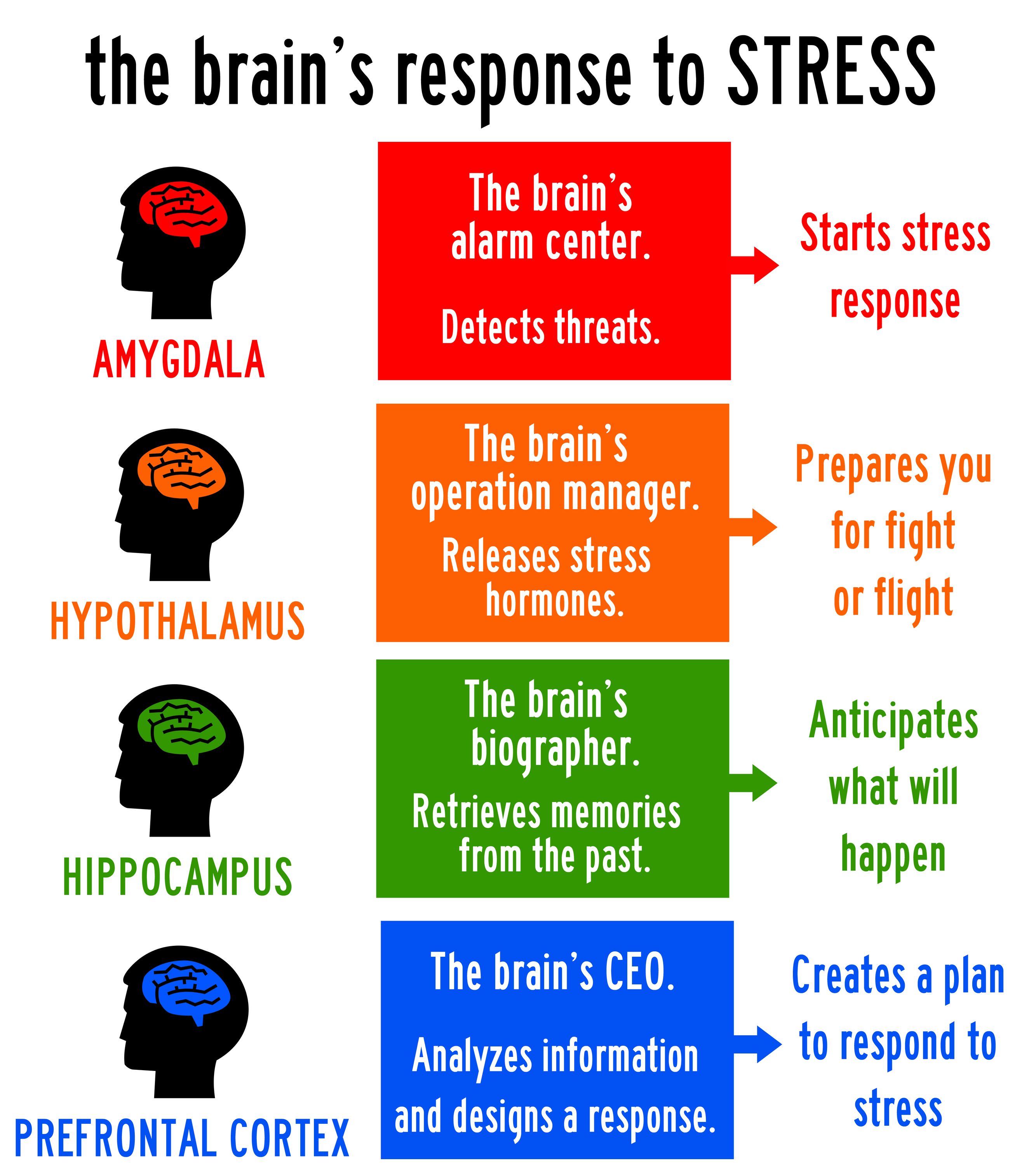
One of the most powerful tools for doing this is naming the emotion we are feeling. If we struggle to identify what we feel, it’s often because our brain is operating from the limbic system—the emotional center that includes the amygdala, our built-in alarm system. While the amygdala is helpful in emergencies, it can be destructive in relationships. Neuroscience shows that when we label our feelings, we engage the prefrontal cortex—the brain’s reasoning and empathy center. This shift helps quiet the amygdala’s alarm, regulate our nervous system, and bring clarity and calm. It’s as if naming the emotion tells the body, You’ve been heard; you can stand down now. From this grounded place, our words are more likely to be gracious and constructive.

However, naming feelings requires care. The first guideline is to differentiate between a feeling and what we are thinking. For example:

  • “I feel betrayed” is an accusation, not a feeling. A nonjudgmental statement would be, “When you lied about where you were, I felt shocked and hurt, because I value honesty and faithfulness.”
  • “I feel that you don’t love me enough” is an interpretation of actions (or inaction). A truer expression might be, “I feel sad and lonely when we don’t spend time together.”
  •  “I feel misunderstood” is an evaluation of someone else’s understanding. A more accurate statement would be, “I’m feeling anxious or annoyed about our communication.”

When we disguise thoughts and judgments as feelings, they often sound like blame. And when the other person feels blamed, their natural reaction is to defend, explain, or counterattack—shutting down connection.

“Do you see someone hasty in his words? There is more hope for a fool than him.” (Pro 29:20, TLV)

“If anyone thinks himself to be religious, and yet does not bridle his tongue but deceives his own heart, this man’s religion is worthless.” (Jas 1:26, NAS95)

Clear feelings language does the opposite. It lowers defenses because it says, “This is what’s happening in me,” rather than, “This is what’s wrong with you.” These small shifts in wording can make a huge difference in how our words are received.

File ID 231447616 | © Maxim Popov

Examples

  • Judgment disguised as feeling: “I feel manipulated.”
    Pure feeling: “I feel uneasy and anxious about this conversation.”
  • Judgment disguised as feeling: “I feel rejected.”
    Pure feeling: “I feel lonely and hurt when I don’t hear back from you.”
  • Judgment disguised as feeling: “I feel attacked.”
    Pure feeling: “I feel tense and unsafe when voices get raised.”

Once we’ve learned to take ownership of our own emotions, love calls us to extend the same care to others. Part of responsibility in communication is ensuring the other person’s feelings are adequately heard. Sometimes this means gently guessing what they might be feeling—not to project or assume, but to offer a bridge: “It sounds like you might be feeling… Is that right?” Even if we miss the mark, we show that their inner life matters enough for us to try.

“Let your speech always be with grace, seasoned with salt, to know how you ought to answer everyone.” (Col 4:6, TLV)

Too much or too little salt makes food inedible or unpleasant. In the same way, wise words are measured, thoughtful, and responsive—not reactive. Owning our emotions and honoring the emotions of others is one way to keep our speech seasoned with grace, opening the gates of righteous judgment in every conversation.

“Have I not wept for the one whose life is hard? Was not my soul grieved for the needy?” (Job 30:25, NAS95)

Component 3: Needs

“The wisdom of the wise is to understand his way, but the foolishness of fools is deceit.” (Pro 14:8, LITV)

If naming emotions helps us take responsibility for our inner world, identifying the needs behind those emotions helps us understand why we feel what we feel and what may lead to resolution or restoration.

Needs are the things we can’t live without like air, food, water, and shelter. But they also represent our values, wants, dreams, desires, and preferences for a happier and/or more meaningful experience as a human. Although we have different needs in differing amounts at different times, they are universal in all of us. When they are unmet, we experience feelings, and when they are met, we experience feelings.

When a need is met, we feel gratitude, peace, joy, or security. When a need is unmet, we feel sadness, fear, frustration, or discouragement. Thus, needs are not inherently sinful, but they can become dangerous when we seek to fill them apart from God or demand that others meet them on our terms. Recognizing needs gives us clarity. For example:

  • Anger may signal a need for fairness, safety, or respect.
  • Sadness may reveal a need for comfort, connection, or reassurance.
  • Anxiety may point to a need for security, stability, or guidance.

When we stop at the surface emotion, we may misdirect our energy toward punishing someone for how we feel. But when we ask, What need is underneath this?, we invite God to show us where we are truly lacking and how He might meet us there.

“Know this, my dear brothers and sisters: let every person be quick to listen, slow to speak, and slow to anger— for human anger doesn’t produce the righteousness of God.” (Jas 1:19-20, TLV)

File ID 154702525 | © Fizkes

When we see the need beneath the emotion, our perspective shifts. Where we once assumed bad motives or sinfulness, we now see an unmet need—an opportunity for empathy instead of judgment.

“The intent of a man’s heart is deep water, but a man of insight draws it out.” (Pro 20:5, TLV)

Identifying needs is not about excusing hurtful actions, it is about moving from accusation to curiosity. It opens the possibility for understanding, for asking questions that draw out the heart, and for finding solutions that honor both parties.

In the language of holy conversation, needs become a bridge. When we can say, “I’m feeling anxious because I need reassurance about this decision,” we give the other person something concrete to respond to, something that can be discussed, negotiated, or supported. In contrast, “You’re making me anxious” blames, accuses, and closes the door.

Needs also invite prayer. When we name a need before God, we position ourselves to receive from Him first, whether through His direct comfort or through the help of others.

“Do not let any unwholesome talk come out of your mouths, but only what is helpful for building others up according to their needs, that it may benefit those who listen.” (Eph 4:29, NIV)

The Jackal and Giraffe Approaches to Needs

Jackal often disguises needs behind demands, moralistic judgments, or blame:

  • “You should listen to me.” (need for being heard)
  • “You’re selfish.” (need for cooperation)
  • “You never spend time with me.” (need for connection)

Giraffe makes needs explicit and mutual:

  • “I need to know my voice matters in our conversations.”
  • “I’m longing for more cooperation as we share this workload.”
  • “I’d like to spend more time together because I value our friendship.”

Four D’s of a Jackal (life-alienating needs language)

  1. Deserving – “I’ve worked hard all day; I deserve to be left alone.”
  2. Diagnosing – “You’re lazy; that’s why you didn’t help.”
  3. Denying Choice – “I have to do everything around here because no one else will.”
  4. Demanding – “You must call me every day.”

Four R’s of a Giraffe (life-giving needs language)

  1. Remembering – “I’m needing some rest and quiet after a long day, and I know you need time together—can we plan both?”
  2. Respecting – “I need help with the chores, and I respect that you’ve had a full schedule too—can we divide the tasks?”
  3. Taking Responsibility – “I feel overwhelmed doing this alone, and I’d like to find a way we can share the work.”
  4. Requesting – “I feel connected when we talk regularly—would you be willing to check in each week?”

Jackal language tells people what they’ve done wrong. Giraffe language tells people what would make life better—for both of you. When we connect our emotions to our needs, we gain insight, self-control, and compassion. We also prepare ourselves for the next step: expressing those needs in the form of a clear, respectful request, rather than a demand.

“Bear one another’s burdens, and in this way you fulfill the Torah of Messiah.” (Gal 6:2, TLV)

Component 4: Requests

Ask, and it will be given to you; seek, and you will find; knock, and it will be opened to you. For everyone who asks receives, and he who seeks finds, and to him who knocks it will be opened. Or what man is there among you who, when his son asks for a loaf, will give him a stone? Or if he asks for a fish, he will not give him a snake, will he? If you then, being evil, know how to give good gifts to your children, how much more will your Father who is in heaven give what is good to those who ask Him!” (Mat 7:7-11, NAS95)

If identifying observationsfeelings, and needs lays the foundation, then requests are where the rubber meets the road. A request is simply an invitation to

File ID 144680797 | © Fizkes

meet a need—yours or another’s—in a way that keeps the dignity of both people intact.The request is the ebb and flow of giving and receiving, back and forth, that provides the opportunity for everyone’s needs to be met.

The difference between a request and a demand is not in the wording—it’s in the spirit behind it.

        • A demand communicates: “Do this or else you’ll be judged, shamed, or punished.”
        • A request communicates: “Here’s what I would like—are you willing?” and leaves room for freedom, dialogue, and even a “no” without retaliation.

Marshall Rosenberg observed that when people hear a demand, they immediately weigh how to protect their own autonomy. Even if they comply, it will likely be from fear, guilt, or resentment, not from a place of love and giving from the heart.

Making requests also tests the sincerity of our humility. Philippians 2:4 says, “Let each of you look not only to his own interests, but also to the interests of others.” A request honors the other person’s perspective and interests too. It says, “I value you enough to ask, not assume or coerce.”

When we turn needs into demands, we put the relationship at risk—because if the demand isn’t met, the next step is judgment and punishment, which is how idols of the heart are created. But when we turn needs into requests, we plant seeds for mutual understanding and cooperation.

Why We Avoid Requests

Many of us struggle to make clear, direct requests because we:

  • Fear rejection or disappointment.
  • Assume the other person “should” already know what we need.
  • Confuse hinting or complaining with asking.

But unspoken expectations are a breeding ground for offense and resentment.

Making Effective Requests

In NVC, a good request is:

  1. Specific and Concrete – “Would you be willing to call me when you’re running late?” instead of “Don’t keep me waiting.”
  2. Positive – Focus on what you do want, not what you don’t.
  3. Present and Actionable – Something that can be done here and now, not a vague future hope.
  4. Mutual – Open to negotiation, recognizing the other person’s needs too.

Specific requests honor both parties’ dignity by removing guesswork and replacing accusation with clarity. A vague request, by contrast, is like leaving the gate half-shut. The other person can’t see clearly what you are asking, and the conversation is more likely to be derailed by assumptions, defensiveness, or hurt.

To ensure our requests are clear and specific, it is helpful to ask the other person one of the following questions:

  • “How do you feel about what I just asked for, and why?”
  • “Do you think this approach will work?”
  • “Do you feel what I’m asking is reasonable?”

These follow-up questions communicate that our request is not a demand but an opening for partnership. They turn the conversation from a one-sided declaration into a two-way bridge that can bear the weight of empathy, creativity, and mutual care.

Two Parts of NVC: Speaking and Listening in Humility

  1. Expressing With Honesty

When we express ourselves with honesty and vulnerability, we give others the gift of knowing our heart without them having to guess. This means:

  • Honestly expressing nonjudgmental observations, your own feelings, and needs.
    “When I hear (or see)… I feel… because I need… Would you be willing to…?”
  • Having the courage to be vulnerable instead of hiding behind blame or generalizations.
  • Making clear, detailed requests rather than hinting, complaining, or assuming the other person “should just know.”

Humility allows us to expose our needs without shame, trusting that the other person can respond freely—yes, no, or with a counter-proposal—without it diminishing our worth.

  1. Listening With Empathy

File ID 144680797 | © Fizkes

“The one who states his case first seems right, until the other comes and examines him” (Proverbs 18:17).

Providing empathy means listening in a way that draws the other person out and helps them connect with their own heart. It requires:

  • Presence – staying focused on them without distraction.
  • Space – resisting the urge to jump in with your own story or opinion.
  • Verbal reflection of feelings and needs: “Are you feeling…?” “Are you needing…?”
  • Avoiding the habits that shut down connection: Advising, Fixing, Consoling, Storytelling, Sympathizing, Analyzing, Explaining, Defending

In this mode, no matter what is said, we listen for only four things: observations, feelings, needs, and requests. We don’t rush to respond with our own request unless invited—either by a sign from the other person that they are ready or by an explicit ask.

Holy conversation is more than polite speech, it is a way of life shaped by humility, truth, and love. It guards the “gates” of our words so that what passes through builds bridges, not walls. When we practice awareness, avoid premature judgments, own our emotions, identify the needs beneath them, and make gracious requests, we participate in God’s work of reconciliation. In speaking this way, we reflect the Messiah, who is “full of grace and truth” (John 1:14). Our manner of life—our conversation in the biblical sense—becomes a living witness of the Kingdom of Heaven.

“The path of the righteous is like the light of dawn, shining brighter and brighter until the full day. The way of the wicked is like darkness. They do not know what makes them stumble.” (Pro 4:18-19, TLV)

Recap of the Four Steps

When I see (or hear)…

I feel…

because I need/value…

Would you be willing to…..
File ID 302069374 | © Danielagaiu1

Helpful PDF Files:

BASIC NVC MODEL PDF (includes list of feelings & needs)

NVC Bible Examples

NVC Practice (worksheet)


WOV Retreat Recording & Slides:


Holy Conversation (pdf of slides used in the audio version at WOV)


Related Links:

Revive 2025 – Humility: Where Heaven Meets Earth (my message begins at 1.08 hr mark of session 2)

Taste Your Words

Making Peace in Relationships

Rom 12:9-18 (NAS95)  Let love be without hypocrisy. Abhor what is evil; cling to what is good.

10 Be devoted to one another in brotherly love; give preference to one another in honor;

11 not lagging behind in diligence, fervent in spirit, serving the Lord;

12 rejoicing in hope, persevering in tribulation, devoted to prayer,

13 contributing to the needs of the saints, practicing hospitality.

14 Bless those who persecute you; bless and do not curse.

15 Rejoice with those who rejoice, and weep with those who weep.

16 Be of the same mind toward one another; do not be haughty in mind, but associate with the lowly. Do not be wise in your own estimation.

17 Never pay back evil for evil to anyone. Respect what is right in the sight of all men.

18 If possible, so far as it depends on you, be at peace with all men.


[1]https://www.amazon.com/s?k=nonviolent+communication&crid=19GEAEWQX0XML&sprefix=nonviolent%2Caps%2C185&ref=nb_sb_ss_p13n-pd-dpltr-ranker_1_10

[2] Salaberrios, Micah. The Art of Nonviolent Communication: Turning Conflict into Connection (p. 22). Brackets added by K. Gallagher

Images licensed from Dreamstime.com



Categories: Conferences, Ethics, Mussar | Tags: , , , , | 20 Comments

Tu B’Shevat: The Lesson of Akhnai’s Oven

© Kydriashka | Dreamstime.com

We are in the eleventh month of Shevat. Shevat comes from an Akkadian word that means a shoot, rod, or lashing, with the latter being a reference to the heavy rains of winter that end at this season. The fifteenth of Shevat (Tu B’Shevat) is the New Year for Trees in Judaism. In Temple times, it was vital for Israel to have a set time to separate one growing season from another in order to properly tithe and bring one’s first fruits to the priests. That is the purpose of the New Year for Trees. Which year does your fruit belong to? This is important for tithing in the natural and spiritual realms.

Winter might seem like an odd time of the year to celebrate trees and fruit, but in Israel’s more temperate climate, the fruit trees are budding and beginning to blossom in this month. In a sense, you are a tree, a planting of the LORD. What’s budding in your life right now?

“People have trunks and limbs. They grow roots, have seeds, and produce fruit. Trees and people feel pain and bleed when wounded. Both breathe and sway (move) when the wind (ruach) blows upon them. The growth of trees and people are deeply affected by the type of soil, the volume of water, and the amount of sunlight that they receive. Even the House (Temple) of YHWH is built with both trees and people. (2 Chron. 2, 1 Cor. 6:19) Thus, it is no wonder that the Scriptures abound with analogies, metaphors, similes, and puns that compare mankind to the majestic trees of the forest.”[1]

In tradition, the first of Shevat is when Moses began to deliver the Mishneh Torah, the second Law or repetition of the Law, or the Book of Deuteronomy. He spoke to Israel for thirty-seven days, passing away on the seventh of Adar. Because Moses delivered a full summary of the Law at this time, Rosh Chodesh Shevat is compared to Shavuot (Pentecost), when Adonai gave His Torah to Israel. Thus, this month and the first seven days of Adar are considered an auspicious time to study the Torah, as it teaches one how to produce proper fruit.

I’ve written elsewhere about the specifics of Shevat and Tu B’Shevat. This year, I will elaborate on the spiritual aspect of this season, specifically in regard to producing spiritual fruit.

Luke 6:43-45 (NASB) “For there is no good tree which produces bad fruit, nor, on the other hand, a bad tree which produces good fruit. 44 For each tree is known by its own fruit. For men do not gather figs from thorns, nor do they pick grapes from a briar bush. 45 The good man out of the good treasure of his heart brings forth what is good; and the evil man out of the evil treasure brings forth what is evil; for his mouth speaks from that which fills his heart.

You are a tree, and the fruit that you produce is your words and actions. No one can escape this reality. If one wants to know what is really in their heart, examine your words. What is coming forth from your mouth or from your keyboard? Life or death? Edification or accusation? Hymns and praise or rants and derision? Good news or mockery? If rotten buds are sprouting, repent before the fruit comes into full bloom, earmarked for destruction.

Proverbs 4:23-24 (NASB) Watch over your heart with all diligence, for from it flow the springs of life. 24 Put away from you a deceitful mouth and put devious speech far from you.

In Hebrew, the bolded words above are both about deception. Since the fall from the Garden, man struggles with the polarities of two natures. One must learn the difference between these two voices, and submit to the renewed man in Messiah, who is governed only by the Spirit of Adonai, not the old nature that is dying; and yet, continually trying to resurrect and rule. (Romans 7) Speaking through the prophet Jeremiah, Adonai reminds man that he is like a tree:

Jeremiah 17:7-8 (NKJV) “Blessed is the man who trusts in the LORD, and whose hope is the LORD. 8 For he shall be like a tree planted by the waters, which spreads out its roots by the river, and will not fear when heat comes; but its leaf will be green, and will not be anxious in the year of drought, nor will cease from yielding fruit.”

But, in the very next verses, Adonai warns that one’s heart, from which the issues of life flow, can trick, deceive, and distort. Therefore, it is imperative that we examine our fruit.

Shutterstock ID 224768824 © Amanda Carden

Jeremiah 17:9-10 (NKJV) “The heart is deceitful above all things, and desperately wicked; who can know it? 10 I, the LORD, search the heart, I test the mind, even to give every man according to his ways, according to the fruit of his doings.”

What are we producing? What words are we speaking (typing)? What actions result from these words? Have we received seed/fruit from a tree that we should not be consuming that is producing fear, suspicion, doubt, paranoia, anger, strife, and division? And, are we then spreading that sort of “news” to others instead of the Good News? You will know them by their fruit. You will know whose seed you have received into the soil of your heart by examining FRUIT.

King David, the man after God’s own heart, prayed:

Psalms 141:3-4 (NASB) Set a guard, O LORD, over my mouth; keep watch over the door of my lips. 4 Do not incline my heart to any evil thing, to practice deeds of wickedness with men who do iniquity; and do not let me eat of their delicacies.

Dreamstime ID 161037541

Since the Garden, receiving words, whether they be of Adonai or from another, are likened to ingesting seed. Seed is found in fruit. Things and words that appeal to the flesh are “delicacies.” In Hebrew, these are man’ammiym. They refer to choice, luxurious portions of (spiritual) food. Above, David knows that receiving such morsels from the wicked and lawless might taste good to his flesh, but in the end, they lead to death. We must be careful of the fruit we partake of because it contains a seed that will grow into a full-grown tree. The Tree of the Knowledge of Good and Evil produces more of the same. Just because something seems good or even is good, doesn’t mean it produces Life.

This is true in every area of life: marriage, family, child rearing, community, relationships, fellowships, education, careers, governments, politics, medicine/health care, and even in theology. Two seeds. Two trees. Two worldviews. Two Kingdoms. We are either of one or the other. Thus, it is vital that we become expert fruit inspectors, beginning with our own hearts.


Difficulty in Discernment

Aside from leaving Egypt, rarely are the people of Adonai required to act in haste. Patience is a fruit of the Spirit. Thus, while inspecting fruit is paramount, so is discretion. Things are not always as they appear. We must not be quick to judge, because we are not omniscient.

Proverbs 15:28 (ESV) The heart of the righteous ponders how to answer, but the mouth of the wicked pours out evil things.

One can listen to the voice of fear or other emotions, or even the voice of one’s own desires and be deceived. One can believe that they are full of light, and that light can, in reality, be darkness.

 Luke 11:35 (NASB) “Then watch out that the light in you is not darkness.”

This is just as true for the Believer as the unbeliever. The Hebrew worldview is not as black and white as western, Greek trained minds would prefer. Hebraic thought centers around the tension between opposites, and seeks to find balance. The Hebrew language reflects this. Most Hebrew words function as contranyms.[2] This is confusing for those trained in western logic. And yet, this is the mindset in which the Bible was written. It is also the mindset that produced Rabbinic Judaism and the Talmud.

Much of the Talmud is debate and argument, something westerners, particularly those of faith, do not wish to participate. If religious arguments become the norm in western faith circles, there is a strong likelihood that the group will choose sides and splinter into new groups. They do this to avoid debate, and to peacefully function in the echo chamber that agrees with one’s conviction.

While this isn’t an evil thing to do, and it certainly has some benefits, it is not spiritually healthy to never have one’s faith, beliefs, or doctrines challenged. The nature of growth, birth, and harvest is toil, pain, and struggle. This is how we learn. While hostile debate can be draining, or even damaging, especially for those young in the faith, having no challenge or debate is equally destructive. It’s akin to one dying on the vine. Hebraic thought challenges one to find the balance between these polarities.

“The nature of a man or doctrine or movement can be rightly estimated only when the results have had time to develop.” (F. B. Meyer)

© Silberkorn | Dreamstime.com

Wait for the fruit. Do not be deceived. Many in religious (and secular) circles prey upon one’s ignorance of the “whole story” or all the facts. According to Scripture, ignorance leads to exile, separation, and destruction, not bliss.[3] The Talmudic story called “Akhnai’s Oven” has been used by detractors to speak evil about Jews, particularly those that adhere to Rabbinic Judaism.

Whether these accusers are ignorant, deceived, or willfully dishonest, I know not. What is obvious is their dependence upon the listener’s ignorance. By choosing to quote a small portion of the this aggadic story out of context, they build a vile strawman and attach it to Rabbinic Judaism. Their goal is to incite fear, doubt, suspicion, and hatred. And sadly, some will receive this seed and it will grow into a wicked tree of antisemitism in their hearts. The irony is that when one reads the entire story in context, it is a teaching about NOT disparaging others with words!

Akhnai’s oven is not a true story, rather it is a parable with great moral lessons about how brothers treat one another, especially in regard to speech. Like much of the Talmud, the rabbis are having an argument about halacha, rulings about “how” to properly keep or walk out the Torah. Hebraic Roots folks often do the same, so this little story has some pearls of wisdom if we have ears to hear, and can reserve judgment for a time.

I will warn you that this is NOT a simple story. It contains layers of moral truth that requires one to wrestle with what is “right.” But, isn’t that just like everyday life? Godly discernment often isn’t black and white. Consider Judah and Tamar. By Torah standards, she APPEARED to have played the harlot (and the irony is that she did), thus Judah wanted her to be burned alive.

When the accusations were brought to her, she said, “Discern, I pray thee, whose are these—the signet ring, cord, and the staff.” Tamar called for discernment. That is how she was vindicated, and that is how the line of Judah was secured. May we have that same discernment as we investigate Akhnai’s Oven.


Ahknai’s Oven

Proverbs 18:21 (NASB) Death and life are in the power of the tongue, and those who love it will eat its fruit.

© Rosa Frei | Dreamstime.com
On the surface level of this story, the ancient rabbis are arguing about whether an earthenware oven that has come in contact with a corpse is clean or unclean (pure or impure/ kosher/nonkosher). In the Torah, an earthenware vessel or oven contaminated by death is impure, and must be shattered. (Lev. 11:33-35) But, the debate arises because of the way in which the oven was built; in this form, is it still considered such a vessel?

The placement of this argument is key to the context of the story. It is sandwiched between sections of where the rabbis made rulings about PROPER SPEECH. Words and how one uses them indicates the state of one’s heart. One is meant to consider that he/she is from the earth, an earthenware vessel.[4] What does an “oven” have to do with this? It is a symbol in this story. Ovens bake BREAD – and bread is a metaphor for The Word and one’s words. What are we cooking up or eating from the ovens of others? “Those who love it WILL EAT its fruit.”

Bava Metzia 59a and 59b (quoted from Sepharia.org)

Apropos the topic of verbal mistreatment, we learned in a mishna there (Kelim 5:10): If one cut an earthenware oven widthwise into segments, and placed sand between each and every segment, Rabbi Eliezer deems it ritually pure. Because of the sand, its legal status is not that of a complete vessel, and therefore it is not susceptible to ritual impurity. And the Rabbis deem it ritually impure, as it is functionally a complete oven. (59a)

That’s the opening argument. R. Eliezer thinks that the oven shouldn’t be considered a complete “vessel,” thus the commandment in Leviticus 11 doesn’t apply. Whereas, the majority of the rabbis see it differently. They think that since it functions as a complete oven, it is also a complete vessel, and subject to ritual impurity. The story begins:

And this is known as the oven of akhnai. The Gemara asks: What is the relevance of akhnai, a snake, in this context? Rav Yehuda said that Shmuel said: It is characterized in that manner due to the fact that the Rabbis surrounded it with their statements like this snake, which often forms a coil when at rest, and deemed it impure. The Sages taught: On that day, when they discussed this matter, Rabbi Eliezer answered all possible answers in the world to support his opinion, but the Rabbis did not accept his explanations from him. (59b)

Consider a couple of things before moving forward. First, the rabbis immediately associate the oven with WORDS. The tongue is likened to the oven, because words originate in the heart. So, based on their explanation, consider whether the tongue is an incomplete example of one’s heart (a separate or incomplete vessel), or if Yeshua is correct when He says it figures the entire heart of a man (a complete vessel).

Dreamstime ID 78252543

Second, notice that the “owner” of the oven is called Akhnai, which means SNAKE. Immediately, one is faced with the real issue. Snakes are “hissers,” and are associated with deception and damaging words. The rabbis surrounded it (the argument) like a coiled snake. And, Rabbi Eliezer counter argued (literally translated), “All the words in the world,” to support his conclusion. Both sides use many WORDS. At this point, you might be wondering which group in this story is the actual snake (or in the wrong). Keep wrestling with that idea as the story builds.

After failing to convince the Rabbis logically, Rabbi Eliezer said to them: If the halakha is in accordance with my opinion, this carob tree will prove it. The carob tree was uprooted from its place one hundred cubits, and some say four hundred cubits. The Rabbis said to him: One does not cite halakhic proof from the carob tree. Rabbi Eliezer then said to them: If the halakha is in accordance with my opinion, the stream will prove it. The water in the stream turned backward and began flowing in the opposite direction. They said to him: One does not cite halakhic proof from a stream.

 Rabbi Eliezer then said to them: If the halakha is in accordance with my opinion, the walls of the study hall will prove it. The walls of the study hall leaned inward and began to fall. Rabbi Yehoshua scolded the walls and said to them: If Torah scholars are contending with each other in matters of halakha, what is the nature of your involvement in this dispute? The Gemara relates: The walls did not fall because of the deference due Rabbi Yehoshua, but they did not straighten because of the deference due Rabbi Eliezer, and they still remain leaning.

 Rabbi Eliezer then said to them: If the halakha is in accordance with my opinion, Heaven will prove it. A Divine Voice emerged from Heaven and said: Why are you differing with Rabbi Eliezer, as the halakha is in accordance with his opinion in every place that he expresses an opinion?

This story is a type of Jewish literature called aggadah, which are parabolic stories meant to convey a moral lesson in support of halachic rulings. Rabbi Eliezer, a highly respected (and real historical) rabbi, stood alone in his opinion of the oven. This story exemplifies the tension between two schools of thought in first and second century Judaism, the struggle after the destruction of the Temple, a nation facing exile (again), and the necessity of unity to maintain Jewish identity. While all those issues can and should be explored, our focus is on the timeless issues of the tongue, and why WORDS will either justify or condemn us. (Mt. 12:37)

At first glance, it appears that Rabbi Eliezer is indeed correct. Miracle after miracle comes forth as a sign for him. But, the other rabbis are not persuaded by such signs. Then, R. Eliezer asks the walls of the house of study to prove that he is right. They began to fall inward and Rabbi Yehoshua rebukes them, so they stopped. It seems the walls decided to agree with both sides of the argument, which we will get to later. Finally, Rabbi Eliezer pulls out his ace card. He calls on heaven and a Divine Voice (Bat Kol) agrees with his ruling. You’d think that this would settle the dispute, but then:

Rabbi Yehoshua stood on his feet and said: It is written: “It is not in heaven” (Deuteronomy 30:12). The Gemara asks: What is the relevance of the phrase “It is not in heaven” in this context? Rabbi Yirmeya says: Since the Torah was already given at Mount Sinai, we do not regard a Divine Voice, as You already wrote at Mount Sinai, in the Torah: “After a majority to incline” (Exodus 23:2). Since the majority of Rabbis disagreed with Rabbi Eliezer’s opinion, the halakha is not ruled in accordance with his opinion. The Gemara relates: Years after, Rabbi Natan encountered Elijah the prophet and said to him: What did the Holy One, Blessed be He, do at that time, when Rabbi Yehoshua issued his declaration? Elijah said to him: The Holy One, Blessed be He, smiled and said: My children have triumphed over Me; My children have triumphed over Me.

© Weerapat Wattanapichayakul | Dreamstime.com

Yikes! That last bit sounds rather sacrilegious. Indeed, it is typically where one promoting antisemitism will stop quoting the story to say horrible things about Judaism or Jews. But, reserve judgment for a moment. There is much more going on than meets the eye, and the story is far from finished.

Rabbi Yehoshua and the other sages do not trust in signs and wonders, not even a heavenly voice, because the Torah warns them about such things. Instead, they stand on the firm foundation of “it is written.” The heavenly Torah was given to earth at Mt. Sinai. And, the Torah plainly states that a contaminated earthenware vessel must be broken. Since the majority agrees with this, the ruling is settled.

In the eyes of an inexperienced reader of the Talmud, controversy arises when it says, “My children have triumphed over me.” That sounds like man has defeated Adonai (God forbid), which is NOT the moral of this story. Nor does it imply that man’s word or judgment is higher than YHWH’s. Instead, the rabbis point to this section to support the fact that God has given His Word (from Heaven) and EXPECTS man to make judgments based on His revealed truth. They also see this is as a support for Rabbinic authority, with the majority ruling in halachic matters. You don’t have to agree with the latter, because if Akhnai’s oven teaches one anything, it is that we are free to disagree. What matters is how we treat one another, and how we speak about each other during and after the fact.

One is also faced with another conundrum. Were the miracles and the heavenly voice false signs and wonders? The text implies that they were the real deal, hence the controversial phrase at the end of the above passage. Or, were the majority rabbis correct by strictly sticking to “it is written?” Two polarities. Two schools of thought. Divine tension. Who is correct?

© Laboko | Dreamstime.com

The truth is that we face similar tensions in our faith walk all the time. In many instances, one could argue for either side and be correct (at least to a degree). However, there is a test that can help with discernment. Yeshua said, “You will know them by their fruit.” The second half of Akhnai’s oven reveals the aftermath (fruit) of this argument. It quickly becomes apparent that both sides were correct… and incorrect. There is a much greater Torah principle being taught in this story for those that have ears to hear.

The Sages said: On that day, the Sages brought all the ritually pure items deemed pure by the ruling of Rabbi Eliezer with regard to the oven and burned them in fire, and the Sages reached a consensus in his regard and ostracized him. And the Sages said: Who will go and inform him of his ostracism? Rabbi Akiva, his beloved disciple, said to them: I will go, lest an unseemly person go and inform him in a callous and offensive manner, and he would thereby destroy the entire world.

What did Rabbi Akiva do? He wore black and wrapped himself in black, as an expression of mourning and pain, and sat before Rabbi Eliezer at a distance of four cubits, which is the distance that one must maintain from an ostracized individual. Rabbi Eliezer said to him: Akiva, what is different about today from other days, that you comport yourself in this manner? Rabbi Akiva said to him: My teacher, it appears to me that your colleagues are distancing themselves from you. He employed euphemism, as actually they distanced Rabbi Eliezer from them. Rabbi Eliezer too, rent his garments and removed his shoes, as is the custom of an ostracized person, and he dropped from his seat and sat upon the ground.

© Leklek73 | Dreamstime.com

The sages burned Rabbi Eliezer’s previous work, and then excommunicated him. Can you imagine the pain this caused R. Eliezer, whether he was right or wrong? His work, devotion, and service to God, were all destroyed because of one argument. The rejection must have been unbearable. Elsewhere, the rabbis teach that humiliating another person in public is akin to murder, as is destroying their livelihood. His colleagues did both. Hence, Rabbi Akiva dressed as a mourner when he delivered the news to R. Eliezer. Something had indeed died: their relationship.

In a sense, the sages knew what they were doing because they feared that if the news reached Eliezer in an unsavory manner, “he would destroy the entire world.” What does this mean? Surely, Eliezer didn’t possess such power, did he? This is symbolic, of course. Think metaphorically as you read the following:

The Gemara relates: His eyes shed tears, and as a result the entire world was afflicted: One-third of its olives were afflicted, and one-third of its wheat, and one-third of its barley. And some say that even dough kneaded in a woman’s hands spoiled. The Sages taught: There was great anger on that day, as any place that Rabbi Eliezer fixed his gaze was burned.

 And even Rabban Gamliel, the Nasi of the Sanhedrin at Yavne, the head of the Sages who were responsible for the decision to ostracize Rabbi Eliezer, was coming on a boat at the time, and a large wave swelled over him and threatened to drown him. Rabban Gamliel said: It seems to me that this is only for the sake of Rabbi Eliezer ben Hyrcanus, as God punishes those who mistreat others. Rabban Gamliel stood on his feet and said: Master of the Universe, it is revealed and known before You that neither was it for my honor that I acted when ostracizing him, nor was it for the honor of the house of my father that I acted; rather, it was for Your honor, so that disputes will not proliferate in Israel. In response, the sea calmed from its raging.

 When we have suffered great pain, loss, betrayal, rejection, or injustice is it not like the “entire world is afflicted?” At least “our” entire world has been destroyed in that moment. Why do you think the crops of harvest are affected in “thirds?” Have we read about judgment occurring in thirds elsewhere? The Book of Revelation has many judgments in thirds, and it is indeed a judgment on the seven abominations that all deal with the tongue in some way.[5]

© Andrii Yalanskyi | Dreamstime.com

Dr. Alewine points out the good side of thirds, which are the chaggim, the three pilgrimage or foot festivals, where brethren gather in unity at Mt. Zion.[6] No one is left out or ostracized. Tongues are used to praise and worship the King of kings. Moreover, they occur at the harvest times of the aforementioned crops (barley, wheat, olives). The destruction in this story symbolizes the consequences of both parties’ actions. No longer will they gather as one at the appointed times of the LORD; hence, a third of the chaggim harvest is afflicted. Likewise, the Sabbath dough is spoiled before it is baked, insinuating that the gathering spirit of breaking bread on Shabbat has been tainted.

Rabbi Gamliel understands that they mistreated Rabbi Eliezer, and that this is the reason his life is threatened, so he prays to the Almighty. What he really did was “explain himself” to the Almighty. I wonder how many of us do the same when we’ve taken our judgment too far with others? Do we tell God all the “good” reasons for our poor actions? Our intentions might be good, but the subsequent fruit reveals the tree.

At this point, we should understand that we can be so right that we are wrong. No matter which side of the argument one is on, there is a right and a wrong way to say things. And, there is a right and a wrong way to cast judgment or bring correction. The last part of the story ends with a woman called Imma (mama) Shalom. She is connected to both men, and both sides of the argument.

The Gemara further relates: Imma Shalom, the wife of Rabbi Eliezer, was the sister of Rabban Gamliel. From that incident forward, she would not allow Rabbi Eliezer to lower his head and recite the taḥanun prayer, which includes supplication and entreaties. She feared that were her husband to bemoan his fate and pray at that moment, her brother would be punished. A certain day was around the day of the New Moon, and she inadvertently substituted a full thirty-day month for a deficient twenty-nine-day month, i.e., she thought that it was the New Moon, when one does not lower his head in supplication, but it was not. Some say that a pauper came and stood at the door, and she took bread out to him. The result was that she left her husband momentarily unsupervised.

 When she returned, she found him and saw that he had lowered his head in prayer. She said to him: Arise, you already killed my brother. Meanwhile, the sound of a shofar emerged from the house of Rabban Gamliel to announce that the Nasi had died. Rabbi Eliezer said to her: From where did you know that your brother would die? She said to him: This is the tradition that I received from the house of the father of my father: All the gates of Heaven are apt to be locked, except for the gates of prayer for victims of verbal mistreatment.

© Jorgeprz | Dreamstime.com

Imagine Imma Shalom as a figure of the Holy Spirit or Woman Wisdom. She is wife and sister to the men who argued. Now, consider Adonai. Is He not intimately connected to us AND our opponents? Like Imma Shalom, He loves both sides, both men. They are close family. While she is devastated for her husband, R. Eliezer, she is also deeply concerned for the consequences that her brother will face if her husband pours his broken heart out to God.

Imma Shalom diligently watches over her husband. One day, she believes it is the new moon, a time like other feast days and Shabbats when one (in Judaism) doesn’t make personal supplications to God; rather, those days are all about worshipping and praising the King. So, with her guard down, she leaves him alone, not realizing that it is a normal week day, a time when one does make supplication and entreaties to God. She walks in to find Eliezer on his face before God, and says, “Arise, you already killed my brother.”

Suddenly, they heard the voice of the shofar come from the house of Gamliel. He had, indeed, died. Eliezer asks her how she knew this would happen. She quotes a tradition passed down from her father’s father, “All the gates of Heaven are apt to be locked, except for the gates of prayer for victims of verbal mistreatment (ona’at devarim).”

Ona’at devarim are stealing words. Words that fraud, oppress, and damage. There are no winners in this little tale. Both sides made grave errors in words and deeds, even though both sides served the Most High God. Neither Eliezer nor the rabbis were 100% correct in their halachic ruling or in the way they spoke to and treated one another. Words brought death in each case, not life. “Those who love it WILL EAT its fruit.” – even great rabbis.

© Kampol Jongmeesuk | Dreamstime.com

This is the Snake’s Oven. It brings forth poisonous bread that once consumed cannot be undone – just like one’s words.

Perhaps, we are like Eliezer, eagerly looking for a loophole to make the unclean, clean. Maybe we are arguing “all the words in the world” to convince others that our private interpretation is right, even though the more words we use, the closer we align with Ahknai, the snake. Or, perhaps the majority is on our side, and there is a sense of safety in those numbers, so we take this as confirmation that we are “right,” and search no further for balance and truth. Maybe our conviction is so strong that even a heavenly voice won’t change our mind. Will we coil like a snake around the minority and choke them out? Can you see the irony on both sides?

The walls of the “house of study” are still leaning to this very day. In the Book of Revelation, the foundation and “walls” of heavenly Jerusalem consist of people, living stones. The overcomers in the church of brotherly love are promised to become “pillars” in the Temple of Adonai. These walls do not lean, they are straight, strong, and true.

But, this side of the Olam Haba (World to Come) the walls in the house of study continue to lean. It is all so precarious, and so are our relationships. They are what matter most, because God desires that we be One with each other, and Him. Anything that seeks to divide brothers should be a bright orange caution sign for Believers. (Pr. 6:16-19)

© Kevin Carden | Dreamstime.com

Last year was the Hebrew year 5780. Eighty is the letter peh, which is also the word for mouth. We have entered a decade of 80’s or mouths. Do you think it is a coincidence that the whole world has had to cover their mouth since mid 5780? In Biblical understanding, one’s (evil) words cause leprosy, a spiritual condition that requires one to be separated (socially distanced) from the camp.

Leviticus 13:45 (TLV) “The one with tza’arat who has the plague-mark should wear torn clothes, the hair of his head is to hang loose, he is to cover his upper lip and cry, Unclean! Unclean!’”

Perhaps, we collectively represent R. Eliezer and the Sages. Everyone in the case of Ahknai’s oven was found to be unclean and contaminated, just like the snake’s oven. And it was all on account of disguised evil speech by those that should know better. We must stop defending and justifying our big, fat mouths.

Maybe God has allowed this plague to come upon us because our words have been found wanting. Maybe we’ve coiled around others like a snake with hissing taunts or we have murdered someone’s reputation or livelihood with our words. Perhaps, our entire ministry is devoted to accusing the other side of wrong doing, which makes one a “satan.”

We have poorly represented the King of the Universe, which makes us false witnesses, an unclean earthenware vessel that needs to be shattered. Yeshua tells the assembly in Thyatira that He searches the minds and hearts of man, no one can explain away or justify their rotten words or deeds. In the end, His rod of iron WILL shatter the unclean human clay pots.

Revelation 2:23-27 (TLV) Then all of Messiah’s communities will know that I am the One who searches minds and hearts, and I will give to each of you according to your deeds. 24 But to the rest of you in Thyatira, who do not hold to this teaching and have not learned the so-called ‘deep things’ of satan—I place on you no other burden. 25 Only hold firm to what you have until I come. 26 To the one who overcomes and guards My deeds until the end, I will give him authority over the nations 27 and he shall rule them with an iron rod, as when clay pots are broken into pieces.

We will give an account for every idle word that we speak. Did they produce life or were they contaminated with death? (Mt. 12:36-37) In Greek, it literally says we will PAY BACK with logos, words. Middah kenedgo middah – measure for measure.

Yeshua comforts the Philadelphians, those immersed in brotherly love, by making the synagogue of Satan (accusers) bow down and worship (use words) at their feet to make them know that Yeshua loved them. I wonder how many of us will do this at the feet of those we have disparaged, hated, and spoken poorly of in this life?

Perhaps, we will be required to cover our lips until we admit that we are unclean. I pray that we freely repent (the rightful use of one’s tongue) before we are forced to do so by further judgments.

Matthew 12:36-37 (NASB) “But I tell you that every careless word that people speak, they shall give an accounting for it in the day of judgment. 37 For by your words you will be justified, and by your words you will be condemned.”

To learn more about Proper Speech click here.


[1] https://graceintorah.net/2017/01/28/tu-bshevat/

[2] A word with two opposite meanings, e.g. sanction (which can mean both ‘a penalty for disobeying a law’ and ‘official permission or approval for an action’).

[3] Isaiah 5:13 (NASB) Therefore My people go into exile for their lack of knowledge; and their honorable men are famished, and their multitude is parched with thirst.

Hosea 4:6 (NASB) My people are destroyed for lack of knowledge. Because you have rejected knowledge, I also will reject you from being My priest. Since you have forgotten the law (Torah) of your God, I also will forget your children.

[4] For example see: Is. 45:9, Jer. 19, Rom. 9:20-21, 2 Cor. 4:7-18, 2 Tim. 2:20,

[5] For more information, see The Creation Gospel: Workbook 1 and 2, by Dr. Hollisa Alewine. Also see Proverbs 6:16-19.

[6] See footnote 3.

Categories: Moedim, Mussar | Tags: , , , , , , , , , , , , , , | 4 Comments

Meditations for the Nine Days Part IV

The last two meditations are closely related. The spiritual gifts are “different kinds of tongues” and “interpretations of tongues.” The corresponding fruit of the Spirit are “gentleness” and “self-control.” As I prayed and meditated on these last two gifts and fruit, it dawned upon me to approach these spiritual gifts in a unique way.

While I fully believe that these gifts are supernatural, there is also a very natural way to look at them that every Believer should practice. In fact, Scripture warns again and again in various ways that the tongue holds the power of life and death. And, Messiah warns that man will give an account for idle word that he/she speaks. Thus, it is fitting that these supernatural gifts are paired with the fruit of gentleness and self-control. In today’s world, very few people manifest these fruits when they speak or type the written word.

Pr. 18:21 (NASB) Death and life are in the power (hand) of the tongue, and those who love it will eat its fruit.

Mat. 12:36-37 (NKJV) But I say to you that for every idle word men may speak, they will give account of it in the day of judgment. 37 For by your words you will be justified, and by your words you will be condemned.

© Kevin Carden | Dreamstime.com

So, rather than focusing on the spiritual gifts of tongues and interpretations, which would require a much lengthier treatment than a devotion, I’ve chosen to primarily address literal language, words, and the tongue. In modern culture, language has become weaponized. Words are being redefined by those immersed in ideologies such a Critical Theory. Standard definitions are being exchanged for confusing revisions. And, social media has become a battlefield of thrusting tongues set on destroying one’s opponent. Now more than ever, may the people of HaShem be known as those that have bridled their tongue.

James 3:6-10 (NASB) And the tongue is a fire, the very world of iniquity; the tongue is set among our members as that which defiles the entire body, and sets on fire the course of our life, and is set on fire by hell. 7 For every species of beasts and birds, of reptiles and creatures of the sea, is tamed and has been tamed by the human race. 8 But no one can tame the tongue; it is a restless evil and full of deadly poison. 9 With it we bless our Lord and Father, and with it we curse men, who have been made in the likeness of God; 10 from the same mouth come both blessing and cursing. My brethren, these things ought not to be this way.

Last year, I released a series called Taste Your Words on MyReviveTV.com. It is about issues of the tongue, proper speech, and lashon hara. You can watch for free by creating an account at MyReviveTV.com. (Creating the account is free too!)

Day 8 – Av 8

Spiritual Gift: Kinds of Tongues 

Fruit: Gentleness

Shutterstock ID 749010103 © somsak nitimongkolchai

On the fifteenth of Av (Tu B’Av), there is a transition from mourning to consolation and joy. In the Three Weeks, we recall our ancestor’s descent into sin, which resulted in the destruction of Adonai’s House. There are fifteen Psalms of Ascent, Shir Haamalot, that were sung by the Levites on the fifteen steps leading up to the Temple. These Psalms (120-134) are a memorial of the Temple rituals, and for us, they are an expression of hope that the Temple service will be restored to the people of Israel.

In many ways, the number fifteen represents the elevation or ascent from the physical to the spiritual. The poetic name of God, Yah, is also the number fifteen (yohd [10] + hey [5] = 15). As those created in His image, we are called to walk through this process by His grace. Through Yeshua, the Way is accessible to all who believe. Not coincidentally, the first Psalm of Ascent, the first step in approaching His Dwelling Place, deals with issues of the tongue.

Ps. 120:1-7 (NASB) A Song of Ascents. In my trouble I cried to the LORD, and He answered me. 2 Deliver my soul, O LORD, from lying lips, From a deceitful tongue. 3 What shall be given to you, and what more shall be done to you, you deceitful tongue? 4 Sharp arrows of the warrior, with the burning coals of the broom tree. 5 Woe is me, for I sojourn in Meshech, for I dwell among the tents of Kedar! 6 Too long has my soul had its dwelling with those who hate peace. 7 I am for peace, but when I speak, they are for war.

Our tongues reveal what is in our hearts. After taking an account of our words and deeds during the Three Weeks, hopefully, we too, are crying out for Adonai to deliver us from our own lying lips and deceitful tongues. The destruction of the first and second Temple was caused by idolatry, immorality, and baseless hatred among brothers. Our “temple” is destroyed for the same reasons. The tongue reveals one’s inner nature in each case.

In this meditation, consider the language or languages that you speak with understanding. Words are powerful. In Hebrew, davar means a word, thing, matter, or order. They bring things into existence to create order. But, these same Hebrew letters spell dever, a pestilence. Words that do not produce order or life, bring pestilence and death. Words build up or tear down. They inspire or they depress. How do you use the language that God gave to you?

Language sets man apart from the beasts of the field. It is the star feature that attests to the fact that mankind is made in the image of Adonai. Like the Creator, we speak. We communicate and create with words. We build with our hands and we build with our mouths – if we are wise.

Pr. 14:1 (NASB) The wise woman builds her house, But the foolish tears it down with her own hands.

Due to today’s lightning speed forms of communication, one can speak a single language, and yet, use it in a variety or diverse “kinds” of ways. For example, one can pontificate on social media platforms, they can record audio and video of themselves and send it across the globe. They can write electronic letters, emails, and post opinions on news message boards. One can self publish books, blogs, and websites. (I’m not missing the irony of my own usage of these formats, lol.) There are multitudes of opportunities to spread the poison of the tongue, and the deceit of the heart.

The hands of one’s tongue can strangle another person through slander and gossip.[1] A subtle manipulation of words can cause fear, doubt, and suspicion about the actions, motives, or reputation of another person. (Remember, Korach? Or, the evil report of the ten spies?) When one listens to such tactics of the tongue, they also get caught in the carefully spun web of these merchants of death. These are examples of perverted “kinds of tongues.” They are powered by Gehenna, as James says, and are akin to the forked tongues of serpents.

Ps. 140:1-3 (NASB) For the choir director. A Psalm of David. Rescue me, O LORD, from evil men; preserve me from violent men 2 who devise evil things in their hearts; they continually stir up wars. 3 They sharpen their tongues as a serpent; poison of a viper is under their lips. Selah.

Rom 3:13-18 (ESV) Their throat is an open grave; they use their tongues to deceive. The venom of asps is under their lips. 14 Their mouth is full of curses and bitterness. 15 Their feet are swift to shed blood; 16 in their paths are ruin and misery, 17 and the way of peace they have not known. 18 There is no fear of God before their eyes.

An unruly tongue is anything but gentle, the eighth listed fruit of the Spirit. Gentleness can be translated as meekness or humility. The tongue is a boastful and proud member. It wears pride like a necklace, and rather than wearing the garment of salvation, it wraps itself in violence and parades throughout the earth.

Ps. 73:6-9 (NASB) Therefore pride is their necklace; the garment of violence covers them. 7 Their eye bulges from fatness; the imaginations of their heart run riot. 8 They mock and wickedly speak of oppression; they speak from on high. 9 They have set their mouth against the heavens, and their tongue parades through the earth.

Most of us, if we are honest, would declare that we would never use our tongue in such a horrid manner. We serve the Most High after all. Perhaps, we even operate with the spiritual gift of tongues. Does this mean that every word that spews from our mouth is pure? Are we better than Isaiah?

Is. 6:5 (NASB) Then I said, “Woe is me, for I am ruined! Because I am a man of unclean lips, and I live among a people of unclean lips; for my eyes have seen the King, the LORD of hosts.”

Do we bless Adonai with our tongues, and then turn around and use that same tongue to curse other humans made in His image? One can babble on and on about their love of God, but their mouth (and keyboards) will reveal what is really in their heart.

Luke 6:43-45 (NKJV) For a good tree does not bear bad fruit, nor does a bad tree bear good fruit. 44 For every tree is known by its own fruit. For men do not gather figs from thorns, nor do they gather grapes from a bramble bush. 45 A good man out of the good treasure of his heart brings forth good; and an evil man out of the evil treasure of his heart brings forth evil. For out of the abundance of the heart his mouth speaks.

Messiah used the analogy of a tree producing fruit to figure the words of one’s mouth. In Hebrew, the word for fruit is p’ri. It is spelled pey (mouth), reish (man’s head), and yohd (hand). A man’s fruit is the things he says (his words), and the things he does with his hands (actions).

James ends his discourse on the iniquity of the tongue by contrasting wisdom from above with wisdom from below. Reread the passage, recalling that the first listed gift of the Spirit is words of wisdom:

James 3:13-18 (NKJV) Who is wise and understanding among you? Let him show by good conduct that his works are done in the meekness of wisdom. 14 But if you have bitter envy and self-seeking in your hearts, do not boast and lie against the truth. 15 This wisdom does not descend from above, but is earthly, sensual, demonic. 16 For where envy and self-seeking exist, confusion and every evil thing are there. 17 But the wisdom that is from above is first pure, then peaceable, gentle, willing to yield, full of mercy and good fruits, without partiality and without hypocrisy. 18 Now the fruit of righteousness is sown in peace by those who make peace.

© Juan Moyano | Dreamstime.com

The Greek word for conduct above is anastrophē. It means behavior and conversation.[2] One’s speech should be offered in wisdom, which is humble, meek, and gentle. According to this passage, envy and selfishness war against godly wisdom. They deceive one to believe that they have wisdom, when in reality, they are bound by the confusion of Babylon. Babylon incites one to violence and war to take what others have. Any tactic is justified because their wisdom is fueled by the earthly, sensual (fleshly desires), and the demonic realm.

Pr. 21:6 (NASB) The acquisition of treasures by a lying tongue is a fleeting vapor, the pursuit of death.

Pr. 13:1-3 (NKJV) A wise son heeds his father’s instruction, but a scoffer does not listen to rebuke. 2 A man shall eat well by the fruit of his mouth, but the soul of the unfaithful feeds on violence. 3 He who guards his mouth preserves his life, but he who opens wide his lips shall have destruction.

Babylon’s message appeals to the appetites and desires of the flesh, which feels natural, fair, and just. Consider the juxtaposition of the following commandments:

Lev. 19:16-18 (NASB) You shall not go about as a slanderer among your people, and you are not to act against the life of your neighbor; I am the LORD. 17 You shall not hate your fellow countryman in your heart; you may surely reprove your neighbor, but shall not incur sin because of him. 18 You shall not take vengeance, nor bear any grudge against the sons of your people, but you shall love your neighbor as yourself; I am the LORD.

The Hebrew word for slanderer above is rakiyl. It describes a merchant, but what he sells is deceit, slander, rumors, and gossip. Gossip and rumors can be about something that is true. But, that doesn’t give one the right to spread it around like an evil report. In verse 16, such a merchant is acting against the life of his neighbor. His/her words are meant to destroy the person or group of people that they speak of. And sadly, they often do.

Those that listen to a rakiyl’s message, not only begin to hate the person or group spoken about, but they then propagate and spread it like a disease. Notice the progression of the commandments above. One speaks or listens to lashon hara, a perversion of the “kinds of tongues.” The words produce anger and hate toward another person or group. The natural next step is vengeance and murder (just ask Cain). But the TRUTH, the Word of Adonai, says to not take vengeance against your neighbor, and don’t even bear a grudge!

Pieter Brueghel | Public Domain

This is the context of loving your neighbor as yourself. Without love, even the spiritual gift of tongues profits you nothing. Instead, one is just another confusing, noisy babbler of Babylon.

1 Cor. 13:1-3 (NASB) If I speak with the tongues of men and of angels, but do not have love, I have become a noisy gong or a clanging cymbal. 2 If I have the gift of prophecy, and know all mysteries and all knowledge; and if I have all faith, so as to remove mountains, but do not have love, I am nothing. 3 And if I give all my possessions to feed the poor, and if I surrender my body to be burned, but do not have love, it profits me nothing.

 The gentleness of wisdom speaks justice (Ps. 37:30-33), but it God’s standard of justice, not man’s. It is based in the Torah, and is full of mercy. Often, when we are wronged, our flesh desires the strictest form of justice for the attacker or oppressor. Yet, when we find ourselves to be the transgressor, we cry to YHWH for mercy. The problem is that we fear that our enemies will not get what “they deserve.” But, that is contrary to what the Word declares, and a gross misunderstanding of God’s love. (1 John 4) Adonai will not let the guilty go unpunished. (Ex. 34)

Thankfully, for our sake’s, His judgment is firmly rooted in His chesed. He punishes, but He also forgives. Each and every soul on the planet should be grateful for this. Once one truly understands the love that God has for us, they can let go of bitterness, envy, hatred, grudges, and thoughts of vengeance. It is only by realizing the depth of our own depravity, that we can appreciate God’s chesed, and desire it for others, even our enemies.

Pr. 10:12 (NASB) Hatred stirs up strife, but love covers all transgressions.

1 Pet. 4:8 (NASB) Above all, keep fervent in your love for one another, because love covers a multitude of sins.

 Today, consider all the various (kinds) ways that you can use your tongue with the fruit of gentleness. Prayer should be one of our first thoughts. Prayer changes everything! If you find yourself suffering at the hands (tongues) of those that would sell your soul like a merchant of Babylon, look up. Cry out to Adonai, not social media. Whatever our need, Adonai is our help and our shield.

Ps. 19:14 (NASB) Let the words of my mouth and the meditation of my heart be acceptable in Your sight, O LORD, my rock and my Redeemer.

Questions

    1. Read Psalm 34:11-14. According to these verses, how does one procure length of days, so he can see good? Do you think this applies to this life or eternity or both?
    1. Name a variety of ways that you can use your tongue for righteousness.
    1. Why do you think that Psalm 120 is the first step of ascension to the Holy Temple, or on one’s pilgrimage to the Holy City of Jerusalem at the moedim?
    1. Read Psalm 141. What sort of delicacies does David fear to eat? Why do you think he chose this term to refer to such things? (Hint: Mt. 26:41, Rom. 7:14)
    1. In Psalm 141, David requests that the righteous strike and rebuke him. What does he compare this to? (vs. 5)
    1. Do you have David’s attitude when Adonai brings correction through one of His servants? Why or why not?


Day 9 – Av 9

Spiritual Gift: Interpretation of Tongues 

Fruit: Self Control

Do you believe that you have control over your tongue? What about your actions? What about your circumstances? While one cannot always control their circumstances, they can control how they speak of them, and how they react. It’s all in how one interprets the words of life. A shift in perspective can change everything, even how one hears and understands God’s Word, and the words or tongues of others.

© Kydriashka | Dreamstime.com

In yesterday’s meditation, we looked at the Hebrew word for fruit, p’ri. Though Messiah freely offers one the Way of salvation through His shed blood, one must choose to walk in it. We have a choice as to what sort of fruit (words/deeds) we will produce. While it’s true that some trees have been planted in ground that has better soil and water conditions than others, we must remember that Adonai is the planter. (Ps. 80:8-19, Is. 5:1-7; 61:3, Jer. 2:21, Hos.10:1, Mat. 21:33-46, Jn. 15:1, etc.)

No matter where Adonai planted you, and no matter how harsh the conditions have been, He sovereignly chose your place for the good. Because, He is good. And, His ways and thoughts are higher than our thoughts. (Is. 55) Often, it is through suffering that a tree or plant produces the most fruit.

Many years ago, we lived in Florida. One day, a colleague of my husband brought him a bunch of Florida avocados from the trees in his yard. My husband commented on how vibrant, large, and healthy they appeared to be. The man then proceeded to tell him how he took a baseball bat and beat his avocado trees! Shocked, my husband asked him why he would do such a thing. The man said, “When the tree thinks it’s being attacked or dying, it produces twice as much fruit.”

I’ll never forget hearing this story. Though at first glance it seemed horrific, it reminded me of many different passages in the Bible. The truth is that our flesh hates suffering. Period. But, we are called to know Messiah in the “fellowship” of His suffering. This means that we are to SHARE and participate in it.

Php. 3:10-11 (NASB) … that I may know Him and the power of His resurrection and the fellowship of His sufferings, being conformed to His death; 11 in order that I may attain to the resurrection from the dead.

To know the power of the resurrection, suffering and death are required. What must die is the flesh. It is to be crucified daily. Daily, flesh is laid on the holy altar, to burn up and ascend in smoke as a pleasing aroma to Adonai. To use another analogy, pressing circumstances and suffering produces oil for our lamps. Just as the flesh of an olive is pressed and squeezed under a great stone (Adonai is the Rock, and stone of stumbling) to produce pure oil for anointing and lighting, so we must submit to His conforming us into His image.

This isn’t a popular message. It doesn’t make the ears tickle or the flesh feel comfortable. But, it is a truth consistently taught in Scripture. The English word compassion means, “to co-suffer.” If we have compassion for another person, we not only have sympathy for their situation, but we choose to suffer along with them or relieve their pain in some way. When we ask God to have compassion for us, we want Him to meet us right in the midst of our pain, and relieve it.

© Jason Stitt | Dreamstime.com

In Hebrew, compassion is racham, which is also the womb (rechem). The womb is a dark, constricted place of growth. When birth pangs begin, both the mother and child suffer the contractions. This is compassion. Suffering is necessary for new life. I once heard Grant Luton say that, “All pain is birth pain.” That phrase has stuck with me and continues to remind me of what pain in this life is for. Again, it is all about perspective. I can control how I perceive my pain. I choose to trust that Adonai loves me and has my best interests at heart no matter how things feel or appear in the natural.

1 Pet. 2:19-25 (NASB) For this finds favor, if for the sake of conscience toward God a person bears up under sorrows when suffering unjustly.20 For what credit is there if, when you sin and are harshly treated, you endure it with patience? But if when you do what is right and suffer for it you patiently endure it, this finds favor with God.21 For you have been called for this purpose, since Christ also suffered for you, leaving you an example for you to follow in His steps,  22  WHO COMMITTED NO SIN, NOR WAS ANY DECEIT FOUND IN HIS MOUTH; 23 and while being reviled, He did not revile in return; while suffering, He uttered no threats, but kept entrusting Himself to Him who judges righteously; 24 and He Himself bore our sins in His body on the cross, so that we might die to sin and live to righteousness; for by His wounds you were healed. 25 For you were continually straying like sheep, but now you have returned to the Shepherd and Guardian of your souls.

Suffering comes from two places: as a consequence for sin, or for the sake of righteousness. Either way, all lives will be touched by suffering. If one suffers due to transgression, it becomes a goad to turn one back to righteousness. If one suffers for the sake of righteousness, it leads to resurrection life.

These things might seem unrelated to the topic at hand. Let’s connect the dots. Today is Tisha B’Av, a day of fasting, lamentation, and prayer. The Book of Lamentations is chanted with a mournful melody in the synagogue on this day. (To hear a sample, click here.) The construction of the Book of Lamentations is aligned with the Hebrew alephbet. The holy tongue seems to weep along with Jeremiah for the destruction of the Temple and the exile of Adonai’s people.

Most of us misuse our tongues when we are suffering. It is extremely difficult to not scream out or curse when we are in pain. This includes our words and attitude toward Adonai. Job is an excellent example of one that exercised self-control, even when his friends and wife offered faulty interpretations of his suffering. The fruit of self-control is the first to be ripped from our vine when we are hurt by someone verbally, emotionally, financially, or even physically. It is the last fruit mentioned in Galatians 5:22-23, but it is the first to take a hit when we fall.

Rather than thinking literally about the interpretations of tongues as explaining a heavenly or foreign language, consider other ways that we communicate. Facial expressions, eye movements, body gestures and postures are all types of tongues or language. What are you saying without using words? How well can you interpret these cues in others?

Much has been written in recent times about the coldness of texts, emails, and social media comments. Without the cues of facial expressions, tone of voice, and body language, it is very easy to misinterpret someone’s intent. It happens every day in a variety of formats. Though we are speaking the same tongue, we often misunderstand the intended message. This causes one to make false assumptions; or even worse, to make an unrighteous judgment against another person.

© Antonio Guillem | Dreamstime.com

Today, consider all the ways that we misread, misunderstand, and assume things that are not true about other people. Instead of actively listening (the sense for the month of Av), we often are preparing our come back. If we have difficultly interpreting the tongues of those that speak the same language we do, how can we expect to hear or understand the multitude of other languages in the world?

The key to any (good) relationship is effective communication. In order to communicate in a healthy way, each party must be respected and allowed time to share and speak. If one assumes that they know the heart of the other or believes they are the only party with the Holy Spirit or with wisdom, then the conversation is doomed from the start. These are issues of pride and fear, which are not conducive for learning or change for the better. While you can’t control another person, you can control your own speech and behavior.

1 Pet. 5:6-11 (NASB) Therefore humble yourselves under the mighty hand of God, that He may exalt you at the proper time, 7 casting all your anxiety on Him, because He cares for you. 8 Be of sober spirit, be on the alert. Your adversary, the devil, prowls around like a roaring lion, seeking someone to devour. 9 But resist him, firm in your faith, knowing that the same experiences of suffering are being accomplished by your brethren who are in the world.10 After you have suffered for a little while, the God of all grace, who called you to His eternal glory in Christ, will Himself perfect, confirm, strengthen and establish you. 11 To Him be dominion forever and ever. Amen.

When Israel sinned against Adonai, He allowed the nations of Assyria and Babylon to overtake them. Though these unrighteous nations believed their own might had won them the victory over Israel, Adonai firmly states that He used them to punish Israel. Anything beyond that, they would be judged for in the end. Beloved, sometimes Adonai allows our enemies to overtake us for the same reason. We can blame them or we can blame Adonai, but the true blame lies at our own feet.

© Jozef Sedmak | Dreamstime.com

The good news, is that when we suffer, even because our sins, there is HOPE. Despite the dire circumstances of Jerusalem, Jeremiah remembered Adonai’s chesed and was comforted. Read the following excerpt from the weeping prophet Jeremiah. May we find comfort in Adonai’s chesed too!

Lam. 3:1-22 (NASB) I am the man who has seen affliction because of the rod of His wrath. 2 He has driven me and made me walk in darkness and not in light. 3 Surely against me He has turned His hand repeatedly all the day. 4 He has caused my flesh and my skin to waste away, He has broken my bones. 5 He has besieged and encompassed me with bitterness and hardship. 6 In dark places He has made me dwell, like those who have long been dead. 7 He has walled me in so that I cannot go out; He has made my chain heavy. 8 Even when I cry out and call for help, He shuts out my prayer. 9 He has blocked my ways with hewn stone; He has made my paths crooked. 10 He is to me like a bear lying in wait, like a lion in secret places. 11 He has turned aside my ways and torn me to pieces; He has made me desolate. 12 He bent His bow and set me as a target for the arrow. 13 He made the arrows of His quiver to enter into my inward parts. 14 I have become a laughingstock to all my people, their mocking song all the day. 15 He has filled me with bitterness, He has made me drunk with wormwood. 16 He has broken my teeth with gravel; He has made me cower in the dust. 17 My soul has been rejected from peace; I have forgotten happiness. 18 So I say, “My strength has perished, and so has my hope from the LORD.” 19 Remember my affliction and my wandering, the wormwood and bitterness. 20 Surely my soul remembers and is bowed down within me. 21 This I recall to my mind, therefore I have hope. 22 The LORD’S lovingkindnesses (chesed) indeed never cease, for His compassions never fail.

Tzom Kal! May you have an easy fast!

Questions

    1. If you have not done so already, read the Book of Lamentations and journal your thoughts.
    1. Think about your relationships (in real life and online). Ask Adonai to reveal misunderstandings, miscommunications, and false assumptions. Then, ask Him if it is your pain that is creating harmful patterns, blockages, or breaches. If so, repent.
    1. Name a time that you misinterpreted another person’s tongue (communication). What did you do, if anything, to rectify it?
    1. In what areas do you struggle with self-control? Control issues are rooted in fear. Pray and ask Adonai to help you with these areas.

Read 1 Cor. 9:23-27, James 1:2-5, and 2 Peter 1:4-11

    1. If self-control is about disciplining the body, including the mind and emotions, where do you lack?
    1. Peter reminds us that if qualities such as self-control are increasing in us, we are neither useless or fruitless. If we fall, we get back up and try again. Paul’s race analogy in 1 Cor. 9 matches this sentiment. We continue to train, even when it hurts. Have you ever reached a place where you feel like giving up? What was Paul and James remedy for facing trials?

PDF of all Meditations:

Meditations for the Nine Days


[1] In Proverbs 18:21, the word “power” is b’yad in Hebrew. This means, “in the hand.” – Death and life are in the power (hand) of the tongue, and those who love it will eat its fruit. The tongue functions like a hand that can cut, thrust, slice, jab, strangle or reach out and help or even save.

[2] For example, see: Gal 1:13, Eph 4:22, 1Ti 4:12, Heb 13:7, Jas 3:13, 1Pe 1:15, 1Pe 1:18, 1Pe 2:12, 1Pe 3:1-2, 1Pe 3:16, 2Pe 2:7, 2Pe 3:11.

Categories: Moedim, Study Helps | Tags: , , , , , , , , , , , | 2 Comments

Taste Your Words

A new teaching series from Kisha Gallagher on the tongue is now available at MyRevivetv.com, called “Taste Your Words.” The New Year for Months (Aviv/Nisan) is just days away, and its sense is speech. There is no better time of the year to examine one’s words than right now, at the beginning of the festival cycle. You can subscribe to MyReviveTv.com for free to hear this new five part series.

Description:

Did you know that the average person speaks around 16,000 words a day? That’s about 6 million words a year! Proverbs 18:21 says, “Death and life are in the power of the tongue, and those who love it, will eat its fruit.” Our words matter greatly; and, in today’s world, we have the capacity to send them across the globe in a heartbeat. Are we paying attention to those flying words? According to James, no one can tame the tongue; and yet, that’s exactly what he and other passages of the Bible challenges one to do. In this series, issues of the tongue will be examined in light of Scripture, along with tools and resources to help one master their unruly member.


Categories: News Flash | Tags: , , , , , | 5 Comments

Blog at WordPress.com.