Posts Tagged With: Sukkot

Hoshiana!

Save us!

Spiritual Imagery of the Lulav & Etrog
© Dreamstimelirika
| Dreamstime.com


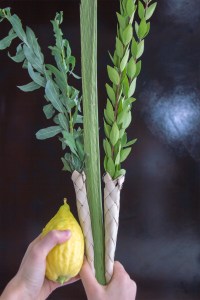
In Jewish tradition, the 7th day of Sukkot is called the “Great Hoshana (Hosanna)” or Hoshana Rabbah. There is a special Hoshana service on this day with song and chanted prayers. In the hands of each worshiper are the branches from “goodly” trees as Leviticus 23 commands. These branches are waved and shook as worshipers move in a procession shouting, “Hoshi a na!” This heartfelt cry is translated as “Save us now!”

The arba minim (branches/4 species/ lulav and etrog) are directly associated with this cry and the service prayers. We can see this type of exclamation by the Psalmist in Psalm 118: 25-26:

(Hoshi’ana) Save
now, I pray, O LORD;
O LORD, I pray, send now prosperity.
Blessed is he who comes in the name of the
LORD!
We have blessed you from the house of the LORD.

If we look carefully, we can see the relationship of the people waving palm branches[1] and crying “hosanna” when Yeshua rode into Jerusalem for Pesach (Passover). Although this custom was reserved for the season of Sukkot (Tabernacles), the people nonetheless were compelled to honor Yeshua in this manner.

The untrained eye may see the people’s reaction as disconnected; but, the real beauty of their demonstration is made clear in the simple recording of what Sukkot commemorates.[2] The fall moedim (feasts) look forward to the coronation of our Lord and King. Sukkot particularly portrays the culmination of our faith as it also looks back to the beginning of our redemption with the Pesach sacrifice. Yeshua IS the Lamb that was slain on our behalf and one day we will see Him crowned as our King! The following is the customary imagery attributed to the  arba minim. Examine each “species” carefully.


SPECIES TYPE IMAGERY
Etrog sweet taste & smell, (Citron- a citrus fruit that looks like a lemon) People who read Torah (the Word) and do good.
Lulav Sweet taste no smell (Date palm branches/ leaves) People who read Torah (the Word) but don’t do good.
Hadas no taste sweet smell (Myrtle branches/leaves) People who don’t read Torah (the Word) but do good.
ARaVah no taste or smell (Willow branches/leaves) People who don’t read Torah (the Word) or do good.

This seems to mirror the Parable of the Sower[3] and the four different types of soil or people. The Seed is the Word of God. The Sower is the Messiah. Therefore, the Sower and that which is sown are the same thing. Carefully examine the types of soil mentioned in this parable and compare them to the 4 species above.

Seed Type Imagery
1. Seeds fell by the roadside and birds ate the seed. Person doesn’t perceive the Word and the enemy steals anything that may have been sown in their heart. Aravah
2. Seeds fell on rocky places and they sprang up, but died due to lack of roots. Person receives Word with joy, but having no root (Yeshua, i.e.Life), affliction or persecution causes them to fall away. Hadas
3. Seeds fell among the thorns and the thorns choked the new seedlings. Person hears the Word, but the worries of the world or the deceitfulness of wealth chokes the Word, and it produces no fruit (no good deeds). Lulav
4. Seeds fell on good soil and produced 100, 60, and 30-fold. Person hears the Word, understands it and brings forth fruit (good deeds). Etrog

Clearly, the imagery of the Etrog (the fruit) and its Seed that fell on good soil are the “people” that we desire to be. We want to release a pleasing aroma, taste sweet in the mouth, and yield many more seeds that will produce the same fruit. That fruit and its beginning, the Seed, is Yeshua. When we are obedient to the Word, we are a living testimony of His goodness. If we’ve truly received the Seed, then we will naturally begin to produce the fruit!

2012-10-08 18.33.07

©Kisha Gallagher

Joshua Aaron has a beautiful song called Hoshiana:


[1] Mt. 21, Mark 11, Jn. 12. Read in context, this was clearly the time of Pesach (Passover).

[2] Lev. 23:39-44

[3] Mt. 13, Mark 4, Lk. 8

Categories: Moedim | Tags: , , , , , , , , | 4 Comments

Sukkot… In the Wilderness

B’midbar, in the wilderness, is the biblical name for the book of Numbers. It is the fourth book of Torah and aptly depicts the Israelites’ journey while in the wilderness after leaving Egypt. This particular segment of the Torah chronicles the tragic story of Israel’s unbelief, discontentment, and disobedience. It begins at the foot of Mount Sinai where the children of Israel received the Torah, the Law of Moses, and follows them through a forty year period of trials and testing.

The Promised Land was approximately an eleven day journey from the foot of Mount Sinai to the border of land of Canaan. (Deut 1:2) Yet, YHWH kept them in the wilderness for forty years! Apparently, it wasn’t the distance that stood between the children of Israel and the Promise Land, but the condition of their hearts. The Father’s desire was to prepare them to live in obedience to Him once they arrived. He desired and demanded their complete trust in Him alone. The journey was a painful but necessary part of training Israel to be His unique people.

The wilderness process taught the people who God was and was not. It also taught the people about who they were. We must not forget that we are just like our ancestors and that our “wilderness” is there to teach us the same truths our predecessor’s had to learn. The Torah, the instructions, accomplishes both of these goals. It clearly displays the fact that we are a sinful people, prone to rebellion and doubt. But it doesn’t leave us hopeless, no instead; it teaches us how to relate to our Holy God in our fallen state.

© Denayune
| Dreamstime.com

Sukkot (Feast of Tabernacles) is an eight day festival given to commemorate the wilderness journeys of our ancestors. It takes place every year in the seventh month on the Hebrew calendar after Yom Teruah (Feast of Trumpets) and Yom Kippur (Day of Atonement). The primary directives given to us to celebrate this feast can be found in Leviticus chapter 23. We are to dwell in a booth, which is a temporary dwelling place, such as a tent. Verse 43 sums up YHWH’s reason for this commemoration:

“That your generations may know that I made the people of Israel dwell in booths when I brought them out of the land of Egypt: I am the LORD your God.”

We are to remember this journey as if we ourselves were there and brought out of the land of Egypt. Why? Because once we are redeemed from Egypt (sin), we too will be taken to the foot of Mount Sinai, receive our instructions (Torah) and trek through the dry, hot wilderness before we can enter into the Promised Land. We will experience trials and tests that will teach us about our God and the true state of our own hearts.

There have been a few times that I knew I was in the wilderness and actually thought that the Father was finally taking me into the Promised Land. To my own dismay, I all too soon discovered that instead of removing me from the wilderness, the cloud had simply moved and the camp along with it. I found myself even deeper still in the abyss of the wilderness. I used to cry out: Why? I used to hate the wilderness, but now I realize that it is in the wilderness that God speaks. It is in the wilderness that I learn and grow. It is here that I am prepared for what is to come.

If you’ve never celebrated the feast of Sukkot by going into the “wilderness” and dwelling in “booths,” I suggest you make it a habit. This year we had the pleasure of staying on a friend’s property to camp during the festival. It was wonderful and… awful. I felt a tremendous compassion for the ancient Israelites.

I thought of simple things like using the bathroom. Can you imagine what an ordeal it would have been for an Israelite woman to relieve herself in the middle of the night? She had to go outside the camp and their camp was no small gathering. Or what about all that sand? I live in Florida and the dirt here is almost completely sand. My feet were in a perpetual state of dirtiness the entire week! Once washed, they inevitably were covered in dirt and sand within minutes. Then there is the constant close proximity of your neighbors. We truly do not know what it is to love our neighbor until we live side-by-side with them for an extended period of time. Oh, and our beds! Our big nice cushy beds call out to our crippled backs by the end of the week! Spoiled doesn’t even begin to describe the state of our delicate American hearts (and backs)!

All these little confessions may seem trivial or worldly to the super-spiritual, but I assure you that even the loftiest of us may find ourselves humbled by an eight-day sabbatical like this. Yes, it is a celebration, but don’t think for a moment that it is not also a test. The Father knows all too well that we need constant reminders in our lives to keep us on the straight and narrow path. The weekly Sabbaths, the New Moons, the yearly Feasts, the seven-year releases, and the Jubilees are all sign-posts that guide us through the wilderness into the Promised Land.

We are each on a journey through the wilderness. It is imperative that we learn everything that this passage offers to us. Sometimes it may seem lifeless, dry, and our thirst for water great. Sometimes the heat may scorch our face and our sweat sting our eyes. Sometimes the night may be so cold and empty that our heart aches from utter loneliness. Sometimes our appetite for the luscious smorgasbord of Egypt cannot be shaken from our longing taste buds. These are the desires of our flesh. We must master them. Our only hope is found in our Redeemer. He alone can satisfy the ever longing groans of our hearts.

He brings Living Water from the Rock and quenches the unbearable thirst. When He stands with us the scorching sun cannot burn our face. He is our Maker and our Husband and wraps His strong arms around us tight and whispers words of love upon longing ears. He changes the desires of our hearts to line up with His will and our appetite is sated by His every Word.

Jeff Benner’s Ancient Hebrew Lexicon of the Bible, describes the pictographic meaning of the Hebrew word, B’midbar, quite eloquently. According to the Hebraic understanding, the “wilderness” is a place of order, or a sanctuary. It shares the same root with “davar” the Hebrew word for “Word, as in speech.” Therefore, the wilderness is a place of order, sanctuary, and a place where YHWH speaks. How different we tend to think of the wilderness! We usually associate it with chaos and a period where hearing the voice of the Father is difficult.

I suggest that we correct our thinking about the wilderness and line up our mind with the Father’s. The physical elements that surround us in the wilderness may appear to us as desolate and empty, but if we adjust our vision just right, we will see that the path is clearly marked and it is filled to over-flowing with the Spirit of the Master! There is a definite order to our wilderness journey and it is a place where He comes and speaks to us.

Perhaps, we simply need ears to hear!

May your Sukkot be blessed! Baruch HaShem!

Categories: Moedim | Tags: , , , , | Leave a comment

Blog at WordPress.com.