
© Kydriashka | Dreamstime.com
We are in the eleventh month of Shevat. Shevat comes from an Akkadian word that means a shoot, rod, or lashing, with the latter being a reference to the heavy rains of winter that end at this season. The fifteenth of Shevat (Tu B’Shevat) is the New Year for Trees in Judaism. In Temple times, it was vital for Israel to have a set time to separate one growing season from another in order to properly tithe and bring one’s first fruits to the priests. That is the purpose of the New Year for Trees. Which year does your fruit belong to? This is important for tithing in the natural and spiritual realms.
Winter might seem like an odd time of the year to celebrate trees and fruit, but in Israel’s more temperate climate, the fruit trees are budding and beginning to blossom in this month. In a sense, you are a tree, a planting of the LORD. What’s budding in your life right now?
“People have trunks and limbs. They grow roots, have seeds, and produce fruit. Trees and people feel pain and bleed when wounded. Both breathe and sway (move) when the wind (ruach) blows upon them. The growth of trees and people are deeply affected by the type of soil, the volume of water, and the amount of sunlight that they receive. Even the House (Temple) of YHWH is built with both trees and people. (2 Chron. 2, 1 Cor. 6:19) Thus, it is no wonder that the Scriptures abound with analogies, metaphors, similes, and puns that compare mankind to the majestic trees of the forest.”[1]
In tradition, the first of Shevat is when Moses began to deliver the Mishneh Torah, the second Law or repetition of the Law, or the Book of Deuteronomy. He spoke to Israel for thirty-seven days, passing away on the seventh of Adar. Because Moses delivered a full summary of the Law at this time, Rosh Chodesh Shevat is compared to Shavuot (Pentecost), when Adonai gave His Torah to Israel. Thus, this month and the first seven days of Adar are considered an auspicious time to study the Torah, as it teaches one how to produce proper fruit.
I’ve written elsewhere about the specifics of Shevat and Tu B’Shevat. This year, I will elaborate on the spiritual aspect of this season, specifically in regard to producing spiritual fruit.
Luke 6:43-45 (NASB) “For there is no good tree which produces bad fruit, nor, on the other hand, a bad tree which produces good fruit. 44 For each tree is known by its own fruit. For men do not gather figs from thorns, nor do they pick grapes from a briar bush. 45 The good man out of the good treasure of his heart brings forth what is good; and the evil man out of the evil treasure brings forth what is evil; for his mouth speaks from that which fills his heart.
You are a tree, and the fruit that you produce is your words and actions. No one can escape this reality. If one wants to know what is really in their heart, examine your words. What is coming forth from your mouth or from your keyboard? Life or death? Edification or accusation? Hymns and praise or rants and derision? Good news or mockery? If rotten buds are sprouting, repent before the fruit comes into full bloom, earmarked for destruction.
Proverbs 4:23-24 (NASB) Watch over your heart with all diligence, for from it flow the springs of life. 24 Put away from you a deceitful mouth and put devious speech far from you.
In Hebrew, the bolded words above are both about deception. Since the fall from the Garden, man struggles with the polarities of two natures. One must learn the difference between these two voices, and submit to the renewed man in Messiah, who is governed only by the Spirit of Adonai, not the old nature that is dying; and yet, continually trying to resurrect and rule. (Romans 7) Speaking through the prophet Jeremiah, Adonai reminds man that he is like a tree:
Jeremiah 17:7-8 (NKJV) “Blessed is the man who trusts in the LORD, and whose hope is the LORD. 8 For he shall be like a tree planted by the waters, which spreads out its roots by the river, and will not fear when heat comes; but its leaf will be green, and will not be anxious in the year of drought, nor will cease from yielding fruit.”
But, in the very next verses, Adonai warns that one’s heart, from which the issues of life flow, can trick, deceive, and distort. Therefore, it is imperative that we examine our fruit.

Shutterstock ID 224768824 © Amanda Carden
Jeremiah 17:9-10 (NKJV) “The heart is deceitful above all things, and desperately wicked; who can know it? 10 I, the LORD, search the heart, I test the mind, even to give every man according to his ways, according to the fruit of his doings.”
What are we producing? What words are we speaking (typing)? What actions result from these words? Have we received seed/fruit from a tree that we should not be consuming that is producing fear, suspicion, doubt, paranoia, anger, strife, and division? And, are we then spreading that sort of “news” to others instead of the Good News? You will know them by their fruit. You will know whose seed you have received into the soil of your heart by examining FRUIT.
King David, the man after God’s own heart, prayed:
Psalms 141:3-4 (NASB) Set a guard, O LORD, over my mouth; keep watch over the door of my lips. 4 Do not incline my heart to any evil thing, to practice deeds of wickedness with men who do iniquity; and do not let me eat of their delicacies.

Dreamstime ID 161037541
Since the Garden, receiving words, whether they be of Adonai or from another, are likened to ingesting seed. Seed is found in fruit. Things and words that appeal to the flesh are “delicacies.” In Hebrew, these are man’ammiym. They refer to choice, luxurious portions of (spiritual) food. Above, David knows that receiving such morsels from the wicked and lawless might taste good to his flesh, but in the end, they lead to death. We must be careful of the fruit we partake of because it contains a seed that will grow into a full-grown tree. The Tree of the Knowledge of Good and Evil produces more of the same. Just because something seems good or even is good, doesn’t mean it produces Life.
This is true in every area of life: marriage, family, child rearing, community, relationships, fellowships, education, careers, governments, politics, medicine/health care, and even in theology. Two seeds. Two trees. Two worldviews. Two Kingdoms. We are either of one or the other. Thus, it is vital that we become expert fruit inspectors, beginning with our own hearts.
Difficulty in Discernment
Aside from leaving Egypt, rarely are the people of Adonai required to act in haste. Patience is a fruit of the Spirit. Thus, while inspecting fruit is paramount, so is discretion. Things are not always as they appear. We must not be quick to judge, because we are not omniscient.
Proverbs 15:28 (ESV) The heart of the righteous ponders how to answer, but the mouth of the wicked pours out evil things.
One can listen to the voice of fear or other emotions, or even the voice of one’s own desires and be deceived. One can believe that they are full of light, and that light can, in reality, be darkness.
Luke 11:35 (NASB) “Then watch out that the light in you is not darkness.”
This is just as true for the Believer as the unbeliever. The Hebrew worldview is not as black and white as western, Greek trained minds would prefer. Hebraic thought centers around the tension between opposites, and seeks to find balance. The Hebrew language reflects this. Most Hebrew words function as contranyms.[2] This is confusing for those trained in western logic. And yet, this is the mindset in which the Bible was written. It is also the mindset that produced Rabbinic Judaism and the Talmud.
Much of the Talmud is debate and argument, something westerners, particularly those of faith, do not wish to participate. If religious arguments become the norm in western faith circles, there is a strong likelihood that the group will choose sides and splinter into new groups. They do this to avoid debate, and to peacefully function in the echo chamber that agrees with one’s conviction.
While this isn’t an evil thing to do, and it certainly has some benefits, it is not spiritually healthy to never have one’s faith, beliefs, or doctrines challenged. The nature of growth, birth, and harvest is toil, pain, and struggle. This is how we learn. While hostile debate can be draining, or even damaging, especially for those young in the faith, having no challenge or debate is equally destructive. It’s akin to one dying on the vine. Hebraic thought challenges one to find the balance between these polarities.
“The nature of a man or doctrine or movement can be rightly estimated only when the results have had time to develop.” (F. B. Meyer)

© Silberkorn | Dreamstime.com
Wait for the fruit. Do not be deceived. Many in religious (and secular) circles prey upon one’s ignorance of the “whole story” or all the facts. According to Scripture, ignorance leads to exile, separation, and destruction, not bliss.[3] The Talmudic story called “Akhnai’s Oven” has been used by detractors to speak evil about Jews, particularly those that adhere to Rabbinic Judaism.
Whether these accusers are ignorant, deceived, or willfully dishonest, I know not. What is obvious is their dependence upon the listener’s ignorance. By choosing to quote a small portion of the this aggadic story out of context, they build a vile strawman and attach it to Rabbinic Judaism. Their goal is to incite fear, doubt, suspicion, and hatred. And sadly, some will receive this seed and it will grow into a wicked tree of antisemitism in their hearts. The irony is that when one reads the entire story in context, it is a teaching about NOT disparaging others with words!
Akhnai’s oven is not a true story, rather it is a parable with great moral lessons about how brothers treat one another, especially in regard to speech. Like much of the Talmud, the rabbis are having an argument about halacha, rulings about “how” to properly keep or walk out the Torah. Hebraic Roots folks often do the same, so this little story has some pearls of wisdom if we have ears to hear, and can reserve judgment for a time.
I will warn you that this is NOT a simple story. It contains layers of moral truth that requires one to wrestle with what is “right.” But, isn’t that just like everyday life? Godly discernment often isn’t black and white. Consider Judah and Tamar. By Torah standards, she APPEARED to have played the harlot (and the irony is that she did), thus Judah wanted her to be burned alive.
When the accusations were brought to her, she said, “Discern, I pray thee, whose are these—the signet ring, cord, and the staff.” Tamar called for discernment. That is how she was vindicated, and that is how the line of Judah was secured. May we have that same discernment as we investigate Akhnai’s Oven.
Ahknai’s Oven
Proverbs 18:21 (NASB) Death and life are in the power of the tongue, and those who love it will eat its fruit.
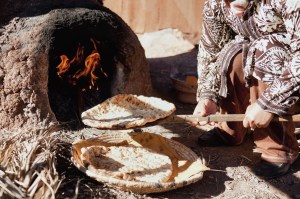
© Rosa Frei | Dreamstime.com
On the surface level of this story, the ancient rabbis are arguing about whether an earthenware oven that has come in contact with a corpse is clean or unclean (pure or impure/ kosher/nonkosher). In the Torah, an earthenware vessel or oven contaminated by death is impure, and must be shattered. (Lev. 11:33-35) But, the debate arises because of the way in which the oven was built; in this form, is it still considered such a vessel?
The placement of this argument is key to the context of the story. It is sandwiched between sections of where the rabbis made rulings about PROPER SPEECH. Words and how one uses them indicates the state of one’s heart. One is meant to consider that he/she is from the earth, an earthenware vessel.[4] What does an “oven” have to do with this? It is a symbol in this story. Ovens bake BREAD – and bread is a metaphor for The Word and one’s words. What are we cooking up or eating from the ovens of others? “Those who love it WILL EAT its fruit.”
Bava Metzia 59a and 59b (quoted from Sepharia.org)
Apropos the topic of verbal mistreatment, we learned in a mishna there (Kelim 5:10): If one cut an earthenware oven widthwise into segments, and placed sand between each and every segment, Rabbi Eliezer deems it ritually pure. Because of the sand, its legal status is not that of a complete vessel, and therefore it is not susceptible to ritual impurity. And the Rabbis deem it ritually impure, as it is functionally a complete oven. (59a)
That’s the opening argument. R. Eliezer thinks that the oven shouldn’t be considered a complete “vessel,” thus the commandment in Leviticus 11 doesn’t apply. Whereas, the majority of the rabbis see it differently. They think that since it functions as a complete oven, it is also a complete vessel, and subject to ritual impurity. The story begins:
And this is known as the oven of akhnai. The Gemara asks: What is the relevance of akhnai, a snake, in this context? Rav Yehuda said that Shmuel said: It is characterized in that manner due to the fact that the Rabbis surrounded it with their statements like this snake, which often forms a coil when at rest, and deemed it impure. The Sages taught: On that day, when they discussed this matter, Rabbi Eliezer answered all possible answers in the world to support his opinion, but the Rabbis did not accept his explanations from him. (59b)
Consider a couple of things before moving forward. First, the rabbis immediately associate the oven with WORDS. The tongue is likened to the oven, because words originate in the heart. So, based on their explanation, consider whether the tongue is an incomplete example of one’s heart (a separate or incomplete vessel), or if Yeshua is correct when He says it figures the entire heart of a man (a complete vessel).

Dreamstime ID 78252543
Second, notice that the “owner” of the oven is called Akhnai, which means SNAKE. Immediately, one is faced with the real issue. Snakes are “hissers,” and are associated with deception and damaging words. The rabbis surrounded it (the argument) like a coiled snake. And, Rabbi Eliezer counter argued (literally translated), “All the words in the world,” to support his conclusion. Both sides use many WORDS. At this point, you might be wondering which group in this story is the actual snake (or in the wrong). Keep wrestling with that idea as the story builds.
After failing to convince the Rabbis logically, Rabbi Eliezer said to them: If the halakha is in accordance with my opinion, this carob tree will prove it. The carob tree was uprooted from its place one hundred cubits, and some say four hundred cubits. The Rabbis said to him: One does not cite halakhic proof from the carob tree. Rabbi Eliezer then said to them: If the halakha is in accordance with my opinion, the stream will prove it. The water in the stream turned backward and began flowing in the opposite direction. They said to him: One does not cite halakhic proof from a stream.
Rabbi Eliezer then said to them: If the halakha is in accordance with my opinion, the walls of the study hall will prove it. The walls of the study hall leaned inward and began to fall. Rabbi Yehoshua scolded the walls and said to them: If Torah scholars are contending with each other in matters of halakha, what is the nature of your involvement in this dispute? The Gemara relates: The walls did not fall because of the deference due Rabbi Yehoshua, but they did not straighten because of the deference due Rabbi Eliezer, and they still remain leaning.
Rabbi Eliezer then said to them: If the halakha is in accordance with my opinion, Heaven will prove it. A Divine Voice emerged from Heaven and said: Why are you differing with Rabbi Eliezer, as the halakha is in accordance with his opinion in every place that he expresses an opinion?
This story is a type of Jewish literature called aggadah, which are parabolic stories meant to convey a moral lesson in support of halachic rulings. Rabbi Eliezer, a highly respected (and real historical) rabbi, stood alone in his opinion of the oven. This story exemplifies the tension between two schools of thought in first and second century Judaism, the struggle after the destruction of the Temple, a nation facing exile (again), and the necessity of unity to maintain Jewish identity. While all those issues can and should be explored, our focus is on the timeless issues of the tongue, and why WORDS will either justify or condemn us. (Mt. 12:37)
At first glance, it appears that Rabbi Eliezer is indeed correct. Miracle after miracle comes forth as a sign for him. But, the other rabbis are not persuaded by such signs. Then, R. Eliezer asks the walls of the house of study to prove that he is right. They began to fall inward and Rabbi Yehoshua rebukes them, so they stopped. It seems the walls decided to agree with both sides of the argument, which we will get to later. Finally, Rabbi Eliezer pulls out his ace card. He calls on heaven and a Divine Voice (Bat Kol) agrees with his ruling. You’d think that this would settle the dispute, but then:
Rabbi Yehoshua stood on his feet and said: It is written: “It is not in heaven” (Deuteronomy 30:12). The Gemara asks: What is the relevance of the phrase “It is not in heaven” in this context? Rabbi Yirmeya says: Since the Torah was already given at Mount Sinai, we do not regard a Divine Voice, as You already wrote at Mount Sinai, in the Torah: “After a majority to incline” (Exodus 23:2). Since the majority of Rabbis disagreed with Rabbi Eliezer’s opinion, the halakha is not ruled in accordance with his opinion. The Gemara relates: Years after, Rabbi Natan encountered Elijah the prophet and said to him: What did the Holy One, Blessed be He, do at that time, when Rabbi Yehoshua issued his declaration? Elijah said to him: The Holy One, Blessed be He, smiled and said: My children have triumphed over Me; My children have triumphed over Me.

© Weerapat Wattanapichayakul | Dreamstime.com
Yikes! That last bit sounds rather sacrilegious. Indeed, it is typically where one promoting antisemitism will stop quoting the story to say horrible things about Judaism or Jews. But, reserve judgment for a moment. There is much more going on than meets the eye, and the story is far from finished.
Rabbi Yehoshua and the other sages do not trust in signs and wonders, not even a heavenly voice, because the Torah warns them about such things. Instead, they stand on the firm foundation of “it is written.” The heavenly Torah was given to earth at Mt. Sinai. And, the Torah plainly states that a contaminated earthenware vessel must be broken. Since the majority agrees with this, the ruling is settled.
In the eyes of an inexperienced reader of the Talmud, controversy arises when it says, “My children have triumphed over me.” That sounds like man has defeated Adonai (God forbid), which is NOT the moral of this story. Nor does it imply that man’s word or judgment is higher than YHWH’s. Instead, the rabbis point to this section to support the fact that God has given His Word (from Heaven) and EXPECTS man to make judgments based on His revealed truth. They also see this is as a support for Rabbinic authority, with the majority ruling in halachic matters. You don’t have to agree with the latter, because if Akhnai’s oven teaches one anything, it is that we are free to disagree. What matters is how we treat one another, and how we speak about each other during and after the fact.
One is also faced with another conundrum. Were the miracles and the heavenly voice false signs and wonders? The text implies that they were the real deal, hence the controversial phrase at the end of the above passage. Or, were the majority rabbis correct by strictly sticking to “it is written?” Two polarities. Two schools of thought. Divine tension. Who is correct?

© Laboko | Dreamstime.com
The truth is that we face similar tensions in our faith walk all the time. In many instances, one could argue for either side and be correct (at least to a degree). However, there is a test that can help with discernment. Yeshua said, “You will know them by their fruit.” The second half of Akhnai’s oven reveals the aftermath (fruit) of this argument. It quickly becomes apparent that both sides were correct… and incorrect. There is a much greater Torah principle being taught in this story for those that have ears to hear.
The Sages said: On that day, the Sages brought all the ritually pure items deemed pure by the ruling of Rabbi Eliezer with regard to the oven and burned them in fire, and the Sages reached a consensus in his regard and ostracized him. And the Sages said: Who will go and inform him of his ostracism? Rabbi Akiva, his beloved disciple, said to them: I will go, lest an unseemly person go and inform him in a callous and offensive manner, and he would thereby destroy the entire world.
What did Rabbi Akiva do? He wore black and wrapped himself in black, as an expression of mourning and pain, and sat before Rabbi Eliezer at a distance of four cubits, which is the distance that one must maintain from an ostracized individual. Rabbi Eliezer said to him: Akiva, what is different about today from other days, that you comport yourself in this manner? Rabbi Akiva said to him: My teacher, it appears to me that your colleagues are distancing themselves from you. He employed euphemism, as actually they distanced Rabbi Eliezer from them. Rabbi Eliezer too, rent his garments and removed his shoes, as is the custom of an ostracized person, and he dropped from his seat and sat upon the ground.
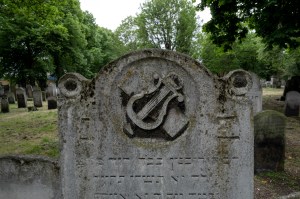
© Leklek73 | Dreamstime.com
The sages burned Rabbi Eliezer’s previous work, and then excommunicated him. Can you imagine the pain this caused R. Eliezer, whether he was right or wrong? His work, devotion, and service to God, were all destroyed because of one argument. The rejection must have been unbearable. Elsewhere, the rabbis teach that humiliating another person in public is akin to murder, as is destroying their livelihood. His colleagues did both. Hence, Rabbi Akiva dressed as a mourner when he delivered the news to R. Eliezer. Something had indeed died: their relationship.
In a sense, the sages knew what they were doing because they feared that if the news reached Eliezer in an unsavory manner, “he would destroy the entire world.” What does this mean? Surely, Eliezer didn’t possess such power, did he? This is symbolic, of course. Think metaphorically as you read the following:
The Gemara relates: His eyes shed tears, and as a result the entire world was afflicted: One-third of its olives were afflicted, and one-third of its wheat, and one-third of its barley. And some say that even dough kneaded in a woman’s hands spoiled. The Sages taught: There was great anger on that day, as any place that Rabbi Eliezer fixed his gaze was burned.
And even Rabban Gamliel, the Nasi of the Sanhedrin at Yavne, the head of the Sages who were responsible for the decision to ostracize Rabbi Eliezer, was coming on a boat at the time, and a large wave swelled over him and threatened to drown him. Rabban Gamliel said: It seems to me that this is only for the sake of Rabbi Eliezer ben Hyrcanus, as God punishes those who mistreat others. Rabban Gamliel stood on his feet and said: Master of the Universe, it is revealed and known before You that neither was it for my honor that I acted when ostracizing him, nor was it for the honor of the house of my father that I acted; rather, it was for Your honor, so that disputes will not proliferate in Israel. In response, the sea calmed from its raging.
When we have suffered great pain, loss, betrayal, rejection, or injustice is it not like the “entire world is afflicted?” At least “our” entire world has been destroyed in that moment. Why do you think the crops of harvest are affected in “thirds?” Have we read about judgment occurring in thirds elsewhere? The Book of Revelation has many judgments in thirds, and it is indeed a judgment on the seven abominations that all deal with the tongue in some way.[5]

© Andrii Yalanskyi | Dreamstime.com
Dr. Alewine points out the good side of thirds, which are the chaggim, the three pilgrimage or foot festivals, where brethren gather in unity at Mt. Zion.[6] No one is left out or ostracized. Tongues are used to praise and worship the King of kings. Moreover, they occur at the harvest times of the aforementioned crops (barley, wheat, olives). The destruction in this story symbolizes the consequences of both parties’ actions. No longer will they gather as one at the appointed times of the LORD; hence, a third of the chaggim harvest is afflicted. Likewise, the Sabbath dough is spoiled before it is baked, insinuating that the gathering spirit of breaking bread on Shabbat has been tainted.
Rabbi Gamliel understands that they mistreated Rabbi Eliezer, and that this is the reason his life is threatened, so he prays to the Almighty. What he really did was “explain himself” to the Almighty. I wonder how many of us do the same when we’ve taken our judgment too far with others? Do we tell God all the “good” reasons for our poor actions? Our intentions might be good, but the subsequent fruit reveals the tree.
At this point, we should understand that we can be so right that we are wrong. No matter which side of the argument one is on, there is a right and a wrong way to say things. And, there is a right and a wrong way to cast judgment or bring correction. The last part of the story ends with a woman called Imma (mama) Shalom. She is connected to both men, and both sides of the argument.
The Gemara further relates: Imma Shalom, the wife of Rabbi Eliezer, was the sister of Rabban Gamliel. From that incident forward, she would not allow Rabbi Eliezer to lower his head and recite the taḥanun prayer, which includes supplication and entreaties. She feared that were her husband to bemoan his fate and pray at that moment, her brother would be punished. A certain day was around the day of the New Moon, and she inadvertently substituted a full thirty-day month for a deficient twenty-nine-day month, i.e., she thought that it was the New Moon, when one does not lower his head in supplication, but it was not. Some say that a pauper came and stood at the door, and she took bread out to him. The result was that she left her husband momentarily unsupervised.
When she returned, she found him and saw that he had lowered his head in prayer. She said to him: Arise, you already killed my brother. Meanwhile, the sound of a shofar emerged from the house of Rabban Gamliel to announce that the Nasi had died. Rabbi Eliezer said to her: From where did you know that your brother would die? She said to him: This is the tradition that I received from the house of the father of my father: All the gates of Heaven are apt to be locked, except for the gates of prayer for victims of verbal mistreatment.
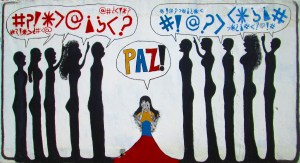
© Jorgeprz | Dreamstime.com
Imagine Imma Shalom as a figure of the Holy Spirit or Woman Wisdom. She is wife and sister to the men who argued. Now, consider Adonai. Is He not intimately connected to us AND our opponents? Like Imma Shalom, He loves both sides, both men. They are close family. While she is devastated for her husband, R. Eliezer, she is also deeply concerned for the consequences that her brother will face if her husband pours his broken heart out to God.
Imma Shalom diligently watches over her husband. One day, she believes it is the new moon, a time like other feast days and Shabbats when one (in Judaism) doesn’t make personal supplications to God; rather, those days are all about worshipping and praising the King. So, with her guard down, she leaves him alone, not realizing that it is a normal week day, a time when one does make supplication and entreaties to God. She walks in to find Eliezer on his face before God, and says, “Arise, you already killed my brother.”
Suddenly, they heard the voice of the shofar come from the house of Gamliel. He had, indeed, died. Eliezer asks her how she knew this would happen. She quotes a tradition passed down from her father’s father, “All the gates of Heaven are apt to be locked, except for the gates of prayer for victims of verbal mistreatment (ona’at devarim).”
Ona’at devarim are stealing words. Words that fraud, oppress, and damage. There are no winners in this little tale. Both sides made grave errors in words and deeds, even though both sides served the Most High God. Neither Eliezer nor the rabbis were 100% correct in their halachic ruling or in the way they spoke to and treated one another. Words brought death in each case, not life. “Those who love it WILL EAT its fruit.” – even great rabbis.

© Kampol Jongmeesuk | Dreamstime.com
This is the Snake’s Oven. It brings forth poisonous bread that once consumed cannot be undone – just like one’s words.
Perhaps, we are like Eliezer, eagerly looking for a loophole to make the unclean, clean. Maybe we are arguing “all the words in the world” to convince others that our private interpretation is right, even though the more words we use, the closer we align with Ahknai, the snake. Or, perhaps the majority is on our side, and there is a sense of safety in those numbers, so we take this as confirmation that we are “right,” and search no further for balance and truth. Maybe our conviction is so strong that even a heavenly voice won’t change our mind. Will we coil like a snake around the minority and choke them out? Can you see the irony on both sides?
The walls of the “house of study” are still leaning to this very day. In the Book of Revelation, the foundation and “walls” of heavenly Jerusalem consist of people, living stones. The overcomers in the church of brotherly love are promised to become “pillars” in the Temple of Adonai. These walls do not lean, they are straight, strong, and true.
But, this side of the Olam Haba (World to Come) the walls in the house of study continue to lean. It is all so precarious, and so are our relationships. They are what matter most, because God desires that we be One with each other, and Him. Anything that seeks to divide brothers should be a bright orange caution sign for Believers. (Pr. 6:16-19)

© Kevin Carden | Dreamstime.com
Last year was the Hebrew year 5780. Eighty is the letter peh, which is also the word for mouth. We have entered a decade of 80’s or mouths. Do you think it is a coincidence that the whole world has had to cover their mouth since mid 5780? In Biblical understanding, one’s (evil) words cause leprosy, a spiritual condition that requires one to be separated (socially distanced) from the camp.
Leviticus 13:45 (TLV) “The one with tza’arat who has the plague-mark should wear torn clothes, the hair of his head is to hang loose, he is to cover his upper lip and cry, ‘Unclean! Unclean!’”
Perhaps, we collectively represent R. Eliezer and the Sages. Everyone in the case of Ahknai’s oven was found to be unclean and contaminated, just like the snake’s oven. And it was all on account of disguised evil speech by those that should know better. We must stop defending and justifying our big, fat mouths.
Maybe God has allowed this plague to come upon us because our words have been found wanting. Maybe we’ve coiled around others like a snake with hissing taunts or we have murdered someone’s reputation or livelihood with our words. Perhaps, our entire ministry is devoted to accusing the other side of wrong doing, which makes one a “satan.”
We have poorly represented the King of the Universe, which makes us false witnesses, an unclean earthenware vessel that needs to be shattered. Yeshua tells the assembly in Thyatira that He searches the minds and hearts of man, no one can explain away or justify their rotten words or deeds. In the end, His rod of iron WILL shatter the unclean human clay pots.
Revelation 2:23-27 (TLV) Then all of Messiah’s communities will know that I am the One who searches minds and hearts, and I will give to each of you according to your deeds. 24 But to the rest of you in Thyatira, who do not hold to this teaching and have not learned the so-called ‘deep things’ of satan—I place on you no other burden. 25 Only hold firm to what you have until I come. 26 To the one who overcomes and guards My deeds until the end, I will give him authority over the nations 27 and he shall rule them with an iron rod, as when clay pots are broken into pieces.
We will give an account for every idle word that we speak. Did they produce life or were they contaminated with death? (Mt. 12:36-37) In Greek, it literally says we will PAY BACK with logos, words. Middah kenedgo middah – measure for measure.
Yeshua comforts the Philadelphians, those immersed in brotherly love, by making the synagogue of Satan (accusers) bow down and worship (use words) at their feet to make them know that Yeshua loved them. I wonder how many of us will do this at the feet of those we have disparaged, hated, and spoken poorly of in this life?
Perhaps, we will be required to cover our lips until we admit that we are unclean. I pray that we freely repent (the rightful use of one’s tongue) before we are forced to do so by further judgments.
Matthew 12:36-37 (NASB) “But I tell you that every careless word that people speak, they shall give an accounting for it in the day of judgment. 37 For by your words you will be justified, and by your words you will be condemned.”
To learn more about Proper Speech click here.
[1] https://graceintorah.net/2017/01/28/tu-bshevat/
[2] A word with two opposite meanings, e.g. sanction (which can mean both ‘a penalty for disobeying a law’ and ‘official permission or approval for an action’).
[3] Isaiah 5:13 (NASB) Therefore My people go into exile for their lack of knowledge; and their honorable men are famished, and their multitude is parched with thirst.
Hosea 4:6 (NASB) My people are destroyed for lack of knowledge. Because you have rejected knowledge, I also will reject you from being My priest. Since you have forgotten the law (Torah) of your God, I also will forget your children.
[4] For example see: Is. 45:9, Jer. 19, Rom. 9:20-21, 2 Cor. 4:7-18, 2 Tim. 2:20,
[5] For more information, see The Creation Gospel: Workbook 1 and 2, by Dr. Hollisa Alewine. Also see Proverbs 6:16-19.
[6] See footnote 3.

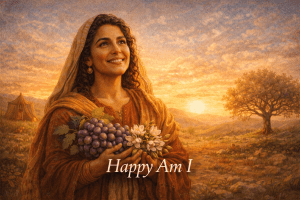
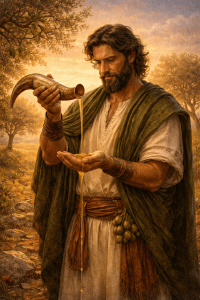 Moses expands Jacob’s blessing by showing what happens when inner discernment is healthy.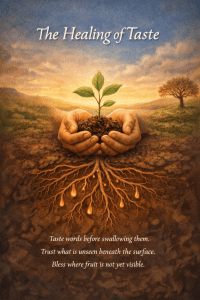




 GRACE in TORAH