Posts Tagged With: chesed

The Unforgiving Servant

The vast mercy, grace, and abounding chesed (lovingkindness) of our Father and King culminates in His willingness to forgive. So, as recipients of His lavish love, why do we often prefer vengeance, pay back, and punishment when wrongs have been committed against us? The parable of the unforgiving servant demonstrates this truth perfectly; and yet, I wonder if we really can see just how much we resemble this servant in our attitudes towards others who have hurt, wronged, or insulted us.

© Kevin Carden | Dreamstime.com

The more the Father has had me revisit this parable and other related passages, the more I am convicted when I look into the perfect law of liberty and see how distorted my reflection is in comparison to the Master. My nephesh (flesh) desires vindication, damages, and justice when I have been wronged, slighted, misunderstood, hurt, taken advantage of, misrepresented, slandered, wounded, stolen from, or even when I am simply offended. It feels like righteous anger, but is it?

When I think about what Messiah endured for lost, unrepentant, and even degenerate souls, my anger dissolves into a puddle of shame and conviction. Can I embody this kind of mercy, empathy, and forgiveness towards those who have deeply wounded me or one of my children? In my flesh, it is futile. But praise Adonai, we are given His Spirit, so the impossible IS possible. Hear the parable from the Literal Standard Version[1]:

Matthew 18:21-35 (LSV)

21 Then Peter having come near to Him, said, “Lord, how often will my brother sin against me, and I forgive him—until seven times?”

22 Jesus says to him, “I do not say to you until seven times, but until seventy times seven.

23 Because of this was the kingdom of the heavens likened to a man, a king, who willed to take reckoning with his servants,

24 and he having begun to take account, there was brought near to him one debtor of a myriad of talents,

25 and he having nothing to pay, his lord commanded him to be sold, and his wife, and the children, and all, whatever he had, and payment to be made.

26 The servant then, having fallen down, was prostrating to him, saying, Lord, have patience with me, and I will pay you all;

27 and the lord of that servant having been moved with compassion released him, and the debt he forgave him.

28 And that servant having come forth, found one of his fellow-servants who was owing him one hundred denarii, and having laid hold, he took him by the throat, saying, Pay me that which you owe.

29 His fellow-servant then, having fallen down at his feet, was calling on him, saying, Have patience with me, and I will pay you all;

30 and he would not, but having gone away, he cast him into prison, until he might pay that which was owing.

31 And his fellow-servants having seen the things that were done, were grieved exceedingly, and having come, showed fully to their lord all the things that were done;

32 then having called him, his lord says to him, Evil servant! All that debt I forgave you, seeing you called on me,

33 did it not seem necessary to you to have dealt kindly with your fellow servant, as I also dealt kindly with you?

34 And having been angry, his lord delivered him to the inquisitors, until he might pay all that was owing to him;

35 so also My heavenly Father will do to you, if you may not forgive each one his brother from your hearts their trespasses.”


If you have been deeply wounded, hurt, manipulated, oppressed, or worse by another person, Peter’s query of forgiving up to seven times seems very generous. How many times does God expect one to “put up with” a person who continues to transgress against them? Isn’t this actually dangerous in some cases?

As a quick aside, consider that forgiveness is NOT a feeling. Forgiving someone does NOT mean that one must put themselves at risk physically, mentally, emotionally, or financially. Forgiveness doesn’t mean you have to give the “weapon” back to the one who assaulted you. This fallacy of belief prevents a lot of people from truly forgiving, because it seems to ask too much. True forgiveness is choosing to release the debt another person owes you. It doesn’t erase what happened. It doesn’t condone their behavior or words. You don’t have to become bedfellows with your betrayer (or even have warm, fuzzy feelings about them), but you do have to forgive the debt they owe you. Let it go and entrust them to Adonai. This releases you from the “torturers,” which will be explained later in this post.

Seven, being the number of completion and rest, was a reasonable, and even a Biblical, deduction made by Peter in regards to forgiveness. But Messiah says something shocking to our human sensibilities in response – we are to forgive our brothers/sisters up to seven times seventy! Rather than this being a clever way of saying 490, Yeshua is hinting back to a story that involved brothers and unforgiveness. When we fail to forgive, we are actually going the “way of Cain.”[2]


Cain & Lamech

In Genesis 4, Cain was offended and hurt that Adonai accepted the offering of his brother Abel, but not his. It is noteworthy to point out that by faith Abel offered firstfruits, his best, which is a better sacrifice.[3]  Though Cain also made an offering, it was not from his firstfruits. He cared more about himself than his brother. Cain’s hurt turned into jealous anger towards his brother. Adonai warned him that he needed to master these emotions or sin would overtake him, and encouraged him that if he did well (in the future), it would go well with him too. But Cain did not listen. He didn’t “hear” the Word from Adonai and his anger resulted with the first murder in human history. Afterwards, Adonai asked Cain:

Genesis 4:9-10 (TLV) 9 “Where is Abel, your brother?” “I don’t know,” he said. “Am I my brother’s keeper?”10 Then He said, “What have you done? The voice of your brother’s blood is crying out to Me from the ground.”
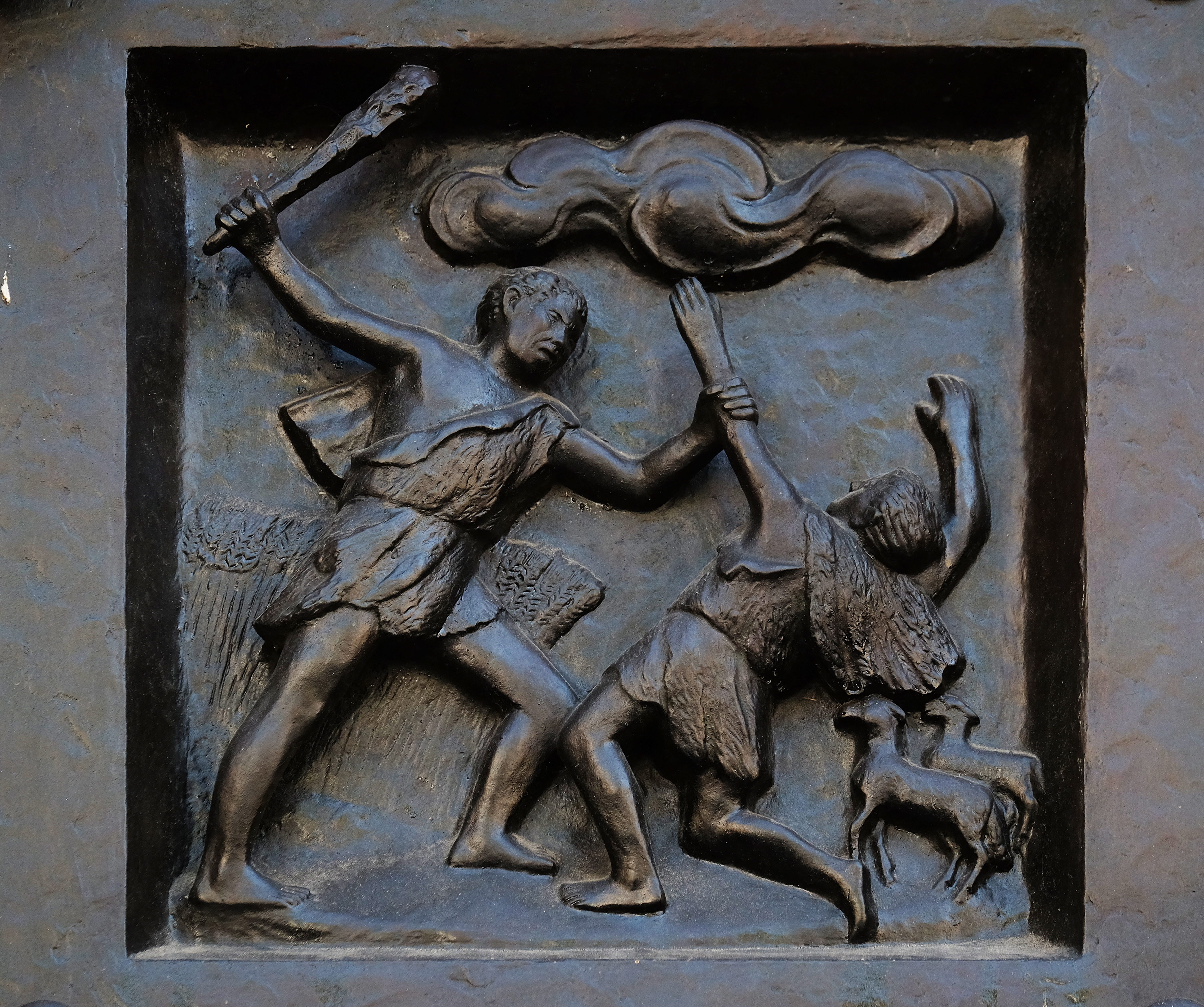
© Zatletic | Dreamstime.com

Rather than repenting for murdering his brother, Cain smugly replies, “Am I my brother’s keeper?” In the eyes of Adonai, yes, you are your brother’s keeper! In Hebrew, keeper is הֲשֹׁמֵ֥ר, ha-shomer, from shamar, a verb meaning to watch, to keep, to preserve, to guard, to be careful, to watch carefully over.

This is true for you and me too. We should keep, guard, and carefully watch over our brothers and sisters despite how we feel about them. What is most telling about the character of Adonai in this episode is that despite Cain’s unwillingness to repent, God still chooses to exercise long-suffering (patience) towards him. Even though Cain was only concerned about himself and only had remorse for the consequences/punishment of his actions, God protected him.

Genesis 4:13-15 (TLV) 13 Cain said to Adonai, “My iniquity is too great to bear! 14 Since You expelled me today from the face of the ground and I must be hidden from Your presence, then I will be a restless wanderer on the earth—anyone who finds me will kill me!” 15 But Adonai said to him, “In that case, anyone who kills Cain is to be avenged seven times over.” So Adonai put a mark on Cain, so that anyone who found him would not strike him down.

There are several ways the sevenfold vengeance is interpreted. Some suggest that this was a reference to seven generations, implying that the slayer of Cain should not only be punished in his own person, but in his posterity, even unto seven generations (Targum Onkelos). Others like Rashi and Ibn Ezra interpret it to mean that God deferred his vengeance on Cain unto seven generations, and at the end of them took vengeance on him by Lamech (Gill).[4] Whichever way one views it, in the seventh generation, Cain’s grandson Lamech says something interesting:

Genesis 4:23-24 (JPS) 23 And Lamech said unto his wives: Adah and Zillah, hear my voice; ye wives of Lamech, hearken unto my speech; for I have slain a man for wounding me, and a young man for bruising me; 24 If Cain shall be avenged sevenfold, truly Lamech seventy and sevenfold.

The phrase seventy and sevenfold is what Messiah said in Matthew 18, but the difference is striking. While Cain and Lamech demonstrated lack of concern for those whom they had wounded or killed, were never noted as being repentant, and were very “I” centered, Yeshua used these same numbers to highlight patience and radical forgiveness towards one that has transgressed. Instead of sevenfold vengeance or vindication, one lays down this right to bring about something far more profound: repentance.

“Or do you think lightly of the riches of His kindness and tolerance and patience, not knowing that the kindness of God leads you to repentance?” (Romans 2:4, NASB)

In this sense, Cain and Lamech represent the elder, firstborn (like Esau), who is one’s flesh (old nature or old man.) Flesh can never please Adonai, for the mind set on the flesh is death.[5] Knowing this, the chesed, mercy, and compassion of God reserves His wrath, and even immediate justice, because above all, His desire is for no one to perish.[6]

In the parable in Matthew 18, the “King” has compassion upon the servant when he pleads for “patience,” which is longsuffering. He forgives a debt so enormous that the man would never have been able to repay it in his lifetime. Instead of expressing gratitude through the trait of chesed (lovingkindness given to one who doesn’t deserve it), the man immediately finds a fellow slave who owes him a tiny debt and grabs him by the throat demanding repayment.

If we think we aren’t just like 
this servant, we are lying to ourselves.

Shepherd
© Maria Dryfhout | Dreamstime.com

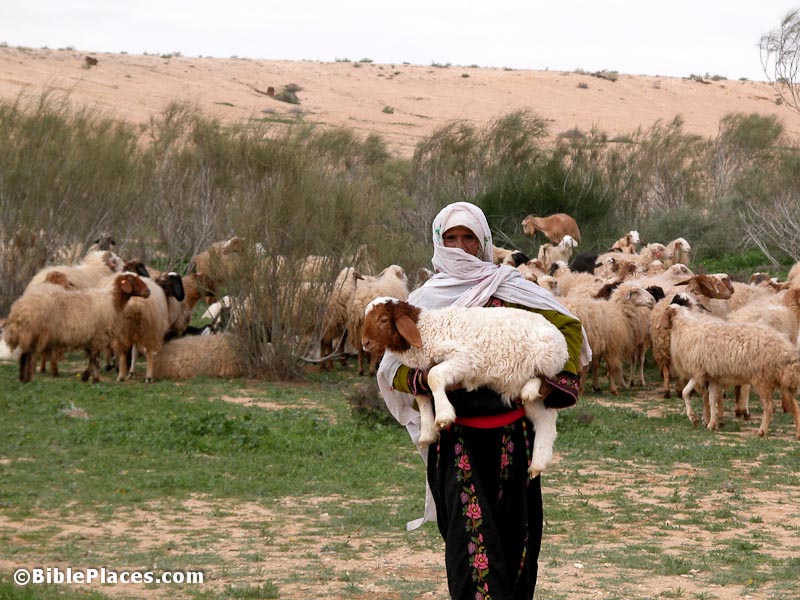
The role of “shepherd” might not appear to be connected to these stories at first glance. But recall that Abel was a shepherd and Yeshua’s hint back to Genesis 4 would have been apparent to a first century hearer. Perhaps this is why Yeshua prefaces the command to forgive one’s brother and the parable of the unforgiving servant with a message about shepherding:

Matthew 18:10-14 (NASB) 10 “See that you do not despise one of these little ones, for I say to you that their angels in heaven continually see the face of My Father who is in heaven. 11 [For the Son of Man has come to save that which was lost.] 12 What do you think? If any man has a hundred sheep, and one of them has gone astray, does he not leave the ninety-nine on the mountains and go and search for the one that is straying? 13 If it turns out that he finds it, truly I say to you, he rejoices over it more than over the ninety-nine which have not gone astray. 14 So it is not the will of your Father who is in heaven that one of these little ones perish.”

A wayward sheep is one that has wandered off from the righteous Way, like Cain. While God certainly cares about the pain and devastation that we experience at the hands of others, He is also concerned with “finding” the perpetrators who have went astray. His will is for them to repent and be reconciled to Himself and the other sheep. When we are told to pray for our enemies, this should be our prayer for them too.[7] It is the heart of our King. We are not to “despise” one of these “little ones,” as Messiah, the Good Shepherd, calls them.

Matthew 5:43-48 (NASB) 43 “You have heard that it was said, ‘YOU SHALL LOVE YOUR NEIGHBOR and hate your enemy.’ 44 But I say to you, love your enemies and pray for those who persecute you. 45 so that you may be sons of your Father who is in heaven; for He causes His sun to rise on the evil and the good, and sends rain on the righteous and the unrighteous. 46 For if you love those who love you, what reward do you have? Do not even the tax collectors do the same? 47 If you greet only your brothers, what more are you doing than others? Do not even the Gentiles do the same? 48 Therefore you are to be perfect, as your heavenly Father is perfect.”

This is not easily accomplished, and is impossible without the Spirit of the Living God residing in one’s heart. God knows this all too well. Longsuffering or patience means to “bear a burden.” It is a burden to bear the sins of others. It is afflicting to bear the emotional weight of our own pain. But this is precisely what Messiah did for us. And He tells us: “If anyone wishes to come after Me, he must deny himself, and take up his cross and follow Me (Mt. 16:24).

According to 1 Corinthians 13:1-3, one can speak the tongue of angels, know all mysteries and knowledge, have faith to move mountains, give all of their money to the poor, willing give their body over to be burned, but if they don’t have love – all of it, even their faith, is useless. This passage goes on to list the attributes of love. The first listed trait is patience. I don’t think this is a coincidence.

Webster’s 1828 defines patience as “the suffering of afflictions, pain, toil, calamity, provocation or other evil, with a calm, unruffled temper; endurance without murmuring or fretfulness. The act or quality of waiting long for justice or expected good without discontent. The quality of bearing offenses and injuries without anger or revenge.”

Are these the traits of a good shepherd? I certainly see Yeshua the Messiah in each aspect![8] Many times I’ve witnessed people demean, condemn, shame, and harass other Believers for not believing, thinking or doing exactly what they do, and when confronted about their behavior, rather than repent, they say, “I’m just speaking the truth in love.” No. They aren’t. Love does not behave that way. Period. The phrase “speaking the truth in love,” comes from Ephesians 4:15. The context of that chapter is about unity in the Body and “growing up,” maturing and becoming like Messiah. It begins with:

Ephesians 4:1-3 (NASB) 1 Therefore I, the prisoner of the Lord, implore you to walk in a manner worthy of the calling with which you have been called, 2 with all humility and gentleness, with patience, showing tolerance for one another in love, 3 being diligent to preserve the unity of the Spirit in the bond of peace.

Ephesians 4 concludes with a few reminders about anger. “Be angry, but sin not.” The furious conduct I see on social media must make Adonai sick to His stomach (figuratively) as He continues to suffer on our wayward behalf. Most believers do not approach their fellowman with humility, gentleness, patience, or tolerance. Instead, they do what is right in their own eyes and seethe with anger, aggression, sarcasm, and passive aggressive behavior and say that they are “speaking the truth in love.” But their anger is dangerous. It has deluded many, and has its root in the way of Cain. Anger, according to verse 27, gives the enemy a “place” in our lives.

Ephesians 4:31-32 (NASB) 31 Let all bitterness and wrath and anger and clamor and slander be put away from you, along with all malice. 32 Be kind to one another, tender-hearted, forgiving each other, just as God in Christ also has forgiven you.

The next time you feel the need to “speak the truth in love,” ask yourself if you can do so while also being kind, tender-hearted, and without bitterness, anger, clamor, and malice. If you are angry, have been hurt, or are bitter toward a particular group, denomination, sect, or person, you are part of the problem. The rotten fruit that comes forth causes more damage and gives the impression (because you are claiming to be and image bearer of Adonai) that He is like you – when He is NOT.

Yonah

Forgiveness is major theme in the Book of Jonah that is read during Yom Kippur. In many ways, the days of counting the omer mirror the days of repentance during the month of Elul and the High Holy Days. Have you ever wondered why Jonah is read on the holiest day of the year? Jonah means dove (the bird), a figure of the Holy Spirit and carrying the Seed of the Good News.

© Biblebox | Dreamstime.com


But Yom Kippur is also the Day of Judgment. It reflects the question of day six of creation – are you a man (the image of Elohim) or are you a mere beast of the field (image of the beast)? Many think that Jonah is read on this day to represent a nation repenting, and it is. But there is a deeper reason that relates directly to the parable of the unforgiving servant and even the stories of Cain and Lamech. Though Jonah knew what He was called to do, he didn’t want to obey, because he despised the Ninevites. Nineveh was the capital city of Assyria – an aggressor of Israel and Judah. Jonah tried to run, but that landed him in the belly of a great fish. Jonah cried out the LORD in his distress and God delivered him; the fish vomited him out on dry land (a hint back to day 3).

Afterwards, Jonah reluctantly went and preached to Nineveh with great success. The people listened and repented, so God relented and didn’t destroy the city. Their repentance and God’s pardon infuriated Jonah. Even though he had enjoyed the mercy and grace of God, he resented it when God extended it to his enemies. The final chapter of Jonah is vital for every Believer to wrestle with – and every Yom Kippur we need to know if our heart is aligned with Adonai or has become like Jonah, who would rather die than see God show mercy and forgive one’s adversary.

Jonah 4:1-11 (NASB)

1 But it greatly displeased Jonah and he became angry.

2 He prayed to the LORD and said, “Please LORD, was not this what I said while I was still in my own country? Therefore in order to forestall this I fled to Tarshish, for I knew that You are a gracious and compassionate God, slow to anger and abundant in lovingkindness, and one who relents concerning calamity.

3 Therefore now, O LORD, please take my life from me, for death is better to me than life.”

4 The LORD said, “Do you have good reason to be angry?”

5 Then Jonah went out from the city and sat east of it. There he made a shelter for himself and sat under it in the shade until he could see what would happen in the city.

6 So the LORD God appointed a plant and it grew up over Jonah to be a shade over his head to deliver him from his discomfort. And Jonah was extremely happy about the plant.

7 But God appointed a worm when dawn came the next day and it attacked the plant and it withered.

8 When the sun came up God appointed a scorching east wind, and the sun beat down on Jonah’s head so that he became faint and begged with all his soul to die, saying, “Death is better to me than life.”

9 Then God said to Jonah, “Do you have good reason to be angry about the plant?” And he said, “I have good reason to be angry, even to death.”

10 Then the LORD said, “You had compassion on the plant for which you did not work and which you did not cause to grow, which came up overnight and perished overnight.

11 Should I not have compassion on Nineveh, the great city in which there are more than 120,000 persons who do not know the difference between their right and left hand, as well as many animals?”

Jonah understood God’s mercy and compassion – that’s why he didn’t want to go to Nineveh. He knew God would be gracious and forgiving if they repented. Even a successful prophet of Adonai can prefer death over life. Three times Jonah says this is his preference. Notice how many times anger is mentioned. Anger is an emotion of the soul/nephesh/flesh, and is NOT of the Spirit of Adonai. This makes Jonah’s name quite ironic. One who should typify the Ruach and Good News, chose death (the flesh).

“For the mind set on the flesh is death, but the mind set on the Spirit is life and peace, [7] because the mind set on the flesh is hostile toward God; for it does not subject itself to the law of God, for it is not even able to do so, [8] and those who are in the flesh cannot please God.” (Romans 8:6-8 NASB)

When we hold resentment, bitterness, grudges, and contempt against other human beings (even if they have deeply wounded us by unspeakable means), we are like Jonah, Cain, and Lamech. Jonah wanted to sit back and watch Nineveh burn to the ground. Isn’t that often our desire towards our enemies? He even built himself a sukkah in hopes that Adonai would change His mind and smite them all. A true sukkah is a covering akin to love; it conceals the sins and faults of others and brings reconciliation and unity. Rather than having compassion for those who “know not what they are doing,” Jonah was more upset over a plant dying because it gave him physical comfort.

The Release

© Psychoshadowmaker | Dreamstime.com

What an awful prison Jonah made for himself. How many jail cells have we built and locked ourselves in? Humans are stubborn. It’s easy to read these stories and see “their” problem. But can we see that these examples were written for our own correction (mussar)? That we embody their selfish, ungrateful, and self-righteous attitudes? I recently listened to a Bema podcast with Marty Solomon and Brent Billings called “The Key to Your Own Prison.” Near the forty-two minute mark, they point out a nuance with the Greek pronouns of the following verse in Matthew 18:

“And his lord, moved with anger, handed him over to the torturers until he should repay all that was owed him.” (Matthew 18:34, NASB)

Did the King who was compassionate and gracious revoke His forgiveness? Does God go back on His Word? Did he forgive an insurmountable debt and then change His mind and have “torturers” wring every last cent from the first slave? If so, that’s a terrifying god. And yet, that’s how most of us read the story, because the truth is that this IS something we would do to, and desire for, someone who was ungrateful for our kindness. But the Greek showcases another possibility that does not compromise the nature of Adonai. What if (and the Greek easily allows this) the Lord handed the first slave over to the torturers until he repaid all that the second slave owed him?

In other words, what if the King required the first slave to be “tortured” until he forgave the second slave’s debt? The next verse implies this too: “My heavenly Father will also do the same to you, if each of you does not forgive his brother from your heart.” When we are in a state of unforgiveness, who is imprisoned? Who is tortured, embittered, and in turmoil? The one we haven’t forgiven, or us? Marty Solomon said we are “given the key to our own prison,” but will we use the key (forgiveness)?

The word “torturers” conjures visions of the Greek god Hades and his hellhound Cerberus. But the Greek word actually means a prison keeper or jailer. Unforgiveness is a jailer, and forgiveness opens the door to the cell. God is not fickle or sadistic. He is not Hades. His attributes of mercy haven’t changed. The main reason we struggle so much with forgiving with the willingness of our Master is because we are afraid. We fear that our oppressor or aggressor is not going to get what they deserve (Jonah).[9] We are afraid that our pain doesn’t matter to God, but it does. We hurt so bad that we no longer can see the “other” as human. We deem them unworthy of God’s grace (the height of haughtiness, which blinds us to the truth).

But those are all feelings. Fear is a liar. The truth is that Adonai will not let the guilty go unpunished. But that punishment will be perfect. It will not be too little or too much. His justice is righteous. It is precisely middah keneged middah – measure for measure. Thus, we can freely forgive, have patience and compassion, and entrust them to Adonai.

Exodus 34:6-7 (TLV) 6 Then Adonai passed before him, and proclaimed, “Adonai, Adonai, the compassionate and gracious God, slow to anger, and abundant in lovingkindness and truth, 7 showing mercy to a thousand generations, forgiving iniquity and transgression and sin, yet by no means leaving the guilty unpunished, but bringing the iniquity of the fathers upon the children, and upon the children’s children, to the third and fourth generation.”

Erekh Apayim

There are two Hebrew words that comprise the English word for longsuffering. Literally, it means a long nose (nostrils). This is an idiom for taking in a long deep breath. It is a pause, a refrain from the short pants and flaring nostrils that anger invokes. Physically, taking long deep breaths calms one’s heart rate, relieves stress, and can even alleviate anxiety. In the west, when we say, “I need a breather,” it refers to removing ourselves from a stressful situation so we don’t make a hasty decision born from anger, frustration, exhaustion, or panic. We need a break, a reset.

When the Bible refers to God as having a long nose or nostrils, it means that it takes a long time for Him to take in a breath. He is calm and patient with us, and that means He suffers on our account when we are wayward and obstinate. Breath is associated with life, not death.  God breathed the breath of life into the nostrils of man and he became a living soul. Adonai’s deep, longsuffering breath is also what allows our life to continue despite our wickedness, rebellion, and sin. Praise His Holy and Merciful Name! On the other hand, anger’s rapid, short breaths figures the opposite.

When being tested, try some deep breathing exercises to separate yourself from your emotions, and to realign yourself with the Spirit of God. Pray the Lord’s Prayer, which reminds us to forgive the debts and trespasses of others because Adonai has forgiven us. This also reminds one of our proper place and position before the King – that is a place of humility and submission.

Matthew 6:9-13 (NASB) 9 Pray, then, in this way: “Our Father who is in heaven, Hallowed be Your name. 10 Your kingdom come. Your will be done, On earth as it is in heaven. 11 Give us this day our daily bread. 12 And forgive us our debts, as we also have forgiven our debtors. 13 And do not lead us into temptation, but deliver us from evil. For Yours is the kingdom and the power and the glory forever. Amen.”

In closing, I leave you with Graham Cooke, who has an excellent podcast episode on patience called “The Patience Advantage.” In it, he outlines patience as fruit that:

  • Guards us from negatives.
  • Acts as an entry point to encounter with God.
  • And is a critical component in walking from where we are today, into the outcomes God has planned for our tomorrows.

As you count the omer this year, may the leaven of unforgiveness be replaced with the New Grain, the New Bread that is our Messiah who was stripped, beaten, spit upon, mocked, and nailed to a tree, and instead of demanding justice or calling down fire from heaven upon the guilty, He said, “Father, forgive them; for they do not know what they are doing.”


“Sooner or later all the people of the world will have to discover a way to live together in peace, and thereby transform this pending cosmic elegy into a creative psalm of brotherhood. If this is to be achieved, man must evolve for all human conflict a method which rejects revenge, aggression and retaliation. The foundation of such a method is love.”  Martin Luther King Jr. – Acceptance Speech, on the occasion of the award of the Nobel Peace Prize in Oslo, 10 December 1964


[1] https://biblehub.com/lsv/matthew/18.htm

[2] Jude 1 – read the attributes/traits/actions of those on this path.

[3] Firstfruits require faith because they are the first to come up from the ground or be birthed in the flock. There is no earthly guarantee of more to come. Hebrews 11:4 (NASB) By faith Abel offered to God a better sacrifice than Cain, through which he obtained the testimony that he was righteous, God testifying about his gifts, and through faith, though he is dead, he still speaks.

[4] https://www.biblestudytools.com/commentaries/gills-exposition-of-the-bible/genesis-4-15.html

[5] Romans 8:6-8 (NASB) For the mind set on the flesh is death, but the mind set on the Spirit is life and peace, [7] because the mind set on the flesh is hostile toward God; for it does not subject itself to the law of God, for it is not even able to do so, [8] and those who are in the flesh cannot please God.

[6] John 3:16 (NASB) “For God so loved the world, that He gave His only begotten Son, that whoever believes in Him shall not perish, but have eternal life.”

[7] See also Luke 6:27-36.

[8] As a contrast, review the actions of wicked shepherds and “fat” selfish sheep in Ezekiel 34.

[9] Later, Nineveh reverted to their wayward ways and God destroyed the city. It wasn’t in Jonah’s timing, but according to the Sovereign King of Universe and the future actions of the Assyrians.
Categories: Ethics, Mussar | Tags: , , , , , , , , , , , , , , | 8 Comments

Haftarah: Vayera

Prophetic Portion to Vayera (And He Appeared)

Genesis 18:1-22:24, 2 Kings 4:1-37

This week’s haftarah portion covers two miraculous accounts performed by the prophet Elisha. Both center around women and their children, which not only relates to the Torah portion, but spiritually to the future and the prophetic realm.[1] Elisha asks each woman:

“What can I do for you?”

Read that again.

Let the question resonate with your spirit.

Macedonian Encyclopedia, MANU, 2009, p., Public domain, via Wikimedia Commons

I wonder how many long to hear those words from the “man of God.” What need, dream, or great desire of yours has not been met? In both the Torah and haftarah portions this week, God meets the needs and desires of women in extraordinary ways. He is FOR you, even when – especially when – things are impossible in the natural world.

I wonder how many tears Sarah, the widow, and the Shunammite shed over their predicaments? I suspect most of their pain was shielded from others with the mask of hard work, determination, and service to others. All three women exude a quiet strength in their narratives. They are not portrayed as women that easily give up or go silently into the night. But even the strongest and stalwart among us FEELS, and deeply so. Real strength doesn’t negate or despise feelings, dreams, and great hope for the future. Such things faith rests upon, and they are good, and lovely, and godly.

Hebrews 11:1-2 (NKJV) Now faith is the substance of things hoped for, the evidence of things not seen. 2 For by it the elders obtained a good testimony.

Sarah might have mockingly laughed at the prospect of having a son in her old age (the natural), but that doesn’t mean that she lacked the faith (spiritual) that God would give her this good pleasure. Upon the birth of Isaac, Sarah laughed again, and this time it was in wonderment and jubilation.

Genesis 21:6-7 (TLV) “God has made laughter for me! Everyone who hears will laugh with me.” 7 She also said, “Who would have said to Abraham, ‘Sarah has nursed children’? For I have given birth to a son in his old age!”

James Tissot, Public domain, via Wikimedia Commons

I imagine the widow and the Shunammite laughing with Sarah. In fact, I see every Eshet Chayil laughing at the future. Their laughter is not a mockery; it is a rejoicing in the goodness and faithfulness of God. They have trained their eyes to see past the veil of flesh. They know that this world is simply a shadow of the world to come. Though this present age is full of strife, pain, and disappointment, the Word and Promises of Adonai stand firm. They will never pass away. So, right now, in this momentary affliction, they open their mouth with Wisdom, and use their tongue to teach the Torah of Chesed (kindness).

Proverbs 31:25-26 (TLV) Strength and dignity are her clothing, and she laughs at the days to come. 26 She opens her mouth with wisdom—a lesson (Torah) of kindness is on her tongue.

Abraham and Sarah opened their tent with great hospitality. They welcomed, nourished, and taught so many that is said that they “made souls.” (Gen. 12:5) In other words, they were known for their great chesed, like the Proverbs 31 woman. They taught the world about faith, hope, and the future. They taught us to trust in the promises of God, even though they are not always manifest in our lifetime.

Hebrews 11:8-13 (NKJV) By faith Abraham obeyed when he was called to go out to the place which he would receive as an inheritance. And he went out, not knowing where he was going. 9 By faith he dwelt in the land of promise as in a foreign country, dwelling in tents with Isaac and Jacob, the heirs with him of the same promise; 10 for he waited for the city which has foundations, whose builder and maker is God. 11 By faith Sarah herself also received strength to conceive seed, and she bore a child when she was past the age, because she judged Him faithful who had promised. 12 Therefore from one man, and him as good as dead, were born as many as the stars of the sky in multitude—innumerable as the sand which is by the seashore. 13 These all died in faith, not having received the promises, but having seen them afar off were assured of them, embraced them and confessed that they were strangers and pilgrims on the earth.

Abraham was waiting for the city which has foundations, whose builder is God, the New Jerusalem. As sons and daughters of Abraham and Sarah, we await the same. They died in faith, as will many of us. And like them, our Torah of Chesed includes the message that we are strangers and pilgrims on the earth. Look up! His promise will come to pass.

So, how do the widow and the Shunammite proclaim this same truth?

The Widow and the Cruse of Oil

2 Kings 4 begins with a widow of the b’nei nevi’im, or sons of the prophets. Abraham was the first named prophet in the Bible. (Gen. 20:7) Thus, the hint is that she and her sons belong to father Abraham. She is destitute, and a creditor has threatened to take her two sons as slaves to satisfy the debt she and her late husband accrued. According to tradition, the woman is Obadiah’s widow. (Rashi)

Elisha, the man of God, tells her to ask her neighbors for “empty” vessels. Then, very specifically, she and her sons were to shut the door behind them. She poured while her sons brought vessel after vessel to fill from the one cruse of oil she had in the house. People are sometimes compared to vessels in Scripture.[3] An empty vessel is in desperate need of purpose, hope, and the filling of the Holy Spirit. Worse, an empty vessel can imply someone that is dead. This family thought they had nothing, when in fact, they had the oil of anointing, one cruse of oil that could light many, many lamps.

© Natushm | Dreamstime.com

Adonai deeply cares for the widows and the fatherless. Josephus and Rashi comment that this family’s debt was accrued because the late prophet Obadiah had borrowed money to feed the prophets that hid in the cave, and that the creditor was Jehoram the son of Ahab. If this is true, the chesed of Obadiah was great, and Elisha desired that chesed be returned upon Obadiah’s house. Hence, the miracle of oil.

In truth, we all have debt that we cannot pay back. We all have sons and daughters that have inherited the same fate. But we also have hope, even if all we have left is one little vessel of oil. If one finds herself in this this place, it is time to go into the House and shut the door. And then, pour every last drop of oil from your vessel into as many empty vessels as you can find. Oil and anointing is acquired through suffering. Olives must be pressed with a heavy Stone to produce oil. The widow and her son’s suffering turned into precious oil that paid off their debt, and provided sustenance for the future.

A wise virgin knows that Obadiah’s widow has the best oil in town. If you’re feeling sleepy, best get to her house as fast you can. Paying chesed to her will ensure that your vessel is full of golden liquid for the future when the Bridegroom comes calling.

The Great Woman from Shunem

The Shunammite’s story echoes Abraham and Sarah’s narrative in several ways.

  • Both were promised a son after showing chesed in the form of hospitality to a messenger of God.
  • Both reacted with astonishment and even a bit of unbelief at this prospect.
  • Both Abraham and the Shunammite’s husband were advanced in years.
  • Both were told that “at this season next year” you will have a son.
  • Both promised sons died (at least figuratively).
  • Both were resurrected (at least figuratively).

Thus, it is easy to see why this prophetic portion was chosen to accompany Vayera. But, this year, as I reread these passages, chesed leaped off the pages of Holy Writ like a neon sign. Adonai has been drawing my attention to chesed since Passover. Chesed is the exact opposite of the traits currently being lauded and paraded in media, social media, and educational institutions. And sadly, the result has been fear, hate, division, mockery, pride, and perverted justice.

Love is growing cold, and this ought not be so – especially if one claims to be a son or daughter of Abraham and Sarah. The father and mother of our faith were KNOWN for their great chesed, as was the Shunammite woman. Chesed is given to everyone – even those that do not deserve it. Especially to those that do not deserve it! Chesed is what woos one to turn back to Adonai. (Jer. 31:3) Chesed is what gives one a spirit of repentance. (Rom. 2:4) Chesed ALWAYS precedes truth and justice in Scripture. If we reverse that pattern, death and chaos reign.

Proverbs 10:12 (NASB) Hatred stirs up strife, but love covers all transgressions.

1 Peter 4:8-9 (NASB) Above all, keep fervent (zealous) in your love for one another, because love covers a multitude of sins. 9 Be hospitable to one another without complaint.

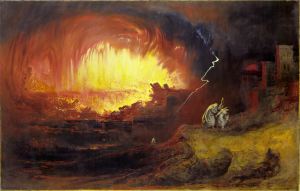
If chesed comes first – if it is the foundation – then, and only then, will one see the pattern conveyed in Vayera in one’s own life. Vayera means, “And He appeared,” a reference to Adonai appearing to Abraham after he was circumcised. It was the “heat of the day.” Likely, Abraham was in great pain and the sun was punishingly hot in the sky. Yet, he arose quickly to serve his guests. The three messengers were not only there to bring the good news that a son would be born to Abraham and Sarah, but to judge Sodom and Gomorrah. God chose to reveal His intentions toward these cities to Abraham.

Have you ever wondered why?

It certainly wasn’t to cause him distress. Or to seek his permission, God forbid. No, the reason God revealed His intentions was because:

Genesis 18:19 (NASB) “For I have chosen him, so that he may command his children and his household after him to keep the way of the LORD by doing righteousness and justice, so that the LORD may bring upon Abraham what He has spoken about him.”

John Martin, Public domain, via Wikimedia Commons

At first glance, this doesn’t seem to be a great reason to reveal to Abraham that He is going to judge the exceedingly great sin of Sodom and Gomorrah. But, carefully considering the above passage, Abraham and his descendants are to represent Adonai in the earth. They are the ones that keep the Way of the LORD by doing righteousness and justice.

If that is the legacy of Abraham, what his response? He pleaded for the innocent, the righteous, within these cities. He didn’t say, “Yeah! Go, take them all out.” (That was Jonah’s response even toward the repentant in Nineveh.) Instead, Abraham showed chesed toward these exceedingly wayward cities. It is highly likely that Adonai was testing the heart of Abraham in this matter. Would he lean toward chesed and mercy, or strict justice?

Abraham passed this test, and as his descendants, so should we. Chesed was the catalyst for not only miraculous births and supernatural provision, but also for resurrection! This demonstrates that acts of kindness are intricately woven into the garments of salvation and the robes of righteousness. They are the essence of the Creator of the Universe. In Jeremiah 3:2, God says, “I am gracious.” That is, chasid, the noun form of chesed. He is chesed!

The Chesed of the Shunammite

The Shunammite woman proves to be a true daughter of Abraham. Stories of women and children are typically prophetic. In this case, where a prophet is directly involved, the prophetic theme is intensified or “doubled.” A match for the prophet that received a double portion of his predecessor’s mantle, Elijah.

Now there came a day when Elisha passed over to Shunem, where there was a prominent woman, and she persuaded him to eat food. And so it was, as often as he passed by, he turned in there to eat food. She said to her husband, “Behold now, I perceive that this is a holy man of God passing by us continually. (2 Kings 4:8-9)

 The place where this great woman lived was called Shunem, meaning double resting place. It was located in Issachar, which implies that the Shunammite was from this tribe or had married a man of Issachar. She told her husband that she knew (ידע – yada) that Elisha was a holy man. She showed him great hospitality by ensuring that he had bread to eat, and by building a resting place for the prophet.

“Please, let us make a little walled upper chamber and let us set a bed for him there, and a table and a chair and a lampstand; and it shall be, when he comes to us, that he can turn in there.” One day he came there and turned in to the upper chamber and rested. Then he said to Gehazi his servant, “Call this Shunammite.” And when he had called her, she stood before him. (2 Kings 4:10-12)

The Shunammite is at the center of the narrative and activity. She is the one that recognizes the need of the prophet, feeds him, and requests a place be built for him. While her husband doesn’t oppose her efforts, and even fulfills her requests, he is content with his passive role in this story. Whether he simply had different gifting or preferred to serve with his hands, we don’t know. He might have had great faith or none at all. Either way, he doesn’t chastise his wife for her boldness, generosity, or more prominent public role. Instead, they work together in the strengths that they have. Thus, when the promise of a son comes, they both are the beneficiaries.

When the boy tragically dies, the Shunammite doesn’t tell her husband. Instead, she places his body on the bed they had made for Elisha, and then shuts the door behind him. This is interesting considering that Elisha told the widow a few verses earlier to do the same while she poured oil into the empty vessels.

2 Kings 4:21 (NASB) She went up and laid him on the bed of the man of God, and shut the door behind him and went out.

The Shunammite asks her husband to give her a servant and a donkey because she is going to see the man of God. This perplexes him and he asks:

“Why will you go to him today? It is neither new moon nor Sabbath.” And she said, “It will be well.” 2 Kings 4:23 (NASB)

The Shunammite had a custom of visiting the man of God on the new moon and the Shabbat, and this day was neither. It is intriguing that it is the woman, and not her husband, that had this custom. If you find yourself in a similar boat, take heart! Keep doing what you know to do as you serve the LORD. Adonai and the man of God recognized her kindnesses and her husband was blessed along with her. May it be so for you as well.

The Shunammite’s husband again fulfilled the request of his wife. She saddled her ass and headed to Mount Carmel. It was obvious to Elisha that she was distressed. When he learns that the boy is near death or dead, he sends Gehazi ahead with his staff to lay on the boy. But, the woman wouldn’t leave him. In fact, she quotes the same words that Elisha spoke to Elijah before the heavenly chariots took him:

2 Kings 4:30 (NASB) The mother of the lad said, “As the LORD lives and as you yourself live, I will not leave you.” And he arose and followed her.

The staff failed to awaken the boy, so Gehazi returned to them with this news. When Elisha entered his room, he shut the door behind them both and prayed to the LORD. This is the third time in this chapter that a door is shut behind the people inside.

2 Kings 4:33-35 (NASB) So he entered and shut the door behind them both and prayed to the LORD. 34 And he went up and lay on the child, and put his mouth on his mouth and his eyes on his eyes and his hands on his hands, and he stretched himself on him; and the flesh of the child became warm. 35 Then he returned and walked in the house once back and forth, and went up and stretched himself on him; and the lad sneezed seven times and the lad opened his eyes.

This is a very mystical passage, and there are many ways to analyze it. Since Elisha first prayed, I assume that Adonai told him what to do. He laid on top of the boy, eye to eye, mouth to mouth, hands to hands. It’s almost like a transference of life occurred, which even warmed the flesh of the child. After doing this once more, the lad sneezed seven times and woke up. Sneezes require deep inhalations of breath, and then powerful expulsions through the nose and mouth. This indicates a strong breath of life – emphasized by the number seven as he resurrects to life.

Both the Torah portion and the haftarah close with stories of sons who miraculously resurrect from the dead. While Isaac’s death is implied, the Shunammite’s son is explicit. God’s promises and His chesed prevails – even overcoming the grave! These are glimpses into the world to come, the olam haba, and the future of all of Abraham’s seed.

To conclude, think back to the three instances in the haftarah where a door is being shut behind those with faith. There are a couple of places in the Brit Chadashah that this phrase occurs. One is in the parable of the Ten Virgins. The other is in the message to the church at Philadelphia, the assembly of “brotherly love.” As you review them, notice the correlation with extra vessels of oil, and how the believers in Philadelphia follow the path of Abraham. They keep the Word of the LORD with patient endurance and have not denied His Name. What other connections do you see?

Matthew 25:1-13 (TLV) “Then the kingdom of heaven will be like ten virgins who took their lamps and went out to meet the bridegroom. 2 Five of them were foolish, and five were wise. 3 For when the foolish ones took their lamps, they took no oil with them. 4 But the wise ones took oil in jars along with their lamps. 5 Now while the bridegroom was taking a long time, they all got drowsy and started falling asleep. 6 But in the middle of the night there was a shout, ‘Look, the bridegroom! Come out to meet him!’ 7 Then all those virgins got up and trimmed their lamps. 8 Now the foolish ones said to the wise, ‘Give us some of your oil, since our lamps are going out.’ 9 But the wise ones replied, ‘No, there won’t be enough for us and for you. Instead, go to those who sell, and buy some for yourselves.’ 10 But while they were going off to buy, the bridegroom came. And those who were ready went in with him to the wedding feast, and the door was shut. 11 Now later, the other virgins came, saying, ‘Sir, Sir, open up for us!’ 12 But he replied, ‘Amen, I tell you, I do not know you.’ 13 Therefore stay alert, for you know neither the day nor the hour.”

Revelation 3:7-13 (TLV) To the angel of Messiah’s community in Philadelphia write: “Thus says the Holy One, the True One, who has the key of David, who opens and no one will shut, and who shuts and no one opens: 8 I know your deeds. Behold, I have set before you an open door that no one is able to shut—because you have little power, but you have kept My word and have not denied My name. 9 Behold, I will cause those of the synagogue of satan—who say they are Jewish and are not, but lie—behold, I will cause them to come and bow down before your feet, so that they acknowledge that I have loved you! 10 Because you have kept My word about patient endurance, I will also keep you from the hour of trial that is coming upon the whole world to test those who dwell on the earth. 11 I am coming soon—hold on to what you have, so that no one will take away your crown. 12 The one who overcomes, I will make him a pillar in the Temple of My God, and he will never leave it. And on him I will write the name of My God and the name of the city of My God—the New Jerusalem, which comes down out of heaven from My God—and My own new Name. 13 He who has an ear, let him hear what the Ruach is saying to Messiah’s communities.”


[1] Role of Women 

[2] 1 Th. 4:3-6, Rom. 9:21, 2 Cor. 4:7-14, 2 Tim. 2:20-26 

Categories: Torah Portions, Women | Tags: , , , , , , , , , , , , , | 8 Comments

Like the Days of Noah

© Radek Procyk | Dreamstime.com

The Haftarah Cycle: A Brief Introduction

In this new Torah cycle,[1] I’m devoting special attention to the prophetic portion or the haftarah. Thus, I will share little nuggets with my readers when I have time. But first, I offer a review of the history of the haftarah for those new to the Torah cycle.

Haftarah comes from a Hebrew root that means to end or conclude. (It does not mean “half!”) The haftarah portion is a selection of verses from the prophets or the writings in the Tanakh.[2] This selection is thematically connected to the weekly Torah Portion about a third of the time, but there are special haftarot (pl.) related to the calendar such as Feast days or Rosh Chodesh, or for historical events such as the destruction of the Temples and the subsequent exile.

For example, from the first Sabbath after Tammuz 17th, until the turn of the year at Rosh Hashanah, the haftarah portions shift from being thematically connected to the Torah Portions to reflecting the historical events that occurred at that season. (For more information see: The Three Weeks or watch “The Dire Straits: This Season in Tradition,” a message I delivered at Revive 2020.)

The institution of the haftarah cycle varies, depending on the source. There are several theories about how this custom began. The most common one suggests that it began during the reign of Antiochus Epiphanes, who outlawed Jews from reading the Torah, but allowed the other writings. Another theory says that the haftarah was established in response to the Samaritans, who denied the inspiration of the prophets and writings, but followed the Law of Moses.

Interestingly, the oldest reference to the haftarah cycle is found in the Brit Chadashah (New Testament). In the first century, there was a custom to read from the Torah and the Prophets on the Sabbath day in the synagogues:

Luke 4:16-21 (TLV) And He came to Natzeret, where He had been raised. As was His custom, He went into the synagogue on Shabbat, and He got up to read. 17 When the scroll of the prophet Isaiah was handed to Him, He unrolled the scroll and found the place where it was written, 18 “The Ruach Adonai is on me, because He has anointed me to proclaim Good News to the poor. He has sent me to proclaim release to the captives and recovery of sight to the blind, to set free the oppressed, 19 and to proclaim the year of Adonai’s favor.” 20 He closed the scroll, gave it back to the attendant, and sat down. All eyes in the synagogue were focused on Him. 21 Then He began to tell them, “Today this Scripture has been fulfilled in your ears.”

Acts 13:14-16 (NASB) But going on from Perga, they arrived at Pisidian Antioch, and on the Sabbath day they went into the synagogue and sat down. 15 After the reading of the Law and the Prophets the synagogue officials sent to them, saying, “Brethren, if you have any word of exhortation for the people, say it.” 16 Paul stood up, and motioning with his hand said, “Men of Israel, and you who fear God, listen.”

While the yearly Torah cycle covers every word in the Torah or Books of Moses, only a small selection from the prophets and writings are read through each year. In fact, only two prophetic books are read completely as haftarot in the modern order: The Book of Obadiah and the Book of Jonah.

There are differences between the reading selections of haftarot in Ashkenazi, Sephardi, and Yemenite communities, though they are similar. Historically, though the Jewish people had a custom of reading from the prophets after the Torah portion, there wasn’t a set order. Until more recent times, random selections were chosen. Moreover, in the old triennial (3 year) Torah cycle, there were naturally many more haftarah portions. So, those that suggest that the Jewish people purposeful removed certain prophecies from Isaiah to keep people away from Yeshua are completely ignorant of the haftarah’s history. Don’t fall into their traps.

There are traditional blessings recited before reading the haftarah, and afterwards.

Blessing Before Reading Haftarah

Barukh attah Adonai eloheinu melekh ha’olam asher bachar binvi’im tovim ve-ratzah ve-divreihem hane’emarim be’emet. Barukh attah Adonai ha-bocher ba-torah uv’Moshe avdo uv-Yisra’el amo, uvinvi’ey ha-emet va-tzedek.

Blessed are you, O LORD, our God, King of the universe, Who has chosen good prophets, and was pleased with their words spoken in truth. Blessed are you, LORD, who has  chosen the Torah, and his servant Moses, and his people Israel, and the prophets of truth and righteousness.

Blessing After Reading the Haftarah

Barukh attah Adonai eloheinu melekh ha’olam, tzur kol ha-olamim, tzaddik be-khol ha-dorot, ha-El hane’eman ha’omeir v’oseh, hamdabeir u’makiyem, shekol devarav emet ve-tzedek. Ne’eman attah Adonai eloheinu, ve-ne’emanim devarekha, ve-davar echad midevareykha achor lo yashuv reikam, ki El melekh ne’eman ve-rachaman attah. Barukh attah Adonai, ha-El hane’eman be-khol devarav.

Blessed are You, Adonai our God, King of the Universe, Rock of all eternities, righteous in all generations, the faithful God, who says and does, who speaks and fulfills, all of whose words are true. Faithful are you, LORD our God, and faithful are your words. Not one of your words turns back unfulfilled, for You, O God, are a faithful and compassionate King. Blessed are You, LORD, the God who is faithful in all His words.

Further Reading

The JPS Bible Commentary: Haftarot by Michael Fishbane

The Haftarah Commentary by W. Gunther Plaut

The Women’s Haftarah Commentary: New Insights from Women Rabbis on the 54 Weekly Haftarah Portions, the 5 Megillot & Special Shabbatot by multiple authors

The Book of Haftarot: An Easy-to-Read Haftarah Translation by Sol Scharfstein

Book of Haftaros – Gutnick Edition by Rabbi Chaim Miller


Like the Days of Noach

Prophetic Portion to Noach:[3] Isaiah 54:1 – 55:5

The context of this portion is decades of Babylonian captivity. Can you imagine spending decades in exile away from your land and your home? In a sense, we are currently in exile in a spiritual Babylon. Will Adonai leave us here forever?

© Javier Cruz Acosta | Dreamstime.com

This haftarah portion floods the reader with the theme of redemption from exile. God has not forgotten us or our children. In fact, He beckons us to partake freely of His water, bread, and wine – His teachings – because they are life. Our disgrace for disobedience has an end, and it is rapidly approaching. Adonai describes His anger as a momentary flood, but His chesed as everlasting.

Isaiah 54:8 (LITV) In a flood of wrath (be-shetzef ketzef) I hid My face from you for a moment; but I will have pity on you with everlasting kindness, says Jehovah your Redeemer.

It is in that context that He says this is “like the days of Noah to me.” Adonai’s anger (judgment) is like the waters that destroyed the earth in Noah’s day; but His promise to take Israel back is even more powerful than the great deluge. While the flood of His anger was temporary, His promises are forever. We can count on them to engulf us with His goodness.

Isaiah 54:9 (NASB) “For this is like the days of Noah to Me, When I swore that the waters of Noah Would not flood the earth again; so I have sworn that I will not be angry with you nor will I rebuke you.”

From Adonai’s perspective, “like the days of Noah” reminds Him not of His anger, but of His mercy and promise. Israel had sinned against her Maker, breaking the covenant agreed upon at Mt. Sinai. After enduring the curses for her unfaithfulness, Adonai promised Israel a new start just as He had promised Noah and his descendants. The entire prophetic portion floods an underserving Israel with God’s boundless chesed (loving-kindness).

Isaiah 54:10-14 (TLV) Though the mountains depart and the hills be shaken, My love will not depart from you, nor will My covenant of peace be shaken, says Adonai who has compassion on you. 11 Afflicted one, storm-tossed, unconsoled, behold, I set your stones in antimony, lay your foundations with sapphires, 12 make your pinnacles of rubies, your gates of crystal, and all your walls of precious stones. 13 All your children will be taught by Adonai. Your children will have great shalom. 14 In righteousness you will be established. You will be far from oppression—for you will not fear—and from terror—for it will not come near you.

The phrase “like the days of Noah” only occurs in a few places in Scripture. When Messiah uses this phrase in Matthew 24, most connect it with the judgment that Adonai wrought upon the whole earth because of the evil hearts of men, violence, and corruption. Hopefully, the link to Messiah’s words about the coming of the Son of Man, the end of days, and the evil that will be prevalent at that time is clear. He does not let the guilty go unpunished…

© Ronstik | Dreamstime.com

However, He also abounds in chesed and forgives iniquity, transgression, and sin. (Ex.34:4-9) This is a two-sided coin. And, “like the days of Noah” is a two-sided phrase. On the one hand, blatant disobedience and sin must be punished – like a flood of fiery wrath. On the other hand, God is gracious, merciful, and abounding in chesed – like a gushing river of life. Both are true.

Noach received favor or grace as a righteous one in his generation. His name (nun, chet), if read backwards, even spells grace (chen – chet, nun), which gives us a clue. Perhaps, the phrase “like the days of Noah” has dual meanings as well. After all, Biblical real estate is precious. There are no words or phrases that are superfluous. The prophetic portion of Noach nearly overwhelms the hearer with the gushing love of God. His promises flow out in a torrential down pour that sound too good to be true. Especially, to a people that have been unfaithful to her Maker and Husband.

How could it be that after all we have done, after all our unfaithfulness, after all our selfish choices, after multitudes of sins, derisions, and infidelities, that the Creator of the Universe, the God of Israel, Builder of Zion, will take us back to Himself? Can this be true? Peter compares God bringing Noach and his family through the flood waters to baptism and a clean conscience. (1 Peter 3:18-22) Adonai promises as sure as He promised to never flood the earth again that He WILL remove our disgrace, enlarge our tent, fill our wombs, comfort us, and quench our thirst and hunger. This is the Good News of the Kingdom!

© Biblebox | Dreamstime.com

In this sense, “like the days of Noah” distinctly refers to God’s everlasting chesed, mercy, and love. He makes a Way where there is no way. Isaiah 53 precedes Isaiah 54. This is Adonai’s everlasting covenant of peace, and He is eager to share it with each one of us. Thus, when we read Matthew 24 or Luke 17 where the Messiah draws our attention back to “the days of Noah,” don’t just focus on the judgment or the flood of His wrath. Instead, look up for the Coming Kingdom and Promises fulfilled! These portions should bring us comfort in the days ahead, just as Noah’s father proclaimed:

Genesis 5:29 (TLV)  And he named him Noah saying, “This one will comfort us from our work and from the pain of our hands because of the ground which Adonai cursed.”


[1] First Fruits of Zion has a beautiful online and printable schedule for the yearly Torah cycle: https://torahportions.ffoz.org I also love their yearly calendar: https://ffoz.com/eretz-yisrael-wall-calendar.html

[2] Tanakh is an acronym that stands for the Torah (Books of Moses), the Nevi’im (Prophets), and the K’tuvim (Writings). Altogether, these three make up the complete Jewish Bible or the complete Old Testament for Christians.

[3] Torah Portion Noach (Noah): Gen. 6:9 – 11:32; Haftarah:  Is. 54:1 – 55:5

Categories: Musings, Torah Portions | Tags: , , , , , , , , | 12 Comments

Meditations for the Nine Days Part II

© Anyaivanova | Dreamstime.com

If you haven’t read Part I, please start there to learn the purpose of this series. Click here for Part III.

Day 3 – Av 3

Spiritual Gift: Faith  

Fruit: Peace

 In Hebrew, faith is emunah (ee-moo-nah). It comes from the root aman, which means to support, confirm, establish, be faithful, to trust. It’s first occurrence is with Abraham:

Gen. 15:5-6 (NASB) And He took him outside and said, “Now look toward the heavens, and count the stars, if you are able to count them.” And He said to him, “So shall your descendants be.” 6 Then he believed (aman) in the LORD; and He reckoned it to him as righteousness.

Aman is often translated as “believe,” because it implies something that can be trusted with confidence. It is firm. Amen (amein) comes from this same root. When one says, “Amen!” they are affirming the words being delivered and counting them as trustworthy. Truth, emetshares this same root. Truth is firm, established, and trustworthy. One can put their faith and trust in the truth of God’s Word.

Emunah differs from western thought. Having “faith” is not a mental or verbal agreement to a set of statements. This is why you won’t find a statement of faith at Grace in Torah. While emunah does have an element of mental belief, it is something that is proved through action. Abraham trusted and believed in God, and demonstrated his faith through his deeds. James said that “faith without works is dead.” As a Hebrew, he understood this concept very well, and reminded the scattered tribes[1]that even demons have head knowledge or mere belief.

Jas 2:18-21 (NASB) But someone may well say, “You have faith and I have works; show me your faith without the works, and I will show you my faith by my works.” 19 You believe that God is one. You do well; the demons also believe, and shudder. 20 But are you willing to recognize, you foolish fellow, that faith without works is useless? 21 Was not Abraham our father justified by works when he offered up Isaac his son on the altar?

Emunah has substance and evidence. The writer of Hebrews says that this is the kind of faith that our elders had (saints in the Tanakh –O.T.), that garnered them a good report. Since Tisha B’Av recalls the evil report of the ten spies in Numbers 13-14, perhaps it would behoove us to also recall the actions of those in the “hall of faith” in Hebrews 11.

Heb. 11:1-2 (KJV) Now faith is the substance of things hoped for, the evidence of things not seen. 2 For by it the elders obtained a good report.

Much could be (and has been) written on emunah. For the purposes of this meditation, consider how faith and peace are related. If one’s faith is true and firm, it naturally produces peace. That doesn’t mean that one will not suffer or struggle; it means that one’s faith gives confidence and shalom in the midst of trials.

Rom. 5:1-5 (TLV) Therefore, having been made righteous by trusting (faith), we have shalom with God through our Lord Yeshua the Messiah. 2 Through Him we also have gained access by faith into this grace in which we stand and boast in the hope of God’s glory. 3 And not only that, but we also boast in suffering—knowing that suffering produces perseverance; 4 and perseverance, character; and character, hope. 5 And hope does not disappoint, because God’s love has been poured into our hearts through the Ruach ha-Kodesh who was given to us.

© Allamachutt | Dreamstime.com

In Hebrew, peace or shalom is not the absence of war, pain, or conflict. Shalom is more akin to wholeness, in the various respects of a person – mentally, emotionally, physically, and spiritually. Being made whole implies that at some point, “parts” were separated. In order for shalom to occur, these pieces must be brought back together, even if they are in opposition to one another. In this sense, shalom is about integrating these things, becoming “one.”

In this realm, one can have shalom in one area and not another. One’s faith can supersede the missing part, because one knows that in the end, all will be made whole again. (1 Cor. 15) It is possible to have shalom while walking through great difficulties or even danger. Having “peace like river” is quite contrary to the idea of still waters. Thus, faith and trust in Adonai can sustain one’s mental and emotional state as they float through the rapids of life, because they TRUST Him and have hope for the future.

Heb. 11:39-40 (NASB) And all these, having gained approval through their faith, did not receive what was promised, 40 because God had provided something better for us, so that apart from us they would not be made perfect.

Those with faith in Hebrews 11 did not receive the promise, because Adonai will not make them “perfect” without us. All the “parts” will be gathered together as a whole (echad), which is shalom. This was the prayer of Yeshua. (John 17:19-26) It will occur under the perfect government of the Prince of Peace! How fitting is that?

Like our forbearers in the faith, we also remain faithful as we look forward to That Day. This brings peace to broken hearts and lives. We have a great Hope! This life is not the end. There is so much more.

Heb. 12:1-2 (TLV) Therefore, since we have such a great cloud of witnesses surrounding us, let us also get rid of every weight and entangling sin. Let us run with endurance the race set before us, 2 focusing on Yeshua, the initiator and perfecter of faith. For the joy set before Him, He endured the cross, disregarding its shame; and He has taken His seat at the right hand of the throne of God.

In the meantime, may we be known as peacemakers.

Jas 3:18 (NASB) And the seed whose fruit is righteousness is sown in peace by those who make peace.

Mt. 5:9 (NASB) “Blessed are the peacemakers, for they shall be called sons of God.”

Questions

  1. If you want to ask someone how they are doing in Hebrew, you say, “Ma shlomchah?” (mas. – speaking to a male) The feminine form is “Ma shlomech?” (speaking to a female) But, what you are really asking is, “What’s your peace?” Today, I’m asking you this question. Ma shlomeach?


  1. Do you have “parts” that need to be integrated into the whole? Or, do you need help with unbelief?


  1. How does one’s faith affect their sense of shalom?


  1. Read through Hebrews 11. When you tell someone about “your faith,” does it look like these examples? If not, what is the difference?


Day 4 – Av 4

Spiritual Gift: Gifts of Healing   

Fruit: Patience

 In 2020/5780, this day is the weekly Shabbat. Because of that, let’s begin this meditation with Shir Hama’alot, which is Psalm 126. In meditation 2, we looked at Al Naharot Bavel or Psalm 137, sang on weekdays and non-holidays during Birkat Hamazon (Blessing after meals). On the Sabbath and holy days, Psalm 126 is sung/recited instead.

Ps. 126:1-6 (NASB) A Song of Ascents. When the LORD brought back the captive ones of Zion, we were like those who dream. 2 Then our mouth was filled with laughter and our tongue with joyful shouting; then they said among the nations, “The LORD has done great things for them.” 3 The LORD has done great things for us; we are glad. 4 Restore our captivity, O LORD, as the streams in the South. 5 Those who sow in tears shall reap with joyful shouting. 6 He who goes to and fro weeping, carrying his bag of seed, shall indeed come again with a shout of joy, bringing his sheaves with him.

Consider the contrast between these two Psalms. They depict exile for rebellion, and then the promise of return and restoration. A wound, and yet there will be healing. That pretty much sums up the entire Bible from man’s perspective. But, like our spiritual gift for this day’s meditation, healing doesn’t always occur instantaneously. Often, it requires patience or long suffering.

In the preface of the list of spiritual gifts, Paul uses a few key phrases to help the reader understand the diversity not only in gifts, but in the people that have them.

1 Cor. 12:4-7 (NASB) Now there are varieties of gifts, but the same Spirit. 5 And there are varieties of ministries, and the same Lord. 6 There are varieties of effects, but the same God who works all things in all persons. 7 But to each one is given the manifestation of the Spirit for the common good.

He reiterates this again after listing the gifts of the Spirit:

1 Cor. 12:11 (NASB) But one and the same Spirit works all these things, distributing to each one individually just as He wills.

The Greek word translated as “varieties” by the NASB, is diairesis. It means distinctions, variety, and diversity. There are a variety of gifts, ministries, and effects, but they all come from the same Spirit of God. The word “effects” is the Greek word energēma, from which our English word energy comes. Different people are given different energies to perform the gift that Adonai has given each. They won’t always “look” the same, even if two people operate in the same gift. And yet, they all are empowered by the Holy Spirit, His energy.

© Pop Nukoonrat | Dreamstime.com

The gift of healing is one of those energies or ministries. Healing has many forms, all with the goal of being made well or whole. One’s mind, emotions, physical body, life circumstances, or even their finances can be broken or wounded. Sometimes, a healer can touch or pray and the area affected is renewed. Sometimes a healer will direct the afflicted to do something such as repent, wash in the Jordan, or give charity. There isn’t a one-size-fits-all box.

Since the fruit for this day is patience, how can suffering through brokenness of soul or body be beneficial? Sometimes healing is a process that one must walk through, because instant healing wouldn’t really heal the root issue, or it wouldn’t bring Adonai glory, or it wouldn’t fulfill His purpose in some way. In cases like this, where we can’t possibly understand with finite minds, we might cry out like David and the saints that are told to patiently wait.

How long, O LORD?

Ps. 6:2-4 (NASB) Be gracious to me, O LORD, for I am pining away; Heal me, O LORD, for my bones are dismayed. 3 And my soul is greatly dismayed; But You, O LORD—how long? 4 Return, O LORD, rescue my soul; Save me because of Your lovingkindness.

Ps. 13:1-2 (NASB) For the choir director. A Psalm of David. How long, O LORD?Will You forget me forever? How long will You hide Your face from me? 2 How long shall I take counsel in my soul, Having sorrow in my heart all the day? How long will my enemy be exalted over me?

Ps. 79:5 (NASB) How long, O LORD? Will You be angry forever? Will Your jealousy burn like fire?

Ps. 90:12-14 (NASB) So teach us to number our days, that we may present to You a heart of wisdom. 13 Do return, O LORD; how long will it be? And be sorry for Your servants. 14 O satisfy us in the morning with Your lovingkindness, that we may sing for joy and be glad all our days.

Rev. 6:9-11 (NASB) When the Lamb broke the fifth seal, I saw underneath the altar the souls of those who had been slain because of the word of God, and because of the testimony which they had maintained; 10 and they cried out with a loud voice, saying, “How long, O Lord, holy and true, will You refrain from judging and avenging our blood on those who dwell on the earth?” 11 And there was given to each of them a white robe; and they were told that they should rest for a little while longer, until the number of their fellow servants and their brethren who were to be killed even as they had been, would be completed also.

We must trust that Adonai is Good, and that His mercy (chesed) endures forever, despite the way things seem to us at the moment. If Adonai can heal Egypt and Assyria, He can definitely heal us! But, like these persecutors of Israel, it will come in His perfect timing.

Is. 19:22-25 (NASB) The LORD will strike Egypt, striking but healing; so they will return to the LORD, and He will respond to them and will heal them. 23 In that day there will be a highway from Egypt to Assyria, and the Assyrians will come into Egypt and the Egyptians into Assyria, and the Egyptians will worship with the Assyrians. 24 In that day Israel will be the third party with Egypt and Assyria, a blessing in the midst of the earth, 25 whom the LORD of hosts has blessed, saying, “Blessed is Egypt My people, and Assyria the work of My hands, and Israel My inheritance.”

IMG_7057In the meantime, we remember that we are like those that dream. (Ps.126) The Hebrew word for dream is chalam (חָלַם). It is like shalom with a chet instead of a shin; and like shalom, it implies recovering and being restored to health. This Shabbat, we sing and we remember, and we patiently consider that our suffering and tears will produce many sheaves for the Kingdom.


Ps. 126:5-6 Those who sow in tears shall reap with joyful shouting. 6 He who goes to and fro weeping, carrying his bag of seed, shall indeed come again with a shout of joy, bringing his sheaves with him.

Questions

  1. Do you operate (energema) with one of the gifts of the Spirit? Which one(s)? If not, ask Adonai to reveal to you how His Spirit (energy) works through you.


  1. Do you suffer with a chronic illness or another affliction? If so, I’m praying for your complete healing and for your patience. May Adonai grant you reprieve this day.


  1. If you know someone that is suffering patiently in some way, reach out to them with words of encouragement.


  1. Dreams are corrective and restorative. If you haven’t been paying attention to these night parables, start keeping a journal of them.


Job 33:15-18 (NASB) In a dream, a vision of the night, when sound sleep falls on men, while they slumber in their beds, 16 then He opens the ears of men, and seals their instruction, 17 that He may turn man aside from his conduct, and keep man from pride; 18 He keeps back his soul from the pit, and his life from passing over into Sheol.

Day 5 – Av 5

Spiritual Gift: Working Miracles 

Fruit: Lovingkindness (chesed)

 Love and lovingkindness go hand in hand. In the meditation for day one, we looked at agape and chesed in relation to wisdom. In this meditation, we will consider the miraculous power of chesed. When acted out in earnest, wondrous things happen.

Shutterstock ID 1643111350 © Lightspring

Yeshua said, “go and learn” what chesed means in Matthew 9:13. In that case, he was being questioned for eating with tax collectors and sinners. The Pharisees and many religious people today have firm ideas of what is acceptable and unacceptable. Yeshua was more concerned for those that needed to repent and be healed, than He was for even the holy sacrifices. Consider the story below.

 Luke 10:25-37 (NASB) And a lawyer stood up and put Him to the test, saying, “Teacher, what shall I do to inherit eternal life?” 26 And He said to him, “What is written in the Law? How does it read to you?” 27 And he answered, “YOU SHALL LOVE THE LORD YOUR GOD WITH ALL YOUR HEART, AND WITH ALL YOUR SOUL, AND WITH ALL YOUR STRENGTH, AND WITH ALL YOUR MIND; AND YOUR NEIGHBOR AS YOURSELF.” 28 And He said to him, “You have answered correctly; DO THIS AND YOU WILL LIVE.” 29 But wishing to justify himself, he said to Jesus, “And who is my neighbor?” 30 Jesus replied and said, “A man was going down from Jerusalem to Jericho, and fell among robbers, and they stripped him and beat him, and went away leaving him half dead. 31 And by chance a priest was going down on that road, and when he saw him, he passed by on the other side. 32 Likewise a Levite also, when he came to the place and saw him, passed by on the other side. 33 But a Samaritan, who was on a journey, came upon him; and when he saw him, he felt compassion, 34 and came to him and bandaged up his wounds, pouring oil and wine on them; and he put him on his own beast, and brought him to an inn and took care of him. 35 On the next day he took out two denarii and gave them to the innkeeper and said, ‘Take care of him; and whatever more you spend, when I return I will repay you.’ 36 Which of these three do you think proved to be a neighbor to the man who fell into the robbers’ hands?” 37 And he said, “The one who showed mercy toward him.” Then Jesus said to him, “Go and do the same.”

 Almost any commandment, tradition, or halachic ruling can be broken to save another person’s life. YHWH is the God of the Living, and all human life is immeasurably valuable to Him. We are told in Leviticus 18:5, “You shall therefore keep My statutes and My judgments, which if a man does, he shall live by them: I am the LORD.” (NKJV) Rabbi Akiva clarifies this verse by saying, “That he shall live by them, and not that he shall die by them.” (Yoma 85b)

He infers that the heart of the commandments islife and love. To save a life or one’s own life (or even the health of either), is the highest priority so long as one doesn’t deny Adonai, commit murder, idolatry, or adultery in order to do so. Piety should never hold a higher place in one’s mind than the value of another human. Choose Life!

The story that Yeshua told the lawyer in Luke 10 is just as valid today as it was in the first century. In the US, segregation is oddly being promoted by some groups. In the first century, various groups also separated themselves from one another based on religious sects, regional affiliations, and race.

The Samaritans were half Jew, half Gentile. During the Assyrian captivity of the northern kingdom of Israel, the king of Assyria sent people from Cutha, Ava, Hamath, and Sepharvaim to inhabit Samaria,[2] and they intermarried with the remaining people left from the northern tribes of Israel. They became known as Samaritans. While they accepted a version of the Torah (5 Books of Moses), they rejected the Prophets and the Writings. They also mixed idolatry with their worship of the Holy One. They even set up their own temple on Mt. Gerizim. When Nehemiah worked to rebuild the walls of Jerusalem, the Samaritans tried to stop the work. (Neh. 6:1-14)

Needless to say, the Jews were not fond of the Samaritans. Tensions between these two groups were high. In John 8:48, the Jews called Yeshua a demon possessed Samaritan. This was meant to be a highly offensive slur. In John 4:9, the (Samaritan) woman at the well was perplexed that Yeshua, a Jew, would even speak to her.

Yeshua gently corrected her understanding in several ways. He pointed out her “5” previous husbands, an allusion to the Samaritans false belief that their version of the Torah was legitimate. He also revealed Himself to her as the Messiah, the Living Waters, and extended salvation to this lowly Samaritan, something the religious leaders in Jerusalem would have never done. The woman dropped her water pot and ran to tell her countrymen the Good News. The men of Samaria believed the woman’s report and came out to meet Yeshua. She was actually the first effective evangelist!

© Bimarto Sasri | Dreamstime.com

Yeshua’s encounter with the woman at the well is chesed in action. She and the Samaritans didn’t deserve anything from Him; and yet, He extended mercy, grace, and kindness to them anyway. Because, He is chesed. He brought reconciliation to two alienated groups, which the apostles continued after the resurrection. (Acts 8:25)

Chesed doesn’t ignore past sins; rather, it chooses kindness over retribution, mercy over vengeance, grace over disdain, love over hate. Chesed doesn’t know the “tit for tat” scores that we keep. It is not intimate with wisdom from below.

Love covers a multitude of sins. (Pr. 10:12, 1 Pet. 4:8) That includes the sins of those that have been a bane to your existence. Yeshua, as the living embodiment of the Word and the image of God, chose chesed rather than sacrifice. This resulted in the miracle of salvation to those that were perishing in Samaria. Often our vision is impaired, and is need of adjustment.

The only way that one can love the way that Adonai loves is to KNOW the love He has for us. (1 John 4) Then, we won’t fear that our enemy might not get his “just desserts.” Instead, we can truly rejoice that forgiveness and salvation has been extended to them as well. The lawyer reluctantly admitted to Yeshua that in the story, it was the “evil” Samaritan that fulfilled the Law more fully than the priest and Levite by extending chesed to the brutalized man. Caring for human life, in all forms, is greater even than the two greatest commandments. Why? Because it is the epitome of chesed love, and the two great commandments hang from it. Yeshua says, “Go and do the same.”

Rom. 13:10 (NKJV) Love does no harm to a neighbor; therefore, love is the fulfillment of the law.

© William Bode | Dreamstime.com

The natural, earthy man struggles with the concept of chesed. Chesed is supernatural. To operate with chesed, one must continually have their mind renewed to align with the mind of Messiah. (Romans 12) Consider testimonies and stories that have had the greatest impact on your thinking. Do stories of radical forgiveness and sacrificial love inspire you more than rote commandments? In our heart of hearts, we hope that we can act with such sacrifice and loyalty to HaShem. We want to believe that we can radically forgive those they don’t deserve our forgiveness.

Chesed is so powerful that it can penetrate even the most callused heart. It is miraculous. It is the gift that keeps on giving. When one experiences true chesed, they are moved to extend chesed to another. It is freely given, underserved, and it certainly doesn’t expect anything in return. Though it is rooted in covenant love, it surpasses the letter of the Law, because it is pure Holy Spirit in action.

The Hebrew and Greek words for miracles (oht, pala, semeion, etc.) are often translated as signs and wonders. They are heavenly, like chesed. Miracles occur when heaven kisses earth (and earth beings). Thankfully, Adonai built (and continues building) the world with chesed (Ps. 89:2), which is the epitome of the Messiah. (Col. 1:15-20)

Ps. 85:10 (NASB) Lovingkindness and truth have met together; Righteousness and peace have kissed each other.

Perform chesed. Expect miracles.

Questions

  1. Read Genesis 4:1-12. What is Cain told to master? If emotions rule a person, can they fulfill the commandments?


  1. In the figurative sense, hating one’s brother/sister (or any other human) is akin to murder. Why?


  1. Read Romans 12. What is love without hypocrisy?


  1. Miracles encompass a range of wonders, including the plagues that fell upon Egypt. What is the purpose of miracles?


[1] James 1:1

[2] 2 Kings 17:24, Ezra 4:2-11

Categories: Biblical Symbols, Moedim, new moon | Tags: , , , , , , | 5 Comments

Blog at WordPress.com.