Moonbeams and the Moedim Part III

If you haven’t read Part I and Part II of Moonbeams and the Moedim, please start there for the best context. In this post, I had planned to cover the Feast Days within the framework of a human gestation cycle, but I felt it was more important to first lay the foundation of why NINE months are necessary for new life. Due to length, gestation and the moedim will be covered in Part IV. Sorry!

Nine

In Part IV of this series, I will enumerate all seven Feasts of YHWH and the two feasts of the people, Chanukah and Purim. All nine of these days will then be compared to the human gestation cycle. Regardless of how you view the latter two festivals, I encourage you to consider my conclusions. If we add the feasts of the people with YHWH’s seven moedim listed in Leviticus 23, we get a total of 9. These nine feasts span an approximate nine month period.[1] Not coincidentally, so does the gestation cycle of a human being.

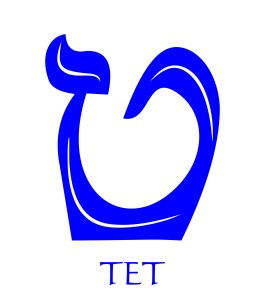
As it turns out, the number nine, represented with the Hebrew letter tet, harnesses not only the duality of women, but also their associations with concealment, birth, and fruitfulness. I plan on using some space to explore this letter, its meaning, and usage because I believe it is intricately linked to our subject matter. In modern block print, tet looks like this:

© Shalom3 | Dreamstime.com

In ancient pictographic form, this letter looked like a vessel, basket, or a container. Frank Seekins’ Hebrew Word Pictures suggests that the imagery of tet could also be a coiled snake, implying something that surrounds (like a woman’s womb). Tet actually looks very similar to an inverted letter mem, the other Hebrew letter associated with the womb. We will explore the womb more fully in a latter post. For now, you can view this footnote for a brief explanation.[2] In Modern Hebrew print, this letter still looks like a receptacle with an inverted spout or rim.

While tet is actually the least common letter in the Hebrew Bible, the first time it appears is in the word tov or good, which is used numerous times throughout the Creation story. I hope you just made the connection that like the Holy Spirit, the moon, and women, tet is the least “seen” letter in the Bible. In other words, there is a “hidden” aspect in all of these things that provides a place of protection, so that growth can safely occur. But, that is what a womb (and a woman) does! They surround and protect new life in order to build the family. Though hidden, this stage is good and necessary.

The goodness of fruit is hidden or concealed within a woman until the fullness of time –nine months. This natural picture of gestation is manifested in the spiritual when one produces the fruit and gifts of the Holy Spirit, both of which, are NINE. (Gal. 5:22-23, 1 Cor. 12:8-10) When nine reveals what it conceals inside, fruitfulness, multiplication, and the building of the House are made visible.

The multiplication aspect of the number nine is extended into the natural through mathematics. If any number is multiplied by nine the resulting digits always add to nine. For example: 2 x 9 = 18 (1+ 8=9); 3 x 9 = 27 (2+7=9); 4 x 9 = 36 (3+6=9), and so on. Also, every multiple of nine will reduce back to nine. This makes a mirroring effect when the multiplication tables are written out. Can you see the reflecting nature of nine in this graphic?

Nine is quite a fascinating number! You can view more mathematical tricks of nine here. For now, consider that every multiple of nine remains nine. For example, consider these biblical numbers: 144, 153, and, 666. All reduce to 9 in Gematria.[3] (1+4+4=9, 1+5+3=9, 6+6+6=36=3+6=9)

Moreover, there are some pretty important Hebrew words that reduce to nine. Adam, a-men, covenant, light, Shabbat, and chesed (loving-kindness) all equal nine when reduced. These seeming anomalies weren’t lost on the rabbis. True to its pictograph, there is obviously something good about this number, though it appears shrouded in mystery. Perhaps, the most notable word associated with nine, TRUTH (אמת), will help one’s understanding.

Not only does truth reduce to nine, but its Hebrew spelling contains the first, middle, and last letter of the Hebrew alphabet. The rabbis’ say the lesson we are to learn is that something that is true cannot be altered and must be true at the beginning, middle, and end. (I hope this reminds you of Messiah! [4]) In other words, truth is immutable and eternal. Like God, it changes not.[5] This author finds it fascinating that the number nine implies this reality in the natural through mathematics. Remember, every multiple of nine remains to be nine. It will not change!

Maybe this is one reason that the Creator chose to give humans life in a nine month gestation cycle. And perhaps, this is why the festivals that testify to eternal life also span a nine month period. Fruit, whether of the womb or of the Spirit, is concealed in order to grow, mature, and eventually sprout new life. The tet pictures all of this and more.

One way in which we connect to the Creator to effect a changed life is through prayer. The Amidah prayer has 18 (1+8=9) benedictions. The ninth hour is not only called the hour of prayer (Acts 3:1; 10:30), but is also the hour that Messiah gave up His Spirit on the Tree (Cross). (Mt. 27:46) By this, He made the ultimate connection between us and the Creator. What was concealed, at last was revealed.  And the mysterious number nine had a role to play in that glorious act!

The Flip Side of Nine

But like most all things Biblical and Hebraic, there is another side to this coin. All words have both a positive and a negative connotation and many words are a contranym.[6] Tet is no exception. Do you recall all of those wonderful positive words associated with nine and tet like truth, covenant, light, and Shabbat? Well, on the flip side, the Hebrew words satan and seduce also contain the letter tet. Although tet is a symbol for GOOD, it can also be a symbol for EVIL. In other words, within the letter tet is the potential for duality.

For example, the Hebrew words for pure and impure (clean and unclean) both begin with the letter tet. While neither of these bodily states imply evil, they do suggest dualism. Obviously, women move in and out of purity and impurity in their monthly cycle and after giving birth. Family purity laws[7] pretty much center on these states of being and their required sacrifices and washings. The Sages make an inference from this that only God, symbolizing Divine Goodness, has the power to make the unclean clean again. In this way, tet unites both the pure and impure in duality to create one renewed entity.

While tet is the symbol for the number nine, the Hebrew word that spells the same number is tayshah. It comes from the root sha’ah,[8] meaning to look to, regard or gaze upon. It is first used when God regarded Abel’s sacrifice and not Cain’s. Thus, the number nine also implies righteous judgment and discernment.

The dualism continues with the Hebrew tet if one considers the modern numeral 9. It appears to be an inverted 6 — the number for both man and the beast.  This question from the very beginning is one that we all must answer. Will you be a man created in the image of Elohim or will you, in the end, be found marked with the image of the beast? When the Creator turns us upside down in judgment (9), either a man or a beast (6) will be revealed.

God had Moses make and mount a brass serpent on a pole to heal those that had been bitten by his judgment of fiery snakes in the wilderness.[9] Later, Yeshua tells Nicodemus that He would be lifted up just as that serpent on the pole had been and that by this He would bring salvation to His people.[10] In these accounts, we can see Yeshua associating Himself with the serpent. He is not the serpent, but He is the Seed of the Woman[11] that crushes the serpent’s head. How does one receive healing or salvation in these examples? By looking upon or regarding the one lifted up — this is the goodness hidden/concealed within the letter tet. What appeared tragic or evil was concealed for God’s tov (good) purposes! Thus, tet demonstrates the two postures of man as referenced by this graphic:

We are a builder or a destroyer, a man or a beast, good or evil. But if we are honest in our self-examinations, we learn that each and every one of us is a contranym.[12] Within even the most holy soul on earth, duality is present with the potential for wickedness. We are like the letter tet because we are a vessel with the potential for both good and evil.

Sometimes our goodness is concealed though the possiblilty for actualization is real. Other times we erect our head like a serpent and gnash our teeth at the very One that was lifted on the stake for our salvation. The serpent beast within must learn to shed its skin of pride and take on the weighty humility of truth. The 6 (man/beast) will be inverted through righteous judgment (9). The question is: Will YHWH find a humble man or a striking snake when your vessel is turned over to reveal its contents?

Now that we’ve laid the foundation of the importance of nine and hinted at its role in the gestation of new life, my next post (Part IV) will cover the festival cycle and human gestation.

(For even more on tet, please see this video by Rabbi Trugman.)


[1] For example, this year (2015), Purim begins on March 4th and Chanukah begins on December 6th. There are approximately nine months that this year is pregnant with the feasts of Israel.

[2] There are two Hebrew words for womb: rechem and beten. The former has a mem, and the latter a tet. However, beten is used in a much broader sense and can refer to the bowels of either a man or a woman. Rechem is used exclusively for the feminine womb that carries a child. It is also the Hebrew word for mercy. These things will be elaborated on in a future post on the Biblical Role of Women.

[3] This article from Hebrew for Christians explains Hebrew Gematria.

[4] Yeshua the Messiah is the same yesterday, today and forever. (Heb. 13:8 CJB)

[5] “For I, the LORD, do not change; therefore you, O sons of Jacob, are not consumed. (Mal. 3:6 NASB)

[6] A word that can mean the opposite of itself is a contranym. Examples in English: bound (bound for Chicago, moving) and bound (tied up, unable to move), cleave (to cut apart) and cleave (to seal together), buckle (buckle your pants — to hold together) and buckle (knees buckled — to collapse, fall apart), citation (award for good behavior) and citation (penalty for bad behavior), clip (attach to) and clip (cut off from), dust (remove dust) and dust (apply dust — fingerprints), fast (moving rapidly) and fast (fixed in position), left (remaining) and left (having gone), literally (literally) and literally (figuratively), moot (arguable) and moot (not worthy of argument).

[7] Here is an article about Family Purity from the Jewish Virtual Library.

[8] H8159 שׁעה shâ‛âh BDB Definition:

1) to look at or to, regard, gaze at or about

1a) (Qal) to gaze at, regard, behold, look about

1b) (Hiphil) to look away, cause gaze to turn away

1c) (Hithpael) to look in dismay, gaze about (in anxiety)

Part of Speech: verb

[9] Num. 21:4-8  Then they set out from Mount Hor by the way of the Red Sea, to go around the land of Edom; and the people became impatient because of the journey.  (5)  The people spoke against God and Moses, “Why have you brought us up out of Egypt to die in the wilderness? For there is no food and no water, and we loathe this miserable food.”  (6)  The LORD sent fiery serpents among the people and they bit the people, so that many people of Israel died.  (7)  So the people came to Moses and said, “We have sinned, because we have spoken against the LORD and you; intercede with the LORD, that He may remove the serpents from us.” And Moses interceded for the people.  (8)  Then the LORD said to Moses, “Make a fiery serpent, and set it on a standard; and it shall come about, that everyone who is bitten, when he looks at it, he will live.”

[10] John 3:13-15 “No one has ascended into heaven, but He who descended from heaven: the Son of Man.  (14)  “As Moses lifted up the serpent in the wilderness, even so must the Son of Man be lifted up;  (15)  so that whoever believes will in Him have eternal life.

[11] Gen. 3:14-15  The LORD God said to the serpent, “Because you have done this, Cursed are you more than all cattle, And more than every beast of the field; On your belly you will go, And dust you will eat All the days of your life;  (15)  And I will put enmity Between you and the woman, And between your seed and her seed; He shall bruise you on the head, And you shall bruise him on the heel.”

[12] See footnote 6. Also see The Creation Gospel Series by Dr. Hollisa Alewine.

Categories: Biblical Symbols, Moedim, Women | Tags: , , , , , , , , , | 21 Comments

Moonbeams and the Moedim Part II

We discussed the LORD as the Master Time keeper and the relationship between women and the moon in Part I. This post will compare the four primary moon phases to the feast days and women’s cycles. 

Quick Review

The Creator’s purpose for placing the great luminaries in the sky is to govern our TIME (and calendars).

Then God said, “Let there be lights in the expanse of the heavens to separate the day from the night, and let them be for signs and for seasons and for days and years; and let them be for lights in the expanse of the heavens to give light on the earth“; and it was so. God made the two great lights, the greater light to govern the day, and the lesser light to govern the night; He made the stars also. God placed them in the expanse of the heavens to give light on the earth, and to govern the day and the night, and to separate the light from the darkness; and God saw that it was good. There was evening and there was morning, a fourth day. (Gen. 1:14-19)

© Kalina Vova | Dreamstime.com

The moon is given a unique role in setting our calendars; it keeps, guards, protects, and marks out our moedim or appointed times with the Creator. These roles mirror those of the female and the ezer kenegdo.[1] These “appointed times” or appointments with God were meant to be important and relevant to God’s people in all generations (Lev. 23).

He made the moon for the seasons (moedim)… (Ps. 104:19)

In this post, we are going to focus on the various moon phases that mark out our months. Have you ever considered what phase the moon is in at various biblical festivals? Do you think it’s possible that the Creator meant for us to consider not only the season of each feast, but also the phase the moon would be in? Since the moon was given for the moedim, I believe there is great significance to be gleaned by these observances.

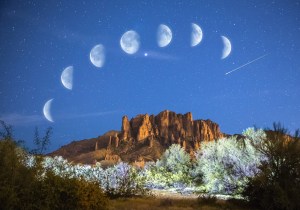
The moon actually changes (from our perspective) a little each night. Science generally categorizes these changes into four principal lunar phases. In between each of these quarters, there are also four intermediate phases.[2] All together, they are:

  • New moon (astronomical)
  •      Waxing crescent
  • First quarter
  •      Waxing gibbous
  • Full moon
  •      Waning gibbous
  • Last quarter
  •      Waning crescent

                                                           © Igor Korionov | Dreamstime.com

For our purposes here, I will be using the four principal lunar phases as section titles. Where a feast day falls during an intermediate phase, it will be noted. But first, let’s define the new moon more clearly.[3]

As I’m sure most of my readers understand, there is a difference between the astronomical new moon and the biblical new moon. The astronomical new moon occurs when the moon is completely invisible or dark. Most of the time, you can see this phase with the naked eye. The moon appears “full” but it has no illumination. This may help us to understand a fascinating contranym (a word that can mean its own opposite) in Hebrew with regard to the moon. That word is the Hebrew keseh. This Hebrew word may sound familiar to you in the form Yom HaKeseh, the Hidden Day — a day referring most particularly to the new moon feast of Yom Teruah (Rosh Hashanah).

Truly, the moon is “hidden” just before the first sliver of the new crescent reveals the return of light and the biblical new moon. But the word keseh means much more than “hidden”. It is used here in the Psalm 81:

Blow the trumpet at the new moon (chodesh), at the full moon (keseh), on our feast day (chag). (Ps. 81:3)

Chodesh (New Moon) is a Hebrew word derived from the root meaning new or renew.[4] The Crescent New Moon is called chodesh precisely because it is the first time the moon is seen anew after being concealed in darkness. What seems to cause confusion is the uncertainty of the root behind the Hebrew word keseh (translated as full moon). This is Strong’s definition followed by its root.

H3677 כּסה    כּסא kese’  keseh Apparently from H3680; properly fullness or the full moon, that is, its festival: – (time) appointed.

H3680 כּסה kâsâh A primitive root; properly to plump, that is, fill up hollows; by implication to cover (for clothing or secrecy): – clad self, close, clothe, conceal, cover (self), (flee to) hide, overwhelm. Compare H3780.

Obviously, keseh means to be full or fully covered. Is not the full moon full of light and the new moon covered in (partial) darkness? Can you detect the contranym in keseh? This word denotes both revealed fullness and concealed coverings. Keseh is like kos, cup. The full moon is like a cup overflowing with abundance. Likewise, the new moon is “covered” with the same abundant force. Thus, the moon (from our perspective) is in a continual state of keseh. Like many Hebrew words, keseh can mean its own opposite. The moon is both revealed and concealed in a cycle. This activity is mirrored by women, both in their appearances in the biblical narratives (their movement in and out of the text) and in their physical bodies (menses/flow).

According to the Bible and Hebraic history, sighting the very first sliver of the waxing moon crescent marks a biblical new moon. This makes sense considering that when the moon is still black, there is not yet an indication of renewal. Only when the first visible sign of light returns can the moon be considered “renewed”. Historically, each new month began with the sightings of two reliable witnesses. Once announced, two silver trumpets heralded the day. Signal fires were then lit from mountain to mountain to spread the news throughout the Kingdom. And a new moonth began.

Rosh Chodesh (New Moon)

Phase One

The Biblical New Moon honors God as the Creator, the Master of TIME and new beginnings. The moon is a symbol that emphasizes our move from darkness unto light. At the head of every new month, we have an opportunity to live out this truth anew. The moon’s cycle of waxing and waning reminds us that even in our failings, when our light decreases, there is always hope for renewal. Rosh Chodesh offers us the opportunity to begin anew every month. This is just one more way that we may join YHWH as masters of TIME in the wheel in the middle of the wheel.

In Jewish tradition, women are given special honor during Rosh Chodesh. Some women celebrate it as a special Shabbat from certain types of labor and gather together with other women for study. There are several stories from tradition that make these associations quite fascinating. You can read about them in the links in this footnote.[5] Regardless of whether the traditional stories are true or not, the physical nature of women’s cycles weren’t lost to the Sages. Though shrouded in some mystery, women’s bodies align themselves with YHWH’s mystical lunar clock.

Yom Teruah

Although Chanukah extends into a new moon phase, there is only one feast day that begins at the New Moon: Yom Teruah or Rosh Hashanah (Trumpets). It may now be very obvious why trumpets are blown at this date. Since weather can affect the sighting of a new moon sliver, this day has been dubbed, Yom HaKeseh, the Hidden Day at which no man knows the hour or the day of its occurrence. Yom Teruah heralds the seventh month, the coming Day of Atonement, and the Feast of Ingathering.

This day calls the ones sleeping in darkness to hear the great alarm of the shofar. Wake from slumber and know the season and phase you are entering. The Father desires that none perish, but many will choose otherwise. There are exactly ten days between Rosh Hashanah and Yom Kippur. These days are called the Days of Awe and throughout this time, the moon grows fuller and fuller. In other words, the new moon brings promises of more light, more awareness. There is an escalation that begins with this New Moon Feast that will culminate at Sukkot. Remember that first sliver of light is visible at this feast and moon phase. It brings with it the potential for growth and restoration.

Women

Many women have their menses either during the dark/new moon or during the full moon. They shed the old, so they can begin building the new. Obviously, menses can occur at any time during the month, but when a woman bleeds during the new moon, she will be fertile at the full. And when she bleeds at the full moon, she will be fertile during the new moon. Studies show that the more women are exposed to natural light (rather than artificial), the more consistent their cycles align with the moon phases.[6] The new moon is certainly a type of renewal, just as the woman’s womb continually renews itself.

To simplify our analogy with women and the moon, let’s consider a woman that ovulates during the new moon. If the egg is met with seed, new life will begin to form.

First Quarter

Phase Two

 As soon as the first sliver of the new moon reveals itself, the moon begins to grow increasing fuller in the night sky.

Shavuot and Yom Kippur

Shavuot (Pentecost) is the fourth feast on the LORD’s calendar. It is the holiday that commemorates the giving of the Torah and the Holy Spirit. Every year, this spring harvest festival falls at the waxing moon. The implication is that this season and phase of the moon is a time of growth, harvest, and blessing.

Yom Kippur, the Day of Atonement, also falls at this time as the sixth feast. As the most holy day of the year, it behooves us to ask why it arrives during the waxing moon. I believe the answer is revealed when we also consider the other two festivals that sandwich this feast (fast) day in the seventh month. We’ve already looked at Rosh Hashanah as the new moon. It calls us to awaken from our slumber and to hear the shofar’s call, warning us of coming Judgment. Ideally, the call will lead us to life.

Yom Kippur is the Day of Judgment. Too often we associate judgment with finality. The moon speaks to us that that is not what the Creator has in mind. There is more to the story. His desire is that we are judged favorably as pictured in this waxing/growing moon phase. Judgment leads us to something. It points us to eternity as visualized in the following feast of Sukkot (Tabernacles).

Women

If an egg was fertilized at the new moon, then at this phase, the zygote will be implanted into the womb and growth will rapidly occur. Conversely, if no seed was received, the womb will prepare to shed in menses.

The Full Moon

Phase Three

The full moon falls around the fourteenth or fifteenth day of Hebrew months. The important thing to remember is that when the moon is full, we have the most light in the darkness. It’s easier to SEE.

Pesach and Sukkot

Two of the three pilgrimage festivals, Pesach (Passover) and Sukkot (Tabernacles), occur at the full moon. If we looked at all seven festivals together, these feasts would bookend Adonai’s entire calendar. The light of the moon offers a bright night sky for worshippers and pilgrims to gather together. Interestingly, Sukkot commemorates the original Passover and the succeeding wanderings in the wilderness. The two feasts with the most light in the darkness are linked and connected by their memorials, light, and completeness.

Mystically speaking, there is more “spiritual” light on the earth at these appointed times. In my experience, it is the two festivals of Passover and Tabernacles that people are more curious about and willing to participate in.

Women

If a woman ovulated during the new moon, she will begin menses at this time if she didn’t receive seed. If she did conceive, her body will pause her cycle at this moon and full gestation will begin. I believe Passover and Sukkot both impregnate the true spiritual seeker with a desire to seek the Creator more diligently through obedience.

Last Quarter

Phase Four

The moon’s light begins to decrease.

Unleavened Bread, Early Firstfruits, Shemini Atzeret, and Chanukah

Holidays that fall during the waning days of diminishing light include Chanukah (which extends into the new moon) and Shemini Atzeret/Simchat Torah, the eighth day of Sukkot. This holiday also marks the end of the Torah cycle and its beginning. These are holidays of new beginnings, cleansing and renewal, and portals from death into life.

In the spring, just after the full moon of Passover, come the days of Unleavened Bread and Early Firstfruits. The moon light begins to gently decrease during these days as well. The theme of these festivals mirrors Shemini Atzeret and Chanukah. This isn’t surprising since they all occur during the same waning moon phase. Harvest, rebirth, resurrection, and renewal are all present.

While decreasing in light can be considered a negative thing, sometimes it is a very necessary and holy act. Perhaps that is why more feast days occur at this moon phase than any other. Consider John the Baptist’s words:

John answered and said, “A man can receive nothing unless it has been given him from heaven. “You yourselves are my witnesses that I said, ‘I am not the Christ,’ but, ‘I have been sent ahead of Him.’ “He who has the bride is the bridegroom; but the friend of the bridegroom, who stands and hears him, rejoices greatly because of the bridegroom’s voice. So this joy of mine has been made full. “He must increase, but I must decrease. “He who comes from above is above all, he who is of the earth is from the earth and speaks of the earth. He who comes from heaven is above all. (John 3:27-31)

I wonder if John had the analogy of the moon in mind when he said these words. If you carefully read the above passage, you can clearly see the moon phases. John was sent ahead of the Messiah as the “sent one”. His job was to testify (reflect) the true light:

 There came a man sent from God, whose name was John. He came as a witness, to testify about the Light, so that all might believe through him. He was not the Light, but he came to testify about the Light. (John 1:6-8)

The imagery of the moon reflecting the true light of the sun (Son) is unmistakable here. The fact that the Hebrew month begins in the evening with the moon in the sky also testifies to this. The moon precedes the sunlight just as John preceded the Messiah. His job? To testify or reflect the coming Light. This is the job of all “sent ones”. Remember to think cyclically and not linearly. In Hebraic thought, this imagery doesn’t occur once, it is ongoing and repetitive. This cycle didn’t begin with John the Baptist nor will it end with him; just as the daily cycles of evening and morning repeat every day and the moon phases repeat every month.

In Jewish literature, the moon is not only associated with women, but with Israel as a nation. This shouldn’t surprise us since God’s people are often given feminine metaphors in the Bible. Israel and Judah are sisters; Israel/Judah is a bride, a woman, and a wife. As I’ve mentioned many times, both men and women are revealed in the Woman of Scripture. This is true whether you are a harlot or a righteous woman.

John knew that he had no real light of himself. The people didn’t need to be distracted by him, a mere man. The Mashiach, the Light of the World, was in their midst. To Him alone all glory belongs. This is a test for all “sent ones”. The moment a “sent one” believes that people must come to them for “light” is the moment they pass from truth to the realm of a false apostle.

This brings us to the other side of the coin of diminishment. Not all light is good or holy light. We know that the enemy masquerades as an “angel of light” and Messiah told us to “watch out that the light that in you is not darkness”. (Luke 11:35) The first wicked spirit that lights a dark lamp is pride.[7] We all suffer from this malady and it must be diminished as a wicked or dark lamp. Repenting and humbling ourselves, we have the promise of renewal and rebirth as seen in the coming new moon.

Women

Women also have this same promise if the conception of life didn’t occur earlier in the month. The new moon is coming, but not before darkness. I believe this is true for women desiring to conceive children and for those trying to birth other (good) things into the world. The cycle teaches us that sometimes we must endure the darkness. Sometimes our light is dim. But praise Adonai; the promise of His light is near. We need only to look up. Our salvation draws nigh.

“For just as the new heavens and the new earth which I make will endure before Me,” declares the LORD, “So your offspring and your name will endure. “And it shall be from new moon to new moon And from Sabbath to Sabbath, All mankind will come to bow down before Me,” says the LORD. (Is. 66:22-23)

Recap

Women connect us to sacred time. Their bodies tell the same story as the great luminaries in the sky. It is a message of life, death, and renewal. It is the gospel spoken through the flesh. Let’s put together what we know about the moon, the feasts, and women thus far. Here, I’ve given the analogy of a woman that is in menses at the new moon. Here are the festivals and their associated moon phase. I’ll let you make your own assessments for the feasts of the people: Chanukah and Purim.

Passover/Full Moon = Shedding of blood. Death is cleansed by blood, so new life can begin. All people must pass through the bloody opening of their mother’s womb, just as people of faith must leave Egypt through the bloody door of the covenant. Light is separated from the darkness. A woman is separated (niddah) by the blood, whether it is menstrual or from birth. Both speak to life, birth, and renewal.

Unleavened Bread/Waning Moon = Leaving an old life for a new one is difficult. All must eat the bread of affliction and struggle with this phase of repentance and cleansing. The light may “appear” dimmer as we walk through this process. As the uterus continues to shed death and decay, a woman experiences a level of discomfort and separation.

Early Firstfruits/Waning Moon = The moon continues to wane during this week. But the darkness of the tomb has light. The separation process isn’t indefinite. Gathering unto life is promised. (As pictured in Isaac and Messiah’s resurrection.) Though the days ahead may be dark, a new dawn is coming. The waters of immersion wash us in the Red Sea just as a woman is cleansed from her blood flow in the mikveh. Newness and cleansing preps us to receive life. We begin to count our days to fullness, to Shavuot.

Pentecost/Waxing Moon = When the day of Pentecost has “fully come”, the moon waxes toward fullness and we begin to overflow with the fullness of the Torah and the Holy Spirit. This likened to a woman that has received Seed. There is promise that a New Life is forming. This is why the moon isn’t yet full. We have our instructions and the filling of the Holy Spirit to see us through to the harvest.

Rosh Hashanah/New Moon = During the long hot summer, the harvest grows and ripens. Eventually, the darkness of this present world seems as if it will engulf us in wickedness. Alas, the trumpet sounds (Rosh Hashanah) announcing the arrival of the king. The tiny new sliver brings with it the promise of the bright full moon to come. But first, judgment must come to pass. The shofar calls the Bride to make herself ready. She is fertile and ready to receive her King.

Yom Kippur/Waxing moon = As the moon begins to reach fullness, Yom Kippur, the Day of Atonement arrives. The harvest is gathered, bundled, and placed in the covering of the Master’s barn, but the chaff is burned outside. Likewise, two goats are marked. One for Adonai and the other is sent into the wilderness of sin to die for Azazel. The woman has been judged. Will she bear fruit fit for the Kingdom or will she only have the curse of a swollen belly because of the bitter waters?

Sukkot/Full Moon = After judgment, the marriage feast takes place under the bright harvest moon. What was promised in the betrothal at Shavuot is consummated under the chuppah. The bridegroom is joined with his bride. She recalls their time in the wilderness of her youth and her redemption from slavery. Everything about this festival recalls the great work and preparation of her Maker, her husband. Though He seemed to delay, the harvest is great. The guests are dressed in clean white linen. What was once a seed has become new and eternal life.

Shemini Atzeret /Waning Moon = The last great day occurs. Though the moon is waning once again, it won’t last long. The cycle will continue, but the moon’s light will no longer be diminished. YHWH is making all things new. There will be no need for the light of the earthly luminaries. He is our Light and His people know their appointed times. The trees (His people) will produce fruit every month because they are nourished from the River of Life that flows from the throne of God. (Ezek. 47:12, Rev. 22:2)

Chanukah = Waning Moon and New Moon

Purim = Full Moon

My hope is that you will now begin to meditate on the moon phase as you celebrate the moedim cycle. While men do not have a menstrual cycle that keeps their physical body attune with the moon, they no doubt have women in their lives that do. As a part of the greater assembly, both men and women (as a Bride) go through cycles of shedding death and nourishing good seed. In a very real sense, both men and women birth things in both the natural and the spiritual realms. The next post in this series will take this concept a bit further by examining the moedim within the framework of a human gestation cycle.

Part III


[1] The Biblical Role of Women Part I and Part II.

[2] The word crescent refers to the phases where the moon is less than half illuminated. The word gibbous refers to phases where the moon is more than half illuminated. Waxing means “growing” or expanding in illumination, while waning means “shrinking” or decreasing in illumination.

[3] In the camps of those returning to the Torah, the moon can cause a bit of controversy in the realm of calendar keeping.  Many divisions and splits have resulted from differing opinions and research of new moon sightings. Many a paper and teaching have sought to prove that their view of when a “new moon” actually occurs is the right one. There are others that adamantly claim that once the new month begins, the count for the weekdays should begin. This makes the weekly Shabbat, fall on the 7th, 14th, 21st, and 28th of a month instead of the usual reckoning of Saturday (Sabbath). Confused yet?

We can truly act like LUNATICS in our pursuit of truth. I encourage you to seek balance in these areas through humility. Our Greek mind-sets desire absolutes, black and white answers, and “rightness”. But Hebraic thought allows for more than one understanding even when they appear contrary to our finite minds. Be careful when you feel the need or desire to draw line in the sand. No one has yet cornered the truth no matter how thoroughly researched the topic may be. Ask yourself what type of fruit will be manifested by your “belief” or “actions”. Will your stand produce life or death in the Body? Will your conviction build or destroy? I’m not calling for compromise, but sacrificial love. We don’t have to sacrifice our convictions in order to love others or respect their conclusions. We will be known by our fruit. May our fruit NOT reek of division, confusion, bickering, self-righteousness, and pride.

So, in regards to the “right” way to observe, mark, or calculate the new moon, humbly follow your convictions, but be careful when you judge someone else’s if it is contrary to yours. If your local Body doesn’t keep the moedim on the dates you do, I encourage you to join with them anyway. Separation that doesn’t lead to gathering is DEATH. (You can always keep the dates you feel are most accurate at home.) In this same spirit, be careful when you “judge” Jewish laws in this area as well. In light of this, I will not engage or allow others to mete out their fierce convictions on this issue in the comments on my blog. I see nothing but rotten fruit in such endeavors.

[4] Strong’s Definitions: H2320 חדשׁ chôdesh From H2318; the new moon; by implication a month: – month (-ly), new moon.

       H2318 חדשׁ châdash A primitive root; to be new; causatively to rebuild: – renew, repair.

[5]  http://www.myjewishlearning.com/holidays/Jewish_Holidays/Rosh_Chodesh/Women/Moon.shtml

http://www.aish.com/jl/hol/o/48972041.html

[6] See The Garden of Fertility by Katie Singer

[7] See Proverbs 6:6-8 and The Creation Gospel Workbook Two, by Dr. Hollisa Alewine.

Categories: Moedim, Women | Tags: , , , , , , , , | 13 Comments

Moonbeams and the Moedim Part I

                       © Printezis | Dreamstime.com

Women, Cycles, and Time

Have you ever considered why many of the families that have returned to the seventh day Sabbath and YHWH’s festivals began with the prompting of the woman or wife?[1] Or have you ever wondered why there is so much physical preparation (domestic and relational requirements) that a woman must do in order for the family to keep Shabbat and the Feasts? What about the rabbinical ruling that women are “exempt” from certain time related commandments; what is this about? Why do women seem to be associated with TIME again and again? Hopefully, we will begin to answer these questions in this post.

I think I’ve figured out why I’ve struggled to start this next series of posts. They each deal with time. And time, like  light, is still very much a mystery to mankind (and modern science). There are several ways that people try to understand time. Some think of it as a linear line with an infinite beginning and end. Each end of this line is constantly moving away from the other. Others view time as a circle with the beginning also being the end. And still others believe that while time is indeed cyclical, that it is much more akin to the double helix of our DNA. It is connected, but with rungs that progress upward on a twisted ladder. Lower parts touch higher rungs repeating the information in new and more dynamic ways with each cyclical step.

The latter view will be the way in which I present this material. This part will present the base line and it will spiral and spread throughout the following posts, but will twist back to touch this post again. To put it simply, I will present this in a “spiral” form of teaching. I just don’t see any other way to do it. (:

Cycles

© Luayana | Dreamstime.com

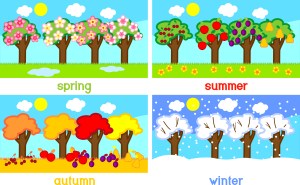
There is an important difference between Hebrew and Greek thought in the worldview of time. While Greek derived mindsets tend to think more linearly, Hebrew thought is more cyclical. Creation (nature) testifies of the latter.  As an example, the seasons are pictured in the graphic. They occur again and again in a cycle. Like the seasons, time and even prophecy is thought of as cycle with recurring themes rather than the common linear timeline that moves from the indefinite left that progresses to the indefinite right. Everything we can see moves in cycles, and Adonai uses cycles to teach us about unseen (spiritual) things (1 Cor. 15:46).

God’s calendar, His appointed times, are also cyclical. Before we delve into how women are connected to these cycles, let’s first look at how God has revealed time.

Adonai’s calendar is primarily based on the lunar cycle.[2] New months begin with sighting the first sliver of a new moon and mark out the appropriate timing of our festivals, fasts, and harvests. In other words, the moon keeps or guards our weeks, months, and years. The passage below chronicles Day 4 of creation. Those of you that have been following my posts or that are Creation Gospel students will notice that as the fourth day, God is establishing His government or authority in the luminaries. (And in His calendar.)

Then God said, “Let there be lights in the expanse of the heavens to separate the day from the night, and let them be for signs and for seasons and for days and years; and let them be for lights in the expanse of the heavens to give light on the earth“; and it was so. God made the two great lights, the greater light to govern the day, and the lesser light to govern the night; He made the stars also. God placed them in the expanse of the heavens to give light on the earth, and to govern the day and the night, and to separate the light from the darkness; and God saw that it was good. There was evening and there was morning, a fourth day. (Gen. 1:14-19)

Verse 14 states that one of the governing actions of the luminaries is to serve as signs, seasons, days, and years. I believe “days” and “years” are pretty self-explanatory, so let’s look at the “signs” and “seasons”. The Hebrew word for signs is ot (aleph, vav, tav). It literally means a mark, signal, omen, or flag. The heavenly lights declare not only the glory of God, but give us signals or warnings of things to come. So while they may help us to keep track of time (past), they can also point to or warn us of future events (prophesy).

The Hebrew word for seasons in verse 14 is moedim. I expect that most of my readers will be familiar with this word. These are our feasts and festivals.[3] Notice that in the very Beginning, Adonai established His calendar or His time clock on day four of creation. This is significant because our calendars govern our day to day lives. They dictate when we celebrate, when we rest, when we work, and when we gather together. If the Creator felt that His calendar required the actual sun, moon, and stars to guard, protect, keep, and mark His time, how much more should His people regard His calendar?

These appointments with the Creator give us LIGHT much in the same way that the sun, moon, and stars give us natural light. They truly separate the light from the darkness. If we ignore these appointments, we will have less light, less revelation. Remember, the natural things are meant to reveal spiritual truths. The guardians of God’s calendar speak to every creature on earth summoning us to come and meet with the King. David said it this way:

The heavens declare the glory of God; And the firmament shows His handiwork. Day unto day utters speech, And night unto night reveals knowledge. There is no speech nor language Where their voice is not heard. (Ps. 19:1-3)

In the very Beginning, the Creator preordained that we meet with Him certain times of the year. You only need to look up at the majestic sun, moon, and stars to see and know the season. Notice that at night the heavens reveal “knowledge.” This is the Hebrew word da’at. This type of knowledge is an intimate knowing and carries with it the idea of sacrificial love. It is the “bone of my bone and flesh of flesh” that Adam experienced with Chavah (Eve) and she conceived and bore a son. It is the loving knowledge that provoked Yeshua to become the sacrifice for His people. Because of the intimate nature of da’at, it cannot be completed without a woman. This type of sacrificial love needs a vessel to pour itself into and women are the natural imagery of a receiving vessel. (Hopefully, you can see men too in this imagery as part of the Bride.)

There is a cycle at work here that is meant to be a guide to God’s people. For our purposes, we will limit our study to the lesser light of the moon. Both men and women as the people of Elohim can be compared to the moon. But women have a unique association that I’d like to focus on. Since both the male and the female are revealed in The Woman in Scripture, we will see some overlaps in the two sex roles.

Moonbeams

He made the moon for the seasons (moedim)… (Ps. 104:19)

The moon has a special role to play in the guardianship role of the moedim (feasts). It is a master timekeeper of sorts. While the sun and stars also share in this responsibility, the moon beckons us to watch it a little more closely. As the nearest heavenly body to earth, the moon has mesmerized mankind since time immemorial. Sadly, many have fallen victim to the idolization of these heavenly bodies. They have failed to realize that these luminaries serve us, we are not meant to serve them.

The moon’s closeness and the fact that it governs our moedim make it quite mysterious. This becomes even more mystical when we consider that the brightest light in the night sky has no light of its own – it can only reflect the light of the sun. We will come back to this concept in a later post.

Since women’s bodies follow a lunar cycle (menses), the Sages have long concluded that women are uniquely associated with not only the moon and Adonai’s Festivals, but with time itself.[4] Let’s review what we’ve covered so far. As you read through my enumerations, ask yourself if any of these remind you of the role of women.

The moon:

  1. Sets boundaries for our months.
  2. Keeps or guards the moedim.
  3. Warns of things to come.
  4. Reflects the light of the sun.

I hope some of these facts caused you to think of the neqevah (female) and the ezer kenegdo from the Biblical Role of Women Part I and Part II. Or perhaps even the prophetic nature of women from Part V. One of the more obvious links between women and the moon is seen in the various PHASES in which both continually go through.

The regular arrival of the new moon and its growth to fullness, followed by its soon disappearance has long been a visible symbol of life, death, and rebirth. With every new moon, we see the necessity of being renewed (born again). This rhythmic clock sets our calendars with each cycle marked as a new month (moonth).

Like clockwork, women also go through phases each month. Similar to the moon, a woman’s phases are directly linked to life, death, and rebirth. Each month a woman’s womb prepares its “soil” for life and then sheds it (death) if no viable seed is planted — only to renew itself once again. This cycle repeats again and again. When a woman’s body is in the shedding stage of menses, blood appears. When the moon gives us a warning of judgment (death), it appears red. It’s not a coincidence that we call this a blood moon.

Not surprisingly, there are four primary phases of the moon with more elaborate depictions showing eight (a factor of 4). You can watch a quick video about these phases here.  Due to the length, we will examine each of the four primary moon phases and their relationship to the feast days and women’s cycles in Part II.


[1] Obviously, this isn’t always the case. However, in most of the families I have met, this is true. Whether she was home schooling the children and discovered these truths through in-depth Biblical and historical studies or by the gentle prompting of the Holy Spirit, it is usually the wife that first “sees” God’s calendar as relevant for the family.

[2] The Hebrew calendar does take the solar cycle into account to maintain the seasons. For an interesting article about this, click here.

[3] See Lev. 23

[4] These two articles speak to women and the moon. Women of the Wall and Aish. Women being associated with time in general is a two-fold concept. The first is simply what we’ve been discussing. Women are tied to time because YHWH made their bodies to mimic His time clock. Secondly, the rabbis ruled that women are exempt from certain TIME related mitzvot. We will explore this idea in a later post.

Categories: Moedim, Women | Tags: , , , , , , , , , | 24 Comments

The Repairer of the Breach

I promised this article in The Biblical Role of Women Part IX. Though this post is directly related to the building/destroying discussed in my last two posts on women, I felt this post was important enough to warrant its own title. I hope it brings you renewal.

Before I get into the meat of this post, I have to tell you something that happened as I was writing this article. I had just finished writing five pages and I hit the “print” button to proofread what I had written. I then hit “save” and POW, the entire document changed into a strange mixture of Asian symbols, English letters, and Arabic numerals. Someone more computer savvy than myself might be able to explain this odd phenomenon with computer science. I, however, have no idea how or why this happened. I searched and tried to recover the document to no avail. All my “saves” were contaminated with the gibberish I mentioned above.

But I did have the intact document in that single print I made. I would have to retype the whole thing to post it on the blog. My husband and children were witnesses to this fiasco and all were sorry for me, LOL. But I believe it happened for a reason. You see, in the original article I had written a lot about how we “react” to life’s interruptions and seeming setbacks. That cannot be a coincidence! I’ve pondered on this and have set out to do more than retype the original. Being a repairer of the breach requires more than a rebuild. It requires strengthening the area where the breach occurred.

What is a Breach?

Photo 16657749 / Breach Wall © Oleg Shipov | Dreamstime.com

A breach is a gap in a wall, barrier, or defense. In warfare or agriculture, a breach is a place where the enemy comes in to destroy or where the sheep break out and get lost. It’s that one weak spot in the levy that gives way to the flood. It doesn’t take much digging to discover that God’s House is to be maintained, and that includes repairing breaches. The accounts of King Jehoash,[1] King Josiah,[2] and the rebuilding of the wall in Jerusalem in Nehemiah all teach us about how and why we are to rebuild what has been breached. And sometimes, due to great opposition, we must rebuild with a sword in one hand and our tools in the other.

Those who were rebuilding the wall and those who carried burdens took their load with one hand doing the work and the other holding a weapon. (Neh. 4:17)

If you’ve read my latest articles on the Biblical Role of Women Part VIII and Part IX, then you know that their themes are related to building. Sometimes, a breach occurs in the walls we have built. This implies two things. First and foremost we must GUARD what we have been building. If watchmen were/are needed in the natural, you better believe that they are needed in the spiritual realm. And secondly, we must be prepared to maintenance or repair any weak areas or outright breaches. We are fools if we don’t think this will be an ongoing endeavor in our lives. Thus, we must diligently search and inspect our building projects. Sometimes, things can be improved or strengthened. All of this is to prevent the enemy from having opportunity and to prevent us from straying.

Who is the Repairer of the Breach?

In my mind, I’ve always thought of Yeshua as being the Repairer of the Breach. And this is true; He does indeed mend what has been broken. He applies the salve we need to endure and the comfort we desire from the battle. However, it is YOU and I that are called to be His hands and feet in the earth! As His followers, we are meant to be the ones that shore up the holes in the wall. We are to repair His House! Our focal passage in this post is from Isaiah 58. Let’s begin by looking at the first eight verses. These serve as the context of our focus, so please don’t skip over them.

Is. 58:1-8  “Cry loudly, do not hold back; Raise your voice like a trumpet, And declare to My people their transgression And to the house of Jacob their sins.  (2)  “Yet they seek Me day by day and delight to know My ways, As a nation that has done righteousness And has not forsaken the ordinance of their God. They ask Me for just decisions, They delight in the nearness of God.  (3)  ‘Why have we fasted and You do not see? Why have we humbled ourselves and You do not notice?’ Behold, on the day of your fast you find your desire, And drive hard all your workers.  (4)  “Behold, you fast for contention and strife and to strike with a wicked fist. You do not fast like you do today to make your voice heard on high.  (5)  “Is it a fast like this which I choose, a day for a man to humble himself? Is it for bowing one’s head like a reed And for spreading out sackcloth and ashes as a bed? Will you call this a fast, even an acceptable day to the LORD?  (6)  “Is this not the fast which I choose, To loosen the bonds of wickedness, To undo the bands of the yoke, And to let the oppressed go free And break every yoke?  (7)  “Is it not to divide your bread with the hungry And bring the homeless poor into the house; When you see the naked, to cover him; And not to hide yourself from your own flesh?  (8)  “Then your light will break out like the dawn, And your recovery will speedily spring forth; And your righteousness will go before you; The glory of the LORD will be your rear guard.

Do you recall from Part IX how that the rabbis often infer from the text that the HOUSE is a reference to the women? If that is true in this case, then the “people” are in rebellion, but the House or women are in sin. Women can represent the intimacy of a relationship. In this passage, YHWH is truly speaking about intimacy or the lack thereof. The people desperately want to know why their cries and worship are not bringing YHWH near or close.

The problem, as YHWH has pointed out, is a heart issue. They may be doing what is required, but their motive is all wrong. Even their fasting has been for selfish reasons. YHWH goes on to delineate the true reason for fasting. I love these verses and have recounted them often. But now, I’m wondering if some of my own fasts have also been for the wrong reasons. Yah help me! So that we can recognize how we are to be repairers of the breach, I will enumerate the true reasons for fasting:

  1. To loosen the bonds of wickedness.
  2. To undo the bands of the yoke.
  3. To let the oppressed go free; to break every yoke.
  4. To divide your bread with the hungry.
  5. To bring the homeless poor into the House.
  6. To cover the naked.
  7. To not hide yourself from your own flesh.

I’m not going to analyze these seven things, but I would like you to notice the fourth reason – it is directly related to repairing the breaches in our own lives. Bread is more than physical sustenance. As we know, “man shall not live by bread alone, but by every word that proceeds out of the mouth of YHWH”.[3] Interestingly, this quote from Deuteronomy also mentions humbling ourselves and our clothing (coverings).

Now for the key verses:

Is. 58:9-12 “Then you will call, and the LORD will answer; You will cry, and He will say, ‘Here I am.’ If you remove the yoke from your midst, The pointing of the finger and speaking wickedness,  (10)  And if you give yourself to the hungry And satisfy the desire of the afflicted, Then your light will rise in darkness And your gloom will become like midday.  (11)  “And the LORD will continually guide you, And satisfy your desire in scorched places, And give strength to your bones; And you will be like a watered garden, And like a spring of water whose waters do not fail.  (12)  “Those from among you will rebuild the ancient ruins; You will raise up the age-old foundations; And you will be called the repairer of the breach, The restorer of the streets in which to dwell.

I wonder how many of us consistently call out to YHWH and feel that He is not listening. I wonder how many of us stumble through life in the darkness of depression, oppression, and “gloominess”. How many of us wallow in self-pity, without direction or satisfaction? What is missing? Why don’t we know what to do with ourselves? Why are we unsatisfied, lonely, and afraid? Why do we believe that everyone else “has it together” when we do not? Isaiah 58 has some answers if we are willing to receive it.

How Do I Get YHWH to Answer Me?

I think that too many of us stumble from one stream of chaos to the next. We are tossed to and fro; and we are tired. What is the root behind all this despair? We have a “breach” in our wall and we’ve not repaired it! The truth is that every single person will have to deal with one or more major “breaches” in their life. Sadly, many of these occur in our childhood and have left us maimed for decades. These gaping holes have left us less than whole. Every relationship is colored by our past experiences and our wounds just won’t seem to heal. The destruction from the breach continues to wreak havoc in our thought life and our relationship with God and others.

So, we cry out to YHWH and beg Him to take the pain away! But sometimes the pain remains, why? What are we missing? Based on our passage in Isaiah, there is something WE must do. Sure, God could supernaturally take it all away in one clean brush stroke. So, why doesn’t He? Perhaps, Isaiah can help us.

There are four things mentioned for us to do in verses 9-12. The text says, “IF” we do these things, “THEN”, our darkness and gloom will become as bright as the midday. The question is: do you want to get out of that pit? If so, let’s follow these words of our King and not only find that quench for our own thirst, but become the spring that never fails. Here are the four:

  1. Call upon Adonai.
  2. Remove the yoke from your midst (heart).
  3. Stop pointing the finger of blame and speaking wickedly.
  4. Give yourself to the hungry and the afflicted.

Call Upon Adonai

If you have a relationship with Abba, I’m sure you’ve been acting on number one rather frequently. That is, unless you are bitter with the Almighty. And you know if you are. If you can’t even bring yourself to worship or cry out to the King, then you will remain in that pit. You must forgive God for that breach. He didn’t cause it, and He hasn’t forsaken you. We live in a fallen world where hurting people hurt other people. It’s a nasty, vicious, and unholy cycle. And, it’s not fair. But, it isn’t God’s fault. He is still the Redeemer, Deliverer, and Savior. Whether your breach was caused by the loss of a loved one, sickness, abuse, disappointment, or some other major struggle, God can and will bring you to a place of renewal, if you are willing. But, in order to get to that place, the first step is forgiving God (see also comments below).

Sometimes, we don’t even realize that our hearts have been harboring unforgiveness toward Adonai. Here are a few signs that you are: 1. You believe that God loves others more than you. 2. You expect good things to happen to other people, but not you. 3. You feel worthless and deserving of the bad things that have happened to you.

If you believe one or more of the above, you are in bondage to a lie(s). Your heavenly Father is no respecter of persons. He is not partial, like beings of flesh. That is the truth of, “it is written.” He would leave the 99 sheep, just to go find you. Our wounds and immense pain make this especially difficult to internalize, because it feels like we have been singled out for misery, not the joy of our salvation. If this is you, step one requires you not to simply call upon Adonai, but to forgive Him for anything you’ve accused Him of that isn’t from “it is written,” and instead has come from the realm of “I think, I feel.”

I know this isn’t simple. But the reason it is not, is for one reason: flesh and the pride of life. I know that stings, because the last thing a dejected, wounded person feels is pride. But pride also manifests as self-pity, which is the opposite of the humbleness of wisdom. Both self-pity and wisdom perceive the obstacles we have faced (or are facing), but they react to these challenges quite differently. Wisdom chooses to believe that God is Sovereign and Good, and that He will enable us to overcome if we trust Him. Self-pity chooses to not even try; and instead, focuses on how worthless and powerless one is. It even goes as far as to think (consciously or subconsciously) that God wants me fail – to hurt – to remain in pain. Self-pity makes endless excuses to remain in the pits of despair, because it knows nothing else. One feels entitled and righteous in their victimhood, but this is a frozen, cold place of being. The trap prevents one from taking responsibility for what they can and from escaping the broken record in their mind that endlessly repeats the stories of blame and shame.

The only way out of the self-pity cycle is to repent for the pride of believing such lies. Make haste. Don’t wait for your feelings to catch up with, “it is written,” or the cycle will continue to suck you under. Step one is to call upon Adonai – even if you don’t feel like.  Call upon Him in your pain and grief over life. Worship Him even though you don’t feel like it. (Especially if you don’t feel like it!) By making your FLESH do what your spirit knows to do, you are mastering your lower, beastly nature. Eventually, if you’re consistent, your flesh will fall in line with your spirit. Though your past won’t change, how you perceive it will. How you go forward in life will change for the better too. Like a strong and wild stallion, your flesh can be mastered. And true release will come!

Remove the Yoke from Your Midst

A yoke is a devise used to pair two beasts together at the neck to carry a load or plow a field. The Bible uses the imagery of yoke to explain what it is that controls us or directs our heads. There is the yoke of the enemy and the yoke of Yeshua. The former is nothing but slavery and bondage; whereas, the latter is light and easy. Yeshua’s yoke brings the protection of the Master’s House. His Kingdom has boundaries, but His walls ensure our safety and security. In order to receive His protection, we must choose to be lifelong bond-servants. For it truly is better in the Master’s House!

Photo by Paul Jai on Unsplash

But, to become His bond-servant, we must remove any other yoke we have attached ourselves to. Did you notice that the first verses of Isaiah 58 on fasting also mentions “undoing the bands of wickedness and the yoke?” Adonai is serious about this. When we fast, it is our FLESH that must suffer. Fasting is one way in which our spirits can take back the upper hand and rule over our beast (flesh). Our flesh doesn’t like to feel hungry. It wants to RULE where we turn our heads. And it is the primary “enemy” you will deal with until death.

Beloved, the more I study, and the more I pursue a life in Torah, the more I realize that after coming into relationship with YHWH, everything is about this. The question of whether you will be a beast or a man (in the image of God) created on Day 6 of Creation is in nearly every single story of the Bible, culminating in the Book of Revelation with the “woman” and the “harlot who rides the beast.” The harlot gives her power to the beast.[4] But, God’s people have taken authority over (their) beast (flesh). They instead, have taken upon the yoke of Messiah.

Whip that flesh into submission! (I’m speaking to myself here as much as I am to you!) Force it to conform into the image of the Messiah. This is our calling. Go back and read the epistles in the Brit Chadashah. (N.T.). Notice the constant call to stop being carnal. Grow up by making your flesh submit. It’s time to build and no longer destroy. (As I’ve mentioned before, mussar is an awesome tool to help you “tame” your beast!)

Stop Pointing the Finger of Blame and Speaking Wickedly

The blame game. We all play it from time to time. The flesh ALWAYS has an excuse for its rotten behavior. Our favorite scapegoat is…  everyone else. They’re not doing what they should be doing; thus, I’m justified in my own stinking actions. I was provoked. They hurt me. They won’t stop doing this or that. They always make me feel… you fill in the blank. They take advantage of me. They made fun of me. They… this or that. There is always a reason that we don’t do what we know to do.

The problem is that “they” are not who we are supposed to master. We aren’t responsible for “their” behavior, no matter how crappy they treat us. YHWH says, “STOP!” Just stop pointing the finger. No matter what happened to you at the hands of some other person, we cannot use them as an excuse for our own bad actions. Go back and look at number seven in the list of fasting requirements. It says, do not hide yourself from your own flesh. While this can mean not to neglect the needs of your own spouse/family, it can also be read as a literal directive to not hide from your own flesh nature. Don’t justify your own carnal nature while pointing out everyone else’s failures. That is being a hypocrite. Mercy is nonexistent in these scenarios.

The second clause in this statement is also true. If you’re pointing the finger, you are also running your big, fat mouth. You’re telling anyone and everyone “why” you are the way you are. And it’s all someone else’s fault. STOP. You will never find the healing and deliverance you so desperately seek while engaging in this relentless behavior. Hurting people hurt people. If you’re hurting right now, please stop and consider your actions. Don’t continue this cycle of chaos and destruction. Choose differently.

Either Messiah has set you free or He hasn’t. You either wear His light yoke or you keep yourself yoked to your lower nature (flesh). Who is steering your head? Who dictates where you walk and what you say with your mouth? Who is at the helm of your ship?

STOP, says YHWH. Turn back and REPENT!

Give Yourself to the Hungry and the Afflicted

I’m not sure if you noticed this or not, but in the first verses of Isaiah 58 on fasting, and in our focal verses on becoming the repairer of the breach, the fourth thing required is to give bread to the hungry. Creation Gospel students understand the “authority” and “governing” aspect of the number four. It is actually a picture of seven and wholeness. You can read my article on The Rivers of Eden, to learn a little more about this number.

Photo 108323831 © Denis Andreev | Dreamstime.com

Four is also a picture of the fullness of the Holy Spirit and the feast of Shavuot (Pentecost). Not surprisingly, this firstfruits festival involves the offering of TWO baked loaves of wheat bread. After you have called upon Adonai, removed the evil yoke, and stopped the blame game, the next requirement is to give yourself to the hungry and the afflicted. How do we give ourselves to the hungry? The passage on fasting says to “divide” our bread with the hungry. Do you have a loaf to spare for your neighbor?

We’ve already mentioned that man does not live by bread alone, but by every word that proceeds out of the mouth of God. But, in order to train our flesh, giving real physical bread is necessary. Our nephesh would rather keep as much for itself as possible. Like a child, anything in its reach is “MINE!” It doesn’t like to share. It doesn’t really care about its neighbor or being in one accord at the feast of Shavuot (Pentecost).

Thank heavens, Adonai does care. The final test for our flesh is in whether or not we will give ourselves to the hungry and the afflicted. As the last step, it will be the most challenging. Giving yourself to another person requires great vulnerability. In order to give yourself over to or to love your neighbor, you must place yourself in a position to get hurt, again. Getting hurt is what caused the breach in the first place. It’s why you’ve built the walls (of sand) around your heart. It’s why you blame, it’s why you complain, and it’s why you’re in pain.

Does Adonai really expect me to risk it all, again? The answer in an unequivocal: YES! And if you get hurt again, then you get hurt. God can mend you again. He risked everything for us. We are to risk everything for our brothers and sisters, because we are to be one. Scars, bumps, bruises, and all. This is perfect love. For every heart break and every disappointment we endure for the building and expansion of Adonai’s House, He is right there with us. We are His hands and feet.

These things are the IF. Now let’s look at YHWH’s promised, THEN.

Then, YHWH

Then your light will rise in darkness And your gloom will become like midday.  (11)  “And the LORD will continually guide you, And satisfy your desire in scorched places, And give strength to your bones; And you will be like a watered garden, And like a spring of water whose waters do not fail.  (12)  “Those from among you will rebuild the ancient ruins; You will raise up the age-old foundations; And you will be called the repairer of the breach, The restorer of the streets in which to dwell. (Is. 58:10-12)

By making our flesh submit its “feelings,” we will eventually line up with the Word. Depression, apathy, and gloom will be replaced with the brightness of God’s Light.

ID 24244811 © Miguel Nicolaevsky | Dreamstime.com

Verse eleven is especially significant. “And Adonai will continually guide you.” Do you lack direction? Are you unsure of which way or where to go? Perhaps, all we need to receive this precious instruction is to give ourselves to our (imperfect) brothers and sisters. Strength will return to the body when we do. Notice that our “bones” or the frame of the House is restored. We become the builder we are meant to be. The living waters of the Holy Spirit are ever present in our midst.

Those willing to risk everything are given a name. Oh, how I want to be called by this name! Those that rebuild the ruins and raise up those old foundations are called “The Repairer of the Breach!” The Kingdom and House have been restored and there we shall dwell in peace. Sigh. This is so awesome! All it will take is a little humility. We can do it!

One last note, the remaining two verses of Isaiah 58 speaks directly about the Shabbat. We are to deny our flesh, and delight in the Sabbath by resting in Adonai’s finished work. Real Sabbath delight requires gathering with our brothers and sisters – blemishes and all. Build, and do not destroy. Repair what has been breached. I hope to see you there. Shabbat Shalom!


[1] 2 Kings 12

[2] 2 Kings 22

[3] Dt. 8:2-6  “You shall remember all the way which the LORD your God has led you in the wilderness these forty years, that He might humble you, testing you, to know what was in your heart, whether you would keep His commandments or not.  (3)  “He humbled you and let you be hungry, and fed you with manna which you did not know, nor did your fathers know, that He might make you understand that man does not live by bread alone, but man lives by everything that proceeds out of the mouth of the LORD.  (4)  “Your clothing did not wear out on you, nor did your foot swell these forty years.  (5)  “Thus you are to know in your heart that the LORD your God was disciplining you just as a man disciplines his son.  (6)  “Therefore, you shall keep the commandments of the LORD your God, to walk in His ways and to fear Him.

[4] Rev 17:13-16  “These have one purpose, and they give their power and authority to the beast.  (14)  “These will wage war against the Lamb, and the Lamb will overcome them, because He is Lord of lords and King of kings, and those who are with Him are the called and chosen and faithful.”  (15)  And he *said to me, “The waters which you saw where the harlot sits, are peoples and multitudes and nations and tongues.  (16)  “And the ten horns which you saw, and the beast, these will hate the harlot and will make her desolate and naked, and will eat her flesh and will burn her up with fire.

Categories: Messianic Issues, Women | Tags: , , , , , , , | 15 Comments

Blog at WordPress.com.