BEKY BOOK: The Biblical New Moon

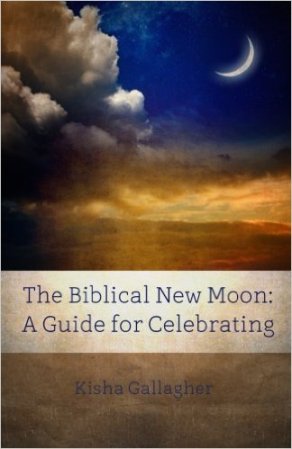
book-coverIt’s been a while in the making considering its small size, but my BEKY Book is finally available on Amazon in both print and Kindle formats. BEKY Book stands for Books Encouraging the Kingdom of Yeshua. This series is the brainchild of Dr. Hollisa Alewine. She envisioned a platform that would accomplish two things. First, the series fills a gap for new-to-Torah folks. Each book is nonthreatening and easy to read. They are small enough to consume in one sitting and the language is Christian friendly, while introducing the reader to a few new Hebrew words and concepts. They are very affordable and make perfect gifts for those that show interest in the Hebraic walk. Secondly, she is giving lesser known teachers of the Gospel a larger platform to spread their messages to the Body.

Currently, there are seven different authors working on various Torah related topics for beginners in the BEKY Book Series. You can learn more at the BEKY Book website. By liking the BEKY Book Facebook page, you will receive updates on new titles, receive links to interviews with the authors, and will even have multiple chances to win a free copy of one of the new books.

My book is the fifth in the series and is entitled, The Biblical New Moon: A Guide for Celebrating. It’s not about calendar calculations or crescent moon sightings. Instead, it offers the reader an introduction to the Scripture, history, and tradition of new moon celebrations. It also examines the purpose and function of the moon. The second half of the book is devoted to each Hebrew month in an effort to help the reader celebrate each new moon/month and dedicate it to the Creator. My prayer is that this little booklet will shed some much needed light on this often forgotten festival of YHWH. May it bring glory to our King!

I humbly ask that you share this with your friends and family. Any Amazon reviews for my book and others in the BEKY Book series are also greatly appreciated! 🙂

For the Kindle version, click here.

Categories: Creation Gospel, News Flash, Women | Tags: , , , , , , | 10 Comments

Hezekiah’s Passover

The Strength of YHWH

The name Hezekiah comes from the root chazak which means “YHWH strengthens” or “The strength of YHWH.” You are probably familiar with this term if you follow the weekly Torah Portions. At the end of each book of Torah, there is a traditional chant that is recited. It is: “Chazak, chazak v’nitchazek,” which means, “Be strong, be strong, and let us be strengthened.” In this post, we will consider how King Hezekiah demonstrates Adonai’s chazak or strength in the Passover.

© Gijsvdabeele | Dreamstime.com

King Hezekiah was one of the few righteous kings to reign in the southern kingdom of Judah. You can read about this fascinating man in 2 Kings 18-20, Isaiah 36-39, and 2 Chronicles 29-32. Isaiah, Hosea, and Micah all prophesied during his reign. Hezekiah tore down the high places, destroyed the bronze serpent, rebelled against the king of Assyria, was miraculously restored to health, cleansed the Temple, and restored the observance of Passover. I’d love to explore all these aspects, but for the sake of space and time, we will focus on his restoration of Pesach (Passover).

Now it came about in the third year of Hoshea, the son of Elah king of Israel, that Hezekiah the son of Ahaz king of Judah became king. He was twenty-five years old when he became king, and he reigned twenty-nine years in Jerusalem; and his mother’s name was Abi the daughter of Zechariah. (2 Kings 18:1-2)

King Hezekiah was the son of wicked King Ahaz. (2 Kings 16) But, he is also known by his mother, Abi or Abijah, the daughter of Zechariah. The Word of Adonai usually traces people through their paternal lineage; maternal lines are rarely given. Interestingly, several of the kings of Judah and Israel are identified by both their father and mother. King Hezekiah is one of them as you can see in the verses above.

Avi (Abi) means “my father” or “fatherly.” She is called Aviyah (Abijah) in 2 Chronicles 29:1, which has the similar meaning of “YHWH is my Father.” I find this fascinating since Hezekiah’s earthly father was wicked. It’s as if the text (in Hebrew) is hinting at his strong motherly role model, Avi. She was “like a father” to Hezekiah because she pointed him to our true heavenly Father, YHWH.

While Hezekiah was far from perfect (as we all are), he was a restorer and nurturer to all Israel. His invitation to Passover revealed a tender heart not just toward Adonai, but also toward his brothers and sisters. Instead of giving the wayward people a strict or harsh “fatherly” correction or direction, he opened his arms wide in gentleness and mercy, which are “motherly” traits. We can learn a thing or two from King Hezekiah about proper (Spirit-led) Passover observance.

If you’ve ever wondered or even speculated about the proper protocol in keeping Adonai’s Passover, King Hezekiah’s example must not be overlooked. I have witnessed too many people deny others the opportunity to participate in the Seder simply because the person in question fails to meet some perceived standard or expectation. While said “standard” might be based on Scripture, it is more often than not based on private interpretation, tradition, or the preference of man — rather than on Spirit and Truth.

The following is a rather long quote, but its context sets the stage for Hezekiah’s Passover. I encourage you to read the entire passage.

Now Hezekiah sent to all Israel and Judah and wrote letters also to Ephraim and Manasseh, that they should come to the house of the LORD at Jerusalem to celebrate the Passover to the LORD God of Israel. For the king and his princes and all the assembly in Jerusalem had decided to celebrate the Passover in the second month, since they could not celebrate it at that time, because the priests had not consecrated themselves in sufficient numbers, nor had the people been gathered to Jerusalem. Thus the thing was right in the sight of the king and all the assembly.  

So they established a decree to circulate a proclamation throughout all Israel from Beersheba even to Dan, that they should come to celebrate the Passover to the LORD God of Israel at Jerusalem. For they had not celebrated it in great numbers as it was prescribed. The couriers went throughout all Israel and Judah with the letters from the hand of the king and his princes, even according to the command of the king, saying, “O sons of Israel, return to the LORD God of Abraham, Isaac and Israel, that He may return to those of you who escaped and are left from the hand of the kings of Assyria.

“Do not be like your fathers and your brothers, who were unfaithful to the LORD God of their fathers, so that He made them a horror, as you see. “Now do not stiffen your neck like your fathers, but yield to the LORD and enter His sanctuary, which He has consecrated forever, and serve the LORD your God, that His burning anger may turn away from you. “For if you return to the LORD, your brothers and your sons will find compassion before those who led them captive and will return to this land. For the LORD your God is gracious and compassionate, and will not turn His face away from you if you return to Him.” (2 Chron. 30:1-9 NASB)

King Hezekiah tried to unify the people by inviting ALL of the tribes to Passover in the second month in Jerusalem. In his letter to the people, Hezekiah urges Judah and Israel to return to Adonai and His true sanctuary. He reminds them of the great compassion and grace of YHWH. Oh, that we would have a heart like this for our brothers and sisters! Hezekiah knew that the people were nowhere near where they should be in regards to obedience; and yet, he still invited his brethren to this monumental meal of the covenant. You see, it was more important, a weightier matter if you will, that the people simply COME at his invitation. (Does this remind you of Yeshua?)

Sadly, many mocked the king and his messengers.

So the couriers passed from city to city through the country of Ephraim and Manasseh, and as far as Zebulun, but they laughed them to scorn and mocked them. Nevertheless some men of Asher, Manasseh and Zebulun humbled themselves and came to Jerusalem. The hand of God was also on Judah to give them one heart to do what the king and the princes commanded by the word of the LORD. (2 Chron. 30:10-12)

Many from the northern kingdom of Israel could not imagine joining themselves with the southern kingdom of Judah. After all, they had their own places of worship, priesthood, and calendar. Why would they heed to the call of brother Judah? Thankfully, the hearts of some were pricked and they “humbled themselves” and went to Jerusalem. Can this be compared to anything we see happening in our “movement” today? I believe so.

While it’s true that many (in the church) mock those of us that desire to return to the Old Ways, there are also those in OUR midst that scorn the House of Judah and their traditions. Many follow the way of the northern kingdom of Israel and set up on their own houses of worship in (a figurative) Dan and Bethel. They also create their own calendars and make priests from those that they find fit in their own eyes. (1 Kings 12:25-33) The pride that comes from this type of self-righteousness creates huge rifts between them and the Church and also between them and the Jewish people. Thus, you will hear them mocking either or both of these groups to scorn. Instead of mirroring the prideful hearts of Ephraim, Manasseh, and Zebulun in the above verses, let’s HUMBLE ourselves and come to the Passover with Judah.

Now many people were gathered at Jerusalem to celebrate the Feast of Unleavened Bread in the second month, a very large assembly. They arose and removed the altars which were in Jerusalem; they also removed all the incense altars and cast them into the brook Kidron. Then they slaughtered the Passover lambs on the fourteenth of the second month. And the priests and Levites were ashamed of themselves, and consecrated themselves and brought burnt offerings to the house of the LORD. They stood at their stations after their custom, according to the law of Moses the man of God; the priests sprinkled the blood which they received from the hand of the Levites. (2 Chron. 30:13-16)

Those that heeded the call of Hezekiah removed all of the false altars (high places –especially in their minds/hearts) from Jerusalem before sacrificing the Pesach lambs. They did this in the second month because the people had not gathered in the first month, nor had a sufficient number of priests consecrated themselves to serve in the House of Adonai. The following verses explain the Torah regulations about observing Passover in the second month (Passover is so imperative that there is a “second chance” to celebrate it):

Speak to the sons of Israel, saying, “If any one of you or of your generations becomes unclean because of a dead person, or is on a distant journey, he may, however, observe the Passover to the LORD. In the second month on the fourteenth day at twilight, they shall observe it; they shall eat it with unleavened bread and bitter herbs. They shall leave none of it until morning, nor break a bone of it; according to all the statute of the Passover they shall observe it. But the man who is clean and is not on a journey, and yet neglects to observe the Passover, that person shall then be cut off from his people, for he did not present the offering of the LORD at its appointed time. That man will bear his sin.” (Num. 9:10-13)

Reasons for celebrating Pesach in the second month:

  1. Person is unclean because of a corpse.
  2. Person is on a long or distant journey.

Adding to Torah? Compromisers?

In Hezekiah’s day, neither of the above reasons for celebrating Passover in the second month are explicitly stated. Instead, it says that even in the second month, many in the assembly were ritually unclean and had not consecrated themselves. And yet, they ate the Passover otherwise than prescribed.

For there were many in the assembly who had not consecrated themselves; therefore, the Levites were over the slaughter of the Passover lambs for everyone who was unclean, in order to consecrate them to the LORD. For a multitude of the people, even many from Ephraim and Manasseh, Issachar and Zebulun, had not purified themselves, yet they ate the Passover otherwise than prescribed.

For Hezekiah prayed for them, saying, “May the good LORD pardon everyone who prepares his heart to seek God, the LORD God of his fathers, though not according to the purification rules of the sanctuary.” (2 Chron. 30:17-19)

What was the remedy for those that “ate the Passover otherwise than (Torah) prescribed”?

Our tenderhearted King PRAYED for the people. One will have difficulty finding a literal or (by the letter) precedent for this in the Torah. But, a careful eye or one that seeks the heart or spirit of the commandment in light of the great compassion of the LORD, will rejoice in His mercies.

Hezekiah was far more concerned that the people return to YHWH and keep the covenantal Passover meal than he was for strict observance. I don’t believe that Hezekiah was snubbing his nose at YHWH’s Word, nor do I believe that he was a compromiser. I also don’t believe that his actions were “adding to” the Torah. Yet sadly, many in our midst today would have accused Hezekiah of all of these things and more. What we should concern ourselves with is YHWH’s response to Hezekiah’s prayer:

So the LORD heard Hezekiah and healed the people. (2 Chron. 30:20)

Instead of acting by the strictest judgment of His Torah, YHWH extended mercy to the people. Hallelujah! In other words, according to the Torah, the people deserved to be “cut off” from Israel and to bear the full weight of their sins. The wages of sin is death; and thus, the holy Torah would judge them as guilty. But YHWH heard Hezekiah’s heartfelt prayer and HEALED the people. He CHOSE to exercise mercy and compassion toward the people even while they reeked of death. This is the SPIRIT of the Torah.

In light of the Torah commandments of Passover and this very real example of a Passover restoration, how do you suppose that Adonai expects us to deal with those that desire to eat of the Passover “other than what is prescribed?” Do we judge them based on the strictest sense of the Law? Or, do we extend mercy and compassion unto them and pray for healing and complete restoration? While it is clear what the Torah says, we also have a very real example of what Adonai did for Hezekiah. I believe cases like this are written so that our sword of Spirit and Truth remains balanced. It is vital that we understand righteous judgment AND divine mercy. For our Elohim is both!

Those that have been forgiven much, love much. (Luke 7:36-50) Can you even imagine the immense joy that was experienced at Hezekiah’s Passover? Beloved, we CAN have this same zeal!

The sons of Israel present in Jerusalem celebrated the Feast of Unleavened Bread for seven days with great joy, and the Levites and the priests praised the LORD day after day with loud instruments to the LORD. Then Hezekiah spoke encouragingly to all the Levites who showed good insight in the things of the LORD. So they ate for the appointed seven days, sacrificing peace offerings and giving thanks to the LORD God of their fathers. (2 Chron. 30:21-22)

Adding Even More to the Torah?

The people were so overwhelmed with the joy that comes from forgiveness and unity that they decided to celebrate the feast of Passover (Unleavened Bread) for an additional seven days.

Then the whole assembly decided to celebrate the feast another seven days, so they celebrated the seven days with joy. For Hezekiah king of Judah had contributed to the assembly 1,000 bulls and 7,000 sheep, and the princes had contributed to the assembly 1,000 bulls and 10,000 sheep; and a large number of priests consecrated themselves. All the assembly of Judah rejoiced, with the priests and the Levites and all the assembly that came from Israel, both the sojourners who came from the land of Israel and those living in Judah. (2 Chron. 30:23-25)

It is as though this story is designed to challenge one’s perceptions of strict justice and mercy. Which is more favorable: rigid adherence to the letter of the Torah or seeking the Spirit behind the letter? In reality, is there a difference or are they ONE thing?

The decision of the assembly to add an additional seven days to the feast of Unleavened Bread wasn’t frowned upon by the Almighty, the king, the priests, or the people. Instead, the passage emphasizes intimate communion between Adonai and His people.

So there was great joy in Jerusalem, because there was nothing like this in Jerusalem since the days of Solomon the son of David, king of Israel. Then the Levitical priests arose and blessed the people; and their voice was heard and their prayer came to His holy dwelling place, to heaven. (2 Chron. 30:26-27)

Perfect Before Pesach?

It is obvious that the priests and the people did not come to the Passover table perfect. They had sin that had to be dealt with and many other areas where improvement was needed. But, if we think back to the original Exodus, this shouldn’t be surprising. The children of Israel were in the same boat before Adonai brought them out of Egypt. This is true for you and I as well.  If we lose sight of what the Pesach meal really represents and begin demanding that others be “perfect” in order to celebrate this memorial, we become the ones that are “adding to the Torah.”

While the false altars were removed from Jerusalem before Hezekiah’s Passover, the rest of the cities in the kingdom (where most of them lived) were still inundated with idols. And even still, the LORD received the people. It wasn’t until AFTER they had celebrated Unleavened Bread for two weeks that the rest of the kingdom was cleaned up. (2 Chron. 31:1)

Passover is the gateway, the bloody door of the covenant. It is the beginning of “our beginning” with Adonai through Yeshua. We are immature at our first Passover. We still carry baggage and junk and possibly a lot of leavened crumbs that we must LEARN to identify and remove. This is a process and a practice. We don’t say the old adage “practice makes perfect” for no reason. We say it because it is TRUE.

Can you imagine demanding that a very beginner piano student play a perfect concerto? That would be ridiculous. Well, so is demanding others to meet an expectation that they have no training for. There must be a starting point. On our Abba’s calendar, that place is Passover. He wants all the whosoever’s at His Table — even the immature little children (spiritual babies included).

This requires a great deal of humility and even more mercy and compassion from those that are older (spiritually). The stricter things can be learned as one matures in the Torah. For now, go and make disciples of all nations. Be patient with those that want to sit at the feet of the Master. Give them a safe place to study, grow, and wrestle with the Word. If they fall down as they are learning to walk (Torah), don’t write them off, pick them up and offer a helping hand!

This is real godly “chazak” or strength. This is where Hezekiah excelled in the Spirit of Adonai. He strengthened his brothers and their unity. He reverted Jerusalem back into a safe womb where life could grow and mature.

The entire purpose of the Passover is to TEACH the CHILDREN, so go and do so!

Chag Sameach Passover!

Find more on Pesach here.


Categories: Moedim | Tags: , , , , , , , | 17 Comments

The Four Cups of Passover

             © Photovs | Dreamstime.com

A few of years ago, I revised our family Haggadah with a special emphasis on revealing the Messiah. While I prefer a more traditional Haggadah and feel it amply reveals Messiah, it’s not about me. (Imagine that, lol!) My mother suggested this format for those new to keeping the Moedim (feasts). And, I completely agree with her. If we truly want to “love our neighbor,” we must consider where others are at on the journey. How we handle these “little children” is a direct reflection of our own hearts. After all, the Haggadah (the telling) opens with the words: “Let all who are hungry come and eat.”

Yet, I’ve met some Torah keepers that refuse to allow certain people to “eat of their Passover.”[1] While I understand Torah commandments regarding this vital festival, I wonder if we are using just weights and equal measures when we make a judgment that refuses their participation? Will we deny the little children to entrance to the Kingdom? Do we have the “authority” to deny them?

Mat. 18:1-6 At that time the disciples came to Jesus and said, “Who then is greatest in the kingdom of heaven?” (2) And He called a child to Himself and set him before them, (3) and said, “Truly I say to you, unless you are converted and become like children, you will not enter the kingdom of heaven. (4) “Whoever then humbles himself as this child, he is the greatest in the kingdom of heaven. (5) “And whoever receives one such child in My name receives Me; (6) but whoever causes one of these little ones who believe in Me to stumble, it would be better for him to have a heavy millstone hung around his neck, and to be drowned in the depth of the sea.

Many “seasoned” in keeping the festivals have forgotten their first love and that that love “covers a multitude of sins.”[2] Misplaced zeal can easily morph into self righteousness and hard heartedness, which IS a great stumbling block to those coming to the knowledge of the truth. This haughty spirit believes it and its form of godliness and obedience has made it greater in the Kingdom. It boasts of its right calendar or right tradition. No one is immune to this spirit or how it affects and infects the Body. The irony is that it is the opposite of the Spirit of Passover. It is antithetical to the four cups and the matzah, because Passover is all about innocent faith, trust, and humility.

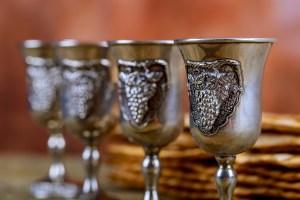
This year, Adonai has been speaking this message to me through the four traditional cups of the Passover Seder.[3] I had not previously meditated on the fact that the Passover meal centers around FOUR.[4] The number four in Hebrew is the letter “dalet.” It is a picture of a door (delet). Passover is YHWH’s appointed time or moed that commemorates the Israelites applying the blood of a lamb to the lintels and doorposts of their homes. Without this act of obedience through faith, the death angel would have smitten Israel’s firstborn sons along with the Egyptians during the tenth plague. Moreover, Yeshua declared Himself the door. Consider the context of the following verses. Those familiar with Pesach will receive His intent immediately.

I am the door; if anyone enters through Me, he will be saved, and will go in and out and find pasture. The thief comes only to steal and kill and destroy; I came that they may have life, and have it abundantly.” (John 10:9-10)

All those in covenant with YHWH must, by faith, apply the Lamb’s blood to their doorposts (hearts). There has always only been one Way to the Father. Passover is the entry or doorway to covenant with Adonai.[5] Outside the covenant (door), the enemy seeks one’s destruction. This is illustrated through Cain[6] (sin crouches at the door) and with the death angel in Egypt passing over the homes with the blood of the Lamb.

Pesach is that first inkling of raw wisdom (light) that draws us unto the Father. It is realizing the depth of our depravity and our desperate need for a Savior. It is not as mature as Shavuot (Pentecost) or Sukkot (Tabernacles). But, it is still the entry point. It is accepting the Messiah and the Covenant. Understanding and deep Knowledge comes later and with maturity, as one journeys through the wilderness with YHWH. Again, will we deny the less mature babes from entering in?

When they had arrived and gathered the assembly together, they began to report all things that God had done with them and how He had opened a door of faith to the Gentiles. (Acts 14:27)

For I do not wish to see you now just in passing; for I hope to remain with you for some time, if the Lord permits. But I will remain in Ephesus until Pentecost; for a wide door for effective service has opened to me, and there are many adversaries. (1 Cor. 16:7-9)

There are real adversaries outside the “door.” The last thing one would desire to do is become an enemy to those trying to enter this DOOR! I’m afraid that some of us have (unintentionally) become an adversary to the immature children trying to enter. We must repent of this great tragedy! A wide door of effective service is open to us and the myriads that are loved by the Father. We have no right to be an enemy by standing in front of the door and blocking those that desire to “come.” Perhaps we do not yet properly understand righteous judgment. If we have received mercy, we should also extend mercy.  (For more, consider reading: Hezekiah’s Passover.)


Four Cups

Ps. 116:12-13 (NASB) What shall I render to the LORD For all His benefits toward me?  13  I shall lift up the cup of salvation And call upon the name of the LORD.

Dr. Alewine’s Creation Gospel[7] model teaches that the number four has a lot in common with the number seven or fullness. It alludes to authority, government, and servanthood, first mentioned on day FOUR of creation. All these belong to Messiah Yeshua. He truly is the Door to Life. Passover may be the entry to the Covenant, but it points ahead to the complete redemption to come. The four cups of Passover mirror this truth in a profound way. They are based on the following passage from Exodus:

Ex. 6:6-7 “Say, therefore, to the sons of Israel, ‘I am the LORD, and I will bring you out from under the burdens of the Egyptians, and I will deliver you from their bondage. I will also redeem you with an outstretched arm and with great judgments. (7) ‘Then I will take you for My people, and I will be your God; and you shall know that I am the LORD your God, who brought you out from under the burdens of the Egyptians.

The four cups are called by different names depending on the Haggadah one is using. Don’t let this confuse you. It is very difficult to encapsulate the full meaning of each cup with one English word. Therefore, it is fitting that we embrace the various names used for each one and seek to understand how they harmonize or complete the “picture” of the promises given to us in Exodus.

  1. The Cup of Sanctification – “I will bring you out”
  2. The Cup of Deliverance/Plagues/Judgment -“I will deliver you”
  3. The Cup of Redemption/Blessing – “I will redeem you”
  4. The Cup of Praise/Hope/Kingdom/Salvation/Restoration – “I will take you for My people”

The cups are drunk in the following order throughout the seder:

  1. Drink 1st Cup with Kiddush (at the start of the seder).
  2. Drink 2nd Cup after the Maggid (telling of Pesach story).
  3. Drink 3rd Cup after Birkat Hamazon (blessing for the meal and Afikomen. Also, pour Elijah’s cup in anticipation for final redemption and coming Messiah.)
  4. Drink 4th Cup after Hallel (Psalms of praise).

We will look at each cup and explore its implications for the people of Adonai.

The Cup of Sanctification

“I will bring you out.” Ex. 6:6

Before saving faith, there is utter darkness. We are like dead men walking blindly toward our ultimate demise. In other words, one is in complete bondage to sin and death at this stage. There is no escape. Enter Adonai. Despite one’s circumstances and multiple transgressions, the Creator of Heaven and Earth loves His Creation. He loves YOU. Therefore, with a Mighty Hand, He separates us from the bondage of sin and death. One simply must believe His promise and apply the blood to the doorpost of their heart by faith. God alone separates His people from the clutches of “Pharaoh,” so they can freely serve Him.[8]

When enslaved to sin and death, one cannot serve or worship YHWH in the manner He prescribes. Logically, the first step is for Him to call or bring one out of this depravity. This is the symbolism of the first cup, sanctification. You have been set apart, called out, and marked as one of His children. Passover is the moed (feast) that demonstrates this reality in process, deed, and ritual.

How this is accomplished by the Father is also abundantly clear; it is by the blood of the Passover Lamb. This has been the process from the very beginning. (Rev. 13:8) Salvation has always been accomplished by believing (faith in action) in the promises of God.

By looking back on the original Passover, the first cup is akin to salvation from the harsh bondage of Egypt or Pharaoh (darkness/sin/death). Like the ancient Israelites, one might still be in a figurative Egypt or the world at this point, but the plagues of judgment placed on the evil taskmasters have lessened one’s hardships considerably. Light has pierced the darkness with a grand promise. We believe, watch, and wait for His deliverance.

The Cup of Deliverance

“I will deliver you.” Ex. 6:6

The second cup is based on YHWH’s promise to deliver you. How is this different from the first cup, “bringing you out?” Being called out and separated is only the beginning of the redemption process. Once separated unto the Father, one is still in great need of rescue. The trappings of Egypt are many. These bondages have many forms with very tight shackles. Like Pharaoh, they do not want to let us go! While some of these trappings are external, many are internal. One’s time in Egypt (the world) has created a lot of soul ties. One’s nephesh or flesh likes many of the delicacies in which it has grown accustomed. Hopefully, Abba will not have to send plagues or judgments in order for one to turn fully toward Him.

The good news is that no matter the issue, deliverance IS available. It’s never too late and one is never too old to experience this sweet release. When Israel was “delivered” from the burdens of the Egyptians, it was so that they could worship YHWH as He intended. Therefore, anything that hinders one from being able to worship Him in fullness can be likened to one of the “plagues,” whether they are external or internal. Anything that is placed before YHWH is an idol of the heart that needs to be removed. The point is to keep seeking for the Promise. Our Deliverer is Mighty!

Traditionally, this cup is drunk at the conclusion of the maggid or retelling of the Passover story. Wine is a symbol of joy and celebration. Because our deliverance and liberation was costly to the lives the Egyptians, we decrease our joy in recognition of their suffering. Thus, one reduces their joy or the contents of the second cup by dipping a finger into their cup to remove a drop for each of the ten plagues or judgments.

This cup can be compared to being delivered and rescued from the clutches of Pharaoh. Though the enemy chased them with great haste and with many chariots, the mighty pillar of cloud by day and the pillar of fire by night would not allow the Egyptians to touch even one hair on the heads of the Israelites.

The Cup of Redemption

“I will redeem you.” Ex. 6:6

The third cup is often called redemption or blessing. YHWH buys back or redeems His people from the realm of sin and death. At the first Passover, the blood of the Lamb saved the lives of the Israelites. But with Pharaoh and Egypt closing in, many were sure that YHWH brought them into the desert to die. If we are honest, sometimes we feel the same way. Are you still there, Abba? Things are looking pretty bad down here! I am about to be swallowed up by the enemy! At this point, Israel would be standing in front of the Reed (Red) Sea. People that have known nothing but bondage often believe the worst in hard circumstances. It takes intent and time to change one’s attitude from victim to victor. Consider Israel’s words as they stood near the Reed Sea:

Ex. 14:11=12 Then they said to Moses, “Is it because there were no graves in Egypt that you have taken us away to die in the wilderness? Why have you dealt with us in this way, bringing us out of Egypt? “Is this not the word that we spoke to you in Egypt, saying, ‘Leave us alone that we may serve the Egyptians’? For it would have been better for us to serve the Egyptians than to die in the wilderness.”

To the Israelite’s natural eyes, their circumstances appeared to be hopeless. Even though they experienced the miracle of the plagues and the pillar of cloud and fire, they still weren’t convinced that God would actually save them. In fact, it probably felt as if He led them into a horrible trap (G-d Forbid)! But that was far from the true intent of our loving Elohim. Instead, He wanted the people (and us) to be completely confident in His saving power and in His great affection toward them. The very next verse says:

red sea

© Kevin Carden | Dreamstime.com

Ex. 14:13-14 But Moses said to the people, “Do not fear! Stand by and see the salvation of the LORD which He will accomplish for you today; for the Egyptians whom you have seen today, you will never see them again forever. “The LORD will fight for you while you keep silent.

Moses tells the people to stand still and see the salvation; that is, the YESHUA, of YHWH. Abba’s salvation, His Yeshua, will accomplish our complete redemption from Egypt (sin and death). YHWH will fight for us, while we shut our doubting mouths. This cup is drunk after the meal in the traditional seder. It is this cup that Yeshua linked to the New Covenant and His shed blood:

And in the same way He took the cup after they had eaten, saying, “This cup which is poured out for you is the new covenant in My blood. (Luke 22:20 NASB)

The cup of blessing that we bless, is it not a partaking of the blood of Messiah? The bread which we break, is it not a partaking of the body of Messiah? (1 Cor. 10:16 HRB)

This cup also mirrors the timing of the parting sea, and crossing over on dry ground. Doubting the intentions of Elohim is no longer an option; redemption or being bought back by the Almighty is a clear and present reality. The waters figuratively wash the deathly dust of Egypt from weary souls and baptize one in Moses and Yeshua. Thus, hearts are prepared for the upcoming fourth cup of hallel or praise.

Rev. 15:2-4 And I saw something like a sea of glass mixed with fire, and those who had been victorious over the beast and his image and the number of his name, standing on the sea of glass, holding harps of God. And they sang the song of Moses, the bond-servant of God, and the song of the Lamb, saying, “Great and marvelous are Your works, O Lord God, the Almighty; Righteous and true are Your ways, King of the nations! “Who will not fear, O Lord, and glorify Your name? For You alone are holy; For ALL THE NATIONS WILL COME AND WORSHIP BEFORE YOU, FOR YOUR RIGHTEOUS ACTS HAVE BEEN REVEALED.”

Messiah said that He wouldn’t partake of this cup again until, “I drink it new with you in My Father’s kingdom.” (Mt. 26:29)

Mar. 14:23-26 And when He had taken a cup and given thanks, He gave it to them, and they all drank from it. (24) And He said to them, “This is My blood of the covenant, which is poured out for many. (25) “Truly I say to you, I will never again drink of the fruit of the vine until that day when I drink it new in the kingdom of God.” (26) After singing a hymn, they went out to the Mount of Olives.

Interestingly, and a wonder to meditate upon, the Mishnah has an interesting note about not drinking additional wine between the third and four cups.

They mix a third cup; he blesses his meal. [The] fourth [cup] is concluded with Hallel, which he says with the [concluding] blessing. Between these cups, if he wishes to drink, he may drink. Between the third and the fourth [cups], he may not drink. – Pesachim 10:7

Passover is about REDEMPTION. Yeshua is our Sanctifier, our Deliverer, and our Redeemer. Of all the Biblical stories about exile and redemption, Passover is the one that YHWH asks one to personally identify with. Passover is Personal; it is the cup of our salvations, as Psalm 116:13 declares. The many sets of “fours” associated with Passover, like the cups, are wonderful tools to help one accurately recount this most important truth.

The Cup of Praise

“I will take you for My people.” Ex. 6:7

The fourth and final cup is a picture of restoration and completeness. This is one reason it is sometimes called the cup of hope, acceptance, or salvation. I prefer its more common name, hallel or praise. Though the Passover is the beginning of YHWH’s moedim (feasts) cycle, in it, He declares the end.[9] God’s desire has always been to restore us (deal with our sin) and then dwell with us for eternity.

Thus, with the fourth cup, we await the coming Kingdom of Heaven where Yeshua will be our King. Wine can be a symbol of judgment or blessing.[10] A cup or kos can denote the same imagery. Passover weaves both of these themes together seamlessly. Sin and wickedness must be judged. There is a false bread and a false wine that competes with Adonai’s covenant Passover meal. Like the righteous woman and the harlot, both call and ask one to rest in their presence.

Pr. 4:17 For they eat the bread of wickedness And drink the wine of violence.

Obviously, the harlot feeds one false bread and wine; which is, in reality a covenant of wickedness. The problem is that the nephesh or flesh craves the (spiritual) false bread and wine just as one often prefers processed junk rather than the healthy plants and animals that Abba meant for consumption.

Nephesh (flesh) fears judgment because it knows that what it likes isn’t healthy or holy. Like the Israelites, we often fear that YHWH won’t keep His promise to bring us out, deliver us, redeem us, and make us His people. Many feel as though they will get lost in the shuffle of the four cups. But YHWH is faithful, even when we are not![11]

1 Th. 5:23-24 Now may the God of peace Himself sanctify you entirely; and may your spirit and soul and body be preserved complete, without blame at the coming of our Lord Jesus Christ. Faithful is He who calls you, and He also will bring it to pass.

Though Passover is certainly the season to thoroughly examine oneself and root out all chametz (sin), it is also a time to remember these four grand promises of Adonai. His Word will not return to Him void. I think many fear that instead of blessing, Adonai will only rain down judgment upon their head. For we know that we are not worthy. And, we know that there is a lot that we still don’t know.

Is. 55:11-12 So shall My word be that goes forth from My mouth; It shall not return to Me void, But it shall accomplish what I please, And it shall prosper in the thing for which I sent it. “For you shall go out with joy, And be led out with peace; The mountains and the hills Shall break forth into singing before you, And all the trees of the field shall clap their hands.

Psalm 136 is generally recited or sang before partaking of the fourth cup. This Psalm recounts the fact that Adonai’s mercy/lovingkindness/grace endures forever. This is good news! The Hebrew word repeated over and over in this Psalm is chesed (חֶסֶד). Abba’s chesed endures forever. Chesed cannot be encapsulated by just one English word. In fact, it would take a book or many volumes to fully realize the depth of what chesed actually means.

To put it as succinctly as possible, chesed is a covenantal term that encompasses both love and loyalty. God has chesed toward us and hopefully, we have chesed toward Him and our neighbor. My acceptance of His chesed requires that I give it back to Him and to others. The Theological Workbook of the Old Testament says this under chesed:

“God’s loving-kindness is that sure love which will not let Israel go. Not all Israel’s persistent waywardness could ever destroy it. Though Israel be faithless, yet God remains faithful still. This steady, persistent refusal of God to wash his hands of wayward Israel is the essential meaning of the Hebrew word which is translated loving-kindness.”

The wonderment of God’s immense chesed toward us may cause one to question His righteous judgment or justice. How do mercy and judgment coexist? Which one is stronger? Obviously, we do not deserve the chesed or loving-kindness of God. The Bible is full of examples of a wayward stiff-necked Israel. We are no different. Like them, we most often refuse to walk in His Ways. In other words, we all deserve judgment, destruction, and death.

Knowing this, most have an unhealthy fear of the coming worldwide judgment, life circumstances in general, and of what God is going to do with our “loved” ones. But, this type of thinking is fear based. It is not rooted in chesed or true love. All of one’s worries, anxieties, and fears come forth from a skewed view of the Creator. He is no tyrant, dictator, or sadist. He is LOVE.

1Jn. 4:16-19 We have come to know and have believed the love which God has for us. God is love, and the one who abides in love abides in God, and God abides in him. By this, love is perfected with us, so that we may have confidence in the Day of Judgment; because as He is, so also are we in this world. (18) There is no fear in love; but perfect love casts out fear, because fear involves punishment, and the one who fears is not perfected in love. We love, because He first loved us.

Notice what John says above. FEAR has to do with punishment. When we only fear punishment, our love is NOT perfected. In other words, if we fail to grasp how deep and wide the love that God has for us really is, we will fear. We will worry. We will believe that YHWH is ready to strike us down at our very next breath. But LOVE, that is His chesed, is stronger than the judgment we all deserve. John reminds us of this, so that we can have confidence in the Day of Judgment.

The LORD is certainly a holy and righteous Elohim, but His love for His people is greater still. Rashi said that God gave “precedence to the rule of mercy” and joined it “with the rule of justice.” God’s judgment and His mercy is an enigma to our peon minds and hearts. Which shall we receive? Passover is the perfect time to ponder this question. The cups reveal the answer. Within each, wickedness is judged and yet mercy prevails. The paradox may twist one’s brain, but hopefully it causes your heart to rejoice.

Adonai will NEVER give up on you, me, our loved ones, or any one else. His chesed is incomprehensible. His love NEVER fails, it NEVER gives up, and NEVER runs out on you or me. This is chesed. This is Love. This is Covenant. This is Passover. May your Cup of Praise runneth over this Pesach and always.

For more on Pesach, click here.


[1] They are referring to those still in the “church” or those that may not be as “Torah observant” as themselves. There are direct and clear commandments that admonish us to not eat (the Passover) with those that are practicing blatant and willful sin. However, we must remember that there is always a sacrifice for sin committed in ignorance. If YHWH provides a sacrifice for them, we should also. Those that DO know better and yet persist in their sin, Paul has the correct course of action to take: But now I have written unto you not to keep company, if any man that is called a brother be a fornicator, or covetous, or an idolater, or a railer, or a drunkard, or an extortioner; with such an one no not to eat. (1Cor. 5:11 KJV)

[2] 1 Peter 4:8

[3] Please refer to Dr. Hollisa Alewine’s Creation Gospel workbooks. These thematic studies will forever change your worldview of the Scriptures. Your understanding of the “bigger picture” will come into sharp focus by learning about the Seven Spirits of God and how they operate in both the physical and spiritual realms. Thecreationgospel.com

[4] For example, there are FOUR sons (or children) that ask FOUR questions, three matzot (unleavened bread) become FOUR with the breaking of the middle cracker, YHWH uses FOUR expressions to describe our redemption from Egypt, which is mirrored in the FOUR cups of wine.

[5] Whether they realize it or not, when a Christian accepts Yeshua as their Lord and Savior and repents of their sins, they are in effect applying the Passover Lamb’s blood to their “doorposts.”

[6] If you do well, will not your countenance be lifted up? And if you do not do well, sin is crouching at the door; and its desire is for you, but you must master it.” (Gen. 4:7)

[7] Thecreationgospel.com

[8] The famous “Let my people go” phrase is always followed by YHWH’s intent: “so that they might serve me.” Ex. 7:16; 8:1,20; 9:1, 13; etc.

[9] Is. 46:9-10 “Remember the former things long past, For I am God, and there is no other; I am God, and there is no one like Me, Declaring the end from the beginning, And from ancient times things which have not been done, Saying, ‘My purpose will be established, And I will accomplish all My good pleasure‘.

[10] Ps. 75:7-8 But God is the Judge; He puts down one and exalts another. For a cup is in the hand of the LORD, and the wine foams; It is well mixed, and He pours out of this; Surely all the wicked of the earth must drain and drink down its dregs.

Pr. 3:9-10 Honor the LORD from your wealth And from the first of all your produce; So your barns will be filled with plenty And your vats will overflow with new wine.

[11] 2 Tim. 2:11-13 It is a trustworthy statement: For if we died with Him, we will also live with Him; If we endure, we will also reign with Him; If we deny Him, He also will deny us; If we are faithless, He remains faithful, for He cannot deny Himself.

Categories: Moedim | Tags: , , , , , , , , , , , , , , , , , | 19 Comments

Parched Ground

How do we display the image of Elohim (G-d) in the earth?

© Marina Bombina | Dreamstime.com

Recently, I participated in an online correspondence class with a rabbi. In it, he made mention of the davar (word) and its relationship to the midbar (wilderness/desert). I know many of you are already familiar with this connection, but for the sake of those who are not, I will briefly explore this notion. In Hebrew, the root of midbar (desert) is davar (word). In other words, the wilderness comes directly from the Word. Being in the desert is akin to receiving the Word. Or to be more precise, the wilderness is where Adonai’s Word is tested in us. In the Torah, the Book of Numbers chronicles the Children of Israel’s wanderings in the desert. Thus, quite fittingly, this book is called BaMidbar or “in the wilderness” in Hebrew.

When God miraculously removed ancient Israel from Egypt or when He rescued us from the figurative house of slavery (sin and death), where did He take them or us? Was it straight to the Promised Land? Or was it into the desert or wilderness? The fact that we all must face a literal or figurative desert upon being saved sounds counterintuitive at first. What do we need to learn in wilderness? I think Bill Cloud said it best (I’m paraphrasing Bill here): “God can remove us from Egypt, but we find that Egypt is still in us.” In other words, salvation, deliverance, and sanctification are ongoing processes. The desert becomes a type of threshing floor for our souls. All that offends is refined, purified, and threshed in the scorching sands of the desert. The Word that began a good work in us continues its commission to test and humble us. The difficulty and the pain of the wilderness “does good” for us in the end. For Abba, this is a labor of love.

“He led you through the great and terrible wilderness, with its fiery serpents and scorpions and thirsty ground where there was no water; He brought water for you out of the rock of flint. “In the wilderness He fed you manna which your fathers did not know, that He might humble you and that He might test you, to do good for you in the end. (Dt. 8:15-16)

But the desert has one more vital message to teach us. It is in our wilderness where G-d speaks. In the ups and downs of the desert, we learn to discern the difference between the Shepherd’s voice and the enemy’s crafty imitation. When we are stripped of all the comforts of Egypt, we finally reach the end of self. It is there, in the midst of what appears to us as chaos and disorder, that the G-d of order speaks kindly to us and lifts our weary heads. With no more worldly distractions, the Word reveals what is in our hearts. Each revelation offers us an opportunity to repent and return to the Master’s loving embrace.

Ones That Speak

While all the above is fascinating, even if a little scary, that’s not what struck me in the Rabbi’s lesson. He mentioned that one way we are like G-d is in the fact that we have the faculty of speech. We are the only creatures in His vast creation that, like Him, have words. We are medeber (ones that speak). Think about this for moment. In the same way that davar and midbar are connected, so is medeber. This means that we are not ONLY “ones that speak”, but “ones like a desert.”

Have you ever thought of yourself as a desert? Maybe our souls have felt dry or parched during a great trial, in the midst of mourning, or while suffering for righteousness sake or on account of our own sins. But have you ever considered that our wilderness journey should be as close and familiar to us as speech?

We were not only meant to speak, but we were meant to drink like the parched earth of a desert. Consider the many passages that urge us to partake of the Living Waters.[1] Or think about how the Word of G-d is figuratively referred to as rain or water.[2] We should be like the thirsty ground, eagerly waiting for the gentle rain of Abba’s Word. Considering that Adam was formed from the dust of the ground, this makes perfect sense. Mankind is essentially dirt or dust. And the ground NEEDS the heavenly rains like we NEED the words of our heavenly Elohim.

Dirt and Seeds

             © Nitsuki | Dreamstime.com

We are, at our core, the substance (dirt) in which seeds can be planted in order for New Life to grow. The Word is equivalent to a Seed in Scripture.[3] Coincidence? I don’t think so. If words are seeds, we should be careful what we allow to take root in our soil or dirt. I believe these words or seeds can come from three places: G-d, the enemy, and ourselves.

Thus, the enemy’s word is a seed. The words we speak are seeds. The words others speak are seeds. But the only Seed that is always truth and always produces life is the Word of YHWH. The question is how do we know, and I mean without a doubt know that we know, whether the seed we are receiving is G-d’s Seed?

This is where the dry, dirty side of our essence comes in to play. In order to hear or receive the Word of Adonai, we must become like a desert. All distractions and things that vie for our attention must be removed in order for us to really hear or shema YHWH. In the wilderness, our nephesh (flesh) is denied worldly pleasures and conveniences. One reason that fasting is so effective is because it strips the nephesh of gratification. Any time our nephesh (with all its thoughts, desires, and appetites) is ruled over by our younger (new) spirit-man, our connection to YHWH is strengthened. And our flesh serves us rather than us serving it.

Whose Voice?

Many times, we listen to the voice of our own desires rather than the Word of the LORD. Like the Tree of Knowledge, it speaks both good and evil. We know this voice so well that we often mistake it for the Holy Spirit (especially when it’s speaking “good”). Let’s face it, when it seems as if we will get to avoid suffering in a dry desert, our voice (or even the voice of the enemy) sounds like good counsel to our itching ears. This is why various people can all claim to be hearing from the One Holy Spirit, yet will have conflicting ideas, agendas, and doctrine. We are ones that speak, but rarely are we willing to become a desert. We must learn to submit to the wilderness and allow the Word to test us.

Emptying ourselves of our own desires (even those we deem good and profitable or even godly) is the key to becoming the image of Elohim in the earth. You want to love YHWH with all your heart and love your neighbor like yourself? It will cost you flesh and bone. Are we willing to suffer for YHWH and our neighbor?[4] Or would we rather cause others to suffer so that we can have things our way? Do we open our mouths and speak life (healing/shalom) to others or do we use our speech to persuade others to do things the way we like it or see it? Which voice is the Holy Spirit and which is the voice of our own nephesh (soul)?

The acquisition of treasures (desires of our hearts/flesh) by a lying tongue is a fleeting vapor, the pursuit of death. (Pr. 21:6 added parenthesis mine)

If anyone thinks himself to be religious, and yet does not bridle his tongue but deceives his own heart, this man’s religion is worthless. (Jam. 1:26)

Watch Your Mouth

He who guards his mouth and his tongue, Guards his soul from troubles. (Pr. 21:23)

Our mouths cause us more trouble than any other member of our bodies.[5] Is this because we only desire to be ones that speak and not ones like a desert? After all, you can’t speak AND drink at the same time! Interestingly, if we fail to choose to become a humble desert before YHWH, He will take us there kicking and screaming. Our only choice in the matter is the method of how we arrive and how we act once we get there. YHWH’s Word is ALWAYS tested in the wilderness/desert.[6] Consider the many judgments that result with the people and the land becoming desolate. In these cases, Abba’s judgment has in effect “shut our mouths”.[7]

Is Adonai just an angry tyrant or does He know something that we desperately don’t want to accept? The Bible says that G-d is Love and that He chastises those whom He loves.[8] He takes us to the desert because He knows that the testing of the wilderness will reveal our hearts. We need to face the serpent on the pole, so that we may be healed and saved. The serpent is the voice of our own selfish desires. It is the crafty forked tongue that whispers both good and evil. When we heed its voice rather than Adonai’s, we are stung with its venom and take the fast track toward death.

This is why we must die daily like the lamb offerings in the Tabernacle and the Temple. Our beast must be brought to the altar. Like all creatures, the beast doesn’t submit easily. It is excellent at convincing us (with its mouth) that all is well. The smooth words of the serpent appeals to our feelings of entitlement, self-righteousness, and piety. The beast does not like to identify with suffering or humility. But like Cain, we are told to MASTER this impulse.

We do this by becoming what we were created to be. We are a desert; a vast wilderness laid bare for all of heaven to see and judge. In this position, we are no longer mouths that speak to justify or coerce; rather, we become a sponge that soaks up the words of life. Though the Living Word kills the flesh, it quickens the spirit.

This is the key to humility, hearing from Abba, and loving our neighbor sacrificially. It is also what molds and shapes our clay vessels into the image of our great and loving Elohim. If we really got this we would no longer scorn our fiery trials or fear the seemingly empty places of life. Instead, we would prostrate ourselves under the heavens and allow the Word to truly divide between our soul (nephesh) and spirit.

For the word of God is living and active 
and sharper than any two-edged sword, and 
piercing as far as the division of soul and spirit,
 of both joints and marrow, and able to judge 
the thoughts and intentions of the heart. 
And there is no creature hidden from His sight, 
but all things are open and laid bare 
to the eyes of Him with whom we have to do. 
(Heb. 4:12-13)

[1] Jer. 2:13; 17:13, John 4:10-11, Rev. 7:38

[2] This post speaks about the early and latter rains.

“For as the rain and the snow come down from heaven, And do not return there without watering the earth And making it bear and sprout, And furnishing seed to the sower and bread to the eater; So will My word be which goes forth from My mouth; It will not return to Me empty, Without accomplishing what I desire, And without succeeding in the matter for which I sent it. (Is. 55:10-11)

“So let us know, let us press on to know the LORD. His going forth is as certain as the dawn; And He will come to us like the rain, Like the spring rain watering the earth.” (Hos. 6:3)

So that He might sanctify her, having cleansed her by the washing of water with the word. (Eph. 5:26)

[3] Luke 8:11

[4] Suffering for Righteousness’ Sake

To sum up, all of you be harmonious, sympathetic, brotherly, kindhearted, and humble in spirit; not returning evil for evil or insult for insult, but giving a blessing instead; for you were called for the very purpose that you might inherit a blessing. For, “THE ONE WHO DESIRES LIFE, TO LOVE AND SEE GOOD DAYS, MUST KEEP HIS TONGUE FROM EVIL AND HIS LIPS FROM SPEAKING DECEIT. “HE MUST TURN AWAY FROM EVIL AND DO GOOD; HE MUST SEEK PEACE AND PURSUE IT. “FOR THE EYES OF THE LORD ARE TOWARD THE RIGHTEOUS, AND HIS EARS ATTEND TO THEIR PRAYER, BUT THE FACE OF THE LORD IS AGAINST THOSE WHO DO EVIL.” Who is there to harm you if you prove zealous for what is good? But even if you should suffer for the sake of righteousness, you are blessed. AND DO NOT FEAR THEIR INTIMIDATION, AND DO NOT BE TROUBLED, but sanctify Christ as Lord in your hearts, always being ready to make a defense to everyone who asks you to give an account for the hope that is in you, yet with gentleness and reverence; and keep a good conscience so that in the thing in which you are slandered, those who revile your good behavior in Christ will be put to shame. For it is better, if God should will it so, that you suffer for doing what is right rather than for doing what is wrong. (1 Peter 3:8-17)

[5] James 3

[6] Think about Moses and Yeshua. Were they each not tested in the wilderness? What about Paul? Can you recall a period where he was tested in the desert? Consider the Children of Israel, Job, David, Jeremiah, John the Baptist, and others. Can you connect these righteous men with both suffering and the desert/wilderness? Does the Bible give us examples of those who willingly flee to the desert and those who are taken there against their will? What is the difference between these two experiences? What is similar about these experiences? It seems as though we ALL must experience the wilderness. The question is: Will we go willingly or by force?

[7] Now we know that whatever the Law says, it speaks to those who are under the Law, so that every mouth may be closed and all the world may become accountable to God. (Rom. 3:19)

[8] FOR THOSE WHOM THE LORD LOVES HE DISCIPLINES, AND HE SCOURGES EVERY SON WHOM HE RECEIVES.” (Heb. 12:6)

Categories: Musings | Tags: , , , , , , , , , , , , , , | 8 Comments

Blog at WordPress.com.