The Mark of the Beast Part I

The Mark of the Beast Part I

There is a lot of chatter about receiving the mark of the beast during the current pandemic. Is it a vaccine, an under the skin microchip, or a tattoo? Speculations about this “mark” have been juicy fodder for apocalyptic literature, whether fiction or nonfiction, for decades, and even centuries. Fear about receiving this damnable mark bolsters countless conspiracies and an endless supply of consumers eager to swallow them. Fear is a very powerful motivator. But, one that serves the Most High is to fear Him alone. Not man. Not circumstances. And, certainly not the mark of the beast.

© Dmitrii Melnikov | Dreamstime.com

While one can find numerous books, articles, websites, and YouTube videos about the mark of the beast, little is available about the sign or mark of Adonai. There is such a disparity, that many Believers aren’t even aware that the LORD also gives a sign upon one’s hand and forehead. So, there are millions that focus solely on the counterfeit, having no experience with the real, authentic sign. No wonder there is such confusion! That is the intent of the beast system, spiritual Babylon.

Thus, if one wants to understand the mark of the beast, one must first understand the positive side of the contranym, which is the sign or mark of Adonai. This is a lengthy article, because it contains extensive Biblical quotes. And yet, this mini-series will only scratch the surface of this ancient dichotomy. The enemy is not creative, though he is crafty and cunning. He can only imitate and pervert God’s genuine Word and creation. With that in mind, let’s read about Adonai’s sign upon one’s hand and forehead.

The Passover is a Sign

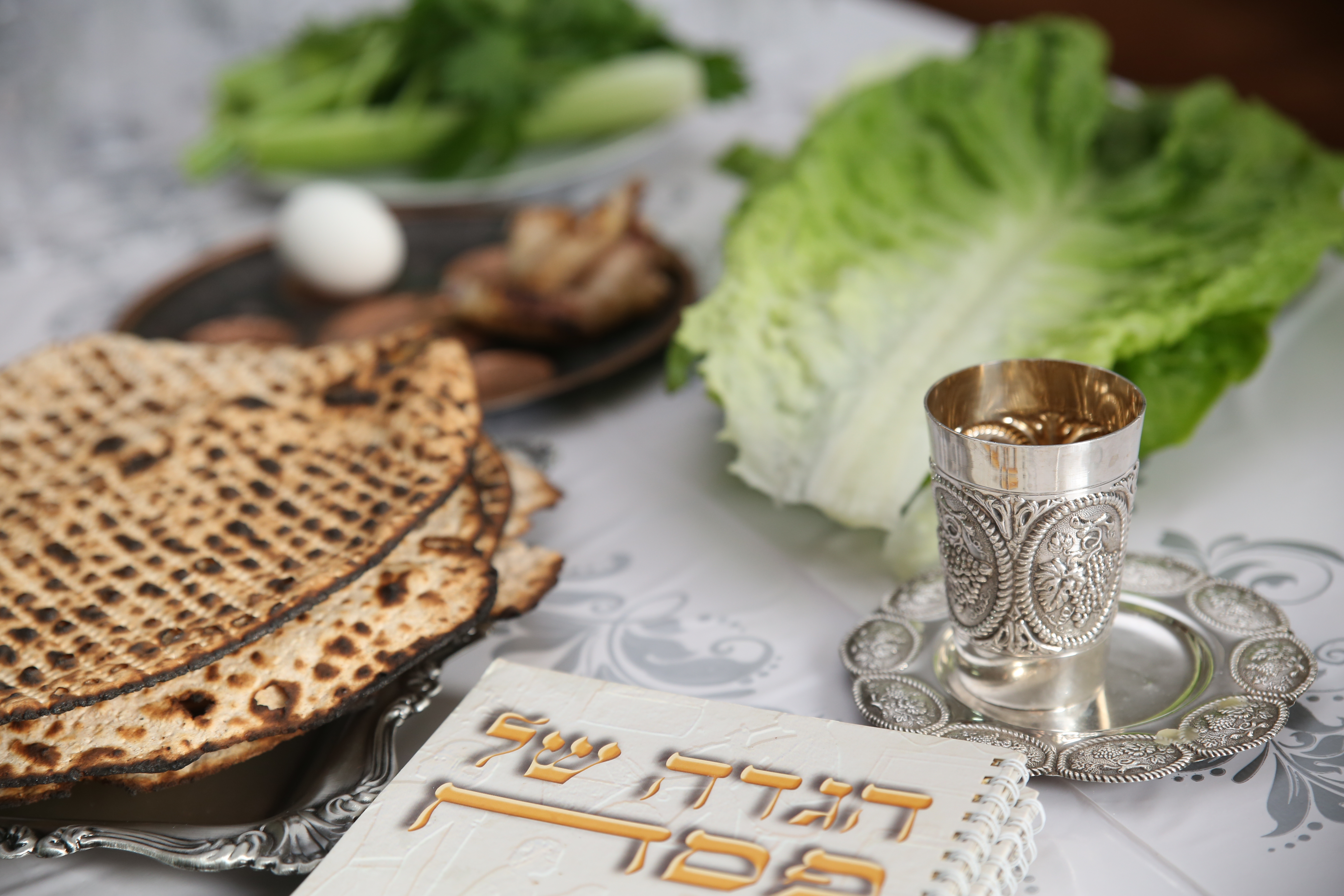
Ex. 13:4-10 (NASB) On this day in the month of Abib, you are about to go forth.  5  It shall be when the LORD brings you to the land of the Canaanite, the Hittite, the Amorite, the Hivite and the Jebusite, which He swore to your fathers to give you, a land flowing with milk and honey, that you shall observe this rite in this month.  6  For seven days you shall eat unleavened bread, and on the seventh day there shall be a feast to the LORD.  7  Unleavened bread shall be eaten throughout the seven days; and nothing leavened shall be seen among you, nor shall any leaven be seen among you in all your borders.  8  You shall tell your son on that day, saying, “It is because of what the LORD did for me when I came out of Egypt.”  9  And it shall serve as a sign to you on your hand, and as a reminder on your forehead, that the law of the LORD may be in your mouth; for with a powerful hand the LORD brought you out of Egypt.  10  Therefore, you shall keep this ordinance at its appointed time from year to year.

© David Cohen 156 | Shutterstock.com

The sign upon one’s hand and forehead is repeated further down in Exodus 13. The context is still Pesach and Unleavened Bread, but the emphasis in verse 16 is the redemption of the firstborn. In both cases, obedience to celebrating, commemorating, and telling the next generation about YHWH’s mighty works in delivering Israel from the slavery and bondage of Egypt, and His preservation of Israel’s firstborns serves as a SIGN upon one’s hand.

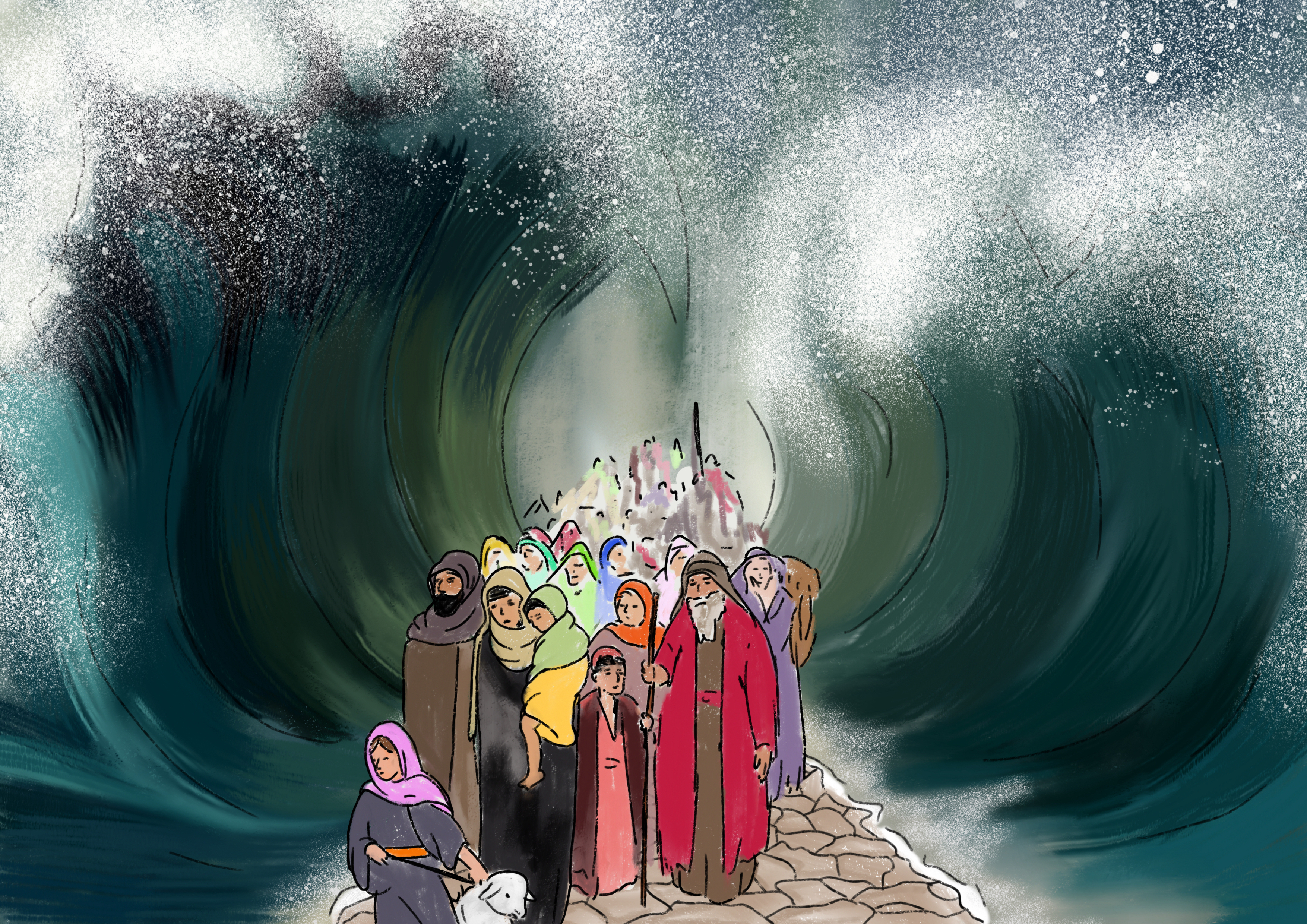
Ex. 13:11-16 (NKJV) And it shall be, when the LORD brings you into the land of the Canaanites, as He swore to you and your fathers, and gives it to you,  12  that you shall set apart to the LORD all that open the womb, that is, every firstborn that comes from an animal which you have; the males shall be the LORD’s.  13  But every firstborn of a donkey you shall redeem with a lamb; and if you will not redeem it, then you shall break its neck. And all the firstborn of man among your sons you shall redeem.  14  So it shall be, when your son asks you in time to come, saying, “What is this?” that you shall say to him, “By strength of hand the LORD brought us out of Egypt, out of the house of bondage.  15  And it came to pass, when Pharaoh was stubborn about letting us go, that the LORD killed all the firstborn in the land of Egypt, both the firstborn of man and the firstborn of beast. Therefore I sacrifice to the LORD all males that open the womb, but all the firstborn of my sons I redeem.”  16  It shall be as a sign on your hand and as frontlets between your eyes, for by strength of hand the LORD brought us out of Egypt.


Defining Hand & Sign

What does the hand signify in Hebraic thought? One acts, performs, or works with their hands. It is a symbol of “doing” something or having the strength to do or act; thus, it can be translated as power. (Dt 32:36, Pr. 18:21, Hos. 13:14, etc.) One’s hand denotes strength to obey, whether that obedience is toward righteousness or wickedness. Whatever one gives their hand to is what (or who) they serve. (Rom. 6:16)

The “sign” in these passages is אות in Hebrew. Brown-Driver-Briggs Hebrew and English Lexicon (BDB) defines it as:

H226 BDB Definition: 1) sign, signal. 1a) a distinguishing mark. 1b) banner. 1c) remembrance. 1d) miraculous sign. 1e) omen. 1f) warning. 2) token, ensign, standard, miracle, proof. Part of Speech: noun feminine. A Related Word by BDB/Strong’s Number: probably from H225 (in the sense of appearing)

The following verses are samples of how the word oht or sign is used in Scripture:

Gen. 1:14 (NASB) Then God said, “Let there be lights in the expanse of the heavens to separate the day from the night, and let them be for signs and for seasons and for days and years…

Gen. 4:15 (NASB) So the LORD said to him, “Therefore whoever kills Cain, vengeance will be taken on him sevenfold.” And the LORD appointed a sign for Cain, so that no one finding him would slay him.

Gen. 9:12-13 (NASB) God said, “This is the sign of the covenant which I am making between Me and you and every living creature that is with you, for all successive generations; 13 I set My bow in the cloud, and it shall be for a sign of a covenant between Me and the earth.”

Gen. 17:10-11 (NASB) “This is My covenant, which you shall keep, between Me and you and your descendants after you: every male among you shall be circumcised.  11  And you shall be circumcised in the flesh of your foreskin, and it shall be the sign of the covenant between Me and you.”

Ex. 12:11-13 (NASB) “Now you shall eat it in this manner: with your loins girded, your sandals on your feet, and your staff in your hand; and you shall eat it in haste—it is the LORD’S Passover. 12 For I will go through the land of Egypt on that night, and will strike down all the firstborn in the land of Egypt, both man and beast; and against all the gods of Egypt I will execute judgments—I am the LORD. 13 The blood shall be a sign for you on the houses where you live; and when I see the blood I will pass over you, and no plague will befall you to destroy you when I strike the land of Egypt.”

Dt. 28:45-48 (NASB) So all these curses shall come on you and pursue you and overtake you until you are destroyed, because you would not obey the LORD your God by keeping His commandments and His statutes which He commanded you. 46 They shall become a sign and a wonder on you and your descendants forever. 47 Because you did not serve the LORD your God with joy and a glad heart, for the abundance of all things; 48 therefore you shall serve your enemies whom the LORD will send against you, in hunger, in thirst, in nakedness, and in the lack of all things; and He will put an iron yoke on your neck until He has destroyed you.

Ps. 78:41-43 (NASB) Again and again they tempted God, and pained the Holy One of Israel. 42 They did not remember His power, the day when He redeemed them from the adversary, 43 when He performed His signs in Egypt And His marvels in the field of Zoan…

Is. 7:14 (NASB) Therefore the Lord Himself will give you a sign: Behold, a virgin will be with child and bear a son, and she will call His name Immanuel.

Aleph

An oht or sign is physical symbol of something figurative or spiritual. For example, oht is also the Hebrew word for a single “letter” or character, such as aleph. Thus, even the Hebrew letters can contain signs and meaning beyond the physical. In the case of covenants, the sign is a physical mark such as circumcision or a heavenly appearance of something like the rainbow. Keeping Passover is physical sign upon one’s hand, not as something seen with the eyes, but something physically performed with one’s hand. Observing this moed serves as the sign on the hand. It is both physical and spiritual. In other uses, a sign is the physical miracles and/or judgments of Adonai. Again, these signs are both physical and spiritual.

Defining Forehead or Frontlets Between Your Eyes

What do the phrases “reminder on your forehead” and “frontlets between your eyes” from Exodus 13 mean? In the first case, the Hebrew word for reminder is zikron. Brown-Driver-Briggs Hebrew and English Lexicon (BDB) defines it as:

H2146 זכרון zikrôn BDB Definition: 1) memorial, reminder, remembrance. Part of Speech: noun masculine. A Related Word by BDB/Strong’s Number: from H2142

Zikron comes from the Hebrew root zakar, which Strong’s Definitions defines as:

Strong’s: H2142 זָכַר zâkar A primitive root; properly to mark (so as to be recognized), that is, to remember; by implication to mention; also (as denominative from H2145) to be male: –  X burn [incense], X earnestly, be male, (make) mention (of), be mindful, recount, record (-er), remember, make to be remembered, bring (call, come, keep, put) to (in) remembrance, X still, think on, X well. Total KJV occurrences: 231

© Wavebreakmedia Ltd | Dreamstime.com

The word for forehead in the NASB translation is literally “between your eyes” in the Hebrew of Exodus 13:9. Observing and telling one’s children about the Passover and exodus from Egypt wrought by the Mighty Hand of Adonai is to be a memorial, a mark, and a reminder, between one’s eyes. This phrase and the following one in verse 16, imply undivided attention, thought, intent, and action. The Passover should be right at the forefront of one’s mind, right before one’s “eyes.”

The similar phrase in Exodus 13:16, “frontlets between your eyes,” reveals the same message, but gives one even more information. BDB defines frontlets as:

H2903 טופפה ṭôphâphâh BDB Definition: 1) bands, phylacteries, frontlets, marks. Part of Speech: noun feminine. A Related Word by BDB/Strong’s Number: from an unused root meaning to go around or bind.

This word gives physicality to intangible thought being a mark. The Passover memorial is like a band wrapped around one’s head. Just as Pesach cycles around and around on Adonai’s calendar, it is to circle and cycle through one’s thoughts and mind. One should NEVER forget that: “with a powerful hand the LORD brought you out of Egypt. Therefore, you shall keep this ordinance at its appointed time from year to year.” This reminder is a standing testimony of the God of Israel.


The Word and Commandments of God are a Sign on One’s Hand and Forehead

Dt. 6:4-9 (NASB) Hear, O Israel! The LORD is our God, the LORD is one! 5 You shall love the LORD your God with all your heart and with all your soul and with all your might. 6 These words, which I am commanding you today, shall be on your heart. 7 You shall teach them diligently to your sons and shall talk of them when you sit in your house and when you walk by the way and when you lie down and when you rise up. 8 You shall bind them as a sign on your hand and they shall be as frontals on your forehead. 9 You shall write them on the doorposts of your house and on your gates.

Dt. 11:18 (NASB) You shall therefore impress these words of mine on your heart and on your soul; and you shall bind them as a sign on your hand, and they shall be as frontals on your forehead.

Shutterstock ID 338021462 © Irmhild B

By reading the entirety of the chapter 6 above, along with chapters 7- 11 of Deuteronomy, one is given clear context of what it means to have the word of Adonai bound to one’s forehead and hand. The flank chapters (6 and 11) declare the exodus from Egypt as the archetype of deliverance and following after the One True God. In fact, if one substitutes the Land of Promise with the New Jerusalem, an even clearer picture emerges, for they are one.

If the Word is bound to one’s forehead, then one’s thoughts and mind are continually immersed and washed by the Words of Life. If the Word of God is bound to one’s hand, then their deeds (fruit) will follow the commandments and they will teach their children to follow suit, because it is understood that God’s Word and His commandments lead to life. They embody true love and wisdom, and engender reverence to the Holy One of Israel.

Shutterstock ID 335390129 © Natushm

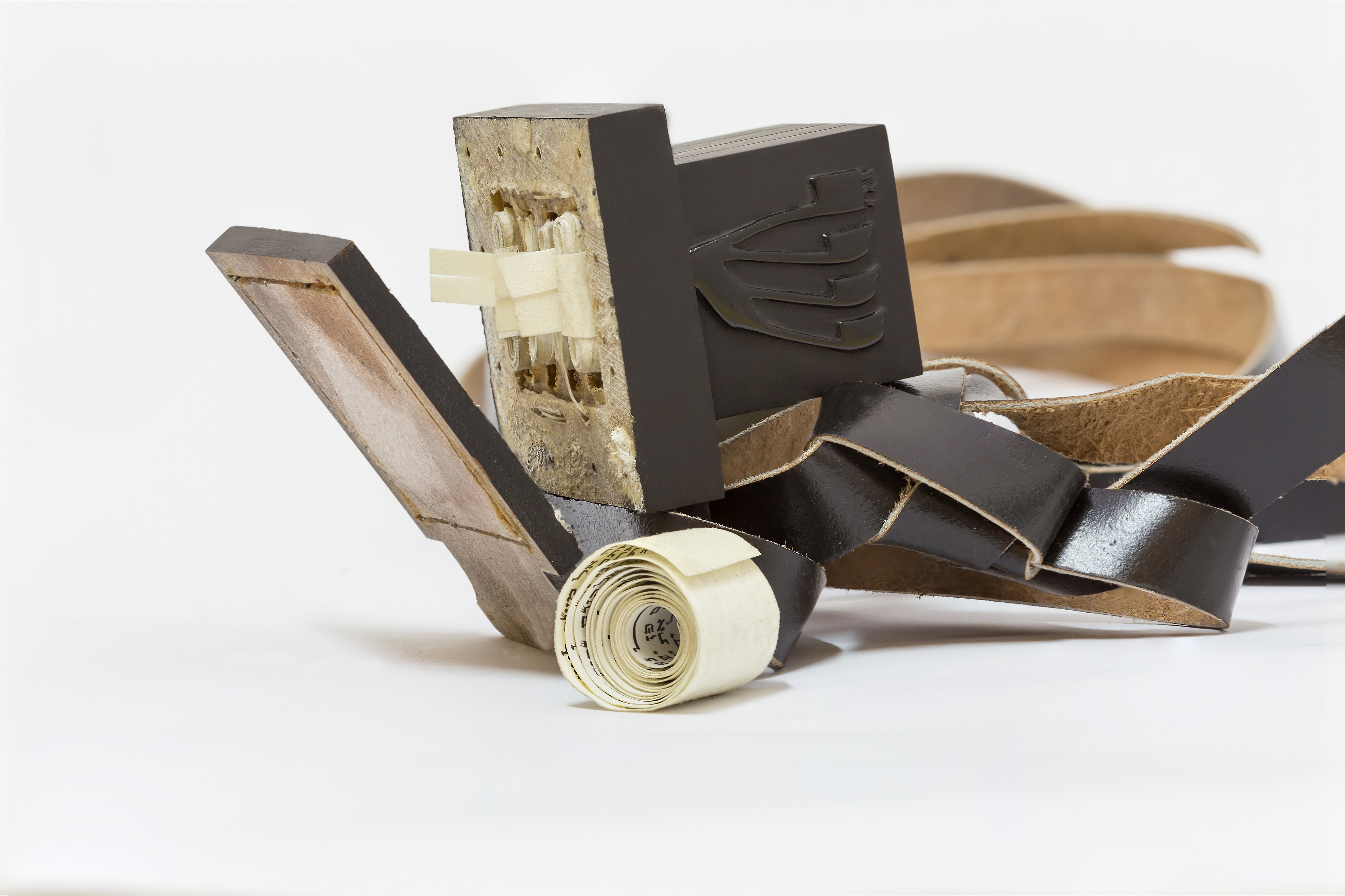
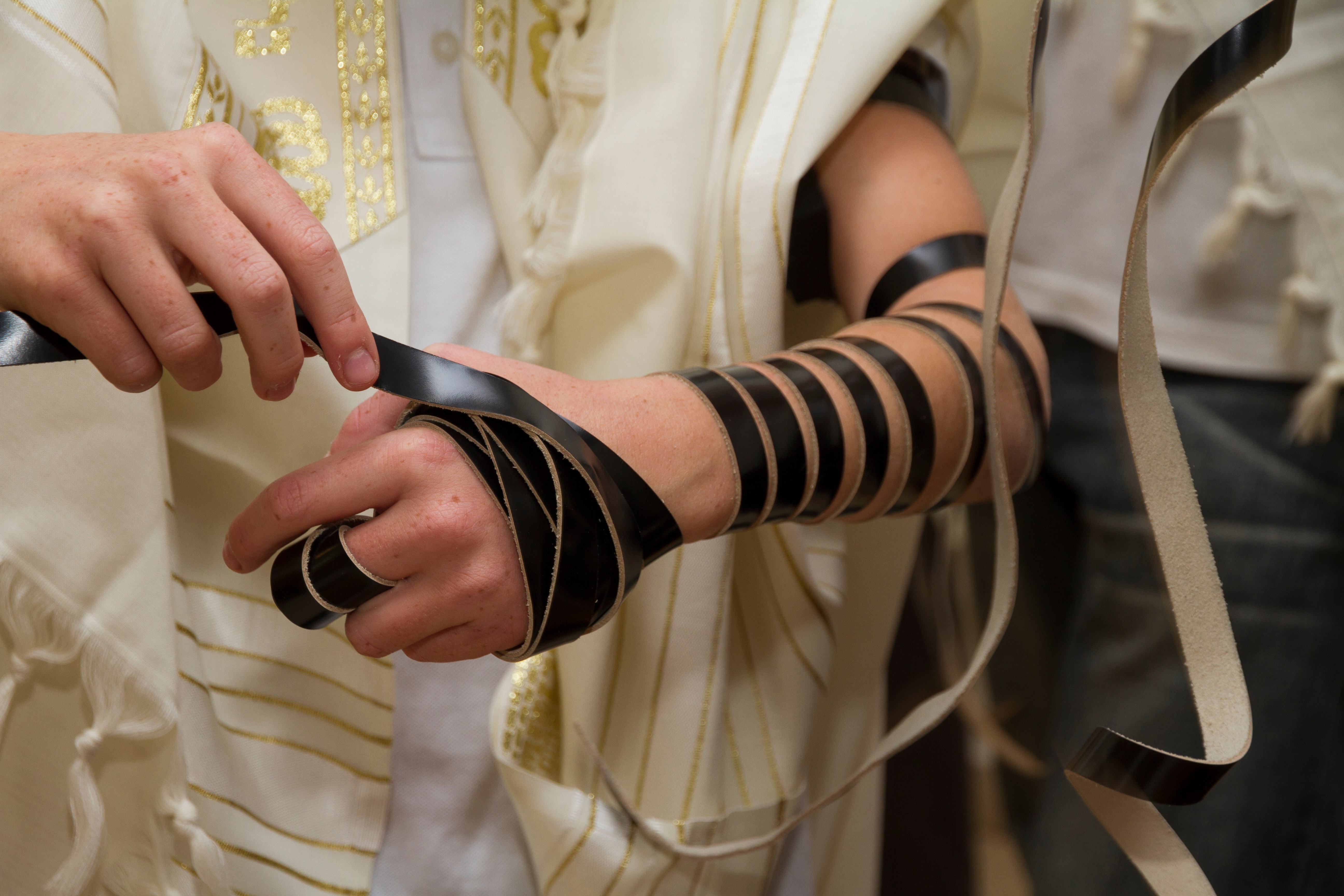
Both Deuteronomy passages above have the phrase “frontlets between your eyes.” Frontlets is the same Hebrew word explored from Exodus 13:16. It is tofafa. These verses are included in the Scripture passages that are placed inside the tefillin or phylactery boxes wore by religious Jews. Donning Tefillin (Totafot) or Phylacteries is the Jewish physical expression of the binding meaning of tafafa. It serves as a physical reminder of a spiritual reality.

While the topic of wearing tefillin during prayer is far too immense to cover in this article, I recommend this summary written by Alexander Cowen. A study of the history and intricacies of this tradition, the inner compartments, the included Scripture, and the design of the boxes with the three and four pronged shin can be found in The Creation Gospel Workbook 6: Hebrew Prayer and Worship Traditions by Dr. Hollisa Alewine. She states on page 237:

The Talmud indicates in Megillah 24b that by the time of its writing, it was primarily Jewish believers in Yeshua who wore the round phylacteries or decorated them with precious metals, and they wore them “without scruple.” (Bagatti, 1984, p.101)

Shutterstock ID 1005959122 © EAZN

Wearing phylacteries as a physical sign of the commandments and commemoration of the Passover was practiced among early believers in Yeshua. Though this custom is foreign to most modern Christians, it would have been common among John’s day when he wrote the Book of Revelation. A sign upon one’s hand and forehead held significant meaning that was not lost on his original audience. But before delving into his mystical book, we will examine a few more references of a godly sign in the Bible. The more context one has of the genuine sign or mark of Adonai, the better understanding one will have of what the counterfeit actually represents.


Weekly Sabbaths and Festival Sabbaths are a Sign

Ex. 31:12-17 (NASB) The LORD spoke to Moses, saying, 13 “But as for you, speak to the sons of Israel, saying, ‘You shall surely observe My sabbaths; for this is a sign between Me and you throughout your generations, that you may know that I am the LORD who sanctifies you.  14 Therefore you are to observe the sabbath, for it is holy to you. Everyone who profanes it shall surely be put to death; for whoever does any work on it, that person shall be cut off from among his people. 15 For six days work may be done, but on the seventh day there is a sabbath of complete rest, holy to the LORD; whoever does any work on the sabbath day shall surely be put to death.  16  So the sons of Israel shall observe the sabbath, to celebrate the sabbath throughout their generations as a perpetual covenant. 17 It is a sign between Me and the sons of Israel forever; for in six days the LORD made heaven and earth, but on the seventh day He ceased from labor, and was refreshed.”

Shutterstock ID 1090591241 © Seth Aronstam

In the above sense, Sabbath is a sign between Adonai and His children. It is like a wedding ring, signifying one that is in covenant with Him. Why the Sabbath? In Genesis chapter one, the Sabbath declares Him the Creator of all things. When one rests in Him by setting the seventh day apart as holy, this is a physical and temporal acknowledgment that He is the King and Creator of the Universe. In this way, it also sets one apart from those that refuse to recognize Him as their true rest and King. One must choose to don this “ring” or symbol of covenant.

Being in covenant with Adonai is often portrayed by the analogy of marriage in the Bible, and in Jewish and Christian tradition. For example, when donning the phylacteries, many Jews recite the following from Hosea.

Hos. 2:19-20 (NASB) “I will betroth you to Me forever; yes, I will betroth you to Me in righteousness and in justice, in lovingkindness and in compassion, 20 and I will betroth you to Me in faithfulness. Then you will know the LORD.”

In Jewish wedding ceremonies, the bride encircles the groom three times (in some traditions it is seven), to symbolize a wall of protection and the creating of a new creation: the two becoming one flesh. The three “betroths” mentioned above in Hosea are mirrored as she encompasses her man. (Jer. 31:22) Likewise, those that encircle the groom seven times, reflect the seven days of creation culminating with the Shabbat, the sign between Adonai and His people.

Ezekiel also recalls the exodus from Egypt and the Sabbaths as a sign between Adonai and His people. Within his prophetic book, he mentions a mark placed upon the foreheads of those who sigh and moan over the abominations committed in Jerusalem. They are preserved from Adonai’s judgment that will start with His sanctuary.

Ezek. 20:10-12 (NASB) “So I took them out of the land of Egypt and brought them into the wilderness. 11 I gave them My statutes and informed them of My ordinances, by which, if a man observes them, he will live. 12 Also I gave them My sabbaths to be a sign between Me and them, that they might know that I am the LORD who sanctifies them.”

Ezek. 9:4 (NASB) The LORD said to him, “Go through the midst of the city, even through the midst of Jerusalem, and put a mark on the foreheads of the men who sigh and groan over all the abominations which are being committed in its midst.”

© Samrat35 | Dreamstime.com

Like Shabbat, the Passover (and other moedim) declare the wondrous works of Adonai. They proclaim the good news: freedom for the captives. By rehearsing and commemorating His works again and again, one gets to know God as Creator, Redeemer, Deliverer, Savior, Sanctifier, Miracle Worker, Law-giver, Compassionate Father, Righteous Judge, Forgiver of Sins, Husband, and Immanuel. He is the first and the last, the Faithful and True Witness, the Beginning and the End, the Amen.

As one follows His divine cycles, the cycles encircle them with His water and fire, an immersion that cleans, purifies, guides, teaches, corrects, and leads. Daily, weekly, monthly, and yearly this process of growth and sanctification continues. In this way, the Word is engraved upon the heart, which directs one’s feet in the Way of Life. Yeshua modelled this perfectly in His earthly ministry. If we follow Him, we will follow the same path that He walked (walks).

This is a sign upon one’s hand and one’s forehead that we are His. It reminds of us of who we are and to Whom we belong, like a wedding ring. But, it also is a sign to those outside of the covenant as well. Though they can’t see a physical or literal mark upon one’s hand and forehead, they can see that you are different. They will see the “sign” and know that you belong to God of Israel. What does that wedding ring look like?

Your calendar is not like their calendar. The oht you observe are not the oht they observe. Your celebrations and commemorations are not like their holidays. Your weekly life revolves around the holy Shabbat, not the constant 24/7 striving that the world enslaves the masses to. Your daily focus isn’t on the acquisition of worldly goods and wealth, but on the Kingdom of God. You don’t fear what they fear. You fear Adonai. You enter into rest, the antithesis to the beast system, which will be explored later in this series.

Continued in Part II.


Categories: Biblical Symbols | Tags: , , , , , , , , , , , , , | 15 Comments

Pesach Sheni

Tonight is Pesach Sheni or the Passover in the second month. A small group of locals are gathering for a Seder and prayer time since we were isolated by “stay at home” orders this year during Passover. Rather than elucidate on the details of Pesach Sheni, I have some suggested homework or extra reading for you this Shabbat. Consider the following passages:

Ex 12:1-28

Dt 16:1-8

Num 9:1-14

Hezekiah’s Passover

Hezekiah cleansed the Temple and restored proper worship. He reinstated Passover; they celebrated in the second month. 

2 Ki 18-20

2 Ch 29-32

A few years ago, I wrote about Hezekiah’s Passover. It was celebrated in the SECOND month.

Josiah’s Passover

Josiah was the grandson of King Hezekiah.  Josiah’s heart was to seek and serve Adonai. He made many reforms that cleansed the land of idol worship. After this “cleansing,” he reinstated Passover. 

2 Ki 23:1-30 

2 Ch 34:1-33

2 Ch 35:1-19 

Above all, I ask you to pray for heart like Hezekiah and Josiah in regard to repentance, tearing down high places and idols, and for mercy for those that seek to return to Adonai. May we remember that Adonai is the, “LORD your God, who brought you out of the land of Egypt, out of the house of slavery.”

Categories: News Flash | Tags: , , , , | 3 Comments

Rosh Chodesh Aviv 2020 (5780)

Happy New Year! It’s the head of the months, the season of our freedom! But, there is a lot of shaking and uncertainty in the world at this time. Should we be worried? Afraid? Messiah says, “Look up! Your redemption draws nigh.” I hope this video encourages you and fills you with hope in this dark hour.

Video

My sister and her daughter bringing in the New Year of Months Aviv 2020. Photo by John McVoy
Categories: Moedim, new moon | Tags: , , , , , , | 9 Comments

Shabbat Shirah

Ps. 145:21 (NASB) My mouth will speak the praise of the LORD, And all flesh will bless His holy name forever and ever.

© Vlastas | Dreamstime.com

In this week’s Torah portion, Beshalach[1], we read the Song at the Sea; and in the haftarah, the Song of Deborah. Because of this, Jewish tradition dubs this Shabbat: Shabbat Shirah, or the “Sabbath of Song.” In each of these songs, YHWH is highly exalted as Israel’s deliverer. The enemy has been defeated, and we rejoice!

Beshalach always coincides with Tu B’Shevat (Shevat 15th), or the New Year for Trees. There is an interesting connection between the splitting of the Reed Sea and trees, found here. As the sap begins to rise in the trees so that they blossom and bud with new life, the birds that nest in their branches begin their migrations. Up to 500 million part the sky as they fill Israel’s air space twice a year, with the spring movement beginning in Shevat (February/March).[2] The birds flow and move to the beat of their own moedim, retelling their own type of exodus.

Jer. 8:7 (KJV) Yea, the stork in the heaven knoweth her appointed times (moedim); and the turtle and the crane and the swallow observe the time of their coming; but my people know not the judgment of the LORD.

Singing Isabelline Wheatear spring migration in Israel. © Agami Photo Agency | Dreamstime.com

Along their journey, they fill the air with something else: songs of praise! Their tiny lungs fill with the air of heaven to release it in a song like no other creatures on earth. Their chirps, squawks, tweets, and peeps harmonize to glorify the LORD. For this reason, a custom developed in Ashkenazi communities to feed these praise singers on Shabbat Shirah.[3]

Ezek. 17:22-24 (TLV) Thus says Adonai Elohim: “I, even I, will take from a sprig from the top of the lofty cedar and will plant it. I will crop off a tender twig from the topmost of its young shoots, and I will plant it on a tall and prominent mountain. 23 I will plant it on Israel’s high mountain. It will bring forth branches, bear fruit and be a magnificent cedar. Birds of every kind will nest under it—they will nest in the shade of its branches. 24 Then all the trees of the field will know that I, Adonai, have brought down the high tree, exalted the lowly tree, dried up the green tree, and made the dry tree flourish. I, Adonai, have spoken and I will do it.”[4]

The Song of the Sea is read every morning in the prayer service (Shacharit) in the Pesukei D’Zimrah, or Verses of Song. The Shacharit begins with blessings and psalms specifically chosen to invoke kavanah or focus and awe for the Holy One in the person praying. The Pesukei D’Zimrah is full of songs and praise, which prepares one to recite the Shema and Amidah. “Know before Whom you stand.”[5] Only after acknowledging and praising Adonai as the Holy One of Israel, can one properly seek Him for requests and desires.

There is another possible meaning of zimrah (song/melody) that emphasizes this point and connects it to the month of trees, in which Beshalach and the Song of the Sea is read. The Hebrew root zemer means “to prune.”[6] The psalms, including the Song of the Sea, are verses of pruning! These melodies act like a type of pruning shear that cuts off wild and unruly growths from one’s tree or mind/heart. Healthy branches receive more nourishment, and hindrances to heartfelt prayer are removed. In this way, the songs and melodies of Scripture (and even modern worship songs/music) lift, align, and unify one with Adonai and fellow worshipers.

This is even figured on the Torah Scroll. The Song at the Sea is written in a brickwork pattern of three interlocking columns, which makes it stand out on the leaf (page of Torah.)[7] This arrangement mimics the congealed columns of water and the Children of Israel walking between them on dry ground, united or interlocked. It is one of only two places in the Torah written in a different layout. The other is the Song of Moses. (Dt. 32) The Song of Deborah follows this same brickwork pattern. (See examples below.)

Song of the Sea © K. Gallagher

Song of Deborah © K. Gallagher

The imagery of the early spring season in Shevat, birds migrating through the Land, splitting the heavens with wings and song, the Torah cycle retelling the exodus and the parting of the sea in the month of trees, all proclaim a loud message. Can you discern the bird’s song? It’s the same message from the beginning. Moses and the children sang it at the sea. Deborah recalled it in Judges 5. David repeats it in Psalm 68. Every morning it is recounted in the synagogue. The last book, Revelation, has flying angels proclaiming it to the whole earth.

Ex. 15:1-2 (NASB) Then Moses and the sons of Israel sang this song to the LORD, and said, “I will sing to the LORD, for He is highly exalted; The horse and its rider He has hurled into the sea. 2 “The LORD is my strength and song, and He has become my salvation (Yeshua); This is my God, and I will praise Him; My father’s God, and I will extol Him.”

Jdg. 5:1-4, 31 (NASB) Then Deborah and Barak the son of Abinoam sang on that day, saying, 2 “That the leaders led in Israel, That the people volunteered, Bless the LORD! 3 “Hear, O kings; give ear, O rulers! I—to the LORD, I will sing, I will sing praise to the LORD, the God of Israel. 4 “LORD, when You went out from Seir, when You marched from the field of Edom, the earth quaked, the heavens also dripped, even the clouds dripped water.” … “Thus let all Your enemies perish, O LORD; but let those who love Him be like the rising of the sun in its might.”

Ps. 68:1-4 (NASB) For the choir director. A Psalm of David. A Song. Let God arise, let His enemies be scattered, and let those who hate Him flee before Him. 2 As smoke is driven away, so drive them away; As wax melts before the fire, so let the wicked perish before God. 3 But let the righteous be glad; let them exult before God; Yes, let them rejoice with gladness. 4 Sing to God, sing praises to His name; lift up a song for Him who rides through the deserts, whose name is the LORD, and exult before Him.

Rev. 14:6-8 (NASB) And I saw another angel flying in midheaven, having an eternal gospel to preach to those who live on the earth, and to every nation and tribe and tongue and people; 7 and he said with a loud voice, “Fear God, and give Him glory, because the hour of His judgment has come; worship Him who made the heaven and the earth and sea and springs of waters.” 8 And another angel, a second one, followed, saying, “Fallen, fallen is Babylon the great, she who has made all the nations drink of the wine of the passion of her immorality.”

© Gracel21 | Dreamstime.com

This Shabbat Shirah, I encourage you to read all the above chapters. (Ex. 15, Jdg. 5, Ps. 68, Rev. 14) See how many thematic connections you can make, and declare The Message to others. The result should cause great jubilation, praise, and awe of the Almighty. If it doesn’t, perhaps one needs to undergo the pruning shears first. To align one’s heart with Adonai, look to the birds. Fill your lungs – even if they feel low on breath– with air and sing, chirp, and tweet about His Greatness. This will lift you up on wings like an eagle, deliverance that only God can achieve.

It is interesting to note that in Hebrew it says that Moses and the sons of Israel will sing, az yashir, but the portion of the song attributed to Miriam and the women is in the present tense, plural imperative: shiru l’Adonai, sing to Adonai (now).

Ex. 15:20-21 (NASB) Miriam the prophetess, Aaron’s sister, took the timbrel in her hand, and all the women went out after her with timbrels and with dancing. 21 Miriam answered them, “Sing to the LORD, for He is highly exalted; the horse and his rider He has hurled into the sea.”

I’ll never forget an evening of prayer with some local women a few years ago. We had just finished a spiritually tough, but encouraging Bible study on a section in the Book of Revelation. I had shown everyone a slide of an artist’s depiction of the harlot riding the red, seven headed beast with four shady horse and riders in the backdrop of smoke and chaos. The picture spoke a thousand words of defeat and oppression. The point of the lesson was overcoming this false image in our own hearts. (See The Scarlet Harlot and the Crimson Thread by Dr. Hollisa Alewine.)

When we prayed, the Spirit was so strong, flowing freely in our midst. Suddenly, my mind was flooded with images of the Song at the Sea. The Words of triumph and joy were so vivid that I began to jump as I recounted Miriam’s words: “Sing to the LORD, for He is highly exalted; the horse and his rider He has hurled into the sea.”

© Duffloop | Dreamstime.com

Beloved, we sing because He has already overcame the world. Though Pharaoh or the Whore of Babylon is riding close at our heels, we already know the end of the story. The horsemen, their chariots, and beasts of burden are stopped with a single blast of the Almighty’s nostrils. Their wheels will get stuck in the very mud in which they wallow. So, don’t wait to sing. Like Miriam and the great host of women, Sing now!

Ps. 68:11-12 (NASB) The Lord gives the command; The women who proclaim the good tidings are a great host: 12 “Kings of armies flee, they flee, and she who remains at home will divide the spoil!”

Ps. 150:6 (NASB) Let everything that has breath praise the LORD. Praise the LORD!

                          Masada © Kisha Gallagher


[1]Exodus 13:17–17:16, Judges 4:4–5:31.

[2]https://www.birds.org.il/en/article-page.aspx?articleId=124 Retrieved 2/7/2020.

[3]There are several explanations given for this tradition. For example, see this article: https://schechter.edu/why-is-shabbat-shirah-for-the-birds-2/

[4]Mat. 3:31-32 (TLV) He presented to them another parable, saying, “The kingdom of heaven is like a mustard seed, which a man took and planted in his field. 32 It’s the smallest of all seeds; yet when it’s full grown, it’s greater than the other herbs. It becomes like a tree, so that the birds of the air come and nest in its branches.”

[5]This phrase is inscribed on the ark (that houses the Torah Scroll) in many synagogues. It is drawn from: Ex.3:4-6 When Adonai saw that he turned to look, He called to him out of the midst of the bush and said, “Moses, Moses!” So he answered, “Hineni.” 5 Then He said, “Come no closer. Take your sandals off your feet, for the place where you are standing is holy ground.” 6 Moreover He said, “I am the God of your father, the God of Abraham, Isaac and Jacob.” So Moses hid his face, because he was afraid to look at God. (TLV)

[6]For example, see The Seif Edition Artscroll Hebrew/English Siddur on Pesukei D’Zimrah.

[7]Torah scrolls are penned on kosher (clean) animal skins and spooled onto a wooden post called an Etz chayim or Tree of Life. The Torah Scroll has much in common with trees and people. Like a tree, it is alive, has leaves, and bears fruit. Like a person, it has a crown, wears a sash or belt and an outer garment, and has a yad or hand. For more, see The Unity of the Scroll.

Categories: Biblical Symbols, Torah Portions | Tags: , , , , , , | 1 Comment

Blog at WordPress.com.