Meditations for the Nine Days Part II

© Anyaivanova | Dreamstime.com

If you haven’t read Part I, please start there to learn the purpose of this series. Click here for Part III.

Day 3 – Av 3

Spiritual Gift: Faith  

Fruit: Peace

 In Hebrew, faith is emunah (ee-moo-nah). It comes from the root aman, which means to support, confirm, establish, be faithful, to trust. It’s first occurrence is with Abraham:

Gen. 15:5-6 (NASB) And He took him outside and said, “Now look toward the heavens, and count the stars, if you are able to count them.” And He said to him, “So shall your descendants be.” 6 Then he believed (aman) in the LORD; and He reckoned it to him as righteousness.

Aman is often translated as “believe,” because it implies something that can be trusted with confidence. It is firm. Amen (amein) comes from this same root. When one says, “Amen!” they are affirming the words being delivered and counting them as trustworthy. Truth, emetshares this same root. Truth is firm, established, and trustworthy. One can put their faith and trust in the truth of God’s Word.

Emunah differs from western thought. Having “faith” is not a mental or verbal agreement to a set of statements. This is why you won’t find a statement of faith at Grace in Torah. While emunah does have an element of mental belief, it is something that is proved through action. Abraham trusted and believed in God, and demonstrated his faith through his deeds. James said that “faith without works is dead.” As a Hebrew, he understood this concept very well, and reminded the scattered tribes[1]that even demons have head knowledge or mere belief.

Jas 2:18-21 (NASB) But someone may well say, “You have faith and I have works; show me your faith without the works, and I will show you my faith by my works.” 19 You believe that God is one. You do well; the demons also believe, and shudder. 20 But are you willing to recognize, you foolish fellow, that faith without works is useless? 21 Was not Abraham our father justified by works when he offered up Isaac his son on the altar?

Emunah has substance and evidence. The writer of Hebrews says that this is the kind of faith that our elders had (saints in the Tanakh –O.T.), that garnered them a good report. Since Tisha B’Av recalls the evil report of the ten spies in Numbers 13-14, perhaps it would behoove us to also recall the actions of those in the “hall of faith” in Hebrews 11.

Heb. 11:1-2 (KJV) Now faith is the substance of things hoped for, the evidence of things not seen. 2 For by it the elders obtained a good report.

Much could be (and has been) written on emunah. For the purposes of this meditation, consider how faith and peace are related. If one’s faith is true and firm, it naturally produces peace. That doesn’t mean that one will not suffer or struggle; it means that one’s faith gives confidence and shalom in the midst of trials.

Rom. 5:1-5 (TLV) Therefore, having been made righteous by trusting (faith), we have shalom with God through our Lord Yeshua the Messiah. 2 Through Him we also have gained access by faith into this grace in which we stand and boast in the hope of God’s glory. 3 And not only that, but we also boast in suffering—knowing that suffering produces perseverance; 4 and perseverance, character; and character, hope. 5 And hope does not disappoint, because God’s love has been poured into our hearts through the Ruach ha-Kodesh who was given to us.

© Allamachutt | Dreamstime.com

In Hebrew, peace or shalom is not the absence of war, pain, or conflict. Shalom is more akin to wholeness, in the various respects of a person – mentally, emotionally, physically, and spiritually. Being made whole implies that at some point, “parts” were separated. In order for shalom to occur, these pieces must be brought back together, even if they are in opposition to one another. In this sense, shalom is about integrating these things, becoming “one.”

In this realm, one can have shalom in one area and not another. One’s faith can supersede the missing part, because one knows that in the end, all will be made whole again. (1 Cor. 15) It is possible to have shalom while walking through great difficulties or even danger. Having “peace like river” is quite contrary to the idea of still waters. Thus, faith and trust in Adonai can sustain one’s mental and emotional state as they float through the rapids of life, because they TRUST Him and have hope for the future.

Heb. 11:39-40 (NASB) And all these, having gained approval through their faith, did not receive what was promised, 40 because God had provided something better for us, so that apart from us they would not be made perfect.

Those with faith in Hebrews 11 did not receive the promise, because Adonai will not make them “perfect” without us. All the “parts” will be gathered together as a whole (echad), which is shalom. This was the prayer of Yeshua. (John 17:19-26) It will occur under the perfect government of the Prince of Peace! How fitting is that?

Like our forbearers in the faith, we also remain faithful as we look forward to That Day. This brings peace to broken hearts and lives. We have a great Hope! This life is not the end. There is so much more.

Heb. 12:1-2 (TLV) Therefore, since we have such a great cloud of witnesses surrounding us, let us also get rid of every weight and entangling sin. Let us run with endurance the race set before us, 2 focusing on Yeshua, the initiator and perfecter of faith. For the joy set before Him, He endured the cross, disregarding its shame; and He has taken His seat at the right hand of the throne of God.

In the meantime, may we be known as peacemakers.

Jas 3:18 (NASB) And the seed whose fruit is righteousness is sown in peace by those who make peace.

Mt. 5:9 (NASB) “Blessed are the peacemakers, for they shall be called sons of God.”

Questions

  1. If you want to ask someone how they are doing in Hebrew, you say, “Ma shlomchah?” (mas. – speaking to a male) The feminine form is “Ma shlomech?” (speaking to a female) But, what you are really asking is, “What’s your peace?” Today, I’m asking you this question. Ma shlomeach?


  1. Do you have “parts” that need to be integrated into the whole? Or, do you need help with unbelief?


  1. How does one’s faith affect their sense of shalom?


  1. Read through Hebrews 11. When you tell someone about “your faith,” does it look like these examples? If not, what is the difference?


Day 4 – Av 4

Spiritual Gift: Gifts of Healing   

Fruit: Patience

 In 2020/5780, this day is the weekly Shabbat. Because of that, let’s begin this meditation with Shir Hama’alot, which is Psalm 126. In meditation 2, we looked at Al Naharot Bavel or Psalm 137, sang on weekdays and non-holidays during Birkat Hamazon (Blessing after meals). On the Sabbath and holy days, Psalm 126 is sung/recited instead.

Ps. 126:1-6 (NASB) A Song of Ascents. When the LORD brought back the captive ones of Zion, we were like those who dream. 2 Then our mouth was filled with laughter and our tongue with joyful shouting; then they said among the nations, “The LORD has done great things for them.” 3 The LORD has done great things for us; we are glad. 4 Restore our captivity, O LORD, as the streams in the South. 5 Those who sow in tears shall reap with joyful shouting. 6 He who goes to and fro weeping, carrying his bag of seed, shall indeed come again with a shout of joy, bringing his sheaves with him.

Consider the contrast between these two Psalms. They depict exile for rebellion, and then the promise of return and restoration. A wound, and yet there will be healing. That pretty much sums up the entire Bible from man’s perspective. But, like our spiritual gift for this day’s meditation, healing doesn’t always occur instantaneously. Often, it requires patience or long suffering.

In the preface of the list of spiritual gifts, Paul uses a few key phrases to help the reader understand the diversity not only in gifts, but in the people that have them.

1 Cor. 12:4-7 (NASB) Now there are varieties of gifts, but the same Spirit. 5 And there are varieties of ministries, and the same Lord. 6 There are varieties of effects, but the same God who works all things in all persons. 7 But to each one is given the manifestation of the Spirit for the common good.

He reiterates this again after listing the gifts of the Spirit:

1 Cor. 12:11 (NASB) But one and the same Spirit works all these things, distributing to each one individually just as He wills.

The Greek word translated as “varieties” by the NASB, is diairesis. It means distinctions, variety, and diversity. There are a variety of gifts, ministries, and effects, but they all come from the same Spirit of God. The word “effects” is the Greek word energēma, from which our English word energy comes. Different people are given different energies to perform the gift that Adonai has given each. They won’t always “look” the same, even if two people operate in the same gift. And yet, they all are empowered by the Holy Spirit, His energy.

© Pop Nukoonrat | Dreamstime.com

The gift of healing is one of those energies or ministries. Healing has many forms, all with the goal of being made well or whole. One’s mind, emotions, physical body, life circumstances, or even their finances can be broken or wounded. Sometimes, a healer can touch or pray and the area affected is renewed. Sometimes a healer will direct the afflicted to do something such as repent, wash in the Jordan, or give charity. There isn’t a one-size-fits-all box.

Since the fruit for this day is patience, how can suffering through brokenness of soul or body be beneficial? Sometimes healing is a process that one must walk through, because instant healing wouldn’t really heal the root issue, or it wouldn’t bring Adonai glory, or it wouldn’t fulfill His purpose in some way. In cases like this, where we can’t possibly understand with finite minds, we might cry out like David and the saints that are told to patiently wait.

How long, O LORD?

Ps. 6:2-4 (NASB) Be gracious to me, O LORD, for I am pining away; Heal me, O LORD, for my bones are dismayed. 3 And my soul is greatly dismayed; But You, O LORD—how long? 4 Return, O LORD, rescue my soul; Save me because of Your lovingkindness.

Ps. 13:1-2 (NASB) For the choir director. A Psalm of David. How long, O LORD?Will You forget me forever? How long will You hide Your face from me? 2 How long shall I take counsel in my soul, Having sorrow in my heart all the day? How long will my enemy be exalted over me?

Ps. 79:5 (NASB) How long, O LORD? Will You be angry forever? Will Your jealousy burn like fire?

Ps. 90:12-14 (NASB) So teach us to number our days, that we may present to You a heart of wisdom. 13 Do return, O LORD; how long will it be? And be sorry for Your servants. 14 O satisfy us in the morning with Your lovingkindness, that we may sing for joy and be glad all our days.

Rev. 6:9-11 (NASB) When the Lamb broke the fifth seal, I saw underneath the altar the souls of those who had been slain because of the word of God, and because of the testimony which they had maintained; 10 and they cried out with a loud voice, saying, “How long, O Lord, holy and true, will You refrain from judging and avenging our blood on those who dwell on the earth?” 11 And there was given to each of them a white robe; and they were told that they should rest for a little while longer, until the number of their fellow servants and their brethren who were to be killed even as they had been, would be completed also.

We must trust that Adonai is Good, and that His mercy (chesed) endures forever, despite the way things seem to us at the moment. If Adonai can heal Egypt and Assyria, He can definitely heal us! But, like these persecutors of Israel, it will come in His perfect timing.

Is. 19:22-25 (NASB) The LORD will strike Egypt, striking but healing; so they will return to the LORD, and He will respond to them and will heal them. 23 In that day there will be a highway from Egypt to Assyria, and the Assyrians will come into Egypt and the Egyptians into Assyria, and the Egyptians will worship with the Assyrians. 24 In that day Israel will be the third party with Egypt and Assyria, a blessing in the midst of the earth, 25 whom the LORD of hosts has blessed, saying, “Blessed is Egypt My people, and Assyria the work of My hands, and Israel My inheritance.”

IMG_7057In the meantime, we remember that we are like those that dream. (Ps.126) The Hebrew word for dream is chalam (חָלַם). It is like shalom with a chet instead of a shin; and like shalom, it implies recovering and being restored to health. This Shabbat, we sing and we remember, and we patiently consider that our suffering and tears will produce many sheaves for the Kingdom.


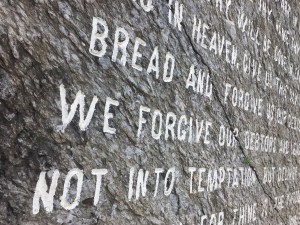
Ps. 126:5-6 Those who sow in tears shall reap with joyful shouting. 6 He who goes to and fro weeping, carrying his bag of seed, shall indeed come again with a shout of joy, bringing his sheaves with him.

Questions

  1. Do you operate (energema) with one of the gifts of the Spirit? Which one(s)? If not, ask Adonai to reveal to you how His Spirit (energy) works through you.


  1. Do you suffer with a chronic illness or another affliction? If so, I’m praying for your complete healing and for your patience. May Adonai grant you reprieve this day.


  1. If you know someone that is suffering patiently in some way, reach out to them with words of encouragement.


  1. Dreams are corrective and restorative. If you haven’t been paying attention to these night parables, start keeping a journal of them.


Job 33:15-18 (NASB) In a dream, a vision of the night, when sound sleep falls on men, while they slumber in their beds, 16 then He opens the ears of men, and seals their instruction, 17 that He may turn man aside from his conduct, and keep man from pride; 18 He keeps back his soul from the pit, and his life from passing over into Sheol.

Day 5 – Av 5

Spiritual Gift: Working Miracles 

Fruit: Lovingkindness (chesed)

 Love and lovingkindness go hand in hand. In the meditation for day one, we looked at agape and chesed in relation to wisdom. In this meditation, we will consider the miraculous power of chesed. When acted out in earnest, wondrous things happen.

Shutterstock ID 1643111350 © Lightspring

Yeshua said, “go and learn” what chesed means in Matthew 9:13. In that case, he was being questioned for eating with tax collectors and sinners. The Pharisees and many religious people today have firm ideas of what is acceptable and unacceptable. Yeshua was more concerned for those that needed to repent and be healed, than He was for even the holy sacrifices. Consider the story below.

 Luke 10:25-37 (NASB) And a lawyer stood up and put Him to the test, saying, “Teacher, what shall I do to inherit eternal life?” 26 And He said to him, “What is written in the Law? How does it read to you?” 27 And he answered, “YOU SHALL LOVE THE LORD YOUR GOD WITH ALL YOUR HEART, AND WITH ALL YOUR SOUL, AND WITH ALL YOUR STRENGTH, AND WITH ALL YOUR MIND; AND YOUR NEIGHBOR AS YOURSELF.” 28 And He said to him, “You have answered correctly; DO THIS AND YOU WILL LIVE.” 29 But wishing to justify himself, he said to Jesus, “And who is my neighbor?” 30 Jesus replied and said, “A man was going down from Jerusalem to Jericho, and fell among robbers, and they stripped him and beat him, and went away leaving him half dead. 31 And by chance a priest was going down on that road, and when he saw him, he passed by on the other side. 32 Likewise a Levite also, when he came to the place and saw him, passed by on the other side. 33 But a Samaritan, who was on a journey, came upon him; and when he saw him, he felt compassion, 34 and came to him and bandaged up his wounds, pouring oil and wine on them; and he put him on his own beast, and brought him to an inn and took care of him. 35 On the next day he took out two denarii and gave them to the innkeeper and said, ‘Take care of him; and whatever more you spend, when I return I will repay you.’ 36 Which of these three do you think proved to be a neighbor to the man who fell into the robbers’ hands?” 37 And he said, “The one who showed mercy toward him.” Then Jesus said to him, “Go and do the same.”

 Almost any commandment, tradition, or halachic ruling can be broken to save another person’s life. YHWH is the God of the Living, and all human life is immeasurably valuable to Him. We are told in Leviticus 18:5, “You shall therefore keep My statutes and My judgments, which if a man does, he shall live by them: I am the LORD.” (NKJV) Rabbi Akiva clarifies this verse by saying, “That he shall live by them, and not that he shall die by them.” (Yoma 85b)

He infers that the heart of the commandments islife and love. To save a life or one’s own life (or even the health of either), is the highest priority so long as one doesn’t deny Adonai, commit murder, idolatry, or adultery in order to do so. Piety should never hold a higher place in one’s mind than the value of another human. Choose Life!

The story that Yeshua told the lawyer in Luke 10 is just as valid today as it was in the first century. In the US, segregation is oddly being promoted by some groups. In the first century, various groups also separated themselves from one another based on religious sects, regional affiliations, and race.

The Samaritans were half Jew, half Gentile. During the Assyrian captivity of the northern kingdom of Israel, the king of Assyria sent people from Cutha, Ava, Hamath, and Sepharvaim to inhabit Samaria,[2] and they intermarried with the remaining people left from the northern tribes of Israel. They became known as Samaritans. While they accepted a version of the Torah (5 Books of Moses), they rejected the Prophets and the Writings. They also mixed idolatry with their worship of the Holy One. They even set up their own temple on Mt. Gerizim. When Nehemiah worked to rebuild the walls of Jerusalem, the Samaritans tried to stop the work. (Neh. 6:1-14)

Needless to say, the Jews were not fond of the Samaritans. Tensions between these two groups were high. In John 8:48, the Jews called Yeshua a demon possessed Samaritan. This was meant to be a highly offensive slur. In John 4:9, the (Samaritan) woman at the well was perplexed that Yeshua, a Jew, would even speak to her.

Yeshua gently corrected her understanding in several ways. He pointed out her “5” previous husbands, an allusion to the Samaritans false belief that their version of the Torah was legitimate. He also revealed Himself to her as the Messiah, the Living Waters, and extended salvation to this lowly Samaritan, something the religious leaders in Jerusalem would have never done. The woman dropped her water pot and ran to tell her countrymen the Good News. The men of Samaria believed the woman’s report and came out to meet Yeshua. She was actually the first effective evangelist!

© Bimarto Sasri | Dreamstime.com

Yeshua’s encounter with the woman at the well is chesed in action. She and the Samaritans didn’t deserve anything from Him; and yet, He extended mercy, grace, and kindness to them anyway. Because, He is chesed. He brought reconciliation to two alienated groups, which the apostles continued after the resurrection. (Acts 8:25)

Chesed doesn’t ignore past sins; rather, it chooses kindness over retribution, mercy over vengeance, grace over disdain, love over hate. Chesed doesn’t know the “tit for tat” scores that we keep. It is not intimate with wisdom from below.

Love covers a multitude of sins. (Pr. 10:12, 1 Pet. 4:8) That includes the sins of those that have been a bane to your existence. Yeshua, as the living embodiment of the Word and the image of God, chose chesed rather than sacrifice. This resulted in the miracle of salvation to those that were perishing in Samaria. Often our vision is impaired, and is need of adjustment.

The only way that one can love the way that Adonai loves is to KNOW the love He has for us. (1 John 4) Then, we won’t fear that our enemy might not get his “just desserts.” Instead, we can truly rejoice that forgiveness and salvation has been extended to them as well. The lawyer reluctantly admitted to Yeshua that in the story, it was the “evil” Samaritan that fulfilled the Law more fully than the priest and Levite by extending chesed to the brutalized man. Caring for human life, in all forms, is greater even than the two greatest commandments. Why? Because it is the epitome of chesed love, and the two great commandments hang from it. Yeshua says, “Go and do the same.”

Rom. 13:10 (NKJV) Love does no harm to a neighbor; therefore, love is the fulfillment of the law.

© William Bode | Dreamstime.com

The natural, earthy man struggles with the concept of chesed. Chesed is supernatural. To operate with chesed, one must continually have their mind renewed to align with the mind of Messiah. (Romans 12) Consider testimonies and stories that have had the greatest impact on your thinking. Do stories of radical forgiveness and sacrificial love inspire you more than rote commandments? In our heart of hearts, we hope that we can act with such sacrifice and loyalty to HaShem. We want to believe that we can radically forgive those they don’t deserve our forgiveness.

Chesed is so powerful that it can penetrate even the most callused heart. It is miraculous. It is the gift that keeps on giving. When one experiences true chesed, they are moved to extend chesed to another. It is freely given, underserved, and it certainly doesn’t expect anything in return. Though it is rooted in covenant love, it surpasses the letter of the Law, because it is pure Holy Spirit in action.

The Hebrew and Greek words for miracles (oht, pala, semeion, etc.) are often translated as signs and wonders. They are heavenly, like chesed. Miracles occur when heaven kisses earth (and earth beings). Thankfully, Adonai built (and continues building) the world with chesed (Ps. 89:2), which is the epitome of the Messiah. (Col. 1:15-20)

Ps. 85:10 (NASB) Lovingkindness and truth have met together; Righteousness and peace have kissed each other.

Perform chesed. Expect miracles.

Questions

  1. Read Genesis 4:1-12. What is Cain told to master? If emotions rule a person, can they fulfill the commandments?


  1. In the figurative sense, hating one’s brother/sister (or any other human) is akin to murder. Why?


  1. Read Romans 12. What is love without hypocrisy?


  1. Miracles encompass a range of wonders, including the plagues that fell upon Egypt. What is the purpose of miracles?


[1] James 1:1

[2] 2 Kings 17:24, Ezra 4:2-11

Categories: Biblical Symbols, Moedim, new moon | Tags: , , , , , , | 5 Comments

Meditations for the Nine Days Part I

© Sergiy Gaydaenko | Dreamstime.com

At the last hour, Adonai prompted me to design a focus for our local women for the Nine Days of the Three Weeks. The Nine Days begin tonight with the new moon of the Month of Av. During the Nine Days, introspection and mourning increase until Tisha B’Av. For more information about this season, click here, here, here, and here.

My premise is simple. But, for those new to commemorating this season, I’ve included information about how this time affects the Haftarah cycle, and general information about the number nine. I wrote the meditations with the assumption that one already is aware of the duality that exists in the number nine and the letter tet. Nine and tet reveal what is concealed inside through judgment, but with the hope of renewal and rebirth. If you are unfamiliar with this information, please read Moonbeams and the Moedim Part III, and the concise points listed under nine in Hebrew Numbers 1-10.

This post will include meditations for days 1-2, the new moon days. Part II has days 3-5, Part III has 6-7, and Part IV concludes with days 8-9.


Haftarot Cycle

The Haftarot Cycle changes every year at this season from being thematically connected to the Torah Portion, to being thematically connected to the Three Weeks and Elul. This change continues throughout the fall feasts, until the scrolls are rolled back to the beginning, and the new cycle begins anew with Bereshit (Genesis). The focus during the Three Weeks and the month of Elul is Sorrow and then Consolation. This encompasses ten haftarot portions (listed below). The remaining Haftarah portions for the year relate to the season of the fall moedim.

Haftarot of Sorrow 2020: Jer. 1:1–2:3 (read with Pinchas); Jer. 2:4–28, 3:4 (read with Mattot- Massei), Is. 1:1-27 (read with Devarim)

Haftarot of Consolation 2020: After Tisha B’Av, the haftarot move from the sorrow of The Three Weeks, to seven weeks of consolation, culminating with the “change” or “turn” of the year. Hopefully, we have repented and changed, and will be made new with the “change” or “turn” of new year at Rosh Hashanah. (1 Cor. 15:50-58)

The readings of consolation are as follows: Isaiah 40:1-40:26 (read with Va’etchanan); Isaiah 49:14-51:3 (read with Ekev); Isaiah 54:11-55:5 (read with Re’eh); Isaiah 51:12-52:12 (read with Shoftim); Isaiah 54:1-54:10 (read with Ki Tetze); Isaiah 60:1-60:22 (read with Ki Tavo); Isaiah 61:10-63:9 (read with Nitzavim / Vayelech).


Meditations for the Nine Days

© Anyaivanova | Dreamstime.com

Read 1 Corinthians 12:1-31 and Galatians 5:18-26. There are nine listed gifts of the Spirit and nine fruit of the Spirit. The following meditations for the Nine Days are based in these Spiritual traits.


 Day 1 – Av 1

Spiritual Gift: Words of Wisdom

Fruit: Love   

What is Biblical wisdom? Read James 3:13-18.

True words of wisdom and knowledge will have the traits that James describes. Tisha B’Av recalls the sin of the children of Israel listening to and believing the evil report about the Land made by ten of their leaders sent to spy out the Land of Promise. (Numbers 13-14)

This sin mirrors the reason that the second Temple was destroyed. In tradition, Israel broke the second of the two greatest commandments: to love thy neighbor as thyself. (Lev. 19:18) In other words, though they had the appearance of holiness, in their heart, they hated their brother, which made their worship of Adonai a lie.

Lev. 19:18 (TLV) You are not to take vengeance, nor bear any grudge against the children of your people, but love your neighbor as yourself. I am Adonai.

Mark 12:28-34 (TLV) One of the Torah scholars came and heard them debating. Seeing that Yeshua had answered them well, he asked Him, “Which commandment is first of all?” 29 Yeshua answered, “The first is, ‘Shema Yisrael, Adonai Eloheinu, Adonai echad. Hear, O Israel, the Lord our God, the Lord is One. 30 And you shall love Adonai your God with all your heart, and with all your soul, and with all your mind, and with all your strength.’ 31 The second is this, ‘You shall love your neighbor as yourself.’ There is no other commandment greater than these.” 32 “Well said, Teacher,” the Torah scholar said to Him. “You have spoken the truth, that He is echad, and besides Him there is no other! 33 And ‘to love Him with all the heart, with all the understanding, and with all the strength,’ and ‘to love the neighbor as oneself,’ is much more than all burnt offerings and sacrifices.” 34 When Yeshua saw that he had answered wisely, He said to him, “You are not far from the kingdom of God.” And no one dared any longer to question Him.

1 Jn 4:20-21 (TLV) If anyone says, “I love God,” and hates his brother, he is a liar. For the one who does not love his brother, whom he has seen, cannot love God, whom he has not seen. 21 And this commandment we have from Him: that the one who loves God should also love his brother.

The Greek word for love in Galatians 5:22 is agape. Like it’s Hebrew counterpart, chesed, agape is much more than a feeling. Both agape and chesed require action, not emotion. True love is expressed through acts of kindness such as charity, caring for the sick, spending quality time, exercising patience and longsuffering with the lost or immature, etc.

Yeshua said, “But go and learn what this means: ‘I DESIRE COMPASSION, AND NOT SACRIFICE,’ for I did not come to call the righteous, but sinners.” Mat 9:13 (NASB) He is quoting Hosea 6:6, where compassion is the Hebrew word chesed. Chesed is love, lovingkindness, mercy, compassion, grace, and loyal-love. To learn more about Biblical love or chesed, listen to this audio.

Mediate upon the following:

1 Cor. 13:1-13 (TLV)

1 If I speak with the tongues of men and of angels but have not love, I have become a noisy gong or a clanging cymbal.

2 If I have the gift of prophecy and know all mysteries and all knowledge, and if I have all faith so as to remove mountains but have not love, I am nothing.

3 If I give away all that I own and if I hand over my body so I might boast but have not love, I gain nothing.

4 Love is patient, love is kind, it does not envy, it does not brag, it is not puffed up,

5 it does not behave inappropriately, it does not seek its own way, it is not provoked, it keeps no account of wrong,

6 it does not rejoice over injustice but rejoices in the truth;

7 it bears all things, it believes all things, it hopes all things, it endures all things.

8 Love never fails—but where there are prophecies, they will pass away; where there are tongues, they will cease; where there is knowledge, it will pass away.

9 For we know in part and we prophesy in part;

10 but when that which is perfect has come, then that which is partial will pass away.

11 When I was a child, I spoke like a child, I thought like a child, I reasoned like a child. When I became a man, I put away childish things.

12 For now we see in a mirror dimly, but then face to face. Now I know in part, but then I will know fully, even as I have been fully known.

13 But now these three remain—faith, hope, and love. And the greatest of these is love.

All of the spiritual gifts are useless without the first fruit of love (agape and chesed). One doesn’t need to “feel” love in order to act with love. In this way, loving one’s neighbor is a choice with clear Biblical parameters to follow.

During the first day of the Nine Days, repent for not fulfilling the commandment to love one’s neighbor as thyself. Pray and ask Adonai to help you to love the way that He loves. The following questions can support this endeavor.

Questions

  1. Consider these nine verses: Lev. 19:9-18. Have you transgressed any of these instructions on “how to love thy neighbor?” Be honest.


  1. Words of wisdom can only come forth from a heart that knows their “first love” intimately. The traits of chokmah (wisdom) mentioned in James 3, mirror Paul’s treatise on love in 1 Corinthians 13. Why do you think this is so?


  1. It’s easy to see how the sin of ten spies broke the first commandment – to love Adonai. But, can you also see how this sin portrays “hating” one’s brother?


  1. Do you find that your idea of love and God’s idea of love are different?


  1. Do you think that we justify our hate (with its resulting actions towards others) and claim that we are acting righteously? Give an example.


Day 2 – Av 2

Spiritual Gift: Words of Knowledge  

Fruit: Joy

 As mentioned on day one’s meditation, words of knowledge will be firmly rooted in the traits of James’ “Wisdom from Above.” In Greek, knowledge is gnosis. Gnosis is found in the Septuagint in many places, including this verse from Hosea:

Hos. 4:6 (NASB) My people are destroyed for lack of knowledge. Because you have rejected knowledge, I also will reject you from being My priest. Since you have forgotten the law of your God, I also will forget your children.

The Hebrew word for knowledge in the verse above is da’at. Both gnosis and da’at can imply simple head knowledge. But true knowledge (da’at) is intimate, and reproducible. Adam knew his wife and she conceived and bore a son. One might have wisdom in an area, but until it can be reproduced or produce life, it is not Biblical knowledge.

Pro 24:3-4 (NASB) By wisdom a house is built, and by understanding it is established; 4 and by knowledge the rooms are filled with all precious and pleasant riches.

One is destroyed for lack of knowledge, like a tree that fails to produce fruit. Essentially, this is a lack of intimacy with Adonai and His Torah (law). Forgetting the Torah stunts growth and leads to destruction. Without intimacy with Adonai and His Word, one cannot reproduce, and building (of the House) stops. Consider Peter’s words below, especially verse eight. Knowledge is something that grows, like a tree, and increases as one continues to seek the will of Adonai.

2 Pet. 1:2-11 (NASB) Grace and peace be multiplied to you in the knowledge of God and of Jesus our Lord; 3 seeing that His divine power has granted to us everything pertaining to life and godliness, through the true knowledge of Him who called us by His own glory and excellence. 4 For by these He has granted to us His precious and magnificent promises, so that by them you may become partakers of the divine nature, having escaped the corruption that is in the world by lust. 5 Now for this very reason also, applying all diligence, in your faith supply moral excellence, and in your moral excellence, knowledge, 6 and in your knowledge, self-control, and in your self-control, perseverance, and in your perseverance, godliness, 7 and in your godliness, brotherly kindness, and in your brotherly kindness, love. 8 For if these qualities are yours and are increasing, they render you neither useless nor unfruitful in the true knowledge of our Lord Jesus Christ.9 For he who lacks these qualities is blind or short-sighted, having forgotten his purification from his former sins. 10 Therefore, brethren, be all the more diligent to make certain about His calling and choosing you; for as long as you practice these things, you will never stumble; 11  or in this way the entrance into the eternal kingdom of our Lord and Savior Jesus Christ will be abundantly supplied to you.

The result of operating in godly da’at is spiritual fruit, harvest, and joy! This fills the rooms of Adonai’s House with treasured vessels, which are His people.

Is. 26:19-21 (NASB) Your dead will live; their corpses will rise. You who lie in the dust, awake and shout for joy, for your dew is as the dew of the dawn, and the earth will give birth to the departed spirits. 20 Come, my people, enter into your rooms and close your doors behind you; hide for a little while until indignation runs its course. 21 For behold, the LORD is about to come out from His place to punish the inhabitants of the earth for their iniquity; and the earth will reveal her bloodshed And will no longer cover her slain.

When Yeshua quoted Hosea 6:6 in Matthew 9:13, He equated chesed (love) with knowledge through parallelism:

Hos. 6:6 (NASB) For I delight in loyalty (chesed) rather than sacrifice, and in the knowledge (da’at) of God rather than burnt offerings (olah).

Chesed and Da’at are much more desirable than the holy sacrifices, even the whole burnt (olah) offerings. Why? Because when we fulfill these actions, we are elevated, by a much higher force. They embody the fullness of Adonai, and those that practice chesed and da’at, grow and transform much more quickly into the image of Messiah. By pursuing these righteous virtues, one has little time or energy to pander to the wiles of the flesh.

One that has the knowledge of Adonai knows that His correction, discipline, and punishment is for one’s good, which will eventually produce joy and blessing. Our loving Heavenly Father chastises those whom He loves. (Heb. 12:6, Pr. 3:12) Those that know Him to be a loving Father, do not fear discipline, but seek to apply the wisdom it bears so they may learn from it.

Pro 23:12 (NASB) Apply your heart to discipline and your ears to words of knowledge.

Pr. 18:15-16 (NASB) The mind of the prudent acquires knowledge, and the ear of the wise seeks knowledge. 16 A man’s gift makes room for him and brings him before great men.

When the House of Judah went into Babylonian captivity for her sins, she mourned, just as we would. One thing they didn’t forget, as her sister Israel did, was the Holy City, Jerusalem. While you remember the glory of the former Temples, the Holy City, and the exile during these Nine Days, keep the following Psalm close to your heart. It is recited every day, except on Shabbat and the moedim, during the Birkat Hamazon (blessings after meals). Even when we are full and satisfied, may Jerusalem be at the forefront of our minds as our chief JOY.

Ps. 137:1-9 (NASB) By the rivers of Babylon, there we sat down and wept, when we remembered Zion. 2 Upon the willows in the midst of it we hung our harps. 3 For there our captors demanded of us songs, and our tormentors mirth, saying, “Sing us one of the songs of Zion.” 4 How can we sing the LORD’S song In a foreign land? 5 If I forget you, O Jerusalem, may my right hand forget her skill. 6 May my tongue cling to the roof of my mouth If I do not remember you, if I do not exalt Jerusalem Above my chief joy. 7 Remember, O LORD, against the sons of Edom the day of Jerusalem, who said, “Raze it, raze it to its very foundation.” 8 O daughter of Babylon, you devastated one, how blessed will be the one who repays you with the recompense with which you have repaid us. 9 How blessed will be the one who seizes and dashes your little ones against the rock.


Questions

  1. Read Psalm 51. David repents and mourns over his sin with Bathsheba. Yet, he trusts that Adonai will renew and restore him. Where does David say that joy comes from? (vs. 8,12)


  1. How do you define joy?


  1. The last Torah Portion during the month of Av is Re’eh,[1]meaning “See.” Count the number of times rejoice (joy) is found in this portion. Is joy a feeling or a choice?


  1. Recall a time when you lacked intimacy with Adonai. How did this affect your da’at or knowledge of Him? Was your “joy” affected as well?


[1] Deuteronomy 11:26–16:17

Categories: Moedim, new moon, Study Helps | Tags: , , , , , , | 12 Comments

Extraordinary Chesed


Sutterstock ID 363741746 © enterlinedesign

This recording is a breakout session delivered on July 2,2020 at Revive called Extraordinary Chesed.


Categories: Messianic Issues, Moedim, Mussar | Tags: , , , , , , | 5 Comments

The Mark of the Beast Part II

In Part I, many Scripture references were given to demonstrate that the sign of Adonai upon one’s hand and forehead is Passover, Sabbath, and the Shema or Words of God. (Dt. 6:4-9) These feasts teach one that YHWH is the Creator, Deliverer, and Law-Giver. He is the supreme authority and King of the Universe.

Initially, I had planned to go directly into the contranym or the mark of the beast, but then I realized that it would be a mistake to not first rehash some key Hebraic concepts. Especially, given how provocative the topic of the mark of the beast is. Thus, there will be a Part III.

Context is king. The mark, which signifies authority, cannot be understood apart from the “image” of the beast. And, the image of the beast must be understood in light of the image of God.

© Bulat Silvia | Dreamstime.com

© Daniil Peshkov | Dreamstime.com

Image of the Beast

Rev 13:15 (NASB) And it was given to him to give breath to the image of the beast, so that the image of the beast would even speak and cause as many as do not worship the image of the beast to be killed.

Does this remind you of this verse?

Gen. 2:7 (NASB) Then the LORD God formed man of dust from the ground, and breathed into his nostrils the breath of life; and man became a living being.

In Targum Onkelos,[1]this verse reads:

Gen. 2:7 And the Lord God created Adam from dust of the ground, and breathed upon his face the breath of lives, and it became in Adam a Discoursing [speaking] Spirit.

© Kevin Carden | Dreamstime.com

The enemy is a counterfeiter through and through. God gave the breath of life to his image bearers, and it became in Adam a speaking or discoursing spirit. The second beast gives breath (and speech) to the image of the first beast. It is the “speaking image” of the beast that is worshipped. We will return to this image after reviewing the image of God.


Image of God

Gen. 1:26-27 (NASB) Then God said, “Let Us make man in Our image, according to Our likeness; and let them rule over the fish of the sea and over the birds of the sky and over the cattle and over all the earth, and over every creeping thing that creeps on the earth.” 27 God created man in His own image, in the image of God He created him; male and female He created them.

Gen. 5:1-2 (LITV) This is the book of the generations of Adam: In the day that God created man. He made him in the likeness of God. 2 He created them male and female, and blessed them, and called their name Adam in the day when they were created.

Man and woman were created in the image of Elohim. The Hebrew word for image is tzelem. The following is The Complete Word Study Dictionary’s definition.[2]

H6754 צֶלֶם tṣelem: A masculine noun meaning an image, a likeness, a statue, a model, a drawing, a shadow. The word means image or likeness; its most celebrated theological and anthropological use was to depict human beings as made in God’s own image (Gen 1:26-27; Gen 5:3). People continue to be in His image even after the fall, although the image is marred (Gen 9:6), and still serves as the basis of the prohibition not to kill human beings… The word is also used in a concrete sense to depict images cut out of or molded from various materials. The word describes the images or idols of foreign or strange gods (2Ki 11:18; Amo 5:26). The people of Israel produced images used as idols from their own jewelry (Eze 7:20; Eze 16:17). Israel was, on its entrance into Canaan, to destroy all the molten images of the heathen (Num 33:52). In Eze 23:14, this word refers to pictures of Babylonians that enticed the people of Israel into apostasy when they saw them (Eze 23:14).

Mankind is the shadow of Elohim. In Hebrew thought, this isn’t about one’s appearance, rather it one’s purpose and actions. YHWH placed within mankind (both male and female) a shadow or likeness of His character and will. We are His representatives in the earth, His image or shadow bearers. Shadows or images mimic the reality. Thus, one’s words, deeds, actions, and fruit will either confirm or profane Adonai’s image. This is why tzelem can also mean a graven image or an idol:

Ex. 20:4 (NASB) “You shall not make for yourself an idol (tzelem), or any likeness of what is in heaven above or on the earth beneath or in the water under the earth. (See also Lev. 26:1, Ezek. 16:17, etc.)

If the above sounded familiar, it’s because it is a quote from my article entitled, Sukkot: Hidden in the Shade of God. In it, I tie several themes together regarding the image of God, a shadow of things to come, Betzalel, Mary, and the Transfiguration. These things demonstrate how one that is the true image of God in the earth is a builder, most specifically of the Kingdom.

What do the tzelem of God do? They subdue and rule over the fish, birds, and the beasts. (Not one another.) In Greek, the word for image in Revelation 13 and in the Septuagint of Genesis 1:27 is eikon. Thayer’s Greek Lexicon defines it as:

G1504 εἰκών eikōn 1) an image, figure, likeness. 1a) an image of the things (the heavenly things). 1a1) used of the moral likeness of renewed men to God. 1a2) the image of the Son of God, into which true Christians are transformed, is likeness not only to the heavenly body, but also to the most holy and blessed state of mind, which Christ possesses. 1b) the image of one. 1b1) one in whom the likeness of any one is seen. 1b2) applied to man on account of his power of command. 1b3) to Christ on account of his divine nature and absolute moral excellence. Part of Speech: noun feminine. A Related Word by Thayer’s/Strong’s Number: from G1503

There are two possible images that one 

can reflect to the world: 

Adonai’s or the Beast’s.

The Image of the Beast, From the Beginning

In Revelation 13, people worship the eikon of the beast. The first mention of “a beast” in the Bible is on day six of creation.[3] The same day (number) that man was created.

Gen. 1:24-31 (NASB) Then God said, “Let the earth bring forth living creatures after their kind: cattle and creeping things and beasts of the earth after their kind”; and it was so. 25 God made the beasts of the earth after their kind, and the cattle after their kind, and everything that creeps on the ground after its kind; and God saw that it was good. 26 Then God said, “Let Us make man in Our image, according to Our likeness; and let them rule over the fish of the sea and over the birds of the sky and over the cattle and over all the earth, and over every creeping thing that creeps on the earth.” 27 God created man in His own image, in the image of God He created him; male and female He created them. 28 God blessed them; and God said to them, “Be fruitful and multiply, and fill the earth, and subdue it; and rule over the fish of the sea and over the birds of the sky and over every living thing that moves on the earth.” 29 Then God said, “Behold, I have given you every plant yielding seed that is on the surface of all the earth, and every tree which has fruit yielding seed; it shall be food for you; 30 and to every beast of the earth and to every bird of the sky and to every thing that moves on the earth which has life, I have given every green plant for food”; and it was so. 31 God saw all that He had made, and behold, it was very good. And there was evening and there was morning, the sixth day.

In creation, the beast was created before the man. It was born first, so to speak. But, that in no way placed the beast in authority over the Adam. “The older shall serve the younger” is what the LORD told Rebekah when she sought Him about the warring twins in her womb. Her sons, Esau and Jacob, are archetypes of the two images man can reflect. The elder is red and hairy like a beast, and grows up to prefer the field. He sells his birthright in a moment of hunger, a snapshot in time, which is the epitome of the flesh wanting instant gratification. Jacob, though far from perfect, is a smooth man, peaceful, a dweller of tents. It is not a coincidence that their father, Isaac, was SIXTY years old when they were born.

Gen. 25:23-28 (NASB) The LORD said to her, “Two nations are in your womb; And two peoples will be separated from your body; And one people shall be stronger than the other; And the older shall serve the younger.” 24 When her days to be delivered were fulfilled, behold, there were twins in her womb. 25 Now the first came forth red, all over like a hairy garment; and they named him Esau. 26 Afterward his brother came forth with his hand holding on to Esau’s heel, so his name was called Jacob; and Isaac was sixty years old when she gave birth to them. 27 When the boys grew up, Esau became a skillful hunter, a man of the field, but Jacob was a peaceful man, living in tents. 28 Now Isaac loved Esau, because he had a taste for game, but Rebekah loved Jacob.

© Petermladenov | Dreamstime.com

It was as if even in the womb, the older, beast-like Esau was trying to crush the head of Jacob. I suggest rereading this account in Genesis. Pay special attention to the actions and nature of Esau. His tzelem does not reflect Adonai. He is much more like a beast. On another mystical level, we all are the twins. We are Esau AND Jacob. Who will win in the end?

Both the beast and mankind are day six creations. From this point forward, the number six in Scripture is teaching one about the nature of the beast or the nature of man. To be a true “man” or Adam (male and female) one will reveal the image of God in the earth. To reveal anything else, is an image of a beast. Just like Esau and Jacob.

Beasts live by instinct, desire, appetites, and fleshly drives. Mankind has all the same instincts, but he/she is to live by every Word that proceeds from the mouth of God. One’s flesh nature, though not evil in and of itself, should not rule or be what drives a person. This sets mankind apart from their day six counterparts, the beasts.

© Nskyr2 | Dreamstime.com

Dr. Alewine teaches that the basic desires of a beast are to eat, sleep, procreate, play games, and expand territory.[4] None of these things are evil, and a beast is fulfilling its God given purpose by following these instincts. Mankind also has these impulses; and, none of them are sin when fulfilled – IF they are governed by the Word of God. But any one of these impulses, if allowed to rule (control) a person will lead to sin.

You are meant to be a man, which is the tzelem of Adonai, not a beast. You are meant to rule over this nature within yourself by constantly meditating upon and obeying the Words of Life. The beast, like the serpent, will challenge God’s Word, His Authority, and your resolve. This is what happened in the Garden of Eden.

Gen. 3:1 (NKJV) Now the serpent was more cunning than any beast of the field which the LORD God had made. And he said to the woman, “Has God indeed said, ‘You shall not eat of every tree of the garden’?”

What does a tempter, like the serpent, appeal to? How is he “cunning” or “crafty?” He is a beast, so he will always appeal to the desires of the flesh and the power of emotions, because that is all he knows. The story of the fall is packed with words that speak of desire. Why shouldn’t we have what we want? Did God really say? That’s the voice of the beast. It is the lips of a seductress. It whispers and entices. It is the voice that questions, twists, and perverts the Word of God to have what it wants without any pesky misgivings.

It gives breath and speech to the things
 
that should have no voice, and seeks to kill

those that will not bow down to its will. 

(Rev. 13:15)

The first murderer, Cain, wrestled with this “speaking beast” in the form of jealous anger. Adonai warned him:

Gen 4:6-7 (NASB) Then the LORD said to Cain, “Why are you angry? And why has your countenance fallen? 7 If you do well, will not your countenance be lifted up? And if you do not do well, sin is crouching at the door; and its desire is for you, but you must master it.”

In the past, I’ve made the mistake of misreading these verses. (To be fair, translations can be misleading.) Unlike English, Hebrew indefinite pronouns must always refer to a correctly gendered noun. The pronouns “its and it” of verse seven read as if they are replacing the noun “sin.” But, sin is feminine and “its and it” refer to a masculine noun. To find the masculine noun these pronouns are replacing, one must look back to verse 6. The phrase “your countenance fallen” is more literally “your face has fallen.” Face is a masculine noun. This is an idiom for intense anger.

It wasn’t “sin” that had desire for Cain, but something that was within him: his anger! Emotions are part of the lower, beast nature of man. God told Cain to master or rule over this powerful force. If not, the emotion of anger would master him. It was close at hand, at the door, ready to take the reins. Cain did not heed the warning of the LORD. The very next verse says:

Gen. 4:8 (NRSV) Cain said to his brother Abel, “Let us go out to the field.” And when they were in the field, Cain rose up against his brother Abel, and killed him.

Notice the reference to the field. (It’s been present in many of the passages I’ve quoted above.) The field is where beasts dwell. The serpent was the most cunning beast of the field. Cain is warned that his strong emotion of anger is crouching at his door. In the very next verse, his anger rose up from its crouch and killed his brother. He became the beast. Anger took over and ruled the man, and murder was the result.

Rev. 13:15 (NASB) And it was given to him to give breath to the image of the beast, so that the image of the beast would even speak and cause as many as do not worship the image of the beast to be killed.

Men (and women) ruled by the beast nature are destroyers, whether they realize it or not. One ruled by their desires and emotions live by the animal kingdom’s “survival of the fittest.” At its core, it is selfish and self-serving, because it is fueled by FEAR. It doesn’t want to play nice, share, or put anything or anyone before what it wants. It is the epitome of want. It seeks to subjugate and dominate others because it serves only its own desire. Consider the beasts of the field. This is exactly what they do.

© Lucafabbian | Dreamstime.com

There were two beasts that spoke in the Torah: the serpent in the Garden and Balaam’s ass. In both cases, the people involved had been enticed by their desires. Chavah (Eve) desired the fruit from the Tree of Knowledge of Good and Evil. Balaam desired honor and to profit from his prophetic gift. The serpent’s words roused and deceived Chavah into fulfilling her desire. Balaam’s ass, a beast of burden, tried to save Balaam (and herself) from the sword of the angel. She was a voice of reason to the hardened prophet. He must only speak what God tells him to speak.

These two examples are perfect teachers. The serpent is an untamable, cold blooded creature. It hisses, charms, and bewitches the listener. This is akin to the unbridled lower, beast nature. The ass is broken and trained to carry a burden. She is faithful to her master. This is akin to one that has bridled their emotions and nephesh (flesh) with all its impulses.


The Image of the Son

How can one overcome the fallen nature and be a proper tzelem of Adonai? Yeshua is the Way!

Col. 1:15-23 (NASB) He is the image of the invisible God, the firstborn of all creation. 16 For by Him all things were created, both in the heavens and on earth, visible and invisible, whether thrones or dominions or rulers or authorities—all things have been created through Him and for Him. 17 He is before all things, and in Him all things hold together. 18 He is also head of the body, the church; and He is the beginning, the firstborn from the dead, so that He Himself will come to have first place in everything.  19  For it was the Father’s good pleasure for all the fullness to dwell in Him,  20  and through Him to reconcile all things to Himself, having made peace through the blood of His cross; through Him, I say, whether things on earth or things in heaven. 21 And although you were formerly alienated and hostile in mind, engaged in evil deeds, 22 yet He has now reconciled you in His fleshly body through death, in order to present you before Him holy and blameless and beyond reproach— 23 if indeed you continue in the faith firmly established and steadfast, and not moved away from the hope of the gospel that you have heard, which was proclaimed in all creation under heaven, and of which I, Paul, was made a minister.

© Ampersandmiami | Dreamstime.com

We are to be conformed into the image of the second Adam. (Rom. 8:29ff) Not the first Adam. The older shall serve the younger. This is accomplished most notably through suffering, which is something the beast hates. But it also requires diligence and mindfulness. It is a lifelong process. While the beast seeks to subjugate and dominate, the Spirit of the Lord brings freedom!

2 Cor. 3:17-18 (NASB) Now the Lord is the Spirit, and where the Spirit of the Lord is, there is liberty. 18 But we all, with unveiled face, beholding as in a mirror the glory of the Lord, are being transformed into the same image from glory to glory, just as from the Lord, the Spirit.

I’ll leave you with Paul’s instruction in this matter. He gives examples of both images, two kingdom attitudes, two paths. The more we know the traits of each side, the more wisdom and understanding we will have to discern between the beast and the man.

Col. 3:1-17 (NASB)

1  Therefore if you have been raised up with Christ, keep seeking the things above, where Christ is, seated at the right hand of God.

2  Set your mind on the things above, not on the things that are on earth.

3  For you have died and your life is hidden with Christ in God.

4  When Christ, who is our life, is revealed, then you also will be revealed with Him in glory.

5  Therefore consider the members of your earthly body as dead to immorality, impurity, passion, evil desire, and greed, which amounts to idolatry.

6  For it is because of these things that the wrath of God will come upon the sons of disobedience,

7  and in them you also once walked, when you were living in them.

8  But now you also, put them all aside: anger, wrath, malice, slander, and abusive speech from your mouth.

9  Do not lie to one another, since you laid aside the old self with its evil practices,

10  and have put on the new self who is being renewed to a true knowledge according to the image of the One who created him

11  a renewal in which there is no distinction between Greek and Jew, circumcised and uncircumcised, barbarian, Scythian, slave and freeman, but Christ is all, and in all.

12  So, as those who have been chosen of God, holy and beloved, put on a heart of compassion, kindness, humility, gentleness and patience;

13  bearing with one another, and forgiving each other, whoever has a complaint against anyone; just as the Lord forgave you, so also should you.

14  Beyond all these things put on love, which is the perfect bond of unity.

15  Let the peace of Christ rule in your hearts, to which indeed you were called in one body; and be thankful.

16  Let the word of Christ richly dwell within you, with all wisdom teaching and admonishing one another with psalms and hymns and spiritual songs, singing with thankfulness in your hearts to God.

17  Whatever you do in word or deed, do all in the name of the Lord Jesus, giving thanks through Him to God the Father.


More to come in Part III.


[1]Targum Onkelos is the official eastern (Babylonian) Aramaic translation to the Torah. Its authorship is attributed to Onkelos, a famous convert to Judaism in Tannaic times (c. 35–120 CE).

[2]The Complete Word Study Dictionary: Old Testament by Warren Baker. Retrieved using Strong’s number H6754 on E-Sword Bible software.

[3]Why the focus on the beginning? Because it teaches the end.  Is. 46:9-10 (TLV) Remember the former things of old: For I am God—there is no other. I am God, and there is none like Me—10 declaring the end from the beginning, from ancient time, what is yet to come, saying, “My purpose will stand, and I will accomplish all that I please.”

[4] The Creation Gospel Workbook Four: The Scarlet Harlot and the Crimson Thread 

Categories: Biblical Symbols | Tags: , , , , , , , , | 17 Comments

Blog at WordPress.com.