Moedim

Chodesh Av 2018

I wanted to get this posted at the beginning of the month of Av, but I’ve been too busy to edit! Every year as I am intentional about celebrating the Moonthly Cycle, Abba has me focus on a particular area, a lot of which is not in my book on celebrating the New Moon. I plan to share my monthly notes from our local gatherings with you, but changing my notes to a blog post that makes sense to a reader requires quite a bit of editing. Better late than never! 

          © Kalina Vova | Dreamstime.com

Chodesh Av

  • Month: Five (11th month on civil calendar)
  • Tribe: Shimon
  • Sense: Hearing
  • Seasons/Feasts: Three Weeks (Dire Straits – from Tammuz 17 to Av 9), Transition by Tu B’Av (Av 15), Fast on Av 9.
  • Theme: From destruction and mourning to comfort and joy, especially in relation to the House of Adonai.

Month five has correlations with day five of creation. That is the day that the birds and fish were created to swim and fly through the wind and water currents of the earth. These are also those that rapidly spread Seed from continent to continent. Seeds can be likened to words or even THE Word. Words can destroy or words can bring Good News, a comfort to the world. In the following offering, see if you can pick out the themes of day five of creation.

Months four and five are connected by the Three Weeks. The sense of Tammuz was sight/seeing/vision, and the sense of Av is hearing/listening. Let’s consider the differences. The sense of seeing is more akin to having spiritual vision or being able to “see” the truth and promises of God despite what one’s circumstances and natural vision suggests. (Ex. The evil report of the ten spies. Joshua and Caleb saw the same thing as the other spies; and yet, Caleb declared, “Let us go up at once and take possession, for we are well able to overcome it.”   [Num. 13:30, Jos. 14:6-15])

This implies that we will face spiritual forces, like giants that have fortified cities, which are people and circumstances that are much stronger than we are during Av (beginning in Tammuz). And yet, the lesson to be learned is to choose to believe the promises of YHWH despite what one sees or hears in the natural. The One in you is stronger than any enemy or circumstance. Fear not.

In light of that, I have a few questions for you to ponder from last month.

  1. How many of you were tested in the sense of “seeing” during the month of Tammuz?
  2. What giant did you face?
  3. What enemy within a fortified (strong) city sought to discourage you?
  4. Based on the Torah portions of Tammuz, did you struggle with proper or improper authorities?

From Seeing to Hearing

Gen. 29:33 (NASB) Then she conceived again and bore a son and said, “Because the LORD has heard that I am unloved, He has therefore given me this son also.” So she named him Simeon.

Shimon means to hear, shema. “We will hear and we will do.” The irony of the sense of seeing coming before hearing in the months is that we cannot see without hearing first. Even a baby in the womb hears before he sees. Biblical or Spiritual vision is the ability to see what is heard: the WORD of YHWH.

       © Nipa74 | Dreamstime.com

What voice have you been listening to? Protect your ears! When things “look” bad in the natural do you hear a voice that says that you deserve calamity? That says, you are worthless, that you are not good enough, that you are UNLOVED by your Husband, like Leah?

If so, it’s time to give birth to Shimon. Adonai hears you, you must hear Adonai. In the Torah, Simeon and Levi act rashly with their swords on account of their sister Dinah. This cost each of these tribes a true portion or inheritance in the Land. They would be scattered in Israel. (Gen. 49) Thus, patience and waiting for the authority over us to give instruction is a test in one’s “hearing.” Just because you know something, doesn’t mean you have the authority to be the judge and executioner. A much better example of a godly Shimon is found when baby Yeshua is presented in the Temple or House of Adonai:

Luke 2:25-35 (NASB) And there was a man in Jerusalem whose name was Simeon; and this man was righteous and devout, looking for the consolation (comfort) of Israel; and the Holy Spirit was upon him.  26 And it had been revealed to himby the Holy Spirit that he would not see death before he had seen the Lord’s Christ.  27  And he came in the Spirit into the temple; and when the parents brought in the child Jesus, to carry out for Him the custom of the Law,  28  then he took Him into his arms, and blessed God, and said,  29  “Now Lord, You are releasing Your bond-servant to depart in peace, According to Your word;  30  For my eyes have seen Your salvation,  31  Which You have prepared in the presence of all peoples,  32  A LIGHT OF REVELATION TO THE GENTILES, And the glory of Your people Israel.”  33 And His father and mother were amazed at the things which were being said about Him.  34 And Simeon blessed them and said to Mary His mother, “Behold, this Child is appointed for the fall and rise of many in Israel, and for a sign to be opposed—  35 and a sword will pierce even your own soul—to the end that thoughts from many hearts may be revealed.”

In the above passage, there is a righteous man named Simeon, one who hears. Simeon believed what he HEARD. Go back and look at the bolded and underlined words and phrases above. Do you “see” the words associated with hearing and seeing? Shimon was LOOKING for the consolation of Israel, that is their comfort, which ties perfectly into the themes of the Three Weeks, and the consolation of Tu B’Av. By following the moonthly cycle, we practice and prepare for this flow of time (that is, was, and is to come) in the seasons each year. Consider these verses:

Jer. 31:9-14 (NASB) “With weeping they will come, and by supplication I will lead them; I will make them walk by streams of waters, on a straight path in which they will not stumble; For I am a father to Israel, And Ephraim is My firstborn.”  10 Hear the word of the LORD, O nations, and declare in the coastlands afar off, and say, “He who scattered Israel will gather him and keep him as a shepherd keeps his flock.” 11 For the LORD has ransomed Jacob and redeemed him from the hand of him who was stronger than he.  12 “They will come and shout for joy on the height of Zion, and they will be radiant over the bounty of the LORD—Over the grain and the new wine and the oil, and over the young of the flock and the herd; And their life will be like a watered garden, and they will never languish again. 13 “Then the virgin will rejoice in the dance, And the young men and the old, together, For I will turn their mourning into joy and will comfort them and give them joy for their sorrow.  14 “I will fill the soul of the priests with abundance, And My people will be satisfied with My goodness,” declares the LORD.

 From weeping and mourning to consolation and joy. That is the connection between Tammuz and Av. We should expect our own walk each year to reflect the same. Simeon’s reward for believing and obeying – true HEARING-  the Word of God was that he could SEE the Comforter, Yeshua, the Consolation of Israel. And even then, the revelation was not complete as we are still awaiting His return and the fullness of the passage above. Until then, we practice. We remember. We see, and we hear.

Destruction of the House

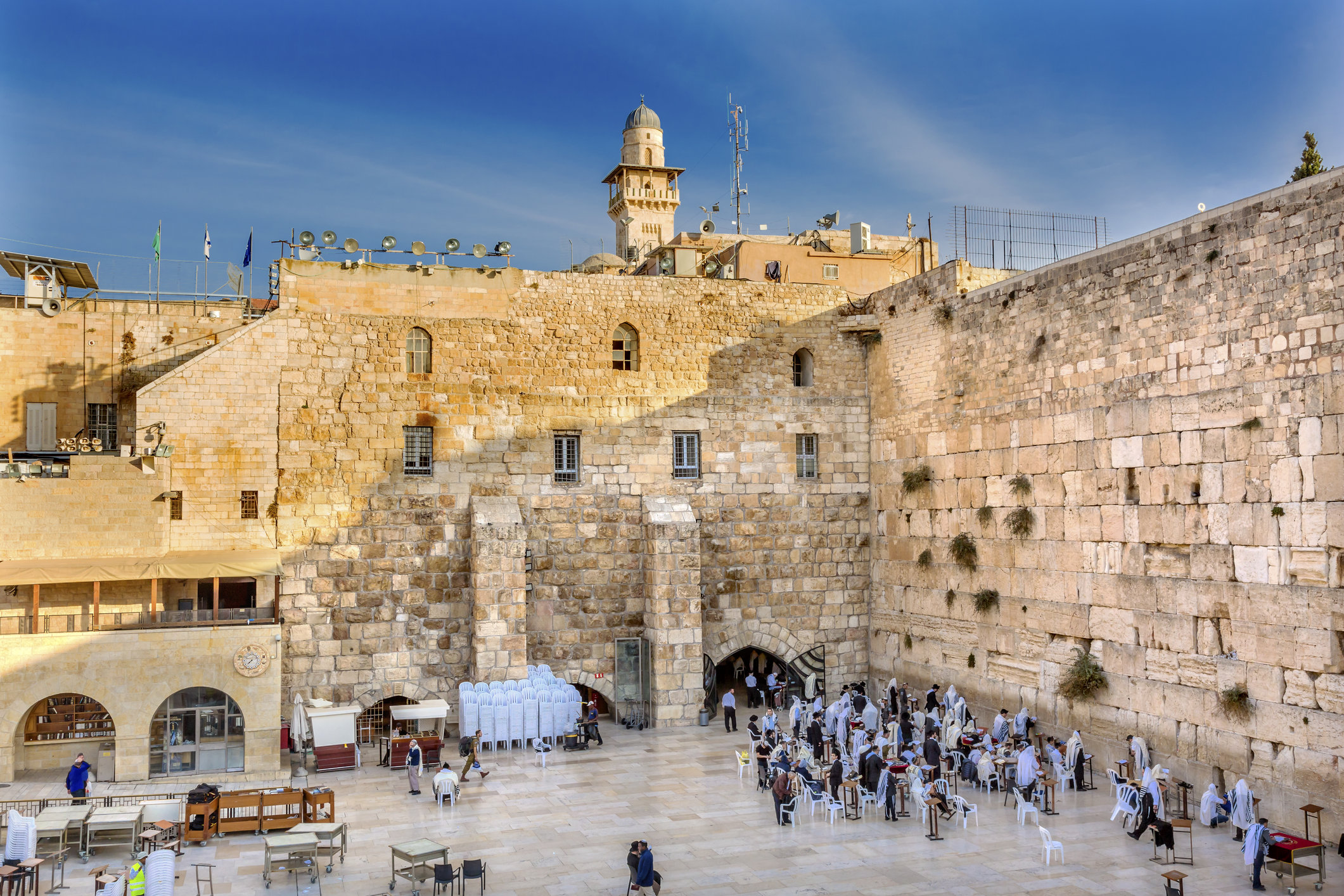
Closely related to the above is remembering the destruction of the Temple, mourning its loss, and believing for its renewal. Thus, I offer a little review. According to tradition, the first Temple was destroyed because of idolatry, and the second Temple was destroyed on account of baseless hatred among brothers. Essentially, this is God’s people breaking the two greatest commandments of loving Him and our neighbor as ourselves. Not doing so, destroys His House and ours!
            © Liorpt | Dreamstime.com

Since Tammuz 17th marks the beginning of the Three Weeks leading up Tisha B’Av (9thof Av), the date that both Temples were destroyed, we should expect to have tests and trials in this area, at this season.

What is the “House” or “Temple”?

  • The Body of Messiah
  • Our physical bodies
  • The Temple Mount/Zion/place of physical Temple
  • Your family
  • Your Assembly

Were any of you tested (or still being tested) in one of these areas? Have you been in a battle to keep these things from being destroyed? What is the purpose in this testing?

The Hidden Goodness in Av

When we see war, calamity, destruction, and unfavorable circumstances with people or life in general, we have a choice to make. If God is truly for us, and we really believe that, then we must adjust our vision, outlook, and attitude to align with the Good News that we have HEARD.

Ps. 119:91-92 (NASB) They stand this day according to Your ordinances, For all things are Your servants.  92 If Your law had not been my delight, Then I would have perished in my affliction.

 Mat. 19:26 (NASB) And looking at them Jesus said to them, “With people this is impossible, but with God all things are possible.”

 Eph. 1:11 (NASB) also we have obtained an inheritance, having been predestined according to His purpose who works all things after the counsel of His will

Do we really believe that ALL things are in God’s hands and control? That even the bad and hard things serve His purposes and are meant for our good, BECAUSE He loves us? There is a story in the Mishnah about a certain Rabbi called Nahum Gamzu that can help one adjust their attitude. I’ve written in other places about the month of Av being referred to as Menachem Av, or Comforting Father. The rabbi in the story below shares this name, Nachum, comforter. It is meant to not only redirect one’s vision or perception of life’s circumstances, but bring one consolation or comfort.

The Gemara inquires: And why did they call him Naḥum of Gam Zu? The reason is that with regard to any matter that occurred to him, he would say: This, too, is for the good [gam zu letova]. Once, the Jews wished to send a gift [doron] to the house of the emperor. They said: Who should go and present this gift? Let Naḥum of Gam Zu go, as he is accustomed to miracles. They sent with him a chest [sifta] full of jewels and pearls, and he went and spent the night in a certain inn. During the night, these residents of the inn arose and took all of the precious jewels and pearls from the chest, and filled it with earth. The next day, when he saw what had happened, Naḥum of Gam Zu said: This, too, is for the good.

When he arrived there, at the ruler’s palace, they opened the chest and saw that it was filled with earth. The king wished to put all the Jewish emissaries to death. He said: The Jews are mocking me. Naḥum of Gam Zu said: This too is for the good. Elijah the Prophet came and appeared before the ruler as one of his ministers. He said to the ruler: Perhaps this earth is from the earth of their father Abraham. As when he threw earth, it turned into swords, and when he threw stubble, it turned into arrows, as it is written in a prophecy that the Sages interpreted this verse as a reference to Abraham: “His sword makes them as the dust, his bow as the driven stubble” (Isaiah 41:2).

There was one province that the Romans were unable to conquer. They took some of this earth, tested it by throwing it at their enemies, and conquered that province. When the ruler saw that this earth indeed had miraculous powers, his servants entered his treasury and filled Naḥum of Gam Zu’s chest with precious jewels and pearls and sent him off with great honor.

When Naḥum of Gam Zu came to spend the night at that same inn, the residents said to him: What did you bring with you to the emperor that he bestowed upon you such great honor? He said to them: That which I took from here, I brought there. When they heard this, the residents of the inn thought that the soil upon which their house stood had miraculous powers. They tore down their inn and brought the soil underneath to the king’s palace. They said to him: That earth that was brought here was from our property. The miracle had been performed only in the merit of Naḥum of Gam Zu. The emperor tested the inn’s soil in battle, and it was not found to have miraculous powers, and he had these residents of the inn put to death. – Taanit 21a

 If we want to transition to the comfort of Av, or find the joy that comes after mourning, we must be able to “see” the world with eyes like Nachum Gamzu. Can we really say, “This, too, is for the best”? In every situation? Even the bad ones?

We currently see only dimly. We must mourn destruction and exile (both physically and spiritually). But we must also try to “hear” the goodness that is hidden in the bitterness of any destruction we encounter in this life and KNOW that Mashiach will come to comfort us, One Day showing us how “this too was really for the best.”

Paul mirrors this sentiment in Second Corinthians. Tu B’Av or the fifteen of Av just passed a few days ago on the calendar. I hope that you are beginning to see the Light after a period of darkness and heavy trials. Be encouraged dear one, in ALL things, rejoice, O daughter of Zion, for your King is Coming to you!

And in ALL things, be able to say, “Gam zu l’tovah!” (This, too, is for the good!)
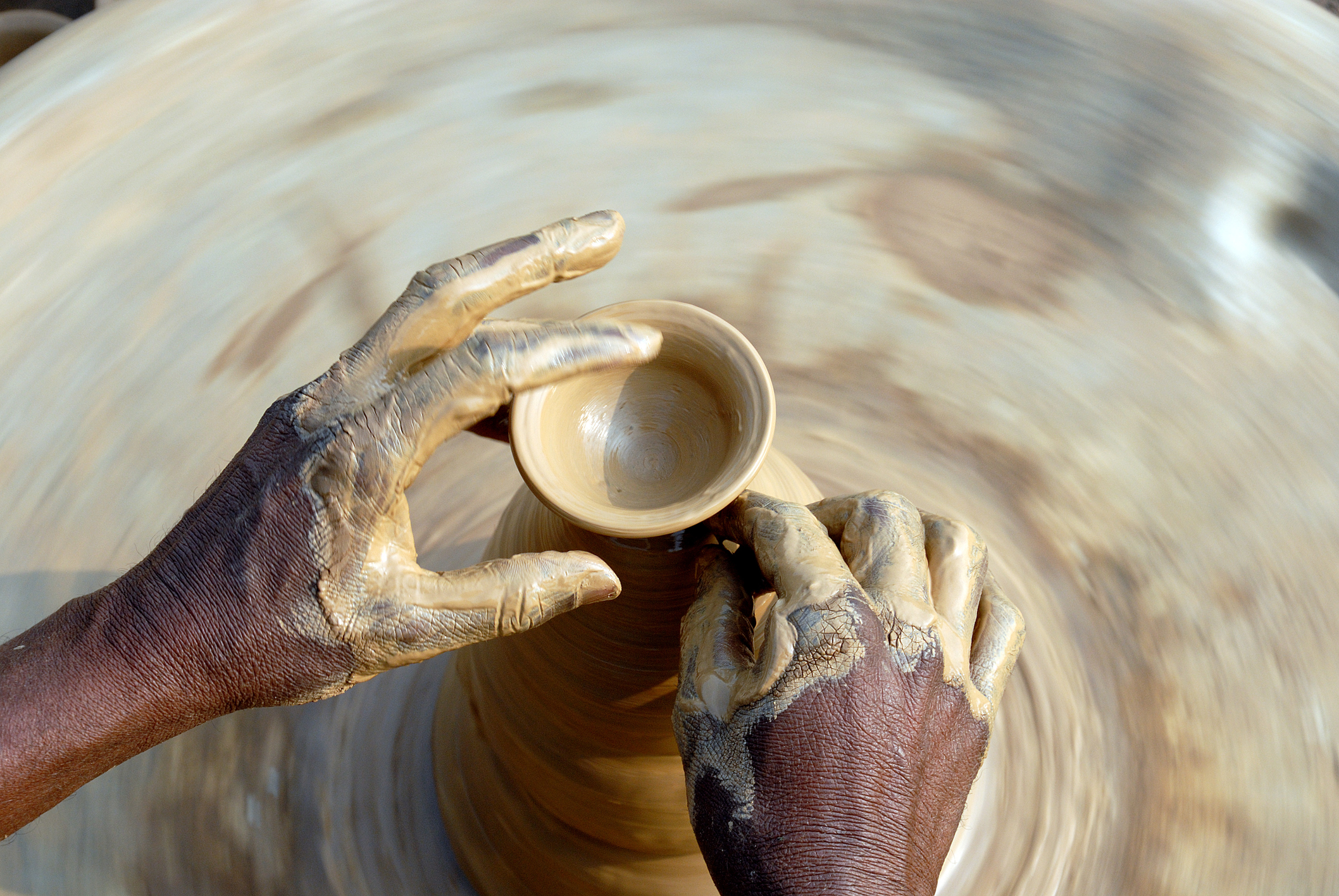
 

            © Samrat35 | Dreamstime.com

2Co 4:7-18 (NASB) But we have this treasure in earthen vessels, so that the surpassing greatness of the power will be of God and not from ourselves; 8 we are afflicted in every way, but not crushed; perplexed, but not despairing; 9 persecuted, but not forsaken; struck down, but not destroyed; 10 always carrying about in the body the dying of Jesus, so that the life of Jesus also may be manifested in our body.  11 For we who live are constantly being delivered over to death for Jesus’ sake, so that the life of Jesus also may be manifested in our mortal flesh.  12 So death works in us, but life in you.  13 But having the same spirit of faith, according to what is written, “I BELIEVED, THEREFORE I SPOKE,” we also believe; therefore, we also speak, 14 knowing that He who raised the Lord Jesus will raise us also with Jesus and will present us with you.  15 For all things are for your sakes, so that the grace which is spreading to more and more people may cause the giving of thanks to abound to the glory of God.  16 Therefore we do not lose heart, but though our outer man is decaying, yet our inner man is being renewed day by day.  17 For momentary, light affliction is producing for us an eternal weight of glory far beyond all comparison, 18 while we look not at the things which are seen, but at the things which are not seen; for the things which are seen are temporal, but the things which are not seen are eternal.


*** By the way, those of you that decided to share your journal of the months with me, please feel free to email me at gracentorah@gmail.com with your monthly results. (I will not make you or your notes public.) Please do not include personal names or organizations when describing trials, issues, or circumstances. Thank you!

 

Categories: Moedim, new moon | Tags: , , , , , , , | 3 Comments

Moonthly Cycle

© Lilkar | Dreamstime.com

For the past five years, I’ve been very intentional about celebrating the new moon. One result was publishing my first book, The Biblical New Moon: A Guide for Celebrating in 2016. Another unexpected outcome was discovering patterns within the monthly cycle. I’ll get to that in moment, but first, I’ll give you a comparison.

Most of my readers have been following the weekly Torah portions through multiple years. Those first several years garner more questions than answers as one’s heart adjusts to the Creator’s paradigm. But, as the years pass by, the Words of the Torah become more and more familiar, a comfort to the soul rather than a contention. Those questions from the early years have long been satisfied by the Words of Life.

Each year, the Spirit highlights certain words, phrases, or sections in the portions as He leads one through the wilderness. It’s always the perfect instruction in due time. I often say that as I follow the Torah portions, they also follow me. It’s like the water giving Rock that followed the children of Israel in the desert. I can see the themes from the portions playing out in my life, testing and encouraging me each week. I can’t imagine walking through life without their guidance, as they are my daily bread, just as sure as Yeshua is the embodiment of the same.

I have had a similar experience on the larger cycle of the months. Much like the Torah portions, they each have a personality (so to speak) that thematically links to real life. And, just as the Ruach HaKodesh highlights certain words, phrases, and sections new every year in the weekly Torah portion, He does the same for the months. The first few years I didn’t notice these patterns because all the information was fresh and new. I had more questions than answers as I attuned myself to this greater cycle through practice.

In the fourth year of being intentional, something shifted, just as it did when I first committed to the Torah cycle. If you’ve read my book (linked above), then you know that I included a great deal of Jewish tradition.[1]For example, I used their assignments of the twelve tribes of Israel for each month, and I included the twelve constellations (mazel) that fall in the ecliptic with the sun and moon each month.[2]There are generally four Torah portions within the months, giving even more layers that make up the personality or theme for the month. Moreover, many months have Biblical and/or traditional feast or fast days. All of these things and more are quite fascinating to meditate upon, and will lead to more understanding.

© Oaties | Dreamstime.com

I think of it as zooming out from the weekly cycle to get a fresh perspective. On an even larger scale, one could zoom out to the yearly festivals, then to the seven-year cycle (Shemittah), and even further to the Yovel (Jubilee) cycle. Wheels within wheels all powered by the Spirit of God. All these cycles are constantly moving around you, your family, your assembly, and the greater Body. And, all these cycles have an order. They are NOT random or arbitrary, they are part of what Adonai has revealed to His people. But, we must choose to either move with them, swim against their current (which gets you nowhere), or ignore them altogether. (Ignorance is not bliss in this case; the cycles are there and working in our lives regardless of whether we choose to follow Him or not.)

Dt. 29:29 (NASB) “The secret things belong to the LORD our God, but the things revealed belong to us and to our sons forever, that we may observe all the words of this law.

I had the privilege of reading Barry Miller’s book, Know the Time Change Your World: The Reappearance of the Seven- and Fifty-Year Biblical Cycles, during these intentional years of celebrating the new moon. His book is very helpful at explaining how the rhythms of these cycles affect not only our spiritual lives, but also our tangible lives in the market, workplace, and finances. After all, Adonai is concerned about the whole person, mind, body, and soul.

© Ekaterina79 | Dreamstime.com

If you’ve been keeping the yearly feasts of Adonai for some time, you’ve probably noticed that things (good and bad) cycle around and around in the seasons. This is because judgment begins in the House of God. Feast days (including the weekly Sabbaths and new moons) are not just times of celebration. They are tests! We will be examined at the appointed times. As such, there are certain themes related to specific times. Perhaps you’ve already noticed this phenomenon on social media.

Every year, after the fall feasts, the identity of the Messiah is questioned, challenged, debated, and reimagined. Whether He is divine or not, Messiah or not, becomes explosive social media fare, destroying our witness regardless of how we view Him. Meanwhile, winter, Chanukah, and Purim are approaching. People in general begin to grow weary about their own identity. They question their purpose and struggle with foundational issues in life and in Bible study. Those that minister to others, really notice these patterns. It’s not chance.

Consider that after Sukkot, it is the “turn of the year.” It’s a type of new beginning. What’s at every beginning? A foundation must be built– whether physical or spiritual. If one has a shaky foundation, there is usually a great identity crisis. If one’s foundation was damaged in the previous year, they too, will struggle with a rebuild. What many consider “basic” or “foundational” issues will be challenged in this season. The Hebrew month’s that span this time frame are Kislev, Tevet, Shevat, and Adar.

Also consider the traditional winter festivals of Chanukah and Purim. They are all about the Jewish people fighting for their right to exist! Foreigners seek to wipe them off the map or conform them into an image of their making. The basic, foundational rights bestowed upon Israel by the Creator are being challenged. Is it a surprise that Messiah is challenged around this season? Or, that individuals search and struggle with who they are? I don’t believe so, because it’s part of the cycle. Sin and rebellion will exacerbate these issues.

That’s one example, I have many. I’ve been journaling about the monthly cycle for a while. I’ve written about my own struggles, and those that others have revealed to me at these seasons. I’ve also tried to pay attention to social media debates (in the Torah keeping world) and the months and seasons in which they occur. I have a dear friend that has given me more insight, and I hope to continue to collaborate with her. We hope to produce something more formal in the future.

Why would something like this be valuable? Testing and trials will not vanish, of course. They are part of our refinement. However, it would be encouraging to know that you are not alone, and that Adonai has good purposes and intentions towards us. It will also be a great resource for prayer! Many claim to be a watchman. A watchman can see what’s coming, sound the alarm, and prepare the army. If you are aware that certain issues in the natural or spiritual will be challenged or tested, then you know how to pray. You know how to stand. Your faith is built up to overcome. I believe the cycles of the Creator reveal these things to His people, so they can do just that: observe all His instruction. And, do so with a different heart, like Caleb, trusting that though there be giants, fortified cities, and Amalekites, we can overcome!

Num. 13:30 (NASB) Then Caleb quieted the people before Moses and said, “We should by all means go up and take possession of it, for we will surely overcome it.”

For now, I have a request for my readers. That is actually the point of this post! I wonder who would be willing to journal alongside me? I’d really like as much feedback as possible. I don’t need you to write a book, just notes about each month. What did you battle with? How did this compare to the weekly Torah portions that month? To the traditions from the Sages? To the feasts or fasts? What “blew-up” on social media? What did people need prayer for? What other patterns did you notice? To streamline what I’m looking for, I’ve devised the following chart. Feel free to print it out to use as journal pages or use it to create your own template.

Moonthly Cycle Chart

New Moon Main Menu


[1]If you are anti-Jewish, anti-tradition, or fear things that are mystical, you need read no further. I believe in balance and using good Bible hermeneutics. However, I also believe the Sages and Jewish sources are valuable and have great wisdom.

[2]This NOT astrology. It has nothing to do with divination or deciding one’s fortune. That’s the perversion. Pagans didn’t put the stars in the heavens, HaShem did. The luminaries declare the glory of Elohim, which is the Good News. (Ps. 19) They also govern His moedim, His calendar, His appointments, and give Light to the earth as a testament to His authority over all the earth. (Gen. 1:14-19)

Categories: Messianic Issues, Moedim, new moon | Tags: , , , , , , , , , , | 13 Comments

Counting the Omer & Shavuot

Chag Sameach Shavuot!

© Beritk | Dreamstime.com

This year, I wrote two articles in a newsletter format. (I used this same format last Rosh Hashanah.) My plan was to print and give these out at our gathering, but they became too lengthy. If you listened to recent Renewed podcasts, you have some idea of where my thoughts have been this year during the Omer count.

So, dear reader, you get a two-for-one in this post – my two loaves, lol!

Shavuot 5778

Counting the Omer 2018


Categories: Biblical Symbols, Moedim, Renewed Radio | Tags: , , , , , , , , , , , , | 6 Comments

What Do Costumes Have to Do With the Book of Esther?

© Evgenia Lysakov | Dreamstime.com

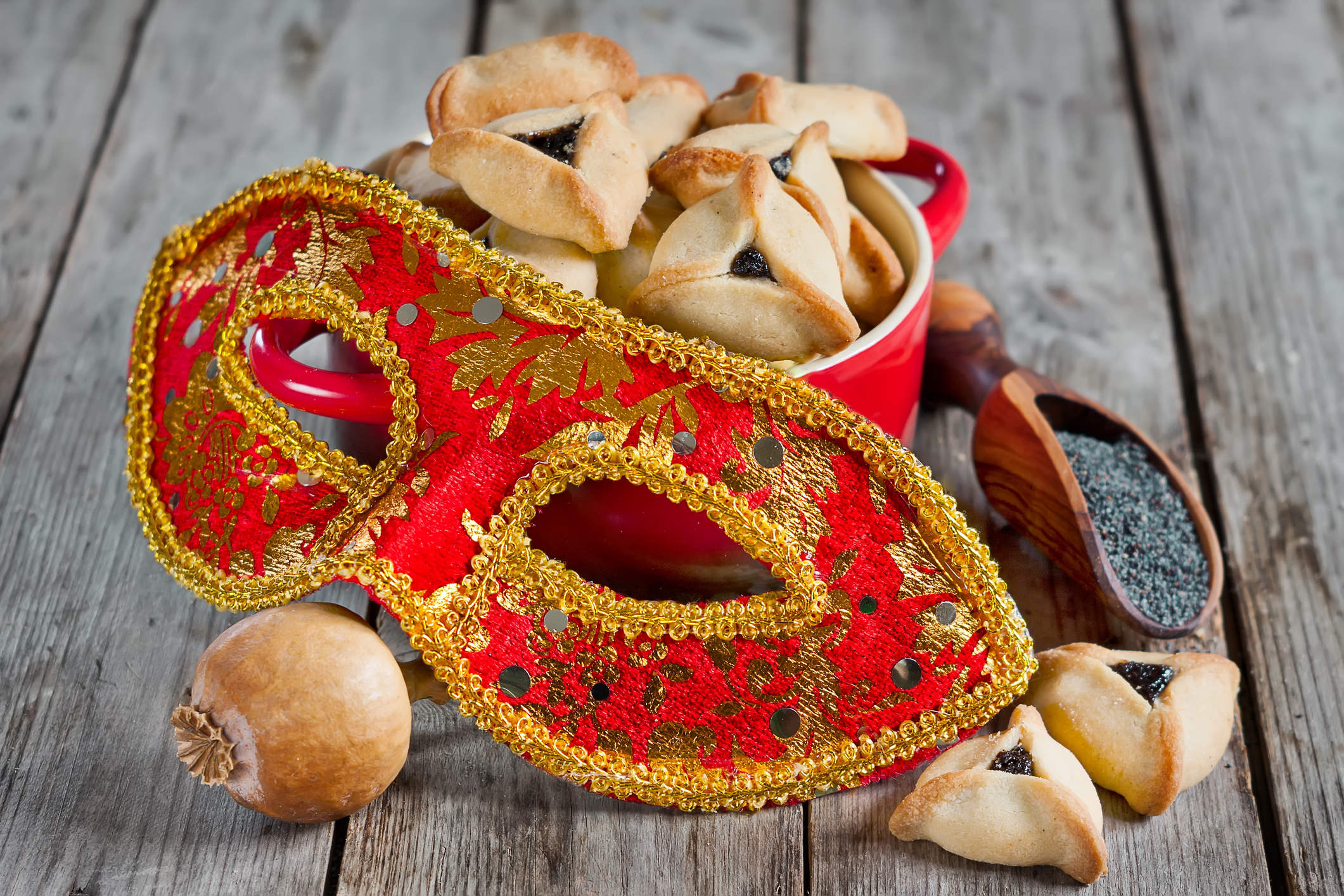
Recently, I participated in a “Table Topics” discussion with Jeremy Legatzke on Hebraic Roots Network. The topic was Purim. Jeremy prepared several questions that tend to be controversial about this Feast of the People. One question was about the tradition of dressing up or wearing costumes. Pondering this question caused me to dig for an answer. Jeremy quoted from a Haaretz article that said that donning costumes during Purim began in the 14th century as an alternative to lent. Is this tradition a tare that needs to be uprooted or is there a Biblical precedent for this custom?

While I do not agree with the scary Halloween-ish type of costumes, dressing up as Biblical or historical characters can be used as a good (and fun) teaching tool, especially for children. This is true not just for Purim, but at other times as well. Dramatic or associative play (dress-up) is an important part of child development that teaches self-regulation, conflict resolution, and empathy. It encourages imagination, creativity, and language and math development. It also relieves stress, tension, and helps children to deal with traumatic circumstances.

© Vitalinko | Dreamstime.com

None of this should be surprising to a Bible Believer or something we should fear. God made us to be imitators of HIM, so naturally, children learn by imitating the adults they encounter. One year, we dressed up for our Passover Seder and it was one of the most memorable we’ve ever experienced, which is the primary POINT of the Seder.

But, what about Purim? First, it is helpful to do a concordance search on clothing, garments, robes, coverings, adornments, etc. The Word of God actually has A LOT to say about garments. In every generation, clothing has played an integral role as a mark of rank, status, royalty, righteousness, gender, holiness, wickedness, mourning, bridal attire, authority, service, and more. These coverings and what they represent are used literally, figuratively, and metaphorically in the Bible. The first mention of clothing is in Genesis:

Gen 3:21 (NASB) The LORD God made garments of skin for Adam and his wife, and clothed them.

(I’ve written some thoughts about these “garments of skin” here and here.) The last mention of clothing is in Revelation:

Rev 22:14 (NASB) Blessed are those who wash their robes, so that they may have the right to the tree of life, and may enter by the gates into the city.

I hope you will meditate on those two verses for a while, as I believe they teach a profound lesson. We could spend years exploring garments, the change of garments, and other adornments in the Bible. For now, consider rereading the Book of Esther and underlining or highlighting every time you see a mention of robes, changing clothes, coverings, and other royal attire such as crowns, scepters, and signet rings. That is what I did this year, and it revealed a new dynamic to this fascinating story. If you have a good imagination, you can also picture the attire not mentioned that other characters in the story would have worn. For example, how would one know if a person was part of the royal court, harem, officials, or army if not for their garments?

Wardrobe reveals much about a person. If we see someone wearing a white coat and a stethoscope, we know that individual is a doctor. If we see a man in a blue uniform with a badge, we know that he is a police officer. So, what do the garments in the book of Esther reveal?


Esther Told Through Apparel

  • Queen Vashti’s crown is taken due to her refusal to come at the king’s command. (Est. 1:11,19)
  • Esther is given the crown because she found favor in the king’s eyes and becomes queen. (Est. 2:17)
  • The king gives his signet ring to Haman; giving him the authority to send out a decree to destroy the Jews. (Est. 3:10-15)
  • Mordechai learns of Haman’s plan to annihilate the Jews, tears his clothes, and puts on sackcloth and ashes. (Est. 4:1-2)
  • Many other Jews did the same. (Est. 4:3)
  • Esther donned royal robes to approach the king on his throne. The King extends his golden scepter to Esther and offers her not only her life and favor, but up to half of his kingdom. (Est. 5:1-3)
  • Haman, thinking the king wanted to honor him, tells the king to array a man in the king’s robes and parade him around the city on the king’s royal horse on whose head the royal crown has been placed. (Est. 6:7-9)
  • The king tells Haman to honor Mordecai by doing exactly that: dress him in the king’s robe and lead him around the city proclaiming, “Thus shall it be done to a man the king desires to honor.” (Est. 6:10-11)
  • Haman was so humiliated that he went home mourning with his “head covered.” (Est. 6:12)
  • When Esther revealed herself and Haman’s plot at the second wine banquet, the king left in fury. When he returned, he found Haman falling on the couch where Esther sat. The king accused Haman of assaulting Esther, and they (the king’s guard) COVERED Haman’s face. (Est. 7:8)
  • The king took the signet ring off of Haman and gave it to Mordecai. (Est. 8:2)
  • Mordecai and Esther wrote new decrees in the king’s name and sealed it with the signet ring, so the Jews could fight and defend themselves. (Est. 8:8,10)
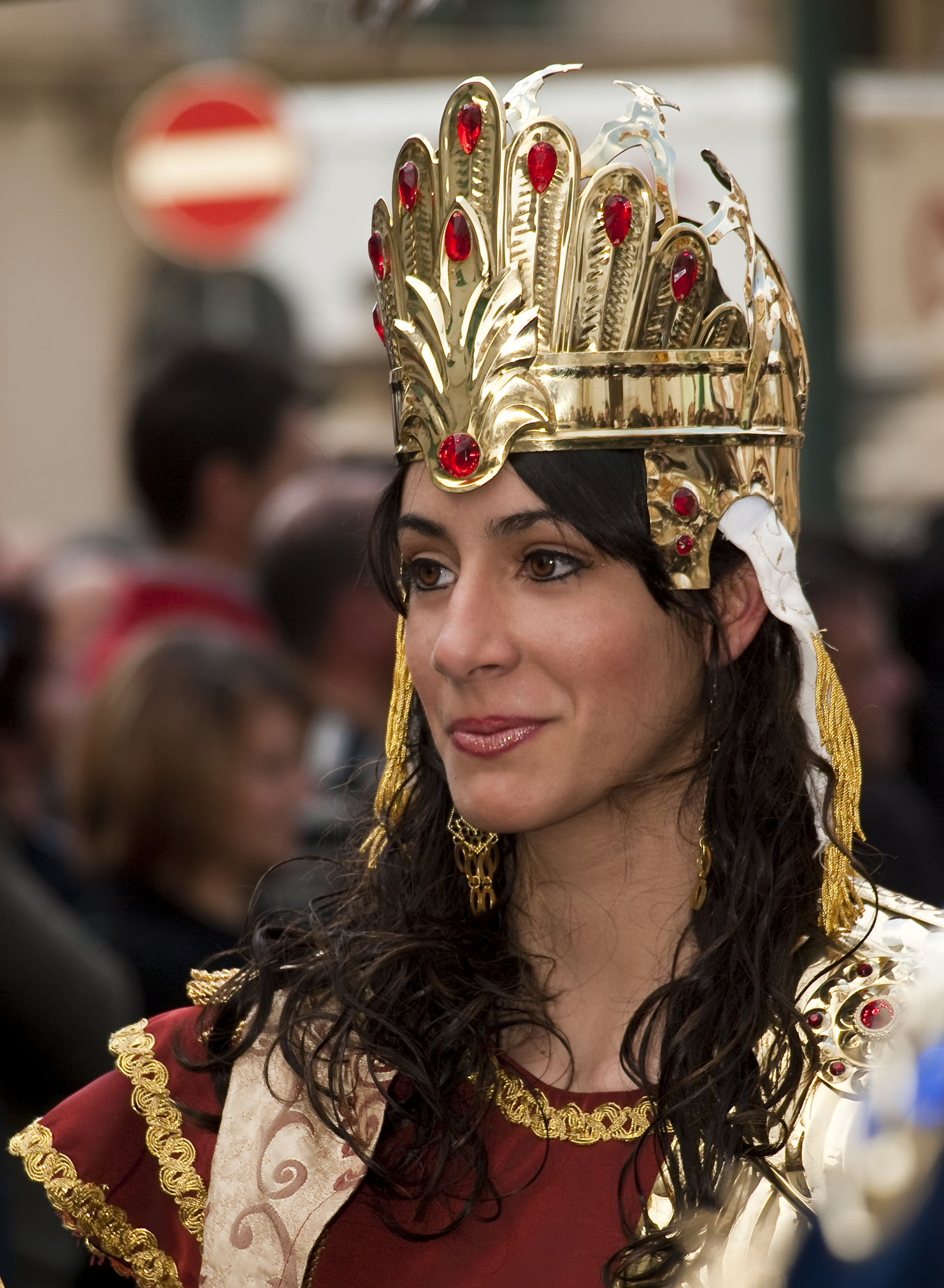
  • Mordecai wore royal robes of blue and white linen, a large crown of gold, and another outer garment of purple and linen. (Est. 8:15)

In a sense, the entire plot reversal in the Book of Esther is told through what is “worn.” Can you see how a tradition of dressing up or wearing costumes and masks could have arisen from the Biblical text? This is just the surface level of the story. If we dig deeper, there is more! I’ll give a couple of examples.

Did the King’s Horse Wear a Crown?

Est. 6:8 (NASB)  let them bring a royal robe which the king has worn, and the horse on which the king has ridden, and on whose head a royal crown has been placed…

© Svetlana Alyuk | Dreamstime.com

It’s obvious that Haman’s pride and unbridled desire for recognition and power had no bounds. This wasn’t lost on King Ahasuerus. Some scholars believe that the Persian horses wore crown-like adornments, especially those used by the royal family, but others disagree. I tend to side with the latter view based on the Hebrew text. The “royal crown” mentioned in the verse above is “מלכות כתר” or keter malkhut. It is used in two other places in the Book of Esther:

Est. 1:11 (NASB) to bring Queen Vashti before the king with her royal crown in order to display her beauty to the people and the princes, for she was beautiful.

Est. 2:17 (NASB) The king loved Esther more than all the women, and she found favor and kindness with him more than all the virgins, so that he set the royal crown on her head and made her queen instead of Vashti.

This “royal crown” is different than the large crown of gold (atarah gadol) that was given for Mordecai to wear.[1] Both display authority, but only one represents the actual kingdom, a feminine Hebrew word. Based on the usage of this Hebrew phrase, some scholars believe that what Haman actually requested was not the king’s crown or his horse’s, but the crown of the queen! Even though Haman was second in the kingdom, he wanted more. He wanted to be THE king and have his wife, the queen, too. This isn’t an outrageous interpretation considering what happened when the king returned from his anger at the second wine banquet. He found Haman falling onto the couch (or bed) with Esther.

Est. 7:8 (NKJV) When the king returned from the palace garden to the place of the banquet of wine, Haman had fallen across the couch where Esther was. Then the king said, “Will he also assault the queen while I am in the house?” As the word left the king’s mouth, they covered Haman’s face.

Ironically, it was this suspicion that cost Haman his life, not his hatred for the Jews. No one messes with the wife of the king and gets away with it!

© William Attard Mccarthy | Dreamstime.com

Before Esther approached the king unannounced, she had not been summoned in thirty days. (Est. 4:11) But when Esther boldly approached the throne, inviting the king and Haman to a “wine banquet,” it intrigued the king. She had his full attention. What could she want? Why did she also invite Haman? To add to the mystery, Esther didn’t tell the king what she wanted at the first banquet. Can you imagine how heightened his curiosity must have been when she requested that he and Haman join her again the next night?

After the first banquet, the king couldn’t sleep. Can you blame him? You know he had to be wondering why in the world she (his queen and wife) only invited him and Haman to these specially prepared wine banquets. He tried to ease his troubled mind by having the book of records read to him. This is how he discovered that Mordecai had saved his life.

Thus, the next day, all his worry and suspicion is fresh on his mind when he asks Haman how he should honor a man that he desires to honor. Do you think he might have been extra sensitive to Haman using the words “keter malkhut?” After this display, King Ahasuerus was likely wondering if Haman wanted not only his kingdom, but also his woman, the queen. I believe this is why his reaction was swift and decisive when he saw Haman falling onto the couch with Esther. It was a confirmation of all his suspicions!

Haman essentially wanted to switch clothes (roles) with the king. Instead, he ended up wearing the very noose he had prepared for Mordecai. Or, perhaps more accurately, a very large pike was adorned with Haman’s head as a warning to all who defied the crown.

Concealed and Revealed

A common theme in the Book of Esther is hidden motives, hidden identities, and even a hidden God (YHWH’s Name doesn’t appear in the Esther even though His divine providence is seen throughout the book.) Costumes and masks “hide” or “conceal” what is underneath. Esther concealed the fact that she was a Jew at the command of Mordecai, though the writer is sure to tell us that they are from the tribe of Benjamin. (Est. 2)

The author also reveals the lineage of Haman:

Est. 3:1 (NASB) After these events King Ahasuerus promoted Haman, the son of Hammedatha the Agagite, and advanced him and established his authority over all the princes who were with him.

Haman is called the son of Hammedatha the Agagite, or of the Agagites. This recalls Agag the king of the Amalekites, conquered and taken prisoner by Saul, and hewn into pieces by Samuel. (1 Sam. 15:8,33) It also harkens back to when the children of Israel first crossed the Reed (Red) Sea and were attacked by the Amalekites. (Ex. 17:8-16) Hence, both Jewish and Christian expositors regard Haman as a descendant of the Amalekite king, who was a descendant of Esau.

If this is the case, Haman’s hatred of Mordecai and the Jews is a very old sibling rivalry that dates back to Jacob and Esau. On a spiritual level, this is the battle of appetites and desires (flesh) with the truth of the Word of God and His Torah. On the outside, Esau wore the skin of the firstborn, but he was ruled by his flesh rather than the Spirit of God. He acted rashly and without concern for his birthright, because he’d rather be in the field like a beast. But Jacob was a peaceful man of the tents, an idiom for Torah study. Thus, Esau’s stomach of desire sold the divine birthright to Jacob for a bowl of red (earth/flesh-like) soup.

Rebekah was given a Word from the LORD while the boys were still in her womb that the older would serve the younger. And, when an aged and blind Isaac went to bless the boys before he died, Rebekah counseled Jacob to dress up or wear the beast-like costume of Esau.

Jacob disguised his identity by donning the garments of his brother and received the blessing of the firstborn, which YHWH said belonged to him in the first place.

Gen. 27:15 (NASB) Then Rebekah took the best garments of Esau her elder son, which were with her in the house, and put them on Jacob her younger son.

At first glance, this activity appears to be highly deceptive. I believe we are meant to wrestle with this story. What was really happening here? Did Rebekah and Jacob sin or did they fulfill God’s plan in an unorthodox way? Wasn’t there a way for YHWH’s intended son to receive the birthright and the blessing without such trickery? To add to our struggle, the Word never says that Rebekah or Jacob sinned by going through with their plan.

Did you catch the punch line? Israel (Jacob) received the blessing while he was wearing the costume of Esau!

Some rabbis teach that this is the real reason for the tradition of wearing costumes on Purim. Descendants of Jacob and Esau met in Persia, and once again Esau sought the life of Jacob. But also once again, there was a heavenly reversal and Jacob (Mordecai) received the eminent position that Esau (Haman) sought.

There are some deep lessons to be learned by wearing the garments of another. If children benefit from this activity in the natural, what do you suppose the spiritual counterpart is?

I think the answer is found in Genesis chapter 1:

Gen. 1:27 (NASB) God created man in His own image, in the image of God He created him; male and female He created them.

We are the image of God in the earth. We are imitators of the Messiah.[2] We are clothed in garments of salvation and robed in His righteousness.[3] But sometimes, we must beat the beast at his own game of masquerading as an angel of light. Things are not always what they seem. Sometimes, what appears to be harlot, is a righteous woman doing the will of God. Sometimes, what appears to be foreign pagan ruler, is actually our long, lost brother. (Joseph)

© Kobby Dagan | Dreamstime.com

Esau still hates Jacob, even if he offers a kiss. We need to discern these twins within ourselves first. Like Esther, many of us live in exile. But also like Esther, we are daughters of Abihail. (Est.2:15) In Hebrew, Abihail is Av + chayil. Our Father is a strong Warrior!

We recall righteous Tamar that took off her garments of widowhood and donned the apparel of a prostitute, concealing her identity from Judah. Her costume helped procure the line of Judah and the Messiah! We recall Joseph who dressed and spoke like an Egyptian, and saved not only the nation of Israel, but also many others. We remember that the outside of the cup can be deceiving. The children of light give others the benefit of doubt. They are not quick to judge or to speak. They do not promote unforgiveness or hatred, even when they are betrayed and hurt. They are image-bearers of God and not a red, hairy beast of the field.

If wearing a costume or dressing up teaches one to be more like Adonai, and to be more empathetic to other’s plights, and it confuses the schemes of the enemy, then that’s what I want to do.

-K


[1] Est. 8:15 (NASB) Then Mordecai went out from the presence of the king in royal robes of blue and white, with a large crown of gold and a garment of fine linen and purple; and the city of Susa shouted and rejoiced.

[2] 1 Cor. 1:11, Eph. 5:1

[3] Is. 61:10

Categories: Biblical Symbols, Moedim | Tags: , , , , , , | 8 Comments

Blog at WordPress.com.