Posts Tagged With: transformation

Twins at the Mountain

A Sivan & Shavuot Reflection

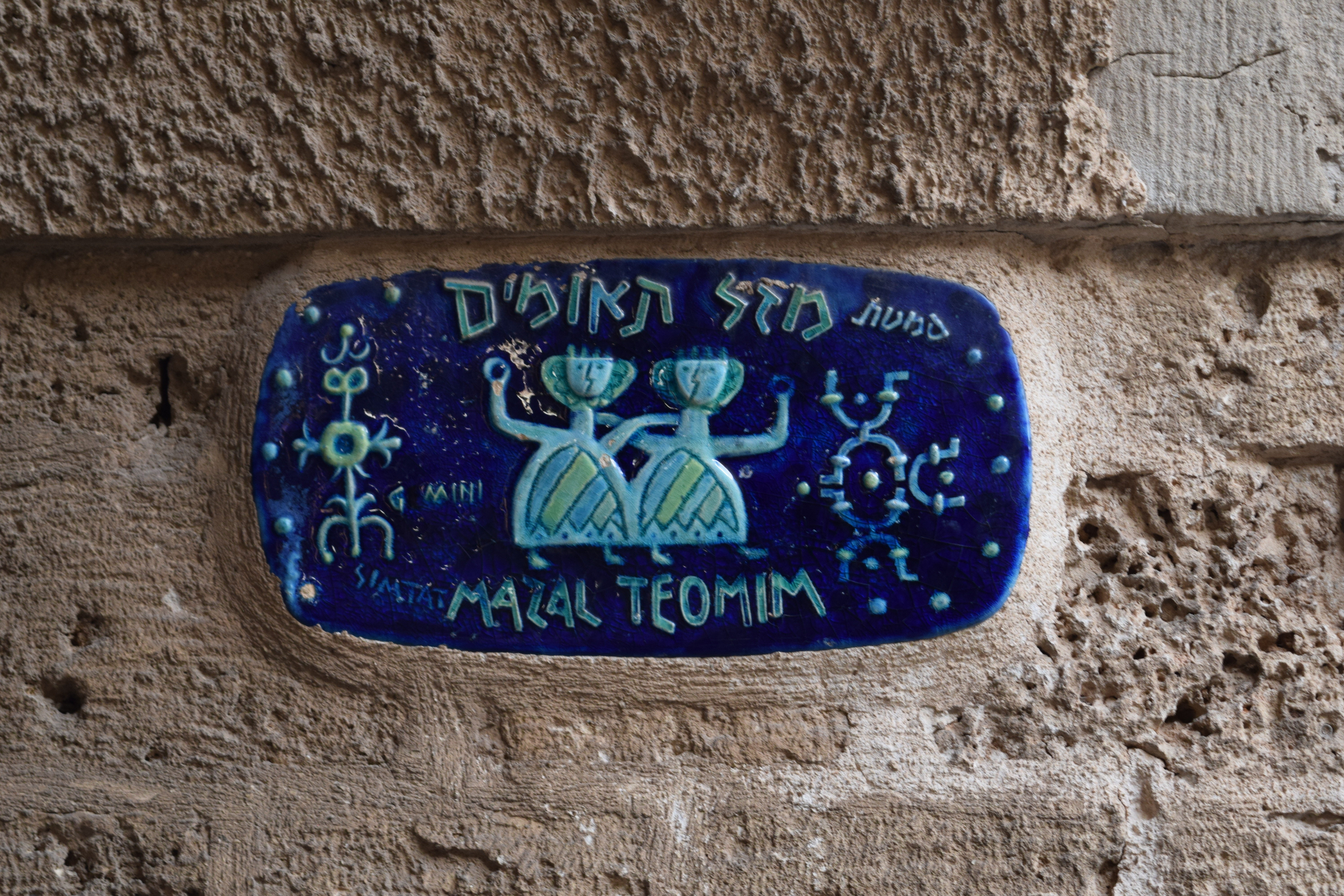
The Twins of Sivan—Gemini, or Teomim—are more than a celestial sign. They mirror a mystical reality: the divided, dynamic inner life of every human soul. In
© Kisha Gallagher

Scripture, the most iconic twins are Jacob and Esau—born of the same womb, struggling from the moment of conception.

In the womb, they wrestled. At birth, they emerged distinct—Esau red and hairy, Jacob grasping his heel. Esau becomes the hunter, the man of the field, of this world; Jacob, the tent-dweller, the man of inward pursuit and divine destiny. These twins symbolize more than two brothers — they represent the inward duality within every soul:

  • Esau: Earthly, impulsive, sensual, flesh-driven
  • Jacob: Heavenly, thoughtful, prophetic, spirit-led (but not perfect!)

Esau reflects untamed strength, raw desire, and worldly instinct. Jacob reflects the yearning for righteousness, the pursuit of intimacy with God—but also fear and manipulation. One is not evil and the other good. Each represents a force that must be transformed. This dynamic is vividly described by Paul in Romans 7:

“I see a different law in my members, waging war against the law of my mind… Wretched man that I am! Who will rescue me from this body of death?” (Rom. 7:23–24)

During the Omer Count, this war is brought to the surface — not to shame us, but to integrate us. Unlike Passover (Nisan 14) or Sukkot (Tishrei 15), Shavuot is not fixed by a date—but by a journey to the mountain. The name of the feast—“Weeks”— is about TIME, because time is the medium through which God heals the fracture between Spirit and Flesh, Jacob and Esau, Law and Spirit.

Revelation does not arrive hastily; it waits for the completion of the 7×7 journey—a journey that exposes our inner dualities and awakens our deep need for both divine instruction and spiritual empowerment.

Time allows the fracture to be felt—so it can be healed not through striving, but through surrender in covenant. Jacob needs truth to stay on the narrow path. Esau needs grace to come to the table. But neither can grow without time—sacred, repeated, transforming time. Dr. Henry Cloud frames this as the triad of healing: grace + truth + time.

This is exactly what the 7×7 count provides (this is true of all appointed times):

  • Grace isn’t received once—it is practiced across many moments.
  • Truth isn’t absorbed overnight—it is tested and confirmed over time.
  • Wholeness doesn’t arrive all at once—it comes through the accumulation of consistent transformation.

This mirrors how trauma and brokenness are often layered. God responds not with haste but with patient and holy repetition—because you are being re-patterned into His likeness, not just patched up with a bandaid. He doesn’t leave scars behind. During Sivan, we reach the mountain of God on Shavuot. This is the divine answer to our inward war:

  • The Torah clarifies the path: “This is the way, walk in it.” It appeals to our Jacob.
  • The Ruach (Spirit) empowers the walk: “Not by might nor by power, but by My Spirit.” It sanctifies the Esau within.
  • The Covenant creates time and space for transformation: “We will do, and then we will understand.” (Ex. 24:7)

This triad—Torah, Spirit, Covenant—mirrors grace, truth, and time in action. Rather than rejecting Esau or idealizing Jacob, Sivan invites us to transform the

© Beritk
| Dreamstime.com

Esau within — not by suppressing him, but by redeeming him. Just as Jacob eventually embraces Esau, so we must learn to embrace and integrate the parts of us that were once in rebellion. In Jewish terms, this is the process of birur — sifting or clarifying, separating light from darkness. But the goal is not permanent separation. Birur refines, but doesn’t discard. This process gives clarity that leads to unity and restoration (tikkun). Jacob cannot be whole until he reconciles with Esau (mystically speaking). Spirit cannot truly reign unless the flesh has been submitted, not annihilated.

Thus, the Teomim of Sivan teach:

  • The inward war is not failure — it is the birth canal of transformation.
  • Conflict leads to covenant, when placed under divine instruction.
  • Spirit and flesh are not equals, but they are both part of the process of becoming whole.

© Skypixel
| Dreamstime.com

Thus, the danger has never been having a “twin” nature — the danger is division/separation without direction/godly counsel. The spiritual journey is not to choose between Jacob and Esau but to become Israel — the one who wrestles, is transformed, and walks with God.

Yeshua is the ultimate Te’om — the twin-natured Redeemer who showed us the Way.  He unites all opposites within Himself. And He invites us into that same integration:

“The glory which You have given Me I have given to them, that they may be one, just as We are one; I in them and You in Me, that they may be perfected in unity, so that the world may know that You sent Me, and loved them, even as You have loved Me.” (John 17:22–23, NAS95)

Through Him, the tension within us can become a holy marriage, a joyful harmony, or a glorious dance. If you are wondering how Yeshua’s followers could be “with one mind in the same place” on Pentecost when we can’t even agree on the “date” of Shavuot, this is the answer. It was never about a “date,” but an accounting and a journey. Perhaps that’s why Sivan’s sense is “walking.” Walking requires two like but opposite things to work together, to be balanced. Without the harmony of two becoming one, we are paralyzed, stripped of the ability to move forward in the Way.

Reflection Questions

  • What does my “Esau” look like — where do I wrestle with earthly desires, impulses, or instincts?
  • In what ways am I reaching out, like Jacob, for higher things — but struggling in the process?
  • How is God inviting me into a deeper union of Torah (instruction) and Spirit (power)?
  • Where in my life do opposites feel irreconcilable — and how can covenant bring them together?
  • What part of me have I condemned or ignored, rather than inviting into covenant transformation?
Categories: Biblical Symbols, Moedim, new moon | Tags: , , , , , , , | 4 Comments

What Do You Want to Make Today?

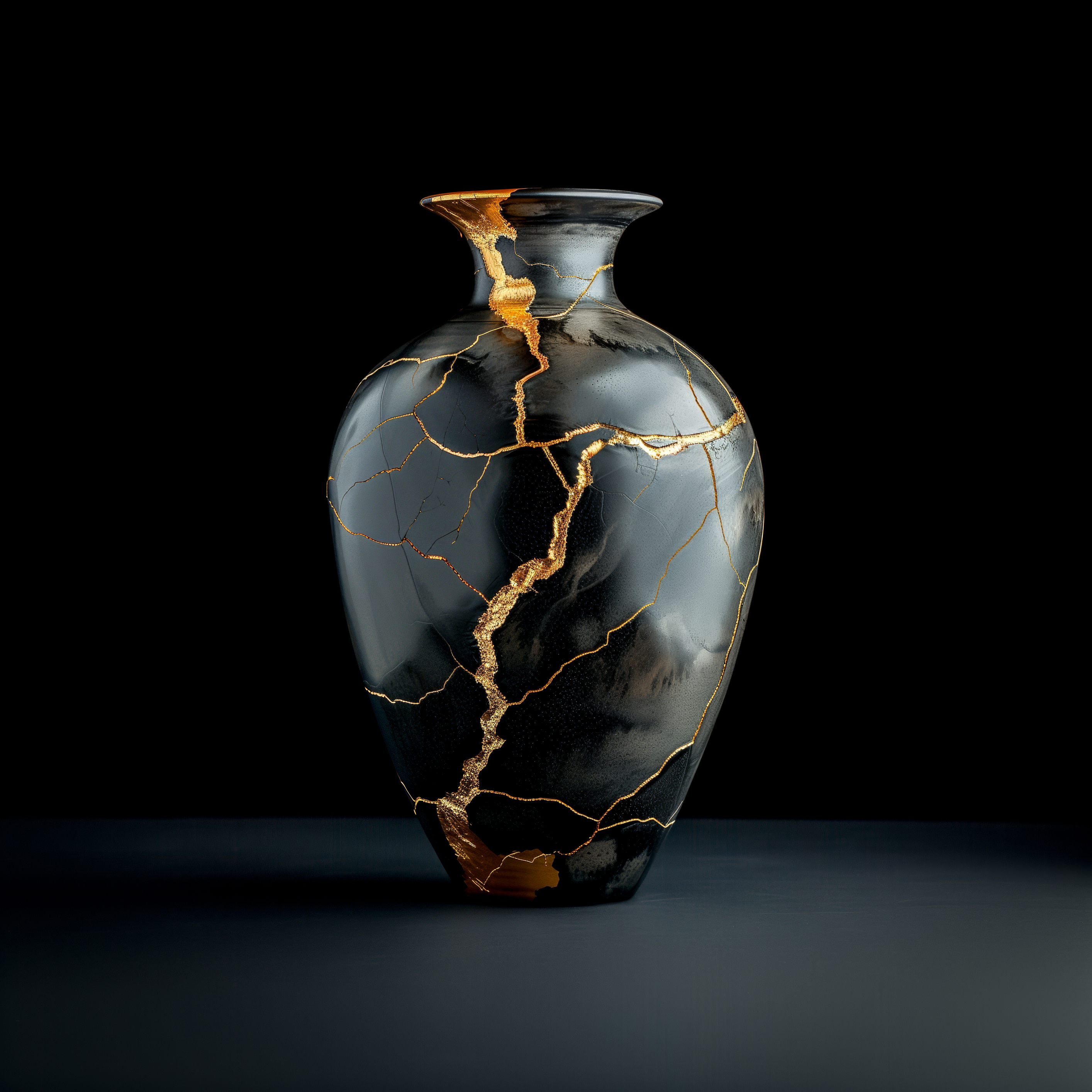
Recently, I was looking for a simple Christian teaching comparing the Japanese art of kintsugi with the healing power of the Gospel to share with a Creation Gospel Workbook 4 class. (Email me at kisha@graceintorah.net or creationgospeltrainers@gmail.com to learn about classes.)

© Gualtiero Boffi | Dreamstime.com

In my search, I found a video by a Japanese artist and believer named Makoto Fujimura. Kintsugi is the process where a broken vessel is mended back together with an epoxy mixed with a metal, usually gold, which acts like a glue and a filler, even filling in for a missing piece of pottery. The vessel, once useless in its broken state, is transformed into a unique and beautiful piece of art. Beauty for ashes. That’s precisely what Yeshua does for us. He takes these jars of clay and transforms us into the good gold of the Kingdom. He takes our brokenness, pain, sorrow, and trauma, and through His grace, He transforms these things into a vessel of honor that gives Him glory.

I was so moved by Makoto – maybe as an amateur artist I related deeply with how he teaches the good news – that I watched a few more videos of him. Back in May of 2012, he gave a commencement speech at Biola University. The title is the same as the title of this post:


What do you want to make today?”


This question, which he heard asked by a high school art teacher, was meant to invoke the imagination of students beginning their high school journey. The question was a metaphor. It wasn’t really about physical art, but their lives. As image bearers of the Creator of the Universe, every human being is “creative.” We are “makers,” like our God. Every single day we have a choice about “what we will make.” Will it be love or war? Will we be a peacemaker or one who stirs up strife? We will choose to make something beautiful and beneficial for others, or will we destroy and burn what is around us to ashes? Will we compete with others or cooperate with them? Will we be the hero or the villain? We will choose life or death?

I used to work for a company that had the slogan, “Make a Great Day.” There is no “it” in the sentence. You are not making “it,” you are making “a day,” great. The implication is that a great day is not something that happens “to you”; rather, it is something you choose, something “you make.” Even when bad things happen, or when a day is simply rote and mundane, one has a choice as to how they will “see” it  and how they will react or respond. “What will you make?”

We are so used to just doing what we are expected to do that we get tangled up in things that are not eternal. This is true even in circles of faith because we tend to mirror the earthy realm. The secular world boils down our creative energy to mere usefulness and profitability, assessed through the lens of competition with others. (Who hasn’t seen this occur in the “church?”) This isn’t true creativity, but cunningness. It’s the lie of the serpent. It makes us a taker and user of others, not creative givers and lovers. Mr. Fugimura says that this changes the fundamental question above to, “What can I take from others?” Or, “How little can I do to get the maximum results?”

© Yevhenii Tryfonov | Dreamstime.com

How different these questions are from, “What do you want to make today?” Imagine sitting in an art room filled with blank canvases, brushes, and paint in every possible color at your disposal when you are asked that question. All the “have-to’s” fall away and one’s mind/heart is free to go to an entirely different place where competition transforms into creativity. The jail cell of striving becomes an open field of dreams and new creations. We’ve had some “art days” with our local women and kids – and all, no matter their skill level, have enjoyed them and found them to be cathartic and spiritual experiences.

Creating is therapeutic whether it is music, art, writing, designing, constructing, fashioning, refurbishing, sewing, etc. Adonai fills His people with His Spirit to build His House.[1] But this same gift of creativity can be used for the enemy’s kingdom. Even Believers struggle with the inward war that Paul speaks of in Romans 7. We want to make love, peace, and unity, but often fail, and instead “do” the works of the flesh. A review of Romans 8 is helpful. In Messiah, the Spirit helps our weakness so we can persevere and choose to put to death the works of the flesh, and walk in the freedom of the Spirit of God.

In the video, Mr. Fugimura recounted the events of 9/11 and how a few people chose “to make” vengeance and destruction and death. As I listened, I couldn’t help but to think back to the more recent events of October 7th, 2023 when others made the same horrid choices. He also spoke of the negativity that pervades our culture, which I would say is even worse now than when he gave this commencement speech in 2012.

Knowing that some, perhaps many, choose to use their creative imagination for evil, destruction, and death is depressing. The question, “What do you want to make today?” can seem like an naïve dream when compared to our present reality. But is it?

The brilliant artist and Gospel teacher, Makoto Fujimura says this question is NOT an idealist escape from reality. Rather, it is a quiet resistance against the deadly fears dominating our world today. It’s a refusal to submit to destructive ideologies, and to instead make a grand use of one’s creative imagination.

The creative power given to us by God is capable of inspiring hearts who seek ways to protect and save lives, and develop new ways to lift people from poverty and from oppressive rulers who demand and teach hate and murder. In the end, it is these things, not the evil wrought by man, that will go on into eternity. The devices or imaginations of evil hearts will not go on. ALL things will be renewed with the kintsugi of the Master Artist.

Meanwhile, we can choose to remake what is broken, to build new things for the glory of God and His Kingdom. The Spirit of the Living God resides within us, and His transformative power has not been cut short by the mere antics of man’s fleshly nature. Maybe you don’t know how to use a paint brush or even draw a good stick figure. You are still creative and have a God given imagination! Your art doesn’t have to be on canvas or in the form of poetry, song, or music.

The greatest art of all is LOVE. But to be an artist, a maker, a creator, or a master architect one must practice their trade. Not every piece will be perfect. In fact, more will end up in the trash heap of trial and error than on public display. Sometimes things need to be erased or painted over. But like kintsugi, do-overs, things remade, can be far more valuable and glorious than the original. And if it weren’t for those mistakes or brokenness, or traumas, the piece wouldn’t hold any value at all. This is the beauty of Grace and the work of love.

Many of my personal paintings have an “underpainting” beneath my final work. Sometimes it is the mistake that inspired the new work that I am happy to display. We shouldn’t feel condemnation for what came before. Messiah is the greatest artist of all, and you are one of His vessels. He can transform your feeble, childish brush strokes into a masterpiece. In fact, He promises to do so![2]

No matter who you are, today you can choose to make something beautiful. You can “make a great day.” Even a smile at a stranger can lift their spirits and make them feel valued. We can choose to be a maker and not a taker. We can choose to beautify what others have broken, left for rot, or destroyed.

It’s all a matter of perspective. Sight is the sense for the fourth month of Tammuz, which is what leads to transformation. “I was blind, but now I see.” A transformation is a thorough or dramatic change in form or appearance. One’s speech, thought, walk, and vision have been radically altered (senses of the first four months). That’s what the spring feasts, culminating on Shavuot at the Mountain are meant to do. They spiritual recreate us every year, transforming and conforming us more and more into the image of Messiah. This enables us to go through the hot, dry summer months without making the same mistakes as our ancestors.

Another way of saying this is “focus.” What are you focusing on? One’s focus requires great creative energy. Take every thought captive to Messiah. And then ask yourself:


What do I want to make today?


[1] For example, see Exodus 35:30-35. Also consider building Adonai’s House is also building up His people, and expanding His Kingdom.

[2] “I am sure of this very thing—that He who began a good work in you will carry it on to completion until the Day of Messiah Yeshua.” (Philippians 1:6, TLV)

Categories: Creation Gospel, Ethics, new moon | Tags: , , , , , | 5 Comments

Blog at WordPress.com.