
In this season, just a month prior to Passover, we read the Book of Esther and celebrate how Adonai used her and Mordecai to overturn Haman’s wicked plans against the Jewish people in Persia. Esther’s story is one of divine reversals: an orphan ascends to royalty, while a nobleman’s pride ensures his downfall. At its heart, Esther’s story presents a choice: will we lead with humility and courage like Esther, or allow pride and offense to consume us like Haman?
As I prepare for the Creative Leadership Retreat during Purim, I find myself in the midst of a two-and-a-half-month battle with offense, and testing in trust and patience in my personal life. Rather than focusing outward—on people or circumstances—I have sought to look inward, examining my own heart, which has been revealing. These seasons of pressing expose what truly lies within us, offering an opportunity for growth, repentance, and transformation. They remind us that leadership begins with mastering the inner world. May Adonai strengthen us as we seek His counsel, choosing the path of life and maturity.
"It is impossible to be spiritually mature
while remaining emotionally immature."
- Peter Scazzero
The Biblical Role of Stars and Leadership
The name Esther means star, a luminary in the night sky. The first mention of stars in the Bible occurs on the fourth day of creation when God placed them in the heavens along with the moon to govern the night (Genesis 1:16). These celestial luminaries were given authority to separate day from night, serve as signs and for seasons (moedim), and to give light to the earth.

© Kalina Vova | Dreamstime.com
Similarly, righteous leaders illuminate truth and provide guidance. In Judges 5, the tribes of Israel are described as stars fighting in their courses against Sisera under Deborah’s leadership. Daniel affirms this metaphor:
“Those who are wise will shine like the brightness of the heavenly expanse, and those who turn many to righteousness will be like the stars forever and ever.” (Daniel 12:3)
In Joseph’s dream of the sun, moon, and stars, the luminaries represent his father, mother, and brothers.[1]Leadership, then, is about embodying wisdom and righteousness to illuminate the path for others.
But not all stars shine with true light. Some are wandering stars, drifting from God’s course and leading others astray. Jude warns of such figures. They are like:
“Wild waves of the sea, casting up their own shame like foam; wandering stars, for whom the black darkness has been reserved forever.” (Jud 1:13, NAS95)
What distinguishes true luminaries from false ones?
True leadership begins not with external success,
 but with deep internal transformation.
A Parable in the Heavens: Leadership as a Mashal
This concept is even embedded in the Hebrew language itself. The word memshalah (מֶמְשָׁלָה) is used in Genesis 1:16 to describe the stars’ governing role. It means dominion, rule, authority, or realm, similar to how a leader exercises authority over people. Interestingly, this word comes from the root mashal (מָשָׁל), meaning “to rule” but also “to compare,” which is why the noun mashal means a “proverb or parable.”

© Mstjahanara903 | Dreamstime.com
This linguistic link teaches that leadership itself is a parable, requiring discernment to distinguish true luminaries from deceptive ones. Appearances can be deceiving—someone may say the right things, display the right signs, yet be a false light. Conversely, one who appears unconventional or misunderstood may be truly following Adonai’s righteous path.
So how do we discern the difference – especially in our own heart?
Star Signs
One of the duties of the luminaries is to be for signs (otot pl.) to the earth. An ot is a sign, signal, mark, or miracle.

© Igor Zubkov | Dreamstime.com
Stars serve as navigational guides for the lost, shining not for themselves but to direct others. Likewise, leaders influence those who follow them. The danger is that even false light, a deceived leader, can perform true signs, but their counsel leads astray.
A deceiver deceives because they are deceived. Haman didn’t know he was a wicked leader – he was simply a man living by his instincts. This is true of all “wandering stars.” it isn’t an accident that the world calls people who pretend to be someone else “stars.”
Lech Lecha: Leading from Within
“And YHWH says to Abram, ‘Go for yourself, from your land, and from your family, and from the house of your father, to the land which I show you.’” (Gen 12:1, LSV)
Abraham’s journey begins with the words Lech Lecha, which means “Go to Yourself.” This is the quest of all of Abraham’s starry descendants.[2] While Abraham was physically leaving his country and family of origin, the first step was not an outward going, but an inward one.

© Thanagon Srichanchom | Dreamstime.com
Go to Yourself. This is the last place most of us dare to venture. It’s too difficult, too emotional, too painful.
We don’t want to look there. And there are so many outward distractions—so much to do, so many causes to fight for, so much media to consume, places to visit, and things to buy. The outward list is endless. We don’t want to miss a thing. And if we stay busy enough, we can avoid Lech Lecha altogether.
It’s a fog, an ether that keeps us in a stupor, asleep and docile so we don’t change and grow spiritually. In this numb state, our busyness feels like progress, but it is a lie. When stress, fatigue, loneliness, unfulfillment, anger, sadness, and fear fester, they turn into anxiety, depression, resentment, and bitterness. And then we seek to numb the pain— to make it feel okay – through addictions, distractions, or indulgences.
But it’s not okay.
And if you’re a leader—it’s really NOT okay.
"Without knowledge of self,
there is no knowledge of God."
– Augustine
Cain: A Wandering Star
One of the reasons God gave us emotions is to indicate when something is off. When Cain was angry, God told him if he did tov (good), there would be a lifting up, but if he didn’t do tov, sin was crouching at the door like a beast, and its desire was for him, but he should mashal (master/rule) it. Cain didn’t choose tov. He chose ra (evil) and killed his brother.
The issue wasn’t Cain’s emotions—it was how he handled them. His anger was an indicator that something was wrong. Instead of examining himself, he projected his rage outward.
What if Cain had done what Abraham did?
What if he went to himself—looked inward and asked God why he was so triggered by his brother?
Did he believe a lie—that God loved Abel more?
Is that why he was jealous?
This story could have had a much different outcome if Cain had learned to RULE HIMSELF with God’s help.
Mastering the Inner World
As we explore righteous leaders, notice how they mashal (rule or lead) themselves before they lead other people. Contrast this with the wild and even explosive emotions of wicked leaders like Haman. Peter Scazzero in Emotionally Healthy Spirituality states that emotional health and spiritual maturity are inseparable.[3]
Paul teaches this in Galatians 5:
- Works of the flesh are negative emotions and their destructive consequences when not ruled by the Word and Spirit.
- Fruits of the Spirit are positive emotions and their godly outflow.
Ruling over our emotions does not mean denying, suppressing, or ignoring them. That’s how they manifest as works of the flesh. Instead, negative emotions must be taken to Yeshua, and even confessed to trusted brothers and sisters for healing.
“Therefore, openly acknowledge your sins to one another, and pray for each other, so that you may be healed. The prayer of a righteous person is powerful and effective.” (Jas 5:16, CJB)
Leaders must lead themselves first. If you can’t govern yourself, you can’t govern others – at least not in a healthy way. Those who do not address their emotional wounds and struggles will inevitably lead from a place of brokenness, manifesting works of the flesh such as jealousy, suspicions, strife, and offense. Worse, immorality and idolatry quickly follow. We must deal with them or risk becoming a wandering star.
"Ignoring our emotions is turning our back on reality;
listening to our emotions ushers us into reality.
And reality is where we meet God.”
- Peter Scazzero
Emotionally Immature Leaders
In Isaiah 14, the king of Babylon is portrayed as the star of the morning.[4] Jude warns about individuals such as Cain, Balaam, and Korah, calling them:
“Wandering stars, for whom the blackest darkness has been reserved forever.” (Jude 1:13, NIV)
These are leaders who drifted from God’s path. Instead of illuminating the way for others, they became stumbling blocks. Note how each example below is a person who is not of Israel. They are foreigners. They are NOT children of Abraham. But at any moment, had they sought the God of Israel, they could have become a spiritual child of Abraham like Rahab and Ruth and left their “foreignness” behind. The Bible gives us many examples of false luminaries, but we will only examine a few and one of the most dangerous emotional issues: offense.
- Balaam – A spiritually blind seer who became offended at God and his faithful ass who stood in his way of honor and wealth.
- Jezebel – A queen who was offended by the truth and the prophet Elijah, dominated through manipulation, and murdered innocents through the testimony of false witnesses.
- Haman – Persia’s second highest official was offended when Mordecai wouldn’t bow down to him, which led him devise a plan of genocide.
Do you see the emotions driving these figures? Anger, pride, jealousy, and offense led them astray. Every emotion (including offense), if directed properly, can bring a person closer to God.
“Emotions are more than feelings;
they are the expressions of our values
and evaluations that affect motives
and conduct.” -
Brian Borgman, Faith And Feelings
Esther: A Righteous Star
While stars can represent angelic beings, the Bible also uses luminary symbolism for earthly leaders and people.[5] Esther’s journey illustrates righteous leadership in the midst of exile, which is often symbolized through the metaphor of night and darkness. She began as an orphan, hidden from public eye, but through faithfulness and humility, she rose to become queen—ultimately risking her life to save her people.
At first glance, it might seem deceptive for her to conceal her true identity. But this was a divine strategy that led to the salvation of the Jewish people.
Her antagonist, Haman, rose to the second highest position in Persia. Like Joseph, who became the second in command of Egypt, Haman could have been a guiding light not only for Persia, but for the many other peoples in their 127 provinces. Like all men, his downfall was his pride. A small offense festered into rage and a spirit of genocide.
Do you see the feelings or emotions shining in these short summations?
The Star of Jacob
Ironically, God placed one of the greatest Messianic prophecies in the mouth of a wandering star—Balaam.
“I see him, but not now; I behold him, but not near; a star shall come forth from Jacob, a scepter shall rise from Israel, and shall crush through the forehead of Moab…” (Numbers 24:17)
This star from Jacob is Messiah Yeshua. A literal star guided the magi from the east to Yeshua’s birthplace:
“Where is He who has been born King of the Jews? For we saw His star in the east and have come to worship Him.” (Matthew 2:2)
Later, Yeshua compares Himself to the Morning Star—the righteous counterpart to the fallen king of Babylon in Isaiah 14:
“I, Yeshua, have sent My angel to testify these things to you for My communities. I am the Root and the Offspring of David, the Bright and Morning Star.” (Revelation 22:16)
In Revelation 1, John sees Yeshua standing among seven golden lampstands:
“In His right hand He held seven stars, and out of His mouth came forth a sharp, two-edged sword. His face was like the sun shining at full strength.”
Yeshua then explains:
“As for the mystery of the seven stars that you saw in My right hand, and the seven golden menorot—the seven stars are the angels of Messiah’s seven communities, and the seven menorahs are the seven communities.”
Dr. Alewine[6] teaches in The Creation Gospel,[7] that each assembly represents one of the seven feasts of Adonai. The feasts are guideposts that illuminate the spiritual process of growth and maturity through the natural agricultural process. The is why the word for seasons and feasts is the same Hebrew word: moedim.[8] The feasts are divine appointments with the Lord, but so are the seven assemblies.
Each assembly is like a classroom where disciples learn about common pitfalls and how to correct their course. Yeshua rebukes two corrupt influences in Pergamum and Thyatira: Balaam and Jezebel. These figures reveal the dangers of unchecked emotions – especially offense.
The Classrooms of Pergamum and Thyatira
The pattern of sevens represents spiritual growth and maturity. As the resurrection assembly, transformation should be evident in the third church of Pergamum —yet this is precisely where many stumble.
In the Torah, the purification ritual to be cleansed from the realm of death occurred on the third and seventh day—a pattern showing that the third stage is critical for transformation (Numbers 19:11-13). Likewise, Passover lambs were inspected for four days prior to their sacrifice. If any blemishes were present, they would be exposed during these days.
Rather than showing growth and maturity in the LORD, what occurs more often, is a regression, not a progression. We stumble over the very thing that is designed to help us grow and mature. We are taken captive to do the will of the enemy.
“The Lord’s bond-servant must not be quarrelsome, but be kind to all, able to teach, patient when wronged, with gentleness correcting those who are in opposition, if perhaps God may grant them repentance leading to the knowledge of the truth, and they may come to their senses and escape from the snare of the devil, having been held captive by him to do his will.” (2Ti 2:24-26, NAS95)
Pergamum: The Danger of Offense
Pergamum means height or elevation and aligns with the third feast of first fruits, symbolizing resurrection life. Yet, Yeshua warns that some in this assembly followed Balaam’s teaching, which is characterized as committing acts of immorality and eating things sacrificed to idols (Revelation 2:14).
The third Spirit of Adonai is counsel (etzah),[9] a cognate with the word for tree (etz), and trees were created on the third day of creation.[10] Negatively, the third wicked spirit is “hands that shed innocent blood.”[11]
Yeshua said that Balaam places a stumbling block before His people – something that causes them to trip in their walk with Adonai. The Greek word for stumbling block is skandalon , which is the bait in a trap or snare. But this is also the word for offense. Spiritually, offense is the bait in the trap of Satan.[12] Yeshua warned:
“And then many will be offended, will betray one another, and will hate one another. Then many false prophets will rise up and deceive many. And because lawlessness will abound, the love of many will grow cold.” (Mat 24:10-12, NKJV)
Notice the growth or progression of offense. It is a downward spiral:
-
- Offense → Someone is wronged, slighted, or disappointed (intentionally or unintentionally).
- Betrayal → They turn against the person who “wronged” them.
- Hatred → Resentment hardens into bitterness or contempt.
- Deception → False prophets and their messages flourish in an offended heart.
- Lawlessness → Rejection of God’s truth follows.
- Cold Love → The heart hardens, cutting off relationship with God and others.
Yeshua’s message to Pergamum warns that offense leads to idolatry. It “counsels” one to rise up and act upon negative emotions and attack the offender with physical blows or with unholy tongues of destruction, all while believing they are in the “right.”
Offenses place personal grievances
above God’s sovereignty.
An offended person has not died to self, or the “old man” is trying to rise and live again. In a warning about idolatry, Paul reminds the Colossians:
“For you have died, and your life is hidden with Messiah in God. When Messiah, who is your life, is revealed, then you also will be revealed with Him, in glory! Therefore, put to death what is earthly in you—sexual immorality, impurity, lust, evil desire, and greed—for that is idolatry.” (Col 3:3-5, TLV)
The remedy to offense is in Yeshua’s introduction to Pergamum. He called Himself the “One who has the sharp two-edged sword.”[13] The sword is the Word of God, which “cuts right through to where soul meets spirit and joints meet marrow, and it is quick to judge the inner reflections and attitudes of the heart.”[14]
If we submit our offenses to Him, we will overcome—and He will give us hidden manna and a new name.
-
-
- A new identity.
- A new sustenance.
- A new path.
-
Counting the Omer: A Test of the Heart
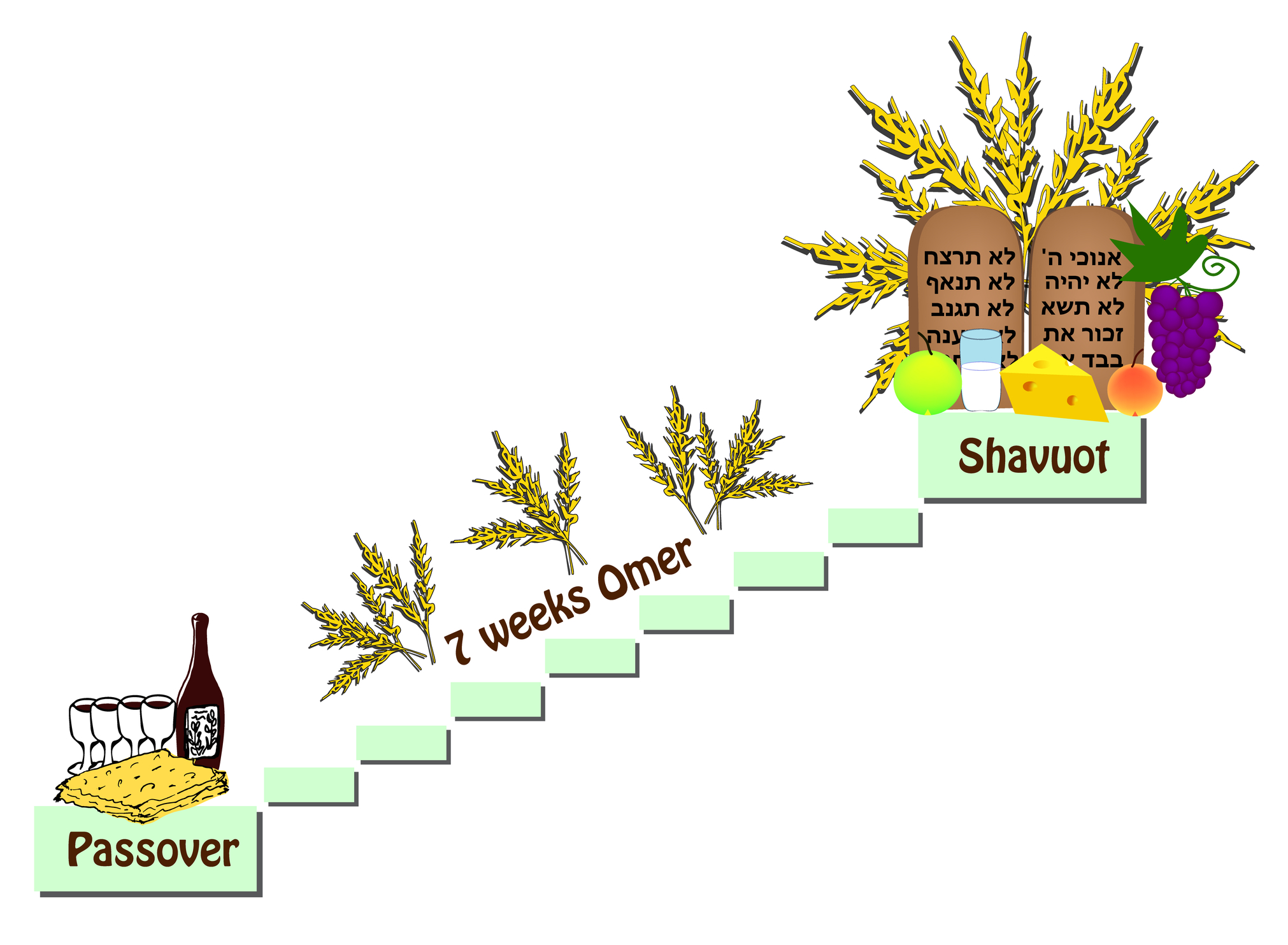
The third feast (Firstfruits) is directly connected to the fourth feast (Shavuot/Pentecost) through the counting of the omer—a journey of firstfruits to firstfruits, seven times seven, or fifty days. Notice that both feasts focus on fruit.
© Iryna Timonina | Dreamstime.com
Have you ever wondered why God commands us to count the days and weeks between these two festivals?
Counting forces us to be aware
 of our spiritual growth.
The Hebrew word for count is same as the word in God’s promise to Abraham:
“Look up at the heavens and count the stars—if indeed you can count them.” (Genesis 15:5)
For Abraham, counting the stars bolstered his faith in God’s promise—despite how things looked in the natural. Counting the omer serves a similar purpose. God would not command us to count if it didn’t accomplish a spiritual work in us.
The physical action has an inner spiritual counterpart—preparing us for the Revelation at Pentecost. By the time we complete the count, we should have a NEW offering for the Lord (Leviticus 23:16).
Manna: Provision and a Test
Counting of the omer shares a thematic connection with the heavenly manna. It was both a provision and a test.
Then the LORD said to Moses, ‘Behold, I will rain bread from heaven for you; and the people shall go out and gather a day’s portion every day, that I may test them, whether or not they will walk in My instruction.’” (Exodus 16:4)
Each person could gather only an omer—no more, no less. If they hoarded it, it bred worms and stank. How could something from heaven—a picture of Yeshua and the Word of God—become putrid or offensive?
When people try to use the Word for selfish gain, it rots. When offended people twist Scripture to justify unforgiveness, anger, or pride, it breeds spiritual worms.
This is why Yeshua compared Himself to the manna: “I am the bread that came down from heaven.” (John 6:41) And what was their reaction?
“This is a hard teaching. Who can accept it?” But Yeshua knew His disciples were murmuring, so He said to them, ‘Does this offend you?’” (John 6:60-61)
Yeshua offended many—not because He was wrong, but because their hearts were not right.
Maybe Yeshua doesn’t offend you, but perhaps His people do. This is where we can learn from the blind seer, Balaam.
Offense is the counterfeit of godly counsel.
Why? Because when we are offended, we reject correction.
-
-
- We stop listening.
- We justify our emotions.
- We isolate ourselves.
- We turn against those who speak truth.
- We become blind to our own condition.
-
This snare opens the door to all kinds of immorality and idolatry.
“Whoever isolates himself seeks his own desire; he breaks out against all sound judgment. A fool takes no pleasure in understanding, but only in expressing his opinion. When wickedness comes, contempt comes also, and with dishonor comes disgrace.” (Pro 18:1-3, ESV)
Balaam’s Ass
Created with AI
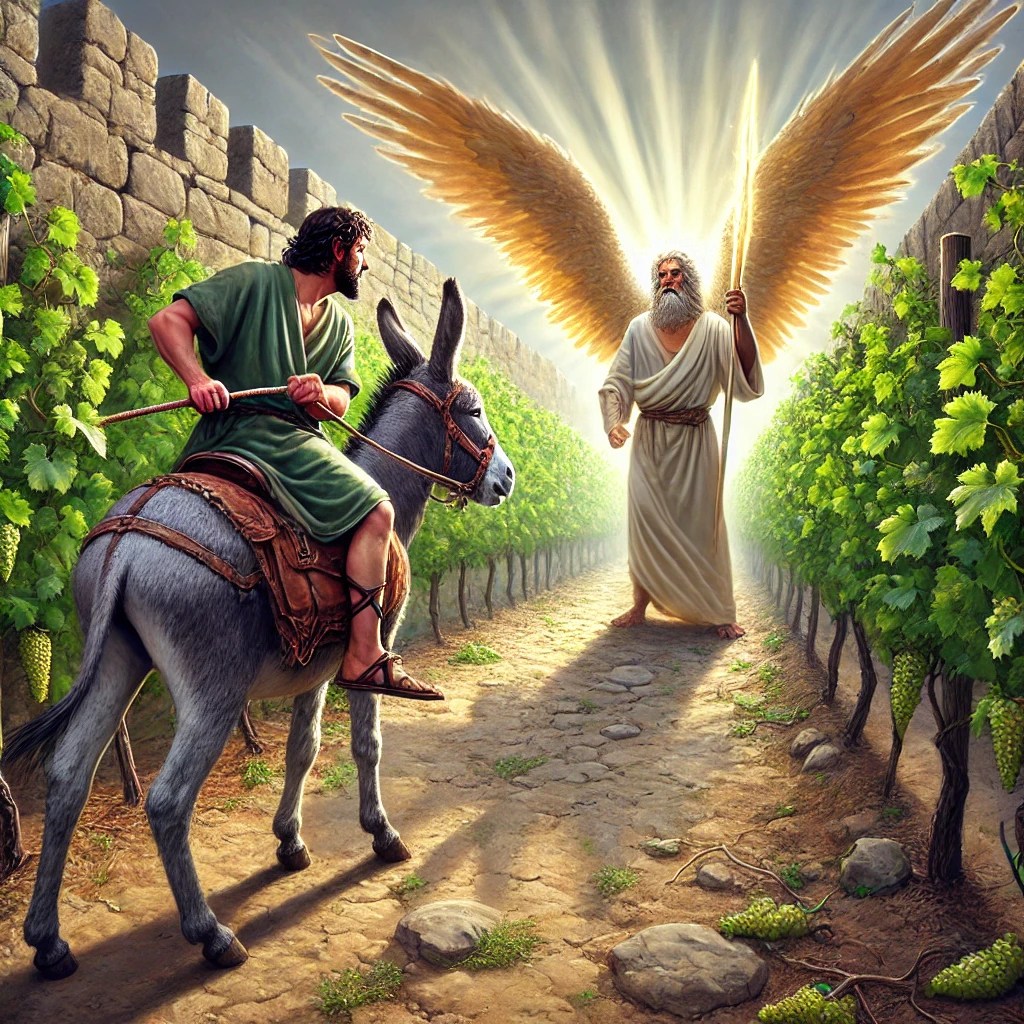
King Balak hired Balaam to curse Israel because he was afraid of them. Balak’s name means “Destroyer”—revealing the true nature of fear. Fear always leads to destruction.
When Balaam saddled his donkey to go, he couldn’t see the angel blocking his path—but his donkey could. Instead of trusting God, Balaam became enraged.
“Then the LORD opened the donkey’s mouth, and she said to Balaam, ‘What have I done to you that you have beaten me these three times?’” (Numbers 22:28)
Balaam was blind to what was truly happening. A humble ass could see better than the “seer.” He became so offended by her that he wanted to kill her. Talk about hands that shed innocent blood! The truth is that she saved his life by not doing what he wanted.
Offense distorts reality!
The Poison of Offense: Haman’s Gallows
Like Balaam, Haman was blinded by offense. Mordecai refused to bow to him, and Haman was highly offended. How dare he not do what I want/desire? Doesn’t he know who I am? The result?
-
-
- Bitterness consumed him.
- He devised a plan to not only kill Mordecai, but his entire race!
- He built gallows fifty cubits high to hang/impale Mordecai.
- He ended up hanged on the gallows he built.
-
The text says that the gallows (Hebrew etz – tree) was fifty cubits high – a hint to the fifty days of refinement during the omer count. If not purged, the trap of offense will ensnare the one who is offended – not the object of their burning contempt.
The Star Wormwood
At the third trumpet a great star falls from heaven.
“The name of the star is Wormwood; and a third of the waters became wormwood, and many people died from the waters because they were made bitter.” (Revelation 8:11)

Created with AI
Wormwood means bitterness, poison, and gall. This star burns like a torch or lamp. Balaam is the son of Beor, which means a burning torch or lamp.[15] Obviously, this isn’t the holy lamps of fire, but flaming hot flesh fueled by selfish passion and desire. This turns fresh water into poison, much like the heavenly manna became putrid if mishandled.
Beor (burning lamp or torch) has a cognate that means stupid.
“Whoever loves discipline loves knowledge, but whoever hates correction is stupid (בּער).” (Pro 12:1, NIV)
Another cognate is beiyr meaning cattle. What does a burning torch, cattle, and stupidity have in common? They are all devourers of some type.
Our tongues, James says, is both a devourer and a poison wormwood spewing bitter waters on the one hand, and blessings with the other. This mixture of the works of the flesh and Spirit results with the double-edged sword of Yeshua coming in judgment as He promised the third assembly of Pergamum. This judgment is greater if one is a teacher or leader who should know better.[16] Led by Joshua, the sword of Israel took the life of Balaam who gave wicked counsel (numbers 31).
Thyatira: Pentecost or Jezebel’s Table?
Jezebel is the antithesis to the obedient, spirit-filled Bride at Shavuot. Rather than being a righteous luminary shining with the Light of the Torah and Yeshua, she embodies one with a heart determined to sit on the throne of her own desires. She manipulates, seduces, and silences opposition, wielding offense as a weapon to ensnare others in her deception.

Created with AI
In 1 Kings 18, in the haftarah read during Purim, Elijah challenges the prophets of Baal. Notice that they eat at “Jezebel’s table.”
“Now then send and gather to me all Israel at Mount Carmel, together with 450 prophets of Baal and 400 prophets of the Asherah, who eat at Jezebel’s table.” (1Ki 18:19, NAS95)
What is Jezebel’s table?
-
-
- False teaching. Gossip. Slander.
-
Offended people infect others with their offense with their mouths. This is why lashon hara (evil speech) is so dangerous. When we consume gossip or slander, it becomes part of us. You are what you eat. And offense demands a sacrifice.
What does an offended person sacrifice?
-
-
- Their new identity in Messiah
- Their morals.
- Their relationships.
- Their peace.
- Their time with God.
-
© Maryna Kriuchenko | Dreamstime.com
In Ken Sande’s Relational Peacemaking Course, he paints a sobering picture of just how easily we slip into idolatry and how conflict reveals it in our hearts. Most
conflicts arise because someone isn’t getting what they expect or want/desire. Ken outlines four steps in the progression of creating an idol. It begins with “I desire.” God designed us to be creatures of desire, but a problem arises when our desire is in conflict with His will or when our desire is in opposition to someone else’s desire. The second stage is “I demand.” When we move from desire to demand, we are on shaky ground. For example, someone isn’t doing something I want them to do, so I demand that they do so. If they still fail to meet my desire, I will likely move to the third stage and judge them for it. That quickly moves to the punishment stage. I might withdraw from the relationship, give them the silent treatment, or slander or gossip about them to other people so that they, too, will punish them.
In reality, I am upset because the other person will not bow down to my want, desire, opinion, or point of view. This results with judging them for their offensive behavior and then punishing them – sacrificing them – on the altar of my desire. Yikes!
The Making of an Idol:
I desire. I demand, I Judge. I Punish.
But there are cool, heavenly waters that can quench these inflamed places and prevent offense and idol making from progressing.
Star Glory: Choosing the Light of Yeshua

© M.e. Mulder | Dreamstime.com
“There is one glory of the sun, and another glory of the moon, and another glory of the stars; for star differs from star in glory.” (1 Corinthians 15:41)
The stars have followed a predetermined course since creation. So have those who walk in Adonai’s ways. We call it the eternal gospel.[17] One who lives the gospel will shine in the darkness with the glorious traits (emotions) of Adonai[18]:
-
-
- Compassion
- Mercy
- Grace
- Patience
- Lovingkindness
- Truth
- Forgiveness of iniquity, transgression, and sin
-
These are the attributes the LORD proclaimed to Moses when he asked to see His glory. Glory, kavod, means weighty or heavy in the sense of worth, honor, and respect. But it also means splendor and brightness, something awesome to behold. We were designed to reflect the glory of God to the earth.
“A person’s wisdom yields patience; it is to one’s glory to overlook an offense.” (Pro 19:11, NIV)
Kavod also means liver, the heaviest organ in the body. The liver is like a weigh station for the blood (and life is in the blood!). All the blood leaving the stomach and intestines passes through the liver. This means everything you eat or consume (think spiritually) is sent to your glory organ. It knows the difference

© Danielz1 | Dreamstime.com
between nutrients and wastes (discernment) and helps purify the blood (life). It removes the unwanted substances absorbed from our food and metabolizes drugs and toxins and excretes them from the body either in the bile or through the kidneys.[19]
The attributes of God and the fruit of the Spirit can act as a “liver” for your spiritual life to ensure that the “glory” you are shining with is of the image of the last Adam, and not the first Adam. What if we purposely filtered every thought, feeling, emotion, and offense through these attributes or fruits and only kept what aligned with God’s character? Wouldn’t that be life changing not only for us, but for those around us?
The counting of the omer between the third and fourth branch (feast and assembly) is an ideal time to filter your spiritual blood to ensure that we are ready for the Revelation of Messiah Yeshua. Peter says “His divine power has given us everything we need for life and godliness, through the knowledge of Him who called us by His own glory and virtue. Through these things He has given us His precious and magnificent promises, so that through them you may become partakers of the divine nature, since you have escaped the corruption that evil desires have brought into the world.”
Peter goes on to list some examples of God’s attributes: “Now for this very reason also, applying all diligence, in your faith supply moral excellence, and in your moral excellence, knowledge, and in your knowledge, self-control, and in your self-control, perseverance, and in your perseverance, godliness, and in your godliness, brotherly kindness, and in your brotherly kindness, love. For if these qualities are yours and are increasing, they render you neither useless nor unfruitful in the true knowledge of our Lord Jesus Christ. For he who lacks these qualities is blind or short-sighted, having forgotten his purification from his former sins.” (2 Pe 1:5-9, NAS95)
If we lack these qualities, we can become a blind seer like Balaam, or so consumed by offense that we will hate and seek to murder like Haman. This is false light, dark glory, a diseased liver. Peter continues: “Therefore, brothers and sisters, make all the more effort to make your calling and election certain—for if you keep doing these things, you will never stumble. For in this way entry into the eternal kingdom of our Lord and Savior, Messiah Yeshua, will be richly provided for you.”
Did you catch that?
It is in doing these things that we avoid snares, traps, and trip cords in the spiritual and emotional realms. We no longer try to save ourselves, our image, or our reputation, and instead align with the will of God. Esther was faithful, even unto death, and she received a crown in an earthly kingdom. That was the message to Smyrna, the second assembly that precedes Pergamum, and figures the sweet perfume of the death of the old self.[20]
Following a star like Esther leads to resurrection life in Pergamum, where hidden manna sustains through the trials of emotional pain and turmoil. Then by the time one has reached Thyatira, they haven’t succumbed to the “deep things of Satan,” who is an accuser, and Yeshua will give them authority over the nations and the morning star.
Peter says, “We have the reliable prophetic word. You do well (tov) by paying attention to it, as to a lamp shining in a dark place, until the day dawns and the morning star rises in your hearts.”[21]
We are halfway through the third year of the seven-year shemittah cycle.[22] Shemittah means release—a divine reset, canceling of debts. Offense clings to grievances like the unforgiving servant in Matthew 18, trapping one in bondage. As we enter the new year of months, may our FRUIT reflect Yeshua—not an offended Haman or Balaam. And if we discover that we are offended, may we repent and be reconciled to Adonai and the brethren.
May We Be True Luminary Leaders, Reflecting the Glory of Yeshua in the Earth!
Recorded Message from the Retreat
Practical Tool & Suggested Reading
The following PDF is self-assessment that will help you gauge your emotional health, ability to set healthy boundaries, measure your work-rest rhythm and conflict management skills, gauge your awareness of past influences, your ability to process pain and grief, and will help you recognize unhealthy coping mechanisms. After the assessment, there is a list of books I have found helpful to my own spiritual growth and maturity.
[1] Genesis 37:9-10
[2] Genesis 15:5
[3] Page 19.
[4] Isaiah 14:12, NAS95
[5] I. Kings and Leaders Compared to the Sun
- Jdg 5:20 (NASB) “The stars fought from heaven, from their paths they fought against Sisera.
- Judges 5:31– “So may all your enemies perish, O LORD! But may those who love You be like the rising of the sun in its might.”
- Context:Deborah’s song compares righteous leaders to the sun shining in strength.
- 2 Samuel 23:3-4– “He who rules over men must be just, ruling in the fear of God. And he shall be like the light of the morning when the sun rises, a morning without clouds…”
- Context:David’s final words compare a righteous ruler to the rising sun.
- Psalm 89:36-37– “His offspring shall endure forever, his throne as long as the sun before me. Like the moon it shall be established forever, a faithful witness in the skies.”
- Context:The Davidic covenant compares his throne to the enduring sun and moon.
- Malachi 4:2– “But for you who fear My name, the Sun of Righteousness will rise with healing in His wings.”
- Context:A prophecy of Messiah, often understood as a divine ruler bringing justice and healing.
II. Kings and Leaders Compared to the Moon
- Genesis 37:9-10– “Then he dreamed still another dream and told it to his brothers, saying, ‘Look, I have dreamed another dream. And this time, the sun, the moon, and the eleven stars bowed down to me.'”
- Context:Joseph’s dream uses the sun (Jacob), the moon (Rachel), and stars (his brothers) as symbols of authority.
- Psalm 72:5-7– “They shall fear You as long as the sun and moon endure… In His days the righteous shall flourish, and abundance of peace until the moon is no more.”
- Context:A messianic psalm comparing the reign of a righteous king to the longevity of the sun and moon.
- Isaiah 30:26– “The light of the moon will be as the light of the sun, and the light of the sun will be sevenfold, as the light of seven days, on the day when the Lord binds up the wounds of His people.”
- Context:A future restoration where luminaries (possibly symbolic of leadership and divine rule) shine brighter.
III. Kings and Rulers Compared to Stars
- Numbers 24:17– “A star shall come out of Jacob, a scepter shall rise out of Israel.”
- Context:Balaam’s prophecy of a future ruler (Messiah) likened to a star.
- Daniel 12:3– “Those who are wise shall shine like the brightness of the firmament, and those who turn many to righteousness like the stars forever and ever.”
- Context:A description of righteous leaders and teachers as shining stars.
- Matthew 2:2– “Where is He who has been born King of the Jews? For we saw His star when it rose and have come to worship Him.”
- Context:The star of Bethlehem leads the wise men to the newborn King.
- Revelation 1:16, 20– “In His right hand He held seven stars… The seven stars are the messengers to the seven churches.”
- Context:Church leaders (possibly bishops or overseers) are depicted as stars held by Christ.
- Revelation 22:16– “I, Jesus, have sent my angel to testify to you about these things for the churches. I am the Root and the Offspring of David, the Bright Morning Star.”
- Context:Jesus directly refers to Himself as a star, the ultimate ruler and King.
IV Kings and Hosts Compared to the Heavenly Bodies
- Deuteronomy 4:19– “And when you look up to the sky and see the sun, the moon, and the stars—all the host of heaven—do not be led astray to bow down to them and worship them.”
- Context:Nations (and their rulers) were often associated with heavenly hosts, leading to idolatry.
- Isaiah 14:12-15– “How you are fallen from heaven, O Day Star (Lucifer), son of the dawn! How you are cut down to the ground, you who laid the nations low!”
- Context:The King of Babylon is compared to a fallen morning star, signifying lost glory.
- Ezekiel 32:7-8– “When I blot you out, I will cover the heavens and make their stars dark; I will cover the sun with a cloud, and the moon shall not give its light.”
- Context:A prophecy of judgment against Pharaoh, where luminaries symbolize the downfall of his rule and authority over the Israelites, and ultimately his death.
- Joel 2:10– “The earth quakes before them, the heavens tremble. The sun and the moon are darkened, and the stars withdraw their shining.”
- Context:Apocalyptic language describing judgment against nations and their leaders.
- Matthew 24:29– “Immediately after the tribulation of those days the sun will be darkened, and the moon will not give its light, and the stars will fall from the sky, and the powers of the heavens will be shaken.”
- Context:Cosmic imagery likely referring to the downfall of earthly rulers.
- Revelation 6:12-13– “The sun became black as sackcloth, the full moon became like blood, and the stars of the sky fell to the earth.”
- Context:The fall of kings and rulers at the end of the age.
[6] https://www.thecreationgospel.com
[7] The Creation Gospel Workbook One: The Foundation
[8] H4150
[9] Isaiah 11:2
[10] Genesis 1:11-13
[11] Proverbs 6:16-19
[12] A great book on offense is The Bait of Satan by John Bevere.
[13] Revelation 2:12
[14] Hebrews 4:12, CJB
[15] https://www.blueletterbible.org/lexicon/h1160/esv/wlc/0-1/ Retrieved 3/7/25.
[16] James 3
[17] Jeremiah 6:16; Revelation 14:6
[18] These are the attributes of Adonai. (Exodus 34:6-7) If we are His image bearers, we will reflect these things to the world.
[19] It’s not a coincidence that Yeshua tells Thyatira that He is the one who “searches reins (kidneys) and hearts.” (Revelation 2:23)
[20] Revelation 2:10
[21] 2 Peter 1:10-19, TLV
[22] Leviticus 25; Deuteronomy 15







 GRACE in TORAH