When in Doubt, Throw it Out

Not very long ago, my husband returned to work from the weekend to find a left over boiled egg in his desk. Since it was still in its shell, he reasoned that it was sealed and safe to eat. He then proceeded to peel and eat the egg. A few co-workers suggested that it was a bad idea, which made him doubt his choice. He then

© Oleh Muslimov | Dreamstime.com

began texting me to ask my opinion on the matter. I agreed with his co-workers. We both googled the possible dangers of eating said egg. The prognosis didn’t look good. Would he succumb to food poisoning by eating a boiled egg that had sat at room temperature for a couple of days? We would have to wait and see.

The good news is that my husband didn’t have any adverse side effects from eating the questionable egg. But this scenario made me think about how and why we make some of the choices we do. Years ago, I remember reading the statement: “We act out what we really believe”. (Sadly, I cannot recall where I read this.) That statement has stuck with me in a profound way throughout my journey in pursuing a Torah obedient lifestyle.

If we really, truly believe something, our actions will reflect said belief. My husband really believed it was perfectly fine to consume the egg, and so he ate it. Only after being confronted with another opinion did he question his choice and begin to research whether or not the choice was wise.

When I look back on my own life and walk with YHWH (the LORD), it becomes increasingly obvious that like my husband, I did many things (and ate many things) that I deemed perfectly acceptable until I was presented with a different opinion. Things that I thought stood on a firm foundation were proved to be nothing more than shifting sands. But even after reviewing the evidence for myself, I still had to make a choice. Would I continue in the way I had always walked because it felt safe and the majority also deemed it perfectly acceptable, or would I trust what God’s Word had clearly revealed to me?

When it comes to food safety, the rule is, “When in doubt, throw it out”. I wonder how many of us use this same logic in matters of faith and obedience. Those that are returning to Torah have lots of information to sift through as they learn “how” to obey God’s Word. Because of this natural process, it’s hard to find two people that “believe” or “act out” their walk in the exact same way. This isn’t a bad thing; it’s a human thing. It is simply the way the Creator made our minds process and work. Thus, when we demonize another being created in the image of God for their personal convictions and walk, we are in effect, demonizing the Creator.

People

© Oleksandra Drypsiak
| Dreamstime.com

There are two areas that I believe we need to be especially careful of when using the “when in doubt, throw it out” rule. The first is in regard to people and the second is in regard to tradition. The Messiah didn’t just throw people out to the trash heaps because they were sinners, in disagreement with His theology, or were simply ignorant. He knew that discipleship didn’t mean to gather a bunch of “yes-men” around Himself. He knew that people weren’t perfect and didn’t always exercise perfect faith. He knew some would doubt and some would betray. Yet, He chose to love anyway. Those that followed Him could see the ups and downs, the trials and tribulations, the celebrations and prayers. They witnessed His joy, His anger, and even His tears. They watched the Son of Man live life, and it wasn’t all rainbows and unicorns.

When we let people in, it is not our “perfection” that draws them to walk as we walk. What causes others to want what we have is to see that we suffer from the same pain, trials, and tribulations as they do — yet we OVERCOME. They see us act differently when we are running late or get a flat tire. Instead of ranting, raving, and complaining, we respond differently. We look for the divine order in seeming chaos. We find peace instead of an inflamed nephesh (flesh). And if we fail and our nephesh takes over, they see us sincerely repent. This is discipleship.

Some of us are afraid of letting people see what really goes on behind closed doors. And others are afraid that those not on the same “spiritual level” as themselves will somehow taint their children. It seems instead of being steadfast believers; many of us are chronic doubters! Thus, nearly everything and everyone is “tossed out” in unholy fear. Let’s choose differently. The egg everyone tells you to toss out, may not be harmful at all!

Tradition

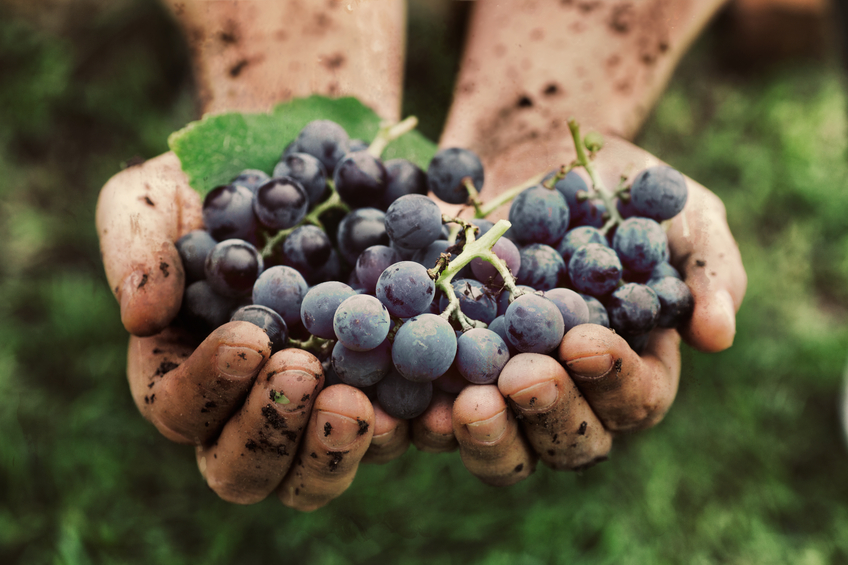
In regard to tradition and customs, we also need to be careful how we utilize the rule, “when in doubt, throw it out”. I know that I’ve had to go back and pick up some traditions that I had deemed “trash” in the past. Though humbling, it taught me a valuable lesson. Sometimes a tradition, custom, or way of observing a commandment may seem past its “use by date”. But before you throw it out, consider that it might be more akin to a red wine instead of a boiled egg. If you taste it before it has had time to mature, the flavor may be bitter on your tongue. Throwing it out would be a great mistake.

I’ll give you a small example from my life. When I first began observing Torah, I was hyper-cautious of anything written in Christian or Jewish commentaries. Blindly following church tradition had proven to rob me of many of the precious treasures (like God’s feast days and Shabbat) first given to us in God’s Law (Torah). Not properly understanding “adding and taking away” from the Word, I tossed anything out that I couldn’t immediately see in the written Word.

This included both Christian and Jewish liturgy and prayers. Later, I joined a group of believers that were utilizing the Jewish Siddur (prayer book). It was completely foreign to me and made me uncomfortable. I likened this type of prayer with Matthew 6:7 — until I really read the verse. (The context speaks of heathen Gentile prayers, not Jewish ones.) To make a long story short, the more exposure I had with the Siddur, the more I fell in love with the great care and diligence the many rabbis took in reverencing the King of the Universe. I began to understand how the prayer services mirrored the worship and sacrifice in the Tabernacle and Temple services. The Lord’s Prayer took on a deeper meaning for me as I was enlightened by the culture, language, and format of Jewish prayer. In a couple of words, the siddur has ENRICHED and BLESSED my prayer life!

If had went with my original inclination (to toss this “foreign” practice out), I would have missed out on this great treasure. And I would have lost valuable wisdom and insight. Above all, we are to fear HaShem (God), not man, circumstances, tradition, or the like.

If I could impart a little wisdom to those that are just coming to Torah (or even seasoned keepers), it would be this: Be careful how you weigh and judge others and even tradition. Not everything is pagan and evil. Don’t wall yourself into a prison. Be wise as a serpent, but gentle as a dove. Sometimes, the better choice is to shelf the wine bottle (foreign tradition) and let it age (you mature). After more time has passed, you may find that the bottle you almost tossed, brings you great joy, insight, and shalom.

Categories: Musings | Tags: , , | 6 Comments

Chewing the Cud

Between work, homeschooling, Passover week, and a vacation, I haven’t had a lot of time for writing. I actually started several posts on the Torah portions, but failed to complete them in time. ): This article was taken from my draft on portion Shemini and deals with Leviticus 11. Enjoy!

© Ecophoto | Dreamstime.com

Distinguishing Between the Clean and Unclean

There are many books and articles out today that are great apologetics for why we should follow God’s food laws as outlined in Leviticus 11 and Deuteronomy 14. (Some examples can be found in this footnote.[1]) After all, it is in the context of the dietary laws where YHWH commands us “you shall be holy, for I am holy”. (Lev. 11:45) To be holy is to be set apart. Adonai cares very much about what we put into our mouths and as the Creator of our bodies, I believe He knows exactly what that should and shouldn’t be.

We must consume food in order to stay alive. It is not just a desire, but a true need. Yet, people start squirming in their seats when you mix “diet” with “Bible.” Our nephesh/flesh wants to eat what it likes – period. “Ain’t nobody gonna make me give up my bacon.” (I’ve actually heard that one.) If you’ve ever worked in the food service industry, you know all too well how irrational and emotional people can get over their food not being just the way they like it. Perhaps this is because ingesting physical food is one of the areas where the nephesh/flesh gets to satisfy itself. It wants what it wants when it wants it. But like all other things pertaining to the flesh, the Creator in His immense wisdom has given us dietary boundaries to follow that will promote holiness and abundant life.

There are fewer things more intimate to us than food. We ooh and ahh over the sights, smells, and tastes of decadent desserts or succulent meats. We think about what we are going to eat at least three times in a day whether our stomachs growl or not. We imagine unique ways to mix things together to tantalize our taste buds in new and exciting ways. We even moan and close our eyes in bliss while tasting something scrumptious. We spend fortunes (at least in the U.S.) at the super market trying to feed our families and ourselves healthy, yet tasty meals. Yes, food is necessary for life, but like all functions of the nephesh, it can become a problem area. Sins related to eating can and do abound where the nephesh is in control. The nephesh will always tell you, “But I HAVE to eat or I will die.” Being the great justifier and exaggerator, the nephesh has certainly won this battle in the west.

Even so, that’s not what this post is about. I want to offer you a completely different take on the dietary laws than you may have ever heard before. You see, I was just talking about the desires of your flesh, which is your nephesh. As my readers are aware, this part of your humanity is shared with the beasts and animals created on day 6 with Adam and Eve. We each have a beast of desire like the animals. Like them, we desire to eat, sleep, play, procreate, and expand our territory. These things aren’t evil in and of themselves, but to be a HUMAN created in the image of God requires that we follow His instructions and live within the boundaries that He has set for us. Otherwise, we start to live like the beasts of the field and follow our own instincts and desires, which leads us to sin.

Have you ever looked through Leviticus 11 and considered the differences between the clean and unclean animals, birds, and fish? Most of us have contemplated that the creatures that are natural predators, trash collectors, and filters are on the “unclean” list. And those that are clean to eat are generally herd driven plant eaters. But have you ever compared these creatures with yourself, the Assembly, and the world? Leviticus 11 was written with more than the surface (literal) level examples of discerning between the holy and the profane. These animals can also teach us how to discern between clean and unclean people, attitudes, behaviors, and mindsets. Revelation in this area just might bring you to your senses when you realize the beastly behavior you’ve been portraying. (Think Nebuchadnezzar in Daniel 4.)

Are You a Beast?

Both man and beast were created on the same day of creation (6). I think that if we are open-minded, we will be able to find many similarities between them and us. Knowing this, let’s think back to the numerous Biblical comparisons where God likens mankind to particular animals. Off the top of my head, I can recall man being compared to the following creatures:

  • A wild ass
  • A lion’s whelp, lion, and lioness
  • A wolf
  • A dove
  • A serpent/viper
  • A sheep/lamb
  • A goat
  • A gazelle
  • A hind

Why do you suppose that God uses the animal kingdom to describe His people or the nations? What lesson are we to learn from these comparisons? Is it possible that beyond the literal level of Leviticus 11 and Deuteronomy 14 there is an even deeper level that can reveal the heart of man?

When God compares us to the beasts of the field, context determines whether the analogy is positive or negative. Like all things Hebraic, animals (and we) are contranyms (a word meaning its own opposite). For example, the Messiah is called the Lion of Judah, an obvious reference to His power and authority. But the enemy is also compared to a lion, except it is one that devours and destroys. Both examples depict the nature of a lion; the question is which character trait is being portrayed? Our job is to look closely at the behavior of the creature, because like them, we also have a nephesh. In like manner, a donkey can be a beast of burden or a stubborn ass and a sheep can be a diligent disciple or a blind follower.

Thus, the nature of animals, including those declared clean and unclean in Leviticus 11, can teach us these same types of analogies. What are the primary differences in behavior between the clean and unclean animals? Which ones are harder to discern? And what lessons can we learn from this?

Chew On This

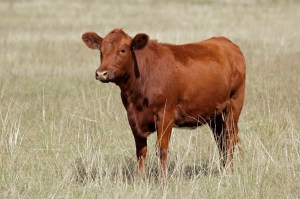
Since people have the most in common with the land dwelling animals, we will explore their characteristics in some detail. Land dwelling beasts must both chew the cud and have split hooves in order to be “clean” or fit for consumption. The cud is food that has been partly digested by the first stomach, but is then regurgitated into the mouth for further chewing. Ruminant animals such as cattle and sheep are all plant-eating creatures. They thoroughly chew their food instead of swallowing it whole like carnivores. (Check out the video at the end of this article for more information.)

The dense grasses they eat require several stages of digestion. Though they may fill up by grazing for hours, the plant matter must be regurgitated and chewed again. An analogy can easily be drawn for us in this process. Spiritually speaking, we may consume (graze) on the Word and become quite full in the process, but if we fail to then unpack, study, meditate, or chew on what we have received, we are not behaving like a “clean” creature.

© Yaroslaf | Dreamstime.com

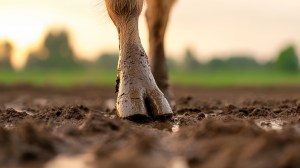
Having a split hoof can teach us a similar lesson. What do feet usually symbolize in Scripture? In Genesis chapter 3, the serpent strikes at the heels or feet. Feet are the lowest part of our bodies. They are what come into contact with the dirt and dust of the earth and they carry us in the way we walk. In other words, our feet are the epitome of our nephesh. As our lower (fleshy) nature, they are the beasts of burden that carry us where the HEAD leads. If ruled by our feet, we can be sure that they will run quickly to filth and evil. (Gen. 4:6-7, Pr. 6:18)

But why a cloven hoof? Is this division of toes not a picture of being separate? Remember it is in the context of Leviticus 11 that YHWH says, “Be holy (set-apart), for I am holy (set-apart)”. Our head must teach our feet to rightly divide the Word of Truth and then WALK in it. This is why the head (mouth) must chew or ruminate on what it ingests. It shouldn’t listen to the feet (nephesh); instead, it carefully chews the cud in order to separate the holy from the profane by the ruach (spirit). In a sense, both the head (mouth) and the feet are meant to discern between the flesh and the spirit.

This same line of thinking is Biblically depicted by the serpent. A serpent crawls on its belly and touches the dust of the earth, like our feet. The serpent lives solely by instinct and desire or the nephesh. It gives no regard to the ruach (spirit). The serpent deceived Chavah (Eve) by getting her to listen to her lower fleshy desires. As a result, she and Adam walked in the image of a beast, not Elohim (God). The serpent, perhaps, is easier to discern as an unclean animal because it neither chews the cud nor has cloven hooves. A snake might hiss out smooth and enticing words with its forked tongue, but if we are even remotely paying attention, we should be able to spot a viper. The same could be said of the sideways scampering of a crab, or the writhing motions of the alligator. Their “walk” does not follow a straight path like the well worn trails of the herds in pasture.

So what about creatures that meet some of Adonai’s requirements for being clean? Swine after all, do have cloven hooves, but they do not chew the cud. In my opinion, a pig is far more dangerous than a snake. Swine have the “appearance” of being holy if you aren’t paying attention. They SEEM to be able to “separate” or divide the Word of Truth with their nephesh (feet), but their head swallows anything and everything without ruminating. Dr. Hollisa Alewine says “the pig is like a serpent who walks and talks Torah out of context”. [2] She has a great commentary on parsha Shemini that will give you enough to chew on for weeks. For now, I hope you will use these few creatures as a model to compare and contrast the many others listed in Leviticus 11.

Wild or Tame

There is one more area I’d like you consider as you ruminate over the differences between the clean and unclean beasts. There are quite a few animals that God declared fit for food, but not for sacrifice. Again, using our head (mouth) to direct our nephesh (cloven feet), we are to discern the difference and learn a lesson. It doesn’t take much meditation to discover that the animals fit for the altar were easily domesticated. In other words, they weren’t wild or rebellious. They were tame and submissive. They didn’t buck against authority or need to declare themselves king of the mountain.

If we examine ourselves and the greater body, it becomes apparent that many of us, though clean, haven’t yet perfected our faith or love.[3] We must willingly SACRIFICE our flesh for God AND our brothers and sisters. We might be doing the first, but our constant state of divisions, bickering, unrighteous judgment, and foul treatment of one another is a testament to our lack of sacrificial love.

 15 Let us therefore, as many as are perfect, have this attitude; and if in anything you have a different attitude, God will reveal that also to you; 16 however, let us keep living by that same standard to which we have attained. 17 Brethren, join in following my example, and observe those who walk according to the pattern you have in us. 18 For many walk, of whom I often told you, and now tell you even weeping, that they are enemies of the cross of Christ, 19 whose end is destruction, whose god is their appetite, and whose glory is in their shame, who set their minds on earthly things. 20 For our citizenship is in heaven, from which also we eagerly wait for a Savior, the Lord Jesus Christ; 21 who will transform the body of our humble state into conformity with the body of His glory, by the exertion of the power that He has even to subject all things to Himself. (Phil. 3:15-21 NASB)

Deer, gazelle, hind, elk, and the like are all clean beasts, but they were never sacrificed on the Holy Altar. Those that live like these creatures are wild. Some prefer to build their own kingdom or have their own excluded mountain. Others hate being penned in with the sheep. They long for the “perceived” freedom of the open range. Maybe they feel safer tucked away in the deep wilderness with a small herd. Perhaps, they’ve grown to love butting heads with the rams. Or maybe they believe the further they separate themselves the better.

But discernment, separation, and holiness that does not lead to gathering, can only lead to death. If you find yourself acting like any of the beasts we’ve mentioned in this article, I hope you will come to your senses like King Nebuchadnezzar. Actually, I believe every single one of us can be likened to one beast or another. I pray that we all become like obedient sheep, quickly heeding the Master’s Voice.

Meanwhile, may every morsel we consume be by the direction of the Word of God and rightly divided to fulfill the two most important commandments: Love Adonai, Love our Neighbor.


[1] Here are some great examples:

Online articles at Messianic Publications by Robert Roy

Did Jesus Declare All Foods Clean? A Hebraic Perspective on Mark 7:19

A Hebraic Perspective on Peter’s Vision (Acts 10)

Jim Staley’s Video

To Eat or Not to Eat 

John K. McKee ‘s ebook

 Kashrut: Kosher for Messianic Believers 

[2] The Creation Gospel Workbook 5, The Torah Portions Volume 3, Vayikra. See portion Shmini, page 77.  Many of the ideas I’ve outlined in this article were first introduced to me by Dr. Alewine either from her written material in the Creation Gospel or by speaking with her. I’ve been “ruminating” on these things for a while and hope that you will too. 🙂

[3] James 1, 1 John 4


Categories: Creation Gospel, Musings, Torah Portions | Tags: , , , , , , , , , | 4 Comments

Moonbeams and the Moedim Part IV  

Please see Part I, Part II, and Part III for the best context.

Gestation

 I do hope you that you have at least read Part III and have considered the significance of the number NINE in regard to the creation of LIFE. The following analogy will cover all seven of YHWH’s moedim and the two festivals of the people (Chanukah and Purim). I realize that some people will have a “problem” with me adding in the latter two festivals. My hope is that those that do will at least take the time to read the whole matter before making a judgment.

I’m obviously not the first person to compare the feast cycle with the human gestation. But in my research of this topic, I haven’t found one that includes all nine of the aforementioned festivals. Since the Biblical year begins in Nisan, all the resources I’ve inquired start the analogy with Pesach. Since human gestation is nine months, 280 days, or 40 weeks, one cannot begin with Passover and end with Sukkot because there are only about 25.3 weeks between these festivals. Thus, many resources extend their analogy to include Chanukah. But even then, there still isn’t a true nine month period as there are only about 10 weeks between Sukkot and Chanukah. (A total of 35.3 weeks)

But if we begin with Purim, a feast that begins exactly one month before Passover, and we walk through the moedim cycle all the way to Chanukah, we indeed end up right at 40 weeks or nine months. I personally don’t believe this is a coincidence. Since Purim technically falls toward the end of the Biblical year, this may seem to be a perplexing place to start. But when we consider what Purim commemorates, I believe things come into focus. Please join me through this exciting journey that chronicles both natural and spiritual life.

Purim and Conception

In the Book of Esther, we are given the history and story behind Purim. There are quite a few fascinating tidbits in Esther that I hope to write about soon. For this post, I will curb my fingers and give you the bare bones as to why I believe Purim is a picture of conception or the beginning of life. In the time of Esther, the Jewish people were living in exile under the rule of the Persian Empire. A highly anti-Semitic official (Haman) tricked the king into signing a decree to annihilate the Jewish people. But God chose a woman (Esther) to intercede and act on behalf of her people. As the new bride of the king of Persia, Esther was able to not only save her people, but also ensure their future.

This is overly simplified, but the point is that Esther became a “mother” to Israel and a builder of the House. Without her heroics, the Jewish people would have been annihilated and the Messiah wouldn’t have been born. During Purim, the people were “fertile” with potential. If Esther had refused to become YHWH’s vessel, salvation would have come from another. (Esther 4:14) Purim celebrates survival; something conceived babies’ need more than ever in today’s world.

Thus, Purim appropriately involves rejoicing through the physical pleasures (food, drink, etc.) because it was our physical bodies that were saved. Ahem… this also implies sex and the potential to receive seed (conception). The date of Purim is Adar 14th, which occurs at the full moon on the last Hebrew month of the year. In leap years, when there are two months of Adar, Purim is celebrated in the second month of Adar, so it is always one month before Passover.

If you will recall from Part II, when a woman is in menses at the new moon, she is fertile at the full moon. In our analogy, both Purim and ovulation occur on the 14th of the month when the moon is full. (Esther 9:17) To make things simple for our comparisons of the moedim and gestation, I will use the Jewish calendar beginning with the date for Purim this year, March 4th, 2015.

Passover

In our analogy, it is during the weeks between Purim and Passover that a woman’s body would make the crucial decision of whether or not the fertilized egg is viable enough to implant in the uterus. Likewise, those that are preparing for Passover begin a similar process of selection by eating up and removing any leaven in the home. Just as Israel had to experience several of the plagues of Egypt, a woman may experience some sickness at this point.

If conception occurred on the evening of March 4th, 2015, then by the time the Biblical New Year and Passover occurs, it will be April 3rd. Since exactly one full month would have passed, Passover will also occur during a full moon when there is more “light”. A woman would have just recently been made aware that she had conceived as her menses would have skipped its cycle at the new moon. At this point, she would be four weeks pregnant.

By the fourth week of pregnancy, the tiny baby has already made itself a “home” in the uterus. As you read the following quote, please keep spiritual birth at the forefront of your mind. What to Expect[1] says this about the fourth week of gestation:

 “Once there [in the uterus], it burrows into your uterine lining and implants — making that unbreakable connection to you that’ll last the next eight months (and a lifetime after that). As soon as that little ball of cells is settled in its new home, it will undergo the great divide — splitting into two groups. Half (now called the embryo) will become your son or daughter, while the other half forms the placenta, your baby’s lifeline…” [Bolding and brackets are mine.]

I don’t know about you, but I find this fascinating. Passover is the covenantal meal. It is what makes that “unbreakable” connection between YHWH and us – and it does last for a lifetime!

Unleavened Bread and Early First Fruits

 On the heels of Passover, the Days of Unleavened Bread commence. In our analogy these festivals would fall from April 4th through April 10th. There is to be no leavened bread consumed for these seven days. This was to remind the children of Israel that they had to leave Egypt in haste. But Pharaoh pursued the Israelites as far as the Red Sea. This would have been about the time that the early first fruits festival would occur. Later as a fulfillment of Passover, Unleavened Bread, and Early First Fruits, Messiah shed His blood in death as the Paschal Lamb, was buried during Unleavened Bread, and rose from the grave becoming our Firstfruits.

 A lot happens throughout this fourth week of pregnancy as well. What to Expect continues:

“Your little embryo is busy setting up house. While the amniotic sac (also called the bag of waters) forms around it, so does the yolk sac which will later be incorporated into your baby’s developing digestive tract. And the embryo now has three distinct layers of cells that will grow into specialized parts of your baby’s body.” [Bolding mine.]

 If you look carefully, you can see elements that are involved with Matzah and Early Firstfruits. Just as the children of Israel walked through the waters of the Red Sea during this time frame, the baby is surrounded (and yet protected) by the merciful waters of the womb. Moreover, its digestive tract begins to develop. This is indicative of our digestive tracts being “reprogrammed” each year by abstaining from leaven. I also cannot help but to notice that it is in this week that the baby (embryo) develops THREE distinct layers of cells that will build its little body. This whole process in the natural and the spiritual is about building the HOUSE.

Omer Counting

The following points are labeled according to gestation weeks, not omer weeks. I have included SEVEN as we are told to count 7×7 weeks up to Shavuot (Pentecost). All of the following developmental stages were taken from What to Expect.

  • Week 5: Baby has visible heartbeat.
  • Week 6: Head and face takes shape.
  • Week 7: Brain cells rapidly develop as do arm/leg buds.
  • Week 8: Heart beats at 150 beats a minute. Lips, nose, and eyelids develop.
  • Week 9: Baby hits milestone. (Notice this is in NINTH week.) Embryonic stage ends and fetal stage begins.
  • Week 10: Bones and cartilage form.
  • Week 11: Sex organs begin forming. Baby now has distinct human features such as hands, feet, nose, and ears.

Shavuot (Pentecost)

Approximately seven weeks later on May 23rd, after the counting of the Omer, the second pilgrimage festival begins. The first fruits of wheat are brought in and baked into two leavened loaves that are then waved before YHWH. The children of Israel would have reached Mt. Sinai at this point and received the Ten Commandments. Later, the resurrected Messiah would send the Holy Spirit to appear as tongues of fire upon His disciples.

The developing baby would be at about 12 weeks gestation and nearing the end of the first trimester by Shavuot. This week marks a turning point for the developing baby much in the same way that experiencing Pentecost is a turning point in the life of a Believer. What to Expect says this about the 12th week of gestation:

“At 12 weeks pregnant, the herculean task of developing new bodily structures is nearing an end, as most of your baby’s systems are fully formed – though there’s still plenty of maturing to do. For one thing, the fetal digestive system is beginning to flex its digestive muscle — literally — as it starts beginning to practice contraction movements, a skill your baby will need after birth to push food through the digestive tract. The bone marrow is busy making white blood cells — weapons which will one day help your baby fight infection once he’s out of your safe haven. And the pituitary gland at the base of the brain has started producing the hormones that’ll enable him (or her) to make babies of his (or her) own in a couple of decades or so.” [Bolding mine]

I think it’s pretty easy to deduce that the Israelites weren’t quite “mature” by the time they reached the mountain to receive the Ten Words. The same could be said of those that received the Holy Spirit at Pentecost in Acts chapter 2 (we read in the epistles of their ongoing immaturity issues.) And if we are really honest, the same thing can be said of us! We are all like the little developing baby (spiritually speaking). Our systems might be fully formed, but we still have a lot of growing to do.

By this point in our spiritual development, we should have enough digestive power to receive the bread offering at Shavuot. The fact that the baby’s white blood cells are arming it against infection mirrors the spiritual armor given to us by the Holy Spirit at Pentecost.  But perhaps the most intriguing thing that begins to happen at this stage is the capacity to REPRODUCE. Just as the baby develops the ability to one day have children of its own, we become spiritually empowered to spread the Seed (Gospel) at Shavuot.

Long Summer

There are about 16 weeks between Shavuot and Rosh Hashanah. That’s close to half the gestation cycle! As you can imagine, a lot of development and maturity occurs during these months. This is true of the harvest and for us spiritually as well. The long, hot summer is meant to prepare and mature us for what is to come.

One month before the fall feasts (Elul), the shofar is blasted every day to call us to repentance. Judgment and the harvest are near. The entire second trimester passed in the hot summer months. One of the most notable things to occur before the Feast of Trumpets is the baby’s development of hearing. Read the following amazing quote about the 17th week of gestation from What to Expect.

Baby’s Startled By Noise. Your baby is almost certainly listening up by now. In fact, loud noises — the dog barking, the doorbell ringing — will actually startle your baby…”

 Obviously, you know that the “loud noise” could certainly include the blast of the shofar!

 Rosh Hashanah or Feast of Trumpets

The trials and struggles of the long hot summer have produced ears that can hear when the heavenly shofar sounds aloud. By the time Rosh Hashanah arrives on September 13th, our ears are fully open. We know the sound of our Master’s voice and are willing to heed His call.

The shofar is meant to call the sleeper from the grave. Those that slumber must “wake up”! Notice that it is at this stage of development (about 28 weeks) that the baby has the ability to sleep and dream. Moreover, the baby has now moved into the “proper” position for birth — which is with its head facing downward. Is this not also the proper posture for us during the High Holy Days? Again from What to Expect:

“Your baby is settling into the proper position for birth, with his head facing downward (toward your body’s nearest exit!). Brain wave activity measured in a developing fetus shows different sleep cycles, including the rapid eye movement phase — the stage when dreaming occurs.” [Bolding mine]

Yom Kippur

Ten days after Rosh Hashanah the most Holy day of the year is upon us. In our analogy, it is Sept. 22nd. The baby enters into the third trimester of development and is almost at 30 weeks gestation. At this stage, the baby’s eyes are just starting to open.

 The people fast as the High Priest makes atonement for the entire nation at Yom Kippur. This day is the only day of the year that the High Priest can enter the Most Holy Place and he doesn’t enter without changing his garments and offering blood. Once again from What to Expect:

“Another big change at 30 weeks pregnant: Your baby’s bone marrow has taken over production of red blood cells (before, tissue groups and then the spleen took care of producing the blood cells). This is an important step for your baby, because it means he or she is better able to thrive on his or her own once born. [Bolding mine.]

 When the blood is offered for atonement, the baby’s bones (frame/building) can now produce blood (where life is found).

Sukkot

In our analogy, the dates for Sukkot are September 27th –October 4th. Judgment has passed and the party begins under the sukkah. The baby is now at about 30-31 weeks into development. All of YHWH’s festivals are meant to engage our senses. But Sukkot seems to invoke these sensations a little more than all the others. Perhaps, it is because Sukkot (as the SEVENTH moed) is a picture of the culmination of the entire festal calendar.  At Sukkot, we see the stars and the neatly decorated sukkah, we feel the wind and the embrace of the brethren, we hear the sounds of the shofar, dancing, and rejoicing, we taste the sumptuous foods in the sukkah, and we smell the fire, food, and four species waved at the four corners of the earth. Not surprisingly, it is at this stage that the baby can now perceive from all five senses. Again from What to Expect:

He’s now processing information, tracking light and perceiving signals from all five senses. [Bolding mine.]

Throughout the following ten weeks, many more changes begin to happen in the development of the baby. Perhaps, two are most notable. First, the baby begins to practice breathing. Its little lungs are now prepared to take in its first breath. Second, its pupils can constrict, dilate and detect light entering his or her eyes.

Chanukah

Chanukah in our analogy is Dec. 6th – Dec. 14th. As the festival of lights, it is not surprising that the baby’s eyes can now fully detect light. After all, it will be during this festival that our little baby will make its way from the darkness of the womb into the bright light of the new world. It is fully developed and ready to meet its maker.

Chanukah is actually a late Sukkot festival. Although we celebrate with Light, we can still sense all the wonder and joy we experienced during the eight days of Tabernacles. I actually like to think of Purim and Chanukah as standing outside the seven festivals of YHWH on either end as a picture of the olam haba. Obviously, that is my opinion; you are free to have your own.

Life in cycles of nine speaks to mankind (adam), covenant, light, and TRUTH.[2] The Gospel is spoken in the stars, in our flesh, and in the moedim. Natural human gestation is a picture of our spiritual gestation as we grow, mature, and develop in order to meet our Maker. I do hope this analogy has given you some food for thought as we are quickly approaching a new year! Purim is this week! Part V should wrap all these concepts up and offer a conclusion to Moonbeams and the Moedim. I hope you’ll join me.

John 3:3-8 Jesus answered and said to him, “Truly, truly, I say to you, unless one is born again he cannot see the kingdom of God.” (4) Nicodemus *said to Him, “How can a man be born when he is old? He cannot enter a second time into his mother’s womb and be born, can he?” (5) Jesus answered, “Truly, truly, I say to you, unless one is born of water and the Spirit he cannot enter into the kingdom of God. (6) “That which is born of the flesh is flesh, and that which is born of the Spirit is spirit. (7) “Do not be amazed that I said to you, ‘You must be born again.’ (8) “The wind blows where it wishes and you hear the sound of it, but do not know where it comes from and where it is going; so is everyone who is born of the Spirit.”


[1] I gleaned the various stages of fetal development in my analogies from the website: What to Expect.

[2] See Moonbeams and the Moedim Part III.
Categories: Moedim, Women | Tags: , , , , , , | 10 Comments

Moonbeams and the Moedim Part III

If you haven’t read Part I and Part II of Moonbeams and the Moedim, please start there for the best context. In this post, I had planned to cover the Feast Days within the framework of a human gestation cycle, but I felt it was more important to first lay the foundation of why NINE months are necessary for new life. Due to length, gestation and the moedim will be covered in Part IV. Sorry!

Nine

In Part IV of this series, I will enumerate all seven Feasts of YHWH and the two feasts of the people, Chanukah and Purim. All nine of these days will then be compared to the human gestation cycle. Regardless of how you view the latter two festivals, I encourage you to consider my conclusions. If we add the feasts of the people with YHWH’s seven moedim listed in Leviticus 23, we get a total of 9. These nine feasts span an approximate nine month period.[1] Not coincidentally, so does the gestation cycle of a human being.

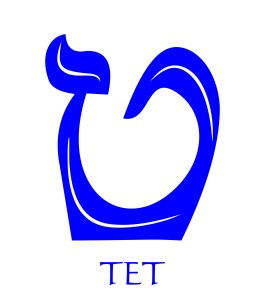
As it turns out, the number nine, represented with the Hebrew letter tet, harnesses not only the duality of women, but also their associations with concealment, birth, and fruitfulness. I plan on using some space to explore this letter, its meaning, and usage because I believe it is intricately linked to our subject matter. In modern block print, tet looks like this:

© Shalom3 | Dreamstime.com

In ancient pictographic form, this letter looked like a vessel, basket, or a container. Frank Seekins’ Hebrew Word Pictures suggests that the imagery of tet could also be a coiled snake, implying something that surrounds (like a woman’s womb). Tet actually looks very similar to an inverted letter mem, the other Hebrew letter associated with the womb. We will explore the womb more fully in a latter post. For now, you can view this footnote for a brief explanation.[2] In Modern Hebrew print, this letter still looks like a receptacle with an inverted spout or rim.

While tet is actually the least common letter in the Hebrew Bible, the first time it appears is in the word tov or good, which is used numerous times throughout the Creation story. I hope you just made the connection that like the Holy Spirit, the moon, and women, tet is the least “seen” letter in the Bible. In other words, there is a “hidden” aspect in all of these things that provides a place of protection, so that growth can safely occur. But, that is what a womb (and a woman) does! They surround and protect new life in order to build the family. Though hidden, this stage is good and necessary.

The goodness of fruit is hidden or concealed within a woman until the fullness of time –nine months. This natural picture of gestation is manifested in the spiritual when one produces the fruit and gifts of the Holy Spirit, both of which, are NINE. (Gal. 5:22-23, 1 Cor. 12:8-10) When nine reveals what it conceals inside, fruitfulness, multiplication, and the building of the House are made visible.

The multiplication aspect of the number nine is extended into the natural through mathematics. If any number is multiplied by nine the resulting digits always add to nine. For example: 2 x 9 = 18 (1+ 8=9); 3 x 9 = 27 (2+7=9); 4 x 9 = 36 (3+6=9), and so on. Also, every multiple of nine will reduce back to nine. This makes a mirroring effect when the multiplication tables are written out. Can you see the reflecting nature of nine in this graphic?

Nine is quite a fascinating number! You can view more mathematical tricks of nine here. For now, consider that every multiple of nine remains nine. For example, consider these biblical numbers: 144, 153, and, 666. All reduce to 9 in Gematria.[3] (1+4+4=9, 1+5+3=9, 6+6+6=36=3+6=9)

Moreover, there are some pretty important Hebrew words that reduce to nine. Adam, a-men, covenant, light, Shabbat, and chesed (loving-kindness) all equal nine when reduced. These seeming anomalies weren’t lost on the rabbis. True to its pictograph, there is obviously something good about this number, though it appears shrouded in mystery. Perhaps, the most notable word associated with nine, TRUTH (אמת), will help one’s understanding.

Not only does truth reduce to nine, but its Hebrew spelling contains the first, middle, and last letter of the Hebrew alphabet. The rabbis’ say the lesson we are to learn is that something that is true cannot be altered and must be true at the beginning, middle, and end. (I hope this reminds you of Messiah! [4]) In other words, truth is immutable and eternal. Like God, it changes not.[5] This author finds it fascinating that the number nine implies this reality in the natural through mathematics. Remember, every multiple of nine remains to be nine. It will not change!

Maybe this is one reason that the Creator chose to give humans life in a nine month gestation cycle. And perhaps, this is why the festivals that testify to eternal life also span a nine month period. Fruit, whether of the womb or of the Spirit, is concealed in order to grow, mature, and eventually sprout new life. The tet pictures all of this and more.

One way in which we connect to the Creator to effect a changed life is through prayer. The Amidah prayer has 18 (1+8=9) benedictions. The ninth hour is not only called the hour of prayer (Acts 3:1; 10:30), but is also the hour that Messiah gave up His Spirit on the Tree (Cross). (Mt. 27:46) By this, He made the ultimate connection between us and the Creator. What was concealed, at last was revealed.  And the mysterious number nine had a role to play in that glorious act!

The Flip Side of Nine

But like most all things Biblical and Hebraic, there is another side to this coin. All words have both a positive and a negative connotation and many words are a contranym.[6] Tet is no exception. Do you recall all of those wonderful positive words associated with nine and tet like truth, covenant, light, and Shabbat? Well, on the flip side, the Hebrew words satan and seduce also contain the letter tet. Although tet is a symbol for GOOD, it can also be a symbol for EVIL. In other words, within the letter tet is the potential for duality.

For example, the Hebrew words for pure and impure (clean and unclean) both begin with the letter tet. While neither of these bodily states imply evil, they do suggest dualism. Obviously, women move in and out of purity and impurity in their monthly cycle and after giving birth. Family purity laws[7] pretty much center on these states of being and their required sacrifices and washings. The Sages make an inference from this that only God, symbolizing Divine Goodness, has the power to make the unclean clean again. In this way, tet unites both the pure and impure in duality to create one renewed entity.

While tet is the symbol for the number nine, the Hebrew word that spells the same number is tayshah. It comes from the root sha’ah,[8] meaning to look to, regard or gaze upon. It is first used when God regarded Abel’s sacrifice and not Cain’s. Thus, the number nine also implies righteous judgment and discernment.

The dualism continues with the Hebrew tet if one considers the modern numeral 9. It appears to be an inverted 6 — the number for both man and the beast.  This question from the very beginning is one that we all must answer. Will you be a man created in the image of Elohim or will you, in the end, be found marked with the image of the beast? When the Creator turns us upside down in judgment (9), either a man or a beast (6) will be revealed.

God had Moses make and mount a brass serpent on a pole to heal those that had been bitten by his judgment of fiery snakes in the wilderness.[9] Later, Yeshua tells Nicodemus that He would be lifted up just as that serpent on the pole had been and that by this He would bring salvation to His people.[10] In these accounts, we can see Yeshua associating Himself with the serpent. He is not the serpent, but He is the Seed of the Woman[11] that crushes the serpent’s head. How does one receive healing or salvation in these examples? By looking upon or regarding the one lifted up — this is the goodness hidden/concealed within the letter tet. What appeared tragic or evil was concealed for God’s tov (good) purposes! Thus, tet demonstrates the two postures of man as referenced by this graphic:

We are a builder or a destroyer, a man or a beast, good or evil. But if we are honest in our self-examinations, we learn that each and every one of us is a contranym.[12] Within even the most holy soul on earth, duality is present with the potential for wickedness. We are like the letter tet because we are a vessel with the potential for both good and evil.

Sometimes our goodness is concealed though the possiblilty for actualization is real. Other times we erect our head like a serpent and gnash our teeth at the very One that was lifted on the stake for our salvation. The serpent beast within must learn to shed its skin of pride and take on the weighty humility of truth. The 6 (man/beast) will be inverted through righteous judgment (9). The question is: Will YHWH find a humble man or a striking snake when your vessel is turned over to reveal its contents?

Now that we’ve laid the foundation of the importance of nine and hinted at its role in the gestation of new life, my next post (Part IV) will cover the festival cycle and human gestation.

(For even more on tet, please see this video by Rabbi Trugman.)


[1] For example, this year (2015), Purim begins on March 4th and Chanukah begins on December 6th. There are approximately nine months that this year is pregnant with the feasts of Israel.

[2] There are two Hebrew words for womb: rechem and beten. The former has a mem, and the latter a tet. However, beten is used in a much broader sense and can refer to the bowels of either a man or a woman. Rechem is used exclusively for the feminine womb that carries a child. It is also the Hebrew word for mercy. These things will be elaborated on in a future post on the Biblical Role of Women.

[3] This article from Hebrew for Christians explains Hebrew Gematria.

[4] Yeshua the Messiah is the same yesterday, today and forever. (Heb. 13:8 CJB)

[5] “For I, the LORD, do not change; therefore you, O sons of Jacob, are not consumed. (Mal. 3:6 NASB)

[6] A word that can mean the opposite of itself is a contranym. Examples in English: bound (bound for Chicago, moving) and bound (tied up, unable to move), cleave (to cut apart) and cleave (to seal together), buckle (buckle your pants — to hold together) and buckle (knees buckled — to collapse, fall apart), citation (award for good behavior) and citation (penalty for bad behavior), clip (attach to) and clip (cut off from), dust (remove dust) and dust (apply dust — fingerprints), fast (moving rapidly) and fast (fixed in position), left (remaining) and left (having gone), literally (literally) and literally (figuratively), moot (arguable) and moot (not worthy of argument).

[7] Here is an article about Family Purity from the Jewish Virtual Library.

[8] H8159 שׁעה shâ‛âh BDB Definition:

1) to look at or to, regard, gaze at or about

1a) (Qal) to gaze at, regard, behold, look about

1b) (Hiphil) to look away, cause gaze to turn away

1c) (Hithpael) to look in dismay, gaze about (in anxiety)

Part of Speech: verb

[9] Num. 21:4-8  Then they set out from Mount Hor by the way of the Red Sea, to go around the land of Edom; and the people became impatient because of the journey.  (5)  The people spoke against God and Moses, “Why have you brought us up out of Egypt to die in the wilderness? For there is no food and no water, and we loathe this miserable food.”  (6)  The LORD sent fiery serpents among the people and they bit the people, so that many people of Israel died.  (7)  So the people came to Moses and said, “We have sinned, because we have spoken against the LORD and you; intercede with the LORD, that He may remove the serpents from us.” And Moses interceded for the people.  (8)  Then the LORD said to Moses, “Make a fiery serpent, and set it on a standard; and it shall come about, that everyone who is bitten, when he looks at it, he will live.”

[10] John 3:13-15 “No one has ascended into heaven, but He who descended from heaven: the Son of Man.  (14)  “As Moses lifted up the serpent in the wilderness, even so must the Son of Man be lifted up;  (15)  so that whoever believes will in Him have eternal life.

[11] Gen. 3:14-15  The LORD God said to the serpent, “Because you have done this, Cursed are you more than all cattle, And more than every beast of the field; On your belly you will go, And dust you will eat All the days of your life;  (15)  And I will put enmity Between you and the woman, And between your seed and her seed; He shall bruise you on the head, And you shall bruise him on the heel.”

[12] See footnote 6. Also see The Creation Gospel Series by Dr. Hollisa Alewine.

Categories: Biblical Symbols, Moedim, Women | Tags: , , , , , , , , , | 21 Comments

Blog at WordPress.com.