Women

Renewed Radio — Marriage

This past week, Dr. Deb Wiley and I interviewed pastor and author John Diffenderfer about his book, The Marriage Commandments on our Hebrew Nation Radio (HNR) program, Renewed. Although I posted the interview on Grace in Torah’s Facebook page, I wanted all my readers to have an opportunity to hear John’s message.

John’s book uses the Ten Commandments as the model for marriage vows. At first glance, this might not seem exceptional, but after reading the book and hearing John discuss his premise, I had MANY “aha” moments. The Ten Words are, after all, the Ketuvah (marriage vows) between Israel and Elohim. Since God Himself uses the analogy of human marriage to explain His relationship with His people, why wouldn’t these same vows be the perfect foundation for a happy and healthy marriage? Listen here.

Here is an example of one of the Ten Commandments and how John’s book gave me a fresh perspective:

“Honor your father and your mother, that your days may be prolonged in the land which the LORD your God gives you. (Ex. 20:12)

How might this commandment be used as a lesson in marriage? Obviously, it’s talking about one’s parents. But what if I applied this same principle toward my spouse? How does one truly honor their husband or wife? If we thought of this commandment as a rule in matrimony, then honoring the other person results in prolonged days — perhaps a prolonged marriage?! One way we can put this into proper perspective is to think of YHWH (God) as the other person. How would I honor Him? I would certainly never speak poorly of Him around others. And, I wouldn’t shame Him or make fun of Him in public. If I wouldn’t do such a thing in respect to Elohim, then I shouldn’t treat my spouse any differently. The accountability level for each partner rises significantly higher after reading this book.

Honor dovetails into the commandment to not take YHWH’s Name in vain… This is just one meditation nugget among many. The Marriage Commandments is a foundational book. It would be great for couples to work through together or even in a couples study group in your congregation. Betrothed couples could especially benefit from its wisdom. It’s small and succinct, yet really provokes one to look deeper. Thinking and actions change for the better.

Marital roles are of particular interest to me as many of my posts are a biblical exploration of such. I encourage each of you to listen to the interview and buy the book. The podcast is free until Wednesday May 17th, 2017 and then it will be archived for subscribers of HNR. (Which is, only $5 a month for morning shows!)

Tune-in to Hebrew Nation Radio on Wednesday mornings (11am-1pm EST) to hear some powerful testimonies from everyday people and interviews with authors and teachers in Hebraic Roots. If you have a testimony you’d like to share contact me at gracentorah at gmail.com

Categories: Messianic Issues, Women | Tags: , , , | 6 Comments

Submission and Authority Part I

This particular series began as answers to emails, so if they read a little odd, that’s why. (: 

Ezer Kenegdo and Submission (1 Peter 3:1)

How do we reconcile the role of the ezer kenegdo as a helper 
that opposes with 1 Peter 3:1?

“Wives, likewise, be submissive to your own husbands, that even if some do not obey the word, they, without a word, may be won by the conduct of their wives.”

© Wavebreakmedia Ltd | Dreamstime.com

One of the points of proper Biblical hermeneutics is called “The Synthesis Principle.” This method explains that the best interpreter of scripture is scripture itself. A passage must be examined in relation to its immediate context (the verses surrounding it), its wider context (the book it’s found in), and its complete context (the whole Bible). The Bible does not contradict itself. In other words, good Bible interpretation relates any one passage to the total content of scripture. This careful process ensures that one has the “whole story.” This lessens the possibility of someone taking a verse or verses out of context to make them fit into a biased paradigm or a preconceived doctrinal framework.

Does submission mean never questioning and always agreeing or going along with another person or authority? Or does submission mean having a heart that is willing to yield to another person out of love and respect? Which type of submission does the Bible teach?

The context for the verses in chapter 3 begins back in chapter 2. This is why Peter begins with the Greek adverb homoios, which means, “likewise/similarly/so.” He’s making a comparison. The second part of chapter 2 deals with general submissiveness to an authority. The character of those that follow the true G-d of Israel should be marked by good behavior or “well-doing” (1 Pet. 2:15). Peter’s discourse on this begins with the directive to “submit yourselves to every ordinance of man for the Lord’s sake…” (1 Peter 2:13) In other words, we (men and women) are to be obedient to the authorities that govern us.

If we are to submit to every ordinance of those that govern us, what do we do when those ordinances oppose the Word of YHWH? Is Peter saying to submit anyway— no matter what? If we answer in the affirmative, there are many scriptural examples that must be ignored or redefined with some pretty fantastic theological gymnastics, and one of those examples is from Peter himself!

“But Peter and the other apostles answered and said: “We ought to obey God rather than men.” (Acts 5:29)

Peter was not double minded. He was discerning, Spirit-filled, and used plenty of common sense in his application of the Torah as he taught others. A heart that is set on serving and loving YHWH will go the distance to be a good witness, a loving neighbor, and even a good citizen. But, that doesn’t make a servant of the Most High a doormat for wicked tyrants. Nor does it mean that one must submit to evil decrees, governors, headships, or kings. While a child of YHWH shouldn’t be known for being rebellious, sometimes rebellion is necessary in order to be obedient! That may sound like an oxymoron, but there are plenty of examples of this in the Bible.

Consider the midwives that rebelled against Pharaoh’s decree to kill the male Hebrew babies. Or, Moses’ parents that hid him as a child in spite of Pharaoh’s decree. Or, Abigail going behind her husband’s back to meet David. Or, Daniel praying to/petitioning YHWH even though it broke the law of the Medes and Persians. Or, the Maccabees rebelling against the Seleucid rulers. Or, the disciples ignoring the Sanhedrin’s authority and mandate to not preach in the name of Yeshua.

Obviously, there is a HUGE difference between outright rebellion and opposing the laws of men that are contrary to the Word of YHWH. The Scriptures are clear on this. We are to submit to those in authority over us because YHWH is the one that placed them in these positions in the first place. Disagreeing with or disliking the way a government operates or rules isn’t rebellion. If these authorities do not force one to abandon the Law of G-d, then one should submit to their authority. However, YHWH is not a sadist. He in no way expects one to obey laws or decrees that are contrary to His Word, knowing it will bring curses or severe consequences. If the government demands you kill your child or desecrate His Temple, you ought to obey YHWH rather than men. Otherwise, you are in outright rebellion to YHWH.

Peter relates these thoughts to “wives, be submissive to your husbands.” Wives are to submit in order that an unbelieving or disobedient husband may become convicted by their chaste conduct, behavior, and conversation. People that use this verse as a blanket statement for women to submit – no matter what – fail to point out the context. Peter is referring to an unbelieving or disobedient husband. Sadly, many equate submission to never questioning or disagreeing with the man. But, this isn’t what Peter says.

Disagreeing with or questioning an authority, ruler, king, or even YHWH is NOT rebellion, nor does it negate submission. You might not understand, agree, or like a certain Torah commandment, but you can submit and obey out of reverence for YHWH. You are even free to question Him and ask, “why?” He may or may not answer, but at least we can rest in the fact that He is perfect and infallible. We can trust Him completely.

Humans, however, are fallible, even those in authority. A man (or other authority) that will not be questioned or counseled has a major issue with pride (which is rooted in ungodly fear.) They are not YHWH. They need accountability. A man that believes he is the mediator between his wife and YHWH has grossly misunderstood Biblical authority and submission.

To assume that a man’s actions, words, or decisions cannot be questioned by a woman (especially one’s other half/wife – the one that should know him best) is mind-boggling. Absolute power corrupts absolutely. YHWH placed checks and balances to ensure that all people, men and women, have culpability.

Not performing an ordinance, request, or law of an authority that violates YHWH’s laws is NOT rebellion. In fact, it is actually submitting to an even higher authority — YHWH. This is true for husbands and wives too. If a husband directs his wife to violate a commandment of YHWH, whom should she obey? Obviously, I’m not condoning an attitude of strife, bitterness, or hatred towards a wayward spouse. There are wrong ways and right ways to deal with the most important human relationship on earth. We can be so right that we are wrong. The way we speak to others — especially our spouses— DOES matter greatly. Nevertheless, we need to obey YHWH and not man. We must prayerfully consider how to approach one another in humility and love.

With YHWH’s help, one can oppose their spouse when they are wrong. In fact, we SHOULD oppose our spouses when they are wrong. This is a big part of what marriage is about. We learn and grow together as ONE flesh. Iron sharpens iron. If both spouses are believers and serving YHWH, then this is the ideal. Biblical submission between humans is not a weaker party serving a higher or stronger party. Submitting to one another is an act of service and is expected by both men and women. We are here to SERVE one another as Messiah served us.

But they kept silent, for on the way they had discussed with one another which of them was the greatest. Sitting down, He called the twelve and said to them, “If anyone wants to be first, he shall be last of all and servant of all.” (Mark 9:34-35)

YHWH gave both men and women the capacity to think and reason. The motives of our hearts will determine how we view, interpret, and act upon the many scriptural examples of biblical submission and servanthood. If we have a relationship where there is complete trust and no fear, but real respect and love, then a verse like this won’t throw us for a loop or cause us to wonder about our “proper role.”

A man and wife will seek to please and serve one another in earnest. There is no “power” struggle because respect and love reside at the heart of the marriage, which casts out fear (pride). When issues do arise, they are dealt with peaceably. When one is called out for disobedience to the Word or for a poor decision, there is no fear that someone will get hurt. The guilty party knows that the correction comes from a place of great love and it is received as divine instruction. When a person feels loved (as a woman) or respected (as a man), submission is natural. No one must tell you to “submit to one another.” (Eph. 5:21)

But, what about Ephesians 5:22-33?

Wives, be subject to your own husbands, as to the Lord. (Eph. 5:22)

This plucked verse seems to be about women being submissive to their husbands. At least that’s why this passage is usually quoted. Rarely is it used to teach Paul’s main idea. Paul claims that the entire point of his discourse is to show us a mystery. In other words, he is using the natural institution of marriage to teach something spiritual about Messiah and His assembly:

This mystery is great; but I am speaking with reference to Christ and the church. (Eph. 5:32)

       © William Wise | Dreamstime.com

Marriage is used as a parable for Messiah and His Body (Assembly). The most intimate relationship on earth between a man and woman is meant to teach us about our relationship with the Messiah. No marriage is perfect and therefore cannot properly reflect this reality. Yet, we can imagine it. We can also strive for this great intimacy not only with Messiah but also within our own marriage covenants. The “how to do this” is the real question and is the reason for so many marriage self-help books, counselors, and retreats.

The answer is found in love and respect. We just don’t know how to “DO” love and respect very well.

Nevertheless, each individual among you also is to love his own wife even as himself, and the wife must see to it that she respects her husband. (Eph. 5:33)

Paul reiterates this in Colossians:

Wives, be subject to your husbands, as is fitting in the Lord. Husbands, love your wives and do not be embittered against them. (Col. 3:18-19)

People get hurt in marriage relationships when they don’t feel loved or respected. Thus, the human tendency is to build walls around the heart to protect these wounds. Symptoms of this malady include indifference, contentiousness, nagging, silence, argumentativeness, apathy, jealously, suspicion, depression, oppression, aggression, and even abuse. The more one experiences these emotions and actions from their spouse, the thicker the walls around one’s heart becomes.

Sometimes past hurts from familial or other personal relationships are brought into the marriage covenant, which can incite the emotions and actions above, creating a vicious cycle. Nearly all relationships suffer from this condition and will continue to be a problem until deliverance has taken place. We live in a fallen and broken world that is in desperate need of the Messiah of Israel. Each of us has areas that need improvement or that needs to be completely rebuilt upon the Rock (YHWH).

If marriage is supposed to mirror our relationship with the King of the Universe, then your bond with your spouse is designed to build up and bind up these wounds, so that you can walk as ONE overcoming flesh. But this cannot happen without TWO participants that are willing to get completely naked with one another emotionally, mentally, spiritually, and physically. This is real Biblical marriage serving YHWH as ONE flesh. It requires the complete vulnerability of both the man and the woman.

But, this side of the World to Come, we each have a common enemy: the nephesh/flesh. Since the fall in Gan Eden, our flesh would much rather run and hide than deal with nakedness, shame, and vulnerability. Nephesh hates exposure. It despises looking at “the man (woman) in the mirror.” It’s so much easier to look outward than inward. The fig leaves of denial, blaming, shaming, and oppressing others are preferred to the death of the animal (human) flesh that YHWH provides for those that SUBMIT to Him.

A man should love a woman as Messiah does, but he isn’t perfect. He will fail. A woman should respect and reverence her husband like the Assembly does Messiah, but a woman is also human. She will fail. We must have mercy, patience, and long-suffering attitudes with one another or our marriages are doomed. Redeemed marriages require us to RISK our pride and our hearts (become vulnerable) with Adonai and each other.

Becoming ONE flesh isn’t easy. It requires constant work and service from both partners.  Your spouse wasn’t given to you so you can “fix” them (fix their brokenness/weaknesses). Disciples of Messiah give their weaknesses and shortcomings to the Messiah. While others can help and encourage a broken person, ultimately YHWH is the only one that can offer a maligned soul true freedom. This is why it is so very vital that we carefully choose our marriage partners. It is also why a proper marriage Ketuvah (contract/vows) needs to be in place and agreed upon before the covenant is made.

© David Pereiras Villagra | Dreamstime.com

Without clear covenant parameters, expectations, and boundaries, spouses hopelessly stumble from one folly to the next. Blame is placed and misplaced in an endless cycle of misery and bondage. Hurting people hurt people and relationships as close as man and wife cut the deepest. Violations are intentionally and unintentionally imposed on one another mentally, emotionally, financially, physically, and spiritually. All of these things TAKE from the other. It is the opposite of GIVING oneself to the service of their spouse. It is the opposite of sacrificial love and respect. It is contrary to Biblical submission.

Poor Biblical hermeneutics and translations of the Bible escalate the destruction of marriages. For example, the roles of men and women are contorted to fit inside the framework of fallen and sinful humans. Divorce is deemed a sin, when it is a solution to the sin of breaking the Ketuvah.[1] Authority and submission in marriage mirror the instincts of the herds, packs, and prides of the beasts of the field rather than the male and female created to be the image of Elohim in the earth. Abuse and domination are often justified with a veneer of false holiness or superiority. You get the idea. Marriage is hard; and sadly, religious spirits and the doctrines of men only make it harder.

The truth is that we can’t change another person. The ONLY person you have control over is yourself. The only person that you CAN change is yourself. No man has the power to change a woman; no woman has the power to change a man. Now, a man can physically overpower a woman. She might physically fear him after this and conform to something he demands, but her heart has not changed — at least not for the better (tov). Deliverance doesn’t originate from abuse; rather abuse creates a need for deliverance.

Thus, when Paul urges a woman to submit to her husband, he is not insinuating that she become his slave. She is not “lessor” than the man. She is not his child and shouldn’t be treated as such. A woman wasn’t made in the image of Elohim to hang on a man’s every word and whim and never question his actions, motives, or decisions. The Hebrew of Genesis literally places her face to face with the man like a mirror. Together they reflect the image of Elohim (or they should).

Woman came from the side of a man as an equal co-ruler of YHWH’s creation. She is bone of his bone and flesh of his flesh. This is WHY the man is admonished to LOVE her like his own BODY. Because that’s what she is. They are one. He protects her one way and she protects him another way. It’s a relationship of reciprocity and mutuality.

The man is also commanded to love his wife as Messiah loves the Assembly— to be willing to die for her. This is sacrificial love at its finest and I don’t know any woman that wouldn’t greatly respect a man willing to die for her. This kind of love cannot be faked, and engenders a reverence like no other. You don’t have to be perfect to love or respect the way Paul is suggesting.

So, what is real submissiveness?

Messiah doesn’t rule over us with an iron fist. He never abused women (or men). He wasn’t a narcissist. He didn’t have a “power-trip.” He never forced anyone to follow Him. He LISTENED to others. He answered questions. He exercised EXTREME mercy. He healed the broken and the sick. He was gentle with sinners. Rather than punish the disobedient —- He DIED for them, taking their death penalty upon Himself.

Men are to emulate Messiah, but they are NOT the Messiah. The parable or metaphor Paul used can only be taken so far. Women are NOT to worship their husbands or replace their relationship with the Messiah with their husband. Husbands were never meant to be the mediator between their wives and YHWH. Man is not the god of woman, no more than woman is the god of man. Either extreme is idolatry, not Biblical submission.

The conclusion is that a woman is to submit to a man as far he emulates Messiah. So long as the man walks and follows in the steps of Yeshua, then the woman follows also. But the minute the man follows his own flesh, a lying spirit, or veers to the left or to the right, a woman is not required to blindly follow or submit to the man. Else, they both will fall into the ditch. But, this type of submission is a reciprocal mandate. We are to submit to one another. (Eph. 5:21)

Sadly, I ‘ve witnessed well-meaning women blindly follow their husbands. Believing they were being Biblically “submissive,” these women failed to hold their husbands accountable to grave sin, knew their decisions were costly, and they tumbled down a path of destruction together. The sad part is that these poor women believed that by following their husbands they were doing YHWH’s will. In their mind, they had no right or authority to say anything about the behavior and decisions of their man, so they remained silent and the entire family paid in spades. The shackles of man’s traditions and doctrines can be very heavy and the price can be immense. But where the Spirit of the Lord is, there is liberty! (2 Cor. 3:17)

I’m so very thankful that Queen Esther didn’t remain silent.[2] Or Deborah. Or Abigail. Or the daughters of Zelophehad. Or Ruth. Or Yael. Or Hannah. Or Mary Magdalene. Or Priscilla. Or Lydia. Or Huldah. Just to name a few.

I hope our understanding of real Biblical submissiveness and authority continues to grow. The more I study the Bible, the more I am amazed by just HOW much YHWH values women. This theme runs in the background behind nearly every story. And, why wouldn’t this be the case? Isn’t the whole Book about Him and His Bride?

Submission & Authority Part II

For more information, see The Biblical Role of Women


[1] Divorce is a viable solution to the “hardness of men’s hearts” according to the Torah. (Dt. 24) Yeshua didn’t change this law in Matthew 5 if you read the text in Greek. Please look up and learn the difference between “putting away” and a “writ of divorce”. They are two separate, but related actions. Yeshua didn’t change any of YHWH’s laws, even about divorce, for that is the work of an antichrist.

People love to proclaim that adultery is the only “Biblical” reason for divorce, but the Torah says the penalty for adultery was death (stoning), not divorce. Moreover, God doesn’t hate divorce; He is a divorcee Himself! (Jer. 3:8, Mal. 2:16) Rather, what YHWH hates, per the Hebrew of Malachi 2:16, is when a man “puts away” his wife without giving a writ of divorce. This selfish act left the woman in limbo with no support and without the option to remarry. Torah requires BOTH “putting away” and a “Writ of Divorcement”, and then the woman is free to marry another. (Dt. 24) Until mankind is completely redeemed, men and women will continue to have hard hearts and sin. Hence, divorce will be allowed until that day comes because YHWH is merciful.

Please read fellow BEKY Book author, Dr. Robin Gould’s, book on Divorce and Remarriage in the Bible. Let the Word set you free!

[2] Queen Esther acted the very day that she heard of her husband’s rash VOW to destroy her people. This was a blatant role reversal from the Torah’s discourse on vows in Numbers 30. To remain silent was akin to agreeing to a rash vow and taking the guilt upon oneself (vs. 14-15). Mordechai used the language of Deuteronomy 30 to persuade Esther (even though she was a woman) to step up and speak to her husband.

Est 4:14  For if you remain completely silent at this time, relief and deliverance will arise for the Jews from another place, but you and your father’s house will perish. Yet who knows whether you have come to the kingdom for such a time as this?”

For Part II, click here.

Categories: Messianic Issues, Women | Tags: , , , , , , , , , , | 12 Comments

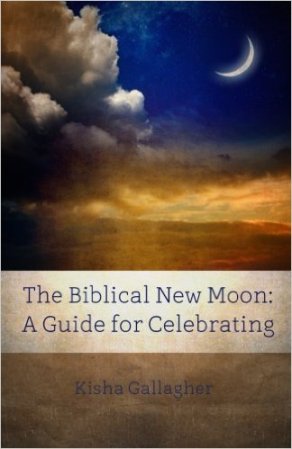
BEKY BOOK: The Biblical New Moon

book-coverIt’s been a while in the making considering its small size, but my BEKY Book is finally available on Amazon in both print and Kindle formats. BEKY Book stands for Books Encouraging the Kingdom of Yeshua. This series is the brainchild of Dr. Hollisa Alewine. She envisioned a platform that would accomplish two things. First, the series fills a gap for new-to-Torah folks. Each book is nonthreatening and easy to read. They are small enough to consume in one sitting and the language is Christian friendly, while introducing the reader to a few new Hebrew words and concepts. They are very affordable and make perfect gifts for those that show interest in the Hebraic walk. Secondly, she is giving lesser known teachers of the Gospel a larger platform to spread their messages to the Body.

Currently, there are seven different authors working on various Torah related topics for beginners in the BEKY Book Series. You can learn more at the BEKY Book website. By liking the BEKY Book Facebook page, you will receive updates on new titles, receive links to interviews with the authors, and will even have multiple chances to win a free copy of one of the new books.

My book is the fifth in the series and is entitled, The Biblical New Moon: A Guide for Celebrating. It’s not about calendar calculations or crescent moon sightings. Instead, it offers the reader an introduction to the Scripture, history, and tradition of new moon celebrations. It also examines the purpose and function of the moon. The second half of the book is devoted to each Hebrew month in an effort to help the reader celebrate each new moon/month and dedicate it to the Creator. My prayer is that this little booklet will shed some much needed light on this often forgotten festival of YHWH. May it bring glory to our King!

I humbly ask that you share this with your friends and family. Any Amazon reviews for my book and others in the BEKY Book series are also greatly appreciated! 🙂

For the Kindle version, click here.

Categories: Creation Gospel, News Flash, Women | Tags: , , , , , , | 10 Comments

The Biblical Role of Women Part XI

Role of Women Main Page

dreamstime_l_47405125 copy

© Nomadsoul1 | Dreamstime.com

Man, Woman, and Fire


Up until now, we have only explored the roles of the male (zakar) and the female (neqevah).[1] In this post, we will look at what it means to be a man or husband (ish) and a woman or wife (ishshah).

For this reason a man (ish) shall leave his father and his mother, and be joined to his wife (ishshah); and they shall become one flesh. (Gen. 2:24)

Let’s begin by looking at the ish and ishshah in Hebrew.[2] Below are Brown, Driver, and Brigg’s Hebrew definitions.

אישׁ

BDB Definition: (ish) 1) man 1a) man, male (in contrast to woman, female) 1b) husband 1c) human being, person (in contrast to God) 1d) servant 1e) mankind 1f) champion 1g) great man 2) whosoever 3) each (adjective)


אשּׁה

BDB Definition: (ishshah) 1) woman, wife, female 1a) woman (opposite of man) 1b) wife (woman married to a man) 1c) female (of animals) 1d) each, every (pronoun)

Man אישׁ and woman אשּׁה share two Hebrew letters: aleph and shin. The difference between the two is that man has the letter yohd and woman has the letter hey. Interestingly, if we put these two together, it spells Yah (yohd, hey). Yah is the poetic form of God’s Name.[3] In other words, the man and the woman each have a piece of the name and authority of God, but only when they come together as one flesh, can we see the Creator’s Name.

יהּ = Yah

This shouldn’t be surprising considering that it takes both the male and the female to display the image of Elohim (God) in the earth. But before we take this further, let’s see what the ish and ishshah share in common. What does aleph and shin spell in Hebrew?


אשׁ = Fire

 Man and woman are beings of fire without the yohd and hey (Yah/God).[4] What does this mean? I believe this depicts two different yet complimentary things to us. I want to explore both. The most obvious side of this issue and the one most often taught is the negative aspect. Fire, burning, and consuming are rarely seen as something positive. In the case of men and women or husband and wife, we understand this all too well. If we say that our marriage is burning, we most likely mean that it is falling apart, collapsing from within, or turning into ashes. Thus, let’s consider this for a moment.

Fire is Destructive

Fire burns. Fire is hot. Fire consumes. Fire can destroy life. If you touch a flame, the effects are painful long after you remove your hand. Nothing hurts quite like a burn. And nothing scars our flesh in a worse way. Flesh can literally melt in a fiery furnace. And yet, at the core of our being, you and I (man or woman) ARE fire (aish). Does that sound scary? You see, we can easily (or maybe not so easily) relate to YHWH as being a “consuming fire,” but how often have you thought of yourself as one?

© Olegs Petuhovs | Dreamstime.com

The truth is that with or without YHWH, we are still FIRE. We are truly made in the image of our “fiery” Creator. Do you recall from Part IX how we are either a builder or a destroyer? The analogy is the same here. The question is: “What will you do with your fire?”

If we are fueled by the motives and desires of the flesh, we will burn and consume ourselves and our relationships with a destructive heat. Even if we manage to put the flames out, irrevocable damage and scarring is left in our wake. We must be very careful and intentional with the power the Creator has granted unto us.

Men and women are “hot,” and not in a sexy way. The fact that our FLESH naturally produces heat has a spiritual message to teach. If we live by the “flame” of our desires, we are sure to find ourselves in the Refiner’s fire of correction.[5] (How’s that for a living parable?)

Fire Cleanses and Refines

On the other hand, fire can cleanse and refine. Fire can give warmth. Fire can tenderize and cook meat. Fire can form, shape, and create new land. Fire and can refine precious metals. Fire can transform dead soil into a rich fertile environment. Fire can preserve life.

Fire, when handled properly and surrounded by definite boundaries, is a very good thing. Thus, we use phrases such as “I’m on fire” to describe our zeal, compassion, blessed efforts, and the like. We even use it to express a winning streak in life or in a game. Not all fire is destructive.

In fact, there are certain seeds that will not germinate and sprout to life without the intense heat from fire. The giant redwoods (sequoias) are a fine example of this. This is interesting considering that most seeds will sprout in the presence of just water. If we look at this natural picture from a spiritual standpoint, the seeds (Word of God) sprout or produce life in the presence of both water and fire. (Does this remind you of baptism in water and fire? The pillar of cloud and pillar of fire? The judgment of water (flood) and of fire? The river of life and the lake of fire?)

At first glance, water and fire seem like polar opposites. But if Hebraic thought has taught me anything it is that every word has the potential to be a contranym and that two diametrically opposed concepts often have a mighty truth to teach if we will just wrestle with the opposites.

The contrast of water and fire was first given in Genesis chapter one. The first reference to the Holy Spirit is on Day one of creation where He is hovering or moving upon the faces of WATER. (Gen 1:2). Then, God says, “Let there be light.” Light can easily be associated with fire. We see a repeat of this contrast of water and fire on day two when the heavenly waters (shamayim) are separated from the earthly waters (mayim). (Gen. 1:6-8)

© Maryna Kriuchenko | Dreamstime.com

The shamayim (heavens) are quite literally waters (mayim) with a shin prefix. As we mentioned above, shin is not only one of the two letters that make the Hebrew word for fire, but it also physically looks like tongues of fire. Thus, it is quite easy to deduce (as Rashi did) that the heavens are indeed waters of fire or fire waters.[6] For our purposes here, the main point is that from the very beginning until the very end, God uses the imagery of both water and fire to not only express His nature, presence, Word, creativity, judgment, and harvest, but also to express similar things in us. The fact that the Hebrew words ish and ishshah depict the heart of men and women as fire and the scientific fact that our “hot” bodies of flesh are composed of mostly water only reiterates this apparent dichotomy.

Are you fire or are you water? The answer is yes. And both water and fire can either destroy life or preserve it. When our lifeblood begins to boil, will it be in lust? In anger? With envy? Or will we give our warmth over to preserve life? To clothe or feed the naked? To defend the helpless?

The truth is that our fire can only be fueled from two places. We either fan the flames with that which is below the expanse or that which is above the expanse. Will our fire come from our lower earthly nature or from the cool, blue, fiery heavens? Both burn with intense heat, both can destroy or purify, but only one does so with a soothing heat that promises everlasting life.

Your kingdom come. Your will be done, on earth as it is in heaven. (Mat 6:10)

Back into the Frying Pan

Man

I think you get the analogy now. But I want to zoom back in on the differences between the ish and ishshah one more time. Remember that the word for man or husband contains fire (aish) and the letter yohd. The yohd is a pictograph of a hand (yahd) or a fist. It has the numerical value of ten and carries the idea of working or creating.[7]

© Alba Molera | Dreamstime.com

This is similar to the function of the zakar (male), but with more emphasis. A man or a husband is for all intents and purposes “a hand on fire.” The fire within a man needs to be channeled into working or creating. (Perhaps this is why so many men love to collect tools. Or why they and boys love mission oriented video games.) A man with idle hands will always find trouble and destruction.[8] Thus, a man’s (and a husband’s) greatest strength is found in what he does with his hands. It is his actions that show YHWH to his wife, to his children, and the world at a large. (And actions really do speak louder than words!)

Do you recall from Part I how the zakar literally serves YHWH when he works the ground? A man’s career will bring him the most fulfillment when he labors to till, guard, and keep what YHWH has given him to tend. In marriage, one way that a man serves his wife and children is by reaping the produce of his labor. Ideally, the provision he provides sustains the family. In this way, his “contained” fire preserves life.

The “hand on fire” or the man has great potential. Those fiery fists can accomplish mighty things. If they are fueled by the cool heavenly flames, his hands will become callused and strong by putting food on the table, building the house, leading and blessing his family, and sometimes even wielding a rod that gently corrects the children. All feel safe, secure, and loved by the large worn hands that create and protect a home that is warmed by his fire.

But as you’ve already surmised, this great strength is also a man’s or husband’s biggest test. Hands that strike and abuse, hands that withdraw when they should caress, hands that fail to work, hands that deal under the table, hands that touch what is forbidden… all these things are a misuse of a man’s fire, but are no less powerful. No one is safe, secure, or loved by a man that gives his fire to these destructions. It won’t take long before his house turns to ashes and all of his labors are consumed.

The good news is that we always have a choice to change fuel sources. A man that finds himself wearing sack cloth and sitting in ashes can rebuild. And if he stays the course, those very ashes will make the ground doubly fruitful. There is always hope. YHWH desires reconciliation. And He loves even the fallen.

Woman

 In the case of the ishshah, a woman or wife is fire with the addition of the letter hey. Hey has a numerical value of five and means a breath or to behold.[9] Pictographically, the letter hey portrays a person with arms lifted up or of an open window. Both imply making something known by drawing attention to it. In other words, the fire of a woman is meant to REVEAL something. I hope you recall from Part X that while women are the epitome of what is hidden, they do in fact reveal (prophetic).

They also draw attention to what isn’t easily seen. For example, YHWH is a Spirit. Though we can’t physically “see” Him, it is usually a woman (mother, grandmother, wife, sister, or the like) that first reveals our hidden God to others. (See Part IX for more on this.) As a wife, a woman can often intuit certain motives of people or circumstances that affect her husband and children. Again, this is her revealing something that is hidden. To make these things known, she must use her hey or breath.

© Konstantin Iuganov
| Dreamstime.com

Thus, for all intents and purposes, a woman is a “fiery breath.” Yikes! That sounds too much like a dragon for my liking! Yet, the fact remains that a woman who is not walking uprightly can sure depict this flaming beast. Just ask any man with a nagging, controlling, or contentious wife.

Ideally, a woman’s gentle breath will be a flame of fervent prayers, praises, and edification. In fact, the hey pictures this very thing. In ancient Hebrew, hey looked more like a person standing with arms lifted high. This is a worship pose. It is certainly one of praise! Perhaps this is why so many women are such valiant worshippers, dancers, counselors, and prayer warriors.

In marriage, this strength carries over to her husband as well. How many of you have read in multiple self help books on marriage that one of man’s greatest desires from his wife is praise? Well, the Hebrew is one more witness to this truth. A man is motivated to work even harder and to stoke the flames brighter when he has a woman that gushes his praises.

Like it or not, we were created to function this way as one flesh. When a man functions in his righteous role as that loving hand of fiery work,[10] the woman feels “safe and secure,” which compels her mouth to sing fiery praises to her man.[11] The converse is also true. Actually, the jury is out on which comes first here… the chicken or the egg. What I do know is that the roles are reciprocal and one fans the flames of the other. If we do our part, even when it seems futile or even if it’s the last thing we “feel” like doing, and we don’t grow weary, the other half naturally changes. Change always starts with YOU, not your spouse. But I digress… let’s continue with the woman.

The strength of a wife or woman is in how she expresses the praises of both Adonai and her man. With words women reveal the will and Word of God to their husband and children. Words can encourage, inspire greatness, and motivate others. Words can bind up wounds and brokenness. Words can uncover the heart of a matter or situation. Women are far more relational than men by divine design. Their lives focus and center around their family and friends, and to maintain these relationships they use words in person, on the phone, and through social media. There’s a reason women are known for “talking.”

© Alena Brozova | Dreamstime.com

But like their counterpart, the ish, it is also their greatest test. The Refiner’s fire isn’t fun, but it is better to suffer for the sake of righteousness than for the sake of unrighteousness.

Beloved, do not be surprised at the fiery trial when it comes upon you to test you, as though something strange were happening to you. But rejoice insofar as you share Christ’s sufferings, that you may also rejoice and be glad when his glory is revealed. (1 Pet. 4:12-13 ESV)

I wonder how many of these “fiery trials” occurs within marriages? I suspect a great deal. And ladies, how often is your strength (mouth) the reason for your troubles? Dr. Alewine says that women have trouble with “delivery.” She intends the pun because it encompasses childbirth and delivering a message. How we say things, the way it comes off of our lips, MATTERS.

Women can be gossipy, cheeky, and manipulative with words. Women know how to say all the right things, but say it in a way that undermines the very message they are conveying. With a look, sigh (breath), or even a smile, they can tell you everything you need to know about what they are really thinking. That old adage “sticks and stones may break my bones, but words will never hurt me” is a lie from the pit of hell. Words give or destroy life! And, words are associated with fire in the Bible.[12]

When a woman speaks solely from her emotions or feelings, her fire can race out of control. The flood from her lips can consume an entire forest. (People are trees!) And because women are gifted with juggling multiple tasks and holding numerous issues, topics, and stressors in the forefront of their mind at one time, this flood can touch EVERY area of the person she spews on at once. Somebody yell, “FIRE!”

We need some water on aisle 9! The good news is that all this destruction can be redeemed. Perhaps, a giant sequoia will grow from the ashes. But of course, the better path is to allow the seeds to sprout after a gentle rain. My prayer is that we LEARN the difference and choose to be a breath of shalom. (By the way, the breath can be another symbol for the Holy Spirit, the ideal role model for the female. See Part V for more detail.)

One Flesh

Now, none of this is meant to limit an ish or ishshah to a one-size-fits-all box. Obviously, men use words and women use their hands! But what this does teach is that men have more proclivities toward work that involves their hands, physical labor, or just “rolling up their sleeves” to conquer a task (literally and figuratively); whereas, women usually shine brighter when they are able to interact with others in a relational way. There will always be some cross over between the roles of men and women. My thoughts are expressing the general rule based on what I see in real life, the Hebrew language, and the Bible.

Remember, you are not just a light, but also a fire. Burn responsibly.

For previous posts in this series click here

See also Dr. Hollisa Alewine’s The Creation Gospel Workbook 3: The Spirit-Filled Family, p. 39


[1] See Part I.

[2] These transliterations are pronounced eesh and eesh-shah. There is no short English “i” sound in Hebrew. Every time you see an “i” in a Hebrew transliteration, it is marking the long double “e” (ee) sound, unless it falls at the end of a word. For example, Elohim (God) does not sound like the English word “him” at the end. It sounds like “heem.” As my Hebrew teacher taught me, Hebrew uses strong, pure vowels. I guess she was implying that English is impure, lol.

[3] For example, see Psalm 77:11. ( Strong’s H3050) Many translations simply translate the poetic name Yah with LORD as they do for the Most Holy Name YHWH. You can search online Bibles to see the poetic version for yourself.

[4] Fire is often transliterated as aish, esh, or aysh. Make the English letter “a” say it’s name then add “sh” to the end and you’re saying it correctly.

[5] But who can endure the day of his coming, and who can stand when he appears? For he is like a refiner’s fire and like fullers’ soap. He will sit as a refiner and purifier of silver, and he will purify the sons of Levi and refine them like gold and silver, and they will bring offerings in righteousness to the LORD. Then the offering of Judah and Jerusalem will be pleasing to the LORD as in the days of old and as in former years. (Mal. 3:2-4 ESV)

[6] The great Jewish commentator Rashi asserts that in Genesis 1:8, “God mingled fire with water and of them made the heavens.” He bases this on an etymological analysis of the Hebrew word for heavens. Rashi explains that shamayim is a compound of the words for fire (esh) and water (mayim).

I wrote about the spiritual aspect of water (and somewhat on fire) in Miriam’s Cup Part I, Part II, and Part III.

You can also read more about the creation days, including the mayim and shamayim, by studying Dr. Hollisa Alewine’s The Creation Gospel Workbook One.

[7] For more on the value of ten, see Hebrew Numbers 1-10.

[8] Pro. 19:15

[9] For more on the number five, see Hebrew Numbers 1-10.

[10] This implies much more than a “job,” I mean work in the fullest sense of the word. Work at work. Work at home. Work for YHWH. Work in marriage. No man does this without LOVE.

[11] This is respect or reverence.

[12] Think of YHWH’s Ten Words coming from a “smoking” Mt. Sinai and the tongues (words/language) of fire that rested upon the disciples in Acts 2. If good and righteous words are akin to fire, you better believe that there is a counterfeit! What do you think the watery river that flows from the mouth of the dragon in Revelation 12:15-16 is metaphorically speaking about? Remember, water and fire mirror one another. (You can see this comparison in my post on The Rivers of Eden.)

Categories: Women | Tags: , , , , , , , , , , , , | 20 Comments

Blog at WordPress.com.