Torah Portions

Chodesh Elul 2018

This post is a little early for the upcoming month of Elul, but I have already transitioned my notes into an article. I look forward to hearing what Abba is telling you this year!

  • © Kisha Gallagher

    Month 6 (12thor last month on civil calendar)

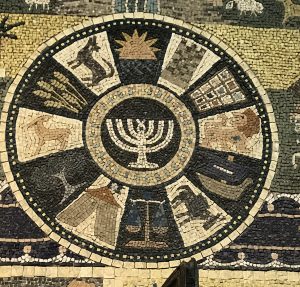
  • Tribe: Gad, meaning “an invading troop”
  • Mazel: Betulah or Woman, the Virgin or Virgo
  • Sense: Action To act requires both thought and deed. It connects the head (thought/speech) to the arm/hand (fruit/deeds) and the feet (one’s walk).

Questions to ponder from last month, Av:

  1. Did you fight major spiritual warfare from Tammuz 17th– Av 9th?
  2. Were these battles particularly to prevent some type of destruction in a family, assembly, physical body, or physical house (all types of the Temple)?
  3. Did you experience a shift or release after the 9thof Av (Tisha B’Av)?
  4. Have you experienced some comfort from the Father (doesn’t mean that the test or trial is over) on or after the 15thof Av (Tu B’Av)?
  5. Were you tested in “hearing”? (See this post for clarity.)

Chodesh Elul

As the sixth month, expect to see parallels to day six of creation, and other implications of six. See my post on numbers, for more themes that relate to the number six.

Just as Friday, the sixth day, is the preparation day for the coming seventh day Shabbat, Elul, the sixth month, is the preparation for the seventh month, Tishrei. Not surprisingly, the sense for the month of Elul is action. One needs to act. And, one acts out what they really believe. Preparation certainly requires action in thought, word, and deed.

© Pascal Deloche | Dreamstime.com

This is the month to prepare for the upcoming High Holy Days and Sukkot. While it is necessary to make physical arrangements to celebrate the fall festivals, the primary preparation is inward and spiritual, one of the heart.

The idea of organization and preparation correlates perfectly with the tribe of Elul: Gad. Gad was the seventh son born to Jacob. Seven is the letter zayin, which looks like a plowshare or a sword. Shabbat and other sevens are tools for harvest AND instruments of war. Gad means “an invading troop.” Compare the blessings of Jacob and Moses for this tribe:

Gen. 49:19 (TLV) Gad—attackers will attack him, but he will attack their heels.

Dt. 33:20-21 (TLV) For Gad he said, ‘Blessed is the one who enlarges Gad. Like a lion he crouches, and tears off an arm or even the crown of a head.  21 He chose the best for himself, for there a marked portion was reserved. He came with the heads of the people. He carried out Adonai’s justice and His judgments for Israel.’

Gad is tribe of war. 1 Chronicles 5:18 describes them as “men who bore shield and sword and shot with bow and were skillful in battle.” It requires great preparation and organization to amass a troop and train them for combat. Gadites know where to strike, because they have trained well. They attack the heel (lower nature/nephesh/appetites/ego), the arm (deeds/power/strength), and the head (the source, leader, authority). When David fled from King Saul, the mighty men of Gad joined him in the wilderness. 1 Chronicles 12:8 describes them this way:

From the Gadites there came over to David in the stronghold in the wilderness, mighty men of valor, men trained for war, who could handle shield and spear, and whose faces were like the faces of lions, and they were as swift as the gazelles on the mountains. (NASB)

How does the month of teshuvah or repentance relate to this aspect of the tribe of Gad? Each day of this month, leading up to Yom Kippur is a training day. There is a battle, but it is not necessarily with an external enemy. The preparation of Elul is a time to search the depths of one’s heel (nephesh), arm (power- intentions and actions), and head (are you at the helm or is Elohim?).

Such great battle tactics might seem excessive for searching or judging one’s self, but in my experience (both personal and observing others) SELF is the last place most people desire to search, examine, and judge. It’s much easier to point the finger and blame others or one’s circumstances for bad behavior. This is the question that six (especially day six of creation) asks of us. Are you a beast or are you a man/woman made in the image of Elohim? In the sixth month, the same question is posited as one prepares for the High Holy Days.

Banner of Gad © Pascal Deloche | Dreamstime.com

Last month (Av), we mourned the destruction of the Temple, the House of God. The second Temple was destroyed because of “baseless hatred among brothers.” The political climate in the U.S. is alarming. How people treat others in general is out of control. The golden rule has been left in the dust. It is time to consider what we say (or type) about other people, regardless of their actions or words. This isn’t a call to stick one’s head in the sand or to subvert justice; rather, it is a call to treat other people (even enemies) as those made in the image of Elohim. They are His shadow in the earth, even when they aren’t acting like it. We can speak of and to them with honor and respect, and do so without condoning a wicked behavior.

I’m working on a series about lashon hara, or proper speech. The mouth or tongue is an unruly member that can quickly send one on a spiral of chaos and destruction. With the tongue (or keyboard), we have become murderers, accusers of the brethren. During Elul, we have an opportunity to make amends with those we have offended before we reach the altar on Yom Kippur.

Mat. 5:21-24 (TLV) “You have heard it was said to those of old, ‘You shall not murder, and whoever commits murder shall be subject to judgment.’ 22 But I tell you that everyone who is angry with his brother shall be subject to judgment. And whoever says to his brother, ‘Raca’ shall be subject to the council; and whoever says, ‘You fool!’ shall be subject to fiery Gehenna. 23 “Therefore if you are presenting your offering upon the altar, and there remember that your brother has something against you, 24 leave your offering there before the altar and go. First be reconciled to your brother, and then come and present your offering.

Lamentations says, “Let us examine and test our ways, and let us return to Adonai.” (3:40 TLV) That is the heart of Elul. Self examination, deep introspection, and yes, judging one’s own heart, is the 40 step process during the days of teshuvah. I wonder if we can avoid looking at other’s sins for forty whole days while we clean our own house? This is true preparation for the seventh month, and also the “turn of the year[1]” on the civil calendar. It’s as if one is getting ready to enter a new time, a new realm, a new day… that’s because beginning with Rosh Hashanah (the Hidden Day), the head of the year[2], we are!

The Torah portions that fall during the month of Elul mirror this conclusion. They are Shoftim (Judges), Ki Tetze (When You Go Forth), Ki Tavo (When You Come In), and Nitzavim (Standing). Judges, when you go forth, when you come in, stand. These portions give disciples instruction for the Season of Teshuvah. (Collectively, this is Deuteronomy 16:18 – 30:20) The highlights from each section or portion[3], will inform a careful eye with the themes for the month Elul. These are things that you will battle with and walk through as you prepare for the fall feasts. Here is a sample:

  1. Adonai expects His people to set up righteous judges that will execute righteous judgement. The people are expected to obey their rulings.
  2. A prophet like unto Moses will arise, look for Him, but also beware of false prophets.
  3. Laws for cities of refuge and the accidental man slayer. (More on this below.)
  4. How to deal with false witnesses.
  5. Rules of warfare, mind the fruit trees (people), and respect the female captives.
  6. Laws concerning sexual immorality, and falsely accusing one’s virgin bride.
  7. Laws concerning divorce and levirate marriage.
  8. Offering firstfruits and tithes.
  9. Mount Ebal – curses and blessings.
  10. Covenant renewed at Moab.
  11. Repentance & Forgiveness
  12. Choice of Life or Death.

These portions cover a lot of territory, but if you look closely, they are a microcosm of our journey! The cities of refuge jumped out this year in relation to Elul. Three cities are to be in the Land He is giving them to possess and three more when He expands their territory for a total of six. Elul is the sixth month. In Chassidic teachings, Elul is the city of refuge in the yearly cycle. The thinking behind this is that we are ALL guilty of being a “man-slayer.” (Didn’t Yeshua say as much in Matthew 5:43-48? See also Proverbs 18:21) Whether we realize it or not, we have killed ourselves and others… with words. (Action)

It is in this season, a space in time if you will, that we contemplate past thoughts, words, and deeds, and rectify wrong doing through heartfelt repentance. In this safe place (in time), a city of refuge, one can truly get to know what is in their heart– the good, the bad, and the ugly. In tradition, the King is said to be in the field during Elul. This implies that He is approachable and near, not as a harsh judge on the throne, but as a loving and compassionate Father ready to receive His prodigal child. Thus, Elul is also called the month of mercy and the month of forgiveness.

What to Expect in Elul

© Artur Szczybylo | Dreamstime.com

There is warfare in Elul, but it should be with your own heart. Outside enemies (spirits) will seek to distract or divert one’s attention away from self-examination. This will be especially true on “social media.” Every year at this season, hot debates pop up with people making strong judgments (shoftim) about the “correct” calendar, the names, proper observance, fasting or not fasting on Yom Kippur, and more. Whether or not the intention is to flare up flesh and emotions, the result is the same. Be a Gadite! Don’t fall for it! The focus of these issues is NOT one’s heart and repentance or making amends between brothers. It is a deception. Reread the highlights of the Torah portions. The chaos will fall into one of those categories, and the portion teaches you how to deal with it.

In reality, the many outside distractions are a flimsy fig leave trying to cover the thing we all hate to deal with – self. The root problem is the same issue the first Adam had: Fear. Hearing the voice of Adonai walking in the garden strikes fear in the heart of those that know they are naked before Him. Don’t listen to the voice of fear.

Is. 54:4-5 (NASB) “Fear not, for you will not be put to shame; And do not feel humiliated, for you will not be disgraced; But you will forget the shame of your youth, And the reproach of your widowhood you will remember no more. 5 “For your husband is your Maker, Whose name is the LORD of hosts; And your Redeemer is the Holy One of Israel, Who is called the God of all the earth.

It’s the season to exchange the fig leave with a new garment provided by Adonai. Let the Holy Spirit do the work of refining, even with fire.

2 Cor. 5:1-5, 10 (NASB) For we know that if the earthly tent which is our house is torn down, we have a building from God, a house not made with hands, eternal in the heavens. 2 For indeed in this house we groan, longing to be clothed with our dwelling from heaven, 3 inasmuch as we, having put it on, will not be found naked. 4 For indeed while we are in this tent, we groan, being burdened, because we do not want to be unclothed but to be clothed, so that what is mortal will be swallowed up by life. 5 Now He who prepared us for this very purpose is God, who gave to us the Spirit as a pledge… 10 For we must all appear before the judgment seat of Christ, so that each one may be recompensed for his deeds in the body, according to what he has done, whether good or bad.

Who doesn’t want to be washed and renewed to don fine white linen garments, like a virgin bride? Perhaps, this is why Adonai placed the betulah or virgin as the mazel to appear in the heavens at this season. The Bride makes herself ready (preparation) before the coming scales of justice in Tishrei (Libra).

© Moshe Chaim Katz | Dreamstime.com

In the Torah portions this month, there is a warning to those that falsely accuse a virgin bride. She has a cloth garment with the evidence of blood that proves she is innocent. Beloved, if you are Messiah’s, so do you. BUT, so is your believing/faithful neighbor, even if you disagree on certain points of halachah. Be careful with your accusations. It is the duty of the Ruach HaKodesh to bring each to the place of groaning as He refines one as heavenly gold. No one gets to escape His process of sanctification, which is the point of the festivals. Have compassion for one another as we travail together.

Virgin daughters of Zion, your King is Coming to you! May your righteous acts, the sense for the month of Elul, be bright and clean fine linen at His return at the fall feasts!

Rev. 19:6-9 (NASB) Then I heard something like the voice of a great multitude and like the sound of many waters and like the sound of mighty peals of thunder, saying, “Hallelujah! For the Lord our God, the Almighty, reigns. 7 “Let us rejoice and be glad and give the glory to Him, for the marriage of the Lamb has come and His bride has made herself ready.”  8 It was given to her to clothe herself in fine linen, bright and clean; for the fine linen is the righteous acts of the saints.  9 Then he *said to me, “Write, ‘Blessed are those who are invited to the marriage supper of the Lamb.'” And he *said to me, “These are true words of God.”

For more on Elul:

Elul

The Vinedresser, the True Vine, and the Branches

A Woman Will Encompass (Eclipse) a Man


[1]How do we know that the turn or change of the year occurs in the fall? Ask Moses. He gives at least five witnesses (see 5thone in footnote 2):

Ex. 23:16 (KJV)  And the feast of harvest, the firstfruits of thy labours, which thou hast sown in the field: and the feast of ingathering, which is in the end of the year, when thou hast gathered in thy labours out of the field.

Ex. 34:22 (TLV) “You are to observe the Feast of Shavuot, which is the firstfruits of the wheat harvest, as well as the Feast of Ingathering at the turn of the year.

Dt. 14:28 (NASB)  “At the end of every third year you shall bring out all the tithe of your produce in that year, and shall deposit it in your town. (Context of previous verses places this in the fall.)

Dt. 31:10-11 (NASB)  Then Moses commanded them, saying, “At the end of every seven years, at the time of the year of remission of debts, at the Feast of Booths,  11  when all Israel comes to appear before the LORD your God at the place which He will choose, you shall read this law in front of all Israel in their hearing.

[2]For those that take issue with the use of the Rabbinical idea of the Feast of Trumpets being dubbed Rosh Hashanah, please see the above footnote. Two of the quotes are from the book of Exodus, which also tells us:

Ex. 12:1-2 (KJV) And the LORD spake unto Moses and Aaron in the land of Egypt, saying, 2 This month shall be unto you the beginning of months: it shall be the first month of the year to you.

Verse two doesn’t call Nisan or Aviv the “Head of the Year” or “Rosh Hashanah.” Instead, it calls Nisan the “Head of the Months” or “Rosh Chodeshim.” It shall be the first (rishon) month (chodesh) of the year (shana) to you. I know this irks the Greek, western mindset. I know this because it used to irk me too, lol. But Abba has broadened my understanding, especially with seeming paradoxes such as this. Regardless of your stance on this topic, it is perfectly acceptable in Hebraic thought and in Biblical interpretation to believe (like classic Judaism) that Adonai continued to mark the “year’s” turn or change in the fall, as Moses goes on to do in Exodus 23 and 34 and in Deuteronomy 14 and 31. One can believe this and yet still believe that He marked the head or start for the months in the spring. The four verses in footnote 1 and the Yovel (Jubliee –Lev. 25:8-11) beginning on Yom Kippur, all point to the change and renewal of the shanim (years) in the fall, or seventh month. The question isn’t which is it, spring or fall; rather the answer is yes – both! I love Hebrew thought! It’s so freeing! If this is struggle for you, I pray that your heart and mind are enlarged like Gad.

[3]I love the outline that First Fruits of Zion creates for the weekly Torah portions: https://torahportions.ffoz.org/torah-portions/. (If you use their outline, there is a mistake/typo with Nitzavim as of this writing. The outline listed is actually for the following portion, Vayelech.)


Categories: Moedim, new moon, Torah Portions | Tags: , , , , , , , , , , | 12 Comments

Know Your Place

The Spirit of Shavuot

After reading this past week’s Torah portion, B’midbar,[1] and celebrating the fourth Biblical festival of Shavuot (Pentecost), I began to think about our various “positions” before Adonai. The Mussar middah (character trait) humility has at its core the question of a person’s proper place. A balanced person neither thinks too highly of himself nor too lowly. Likewise, he or she doesn’t focus too much on self or on the faults of others. This sounds so simple, but the issue of humility is a great struggle for most of us. (Me included!)

ID 12597474 © Thedreamstock | Dreamstime.com

In parsha B’midbar, HaShem described not only the placement of each individual tribe as they camped, but also outlined the order in which they would travel and go to war. The tribal leaders were named and the duties of the priests for the movement of the Mishkan (Tabernacle) were established. Adonai is very specific and organized. There was no question as to one’s duty or placement in the body of Israel. Today, instead of knowing our place, we seem to be “all over the place” in both physicality and deed; each thinking his way, interpretation, or understanding is higher or better.

This creates confusion, not unity. Instead of being united like the believers at Shavuot in Acts Chapter 2, we seem to be more scattered and divided like they were after Messiah’s last Passover and subsequent crucifixion. Using this as a model, we know that Yeshua’s desire was for them to come back together as one people at Shavuot. This is why the risen Messiah told them during the days of the Omer count to go to Jerusalem and WAIT for the promise of being “clothed with power from on high.”

“And behold, I am sending forth the promise of My Father upon you; but you are to stay in the city until you are clothed with power from on high.”  (Luke 24:49 NASB. See also Acts 1:4)

We all know what happened next.

And when the day of Pentecost was fully come, they were all with one accord in one place. (Acts 2:1 KJV)

When we fully come into the Spirit of Shavuot, we know our proper estate. Can you even imagine how glorious the unity of the people was? Look at what their actions produced; it’s eerily similar to when God spoke the Ten Words to the people standing at the base of Mt. Sinai at an earlier Shavuot:

And suddenly there came a sound from heaven as of a rushing mighty wind, and it filled all the house where they were sitting.  (3)  And there appeared unto them cloven tongues like as of fire, and it sat upon each of them.  (4)  And they were all filled with the Holy Ghost, and began to speak with other tongues, as the Spirit gave them utterance. (Acts 2:2-4 KJV)

So it came about on the third day, when it was morning, that there were thunder and lightning flashes and a thick cloud upon the mountain and a very loud trumpet sound, so that all the people who were in the camp trembled.  (17)  And Moses brought the people out of the camp to meet God, and they stood at the foot of the mountain.  (18)  Now Mount Sinai was all in smoke because the LORD descended upon it in fire; and its smoke ascended like the smoke of a furnace, and the whole mountain quaked violently.  (19)  When the sound of the trumpet grew louder and louder, Moses spoke and God answered him with thunder. (Ex. 19:16-19 NASB)

Adonai descended upon Mount Sinai in fire at the giving of the Ten Commandments and the people trembled. Later He descended in fire again, but this time, instead of manifesting on a mountain, the fire sat upon the people that had gathered at His Mountain (Zion). Like the mountain, the people were not consumed. In both cases, the Word of Adonai went forth like FIRE at the feast of Shavuot!

The people in each of the above examples were unified. I dare say that their theology was NOT what united them. It’s difficult to find two people that have the same opinion on any given matter. Jews have a saying to express this: “two Jews, three opinions.” So, what did unite the people? Or better yet, what CAN unify us?

The two most memorable Shavuot festivals have at their heart two great leaders. And there is one trait that both are said to possess that I find most fitting for us to focus on within the theme of unity. Moses is called the most humble man on earth.[2] Later, the one like unto Moses[3] is also called humble.[4] By following Moses’ and Yeshua’s example, it’s not our theology and opinions that binds us into one accord. Rather, it’s our willingness to “know our place” or live in a state of humility.

The Humility of Shavuot

“Always seek to learn wisdom from everyone, to recognize your failings and correct them. In doing so you will learn to stop thinking about your virtues and you will take your mind off your friend’s faults.”Cheshbon ha-Nefesh by Rabbi Menachem Mendel of Satanov.

If there is one thing that I notice more than anything on television, the blogosphere, and social media, it is that our focus is continually on the faults of others. I see very little introspection and meekness. As Rabbi Menachem mentions in the above quote, it is by seeking to learn wisdom from EVERYONE that we are enabled to really see our own failings and correct them.

Everyone? Even the heathen, pagan, atheist, and cult follower? Most would squawk that these lost souls have no wisdom. Is this true? The last time I checked, they too were made in the image of God. While they may need redemption, they too, are a holy soul and Adonai cares greatly for them. Pride is what causes us to assume that we have nothing to learn from these precious ones.

But, this is also true of those that we interact with from the redeemed. Just because Joe Schmoe doesn’t think, believe, or act out his walk with the LORD exactly like you do, doesn’t mean that you are better than him or that he doesn’t have something to teach you. Again, it’s PRIDE that keeps us from gathering together. I’ll give you an example from my own life.

Years ago, I was part of a congregation in FL. The local Seventh-Day Adventist (SDA) church allowed us to meet in their building. I personally don’t think or believe like SDAs. Other than obeying the Sabbath, I thought I didn’t have much in common with these folks. One day, the SDA group asked us to join with them to break bread. To be honest, I didn’t really want to go. My prideful little self secretly thought, “What could they possibly teach me at this point?” I know you’ve never had a thought like that about a person or group, but I freely admit my debauchery to you anyway.

ID 61401855 © R. Gino Santa Maria / Shutterfree, Llc | Dreamstime.com

Long story short, I went… begrudgingly. The meal was fine. It was more or less a communion service in their fellowship hall. Since I associate communion with Passover, I felt that the meal wasn’t quite “accurate.” (More pride.) Then, something odd happened. The people rose from their seats and began to break off for a foot washing ceremony. Without anyone leading, spontaneous songs and hymns began to flow from the lips of these people. A sweet Spirit entered our midst and I think my mouth hung open, lol.

Married couples went to one room. Singles of the same sex went off into two other areas (children included). A sink and a stack of basins were in each room for us to gather water. One spouse sat while fresh, warm water was poured over the other’s feet. Song and praise continued to flow throughout the building. It was one of the most touching experiences I’ve ever had in my life. The water was just water, but it felt like SO much more than that.

It was SO much more than that! Adonai humbled me in a way that day that I will NEVER forget. Washing someone else’s feet is the epitome of humility. But, I honestly believe it takes even MORE humility to have someone else wash YOUR feet.

Feet are the lowest part of our bodies. Since they are what touch the earth and because they are what carry our every weight and burden, they are likened to our nephesh (soul/flesh). They are our beast (of burden). And they get dirty. They, more than any other part of us, need frequent washings. You can walk around in the dirt all day and your hands can remain clean, but not your feet.

Some of you may know that I’m a licensed manicurist. I give pedicures (wash, clean, and manicure of the feet) all the time. I actually enjoy it. I consider it a privilege to care for a person in this way that is often difficult for them to do for themselves. But without soap, sweet ointments, or even toenail polish, the foot washing that I gave and received at that little SDA church has stood out as the best of the best.

Having my feet washed in the presence of Adonai and His people nearly overwhelmed me. The chip on my shoulder fell off the minute the water touched my toes. This is the Spirit of Shavuot. I wanted to separate myself out like the disciples did at Passover and Unleavened Bread, but Abba wanted me to humble myself and gather together with His people in one accord and one place.

Shavout isn’t about perfect doctrine or halachah. It is one of the pilgrimage feasts and as such, it is literally a FOOT festival. You must tame your feet and direct them to Jerusalem to receive the promise of the Father. The journey will make your feet both tired and dirty, but when you arrive, true disciples will be there with fresh water and songs of praise on their lips. Better yet, YOU will be there happy to wash the grime and mud off of your neighbor’s feet.

The heart of the commandments is LOVE. And there is no better way to express the love for your brother than to wash his feet. In a sense, this humble act says; let me wash the dirt from your lower nature. I know walking through life gets your soul muddy. I understand. I too, have a dirty nephesh. Let me refresh you. Allow me to care for you by meeting a need we all share regardless of our theology or lack thereof. I love you anyway. Let me learn something from you. You matter to me.

If we think about Moses and Yeshua, didn’t they do exactly this? Both dealt with imperfect and challenging people. Both humbled themselves and SERVED the people. They knew their place. Instead of calling fire down from heaven to destroy those with dirty feet, they tenderly washed the people.[5] The result was a fiery Word in the mouth of Israel.

Since Shavuot is about the Bride receiving her ketubah (Torah Covenant) and the empowerment of the Holy Spirit, I thought it would be fitting to conclude with the words of Abigail, a bride of King David. Let’s see what wisdom this model bride can teach us:

ID 249467493 © Kevin Carden | Dreamstime.com

When the servants of David came to Abigail at Carmel, they spoke to her, saying, “David has sent us to you to take you as his wife.” She arose and bowed with her face to the ground and said, Behold, your maidservant is a maid to wash the feet of my lord’s servants.” (1Sam. 25:40-41)

Abigail was a humble bride; one any king would desire. She proved this through the selfless action of foot washing. Shavuot beckons us to ask: “What do I do with the feet of those I encounter? Do I step on their toes? Do I turn my nose up at their grime? Or do I bow down low and tenderly wash them clean?” May we become a maidservant like Abigail. When the King comes to take us as His Bride, may we know our place as ones who wash the feet of His servants!


[1] Numbers 1:1- 4:20. B’midbar literally means “in the wilderness”.

[2] Now the man Moses was very humble, more than any man who was on the face of the earth. (Num. 12:3)

[3] “The LORD your God will raise up for you a prophet like me [Moses] from among you, from your countrymen, you shall listen to him.” (Dt. 18:15)

[4] “Take My yoke upon you and learn from Me, for I am gentle and humble in heart, and YOU WILL FIND REST FOR YOUR SOULS. “For My yoke is easy and My burden is light.” (Mat. 11:29-30)

[5] Ex. 19:10-11; John 13:5-13

Categories: Moedim, Mussar, Torah Portions | Tags: , , , , , | 10 Comments

B’har

(Revised from 2013)

                                     © Beritk | Dreamstime.com

Lev. 25:1- 26:2

The name of this week’s portion is B’har. It literally means “on mount” or “on the mountain”; this is where Adonai spoke to Moses. This portion begins with the mitzvah of the Sabbatical years for the land and the counting of years until the Yovel or Jubilee year. This count is strikingly similar to the yearly counting of the Omer that leads to Shavuot (Pentecost). Both counts add up to 7×7 or 49 with the holy day proclaimed the next day (with Shavuot) or year (with the Yovel). Yovel’s 50 year cycle is a much larger picture of Shavuot’s 50 day cycle. While the counting of the Omer begins following the Sabbath after Pesach and culminates 50 days later at Shavuot in the spring months, the beginning count for the Sabbatical years that culminates with the Yovel (Jubilee) begins on Yom HaKippurim[1] (Day of Atonements) in the fall. [Lev. 25:9]

This “counting” connection between the Yovel and Shavuot is no coincidence. The Scriptures are almost begging us to ask more questions and mine out the answers. After a close inspection, a common theme begins to emerge from the excavation. That theme is FREEDOM. At first glance, Shavuot may not appear to contain the thematic element of liberty. After all, the direct commandments associated with Shavuot are linked to the wheat harvest and the waving of leavened loaves.[2] It commemorates the giving of the Torah at Mt. Sinai and our in filling of the Ruach HaKodesh (Holy Spirit). Thus, we can see the relationship of liberty begin to emerge.

Pesach is well-known as the “Festival of our Freedom”. And it should be as it marks Israel’s undeserved redemption from slavery and oppression. However, we must not make the mistake of assuming that Pesach is the end of our journey or salvation. On the contrary, Pesach and our exodus from Egypt and all it represents is only the beginning of our “renewed life” with our Holy Redeemer. All the moedim (feast days) are intrinsically connected to one another and are designed to be recurring appointments or rehearsals with our Creator. They are guide posts that light our path as we follow the Mashiach. We have a weekly illumination in the Shabbat, a monthly light in the New Moon, 7 yearly celebrations in the moedim, 7 year markers in the Sabbatical years, and every half of a century we are released in the Yovel (Jubilee). Many believe that these “cycles” are Ezekiel’s great “wheel in the middle of a wheel“. I imagine them to be akin to the planets circling the sun, each on their own elliptical or the electrons encircling the neutron of an atom.

Shavuot is deeply connected to Pesach by way of the counting of the Omer. It IS the culmination of our freedom on Pesach. Ancient Israel, and we as their descendants, are not truly “free” until we receive the Torah. It is as it were, our ketuvah (wedding vows). The picture is repeated in the Brit Chadashah (N.T.). We are redeemed by YHWH’s unmerited favor (grace) by the blood of the Lamb, but then we are to wait (count) until the feast of Pentecost (Shavuot) to receive our instructions (Torah) and be filled with the Ruach HaKodesh in order to carry out our Master’s will. We must accept or say “I do” to the Covenant. We are set free from the bondage of sin and death (Egypt) so we can choose the easy “yoke” of the One True Master.

The Yovel (Jubilee) is like Shavuot but on a grander scale. In fact, if you read Leviticus 25 carefully, you will see that what the Sabbatical years and the Yovel actually proclaim is YHWH’s ownership of not only Israel (those that have entered into covenant with Him), but of the whole earth! Think about this for moment. Every 7 years the “land” is to remain fallow; it is a Sabbath for the LAND. If these “sabbaticals” are kept, it leads to the release of MAN. All debts are forgiven and all those found in bondage are released. Property reverts back to the original owner, because no one really owns the land but YHWH (Lev. 25:23). We are only stewards. This is another testimony that YHWH is the Master; we are the servants. No other celebration declares YHWH’s ownership of not only “us”, but of the “earth/land” more than the Yovel.

Ps. 24:1 A Psalm of David. The earth is the LORD’S, and all it contains, The world, and those who dwell in it.

YHWH’s ownership makes Him our King and we are His subjects. Isaiah 61 speaks about the Yovel and its theme of freedom. Is it any wonder that Yeshua our Redeemer spoke these very words in Luke 4: 18-21?

Isa 61:1-3 The Spirit of the Lord GOD is upon me, Because the LORD has anointed me To bring good news to the afflicted; He has sent me to bind up the brokenhearted, To proclaim liberty to captives And freedom to prisoners; (2) To proclaim the favorable year of the LORD And the day of vengeance of our God; To comfort all who mourn, (3) To grant those who mourn in Zion, Giving them a garland instead of ashes, The oil of gladness instead of mourning, The mantle of praise instead of a spirit of fainting. So they will be called oaks of righteousness, The planting of the LORD, that He may be glorified.

I hope you noticed the agrarian imagery used by Isaiah in reference to us. Somehow, we are intrinsically linked to the Land. And if we meditate on this for a while, we remember that mankind was birthed from the dust of the earth. This is why the Yovel deals so intimately with both mankind and the land. When we are obedient to the Covenant, the land produces abundantly. When we are disobedient it resists us. So much in fact, that if we remain in rebellion, the land eventually spits us out into exile and captivity (bondage). Certain sins directly affect the land such as incest, bestiality, offering your children to Molech [abortion], and homosexuality. (Lev. 18) Why? Because all these actions profane the name of YHWH. They are the opposite of His character.

If our obedience proclaims His ownership and Kingship, then these sins are in reality proclaiming a false deity (HaSatan). We are currently in the Omer count leading to Shavuot. As we count, we should be reminded of the Shemitah (7 year Sabbatical year) and its count to our great release in the Yovel. Our thoughts should be on the King and His Kingdom and not on our own selfish desires and lusts. Our desire should be to march with perseverance toward a more obedient lifestyle. This will not “redeem” our souls, but it will bless our lives. (Remember the picture from paragraph 5?) If we are the King’s subjects, then we must walk and live by the decrees of the Kingdom (Torah); this shows us to be true followers.

John 15:8-10 “My Father is glorified by this, that you bear much fruit, and so prove to be My disciples. (9) “Just as the Father has loved Me, I have also loved you; abide in My love. (10) “If you keep My commandments, you will abide in My love; just as I have kept My Father’s commandments and abide in His love.

Lessons from the Hebrew Pictographs

The Yovel (Jubilee) begins with a loud shofar blast on Yom Kippur. Brown, Driver, and Briggs’ Hebrew defines Yovel as trumpet, cornet, ram’s horn, horn, ram’s, and Jubilee (as marked by blowing of horns). Literally, this special holy day that comes only once every 50 years is named for the instrument in which it is announced.[3] What is the trumpet blast to remind us of? Once again we see a connection with Shavuot. At the original exodus, the children of Israel traveled for about 50 days until they reached the base of Mt. Sinai (at Shavuot). When YHWH gave the 10 Words (Ten Commandments), He told Israel:

Ex. 19:13 “Not a hand is to touch it, but he shall certainly be stoned or shot with an arrow, whether man or beast, he shall not live.’ When the trumpet sounds long, let them come near the mountain.”

The Hebrew word for trumpet in this verse is not shofar or a Ram’s horn, but yovel. As a side note, it is important to know that many of the Sages believed that the Yovel was simply another name for a ram’s horn or shofar; in fact, we see the word yovel translated as such throughout the Tanakh. In Hebrew, yovel consists of a yod, bet, and a lamed. The last two letters, bet and lamed, form the Hebrew root word “val” that means ‘to flow’. It has the idea of the flowing of any substance (like the release of oil from pressed olives – this flow is val). Since the release of something is often also the emptying of a vessel, val also means to come to nothing, flowing away, or none.[4]

The first letter, yod, means the hand, a deed, or work. If we put these two pictographs together from the word Yovel, we get “the hand or deed that causes release. This a perfect picture of the function of the Biblical Jubilee or Yovel. Remember how we discussed that the theme for both Shavuot and Yovel was FREEDOM or liberty? The Hebrew word for liberty is “deror.” It is used in several passages that speak about the Jubilee, including Isaiah 61. As we’ve just seen, Yovel is also a release (of those in bondage).

While in Hebrew these two words are not etymologically related, their meaning or function most certainly is. Both yovel (Jubilee) and deror (liberty) come from root words that carry the idea of a substance that is free-flowing, like a release of fluid, sound, or the abstract idea of “freedom.” English employs this imagery when one sings “Let Freedom Ring!” The sound waves flow forth like the yovel blast. All of this deals with a build up of pressure just before the “release.” It’s like a birth! In other words, there is a FORCE behind our release! (The Holy Spirit!)

When the time on Adonai’s calendar is just right … BAM! In my opinion, the fact that these two words are often used in conjunction and that they have similar meanings only adds to the significance of the flow of freedom. When man is free to move about or FLOW without the restraint of sin and bondage, only then can (s)he truly be free to seek and follow the King of Heaven and Earth. The flow or sound waves created by the shofar announce the return of our King and our complete redemption. May we have ears to hear it!

For more recent “mountain” top thoughts, listen to Renewed’s podcast from May 9, 2018, here.


[1] Creation Gospel Students should make the connection immediately. All the moedim find their source in the 4th branch, the festival of Shavuot. The Day of Atonements is the epitome of a “clean slate”; therefore, it is quite fitting that the Yovel (Jubilee) begins at this crucial point. This day is ruled by the Spirit of Daat, the knowledge of sacrificial love. What better picture of this loving knowledge is there than a “return”? How many of us fantasize about going back and doing things all over again —- but this time better? This is the Yovel. (Lev. 25:10, Neh. 1:8-9, Is. 44:21-22)
[2] Interestingly, Shavuot’s wave offering is the ONLY offering in the entire feast and sacrificial system where “leavening” is not only allowed, but commanded. (Lev. 23:17) We are to be so full of the Holy Spirit that there is a release like the tongues of fire flowing forth from the mouths of the faithful in Acts 2!
[3] Likewise, this is the case for Yom Teruah or the Feast Day of Blowing (Trumpets).
[4] Other Scripture examples are Is. 53:7 Is. 55:12, and Jer. 31:9.
Categories: Moedim, Torah Portions | Tags: , , , , , , , , , , | 4 Comments

Chewing the Cud

Between work, homeschooling, Passover week, and a vacation, I haven’t had a lot of time for writing. I actually started several posts on the Torah portions, but failed to complete them in time. ): This article was taken from my draft on portion Shemini and deals with Leviticus 11. Enjoy!

© Ecophoto | Dreamstime.com

Distinguishing Between the Clean and Unclean

There are many books and articles out today that are great apologetics for why we should follow God’s food laws as outlined in Leviticus 11 and Deuteronomy 14. (Some examples can be found in this footnote.[1]) After all, it is in the context of the dietary laws where YHWH commands us “you shall be holy, for I am holy”. (Lev. 11:45) To be holy is to be set apart. Adonai cares very much about what we put into our mouths and as the Creator of our bodies, I believe He knows exactly what that should and shouldn’t be.

We must consume food in order to stay alive. It is not just a desire, but a true need. Yet, people start squirming in their seats when you mix “diet” with “Bible.” Our nephesh/flesh wants to eat what it likes – period. “Ain’t nobody gonna make me give up my bacon.” (I’ve actually heard that one.) If you’ve ever worked in the food service industry, you know all too well how irrational and emotional people can get over their food not being just the way they like it. Perhaps this is because ingesting physical food is one of the areas where the nephesh/flesh gets to satisfy itself. It wants what it wants when it wants it. But like all other things pertaining to the flesh, the Creator in His immense wisdom has given us dietary boundaries to follow that will promote holiness and abundant life.

There are fewer things more intimate to us than food. We ooh and ahh over the sights, smells, and tastes of decadent desserts or succulent meats. We think about what we are going to eat at least three times in a day whether our stomachs growl or not. We imagine unique ways to mix things together to tantalize our taste buds in new and exciting ways. We even moan and close our eyes in bliss while tasting something scrumptious. We spend fortunes (at least in the U.S.) at the super market trying to feed our families and ourselves healthy, yet tasty meals. Yes, food is necessary for life, but like all functions of the nephesh, it can become a problem area. Sins related to eating can and do abound where the nephesh is in control. The nephesh will always tell you, “But I HAVE to eat or I will die.” Being the great justifier and exaggerator, the nephesh has certainly won this battle in the west.

Even so, that’s not what this post is about. I want to offer you a completely different take on the dietary laws than you may have ever heard before. You see, I was just talking about the desires of your flesh, which is your nephesh. As my readers are aware, this part of your humanity is shared with the beasts and animals created on day 6 with Adam and Eve. We each have a beast of desire like the animals. Like them, we desire to eat, sleep, play, procreate, and expand our territory. These things aren’t evil in and of themselves, but to be a HUMAN created in the image of God requires that we follow His instructions and live within the boundaries that He has set for us. Otherwise, we start to live like the beasts of the field and follow our own instincts and desires, which leads us to sin.

Have you ever looked through Leviticus 11 and considered the differences between the clean and unclean animals, birds, and fish? Most of us have contemplated that the creatures that are natural predators, trash collectors, and filters are on the “unclean” list. And those that are clean to eat are generally herd driven plant eaters. But have you ever compared these creatures with yourself, the Assembly, and the world? Leviticus 11 was written with more than the surface (literal) level examples of discerning between the holy and the profane. These animals can also teach us how to discern between clean and unclean people, attitudes, behaviors, and mindsets. Revelation in this area just might bring you to your senses when you realize the beastly behavior you’ve been portraying. (Think Nebuchadnezzar in Daniel 4.)

Are You a Beast?

Both man and beast were created on the same day of creation (6). I think that if we are open-minded, we will be able to find many similarities between them and us. Knowing this, let’s think back to the numerous Biblical comparisons where God likens mankind to particular animals. Off the top of my head, I can recall man being compared to the following creatures:

  • A wild ass
  • A lion’s whelp, lion, and lioness
  • A wolf
  • A dove
  • A serpent/viper
  • A sheep/lamb
  • A goat
  • A gazelle
  • A hind

Why do you suppose that God uses the animal kingdom to describe His people or the nations? What lesson are we to learn from these comparisons? Is it possible that beyond the literal level of Leviticus 11 and Deuteronomy 14 there is an even deeper level that can reveal the heart of man?

When God compares us to the beasts of the field, context determines whether the analogy is positive or negative. Like all things Hebraic, animals (and we) are contranyms (a word meaning its own opposite). For example, the Messiah is called the Lion of Judah, an obvious reference to His power and authority. But the enemy is also compared to a lion, except it is one that devours and destroys. Both examples depict the nature of a lion; the question is which character trait is being portrayed? Our job is to look closely at the behavior of the creature, because like them, we also have a nephesh. In like manner, a donkey can be a beast of burden or a stubborn ass and a sheep can be a diligent disciple or a blind follower.

Thus, the nature of animals, including those declared clean and unclean in Leviticus 11, can teach us these same types of analogies. What are the primary differences in behavior between the clean and unclean animals? Which ones are harder to discern? And what lessons can we learn from this?

Chew On This

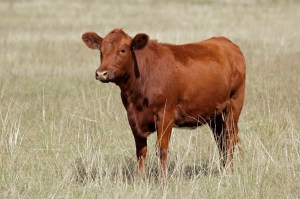
Since people have the most in common with the land dwelling animals, we will explore their characteristics in some detail. Land dwelling beasts must both chew the cud and have split hooves in order to be “clean” or fit for consumption. The cud is food that has been partly digested by the first stomach, but is then regurgitated into the mouth for further chewing. Ruminant animals such as cattle and sheep are all plant-eating creatures. They thoroughly chew their food instead of swallowing it whole like carnivores. (Check out the video at the end of this article for more information.)

The dense grasses they eat require several stages of digestion. Though they may fill up by grazing for hours, the plant matter must be regurgitated and chewed again. An analogy can easily be drawn for us in this process. Spiritually speaking, we may consume (graze) on the Word and become quite full in the process, but if we fail to then unpack, study, meditate, or chew on what we have received, we are not behaving like a “clean” creature.

© Yaroslaf | Dreamstime.com

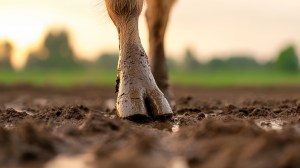
Having a split hoof can teach us a similar lesson. What do feet usually symbolize in Scripture? In Genesis chapter 3, the serpent strikes at the heels or feet. Feet are the lowest part of our bodies. They are what come into contact with the dirt and dust of the earth and they carry us in the way we walk. In other words, our feet are the epitome of our nephesh. As our lower (fleshy) nature, they are the beasts of burden that carry us where the HEAD leads. If ruled by our feet, we can be sure that they will run quickly to filth and evil. (Gen. 4:6-7, Pr. 6:18)

But why a cloven hoof? Is this division of toes not a picture of being separate? Remember it is in the context of Leviticus 11 that YHWH says, “Be holy (set-apart), for I am holy (set-apart)”. Our head must teach our feet to rightly divide the Word of Truth and then WALK in it. This is why the head (mouth) must chew or ruminate on what it ingests. It shouldn’t listen to the feet (nephesh); instead, it carefully chews the cud in order to separate the holy from the profane by the ruach (spirit). In a sense, both the head (mouth) and the feet are meant to discern between the flesh and the spirit.

This same line of thinking is Biblically depicted by the serpent. A serpent crawls on its belly and touches the dust of the earth, like our feet. The serpent lives solely by instinct and desire or the nephesh. It gives no regard to the ruach (spirit). The serpent deceived Chavah (Eve) by getting her to listen to her lower fleshy desires. As a result, she and Adam walked in the image of a beast, not Elohim (God). The serpent, perhaps, is easier to discern as an unclean animal because it neither chews the cud nor has cloven hooves. A snake might hiss out smooth and enticing words with its forked tongue, but if we are even remotely paying attention, we should be able to spot a viper. The same could be said of the sideways scampering of a crab, or the writhing motions of the alligator. Their “walk” does not follow a straight path like the well worn trails of the herds in pasture.

So what about creatures that meet some of Adonai’s requirements for being clean? Swine after all, do have cloven hooves, but they do not chew the cud. In my opinion, a pig is far more dangerous than a snake. Swine have the “appearance” of being holy if you aren’t paying attention. They SEEM to be able to “separate” or divide the Word of Truth with their nephesh (feet), but their head swallows anything and everything without ruminating. Dr. Hollisa Alewine says “the pig is like a serpent who walks and talks Torah out of context”. [2] She has a great commentary on parsha Shemini that will give you enough to chew on for weeks. For now, I hope you will use these few creatures as a model to compare and contrast the many others listed in Leviticus 11.

Wild or Tame

There is one more area I’d like you consider as you ruminate over the differences between the clean and unclean beasts. There are quite a few animals that God declared fit for food, but not for sacrifice. Again, using our head (mouth) to direct our nephesh (cloven feet), we are to discern the difference and learn a lesson. It doesn’t take much meditation to discover that the animals fit for the altar were easily domesticated. In other words, they weren’t wild or rebellious. They were tame and submissive. They didn’t buck against authority or need to declare themselves king of the mountain.

If we examine ourselves and the greater body, it becomes apparent that many of us, though clean, haven’t yet perfected our faith or love.[3] We must willingly SACRIFICE our flesh for God AND our brothers and sisters. We might be doing the first, but our constant state of divisions, bickering, unrighteous judgment, and foul treatment of one another is a testament to our lack of sacrificial love.

 15 Let us therefore, as many as are perfect, have this attitude; and if in anything you have a different attitude, God will reveal that also to you; 16 however, let us keep living by that same standard to which we have attained. 17 Brethren, join in following my example, and observe those who walk according to the pattern you have in us. 18 For many walk, of whom I often told you, and now tell you even weeping, that they are enemies of the cross of Christ, 19 whose end is destruction, whose god is their appetite, and whose glory is in their shame, who set their minds on earthly things. 20 For our citizenship is in heaven, from which also we eagerly wait for a Savior, the Lord Jesus Christ; 21 who will transform the body of our humble state into conformity with the body of His glory, by the exertion of the power that He has even to subject all things to Himself. (Phil. 3:15-21 NASB)

Deer, gazelle, hind, elk, and the like are all clean beasts, but they were never sacrificed on the Holy Altar. Those that live like these creatures are wild. Some prefer to build their own kingdom or have their own excluded mountain. Others hate being penned in with the sheep. They long for the “perceived” freedom of the open range. Maybe they feel safer tucked away in the deep wilderness with a small herd. Perhaps, they’ve grown to love butting heads with the rams. Or maybe they believe the further they separate themselves the better.

But discernment, separation, and holiness that does not lead to gathering, can only lead to death. If you find yourself acting like any of the beasts we’ve mentioned in this article, I hope you will come to your senses like King Nebuchadnezzar. Actually, I believe every single one of us can be likened to one beast or another. I pray that we all become like obedient sheep, quickly heeding the Master’s Voice.

Meanwhile, may every morsel we consume be by the direction of the Word of God and rightly divided to fulfill the two most important commandments: Love Adonai, Love our Neighbor.


[1] Here are some great examples:

Online articles at Messianic Publications by Robert Roy

Did Jesus Declare All Foods Clean? A Hebraic Perspective on Mark 7:19

A Hebraic Perspective on Peter’s Vision (Acts 10)

Jim Staley’s Video

To Eat or Not to Eat 

John K. McKee ‘s ebook

 Kashrut: Kosher for Messianic Believers 

[2] The Creation Gospel Workbook 5, The Torah Portions Volume 3, Vayikra. See portion Shmini, page 77.  Many of the ideas I’ve outlined in this article were first introduced to me by Dr. Alewine either from her written material in the Creation Gospel or by speaking with her. I’ve been “ruminating” on these things for a while and hope that you will too. 🙂

[3] James 1, 1 John 4


Categories: Creation Gospel, Musings, Torah Portions | Tags: , , , , , , , , , | 4 Comments

Blog at WordPress.com.