This is a reference post about the symbolism of Hebrew numbers/letters that are derived from my personal notes. Thus, they are not written in a formal format. You will be able to see related articles and reference information under the new menu heading Misparim — of which I will be adding to as I have time. Studying Dr. Hollisa Alewine’s The Creation Gospel has been extremely helpful in making many of these determinations. I hope you will take the time to learn her material for yourself. You will see her work reflected in numbers 1-7 in regard to the seven creation days, seven Spirits of Adonai, seven Feast days, seven Churches, and in the seven abominations.

ID 75115757 © Iryna Timonina | Dreamstime.com
Zero
Efes (modern Hebrew). Ancient/Biblical Hebrew doesn’t have a representation for the number zero. The closest words would be no or nothing. In English, one typically thinks of zero as nothing, but in Hebrew, this idea isn’t so simple. “No” in Hebrew  is “lo,” and is spelled lamed, aleph. (See picture) If one reverses these two letters, it spells “El” or God. Thus, zero indicates what is hidden or unknowable or uncertain. It can represent what is eternal and limitless or something that has great potential, and it also signifies something unquantifiable and uncontainable such as the Mighty Elohim (God).
Although zero doesn’t have a value by itself, when placed behind another number it multiples or elevates the quantity. For example, 70 is the number 7 followed by a zero. In a case like this, zero has increased or “elevated” the number seven. When studying higher numbers, zero should be viewed with this in mind.
The negative connotations of zero imply a lack of harvest, reward, or effort. Since there are many idioms in English that represent zero or nothing, sometimes zero will be just that. For example, one might say, “I received a big, fat goose egg,” to indicate a lack of success or reward for work/effort. In this sense, a dream with such idioms or an actual zero could imply uselessness or wasted efforts.
One
 Achat [f.], echad [m.] Oneness, Unity, Primacy, First, Beginning. Single and not plural, not subject to multiplicity or division. (1×1=1) One remains one, it does not change. God is One. (Dt. 6:4) There is one body, one Spirit, one hope, one Lord, one faith, one baptism, one God, one Father. (Eph. 4:4-6)
- First Hebrew letter: Aleph Numerical value of one. Pictographic meaning strength, ox, chief, prince, leader, first. Marks singular future tense “I will.”
- On Day One of creation (lit. One Day – Yom Echad), light is separated from darkness. Instead of indicating division, this demonstrates the set-apartness of God and His Light. This day is called tov or good. It is akin to being called out.
- Also on Day One, the first mention of the Holy Spirit occurs in association with movement. “And the Spirit of God was hovering over the face of the waters.” (Gen. 1:2b) Hovering in Hebrew is merachefet (present tense, feminine, singular), which is the action of a mother bird brooding, fluttering, or hovering over her nest. In this case, the Spirit of God is performing this action over the primordial waters of creation. (See Ex. 19:4, Dt. 11:32; 32:10-11, Pro. 8, Is. 49:15; 66: 12-13, Mt. 3:16, Jn. 3:5) The dark, watery Yom Echad is like the womb before “Let light be!” is uttered forth.
- The first day of creation is called “One Day” rather than the “first day,” insinuating the wholeness and perfection of the day and a prophetic future return to Yom Echad (One Day). In other words, the first day of creation is described with the cardinal number “one” in Hebrew; whereas, the remaining days are described with ordinal numbers (2nd, 3rd, 4th, etc.).
- Echad (one) and ahavah (love) are linked, because their Hebrew numerical value is the same: 13. (For more on 13 and other words that equal 13, click here.)
- First Feast: Pesach (Passover) Lev. 23
- First Spirit of God: Chokhmah (Wisdom) Is. 11:2
- First Church of Revelation: Ephesus (Meaning First, Desirable, or Permitted)
- Negative side: Pride, Haughty Eyes (1st wicked abomination Pr. 6:16-19)
Echad (one) is the watchword of Israel. The Shema (Dt.6:4): “Hear, O Israel! The LORD is our God, the LORD is one (echad)!” These words are the first declaration taught to Jewish children and the last words on the lips of the dying. Praying the Shema affirms God’s authority over heaven and earth. He is the Eternal One and the Source of all creation. But even more than that, it is a declaration that His people accept and reverence His lofty position over mankind. One Day is a return to the beginning, a return to Eden. (Is. 46:10, Rev. 21: 6; 22:13) One Day, there will be a restoration of all things. (Acts 3:21) One Day, God will be all in all. (1 Cor. 15:28) One Day, every tear will be wiped away. (Rev. 7:17) One Day, YHWH will dwell permanently among men. (Rev. 21:3) One Day there will be no more death, no more sorrow, no more pain. (Rev. 21:4)
It shall be one day Which is known to the LORD Neither day nor night. But at evening time it shall happen that it will be light. And in that day it shall be—That living waters shall flow from Jerusalem, half of them toward the eastern sea and half of them toward the western sea; in both summer and winter it shall occur. And the LORD shall be King over all the earth. In that day it shall be “The LORD is one,” and His name one. (Zech. 14:7-9 NKJV)
Two
 Shtayim [f.], shnayim [m.] Divide, difference, oppose, judge, discern, witness, conflict, blessing, abundance, building, couple, dying to self. It is also related to the Hebrew word shanah, meaning change or repeat. Context determines meaning (as with all numbers). Ideally, two should mirror one, as in the “two shall become one (echad) flesh.” Thus, making a true “pair” that works together like one’s ears, eyes, nostrils, hands, and feet.
There are two great commandments (love God/love neighbor), two houses of Israel, two sticks, two sisters, two olive branches, two silver trumpets, two leavened loaves on Shavuot, two cherubim guard Ark of the Covenant and the entrance to Eden, two good spies (Joshua and Caleb), and two witnesses mentioned in the Bible. What is opposite is meant to complement for a blessing, not bring division and conflict. There were two pillars that protected and watched over Israel in the wilderness: a pillar of cloud by day and a pillar of fire by night, yet they were one. These watery fire pillars reflect the earthly waters and the heavenly fire waters of day two of creation.
In the sense above, two (ideally) is meant to bring a blessing, barukh/berakhah, which begins with the letter beht. To bless, in simple understanding, is to multiply something or someone. With the number two, multiplication becomes possible.
When two isn’t reflecting the positive side of one (unity), it denotes division rather than multiplication (blessing) in the Bible. For example, the second day of creation DIVIDES the upper and lower waters. The second sentence in scripture speaks of chaos, and the second chapter reveals two trees representing life and death. The Apostolic Writings (N.T.) also confirms two’s pattern of division or separation. Consider the second books of Corinthians, Thessalonians, Timothy, Peter, and 2 John; they each speak either about the enemy/antichrist or the assembly in ruin/apostasy. Two presents one with a choice, and hopefully that choice will lead to life and blessing, a positive change that repeats through each new cycle or shanah (year).
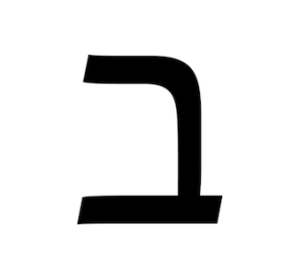
- Second Hebrew letter: Beht Numerical value of two. Pictographic meaning house, tent, sons/daughters (ben/bat), to build, and division. As a preposition, it means “in” or “with.”
- 1st letter of the Bible is an enlarged Hebrew beht. This implies that God’s intent from the very beginning of creation was to expand/build His House.
- The two (male & female) are meant to join together to form one (echad) flesh, bringing unity.
- On day two of creation, the heavenly and earthly waters are separated; this creation day is not called tov (good). Heaven and earth are meant to reflect (mirror) one another in oneness. Creation becomes good again when the separation of the waters of day two are gathered together in one place on day three. Separation that does not lead to gathering is not good.
- Second Feast: Matzah (Unleavened Bread) Lev. 23
- Second Spirit of God: Binah (Understanding- a building, discerning Spirit) Is. 11:2
- Second Church of Revelation: Smyrna (Meaning Myrrh – a burial spice)
- Negative side: Lying (forked) tongue, division, separating unto death. (Second wicked abomination Pr. 6:16-19)

ID 2726224 © Dmitry Maslov | Dreamstime.com
Mankind has two natures. They mirror the TWO trees in the Garden, the Tree of Life and the Tree of the Knowledge of Good and Evil. Christians might liken these to the Christ-nature and the sin-nature. Jews, however, refer to the two natures of man as the yetzer hara and the yetzer hatov. Literally this is the evil inclination and the good inclination. I prefer the latter designation as it doesn’t completely demonize the lower, earthly nature. The Bible declares that the second tree produces both good and evil, a mixture. The lower nature, the evil inclination, is simply the flesh (mind, will, emotions, intellect, instincts, appetites, and desires). Man and animals share this earthly nature, thus it is not wicked or evil. Humans are told to master or rule these impulses, not deny that they exist or that one can live a human life without them. (Gen.4:6-7) Two requires one to discern this difference. It also requires one to look inward at the heart to see which nature sits on the throne, the shamayim (heavenly waters) or the mayim (earthly waters). For example, see the entire Book of Proverbs (Parables), which personifies the two natures in woman folly and woman wisdom. There is wisdom from above and wisdom from below. Actions, deeds, and especially one’s words will reveal which one is operating in the heart of man. (James 3)
The separation on day two divides between the earthly and heavenly waters, the second feast (Matzah) separates one from leaven, and the second Spirit of God (Binah) separates materials in order to build. Since this day is not called tov or good, we must be very careful in how and what we separate. Division is only truly good if it leads to building and gathering (multiplication), not tearing down and isolation (reducing/division). “A wise woman builds her house, but the foolish tears it down with her own hands.” (Pr. 14:1)
Three
 Shelosh [f.], sheloshah [m.] Seeds, trees, fruit. Revelation, resurrection, gathering balance, equilibrium, pattern, counsel, witness, and strength. New life, sprouting, resurrection, fruitfulness, words of life (counsel), unity, and the foundation of the Temple/House are all signified by the number three. Three brings harmony and unity to opposites like one and two. Three creates a solid or a foundation and makes the first geometric shape (triangle). The sequence of three makes a chain of continuity: three patriarchs, three pilgrimage festivals, third day, three primary manifestations of the Godhead, three ply cord, three witnesses, three kings of united Israel, three primary missionary journeys of Shaul (Paul), three woes of judgement (Book of Revelation). In tradition, Moses ascended and descended Mount Sinai three times.
Moses was the third child in his family, and his name is often an idiom for the Torah (Law), which was given in month three or Sivan. (Ex. 19) When Moses was born, his mother saw that he was “tov,” and hid him for three months (Ex. 2:2). There were three servant leaders of Israel: Moses, Aaron, and Miriam (Micah 6:4), who were also siblings. God gave the Israelites three days to prepare themselves to receive the Torah (Ex. 19). The Tree of Life is an idiom for the Torah in Judaism. (Pr. 3:8 – God’s instructions/laws are His wisdom – Dt. 4:5-6) The spindles that hold the sacred scroll are called trees of life and each parchment is called a leave; trees were created on day three of creation. (Ps. 119:1-9; 119:92-94; 119:174-176, Pr. 3:18, Mt. 19:16-17, John 1;1-5; 5:46, 1 John 2:3-5 ) Messiah was in the grave for three days and three nights after dying on a tree (a day three creation. Sign of Jonah/resurrection). Seeds were also created on day three of creation. The natural function of seeds teaches death, burial, and resurrection to new life. Mashiach is the “Seed of the Woman” that will overcome the seed of the serpent (Gen. 3:15). The Word of God is likened to a “Seed” (Luke 8:11).
- Third Hebrew letter: Gimel Numerical value of three. Pictographic meaning to ripen, reward, nourish, mature, recompense, benefit, foot, and camel. Camels were highly prized in the ancient world. They enabled one to make an otherwise dangerous and deadly journey across the desert or wilderness through their pregnant like hump filled with “water” reserves. In this sense, they enabled life to continue.
- There are 3 pilgrimage festivals (shalosh regalim), which are literally FOOT festivals. (Matzah, Shavuot, Sukkot)
- On day 3 of creation, the waters are gathered together, dry land appears, and the first seeds, plants, and trees spring to life.
- the first mention of mikveh (a gathering of waters) for baptism is on day three of creation.
- Third Feast: Yom HaBikkurim (Early Firstfruits of Barley) Lev. 23
- Third Spirit of God: Etzah (Counsel) Is. 11:2 (Root for etzah is etz, a tree.)
- Third Church of Revelation: Pergamum (Meaning height or elevation)
- Negative side: Hands that shed innocent blood, deeds that tear down instead of ones that gather and build, sowing seeds of death and discord. (Pr. 6:16-19) It’s important to note that “hands shedding innocent blood” is also figurative. When we speak slander or even the truth in anger, our words can cause major destruction and damage. Words have the power to shed innocent blood and strangle the life out of another person. This is the antitheses to the 3rd Spirit of God, Counsel (Etzah). Hence, wicked counsel is hands that shed innocent blood. The fruit and seeds from our lips (pens & keyboards) should be pure, not poison. For example, “Life and death are in the power (lit. yad – hand) of the tongue (Pr.18:21).”
Waters are gathered and dry land appears on day three. With the dry land, seeds, trees, and fruit spring forth. Thus, the dividing and separating of day two is ideally to promote the gathering, stability, and growth of day three. Just as trees put down roots deep into the soil for strength, nourishment, and stability, so we, too, anchor ourselves in three. One way that this manifests is in our Hope. Because Messiah was resurrected on the third day, we have hope for our own future resurrection. Because He is the early first fruits (3rd feast) unto God, we also have hope to be counted as His first fruits in resurrection. (1 Cor. 15:12-28)

ID 100249938 © Maryna Kriuchenko | Dreamstime.com
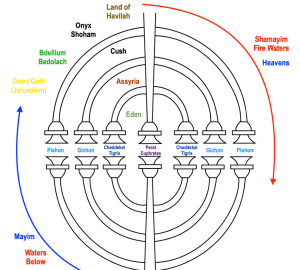
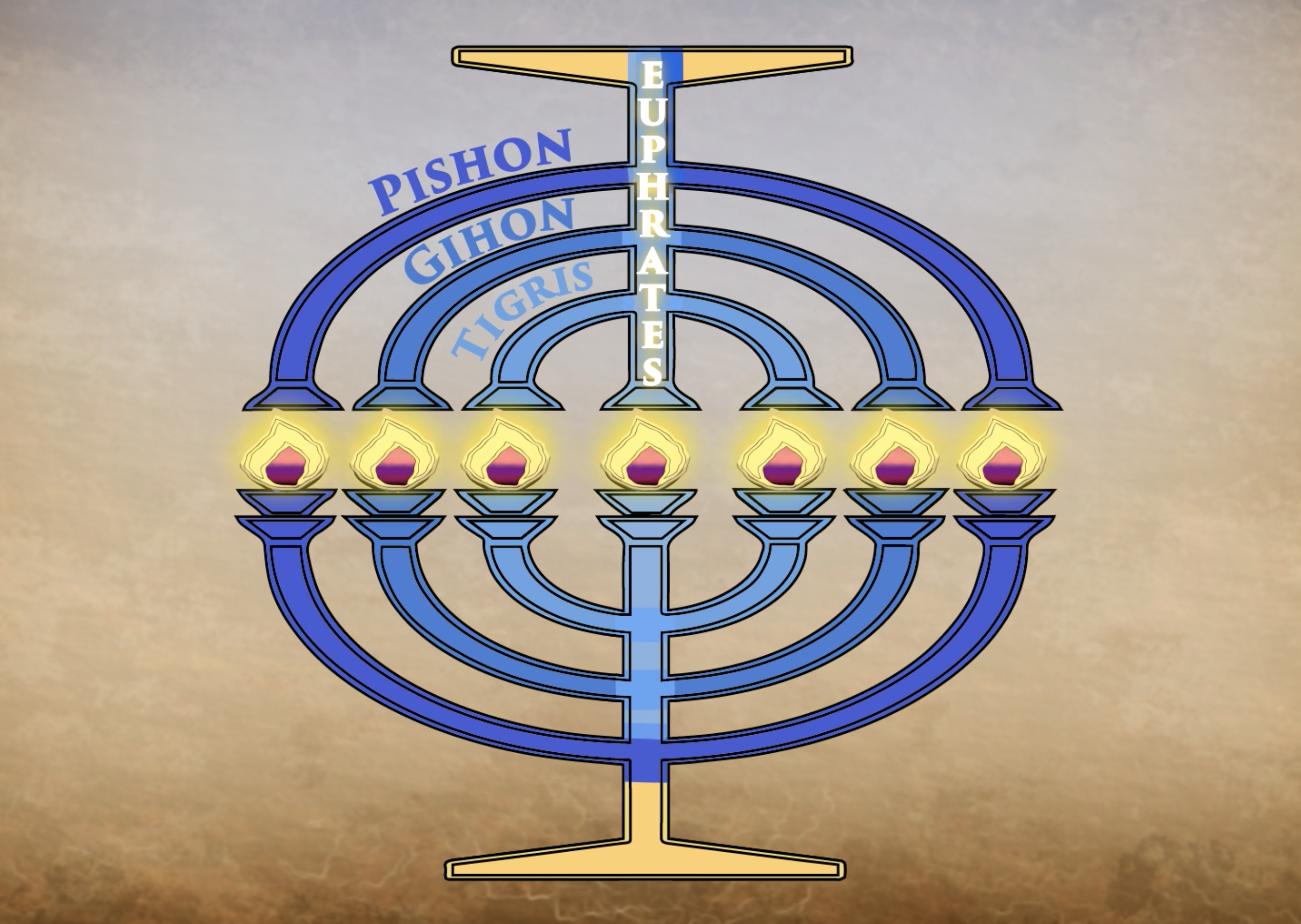
The House/Tabernacle/Temple has three primary sections: the outer court, the Holy Place, and the Most Holy Place. Thus, the number three teaches about three levels of holiness in which YHWH dwells among His people, each more intimate than the other. Within the Holy Place, there are three pieces of furniture: the Menorah, the Table of Shewbread (Presence), and the Altar of Incense. On a daily basis, this is as intimate as one can be.
The menorah is a figure of the Light and the Tree of Life. It is fueled by the precious oil of the Holy Spirit. The Table of Presence (literally the bread of “faces”) has twelve loaves, one for each tribe of Israel. They remain in YHWH’s presence all week and are refreshed every Shabbat. Clearly, these loaves (which come from the grains created on day three) are the ground seeds of Torah that live in all Israel, making them one loaf. (1 Cor. 10:17) They are a memorial of His Word to His people. They also recall the double portion of manna (heavenly bread) given on day six, so one can rest on the seventh day as God commanded. The Altar of Incense is the closest piece of furniture to the Most Holy Place. Its fragrance and covering cloud of sweet smelling smoke is indicative of prayers continually ascending to the Throne of Adonai. Notice that all three pieces of furniture in the Holy Place involve food stuffs or fuel that are derived from PLANT life created on the third day.
Peter sees a vision in Acts 10 of a sheet that descends from heaven three times (heavenly witness). He would soon meet three Gentile men, and Peter wasn’t to think of them as something unfit (common). Peter explained his own vision, which had nothing to do with food or God changing His Law or Holy Word. (Acts 10:28, Mal. 3:6, Mat. 5:17-20) In the natural, Peter was “hungry” when he had this heavenly vision. The men that were coming to him were spiritually “hungry” for the message that Peter had for them. (Acts 10:33-48) In his discourse to those hungry for the Words Life, he mentions that he is a witness to the third day resurrection. For a more in depth Hebraic understanding of Peter’s vision, see Peter’s Vision: Beacon or Bacon? by Dr. Robin Gould.
Four
Arbah [f.], arbahah [m.] Authority, government, rule, dominion, calendar, time, creation, kingdom, fullness, giving of the Torah (Law) and Holy Spirit. The most holy Name of G-d has four Hebrew letters (yohd, heh, vav, heh – YHWH). Judah was the fourth born son and has the scepter of rule. Pictures completeness much like seven. Four matriarchs, four corners of the earth, four horns on altar, four tassles (tzit-tziyot) are to be worn on one’s garment/robe, four living creatures, four horsemen, Four rivers of Eden, four winds, four gospels, etc.
 On the negative side there are four beasts (Dan. 7:3). The fourth one is diverse from the others and has ten horns (see info for the number ten below). Then, an eleventh horn emerges (see info on eleven here) that seeks to change times (appointed seasons/feast days) and law (God’s Torah). (Dan. 7:25) This is in direct opposition to the calendar/clock/seasons/law that YHWH gave on day four of creation.
- Fourth Hebrew letter: Dalet Numerical value of four. Pictographic meaning door, draw out or in, knock, path, way, portal to heaven, dominion, control, bough, and branch.
- Priests wore four garments: a linen tunic, linen breeches, a linen turban, and a long sash. High priests wore an additional four garments (see number eight): the ephod, breastplate, a cloak of blue wool with bells and pomegranates, and a golden plate on their forehead inscribed with, “Holy to YHWH.”
- The Mishkan (Tabernacle) had four coverings: badger/porpoise skin, ram skin dyed red, goat’s hair, and embroidered linen.
- The Passover Seder is structured around fours: the Four Questions, the Four Sons, and Four Cups of Wine.
- Seven loaves fed four thousand with seven baskets leftover. (Mt. 15:32-39)
- On day four of creation, the sun, moon, and stars are placed in the sky (natural light) to govern the moedim (feast days). They mark time and give signs. Their natural light separates from the darkness for those on the earth.
- God’s calendar and prophetic clock were established on Day Four of Creation.
- The Jerusalem Council gave FOUR basic requirements for Gentiles to enter the assembly; from that point they would learn Torah/Moses. (Acts 15:19-21)
- Four fasts will one day become cheerful moedim. (Zech. 8:19)
- Fourth Feast: Shavuot (Pentecost) Lev. 23
- Fourth Spirit of God: Ruach Adonai (fullness of Holy Spirit) Is. 11:2
- Fourth Church of Revelation: Thyatira (Meaning perfume, odor of affliction, sacrifice of labor, or castle Thya)
- Negative side: A heart that devises wicked imaginations, becoming full of false light. (Pr. 6:16-19) Giving authority to the beast and appetites of desire. Four also results in judgment, as in the four horsemen and the four altar judgments. When the Word is tested in an individual, it will produce life (davar) or pestilence (dever).
Ezekiel 14:21 (NASB) For thus says the Lord GOD, “How much more when I send My four severe judgments against Jerusalem: sword, famine, wild beasts and plague to cut off man and beast from it!
Four is indicative of AUTHORITY. The fourth branch on the Menorah is the center, main shaft. It is the source for the other six branches. Yeshua stands in the midst of the menorah. (Rev. 1:12-13) On the fourth day of creation, YHWH declared His GOVERNMENT of the earth and all who dwell in it by creating the sun, moon, and stars. These celestial bodies faithfully keep and proclaim His calendar, His months, His weeks, and His holy days to the world. Only the Creator of the Universe has the ability to define and regulate a man’s clock and calendar. Our life (time) is limited and decreed by the King of all Creation. Every second of our lives is in the palm of His hands whether we recognize His authority or not. Thus, TIME and AUTHORITY are intrinsically linked with day four.
The fourth feast day, Shavuot, the Feast of weeks (time), or Pentecost arrives after one counts fifty days and seven times seven weeks of TIME. It is the fullness of all the feast days as it commemorates Adonai giving His people His Torah (Covenant) and His Spirit (Seal). Again, this is about TIME and AUTHORITY, which declares Adonai’s GOVERNMENT of the Universe (this is mirrored by the Sabbath day – a weekly feast day that is also about Time and Authority). See more about the fourth feast, Pentecost here. Moreover, the Sabbath is the “oht” or sign Between YHWH and His people for all generations, as is keeping the Feast of Unleavened Bread. (Ex. 13:9, 31:13, 17) The “oht” were given on day four of creation.
The fourth piece of furniture in the covered place of the Tabernacle/Temple/House is the Ark of the Covenant, but if one counts from the courtyard, it is the seventh. The Most Holy Place could only be entered ONCE in a YEAR. One must know the Creator’s calendar given on day four in order to live and not die in this sacred space. The mercy seat is a type of Throne, another picture of Authority and Government. Four Living Creatures surround the Throne of Elohim, always declaring, “HOLY, HOLY, HOLY is THE LORD GOD, THE ALMIGHTY, WHO WAS AND WHO IS AND WHO IS TO COME.” (Is. 6:3, Rev. 4:8)
Four and seven have many common factors. They depict holy places in both SPACE and TIME. (For more on this see Rivers of Eden.) Fullness and completeness are characteristics of Abba’s House. As the door (delet), four shows one the Way into the Throne room of Adonai, the place of Authority/Kingship. Yeshua is the door for the sheep. (John 10:7-9) It is impossible to get this close and personal with YHWH by entering another door or way. Thus, intimacy and authority are linked.
Five
Chamesh [f.], chameeshah [m.] Power, strength, alertness (wake-up!), Torah, grace, ministry, service, gospel, fruitfulness, going forth, fast movement, anointed, prayers, and protection. The holy anointing oil had five ingredients: four spices mixed with olive oil. (Ex. 30:23-25.) The holy incense also had five ingredients: four spices mixed with salt. (Ex. 30:34-35 – though tradition says there were eleven ingredients.) We are empowered by the Word (Torah) and the Spirit. All is given by God’s mercy and grace. There are five Books of Torah (Moses/Law), the five-fold ministry (Eph. 4:11), David’s 5 smooth stones, fruit from trees is fit to eat in the fifth year.
- Fifth Hebrew letter: Hey Numerical value of five. Pictographic meaning breath, air, spirit, femininity, and behold (to make known). As a prefix, it is the definite article “the.”
- Five loaves fed five thousand, leaving twelve baskets leftover. (Mt. 14:16-21, a story in all four gospels)
- On day five of creation, the birds and fish were created. They move fast and carry seed throughout the whole earth in their migrations. Like them, we are anointed and filled with the Spirit to carry God’s Seed, the Gospel throughout the earth. These creatures move in unity.
- There are five divisions to the Psalms.
- Zelophehad had FIVE daughters and no sons. The daughters brought a case before Moses asking to receive an inheritance as sons. YHWH tells Moses that the women are right and they get an inheritance. (Num. 27:7)
- Fifth Feast: Rosh Hashanah/ Yom Teruah (Feast of Trumpets) Lev. 23
- Fifth Spirit of God: Gvurah (Power/Strength) Is. 11:2
- Fifth Church of Revelation: Sardis (Meaning Red Ones, prince of joy, escaping ones, or those who come out)
- Negative side: Feet that run swiftly to evil, walking toward darkness, trampling the holy with one’s feet, being ruled by the power of the nephesh/flesh instead of the power of the Holy Spirit. (Pr. 6:16-19)
 Five is indicative of being filled, prepared, and empowered to go forth on whatever mission YHWH has given one to do. Five books of Moses completes YHWH’s instructions to His people. It’s not a coincidence that grace is also associated with the number five. Grace and Torah are not in opposition to one another; rather they work together in harmony. The Torah and Messiah are the Seed carried throughout the earth by the spiritual birds and fish. The five books of Torah are the five loaves that feed five thousand with plenty leftover for those that come later – all Israel – twelve loaves – like the Bread of Presence. Women have the same inheritance in the Torah and are called to spread the Good News, which is pictured in Zelophehad’s daughters.
Five is associated with prayers and being anointed, as figured by the ingredients in the incense and the anointing oil. This indicates that anointment and prayer are POWERFUL. Both define and declare YHWH’s authority, gifts, callings, favor, direction, purpose, and will. They release a sweet fragrance. Both can be a hedge of protection like the clouds, the seal, and the “hiddenness” of Yom Teruah. Five also indicates maturity and unity. Notice how perfectly synchronized the movements of flocks of birds and schools of fish are in the mayim (waters) and shamayim (heavens). Though they are many, they flow as one fluid Body. This is the Spirit of Power, which cannot be accomplished if there isn’t a love for the brethren. Without love, there is no unity or gathering.
Six
 Shesh [f.], sheeshah [m.] Connection, image, man, beast, flesh, work, sacrifice, intimacy, knowledge, sacrificial love (da’at – knowledge), number of man and beast, antichrist, idol, Adam, relationship, and judgment. Six often refers to the works of man, but ideally represents sacrificial love and intimate knowledge with the Creator (Da’at). When the latter is forsaken, only idolatry and flesh remain. One is ALWAYS either projecting the image of God or the image of the beast (flesh) to the world, which is represented by the number six and Day Six of Creation.
Above all, the letter/number vav is about connection and relationship. The Talmud says that wherever the vav appears, it also serves to “add” something that is not obvious – something that goes beyond the simple meaning of the text. To whom or what are you connected with? Mankind is a relational being meant for connection. With whom or what shall we attach ourselves? That is the question of Day Six, and the answer to the “mark of the beast.”
On the Torah scroll, each column of text begins with the letter vav (the conjunction “and”), which joins each section to the next in a continual untied flow.[1] Thus, the Word of Adonai in man connects him/her with God. Without the Words of Life, one is disconnected or disjointed from God, because one has chosen to join with the words of “another,” such as self or other falsehoods (idolatry).
The purposeful alignment to start each Torah column with a vav is based on the construction of the Tabernacle. Like the Mishkan, the Torah is meant to contain the Spirit or Presence of Adonai. And like man, if the Ruach HaKodesh is not present, it is just letters on parchment, lifeless and incapable of projecting His image to the world.
Exodus 27:9-10 (NKJV) You shall also make the court of the tabernacle. For the south side there shall be hangings for the court made of fine woven linen, one hundred cubits long for one side. 10 And its twenty pillars and their twenty sockets shall be bronze. The hooks of the pillars and their bands shall be silver.
The Hebrew word for curtains/hangings is the same word for the parchment of the Torah scroll. Likewise, the Hebrew word for pillars is the same word for the columns on the Torah scroll. In the Tabernacle, the curtains were held up by vavim (plural of vav), hooks that hold two things together.[2] Just as the vavim held the court curtains in place and connected them one to another, firm to the pillars, the Torah connects and stabilizes earth (beings) with the heavenly realm.
“Six is the revealed creation of the physical world… seven or Shabbat reveals the spiritual within the physical.” (Alewine)
- Sixth Hebrew letter: Vav Numerical value of six. Pictographic meaning of hook, nail, to connect, tent peg, add to, attach. As a conjunction prefix, it means “and.” The number six reveals whether we are connected to Adonai or the beast/flesh.
- On Day Six of Creation, beasts of the field (land creatures) and mankind (male and female) were created. Mankind is designed to rule over the beasts of the field. Spiritually, he/she must rule over their own beast/flesh empowered by the Torah – His instructions for this purpose.
- The world (all of creation) was created in six days. Hence, six is connected to creation and the work by God and of man as His image bearers.
- The first word in the Bible is Bereishit (In the beginning), which in Hebrew consists of six letters, בראשית.
- The sixth word in the Bible (ואת) begins with vav, connecting “heaven and earth.”
- In Bava Batra 14a, the Luchot HaBrit (Tablets of Testimony) were cube shaped sapphire stones, and they measured 6x6x6 handbreadths.[3] (For more information, see the pdf entitled Counting the Omer 2018.)
- The Tefillin or phylacteries and the Mezuzah have the letter shin engraved
on the outside, which represents Shaddai (God Almighty). A shin is made of three vavim or 666. In this case, the number is positive as the tefillin and the mezuzah represent binding the Word of God as a sign on one’s hand, forehead, and doorposts. Dt. 6:8-9 You shall bind them as a sign on your hand and they shall be as frontals on your forehead. 9 You shall write them on the doorposts of your house and on your gates.

Mezuzah ID 93511633 © Laudiseno | Dreamstime.com
- There are six sedarim (orders) in the Mishnah.[4]
- Seraphim have six wings, with a head in the center, making a fiery menorah. (Is. 6:2)
- Four Living Creatures have six appendages/wings with a head, also making a menorah. (Ezek. 1:5-8, Rev. 4:8)
- Magen David (Star/Shield of David) has six points or wings.
- Man is to work for six days and then rest on the seventh day, Shabbat. (Ex. 16:23-30; 20:8-11
- Noah was 600 years old when the flood waters came upon the earth. (Gen. 7:6)
- Isaac was sixty years old when Rebecca gave birth to Esau and Jacob. (Gen. 25:26)
- Leah bore Jacob six sons. (Gen. 30:20)
- Jacob served Laban fourteen years for his wives, and six years for his flock. (Gen. 31:41)
- 66 of Jacob’s descendants went down to Egypt. (Gen. 46:26-27 with Joseph and his sons, totaling 70.)
- 600,000 men on foot (and their families) were redeemed from Egypt. (Ex. 12:37)
- Pharaoh chose 600 choice chariots to chase after Israel. (Ex. 14:7)
- Goliath’s spear head weighed 600 shekels of iron. (1 Sam. 17:7)
- In the story of Saul and David, each are said to have 600 men with them in multiple places.
- The length of the House of Adonai that King Solomon built was 60 cubits. (1 Kings 6:2)
- There were six steps that led up to King Solomon’s ivory throne. (1 Kings 10:19)
- The King of Babylon, Nebuchadnezzar, built a golden image with a height of 60 cubits and a width of 6 cubits. (Dan. 3:1)
- The number of the beast IS the number of man, 666. Let him who has understanding calculate the number. (Rev. 13:18 – see also The Mark of the Beast.)
- Seed that falls on GOOD soil yields 100, 60, or 30 fold. (Mt. 13:23)
- Sixth Feast: Yom HaKippurim (Day of Atonements) Lev. 23
- Sixth Spirit of God: Da’at (Knowledge; sacrificial love) Is. 11:2
- Sixth Church of Revelation: Philadelphia (Meaning: brotherly love)
- Negative side: A false witness that speaks lies, being a witness for the enemy or for the lusts of the flesh. (Pr. 6:16-19) See the number 24 for a giant that followed this image of the beast (6) that actually had six fingers on each hand and six toes each foot. The sixth abomination of Pr. 6:16-19, marks a change from body parts to a whole person, a false witness.

ID 242155470 © Rudall30 | Dreamstime.com
Peter had a vision of a sheet with unclean beasts at the sixth hour. (Acts 10:9) The vision was a parable; the beasts represented people (men), not food. Peter saw the sheet three times and three Gentile men (3+3=6) came to see him. (Acts 10:28-29) This story is a great example of how to discern between the Spirit of Adonai and the desires of the flesh, or the number six. How do you view Peter’s vision? A flesh ruled person (6) can and usually will twist this encounter to condone the appetites of the flesh; that is, eating unclean animals that YHWH calls an abomination. (Lev. 11) This is a false witness. To their credit, most have been taught by misinformed teachers to view Peter’s encounter as a license to indulge in the desires of the flesh. In other words, they’ve been deceived and are not in outright rebellion, but still a false witness.
On the other hand, one that knows and loves God’s Word and commandments will not be looking for a loophole to disobey what is written and will immediately discern the context of Acts chapter 10. Peter clearly interprets his own vision in the text; it’s better to take his word for it. The unclean animals symbolize men, and have nothing to do with food or eating what God has forbidden. We must have the mind of Messiah, not a mind set on appeasing the wants, desires, and appetites of the flesh, which is the image of a beast. The beauty and depth of Peter’s vision has been tainted by the desire to consume swine’s flesh for far too long. Peter’s vision is about God’s love and acceptance of people from all nations, tribes, and tongues. You must decide which interpretation is spiritual and which one is from the appetite of a beast. This decision is made in the sixth hour (noon) when the sunlight is at its peak in the sky. In other words, there should be no ambiguity or darkness to blind one to truth. See also Dr. Robin Gould’s book, Peter’s Vision: Beacon or Bacon.
Song of Solomon 3:6-8 (NASB) What is this coming up from the wilderness like columns of smoke, perfumed with myrrh and frankincense, with all scented powders of the merchant? 7 Behold, it is the traveling couch of Solomon; sixty mighty men around it, of the mighty men of Israel. 8 All of them are wielders of the sword, expert in war; each man has his sword at his side, guarding against the terrors of the night.
Seven
 Shvah [f.], sheevah [m.] Rest, cessation from work, wholeness, completeness, being ripe, order, stability, and holiness. Also, the number of the Temple, Adonai’s House. We rest (7) in the finished work (6) of the Messiah. There are seven days of creation, seven days for Temple dedication, seven Spirits of God, seven feasts of God, seven churches or assemblies in Revelation, seven stars in Yeshua’s hand, seven golden lampstands, seven seals, seven trumpets, seven bowls, seven thunders that speak, seven eyes of the Lord, seven horns & eyes on the Lamb, seven abominations (wicked lamp spirits Pr. 6:16-19), the priest of Midian (Moses’ father-in-law) had seven daughters, Joshua had the people along with seven priests march around Jericho before the Ark for seven days. On the 7th day, seven priests blowing seven shofarot along with the people circled the city seven times. On the 7th circuit, the shofars sounded long and the people shouted and the walls fell. Sampson had seven locks of hair in which were the source of his strength (Holy Spirit). Elijah sent his servant to look for the indication of rain seven times. Elisha had Naaman wash in the Jordan seven times to be cured of his leprosy. Elisha laid upon a dead boy; he sneezed seven times and rose. King Joash began to reign at age seven; and he began to rebuild the Temple of YHWH. King Hezekiah reinstated the observance of Passover (1st feast) and Unleavened Bread (seven day festival). The people were so excited they celebrated an additional seven days. Pure, white light refracts into seven colors (iris, prism, rainbow).
On day seven of creation, God rested from His work. He set the seventh day apart as holy, and gave it a name: Shabbat. Seven transcends the natural and moves into the supernatural. We begin every week (and even every day as the day begins at sunset) by RESTING. First, we rest in the finished work of God, then we go to work (perform good deeds). This has been G-d’s pattern from the very beginning. Rest, then work. Any other pattern proclaims mankind’s desire to rest in the work of his own hands.
“Six is the revealed creation of the physical world… seven or Shabbat reveals the spiritual within the physical. The Sabbath seven exposes the spirit that moves inside the physical garment of the six.” (Alewine)

ID 25489169 © Miguel Nicolaevsky | Dreamstime.com
According to the ancient near eastern (ANE) culture and understanding of the cosmos (this includes ancient Israel), seven was the normal operation and order of G-d’s House/Temple. Thus, all the seven’s in the Bible have to do with Temple building, inauguration, and dedication. (Obviously, the negative side of this is wickedness that destroys this imagery.) For example, the seven days of creation are the seven days of Temple dedication, with Shabbat being the inauguration or rest. In this case, the Shabbat signifies the Creator’s rule of heaven and earth and His Temple/presence being the ultimate means of stability and order in the world. In other words, the completeness pictured in the number seven is qualified in ANE thought by TEMPLE building/dedication/inauguration. Without the Temple (G-d’s rule), there is chaos and a lack of order in the world. Knowing this should broaden our perspective on the spiritual implication of the number seven. (For more information, see Dr. Dinah Dye’s book, The Temple Revealed in Creation.)
- Seventh Hebrew letter: Zayin Numerical value of seven. Pictographic meaning plowshare, weapon, sword, to arm, to adorn, to cut, to feed, completion.
- The first verse of the Bible has seven Hebrew words with twenty-eight (4×7) letters.
- Blood was sprinkled on the mercy seat seven times on Yom Kippur. (Lev. 16:14) Blood of the chatat (sin) offering was sprinkled before the veil seven times (Lev. 9:17)
- It takes seven days to atone for the altar and to purify it. (Ex. 29:37, Ezek. 43:26)
- Seven of the Ten Commandments are negative and begin with the Hebrew loh, or no/not, as in “Thou shall not.”
- Seven weeks (7 x 7) are counted to get to Shavuot (Pentecost). Likewise, 7 x 7 years are counted to reach a Yovel (Jubilee) year. Each of these seven year bundles are a Shemittah year or a year of release. (See future post on the number fifty.)
- Wisdom has seven pillars. (Pr. 9:1)
- Seven loaves fed four thousand with seven baskets leftover. (Mt. 15:32-39)
- We must forgive our brothers/sisters 7 x 7 times. (Mt. 18:21; Luke 17:4)
- Mary Magdalene had seven evil spirits cast from her. (Mar. 16:9, Pr. 6:16-19)
- Seventh Feast: Sukkot (Tabernacles) Lev. 23
- Seventh Spirit of God: Yirat Adonai (Fear/Reverence of God) Is. 11:2
- Seventh Church of Revelation: Laodicea (Meaning justice or vengence of the people)
- Negative side: One who sows discord or strife among brothers, tearing down the house. The opposite of restoration and rest. Chaos in the house and in relationships. Becoming wholly wicked. (Pr. 6:16-19) Destroying G-d’s Temple or House. Destroying creation, order, stability, and life. Rejecting the Kingdom and YHWH/Yeshua as King. Cup of iniquity, abominations, and wickedness becoming full, which results in destruction.
The harlot in the Book of Revelation rides a scarlet beast (see number 6) that has SEVEN heads. She is the epitome of one ruled by the image of the beast created on day six and the lusts of the flesh (the beast is red like Esau). The beast has ten horns (see 10 below), which denotes a completely wicked assembly. Instead of holding the holy Shabbat (7) Kiddush cup, she has a cup full of abominations. (Pr. 6:16-19)
Eight
 Shemoni [f.], shemonah [m.] Literally to “make fat.” New beginnings, not just complete (like seven), but satiated. Becoming “fat” is having more than enough. Full to overflowing. Moves from natural to supernatural. Transcends natural time and space to supernatural realm. Figuratively, eight takes one through a full cycle of seven, and begins anew – the One Day – Yom Echad – of creation. But, it also alludes to greater authority (doubled 4), accountability, and holiness (set apartness).
Torah Portion Shemini – “Eighth” (Lev. 9:1-11:47) describes what occurs “on the eighth day” after the inauguration of the Tabernacle. Aaron’s sons brought an esh zarah, a strange fire, before Adonai and His fire consumed them. There is a connection between the brazen altar and the incense altar (the latter being the offering of Aaron’s sons). Both discern between the spirit and the nephesh. While some nephesh might remain after passing through the brazen altar, none can be present at the golden altar, which is closer to the Presence of the Holy One. For YHWH our God is a consuming fire; He is a jealous God. (Dt. 4:24) His priests are required to teach the people the difference between the holy and the profane. (Lev. 10:10-11)
While “new beginnings” sound wonderful to the soul, it is imperative that one considers the cost for this to occur. All new life, new births, and new beginnings require a death (at least figuratively). The old must die in order for new life or for a new beginning to occur. The nephesh hates this message, because it does not want to relinquish the power of the soul, the power of sin, to God’s holy fire/altar. The ego wars against letting go, to submission, and obedience, because it cannot see past the natural, earthy realm. It doesn’t understand that the smoke rising up from its demise IS the Way to the heavenly realm, and true life. The sign of the covenant, circumcision, which is performed on the “eighth” day, teaches this same message. Saul and David are figures of the desires of the nephesh and the spirit, respectively. It’s not a coincidence that David was an “Eighth” son.
There is a distinction, a division, a set-apartness involved with “eight.” Holiness is, in a sense, a boundary – or rather, a set of boundaries. There are levels of holiness explained in intricate detail in the Torah (Instructions) of God. Even at Mt. Sinai, the children of Israel were told not to cross the boundary set by Adonai, even in their zeal to gaze upon Him, or they would die. (Ex. 19) In our current state, God’s holiness would consume us. Until the final redemption, the redemption of our bodies (resurrection/change), we will suffer the same fate as Nadab and Abihu if we try to zealously cross a holiness boundary beyond what Adonai has prescribed for us. (Rom. 8:18-30, Eph. 4:30-32)
The priesthood had to live by stricter standards than average Israelites. Their boundaries were not as “loose,” because they were mediators and drew closer to the Holy One. Aside from this most holy duty, they were to teach the people the difference between the holy and the profane, and the clean and the unclean. These were/are God’s standards, not man’s. Carnal man is deeply opposed to such laws and standards, because these things are Holy and Spiritual, and man is not. (Rom. 7:12-24) The holiness of Adonai and His Torah are spiritually discerned, a carnal man cannot know them. (1 Cor. 2:14) Failing to teach these spiritual instructions to Adonai’s people does “violence” to His Torah, and profanes His Name.
Ezekiel 22:26 (NASB) “Her priests have done violence to My law and have profaned My holy things; they have made no distinction between the holy and the profane, and they have not taught the difference between the unclean and the clean; and they hide their eyes from My sabbaths, and I am profaned among them.”
It is important to read the entirety of portion Shemini. The last half explains the distinctions between clean and unclean animals. This is not disconnected from what happened on the “eighth day” with Nadab and Abihu. The Christian world has mostly ignored or explained these laws away to conform to the desires of the nephesh (flesh). But, it is in this section that Adonai twice declares, “Be holy, because I am holy.” (Lev. 11:45-46) Food, what one “eats,” is deeply intimate. We are to make distinctions, based on what the Word of God says, between the creatures we eat, because they become a part of us (physical body). The spiritual counterpart is even more vital. We are to “eat” the Bread of God, the heavenly bread, which is His Word and Messiah, so it/He becomes a part of us too. This is what sustains, preserves, and allows life to continue in us in both the natural and spiritual realms.
Be holy, be set apart, live by the boundaries declared from the mouth of Adonai in regard to food. Then, consider that only some “clean” creatures were fit to be placed on God’s holy altar – another, tighter boundary (holiness). These animals represented the offerer. Closely consider their natural aspects. Cows, goats, and sheep have “cloven hoofs” or feet. They are divided or separated in two, a distinction, akin to holiness and discernment. They also chew the cud. Study that process and relate to the Word of God, the word of His ministers, and the things you “consume.” What does this teach us, spiritually? The swine or pigs have feet that look “clean,” but they do not chew the cud. They are a figure of deception, hypocrisy, rebellion, and “strangeness.” Many years of my life, I could say that I resembled this unclean creature, because while I might have had cloven hoofs, I did not “chew the cud.” I ate anything – in both the physical and spiritual sense. I did not ruminate, meditate, or cut, divide, and separate what I was consuming (physically and spiritually), which means the desirable and undesirable both mixed together in my being to became one with me. I ate whatever came my way, just as the swine does. God’s people are to make a distinction between such things, even spiritual things, like the Bereans. (Acts 17:10-12)
Want a New Beginning? Make distinctions between the holy and profane, the clean and the unclean. Let those things that war against “it is written” in you DIE by the Letter, so the Spirit can quicken you to Life.
- Eighth Hebrew letter: Chet Numerical value of eight. Pictographic meaning wall, fence, protect, new beginning, separation, sin, outside, olam haba.
- Covenant (pictured in circumcision on the 8th day).
- The Tabernacle was dedicated in an eight-day ceremony.
- High Priests wore eight garments: a linen tunic, linen breeches, a linen turban, and a long sash, the ephod, breastplate, a cloak of blue wool with bells and pomegranates, and a golden plate on their forehead inscribed with, “Holy to YHWH.”
- Righteous King Josiah began his rule of Judah at the age of eight. (2 Kings 22:1-2) In the eighth year of his reign, while still a boy, he sought YHWH and began to purge Judah of high places and Asherim. (2 Chr. 34:3) He repaired the Temple, discovered the Torah, repented, and cleansed Judah further in the eighteenth year of his reign. (2 Kings 22:3 – 23:20) Also in his eighteenth year, he restored YHWH’s Passover (1st feast – see one). With Unleavened Bread, Passover week is EIGHT days, which mirrors the eight day festival of Sukkot plus Shemini Atzeret. (2 Kings 23: 21-25)
- Eight days after His resurrection, Yeshua appeared to the disciples and spoke to (doubting) Thomas. Thomas proclaimed Yeshua “My Lord and my God.” (John 20:26-29)
- The Transfiguration occurred on the eighth day (Luke 9:28); and Peter wanted to build three sukkot (tabernacles) for Yeshua, Moses, and Elijah. This is a direct reference to the season of the transfiguration: Sukkot – the eight-day feast of YHWH. It also reveals the realm outside of natural time and space – the future One Day – Yom Echad.
- Torah (Law) is elevated to the spiritual realm in Ps. 119 by following an 8 verse alphabetical sequence. (See also Ps. 19:7) Paul says, “the Law is Spiritual” in Romans 7:14, indicating that it is spiritually discerned to the natural realm of carnal flesh.
- Elijah performed eight miracles; and Elisha doubled that with sixteen (8 + 8).
- Eight souls were saved from the flood in Noah’s day, a new beginning.
- Chanukah (a late Sukkot festival) is eight days long. Its themes are overcoming darkness with LIGHT, heavenly miracles, supernatural oil, cleansing the Temple, defeating the enemy and idol worship, etc.
- Shemini Atzeret, the last great 8th day of Sukkot asks one to linger (add to over flowing) one more day with YHWH.
- King David, a prefigure of Messiah Yeshua, was the eighth son of Jesse (a multiple of four [number for scepter, government, authority, and rule]). (1 Sam. 17: 12-14)
Eight is passes the completed work of seven and moves one into the realm of the supernatural or the world to come. It also depicts new beginnings as Hebraic thought sees time and the calendar as cyclical, rather than linear. It is a doubling of four or authority and government. Thus, eight is a re-creation of the House/Tabernacle/Temple of YHWH. Coupled with the letter “yohd” (also the symbol for 10), creates the Hebrew word chai or LIFE. It is impossible to get to this level of closeness with Adonai without complete submission and obedience, as demonstrated by Yeshua.
Nine
 Tehshah [f.], teeshah [m.] Last and largest single digit. Signifies finality, judgment, harvest, fruitfulness, the womb, duality (good/evil), concealment, truth, loving-kindness, fruit of the Spirit, turning to look upon/gaze, hour of prayer, etc. When nine reveals what it conceals inside, there is fruitfulness, multiplication, and the building of the House.
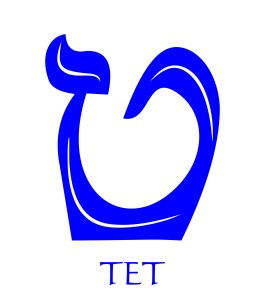
- Ninth Hebrew letter: Tet Numerical value of nine. Pictographic meaning basket, good/evil, snake, surround, knot, twist, spiral, fruitfulness, repentance, judgment.
- There are nine fruit and gifts of the Spirit. (Gal. 5:22-23, 1 Cor. 12:8-10)
- Human gestation lasts nine months, linking the number nine to birth, fruit, and life.
- Feast cycle covers nine months, again linking nine to birth (salvation), fruit, and life.
- Chanukah (Feast of Dedication) falls in the ninth Hebrew month (Kislev).
- The chanukiah menorah has nine branches, which represents the normal seven branched menorah that in tradition, miraculously stayed lit for eight days with only enough oil for one day. The ninth branch is the shamash or servant candle that lights the eight days.
- Ninth hour is the hour of prayer in Acts 3:1; 10:30.
- Yeshua gave up His Spirit at the ninth hour, securing life for the world. (Mt. 27:46)
- Cornelius saw an angel of God in a vision at the ninth hour. (Acts 10:3, 30)
- Nine has mathematical properties unlike any other number. (See this article)
- The first recorded biblical war involved four kings against five kings, which equals nine (4+5=9).
- Abram was 99 when YHWH changed his name to Abraham, gave him the covenant of circumcision, and predicted Isaac’s birth. (Gen. 17)
- Sarai was 90 when YHWH changed her name to Sarah and was promised a son (Isaac). (Gen. 17)
- Yeshua will leave the 99 sheep to go after one. (Mt. 18:12)
- Out of ten cleansed lepers, nine do not give praise to God. (Luke 17, one foreigner does give praise!)
- End time harvest is marked by wars and rumors of war and great judgment. A harvest cannot be made without separating the wheat from the chaff or without putting a sickle to the heads of grain. (Hence, nine’s association with judgment.)
- The last Nine Days of the Three Weeks, culminating with Tisha B’Av mark an intensified time of mourning for sin and rebellion, which resulted in the destruction of the first and second Temple on the 9th of Av.
For much more on nine, click here.
Ten
 Esehr [f.], ahsahrah [m.] Divine order, completed cycle, measure, or group (congregation) whether for good or evil, blessing or judgment. A tenth part represents the whole in a tithe. Thus, ten represents a complete congregation, body, or kingdom, whether good or evil.
The orig. meaning of this base prob. was ‘gathering, collection, union’. cp. Arab. ‘ashara (= he formed a community), ‘ashirah ( = tribe), ma’ashar (=a group of ten men). Accordingly, Heb. עשר (eser), Arab. ‘ashr, etc. prob. meant orig. ‘a group collection’, whence ‘a group of ten’, and ultimately ‘ten’.
- Tenth Hebrew letter: Yohd Numerical value of ten. Pictographic meaning hand, work, worship, deeds, fist, power, congregation. Shows the possessive singular and past singular.
- Ten Commandments or Ten Words
- Ten Plagues
- Abraham endured ten trials.
- For the sake of ten righteous people, YHWH would have spared Sodom. (Gen. 18)
- Abraham’s servant brought ten camels as gifts to Rebecca. He knew she was the one because she watered them. (Gen, 24) Her brother (Laban) and her mother wanted her tarry with them for ten days. Could these represent the Ten Words and what helps the Bride to endure the wilderness until she meets her Groom?
- Laban changed Jacob’s wages ten times. (Gen. 31:7)
- Ten of Joseph’s brothers had to go down to Egypt to buy grain because of famine. (Gen. 42:3) Joseph sent them back with ten donkeys loaded with goods and ten female donkeys loaded with grain. (Gen, 45:23)
- On the tenth of the month of Aviv (Nisan), lambs were set-apart for each household and inspected for the Passover sacrifice. (Ex. 12) This was mirrored by Yeshua’s triumphal entry into Jerusalem on the tenth of Aviv as the sacrificial Lamb of G-d. He was also “inspected” in the four days before Passover as the Lamb of God. (Mt. 21:1-11, Mark 11:1-11, Luke 19:28-44, John 12)
- Israel rebelled ten times in the wilderness. (Num. 14:22)
- Israelites gathered at least ten homers of quail in the wilderness. Those that ate it died with the meat between their teeth. (Num. 11:32)
- There were 10 of 12 spies that gave a bad report to Israel, costing them forty more years (4 x 10) in the wilderness.
- Foundation of Tabernacle was made from 10 x 10 silver sockets.
- Fire came down from heaven ten times (six were in judgment).
- Boaz sat before TEN men (elders/rulers) at the city gate to redeem the field of Naomi (Elimelech) and also to take Ruth as his wife to carry on the name of his deceased relative (Levirate marriage), Mahlon. (Ruth 4)
- Ten Virgins (5 wise, 5 foolish).
- Ten lost tribes of Israel.
- Wicked Haman had TEN sons. (Esther 9:12)
- Tenth generation represented whole. (Dt. 23:3)
- Ten generations from Adam to Noah.
- Minyan is made complete with ten men for prayer.
- Ten Days of Awe between Rosh Hashanah and Yom Kippur.
- Day of Atonement falls on tenth day of Tishrei.
- In the Parable of the Lost Coin (Luke 15:8-10), the woman has a total of TEN silver coins. (Silver is the metal/color of redemption.) When she loses one, she lights a LAMP and sweeps the HOUSE, until she finds the lost coin. Then, she and the entire community rejoices at finding the “lost” coin.
- The beast that the harlot rides in Revelation has seven heads and TEN horns, as does the fourth beast in Daniel’s night visions (Dan.7). The horns represent wicked kings or rulers (authority and power).
Thus says the LORD of hosts, “In those days ten men from all the nations will grasp the garment of a Jew, saying, ‘Let us go with you, for we have heard that God is with you.'” (Zec. 8:23 NASB)
[1] There are only five exceptions to this: Genesis 1:1 starts with bet (ב); and the other four start with the letters י (Genesis 49:8), ה (Exodus 14:28), ש (Leviticus 18:8), and מ (Numbers 24:5).
[2] Luton, Grant. In His Own Words: Messianic Insights into the Hebrew Alphabet. Beth Tikkun Publishing, 2018. p. 84
[3] The baraita continues: And as for the tablets, their length was six handbreadths, their width was six handbreadths, and their thickness was three handbreadths. The tablets were placed along the length of the Ark, one next to the other. If so, how much space did the tablets occupy along the length of the Ark? Twelve handbreadths, as each tablet was six handbreadths long. Three handbreadths were left there along the length of the Ark, for a total of fifteen handbreadths. Deduct a handbreadth from them: One-half a handbreadth for this wall, namely, the thickness of the wooden Ark itself, and one-half a handbreadth for the other wall. Accordingly, two handbreadths were left there, in which the Torah scroll written by Moses lay. (Bava Batra 14a)
[4] https://www.jewishvirtuallibrary.org/mishnah
For Hebrew numbers 11-30, click here.
For references, please see footnotes on this page: Misparim
Alewine, Hollisa. The Creation Gospel Workbook 2: The Seven Abominations of the Wicked Lamp. The Creation Gospel, 2020.






 GRACE in TORAH