Biblical Symbols

Garments of Light Part II

In Part I, we looked at the Hebrew word arom (naked). I’d like to revisit this briefly as it is the context of this post. Adam and Chavah (Eve) were naked and not ashamed before they sinned. They were innocent without anything to hide. The enemy was also arum (cunning), and he was certainly hiding something. Now, let’s look at some of the words he chose to tempt Chavah.

The serpent said to the woman, “You surely will not die! “For God knows that in the day you eat from it your eyes will be opened, and you will be like God, knowing good and evil.” (Gen. 3:4-5)

Before we examine the verses above, let’s look at one more.

Then the LORD God said, “Behold, the man has become like one of Us, knowing good and evil; and now, he might stretch out his hand, and take also from the tree of life, and eat, and live forever”— (Gen. 3:22)

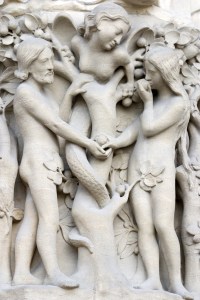
Did you notice the “cunning” of the serpent? He didn’t exactly lie to Chavah, did he? In fact, he used the truth. Perhaps the truth had a little twist or perhaps he caused her to doubt. Regardless, we all know the outcome. Their eyes were opened and they were like Elohim knowing good and evil. Sin stripped them (made them bare) of their heavenly garments (innocence), so Elohim covered them with ohr, mortal flesh or skin.[1]

One strategy of the enemy that is often overlooked is that he can use truth to strip one of their garments, thus covering one with shame. I wonder how many of us have followed his example unwittingly? Do we sometimes use truth to strip our neighbors? Do we sometimes leave people naked and in shame without covering them?

Dirty Laundry

© Mike2focus | Dreamstime.com

Sin is likened to dirty garments in the Bible.

Now Joshua was clothed with filthy garments and standing before the angel. He spoke and said to those who were standing before him, saying, “Remove the filthy garments from him.” Again he said to him, “See, I have taken your iniquity away from you and will clothe you with festal robes.” Then I said, “Let them put a clean turban on his head.” So they put a clean turban on his head and clothed him with garments, while the angel of the LORD was standing by. (Zec. 3:3-5)

For all of us have become like one who is unclean, And all our righteous deeds are like a filthy garment; And all of us wither like a leaf, And our iniquities, like the wind, take us away. (Is. 64:6)

Conversely, clean garments can represent one’s righteous acts, salvation, wedding garment, or even the priesthood. Thus, we can figuratively “wear” anything from shame to salvation. This is a common biblical metaphor. But, it is also an English metaphor. Not long ago, I heard the old Don Henley song “Dirty Laundry.” It got me thinking about the sad state of social media, the news, and the like. People LOVE to put other people’s dirty laundry on display for the whole world to see. But even worse, those that claim to be followers of the Messiah are often the worst perpetrators.

After meditating on this, I printed out the lyrics to “Dirty Laundry”. You can see the full list here, but here is a sample:

Dirty little secrets

Dirty little lies

We got our dirty little fingers

In everybody’s pie

We love to cut you down to size

We love dirty laundry

 We can do the Innuendo

We can dance and sing

When it’s said and done

We haven’t told you a thing

We all know that Crap is King

Give us dirty laundry

Why do we feel the need to air another person’s dirty laundry? Why do we always seem to focus on the crap? What would possess one to post the downfall of another human created in the image of Elohim on Facebook? How does this serve the King of the Universe? Are we without sin? No, yet we are often the first to throw stones at our brothers and sisters. Something in us secretly relishes in another person’s demise – and it’s NOT the Spirit of God! How sick and sad is this?

May I suggest that when we do things like this we are following the image of the serpent beast and not YHWH? The nachash (serpent) was the first to use this tactic. His careful choice of words made them doubt the motives and goodness of Elohim. His final blow was to tell them something that was true. They would indeed become like Elohim knowing good and evil.

You see, we think that just because we know something that it is always the will of the Father to reveal it. We fail to take into account the sovereign timing of YHWH. Only the Sower knows when the seed should be planted and when it will sprout to life. We are meant to be the servants and holy vessels Adonai uses to accomplish His will. We don’t decide these things, He does.

Now don’t misunderstand, I’m not suggesting that we withhold truth from people. Nor am I suggesting that we hide our light. But, what I am proposing is that we need to be careful in our method of delivery and in our follow-up (discipleship). Even with good intentions, we can strip the robe off of our neighbor and leave them uncovered and naked. For example, you might tell someone the truth about the origins of Christmas. This reality is painful. The person most likely has strong emotions, memories, and traditions tied to this unbiblical festival. If all you do is strip them of this dirty garment, you have left them naked.

“Lately My people have risen up as an enemy— You pull off the robe with the garment From those who trust you, as they pass by, Like men returned from war. (Mic. 2:8 NKJV)

This is the problem. Many love to proclaim the truth ONLY to shake the foundation or faith of others. But this isn’t LOVE unless one is also there to cover and protect their exposed and tender flesh. We must be merciful and allow others to grieve their loss (false covering). We also must be there to bandage their wounds with oil and wine and cover them with the true festivals and the comfort of the white linen garments of heaven. We are called to MAKE disciples and this requires a genuine relationship, not a Facebook meme or Youtube video.

What is Shame?

Recall that in the beginning, Adam and Chavah were naked (arom), but not ashamed. But once sin entered the equation, their nakedness became something else entirely. They were now naked (arum) like the serpent, with something to hide: sin. Sin shames us.

The Hebrew word for shame in Genesis 2:25 is boosh (beht, vav, shin). It carries the idea of great disappointment (in self). Pictographically, it means to be linked with the destroyer of the house/tent. Isn’t this exactly what happened to Adam and Chavah? Were they not found to be in collusion with the enemy of Adonai?

© Sarah Holmlund | Dreamstime.com

Shame is the realization, sorrow, and guilt one feels when this truth is exposed. It is greatly humiliating whether the action was done in ignorance, through deception, or with our full intention. Our light or covering is ripped off to expose our weak and sensitive flesh. Shame can be quite devastating and is the cause of many suicides. Shame leaves a person in a state of feeling worthless and hopeless. And this is the goal of the enemy. He wants to kill, steal, and destroy any and all hope for a future.

How did YHWH respond to the “nakedness” in Adam and Chavah? We need to pay close attention to Adonai’s remedy, because it is THE pattern we are to use with one another when dealing with sin. Reread Genesis chapter 3. Notice that first, YHWH deals with their sin. He questions them about their participation while they are still exposed and trying to cover/hide themselves with fig leaves. Adonai hears both of their excuses, and then outlines the results of their actions. (He makes a righteous judgment.) The blame game didn’t absolve them from guilt or consequence.

But after making a righteous judgment, Adonai gracefully clothes the tender and exposed flesh of Adam and Chavah. He binds up their emotional wounds. He covers them with skins of flesh and takes them away from the temptation. This is mercy, grace, and love at its finest.

This is our model. If we are walking in the image of Elohim, we can remove the shame of our brothers and sisters the same way. Leaving them to wallow in their despair and hopelessness is the same thing as leaving them naked.

Clothing the Naked

 ‘For I was hungry, and you gave Me something to eat; I was thirsty, and you gave Me something to drink; I was a stranger, and you invited Me in; naked, and you clothed Me; I was sick, and you visited Me; I was in prison, and you came to Me.’ (Mt. 25:35-36)

Messiah says that when we feed, give drink, clothe the naked, visit the sick and prisoners, we are His hands and feet in the earth. How we treat our neighbors is of great import. Does He just mean this in the literal sense or is He also speaking figuratively? The metaphoric language of Scripture demands that His statement be both literal and figurative (spiritual). After all, humans are both flesh and spirit. Elohim always deals with the whole person.

This analogy is the same when we think we need to announce to the world another person’s sins, familial issues, finance issues, or the like. When we participate in tearing down the reputation and character of another human being created in the image of Elohim with great revelry, we are an enemy. We are satan. We are defaming the Name of our Great Elohim. We are a destroyer and accuser of the brethren. We are the man or woman that strips another down to naked shame. The only reason a person could take pleasure in such treachery is because they want to draw attention away from their own fig leaves of insecurity, rejection, and guilt. If one must tear down another person to feel better about their own issues, then they are no better than a beast. This is the attitude of a destroyer, a snake, and an accuser of the brethren.

As I write, we are in the Ten Days of Awe, the season of repentance. Yom Hakippurim is just around the corner. May we be reminded of the true reason for the fast:

“Is this not the fast which I choose, To loosen the bonds of wickedness, To undo the bands of the yoke, And to let the oppressed go free And break every yoke? “Is it not to divide your bread with the hungry And bring the homeless poor into the house; When you see the naked, to cover him; And not to hide yourself from your own flesh? “Then your light will break out like the dawn, And your recovery will speedily spring forth; And your righteousness will go before you; The glory of the LORD will be your rear guard. “Then you will call, and the LORD will answer; You will cry, and He will say, ‘Here I am.’ If you remove the yoke from your midst, The pointing of the finger and speaking wickedness, And if you give yourself to the hungry And satisfy the desire of the afflicted, Then your light will rise in darkness And your gloom will become like midday. (Is. 58:6-10)
light and darkWe should mourn and fast when a brother or sister falls or when they are living in the bondage of ignorance and false traditions. We should not be pointing our scaly fingers in accusation. Our fast is meant to break the bonds of wickedness and cause a well of repentance to spring in our neighbor’s heart. This is the will of YHWH. Sin oppresses one with a transparent garment of shame. But Adonai says, if someone is naked and exposed to the world on account of his or her shame, we should cover him or her with mercy and forgiveness. All the while, never forgetting (not hiding from the fact) that we too have flesh just as tender and needy. (This requires humility!) In other words, we are no better than they. This is how the original light that we bestowed in the beginning shines through the darkness of a fallen world.


[1] For we know that if the earthly tent which is our house is torn down, we have a building from God, a house not made with hands, eternal in the heavens. For indeed in this house we groan, longing to be clothed with our dwelling from heaven, inasmuch as we, having put it on, will not be found naked. For indeed while we are in this tent, we groan, being burdened, because we do not want to be unclothed but to be clothed, so that what is mortal will be swallowed up by life. (2 Cor. 5:1-4)


Categories: Biblical Symbols, Messianic Issues | Tags: , , , , , , , , , , , | 9 Comments

The Voice of the Shofar

Shofar of Flesh

Shofar… So Good.

The feast of Yom Teruah (Rosh HaShanah/Feast of Trumpets) is nearly upon us. And with it, there is much speculation as to what the upcoming holy month holds for Israel and the world at large. Some folks are excited, but even more fear what may come to pass. There are so many voices speaking and prophesying at this season. Who is right? Who do we need to listen to?

According to the Torah, there is only one voice that we are commanded to hear at this season. (Lev. 23:23-25) It is the shrill voice of the humble shofar. Do you find it odd that out of all the feast days, Yom Teruah has the least requirements mentioned in the Torah? There is so much mystery associated with this day. Since it occurs on the New Moon, there is literally and figuratively less light. No wonder there is so much confusion surrounding this moed.

May I make a suggestion? Let’s have another look at what has been clearly revealed. What exactly is a shofar and why is it so important as to have an entire moed (feast) associated with it? At first glance, a shofar seems to be no more than a primitive trumpet made from the horns of a ram. But YHWH isn’t random or arbitrary. This Elul, all the mayhem, trials, testing, and just plain pressing has caused me to really cry out to YHWH.

And then something dawned on me. This simple instrument is made from a nephesh, a living creature. In order for us to enjoy its beautiful and unique sound, a ram (or least this part of the ram) must first die. [1] If you’ve ever heard the voice of a shofar, it sounds very much like a loud, piercing cry.

A cry. Isn’t that what we are doing in this season? Are we not crying out to our Elohim and King? We desire heartfelt repentance, forgiveness, restoration, healing, and reconciliation. We throw ourselves at the feet of our Redeemer and rest in His unfathomable mercy, grace, compassion, and sovereignty. There is no instrument on the planet that can encompass our inward groans and wordless pleas better than the shofar.

The flesh/nephesh has to die in order for these cries to become a reality. This places us in a very intimate and childlike state. Little babies and young children cannot use words to describe what is in their innermost being. They often can’t express their discomfort with words. So, what do they do? They wail and cry out to their mother or father. Their shrieks are a loud alarm. It’s a siren call for mom or dad to come to the rescue. A loud cry will wake a parent from their slumber.

And, so it is with the shofar. Its voice is the cry of a child to its parent. It is a tongue of wordless words. It reminds YHWH that He is our Father. It is a desperate plea for Abba to act on our behalf. It is a voice crying out from a vessel of flesh submitted to its Maker.

Ruach

All of the inside soft flesh or cartilage of the ram’s horn must be removed before it can be used as an instrument of prayer, worship, and war. [1] Once it is thoroughly cleaned out, one can then begin to fill it with something else: breath (life). The first cries from the shofar are born from pressed lips and a strong exhale of the blower’s breath. It is very much like a deep wail. The lips do not form words, but wordless music powered by the ruach.

Can you see the picture? This vessel must have all of its fleshly tissues removed in order for the breath/wind or Ruach to flow freely through it from tip to tip. When the shofar is filled with ruach, it cries out in repentance, praise, worship, and gathering. It speaks a message that is beyond words. 

What was once a nephesh has been transformed into a vessel for the Holy Spirit (Ruach HaKodesh). The voice of the shofar is very much akin to the niggunim and the tongues of fire acquired at the previous feast of Shavuot (Pentecost). We learn to move and speak not from the flesh, but with the infilling of the Spirit. And like sweet music, our (redeemed) voices learn to whisper the everlasting Good News which is carried to the far reaches of the earth by the wind (ruach).

YHWH gave His followers the shofar for a reason. We are called to hear its voice because we are to be like the shofar. We are to be willing vessels, submitted to Adonai. We shout and cry out in jubilation for our King is Coming!

I pray your High Holy Days are blessed!

Below is a Blessing and Psalm for the Season. Shalom!

Blessing for the Shofar

Baruch ata Adonai Eh-lo-hei-nu meh-lekh ha-o-lam ah-share kid-e-sha-nu b-mits-vo-tav ve-tzi-va-nu leash-moe-ah kol shofar.

 Blessed are you, Adonai our God, King of the Universe, who has sanctified us with commandments and who has commanded us to hear the voice of the shofar.

Psalm to Praise our King at this Season

Psalm 47

Complete Jewish Bible (CJB)

 For the leader. A psalm of the descendants of Korach:

2 (1) Clap your hands, all you peoples! Shout to God with cries of joy!

3 (2) For Adonai ‘Elyon is awesome, a great king over all the earth.

4 (3) He makes peoples subject to us, puts nations under our feet.

5 (4) He chooses our heritage for us, the pride of Ya‘akov, whom he loves. (Selah)

6 (5) God goes up to shouts of acclaim, Adonai to a blast on the shofar.

7 (6) Sing praises to God, sing praises! Sing praises to our king, sing praises!

8 (7) For God is king of all the earth; sing praises in a maskil.

9 (8) God rules the nations; God sits on his holy throne.

10 (9) The leaders of the people gather together, the people of the God of Avraham; for the rulers of the earth belong to God, who is exalted on high.


[1] An animal’s horn is made of an outer layer of hard keratin that is filled with soft bone tissue. Human bones and hair are made from this same material, keratin. In order to make a horn into a Shofar, the soft bone tissue must be removed from inside the horn.  This process takes a YEAR. The horn must sit for at least this long for the tissue to dry up, shrivel, and decompose. After this has happened, the tissue can usually be removed in one solid piece.

Categories: Biblical Symbols, Moedim | Tags: , , , , , , , , , , , | 11 Comments

Garments of Light Part I

© Haywiremedia | Dreamstime.com

And the man and his wife were both naked and were not ashamed. (Gen. 2:25 NASB).”In the beginning, man and woman were “naked” and not ashamed. The Hebrew word for naked in the above verse is arom (ayin, rosh, mem). It comes from the verbal root aram (same Hebrew letters as arom), which means, “to make bare, to be subtle, crafty, or cunning.”[1] This is interesting because in the next chapter of Genesis, actually in the very next verse on the scroll, the serpent is introduced. He is more subtle, crafty, or cunning that any BEAST of the field that YHWH had made.

Now the serpent was more crafty than any beast of the field which the LORD God had made. And he said to the woman, “Indeed, has God said, ‘You shall not eat from any tree of the garden’?” (Gen. 3:1)

As I’m sure you have guessed, the Hebrew word used to describe the serpent as crafty is from the same Hebrew word above. It is the passive participle form of aram, pronounced arum (again same Hebrew letters as arom).[2] Thus, like many Hebrew words, arom is actually a contranym (a word that is its own opposite).[3] To be naked is akin to being transparent with nothing hidden. On the contrary, to be cunning or crafty, something is definitely hidden or concealed.

In the case of Adam and Chavah (Eve) before the fall, their nakedness wasn’t something in which they should be ashamed. They were transparent with nothing to hide. Their nakedness was virtuous at this point. They had no need of being covered in the hair of a beast, nor did they need a covering of fur for protection. (Obviously, the converse was true for the serpent, but we explore him in a later post.)

Skins of Light

There are traditions from both Jewish and Christian sources that teach that before the fall, the skin of Adam and Chavah was luminous. In other words, they were “covered” by divine light and would “glow,” so to speak. I hope this triggers your mind to make some connections to Moses’ face and Messiah, but we will get there soon enough.

© Karen Harding | Dreamstime.com

This idea or tradition isn’t random. The Hebrew language is VERY idiomatic, metaphoric, and figurative. Contranyms, homonyms (sound alike words), parables, and many other literary devices are used heavily to help one understand spiritual concepts through the experience of natural things.[4] Hebrew speaks through our senses and imagination. It draws simple “pictures” that even a child can understand. As the old adage goes, “a picture is worth a thousand words.” In our case, it is neither coincidence nor chance that the Hebrew word for light and for skin sound exactly the same: ohr. Look carefully at the following:

אוֹר Light (aleph, vav, resh)

עוֹר Skin (ahyin, vav, resh)

The only difference is the first letter (read from right to left). Light begins with aleph, a letter heavily associated with God,[5] and skin begins with ahyin, the letter that also means eye. Both aleph and ahyin are silent letters. They have no sound aside from the vowel associated with them. In our words above, the vowel is shown by the letter vav with the dot on top, which is called a cholem vav. The last letter is a resh, an “r” sound that pictographically means “a man’s head.”

By simply looking at the pictographic meaning of these words, both have a heart that connects. Vav means to link, connect, or hook together. It is also the number 6, the creation day for both beast and man. In the verses above in Genesis, the text presents us with a beast (snake) that speaks like a man.

The other Hebrew letters for each word reveals what light and skin connects or links one with. In the case of light, the head (resh) is connected to God (aleph), the Father. But in the case of skin, the head (resh) is connected to only what one’s eyes (ahyin) can see (flesh/natural).

Dr. Alewine in The Creation Gospel Workbook Four: The Scarlet Harlot and the Crimson Thread has this to say:

“Rabbinic insight is that the clothing of Adam and Eve was glory, or radiance (or with an aleph), a white light invisible to the human eye that was replaced with a covering of skins (or with an ayin). The white light is the same covering of the Bride of Messiah in Revelation. The Bride reflects the Lamp of the New Jerusalem, the Lamb. In terms of the menorah, there was a spiritual covering over the first couple’s earthly bodies, a covering or radiance pictured when Moses spoke with Adonai on the mountain, receiving the Torah covenant for Israel. Like the Holy One in whose image they were made, they had corresponding covers of light like garments.” (p. 175)

Roaming Eyes

Do you recall what organ tempted Chavah (Eve) to fall into deception?

The serpent said to the woman, “You surely will not die! “For God knows that in the day you eat from it your eyes will be opened, and you will be like God, knowing good and evil.” (Gen. 3:4-5) 

The serpent, the one that was arum (cunning), was implying that Adam and Chavah were “blind” in some way. Recall, that at this point, Adam and Chavah were naked, arom, but had no shame. Before sin, their covering was the spiritual light of Elohim (God). Again, notice below the association with EYES.

When the woman saw that the tree was good for food, and that it was a delight to the eyes, and that the tree was desirable to make one wise, she took from its fruit and ate; and she gave also to her husband with her, and he ate. Then the eyes of both of them were opened, and they knew that they were naked; and they sewed fig leaves together and made themselves loin coverings. (Gen. 3:6-7)

Chavah SAW the Tree of Knowledge of Good and Evil and found that it delighted her eyes, and had the potential to make one WISE. Folks, our eyes are what typically deceive us. Imagine with me all the sins that begin by looking at someone or something with our eyes: coveting, jealousy, lust, greed, envy, judgment, false witness or testimony, etc. It has been this way since the beginning. Our eyes can be deceitful because they are a part of our flesh/nephesh. They need a constant physical and visual reminder that will refocus our attention back to the heavenly and spiritual reality. This is one reason YHWH gave the commandment to wear tzit-tziyot (fringes) on the four corners of one’s garments. Again, notice the EYES.

“It shall be a tassel for you to look at and remember all the commandments of the LORD, so as to do them and not follow after your own heart and your own eyes, after which you played the harlot, so that you may remember to do all My commandments and be holy to your God. (Num. 15:39-40)

Leaves that Kill, Leaves that Heal

When Adam and Chavah ate from the Tree of Knowledge, they forfeited the Light (of God) as their covering. In other words, they took upon themselves a different authority. Once they transgressed YHWH’s command, they immediately realized that their heavenly garments were missing. They were “bare” or naked without this covering (of light). Like them, we would probably scramble to find a replacement for such a great loss. In fact, this realization is what caused them to fear, and it is the reason they hid from Elohim. (Gen. 3:8)

© Ben Renard-wiart | Dreamstime.com

So, why do you think they chose fig leaves? I believe that prior to sin, the Tree of Life provided Adam and Chavah with their garments or skins of Light. Often used as an idiom for the Torah or Law of God and Wisdom, the Tree of Life indeed produces light, life, healing, fruit, and blessings. I encourage you to do a concordance search and find your own associations.

Then he showed me a river of the water of life, clear as crystal, coming from the throne of God and of the Lamb, in the middle of its street. On either side of the river was the tree of life, bearing twelve kinds of fruit, yielding its fruit every month; and the leaves of the tree were for the healing of the nations. (Rev. 22:1-2)

The leaves from the Tree of Life HEALS the nations. Perhaps, Adam and Chavah thought that the leaves from the Tree of Knowledge (their new tree of choice) would do the same. But what they discovered is that the Tree of Knowledge of Good and Evil only leads to darkness, exile, death, sickness, fleshly desires, and curses. It is the exact antithesis to the Tree of Life. So what did God do?

The LORD God made garments of skin (ohr) for Adam and his wife, and clothed them. (Gen. 3:21)

What Kind of Skin?

We typically assume that God slaughtered an animal and made coverings of fur for the first couple. But the text doesn’t explicitly say that this is what God did. There is no mention of Him slaughtering an animal. Our old assumption isn’t necessarily wrong, but the skin (ohr) that God made could have been of (mortal) human skin. The verse literally says that God made (asah) ohr (skin) and clothed Adam and Chavah with it. Perhaps, after losing their garments of Light, God made them garments of (mortal human) skin. This is a viable possibility in the Hebrew and one to consider.

Whether or not Adam and Chavah once had literal garments of Light that were forfeited when they sinned isn’t the point. God did make for them skins (human or animal) in which to cover their nakedness. Maybe their nakedness wasn’t physical. Or perhaps, it was both physical and spiritual. Either way, this series will explore the figurative or spiritual side of this coin.

Much more to explore in upcoming articles. Click here for Part II


[1] See Strong’s definitions for H6174 and H6191.

[2] H6175

[3] A contranym (also spelled contronym) is sometimes called an auto antonym. Like Hebrew, the English language has many terms that fall into this category. Think of the word cleave. It can mean to cling to tightly or to cut into as to divide into pieces. Other examples are as follows:

Bolt: To secure, or to flee

Bound: Heading to a destination, or restrained from movement

Buckle: To connect, or to break or collapse

Clip: To fasten, or detach

Screen: To present, or to conceal

Splice: To join, or to separate

Transparent: Invisible, or obvious

[4] 1 Cor. 15:46

[5] This is based on the many words that begin with aleph: for example, Elohim, Abba, El, etc. Moreover, the ancient Hebrew pictograph means a strong leader, strength, power, ox, etc.

For more great insight into the first couple and the serpent in the garden, please see Rabbi David Fohrman’s book, The Beast that Crouches at the door.

Categories: Biblical Symbols, Messianic Issues | Tags: , , , , , , , , , , | 7 Comments

Five Smooth Stones

He (David) took his stick in his hand and chose for himself five smooth stones from the brook, and put them in the shepherd’s bag which he had, even in his pouch, and his sling was in his hand; and he approached the Philistine. (1 Sam. 17:40)

K. Gallagher

© K. Gallagher

My family recently visited the Cherokee National Forest to view the beautiful waterfall in Tellico Plains called Bald Creek Falls. Noted as one of the most scenic and impressive falls in eastern TN, it is also the most accessible. (You can get a great view and photography opportunity right from your car.) We decided to spend the day relaxing up the road along the Tellico River. Though the temperature outside was hot and humid, the river water was a chilling 60 degrees. (One of the reasons it is ideal for trout fish.) Needless to say, the stark contrast of the water and air temperature made this an ideal place to spend a hot summer afternoon.

As I sat on a large rock dangling my feet in the refreshing cold water, I took a survey of the thousands of smooth stones surrounding the riverbed. I bent down to examine stone after stone. Each had its own color, pattern, size, shape, and other unique characteristics. But nearly every single one had soft smooth edges. (Ideal for skipping, my husband and son would tell you.) Just gazing at the constant flow of the water or listening to its soothing rushing sound is enough to invoke feelings of relaxation and wonder. But dialing the lens in closer, looking at the seeming mundaneness of pebbles and stones, conjured up thoughts of another person that obviously enjoyed the brook, the young King David.

When faced with the threat of an enemy army and their champion giant, it wasn’t the king’s armor or sword that David chose to wield. No, this shepherd went with what he knew best, his trusty old sling shot. His choice of ammunition? Five smooth stones from the brook or river. Before we get into his choice of picking up five stones, let’s look at the Hebrew word used here for brook. It is different than the word for river used in Genesis 2:10, where I examined the The Rivers of Eden.

In Hebrew, the word is nachal spelled nun, chet, lamed.[1] It is indeed a stream, brook, or river. But what struck me is its verbal root, also nachal,[2] which means to inherit, to occupy, to bequeath, or to possess. In other words, David drew his ammo from the only trustworthy source: from the living waters of the promises of YHWH.[3] David knew that Saul’s armor had not been tested, but there was One that had never failed David in the past. David took from the inheritance he had in YHWH Tz’vaot.

Then David said to the Philistine, “You come to me with a sword, a spear, and a javelin, but I come to you in the name of the LORD of hosts, the God of the armies of Israel, whom you have taunted. “This day the LORD will deliver you up into my hands, and I will strike you down and remove your head from you. And I will give the dead bodies of the army of the Philistines this day to the birds of the sky and the wild beasts of the earth, that all the earth may know that there is a God in Israel, and that all this assembly may know that the LORD does not deliver by sword or by spear; for the battle is the LORD’S and He will give you into our hands.” (1 Sam. 17: 45-47)

What made David so sure that he could defeat the giant, Goliath? After all, he was the youngest of his brothers and was much smaller in stature than King Saul. I believe it was because he knew who he was in the eyes of Elohim (God). Shepherding the flocks of his father Jesse had given him valuable experience in not only tending to the vulnerable, but also in defeating mighty beasts. And that’s exactly what David compared Goliath with, an uncircumcised beast.[4]

David knew that the Ruach HaKodesh (Holy Spirit) would always prevail over the nephesh/flesh of a beast whether that beast is an actual beast of the field, or if it is a man living in the beast’s image. David had already chosen to live after the image of Elohim (God). Those made in the image of God RULE over all creatures, great and small.[5] Goliath was no exception and David had complete faith in this truth from the Word of YHWH.

Though the giant taunted Israel with threats for forty days[6], invoking great fear in the king and army of Israel, David could “see” beyond his natural sight. I believe this is figured not only in the source of his ammunition (the stones were retrieved from Living waters), but in the number of stones that he chose to wield.

Why Five?

In Hebrew, a stone or eben, is a contraction of the words father and son (av + ben).[7] This is why a stone is not only strong, but a far worthier choice of ammo against the enemy. What is stronger than the Father and the Son? Nothing! If this is true, why did David choose five stones when it only took ONE stone to defeat the great giant?

K. Gallagher

© K. Gallagher

I believe that YHWH loves metaphors and figurative language. Literary devices such as these are what give depth and dimension to any story, report, poem, song, dream, or vision by conveying multiple facets and angles in very little space. Thus, details matter greatly and can often reveal a sharp angle that is cut just so that the story sparkles only when it is held and turned slowly in the LIGHT. A less diligent examination would miss this beautiful twinkle and some of the story’s dimension.[8]

Five is the number of strength and power as the fifth manifestation of the Holy Spirit. (Is. 11:2) This power is what fueled the first global migrations of the birds and fish created on the fifth day of creation. Just in case we missed this connection with creation and the number five, it says in 1 Sam. 17:48 that when Goliath went to meet David in battle, that David “ran quickly” to meet him. The word for ran (rutz) is the same root word used to describe the movement of the creatures created on day five. Quick flowing movement is a trademark of those filled with YHWH’s Spirit of Power.

For more symbolism found in the number five, please see my article: Hebrew Numbers 1-10. For now, consider that there are FIVE books of Moses or Torah. The Ten Commandments were written on two stone tablets, with FIVE commandments teaching one how to love YHWH and FIVE teaching one how to love their neighbor. FIVE is associated with grace, the gospel, and anointing.

Though it only took one smooth stone to defeat Goliath, David picked up five, a clear indication that the Torah (Word) is what defeats a beast. Our greater King David, the Messiah Yeshua, was likewise taunted (tempted) for forty days. Like David, He overcame the adversary with one smooth stone by quoting one of the FIVE books of Torah: Deuteronomy, the fifth book. Coincidence? I don’t think so.

The hints of the number five are one example of many precious stones scattered throughout the Biblical text. When the Light hits them just right, our (spiritual) eyes see the connections that thread the entire Bible together in one seamless and flawless tapestry. The same story is told again and again in simple and progressively more detailed and varied ways. That story is the Good News or the Gospel.

Why Are the Stones Smooth?

The answer to this question came to me as I sat by the river examining the multitude of smooth stones and pebbles. If the Word is in us, we become the stones that cry out in triumph.[9] We have become One with the Father and the Son.[10] The constant washing of the water of the Word wears down all of one’s rough and crooked edges. Like the river stones, this is a slow process, a journey if you will, down the bumpy and twisted path of life.

K. Gallagher

 © K. Gallagher

Each impact, trial, and toss that the Living Water subjects one to, wears, carves, and sculpts us into the image of Elohim. The persistent and consistent rush of tiny water droplets beats (or threshes) the things that offend off until one is as smooth as David’s five stones.

God chose the story of David and Goliath to be one of the first impressions we are given about King David. Why do you think this is so? Could it be that He wanted us to know how “a man after His own heart[11] defeated the beast without AND the beast within (nephesh/flesh)? We see David battling both throughout his lifetime. One quality seems to stand out with David and it’s not perfection. He committed serious sin in his lifetime. But like the water, David was persistent and consistent to turn (repent) and let God continue the good work He began in him. As such, he became a “living stone” and a role model for us.

I think YHWH expects us to sit by a river and meditate on the smooth stones and the rushing water. This natural phenomenon has deep spiritual implications. The Father’s Light (water) is always trying to penetrate our thick skulls (and hearts). But like the hard rocks, we must yield to the soft water (of the Word). The will of God is evident: He desires for us to be Living Stones in His House.

“You also, as living stones, are being built up as a spiritual house for a holy priesthood, to offer up spiritual sacrifices acceptable to God through Yeshua the Messiah.” (1 Peter 2:5)

 I want to leave you with the following passage from the Book of Revelation. This section speaks about our future inheritance (nachal). Like David, we can draw from this truth right now when we have a giant to face. Life is hard and trying. If you find it easy, you might not be in the River getting worn and washed by the Word. Rejoice in your current battle, circumstance, and trial. Move fluidly and without fear as David did; for each step will only make you smoother in the New Jerusalem!

 Then one of the seven angels who had the seven bowls full of the seven last plagues came and spoke with me, saying, “Come here, I will show you the bride, the wife of the Lamb.” And he carried me away in the Spirit to a great and high mountain, and showed me the holy city, Jerusalem, coming down out of heaven from God, having the glory of God. Her brilliance was like a very costly stone, as a stone of crystal-clear jasper. It had a great and high wall, with twelve gates, and at the gates twelve angels; and names were written on them, which are the names of the twelve tribes of the sons of Israel. There were three gates on the east and three gates on the north and three gates on the south and three gates on the west. And the wall of the city had twelve foundation stones, and on them were the twelve names of the twelve apostles of the Lamb. The one who spoke with me had a gold measuring rod to measure the city, and its gates and its wall. The city is laid out as a square, and its length is as great as the width; and he measured the city with the rod, fifteen hundred miles; its length and width and height are equal. And he measured its wall, seventy-two yards, according to human measurements, which are also angelic measurements. The material of the wall was jasper; and the city was pure gold, like clear glass. The foundation stones of the city wall were adorned with every kind of precious stone. The first foundation stone was jasper; the second, sapphire; the third, chalcedony; the fourth, emerald; the fifth, sardonyx; the sixth, sardius; the seventh, chrysolite; the eighth, beryl; the ninth, topaz; the tenth, chrysoprase; the eleventh, jacinth; the twelfth, amethyst. And the twelve gates were twelve pearls; each one of the gates was a single pearl. And the street of the city was pure gold, like transparent glass. I saw no temple in it, for the Lord God the Almighty and the Lamb are its temple. And the city has no need of the sun or of the moon to shine on it, for the glory of God has illumined it, and its lamp is the Lamb. The nations will walk by its light, and the kings of the earth will bring their glory into it. In the daytime (for there will be no night there) its gates will never be closed; and they will bring the glory and the honor of the nations into it; and nothing unclean, and no one who practices abomination and lying, shall ever come into it, but only those whose names are written in the Lamb’s book of life. (Rev. 21:9-27)


[1] Strong’s number 5158.

[2] Strong’s number 5157.

[3] Fresh water streams, rivers, and brooks (even those that run under ground) are constantly moving or flowing. In Scripture, waters that are specifically called “Living Waters” come only from these sources. David’s five smooth stones would have been retrieved from a source of living waters!

[4] 1 Sam. 17:34-37

[5] Gen. 1:26-28

[6] Forty is a time of completeness as a multiple of four. It especially marks a period of testing and trial. By the time David arrives on the scene, this period has reached its peak and David, filled with the Ruach HaKodesh (4), is ready to move in strength and power (5) against this insolent head of a beast. For more on the symbolic meaning of numbers, see Hebrew Numbers 1-10 or Misparim.

[7] See Frank T. Seekins’ Hebrew Word Pictures under Aleph.

The Hebrew words “stone” (eben) and “son” (ben) were spoken by the Messiah in a play on words in Matthew 3:9, “And do not suppose that you can say to yourselves, ‘We have Abraham for our father’; for I say to you that from these stones (eben) God is able to raise up children (ben) to Abraham.”

Luke 19:37-40 records Yeshua making another comparison to His people (ben) and stones (eben).

[8] Don’t let this reality cause you or those you love to despair. The wisdom of YHWH is all encompassing. The plain, simple, one-dimensional surface meaning of His Word is enough for the smallest child and any of us. The joy is that no matter our I.Q. or developmental stage, the Word is Alive! From the shallow pools to deepest depths, the nuances, patterns, analogies, symbolism, chiasms, numbers, and codes are in His Word for the unearthing. No matter who or where you are, the Word has just what you need and more. There is something for everyone, no matter your maturity level. I don’t know about you, but I find this most extraordinary and exhilarating!

[9] See notes in footnote 6.

[10] “I do not ask on behalf of these alone, but for those also who believe in Me through their word; that they may all be one; even as You, Father, are in Me and I in You, that they also may be in Us, so that the world may believe that You sent Me. “The glory which You have given Me I have given to them, that they may be one, just as We are one; I in them and You in Me, that they may be perfected in unity, so that the world may know that You sent Me, and loved them, even as You have loved Me. (John 17:20-23)

[11] 1 Sam. 13:14

Categories: Biblical Symbols, Creation Gospel | Tags: , , , , , , , , , , , , , | 27 Comments

Blog at WordPress.com.