Author Archives: K. Gallagher

Unknown's avatar

About K. Gallagher

Kisha Gallagher is the author of the BEKY Book: The Biblical New Moon: A Guide for Celebrating, and the website, Grace in Torah, a ministry devoted to the Gospel of Yeshua, the moedim (feasts), marital roles, and general Bible study. Many lives are touched through her website, conference engagements, and weekly small groups. Kisha is a Creation Gospel trainer and a former cohost on Hebrew Nation Radio’s Morning Show, Renewed. She is a programmer on MyReviveTV (Hebraic Roots Network). Kisha resides near the Smoky Mountains with her husband and sons. She can be contacted at kisha@graceintorah.net

Making Peace in Relationships – Revive 2024

I had the honor of teaching at Revive this past weekend. The theme was “Songs of Deliverance.” Amazingly, the Holy Spirit translated that through many messages brought forth from various teachers as harmony and unity being a type of deliverance. It was a great confirmation to me regarding the message I spoke. Life and ministry is all about relationships. Yet, we often struggle with conflict rather than being the ministers of reconciliation we are called to be.

Since my message was really an overview of what should be a whole workshop, I provided a resource list for further study. I have included it below. My favorite resource and teacher in this vital area is Ken Sande of RW360. No matter who you are, you have relationships. And relationships aren’t easy. The heart of relationships and peacemaking is to fulfill the two great commandments: Love Adonai & Love your neighbor as yourself. Mr. Sande’s ministry will equip you to deal with difficult, strained, or even estranged relationships in a Biblical, healing, and restorative way.


Making Peace in Relationships – Kisha Gallagher Revive 2024 (The PA system wasn’t the greatest, so I apologize for the sound quality.)

Alternate way of listening:

Making Peace in Relationships PDF (Slides from the above message; pictures and graphics were licensed for use through Dreamstime.com)

Recommended Resources (Handout I gave at the conference)


Categories: Conferences, Ethics, Messianic Issues | Tags: , , , , , | 2 Comments

What Do You Want to Make Today?

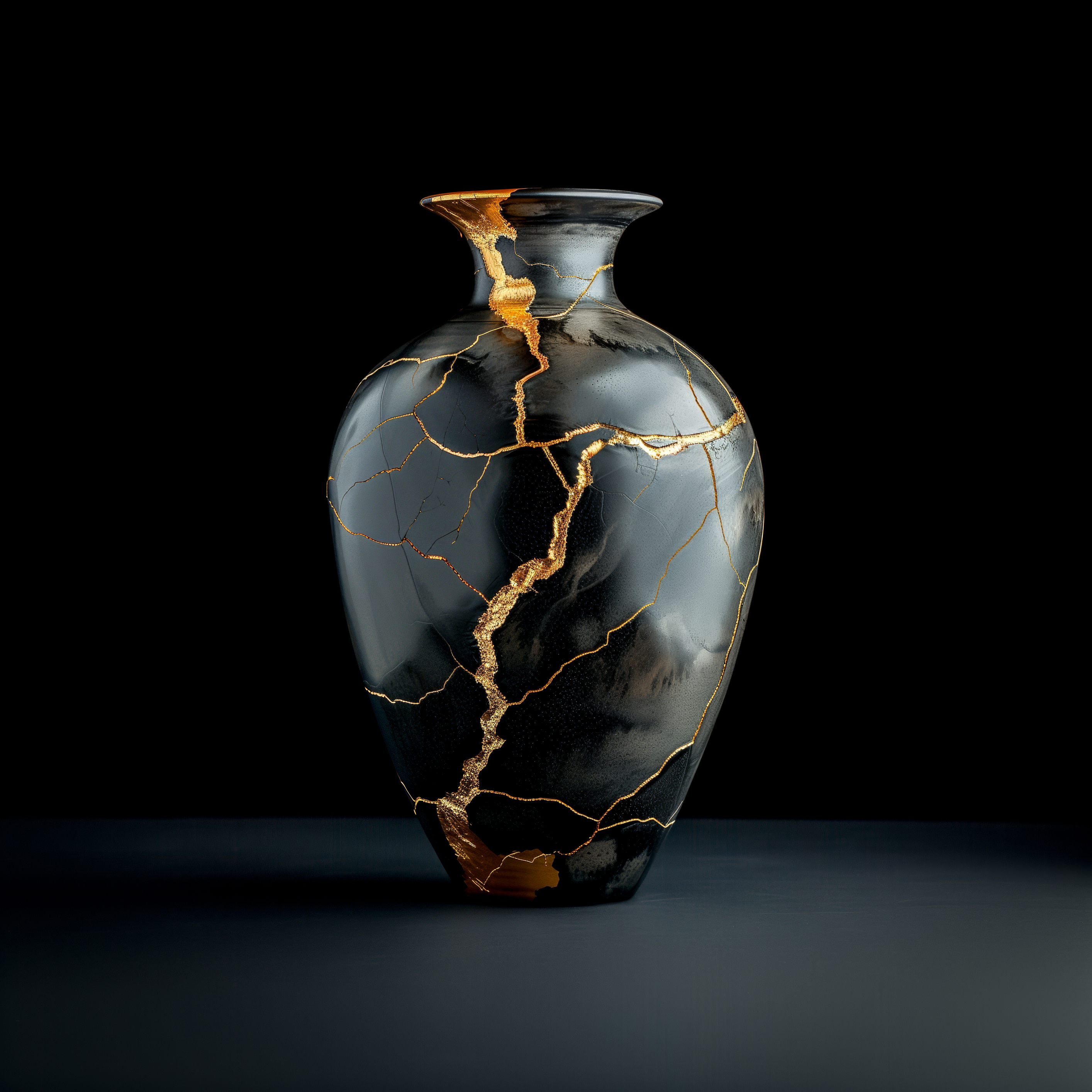
Recently, I was looking for a simple Christian teaching comparing the Japanese art of kintsugi with the healing power of the Gospel to share with a Creation Gospel Workbook 4 class. (Email me at kisha@graceintorah.net or creationgospeltrainers@gmail.com to learn about classes.)
© Gualtiero Boffi | Dreamstime.com

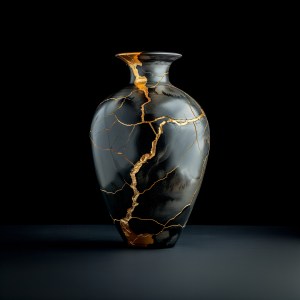
In my search, I found a video by a Japanese artist and believer named Makoto Fujimura. Kintsugi is the process where a broken vessel is mended back together with an epoxy mixed with a metal, usually gold, which acts like a glue and a filler, even filling in for a missing piece of pottery. The vessel, once useless in its broken state, is transformed into a unique and beautiful piece of art. Beauty for ashes. That’s precisely what Yeshua does for us. He takes these jars of clay and transforms us into the good gold of the Kingdom. He takes our brokenness, pain, sorrow, and trauma, and through His grace, He transforms these things into a vessel of honor that gives Him glory.

I was so moved by Makoto – maybe as an amateur artist I related deeply with how he teaches the good news – that I watched a few more videos of him. Back in May of 2012, he gave a commencement speech at Biola University. The title is the same as the title of this post:


What do you want to make today?”


This question, which he heard asked by a high school art teacher, was meant to invoke the imagination of students beginning their high school journey. The question was a metaphor. It wasn’t really about physical art, but their lives. As image bearers of the Creator of the Universe, every human being is “creative.” We are “makers,” like our God. Every single day we have a choice about “what we will make.” Will it be love or war? Will we be a peacemaker or one who stirs up strife? We will choose to make something beautiful and beneficial for others, or will we destroy and burn what is around us to ashes? Will we compete with others or cooperate with them? Will we be the hero or the villain? We will choose life or death?

I used to work for a company that had the slogan, “Make a Great Day.” There is no “it” in the sentence. You are not making “it,” you are making “a day,” great. The implication is that a great day is not something that happens “to you”; rather, it is something you choose, something “you make.” Even when bad things happen, or when a day is simply rote and mundane, one has a choice as to how they will “see” it  and how they will react or respond. “What will you make?”

We are so used to just doing what we are expected to do that we get tangled up in things that are not eternal. This is true even in circles of faith because we tend to mirror the earthy realm. The secular world boils down our creative energy to mere usefulness and profitability, assessed through the lens of competition with others. (Who hasn’t seen this occur in the “church?”) This isn’t true creativity, but cunningness. It’s the lie of the serpent. It makes us a taker and user of others, not creative givers and lovers. Mr. Fugimura says that this changes the fundamental question above to, “What can I take from others?” Or, “How little can I do to get the maximum results?”

© Yevhenii Tryfonov | Dreamstime.com

How different these questions are from, “What do you want to make today?” Imagine sitting in an art room filled with blank canvases, brushes, and paint in every possible color at your disposal when you are asked that question. All the “have-to’s” fall away and one’s mind/heart is free to go to an entirely different place where competition transforms into creativity. The jail cell of striving becomes an open field of dreams and new creations. We’ve had some “art days” with our local women and kids – and all, no matter their skill level, have enjoyed them and found them to be cathartic and spiritual experiences.

Creating is therapeutic whether it is music, art, writing, designing, constructing, fashioning, refurbishing, sewing, etc. Adonai fills His people with His Spirit to build His House.[1] But this same gift of creativity can be used for the enemy’s kingdom. Even Believers struggle with the inward war that Paul speaks of in Romans 7. We want to make love, peace, and unity, but often fail, and instead “do” the works of the flesh. A review of Romans 8 is helpful. In Messiah, the Spirit helps our weakness so we can persevere and choose to put to death the works of the flesh, and walk in the freedom of the Spirit of God.

In the video, Mr. Fugimura recounted the events of 9/11 and how a few people chose “to make” vengeance and destruction and death. As I listened, I couldn’t help but to think back to the more recent events of October 7th, 2023 when others made the same horrid choices. He also spoke of the negativity that pervades our culture, which I would say is even worse now than when he gave this commencement speech in 2012.

Knowing that some, perhaps many, choose to use their creative imagination for evil, destruction, and death is depressing. The question, “What do you want to make today?” can seem like an naïve dream when compared to our present reality. But is it?

The brilliant artist and Gospel teacher, Makoto Fujimura says this question is NOT an idealist escape from reality. Rather, it is a quiet resistance against the deadly fears dominating our world today. It’s a refusal to submit to destructive ideologies, and to instead make a grand use of one’s creative imagination.

The creative power given to us by God is capable of inspiring hearts who seek ways to protect and save lives, and develop new ways to lift people from poverty and from oppressive rulers who demand and teach hate and murder. In the end, it is these things, not the evil wrought by man, that will go on into eternity. The devices or imaginations of evil hearts will not go on. ALL things will be renewed with the kintsugi of the Master Artist.

Meanwhile, we can choose to remake what is broken, to build new things for the glory of God and His Kingdom. The Spirit of the Living God resides within us, and His transformative power has not been cut short by the mere antics of man’s fleshly nature. Maybe you don’t know how to use a paint brush or even draw a good stick figure. You are still creative and have a God given imagination! Your art doesn’t have to be on canvas or in the form of poetry, song, or music.

The greatest art of all is LOVE. But to be an artist, a maker, a creator, or a master architect one must practice their trade. Not every piece will be perfect. In fact, more will end up in the trash heap of trial and error than on public display. Sometimes things need to be erased or painted over. But like kintsugi, do-overs, things remade, can be far more valuable and glorious than the original. And if it weren’t for those mistakes or brokenness, or traumas, the piece wouldn’t hold any value at all. This is the beauty of Grace and the work of love.

Many of my personal paintings have an “underpainting” beneath my final work. Sometimes it is the mistake that inspired the new work that I am happy to display. We shouldn’t feel condemnation for what came before. Messiah is the greatest artist of all, and you are one of His vessels. He can transform your feeble, childish brush strokes into a masterpiece. In fact, He promises to do so![2]

No matter who you are, today you can choose to make something beautiful. You can “make a great day.” Even a smile at a stranger can lift their spirits and make them feel valued. We can choose to be a maker and not a taker. We can choose to beautify what others have broken, left for rot, or destroyed.

It’s all a matter of perspective. Sight is the sense for the fourth month of Tammuz, which is what leads to transformation. “I was blind, but now I see.” A transformation is a thorough or dramatic change in form or appearance. One’s speech, thought, walk, and vision have been radically altered (senses of the first four months). That’s what the spring feasts, culminating on Shavuot at the Mountain are meant to do. They spiritual recreate us every year, transforming and conforming us more and more into the image of Messiah. This enables us to go through the hot, dry summer months without making the same mistakes as our ancestors.

Another way of saying this is “focus.” What are you focusing on? One’s focus requires great creative energy. Take every thought captive to Messiah. And then ask yourself:


What do I want to make today?


[1] For example, see Exodus 35:30-35. Also consider building Adonai’s House is also building up His people, and expanding His Kingdom.

[2] “I am sure of this very thing—that He who began a good work in you will carry it on to completion until the Day of Messiah Yeshua.” (Philippians 1:6, TLV)
Categories: Creation Gospel, Ethics, new moon | Tags: , , , , , | 5 Comments

Purim 2024

Shabbat Shalom, Readers! This is coming in at the last minute (a great description for my life the past six weeks), but better late than never.

I am in an airplane descending to meet Pastors Ken and Lisa Albin of Save the Nations in south, FL. They are hosting me this Shabbat Zachor (Sabbath of Remembrance), and I will be teaching on the new moon, the month of Adar, and Purim.

Join us via YouTube livestream in the following links. I pray your Shabbat and Purim are blessed!

Purim Conference Links

Friday

Saturday 10 AM

Saturday 2PM

Categories: News Flash | 2 Comments

A Voice is Heard in Ramah Part II

For I heard a cry like one in labor, the anguish of one giving birth to her first child—the cry of the Daughter of Zion gasping for breath, stretching out her hands saying, “Oy, now to me! For my soul faints before murderers.” (Jeremiah 4:31, TLV)

I was in Israel when war broke out on Simchat Torah. Our tour group was scheduled to fly home that night. Some of us were able to get out because we had booked flights with United and El Al, who continued to fly passengers despite the very real and present danger of rockets striking near the airport. Others were stranded in Tel Aviv because their airlines chose to abandon their paying customers and only fly their crews, family members, and their friends out of the war zone.

After returning home, I suffered survivor’s guilt because I had experienced the fear caused by running to shelter at the airport, and some of our tourists would have a week of living through constant threat in Tel Aviv until new flights could be secured. I anxiously stayed in contact with them and tried to help when I could. Our Jewish brothers and sisters, many who live with the reality of such threats on a daily basis, not just in this time of war, have my utmost respect. Chazak! (Be Strong!) We have no idea what our elder brother endures, and how they, as the “first tribe to go forth,” make our way so much easier. May Adonai continue to protect and strengthen them as they guard and defend their families and the Holy Land of Israel!

Thankfully, our entire tour group has now made it home. While that brings me relief, my heart continues to ache for Israel and the Jewish people who have suffered such great losses. I have been and will continue to pray for them, especially during the eighth month, the month for Messiah. Hoshiana, save, please, Adonai! I dedicate this series to them.

Before Simchat Torah and the outbreak of war, we were blessed with an awesome Sukkot experience in Israel. Thus, if you remember anything about this post, I pray it is this: “Tovah haeretz meod meod” – the Land is VERY VERY GOOD (Num. 14:7). And though it contains “giants with fortified cities” and “Amalek lives in the Negev,” and they are scary, “Do not fear the people of the land, for they will be our prey. Their protection has been removed from them, and the LORD is with us; do not fear them.” (Num. 14:9)

Unlike past visits to the Land during Sukkot, this one offered something unique, and I don’t mean the war. Nearly every day we had partly cloudy skies. This “cloud cover” protected us from heat and reminded us of the wilderness pillar of cloud and fire. When we were in the Galilee and the Golan Heights, rain could be seen in the distance on the mountain tops such as on Mt. Hermon. Since Sukkot commemorates the supernatural Clouds of Glory, it wasn’t lost on us that Abba covered us in a “cloud” as we moved throughout the Land. This was even more apparent in hindsight with the aftermath of Simchat Torah, as He faithfully watched over the many who were left in a warzone after the feast.

Rains Drops on the Stairs of Bet Hoglah

The month of Cheshvan is called Bul in 1 Kings 6:38, which means a flow (like rain) or an increase (as in well-watered crops). While we were touring, there were a couple of times that the clouds released a few drops of rain (the early rains begin to fall after Sukkot in the eighth month). Reflecting on these instances after my return, I have found them to be even more profound than I first realized. Both locations were in the West Bank (Samaria and Judea) where faithful Jews are tenaciously defending portions of their inheritance.

The first place we experienced drops was in the plains of Jericho at Beit Hoglah[1] where an old Jewess named Erna Covos stanchly holds the ground near the place where Israel first crossed over the Jordan to enter the Holy Land under the leadership of Joshua. Mount Nebo, where Moses spoke his last words, gazed at the Holy Land, and died, sits on the east bank of the Jordan, right across from where we stood in Beit Hoglah.

Beit Hoglah is associated with Jericho and Gilgal. This is part of the territory allotted to Benjamin, the son Rachel died giving birth to. It is between Judah and Joseph’s allotment and includes Jericho and Jerusalem (Jos. 18:11-28). Beit Hoglah means “House of the Partridge,” from a verb meaning to wobble or hop (like a bird). Gilgal means to “roll away,” as in Adonai

Bet Hoglah

rolled away the reproach of Egypt (Joshua 5). Jericho (Yericho) means “moon city,” from the Hebrew word yare-ach (H3394), moon. Some suggest Yericho comes from the word ruach (H7306) meaning to smell, scent, or perceive. All of these place names hint to Passover – from the moonths (months) being reset in Aviv, the “hopping” aspect of a bird in the meaning of Pesach and Hoglah, and the rolling away of reproach through circumcision and eating the Paschal lamb, but especially this location belonging to Benjamin, the Son of Sorrows and the Son of the Right Hand which is couched between Judah and Joseph.

Interestingly, today, the Moon City (Jericho) is governed by those who use the waning crescent moon as their symbol. A waning moon is a “dying” moon. But new moons on Adonai’s calendar are marked by the first sliver of the waxing crescent, which represents new birth and a new beginning. The dichotomy is striking. It was in this region under the leadership of Yehoshua (Joshua) that renewal and new beginnings were especially highlighted. Here are a few:

    • God parted the waters of the Jordan River for the Israelites to cross over on dry ground just as He did at the Red Sea, both were like “births.”
    • Joshua built a memorial out of twelve stones taken from the riverbed to set up at Gilgal as a reminder of this monumental occasion.
    • Israel took their first steps into the land and camped at Gilgal/plains of Jericho, the moon city. (Jos. 4:5-7; 20-24; 1 Peter 2:1-6)
    • The male Israelites were circumcised like NEWBORNS, because this generation was born in the wilderness and were not circumcised. When they received the sign of the covenant, the reproach of Egypt was “rolled away,” which is the meaning of Gilgal.
    • Israel celebrated their first PASSOVER in the Land to commemorate their liberation from slavery in Egypt.
    • They ate the produce of the land of Canaan for the first time, and immediately the supply of heavenly manna stopped. The Land of Promise would now sustain them (Joshua 5).
    • Right after having the covenant meal of Passover, Adonai had them conquer the Moon City, Jericho. Erna pointed out that the fall of Jericho was a picture of Israel marrying the Land of Promise.[2] Israel marched around the walls of Jericho one time for six days in a row while the people remained silent. On the seventh day, they circled the city seven times. On the seventh circuit, they blasted trumpets along with the shouts of the people and the walls of Jericho fell down (Joshua 6). Jewish brides circle their husbands seven times in wedding ceremonies to this day to represent tearing down any walls that would prevent her from becoming echad (one) with her groom. After the wedding, there are seven blessings proclaimed over them. After conquering Jericho and failing to keep the covenant, Joshua renewed the covenant with blessings and curses at Mount Gerizim and Mount Ebal (Joshua 7-8). From this point, they began to conquer the Land in earnest and take their inheritance.
    • Rahab, a Gentile, was spared for saving the spies and joined the commonwealth of Israel when they conquered Jericho. She has the honor of being in the lineage of Messiah, and a place in the hall of faith (Mt. 1:5, Heb. 11:31, Jam. 2:25).
    • Later in this same area, Elijah passed on a double portion to Elisha before ascending to heaven in a fiery chariot (2 Kings 2).
    • Erna also pointed out that the school of the prophets[3] often met in caves footsteps away from where we stood on her modern farm.

Jericho, Gilgal, and Beit Hoglah are the gateway and key to the Holy Land. This is the place of crossing over. It is where the birthing waters parted and the children walked through the Jordan River on dry ground (Day 3), again. This is where the Tabernacle rested for fourteen (7+7) years, the number of Messiah. It is the place where Samuel placed the first king over Israel, Saul, who ruled over a united Israel. This is the place of FIRSTS. First steps, first Passover, first king, first Canaanite convert to join Israel (Rahab). It is about firsts, but it is also about sevens and completion as outlined in Jericho’s fall. After the wilderness experience, everything began for Israel in the region of Benjamin (Jos. 18:11-28), the second son of Rachel, the only one born in the Land of Promise, the tribe for the upcoming month of Kislev. It cost Rachel her life to birth Benjamin, but it is her voice that continues to cry and weep for her wayward children.

Erna calls Gilgal and Beit Hoglah “The beginning of our possession of the Land of Israel, and it is the beginning of its redemption.” The more I ponder her words along with The Word, the more I agree. Erna is holding the gate open for the children of return, while guarding it from the enemy. As rain drops began to fall on our group as we were getting ready to depart, the prophetic significance of people from the nations celebrating Sukkot was not lost on Erna. She called us the “first drops” (of those returning from the nations), the drawing near of the final redemption.

The second place we felt drops of rain was at Arugot Farm with Rabbi Jeremy Gimpel and Rabbi

House of Prayer for All Nations at Arugot Farm

Ari Abramowitz. Arugot Farm is located in the southern hills of Judea, where King David shepherded his sheep and wrote many of the Psalms. It is dotted with caves that he would have escaped to as he fled from King Saul. From their mountaintop, you can see Jerusalem’s skyline in the north, along with nearby Bethlehem and Hebron. The Dead Sea is to the west, and the Negev to the south. It is such a strategic place. Jeremy and Ari risked everything to move to this southernmost Jewish settlement in the Judean Hills (that the world calls the West Bank), and like Erna, they have a heart set on being a light to the nations. They have built a beautiful house of prayer that they call a “House of Prayer for All Nations.”

After we left, they opened their doors wide to families fleeing Sderot and other places under heavy attack. For a few years, they have been hosting weekly Torah studies for the nations on Sundays. Their work and service on multiple fronts is to be commended and supported as they also are gatekeepers of the Land of Promise who seek the complete redemption and the return of all exiles. They have been sending daily updates about the war to their fellowship members and Youtube subscribers. To learn more about their work and journey click here and here.

Erna, Jeremy, and Ari have something else in common. They not only tend to the hearts of people, but they tend the Land – literally making dry and desolate places bloom with life. Their natural work reflects their spiritual work. I find it most amazing that Adonai allowed us to experience “drops” in only these two places which represent Joseph and Judah, Rachel and Leah, the two Houses of Israel. It reminded me of the verses below. “Stick” in this passage is the Hebrew word “etz,” which also means tree. Compare it with Romans 11.

Ezekiel 37:19-28 (NASB)
19 say to them, ‘Thus says the Lord GOD, “Behold, I will take the stick of Joseph, which is in the hand of Ephraim, and the tribes of Israel, his companions; and I will put them with it, with the stick of Judah, and make them one stick, and they will be one in My hand.”‘
20 “The sticks on which you write will be in your hand before their eyes.
21 “Say to them, ‘Thus says the Lord GOD, “Behold, I will take the sons of Israel from among the nations where they have gone, and I will gather them from every side and bring them into their own land;
22 and I will make them one nation in the land, on the mountains of Israel; and one king will be king for all of them; and they will no longer be two nations and no longer be divided into two kingdoms.
23 “They will no longer defile themselves with their idols, or with their detestable things, or with any of their transgressions; but I will deliver them from all their dwelling places in which they have sinned, and will cleanse them. And they will be My people, and I will be their God.
24 “My servant David will be king over them, and they will all have one shepherd; and they will walk in My ordinances and keep My statutes and observe them.
25 “They will live on the land that I gave to Jacob My servant, in which your fathers lived; and they will live on it, they, and their sons and their sons’ sons, forever; and David My servant will be their prince forever.
26 “I will make a covenant of peace with them; it will be an everlasting covenant with them. And I will place them and multiply them, and will set My sanctuary in their midst forever.
27 “My dwelling place also will be with them; and I will be their God, and they will be My people.
28 “And the nations will know that I am the LORD who sanctifies Israel, when My sanctuary is in their midst forever.”‘”

First Drops

The rains that come in the early part of the year, from around October to December, are called the early rains, or in Hebrew, yoreh (H3138). This word comes from the same root as Torah, yarah (H3384), meaning to shoot, cast, or pour (as in an arrow or the flow of rain). Just as the Land drinks rain from heaven to produce crops necessary for life, we need to hear (internalize/obey) the heavenly mitzvot to produce spiritual fruit, which is spiritual rain.

“But the land you are crossing over to possess is a land of hills and valleys, drinking from the rain of the heavens it drinks in water. It is a land that Adonai your God cares for—the eyes of Adonai your God are always on it, from the beginning of the year up to the end of the year. Now if you listen obediently to My mitzvot that I am commanding you today—to love Adonai your God and to serve Him with all your heart and soul— then I will give rain for your land in its season—the early rain and the late rain—so that you may gather in your grain, new wine and olive oil.” (Deuteronomy 11:11-14, TLV)\

Adonai is always concerned about the Land, the People, and the Covenant. All three are intertwined. Though some systems of theology spiritualize away the significance of the Land of Israel, Adonai’s people – all of them – are deeply connected to it. Man, Adam, comes from the adamah, the ground. Sin causes defilement not just to people, but to the land. When Adonai’s people were disobedient, they were uprooted like a plant from the soil of Israel, just as Adam and Eve were exiled from the Garden of Eden. Obeying Adonai’s Word, which is likened to a Seed meant to take root in people, produces fruit. Eating foreign seed, words not of Adonai brings forth thistles and thorns, which must be weeded away (exile). This is why the people are “married” to the Land. They are one.[4] The wife of the Lamb is the New Jerusalem, which is a place and a people. And the Land IS a covenant promise, not just in the “old,” but the new (Is. 61, Jer. 31-33; 50:4-5, Ezek. 11:14-25; chapters 36-37, Psalm 105-106; 111).

In the cycle of months, Rachel’s children are the tribes for the months of Tishrei (Ephraim- 7), Cheshvan (Menashe -8), and Kislev (Benjamin- 9). It is her children that lead us through the fall feasts, the early rains, and the dark winter months. This shouldn’t be surprising since both Sukkot and Joseph figure not only Israel, but the nations with them. Joseph didn’t just save Israel, he saved Egypt and many other nations from famine. Famine, spiritually speaking, is a lack of the life giving Word/Seed of Adonai (Amos 8:11), and one of the four altar judgments for disobedience is famine (Ezek. 14:21, Rev. 6:8).

On the other hand, Judah leads in the first month of Nisan/Aviv. The first month comes after the dark winter and the latter rains. Judah leads the charge just as they did when Israel moved camp and went out to war. To the Jew first, then the Greek/Gentiles (Rom. 1:16; 2:9-10). In the moedim cycle, the spring feasts focus more on individuals and families, and the fall moedim figure a much larger harvest of not just the nation of Israel, but all nations. Judah leads in the first month, and Joseph (via Ephraim) leads in the seventh. There is a mirror in these months and in the spring and fall feasts.

By putting the months on a clock face, it is easier to see the opposite or “mirror” month for each one. Tishrei and Nisan face one another, as does Adar and Elul, both prepare one for the months of the moedim.

If we flip them around, Judah becomes seventh, and Joseph is first. That is the chiastic structure of the months. These two tribes were given the birth right and the scepter of rule/kingship (1 Chron. 5:1-2), and Messiah can be prophetically seen in both. Thus, there are two primary heads in the year (Nisan and Tishrei), and there are two primary heads of the tribes. The tribal order for the months is not in the actual birth order of the sons of Israel, but in the order in which the tribes of Israel camped around the Tabernacle, went out to war, and gave their offerings at the dedication of the Tabernacle. This order isn’t arbitrary, it is spiritual.

In Ephraim’s month, Tishrei – the seventh,  the full harvest of fruit with seeds are brought to Jerusalem. These will be sown in the rainy winter months, then sprout and mature, beginning in Nisan/Aviv, the first month. Whether the enemy realizes it or not, I believe, after having time to pray, think, and process the events I experienced both prior to the attack and afterwards, that the Eighth Day, Simchat Torah, was chosen because their desire is to corrupt and crush the Seed of the Woman and her work.

Seeds need good soil and water to germinate. The enemy wants to destroy the soil of Israel and her people, making them desolate. This year, instead of thinking about the physical rain drops that come to water the delicate seeds at this season, I’m forced to think about the water source for the seeds being tears, the salty droplets from so many sorrowful eyes. But as I did so, I was reminded of Psalm 126 that I quoted in Part I.

“Surely he who walks and weeps, bearing a trail of seed, shall come again with joyful shouting, bearing his sheaves.” (Psalms 126:6, LITV)

© Yafit Moshensky | Dreamstime.com

These are “dreamers,” like Joseph, the returning exiles. I’ve cried seeing photos of Jews from all over the world flying to their homeland to defend her in her time of need. They are dreamers too. Dreamers are deeply connected to Rachel and her children, explored in Part III.

Their tears and our tears water the seeds Torah, and when they do, they bear the sheaves of Israel! During Sukkot this year, there were multitudes from the nations who showed their love and support while celebrating the feast. I marched with many of them in the ICEJ’s Parade of the Nations in Jerusalem and witnessed flags from at least 70 nations. I worshiped with Solu and Shilo Ben Hod in Jerusalem that very night where each continent was lifted up and prayed for in various languages, along with the nation of Israel.

So despite the war and the atrocious rise of antisemitism in the US and around the world, I must remember that the hearts and motivations of those who hate Israel are no longer being hidden. With precision force, and even through tears, a separation is being made. On Tishrei 1, the year changed to 5784, the second year in the current shemittah cycle. Year two mirrors the chaos of Day 2 of creation.[5] The upper and lower waters are being separated to make room for dry land that will produce fruit with like kind seed, not thorns and thistles. When the third year arrives and the waters are gathered to one place and dry land appears, will we bear fruit with the seed of the Land, the People, and the Covenant? Will we say with Joshua and Caleb (tribes of Joseph and Judah), “Tovah haeretz meod meod” – the Land is VERY VERY GOOD? (Num. 14:7), or will we be found in agreement with the wicked spies/witnesses who say, “It is a land that devours its residents? (Num. 13:32)

Never Again! STAND WITH ISRAEL!


[1] Beit Hoglah is mentioned in the Book of Joshua as being near the northern tip of the Dead Sea, on the border between Judah and Benjamin’s allotment; it was also known as a town in Benjamin (Joshua 15:6; 18:19, 21).

[2] In Hebrew, the word for land, eretz, is feminine. “No longer will you be termed ‘Forsaken,’ no longer your land termed ‘Desolate.’ Instead you will be called, ‘My Delight is in Her’ and your land, ‘Married.’ For Adonai delights in you, and your land will be married.” (Isaiah 62:4, TLV) The word for city, ir, is also feminine. Thus, when personified, the Land and the Holy City of Jerusalem take on feminine attributes, and when spoken of poetically, they are a Bride Who is Married (Rev. 21:9-10). Both the Land and the Holy City are filled with people, Who are also the Wife or Bride of Adonai.

[3] Easton’s Bible Dictionary: Schools of the Prophets (1 Samuel 19:18-24 ; 2 Kings 1 Samuel 2:3 1 Samuel 2:5 1 Samuel 2:7 1 Samuel 2:12 1 Samuel 2:15 ) were instituted for the purpose of training young men for the prophetical and priestly offices.

[4] See footnote 2

[5] To learn more about the Shemittah cycle, see Barry Miller’s book, KNOW THE TIME CHANGE YOUR WORLD: THE REAPPEARANCE OF THE SEVEN-AND FIFTY-YEAR BIBLICAL CYCLES.


Categories: new moon, Women | Tags: , , , , , , , , , , , , , , | Leave a comment

Blog at WordPress.com.