Yearly Archives: 2014

Miriam’s Cup Part I


          © Daniel Million | Dreamstime.com

This Passover season, I have given an often overlooked custom a second glance — well more like a long hard stare! Many of you incorporate the mystical and prophetic Cup of Elijah in your Passover Seders. For Believers in Messiah, this cup takes on even more significance because of John the Baptist. He truly paved the Way for Messiah at His first coming. Since we have already seen this “cyclical” prophecy fulfilled once, hopefully we will better be able to discern the spirit of Elijah in these last days.

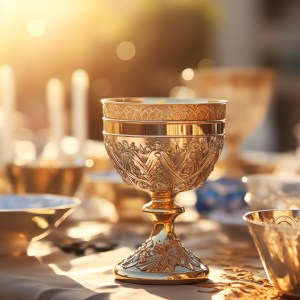
If you’ve purchased a special goblet with Elijah’s name written on it to use at your Passover Seder, you may have noticed another more obscure goblet inscribed with Miriam’s name. What is this cup for? Is it just to satiate liberals and feminists? Does this “new” ritual have any redeeming value? My hope is to show you the richness and beauty that this tradition can bring to your Passover table, and perhaps even to your weekly Kiddush.

The Cup of Miriam is not part of a traditional Seder, and I can find no mention of it in any of the feast books that I own. (But, don’t let that deter you from reading on!) According to Risa Borsykowsky[1] , the practice of drinking WATER from a special kiddush cup called Kos Miriam, began with Stephanie Loo Ritari and her Rosh Chodesh Boston group in the late 1980s. Reading through the Exodus, one can find numerous righteous women that played significant roles that led up to the redemption of Israel from Egypt.[2] Mrs. Ritari decided to bring these “hidden” women into the “retelling” of the Passover story to not only honor the matriarchs, but as a tool to make the Seder more comprehensive for women and girls. The most prominent woman of the Exodus story is Moses’ sister, Miriam. Therefore, she will be our focus in this study.

The Bible calls Miriam a prophetess of Israel.[3] She alone ensured that baby Moses would live by following him as he floated down the treacherous Nile River.[4] She watched as Pharaoh’s daughter drew Moses from the water, and then cunningly secured Moses’ own mother as his wet-nurse. She helped sustain the Israelites during their trek across the wilderness and she led them in joyous song and dance to praise YHWH for the miracle of parting the Red Sea. Upon her death, the Israelites grumbled against Moses and Aaron for a lack of life giving water.[5]

Did you notice the many connections of Miriam with water?[6]

Though her name can mean bitterness or even rebellion, the Hebrew also reveals that there is another (positive) side to Miriam. This should give hope to us all, as we each have both a good and evil inclination that wars for supremacy. To learn the duality of Miriam is to understand the ancient contradiction of what it is to be human. We all share the life long struggle between spirit and flesh.

Moreover, we would be wise to consider that other than one bad instance, Miriam’s portrayal of rebellion and bitterness was toward the anti-torah decrees of Pharaoh.[7] She and her family risked their lives by rebelling against Pharaoh. The midwives Puah and Shifrah acted similarly by defying Pharaoh’s edict to kill Hebrew male babies. It is interesting that it was the fearlessness of WOMEN that initially ignited the courage of all Israel. These brave lionesses stood firm and earned a spot forever in the Torah of our Elohim. Why would we leave their stories out of our maggid (retelling of the Passover story)?  Would our daughters not be strengthened to hear year after year that they too have this great potential residing within them?

Miriam and Water

As I was studying the many links between Miriam, water, wells, fountains, the Holy Spirit, the Word, Yeshua, and Living Waters, I could hardly contain my excitement! Miriam is spelled mem, resh, yod, mem. Water is spelled mem, yod, mem.

Did you notice how similar these words are in Hebrew? Miriam is water with an added resh, which is pictographically a head. Thus, her name is literally head or lead waters. This meaning can also be demonstrated another way in Hebrew by looking at Miriam as a compound of two words: mar and yam. These words mean bitter/strong and sea (waters) respectively. Hence again, Miriam is associated with the idea of strong (head) waters.

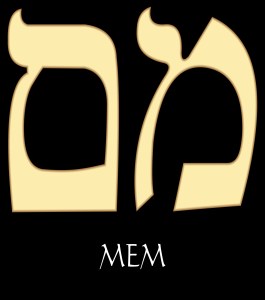
But what do strong waters imply and what are we to learn from this association? In order to get the full impact of Miriam’s role and name, we must first understand WATER from a Hebraic perspective. Mayim (mem, yod, mem) is a word bookended with two mem(s). The Hebrew letter mem is likened to water, a womb (it’s full of water), strength (as in gushing waters), chaos (again like an ocean), and as a preposition “to come forth from or out of”. This letter is one of a handful that has a sofit or final form when it is written at the end of a Hebrew word. A regular mem is open on the bottom, whereas the final form is closed.

    © Shalom3 | Dreamstime.com

Rabbi Michael L. Munk, in his book The Wisdom of the Hebrew Alphabet on the letter mem, states, “The word mayim, water, with its initial and end mem, one open and one closed, depicts the accessible and the inaccessible – an allusion to the waters at Creation.” Thus, mem also illustrates what is revealed and what is concealed. Add to that the letter at the heart of mayim, yod (a hand, work, or deed), and the Creation waters (and all water thereafter) become the same contradiction that we see in Miriam’s name: a work or deed that has the potential for life (strong living waters) or death (bitterness and rebellion).

Water is a place of darkness and yet, great potential in Creation and in a woman’s womb. It can be as powerful and destructive as a roaring ocean and as gentle and satisfying as a trickling stream. It is at the same time both a life giving necessity and a place where chaos and death reign (like at sea). If you read my posts on Crate Trained Believers and The Devouring Lion, you may have noticed the similar imagery. Gentle AND Fierce.

Interestingly, the Hebrew word for mother, em (aleph, mem), also has the pictographic meaning of strong waters.[8] It seems as though the very fact that women have a womb that can fill with life giving waters connects them to Miriam.[9] Females made in the image of Elohim are “mothers” of all living. However, like our sisters Chavah (Eve) and Miriam, we also have the potential to bring chaos and death. (Like a tumultuous ocean.) One must learn to turn life’s bitter unruly waters into sweet waters of refreshing. By the way, this is also something men need to learn as well, for both men and women are revealed in the woman as the wife and bride of the Lamb.

This is the real Biblical portrayal of Miriam, the sister of Moses. She is truly a mother to the Israelites and a leader of her people.[10] Since the force and strength of her name is better understood, does this lend fresh insight about Mary (Miriam), mother of Yeshua? Isn’t it fitting that Yeshua should come forth from a womb such as this? How about the many other “Mary’s” mentioned in the Brit Chadashah (N.T.)? Will their stories speak a little louder the next time you read them?

There has been a tendency for us to forget that the Body needs both masculine and feminine leadership to keep us in balance and to display the whole image of Elohim (God). It is females that bring qualities such as comfort, nurture, protection, and mothering to the Body of Messiah. They are fierce AND gentle. Without these essentials, we raise nothing more than Devouring Lions.

Miriam is a representation of strength, the womb, mercy, prophecy, and praise. The ancient sages recognized the vital role of women in the Exodus in the Babylonian Talmud, Sotah 9b:

“If it wasn’t for the righteousness of women of that generation we would not have been redeemed from Egypt”

The rabbis recognized the very thing examined above: women were the progenitors of Israel’s redemption from Egypt.[11] I hope that you will include Miriam’s Cup in your Seder or even in your weekly Kiddush as a commemoration of her vital role in the Exodus and as a role model to your daughters, sisters, mothers, and wives. But, if this isn’t enough to convince you, there is so much more! In Part II, we will look at how water is associated with the rock in the wilderness, the Holy Spirit, Wisdom, and Pesach.


[2] There is Yocheved, the brave midwives (Puah & Shifrah), Miriam, and Tzipporah. See also footnote 6.

[3] Ex. 15:20

[4] Obviously, the Holy Spirit is what provoked Miriam to do this!

[5] Num. 20:1-2  Then the sons of Israel, the whole congregation, came to the wilderness of Zin in the first month; and the people stayed at Kadesh. Now Miriam died there and was buried there.  (2)  There was no water for the congregation, and they assembled themselves against Moses and Aaron.

[6] D. Hollisa Alewine’s Workbook 5 The Torah Portions Volume 2 –Shemot p.7-21 (2013) offers an interesting perspective on the women of the Exodus and Miriam in particular. If you’re ready to dig deep, buy this series and uncover a multitude of treasures.

[7] Numbers Chapter 12.

[8] See Hebrew Word Pictures by Frank T. Seekins (2003) p. 62

[9] The Hebrew word for womb, racham, ends with the letter mem. This is the same Hebrew word for mercy or compassion. Indeed the watery womb is a place of protection, growth, maturity, and nurture. This word shares the resh and mem with Miriam only adding a chet, which is a fence or boundary that protects.

[10] Micah 6:4  “Indeed, I brought you up from the land of Egypt And ransomed you from the house of slavery, And I sent before you Moses, Aaron and Miriam.

[11] This makes perfect sense considering the “birthing” nature of women.


Categories: Moedim, Women | Tags: , , , , , , , , , , , , , , , | 9 Comments

The Devouring Lion

© Johannes Gerhardus Swanepoel | Dreamstime.com

In Crate Trained BelieversI submitted that as Believers, we should reflect the attributes of a lion and a lamb, because that’s who Yeshua is. When one’s self-image is out of kilter, it skews one’s true identity, and the image of Elohim in the earth. If we could really grasp the reality of who we are, our lives and impact on the world would be changed for the better. Many of think of themselves as weak, powerless, and vulnerable. These are NOT the traits of a lamb of Elohim. The problem seems to come from a false view of humility, which was the focus of the previous post.

Our Messiah is returning for a Bride of like kind. She will be both gentle (like a lamb) and fierce (like a lion), not one or the other. In order to be a spotless Bride, we must know how to be both. If we carefully follow the example of our Messiah, we can do just that. I have witnessed many that are gentle like a lamb, to a fault. They are proverbial doormats, and the host or hostess of the best pity parties. Their poor self-image renders them ineffective. Who would ever what to join the ranks of the Kingdom if this is the nature of its subjects?

On the other hand, I have also witnessed many that have become nothing more than a devouring lion. Mercy, grace, and compassion are exchanged for severity, strictness, and judgment. These prideful ones have forgotten how to be a lamb. Balance is the key to most issues of life and this is no exception.

Over the past decade, I have watched the Father gently awaken His people to His Torah. (I was one of them!) When our eyes begin to open, there is a rainbow of emotions that flood our lenses. Unspeakable joy, elation at answered questions, and a renewed hunger to seek after the Kingdom are some of the positive ones. But there are also some negative emotions like deep regret, guilt, shame, and immense anger. Truth sets one free, but it also sheds light on areas that we didn’t even know were dark. Therefore, repentance takes on a whole new meaning, and accountability skyrockets. Awakening to the Torah with Messiah is a hard place to stand in the beginning, and many have difficulty finding balance. Weeding through truth and lies is not for the weak hearted.

Those that come out on the other side usually take one of two forms. They are either humbled by the mercy of the King, determined to show His truth and mercy to the masses. Or, they become rigid and cold, resolute on scaring the masses into submission (their idea of righteousness). Many have been party to both sides as their internal pendulum swings, seeking balance.

Hear Me Roar

Sadly, many that have “awakened” to the Torah of YHWH have become a roaring lion without the restraint and gentleness of the lamb. I see and definitely hear them growling at any and everybody, but they are not tempered with mercy, grace, or compassion (lamb traits). While their zeal is commendable, they have forgotten their first love and the mercy that the Lamb extended to them. They forego righteous judgment for self-righteous judgment. They become the very thing they claim to hate: sanctimonious bigots.

They can’t meet with so-in-so because they don’t agree on this teaching, doctrine, etc. They isolate themselves from family that remains in the church (and smugly call them pagans); they burn bridges and create enemies at every turn all in the name of righteousness. If they would simply turn around and look at the destruction they have caused along the way, they would see that instead of planting, they are uprooting. They have no legacy of fruit and increase, only decay and death. All they can say is, But I’m right! I read it on the internet or studied it out for myself.

They are the image of the roaring lion seeking someone to devour, not the Lion of the tribe of Judah!

Be of sober spirit, be on the alert. Your adversary, the devil, prowls around like a roaring lion, seeking someone to devour. (1Pet. 5:8)

There is a fine line here. The verses just before this have this to say:

Therefore humble yourselves under the mighty hand of God, that He may exalt you at the proper time, casting all your anxiety on Him, because He cares for you. (1 Pet. 5:6-7)

We must understand and practice humility. A humble person puts another BEFORE himself, even if that person is less mature, imperfect, ignorant, and far from deserving it. This requires immense strength, compassion, and real sacrificial love. If your motive is to be “right” or even “holy,”[1] you are the weaker vessel operating in pride.

OUCH! I sadly have been this roaring lion when confronted with various issues and people in the past. I never want to make these mistakes again. Jacob is a lioness, but within that lioness is a gentle lamb, like Yeshua. We must be both, because He is both. There is a time for the lamb and time for the lion.

How do we discern the difference between the Lion of Judah and the Devouring Lion? The name tells us everything we need to know. Judah means “praise,” while devour means “to ravenously eat or destroy.” Does your life have a legacy of praise or better yet, do the people you influence have a legacy of praise? Or do you and they have a spirit that constantly divides brothers, condemns the ignorant, and gobbles up the faith of the immature? In other words, does your faith cause the weak to praise YHWH? Or does your faith sentence the weak to the pit?

As I surf the web, blogosphere, and social media, I “hear” many roaring lions that claim to keep Torah and follow Messiah. But they have no traits of a lamb whatsoever. When one realizes the depth of the lies we were taught and believed, it often invokes a spirit of anger. In fact, it makes many furious. If this strong emotion is not tempered with the cool and loving Holy Spirit, destruction is sure to follow.

Is this the heart of the Lion of Judah? Is His judgment ever NOT tempered with mercy, compassion, long-suffering, and love? If He still lends mercy and compassion to the masses, shouldn’t we? Can we leave our vengeful anger to Him? Can we instead be profoundly grateful for the long-suffering mercy He extended to us and offer that same compassion to those in ignorance, or even rebellion?

Who are you following: 
the devouring lion or the Lion AND the Lamb?


[1] Separation or holiness is necessary, but if separation fails to lead to gathering, it is a love a death, not life. The fruit will be rotten, and so will relationships. Dr. Hollisa Alewine’s Creation Gospel explores this fully; thecreationgospel.com

Categories: Messianic Issues, Musings, News Flash | Tags: , , , , , | 10 Comments

Crate Trained Believers

               © Ian Dyball | Dreamstime.com

Secondhand Lions is one of my all-time favorite movies.[1] It was produced in 2003, starring Robert Duvall and Michael Caine. At one point in the movie, two old eccentric brothers have grown restless in their calm retired life and decide to break up the monotony by purchasing a lion to release and then hunt. Instead of taking off to Africa as they would have in their younger days, they decide to bring the safari to their own backyard. The scene begins with a truck winding up the driveway carrying crates. The long neck of a giraffe extends high in air, far above the brush that lines either side of the driveway.

The brothers had been “forced” into caring for their precocious nephew, when his desperate mother had abruptly dropped him there one summer afternoon. Though she promised to return, the boy and his uncles soon realized that this was unlikely. The curious boy was quite mesmerized by the truck load of mysterious creatures and his quirky uncles. While the truck drivers are unloading one of the crates, the men go into the house to get their rifles. They are long overdue for some excitement and danger, and so they impetuously allow the captivated young boy to open the flimsy crate that houses the fierce and majestic lioness.

But when the door of the crate is finally flung open, the beast doesn’t charge, roar, or even appear to be moved by the prospect of freedom. What should have been intimidating and dangerous turns out to be calm and tame. The men quickly realize that they had purchased an old and worn out lioness. They actually call her “no good” and “defective.”

She had been caged and confined her entire life, and now she was old. She had never laid eyes on a real jungle, nor had she ever had to hunt for prey. Her life had been spent in bondage; and though she was a lion, she had not the slightest clue as to how to be one. She was truly an old, secondhand lion.

I wonder how many of us are like Jasmine (the name the boy eventually gave to the lioness)? Have we been crate trained into relinquishing our great authority and power? Have we forgotten how to be a lioness?

Most of us haven’t had any experience with a caged lion, but have you ever tried to crate train a puppy? At first, they resist the crate because they have an overwhelming feeling of being trapped, restrained, and alone. It is important to slowly introduce crate exposure and associate only positive actions and emotions with its usage. Over time, what originally caused the puppy great anxiety will become a source of security, safety, and comfort. We can only imagine that this process would be even more dramatic and unnatural for a king or queen of the jungle.

While followers of the Messiah aren’t likened to dogs, they are certainly likened to lambs (sheep) and lions, among other creatures.  For many Believers, the image of a lion and a lamb invokes visions of the Messiah. As His Bride, it’s not surprising that these same symbols reference us. Consider these verses from the Book of Numbers.[2]

“For there is no omen against Jacob, Nor is there any divination against Israel; At the proper time it shall be said to Jacob And to Israel, what God has done! “Behold, a people rises like a lioness, And as a lion it lifts itself; It will not lie down until it devours the prey, And drinks the blood of the slain.” (Num. 23:23-24) 

 Jacob (Israel) is like a mighty lioness. She, along with the lion, rules the entire jungle. Every other creature has a healthy fear and great respect for this pride. But something else caught my attention in these verses from Numbers. “At the proper time it shall be said…” There is an appointed time when this correlation will be true. Thinking Hebraically or cyclically, this “time” can have multiple fulfillments. Are these allusions to the millennium reign? Isn’t the Kingdom in which we have been engrafted, the Kingdom of all kingdoms? Are we not learning how to rule and reign with Messiah?

Do we really get this? You are a king or a queen of THE Kingdom. You have far more authority and power than you realize. We will one day rule the earth! But we will not be tyrants; we will be servants. Strong and fierce, yet loving and gentle. We will be like our One only King: a Lion and a Lamb.

There is an unquestionable premise given in the first chapter of Bereshit (Genesis). That is, that like kind produces like kind. Birds produce birds. Whales produce whales. Dogs produce dogs. Therefore, male dogs go with female dogs, male whales go with female whales, and male birds go with female birds. Do we expect a different pattern when the Father likens us to His bride? Are we not made in His image (male and female)?

Within each of us is a divine spark. It is the very breath of the Creator and it is what makes us undeniably His. This must be true in order for us to not only be likened to His children, but even more intimately as His wife or bride. Therefore, we are the lion/lamb counterpart to His Lion/Lamb. I think we have far more potential and influence than we realize.

We think we understand how to be a lamb. After all, a lamb is weak, defenseless, and in need of a care taker. We don’t have a problem realizing our vulnerability. We know where our weak spots are located. We usually protect these areas quite fiercely. So much so, that we often have a hard time even releasing them to our Abba, even though He greatly desires to heal these areas. Perhaps, we are too ashamed to allow Him to speak to these issues. Maybe, we don’t trust that He will actually heal us, because we certainly know we don’t deserve it.

My point is that Believers have no problem identifying themselves with weakness, shame, guilt, fear, depression, anxiety, worthlessness, and the like. Sadly, many even believe these are desirable traits because they equate them with humility. Dear friend, this is NOT true humility. And, this is not the picture of a Lamb! There is nothing holy or good about this kind of thinking.

A real lamb in the image of Elohim is not weak; it is strong! It freely offers its life. It is without spot or blemish. It is not guilty, but innocent! It has full trust in its Shepherd. Likewise, real humility is strength, not weakness. Keep the image of a lion and lamb in your mind and consider these most humble of men.

Now the man Moses was very humble, more than any man who was on the face of the earth. (Num. 12:3)

“Take My yoke upon you and learn from Me, for I am gentle and humble in heart, and YOU WILL FIND REST FOR YOUR SOULS. (Mat. 11:29)

Both Moses and Yeshua were humble or meek. Would you consider them weak or even self-dejected? Of course not! A humble person is willing to put other people before himself. They submit without resistance to the will and desires of someone else. This requires great self-control. It’s not that they aren’t able or capable to perform; rather, it is that they restrain their ability and channel it to lift up someone else. Humble people possess the strength of a mighty lion. This is a very “regal” trait or virtue.

Moses and Yeshua certainly display the imagery of the lion and the lamb! These are our role models. Do you believe you possess both the strength and restraint of a lion or lioness? According to Scripture, these virtues have already been given to you when you became a Believer. This is the legacy of Israel, but sadly, like us, they possessed an ungodly self-image. Do you remember the bad report of the 10 evil spies? They envisioned themselves to be tiny insignificant grasshoppers in the eyes of the Canaanites. Believing this lie cost the Israelites more than they could have ever imagined. What have we given up to cling onto our poor self-image?

Joshua and Caleb reported the truth, but the people PREFERRED the lie. Keep in mind that this lie was about WHO they were. YHWH’s people are not insignificant. They are the mightiest people on the planet! We are the light of the world, not the scum of the earth! When we deny our real identity, we are in effect denying the majesty, power, and might of our Creator and King. In other words, it’s blasphemy.

I had never really considered this until the other day. My view of who I am is a direct reflection of my Maker. I cannot separate the two. When my self-image is unhealthy, it is because I don’t really believe or trust YHWH. In fact, it’s worse than that. If I claim out of one side of my mouth that I am His and out of the other that I’m worthless, what I’m really saying is that He is not worthy. How many of us need to repent of this? How many of us are sick because we are inadvertently blaspheming the King of the Universe in this manner? By the way, this is also the case when we oppress, slander, or speak against our brothers and sisters. They, too, are made in the image of Elohim.

Sleeping Lion

© Štěpán Kápl | Dreamstime.com

Moses, Aaron, Joshua, and Caleb understood this fact. Notice their words to the people.

“Only do not rebel against the LORD; and do not fear the people of the land, for they will be our prey. Their protection has been removed from them, and the LORD is with us; do not fear them.” (Num. 14:9)

The Canaanites would be the prey of the lions and lionesses of Israel! If only the people could see this truth. If only WE could see this truth! Instead, the people would rather stone the messengers.

But all the congregation said to stone them with stones. Then the glory of the LORD appeared in the tent of meeting to all the sons of Israel. (Num. 14:10)

Beloved, we are worthy because He is worthy! We are mighty because He is Mighty! We are kings and queens of the earth because He is the King of kings. If we got up every day really believing that we have the authority and power to change the world and overtake our Canaanite enemies what a different world it would be. What a different view the world would have of us.

The world should fear us as we fear our King. Instead, we have allowed our fears, the world, and the enemy to chain us to feelings of helplessness and powerlessness. We longingly speak of a future where our strength and impact are restored. Sadly, we think that future can never happen this side of Kingdom Come. Where did we get this idea? Have we bought a lie and forfeited our birthright for the here and now?

Bondage, burdens, sins, fears, and the like are very real CAGES. Pet doctrines and traditions can also be a stronghold of false security. Like the puppy or the lion cub, we at first resist our confinements. We have an innate knowing that they are unnatural — that they are keeping us from being free to be exactly what YHWH designed us for. But somewhere along the way of life, we lose our resolve. Do you know how many of us are sick, dying, depressed, dejected, lonely, disappointed, discontent, restless, insecure, and needy?

The door of the cage has been swung wide open, and we are like Jasmine, the secondhand lion, tired and worn-out. The fight left us long ago. We have been entrapped for so long that the steel cage walls seem comfortable, safe, and peaceful. Many no longer have the desire to run, chase, hunt, or explore. What a pitiful bunch we have become. How did we get here?

I believe we are like the ten virgins that fell asleep before the bridegroom arrived. There are numerous passages that liken our apathy and indifference to slumber. For too long, western Believers have hit the snooze button. We have grown fat, lazy, and diseased. We need to WAKE UP!

Just as importantly, we need to be rousing our brothers and sisters to this truth. How much greater would our impact be in our circumstances, relationships, and the world if we received this message? A poor self-image cost an entire generation the Promised Land. My prayer is that we will start walking in the mightiness of our calling.

To this end also we pray for you always, that our God will count you worthy of your calling, and fulfill every desire for goodness and the work of faith with power, so that the name of our Lord Jesus will be glorified in you, and you in Him, according to the grace of our God and the Lord Jesus Christ. (2Th. 1:11-12)

 What kind of crate do you find security in? Let’s break out together!

There is another side to this coin revealed in Part II, The Devouring Lion.


[2] Lisa Bevere has written an excellent book called Lioness Arising that speaks about the imagery of lions and the believer. Her focus is on the role of women as the lioness. I highly recommend it!! http://www.amazon.com/Lioness-Arising-Wake-Change-World/dp/0307457796

Categories: Messianic Issues, Musings | Tags: , , , , , , , , | 13 Comments

More Than a Womb-Man

  More than a womb-man to me[1] 

© Jason Stitt | Dreamstime.com

You, dear sister, are definitely far more than a “womb-man” to the LORD! That is, you are more than a man with a womb.[2] Women who cannot or have not had children for any number of reasons can take great comfort in the fact that a woman’s identity is not found in her uterus, but in her unique relationship to the Father and His purpose for her life. A woman can serve YHWH in a vast number of ways that do not involve physical child birth and/or child rearing. And even more importantly, she can find great fulfillment, joy, and happiness as she follows the Master in the Way He leads.

I happen to know several women that are childless. Some of these women are unmarried or widowed. Others have been married for many years, but the King has sovereignly kept their womb closed. One of these women happens to be a very close friend of mine. Therefore, I am sensitive to the plot of these precious daughters of the King. Too often our goodhearted counsel has the opposite effect of what we intend. We haven’t walked in their shoes. We may sympathize with their pain, but we are clueless as to how to express true empathy for this GREAT loss they suffer on a daily basis.

Thus, what we think is encouragement, actually becomes a stumbling block to their healing and/or only a reminder of their lack. Since all women are “built” or wired by the same Creator to be feminine, we all share some innate qualities. Though we are each unique individuals with distinctive personalities, strengths, and gifts; we are, at our core, each still a neqevah (female) that is compelled to surround and protect boundaries[3] that promote growth and maturity. The womb of the woman is an amazing picture of this spiritual reality. And in a perfect world, it is one that every woman would get to experience both physically and spiritually. But we live in a broken world. Things aren’t perfect. Yet, we can learn how to better encourage and minister to these women — and it’s probably not in the way you think.

Some well-meaning teachers bring condemnation upon the heads of these dear sisters without even realizing it by promoting extremist family views that may never be a possibility for this minority. Often these views are out of balance. There is a not a one size fits all rule or commandment for family size, though scripture can be twisted and proof texted to say such.

Women that are unmarried or that have a barren womb are left feeling less than a womb-man to be sure. What is a great blessing to most women in the congregation is a great trial and test for others. The older the woman becomes, the more final the test must feel. And that feeling is often a sense of failure. Failed as a womb-man. Can you even imagine the pain? Even those seasoned and mature in YHWH feel this pain no less. The scab is picked from the wound every time another teacher insists that a woman only finds true fulfillment in birthing physical babies! Again, hear the word failure. Oh my heart cries out for you! And it’s not so much that you’re childless; it’s in the way we have treated you. It’s in our promotion of a narrow-minded view of womanhood that has left you feeling less than a womb-man.

The good news is that these marginalized women are not left in the cold by our great Elohim (even if we inadvertently have). There is more to woman than the physical womb! Thankfully, YHWH is not a “black and white” extremist, nor is He oblivious to the multi-faceted dynamics involved in family, singleness, children, and lack thereof. In fact, there is quite a bit of “grey” area in matters of doctrine, theology, and halachah. Why else do you think it was so vital that Israel institute judges? Matters of faith and doctrine require righteous judgment. There is not a one size fits all answer to every situation or family.

Therefore, when “absolutes” are drawn like lines in the sand, we can be sure that there is a Sith nearby.[4] Perhaps this is why we find Yeshua literally drawing on the ground when the scribes and Pharisees brought a woman caught in adultery before Him. It wasn’t Yeshua that stood on an absolute or rigid commandment; the accusers were the ones pointing to the black and white Law. Yeshua exercised righteous judgment and extended mercy to the woman all while still maintaining or upholding the Spirit of the Torah. We are too often like the scribes and Pharisees, demanding our idea of adherence. Our zeal leaves a wake of bruised and battered bodies —– causalities of our “truth”—- and we never bat an eyelid.

I don’t think the Bee Gees’ had my sentiments in mind with their song More Than a Woman, but as I am writing this post, the tune keeps ringing in my ears. There is a lot faulty etymology out there about the English word “woman”. It has been said that a woman is simply a man —- with a womb. In other words, some well-meaning teachers (falsely) believe that “woman” is a compound of the English words “womb” and “man”. However, even a quick study of the etymology of “woman” will prove this idea to be false.[5] Though being a womb-man appears to be harmless and perhaps even edifying, this concept has and can cause a great deal of damage to the many marginalized daughters of the Most High.

Many people cite Webster’s 1828 dictionary to perpetuate the “womb-man” teaching. Here is Webster’s full entry:

WOMAN, n. plu. women. [a compound of womb and man.]
1. The female of the human race, grown to adult years.
And the rib, which the Lord god had taken from the man, made he a woman. Gen 2.
Women are soft, mild, pitiful, and flexible.
We see every day women perish with infamy, by having been too willing to set their beauty to show.
I have observed among all nations that the women ornament themselves more than the men; that wherever found, they are the same kind, civil, obliging, humane, tender beings, inclined to be gay and cheerful, timorous and modest.
2. A female attendant or servant.
WOMAN, v.t To make pliant.
 

While I highly respect (and frequently use) Mr. Webster’s work, it doesn’t make him infallible. I haven’t been able to find any other reference source that even hints to the evidence needed to support Mr. Webster’s suggestion that the English word woman is “a compound of womb and man”. Moreover, no other language ancient and modern (that I can find) shares this leap of faith in the etymology of their word for woman. Therefore, I’m left to conclude that Mr. Webster “assumed” this idea was true just as many other well-meaning people have done in the past and present. (And many of them have done so by blindly accepting Webster’s speculation as truth —- a vicious cycle.)

Where does the English word for “woman” actually originate? Here is Etymology Online’s entry for woman:

(n.) late Old English wimman (plural wimmen), literally “woman-man,” alteration of wifman (plural wifmen), a compound of wif “woman” (see wife) + man “human being” (in Old English used in reference to both sexes; see man (n.)). Cf. Dutch vrouwmens “wife,” literally “woman-man.”
The formation is peculiar to English and Dutch. Replaced older Old English wif and quean as the word for “female human being.” The pronunciation of the singular altered in Middle English by the rounding influence of -w-; the plural retains the original vowel. Meaning “wife,” now largely restricted to U.S. dialectal use, is attested from mid-15c. Women’s liberation is attested from 1966; women’s rights are from 1840, with an isolated example in 1630s.[6]


The real etymology of woman has nothing to do with possessing a womb. The counterpart to the Old English “wif” (woman) is “wer” (man).[7] Thus, a male was a “wer” as we still see used in words such as “werewolf”, a man-wolf. None of these old uses are derived from the fact that a female has a womb and male does not.

Please don’t misunderstand my intent in this post. There are some very fascinating truths about femininity and the womb. I am in no way dismissing the importance and significance of the “birthing” nature of women. In fact, I will probably write about the womb at a later date. However, faulty etymology, teachings, and foundations must be removed if we desire to walk in complete freedom and restoration. This is necessary even for those ideas that appear to be harmless and/or helpful. I felt that this issue was vital enough to point out for one reason. We tragically forget that it is the “little” foxes that spoil the vine.

Women have suffered so much throughout the ages. Sadly, our suffering has always been predicated on faulty assumptions, beliefs, opinions, and paradigms. Therefore, I feel it is absolutely crucial that we don’t veer to the left or right as far as we can help it as we seek restoration[8].

Song of Songs 2:15 “Catch the foxes for us, the little foxes that are ruining the vineyards, while our vineyards are in blossom.”

I strongly believe that the vineyards of women are truly in blossom. While great truths are being restored to women that are bringing healing, unity, and renewal, there have been and always will be (this side of Kingdom come) little foxes that can and will bring great devastation to our garden in spite of our most diligent efforts.


Womb Man

A woman of faith is not solely defined by her physical womb or her children. We must be sensitive to this truth for the sake of our sisters that have closed wombs (or no husband). As I was pondering this delicate issue, I believe the Father revealed to me the heart of the problem and why this uncomfortable reality must be addressed with great compassion.

Consider the mercy and loving-kindness that the Torah extends to marginalized people.

“The Levite, because he has no portion or inheritance among you, and the alien, the orphan and the widow who are in your town, shall come and eat and be satisfied, in order that the LORD your God may bless you in all the work of your hand which you do. (Dt. 14:29)

“Then you shall celebrate the Feast of Weeks to the LORD your God with a tribute of a freewill offering of your hand, which you shall give just as the LORD your God blesses you; and you shall rejoice before the LORD your God, you and your son and your daughter and your male and female servants and the Levite who is in your town, and the stranger and the orphan and the widow who are in your midst, in the place where the LORD your God chooses to establish His name. (Dt. 16:10-11)

We are reminded in numerous places NOT to forget the people that do not fit into the ideal “mold” of family. Likewise, those that are poor, different (by status, race, or circumstance) or who have been or are imprisoned are NOT to be forgotten.

How might we forget these souls that are precious to the Father? By forgetting to include them in COMMUNITY. We may be inadvertently doing this by treating them differently because they are unlike our “preconceived” notions of normal. Examples include race, sex, age, weight, health, wealth or lack, marital status, child status, looks, dress, their past, education level, or even their maturity level.

Answer for yourself: How does YHWH look upon these souls He created? Are they made any less glorious than you? Are they not also one made in the image of Elohim? If they are defective in your eyes, does that give you the right to reject them? What if they don’t meet your idea of normal or ideal?

The truth is that we mistreat and ostracize “strangers” all the time. This is a tragedy even if these people are lost pagans. (What a horrible witness!) But even worse, we do this with those seeking and returning to the King and His Torah. Sometimes we miss an opportunity because we are so preoccupied with our own issues and cliques. But more often, we are actually afraid of them. We fear they are going to taint us, our children, and our assemblies. Perhaps we’ve been hurt in the past by a so-called stranger. Perhaps we have encountered wolves along the way. Does our “bad” experience give us a right to shun new-comers or those that don’t fit our ideal mold (and probably never will)?

I’ve heard Dr. Hollisa Alewine say on numerous occasions that ungodly fear is to fear man or circumstances, and anything that we fear — we make holy (set apart)! Read that again. Anything we fear, we make holy. YHWH alone is to be feared (revered) and set apart as holy unto us; therefore, our fear of man and circumstances is irrational and reveals our lack of trust in Him. I hope you let that sink in for moment. I am constantly reminding myself of this truth, because fear loves to pop-up and take you by surprise. We must exercise our faith (trust) like a muscle. Sadly, we often give our strength to the enemy instead.

My focus in this post is marginalized women, but I hope that you will also apply these concepts to all marginalized people. Please consider other passages from the Bible that speak to these issues.

If anyone thinks himself to be religious, and yet does not bridle his tongue but deceives his own heart, this man’s religion is worthless. Pure and undefiled religion in the sight of our God and Father is this: to visit orphans and widows in their distress, and to keep oneself unstained by the world. (James 1:26-27)

If you forget to bring in a stack of harvested grain, don’t go back in the field to get it. Leave it for the poor, including foreigners, orphans, and widows, and the LORD will make you successful in everything you do. (Dt. 24:19)

Then Jesus said to the man who had invited him: When you give a dinner or a banquet, don’t invite your friends and family and relatives and rich neighbors. If you do, they will invite you in return, and you will be paid back. When you give a feast, invite the poor, the crippled, the lame, and the blind. They cannot pay you back. But God will bless you and reward you when his people rise from death. (Luke 14:12-14)

Oneness versus Singleness

Nothing about the woman BUILT from the side of Adam is male or masculine. In fact, the woman or female is truly the OPPOSITE of maleness. She is feminine. Therefore, there are far more differences between men and women than the physical womb. Dr. John Garr, in his Feminine and Free Series, goes into great detail exploring these differences. Men and women are different (by divine design) physically, mentally, emotionally, and spiritually. These differences are how and why the two sexes complement one another. His strengths are her weaknesses and vice versa. For example, women and men often have opposing dispositions, preferences, and purposes. All these differences, ironically, are what make a marriage work. When these variances merge, the couple becomes a picture of the unified Elohim and suitable to display His image in creation.

Each of the sexes exhibit key facets of the image of the One Elohim. Both are equally expressive of the nature of God. One side of this glorious coin can never properly bear the image of the Creator. It truly does, “take two”! The Creator made the one Adam into two distinct yet complimentary beings (male and female) so that they could come back into unity and oneness through marriage.

BUT (on the other hand)!

An unmarried woman is never considered a “sinner” or to be living a life of disobedience if she never marries. While marriage is the great symbol of Messiah and the Assembly, that in no way mandates that every single person on the planet live out this metaphor in the natural. The institution of marriage is the foundation for families and faith; but, we cannot take an “absolute” approach and apply it to every situation. Paul recognizes this truth[9] even though it encompasses a small minority. Hebrew thought is concerned about even the fringes of the camp. YHWH really does care about the one sheep that strays away or that gets left behind. He has provision and purpose for each of us.

Thus, an unmarried and childless woman (or a widow), can and will find great fulfillment if she so chooses. Shaul (Paul) was of the opinion that a woman that had chosen this path would be more blessed/happy (Greek: makarios) than their married counterparts for living in this manner.[10] Sadly, we often only hear one side of this issue from the pulpit. My hope is to lift these women up. They are not black sheep. They are not lost sheep. And they certainly aren’t poor, pitiful, or cursed. In fact, many assemblies and ministries wouldn’t function half as well as they do without the diligence of single childless women and/or married childless women. They are usually a strong bulwark to the whole body! Her service builds strong walls of protection and strength in any ministry she puts her hands to do. We are fools to overlook the line of defense[11] she can provide our assemblies.[12] And we are even greater fools to shun, reject, or pity these power houses of faith.

What sort of role, function, or ministry can these women engage in? Dr. John Garr, in his book Feminine by Design, devotes an entire chapter to the nurturing aspects of women. Dr. Garr believes that “at the very core of every woman’s being…is the nature of nurture.”  Nurture is defined as that which nourishes, promotes growth, educates, trains, raises, develops, offers protection, and encourages.

I want to give you a living example of a single childless woman that I know. This woman has come to the aid of my family numerous times. Her support emotionally, physically, and spiritually has been unmatched by anyone else. She is truly an eshet chayil. She has provided food, prayers, and most importantly TIME. She has tirelessly been at our side when tragedies have struck. The time she devotes is unsurpassed for several reasons. One, she obviously has more time than those with a husband and children. Without these responsibilities, she is able to offer far more than the average person. Second, she has a heart to serve the body in this way, for we are not the only family she ministers to or the only one she has sacrificed her time to help. Third, she is a woman and not a man!

That last reason needs some explanation. While single men can be effective ministers[13], they just aren’t “built” with the same nurturing qualities that a woman naturally possesses. This isn’t a fault on the part of men; it’s simply a difference by divine design. My point is to recognize this strength inherently given to women. Thus, a single childless woman will be unparalleled in the service and ministry given to her by the Creator in areas that require emotional, physical, and spiritual sustenance to those hurting. In this way, she is a “mother” to Israel —- spreading her comforting wings around those that need consoling, edification, healing, or “help” in general. We need to be recognizing these powerhouses in our assemblies. For while they may give all of themselves to us, I wonder how much we offer them in return in the way of edification and validation.

A woman, married or not and childless or not, will be a nurturer in her sphere of influence. The traits of a nurturer are very similar (not surprisingly) to an ezer kenegdo and an eshet chayil. As we discovered in my 7 part series on the Biblical Role of Women, a woman’s desire to function in her purpose is unrelenting. We must be willing to allow these treasures of Elohim to function in the work and service He has for them regardless of their marital or child status. They may have a mighty message to teach us in their lifestyle and service that we may miss if we sidestep their value due to their life circumstance not matching our own.

Singleness can display a powerful facet of the Creator just as Oneness in marriage does. We don’t often like to look at this truth. Catholic priests, monks, and nuns may be the image conjured when we think of abstinence or singleness. While there may be some merit to the Catholic view, I believe it is a twisted version of the Creator’s ideal purpose for these precious souls. In a sense, singleness is truly a higher way of life, because it is also a great sacrifice. This is true whether a person finds themselves in this lifestyle by choice or circumstance. Most, I assume, are there by divine sovereignty, not choice.

Thus, there is great pain and testing for these dear ones as they serve the body. It’s not that they cannot find great joy and fulfillment in their service, but that at their core they are just as human as you and I. They have physical and emotional needs that must be met by faith and not a physical spouse. Perhaps this constant exercise (of their faith) is why so many become living examples of The Comforter and is why their strength in nurturing often borderlines the angelic. For they know better than most how desperately we need these necessities because they struggle daily in the natural in this area.

This is true (though from a different perspective) for married childless women. As women, we are the ones that “birth” or give life in this world. Though men provide the “seed”, we give it the environment, nourishment, and care to see it through to fruition. This is true of far more than physical seed and children. Why do you think women are such fantastic organizers, decorators, and planners? We can often take an idea, subject, or theme and “flesh it out”. Women with children will devote a great deal of this energy into the rearing of her children. (And rightfully so!) But, childless women have these same abilities. Why not give her the opportunity to “flesh-out” all those projects, ministries, and missions that have been left undone? Don’t miss out on the great blessings these women can offer your assemblies.

Celebrate

We must learn to celebrate the diversity within the body of Messiah. The Master seeks out the sick and the lost. He embraced and ministered to the hurting, broken, and sinful. He wasn’t afraid of those that didn’t meet the status quo of the majority’s view of “ideal”. He certainly didn’t fear that the immature, broken, or “different” ones coming into the Kingdom would taint the children. He expressed tenderness, comfort, and mercy to the marginalized people —- all feminine attributes. He came like a mother hen to gather his chicks in comfort and protection. The protection he most offered was from the current rigid religious leaders, not Satan. We must be careful to not duplicate the unbelieving scribes and Pharisees in these issues. We must be willing to offer help to the helpless, love to the unloved, and mercy to the sinner.

Women were created in this image of Elohim. We are the ones that will bring the balance to the masculine in these areas. Both are needed, but the scale is certainly tipped too far toward the hard masculine in the Hebraic Roots/Messianic movement today. If we can humbly seek out the restoration of women, we just might see an explosion of power, creativity, and growth in our assemblies and in our impact on the world. I pray that the Father will give us creative ways to reach out, serve, protect, love, and support these precious daughters of the Most High.

I encourage you to do a concordance search on barren wombs. This search will reveal a powerful truth. Many great deliverers in Scripture came forth from a “once” barren womb. Israel was even born from multiple barren wombs.[14] We cannot overlook the fact that this a physical picture of the spiritual. What appears to be fruitless in our eyes may be the perfect womb (place of growth) that will give birth to the return of the greatest deliverer, Messiah Yeshua!


[1] This, of course, is a play on the lyrics to the Bee Gee’s song More Than a Woman.

[2] I am in no way insinuating that there is not great, even miraculous, power in the womb of a woman. However, as women, we are far more than just a womb. The context of this post is to bring freedom to the daughters of the Most High that have never had or may have physical children.

[4] This is a reference to the newer Star Wars Trilogy when Obi Won Kenobi tells Anakin Skywalker that, “Only Siths deal in absolutes”. A sith is a dark lord. There is wisdom to be gleaned from this fictional discourse if you have ears to hear. J  We never see the Master, Yeshua, acting with the force of rigid cold law. He always found the balance between black hard judgment and white loving mercy. A lack of mercy, compassion, and long suffering indicates a heart that is hard and narrow minded. Such a one is not ruled by the Creative Holy Spirit of Elohim, but of a fearful self-serving spirit of wickedness. The difference is literally life and death. What had provoked this memorable statement by Obi Won was Anakin’s statement that, “If you’re not with me, then you are my enemy”. Anakin’s vision was narrow. He was turning to the dark side (as he later becomes the infamous Darth Vader). It was either his way or the highway. Sadly, we are often like Anakin with our pet doctrines, traditions, convictions, and biblical interpretations. We can only see “our” way; and since we are often steeped in western (Greek) mindsets, we assume everyone else must be wrong. A Hebraic lens however would be more akin to Obi Won’s response. Rigid viewpoints usually lead to the dark lamp and death. They are cold and merciless; there is no room for growth or creativity. There is no, “on the other hand”. I’ll stick with Obi Won and the Jedi on this one! Absolutes and the pursuit of absolute certainty leads you into the dark cave of the sith lord. There is something to be said of divine “tension” and truth resting in the middle of two extremes. You can watch the short exchange between Obi Won Kenobi and Anakin Skywalker here: http://www.youtube.com/watch?v=wgpytjlW5wU

[5] Dr. John Garr explores this faulty etymology in his book, Feminine by Design, p. 14-15

[8] By the way, I am completely and utterly aware of my own short comings and finiteness. Therefore, if you see something I don’t or a correction that needs to be made —- PLEASE, by all means bring it to my attention. I promise to explore it thoroughly and prayerfully.

[9] 1 Cor. 7

[10] 1 Cor. 7:40

[11] See my posts on women as “boundary setters” and “protectors of boundaries”. A single and/or childless woman usually has the opportunity to become a builder of the whole body, not just her family. They can meet needs that other women cannot (depending on the season of life they may be in).

[12] This is why we need to be building these women up; not tearing them down (even unintentionally). She will be a strong fortress or she will be block of stumbling. We each have two inclinations! By surrounding these women with our love, appreciation, and encouragement we prepare them to be that strong wall of support. Shunning them or making them feel “un-included” because they don’t share the experience of a husband and/or children may drive them to bitterness. (Think of Naomi) For many this life style wasn’t a choice; it was simply their lot. How the body handles these hidden “treasures” will dictate growth or lack thereof.

[13] Men are more suited and more comfortable (generally) offering themselves or their time in other ways. They often offer their physical strength or support in matters of life, faith, and ministry.  For example, in Bible studies/teachings/discipleship or in physical helps such as carpentry, plumbing, mechanics, etc. Like females, they have their own set of gifts and strengths. Some are more comfortable standing and ministering to the body, others offer physical talents. All are equally important and needed by the body.

[14] The mothers of Israel, Sarah, Rebekah, Leah, and Rachel, were all at one time barren.
Categories: Women | Tags: , , , , , , , | 5 Comments

Blog at WordPress.com.