Posts Tagged With: Holy Spirit

Chodesh Shevat: Taste and See

Ps. 34:8 (NASB) O taste and see that the LORD is good; How blessed is the man who takes refuge in Him!

The eleventh Hebrew month is called Shevat in Zechariah 1:7. Shevat is a cognate of shevet; meaning branch, rod, scepter, scion, staff, and tribe.[1] In the Land of Israel, Shevat gives the first indicators of spring as the almond trees “wake up” and sprout green buds as a sign of new (resurrected) life. Tu’B’Shevat, the 15th of Shevat, commemorates the New Year for Trees in Jewish tradition. (Read more about that here.)

© Victor Torres | Dreamstime.com

Almond buds and blossoms are also associated with authority. Consider Aaron’s rod that budded and blossomed overnight with fully ripe almonds after Korah’s rebellion and the consequent plague upon the people. (Num.16-17) This sign (oht) revealed that Aaron was YHWH’s chosen high priest, and that he operated in the fullness of the Holy Spirit, as indicated by the fully ripe fruit on his rod. It wasn’t happenstance that the rod or branch of the almond was chosen to display this sign, as almond trees flower and bear fruit earlier than all the other fruit trees in Israel. Therefore, almonds are שָׁקֵד (sheked) in Hebrew; a word that also means to awake or watch (shakad).

Jer. 1:11-12 (NASB) The word of the LORD came to me saying, “What do you see, Jeremiah?” And I said, “I see a rod of an almond tree.” 12 Then the LORD said to me, “You have seen well, for I am watching over My word to perform it.”

The imagery of wakefulness, resurrection, counsel, correction, and authority are also symbolized in the design of the holy golden menorah. It too, has almond blossoms, buds, and even seven watery-like eyes filled with fiery olive oil. Traditionally, the eleventh month of Shevat merges these themes together with the human faculty of taste and the stomach, i.e. eating.

At first glance, this notion seems a little odd. Haven’t we clearly detected the connections of trees, especially almond trees, with the current season and (spiritual) sight? We could even add light, vision, the Word, and the fullness of the Holy Spirit to these ideas as both the almond tree and the menorah tree represent these concepts beautifully. So why then, do the rabbis suggest that Shevat is associated with taste?

Taste Buds

Contemplating this question led me to do a little research on the tongue and taste buds. The average human tongue is about three inches long with 2,000 to 4,000 taste buds. The tongue is made up of 8 different muscles that intertwine with each other creating a flexible matrix that work independently of the skeleton.

The tongue’s pink and white bumps that are visible to the human eye are called papillae. Each papilla contains 1 to 700 taste buds, depending upon its location on the tongue.[2] Taste buds have ten to fifty sensory cells that are intermittently renewed about every ten days.[3] The arrangement of these cells looks like the bud of a flower; hence, the name “taste buds.”[4]

Taste is some combination of sweet, salty, sour, bitter, and umami (savory).[5] Contrary to what many were taught in school, all areas of the tongue can detect each of these tastes. Like all of the human senses, taste enables one to discern the world around them. Taste (often along with the sense of smell) is how we discern what we are ingesting. But “eating” doesn’t begin with the tongue and one’s taste buds. We eat with our eyes first. Like Chavah (Eve), the fruit is first pleasing to the eyes before it is deemed good to eat.

Taste and Shevat

Now that the science lesson is over, how does this relate to the month of Shevat? People are often compared to trees in Scripture.[6] Humans have limbs, trunks, and grow roots. People can flourish or wither, and produce fruit. Fruit is an indicator of health and reproduction. Seeds reside inside the fruit, and have the potential to produce a whole new tree. Messiah compares man to trees:

Mat. 7:15-20 (NASB) “Beware of the false prophets, who come to you in sheep’s clothing, but inwardly are ravenous wolves.  16  “You will know them by their fruits. Grapes are not gathered from thorn bushes nor figs from thistles, are they?  17  “So every good tree bears good fruit, but the bad tree bears bad fruit.  18  “A good tree cannot produce bad fruit, nor can a bad tree produce good fruit.  19  “Every tree that does not bear good fruit is cut down and thrown into the fire.  20  “So then, you will know them by their fruits.

The appearance of the tree is not a good indicator of whether that tree (man) is good or evil. We are to look for proper fruit, as outlined by Paul in Galatians 5.

Gal. 5:22-23 (NASB)  But the fruit of the Spirit is love, joy, peace, patience, kindness, goodness, faithfulness,  23  gentleness, self-control; against such things there is no law.

No matter how appealing the outward appearance is to one’s eyes, human sight, like all senses, can be deceiving. Tasting fruit offers one an additional measure of discernment. What does your tongue tell you? Is the fruit sweet? Sour? Bitter? Salty? Is there a seed inside the fruit?

Taste buds look like a flower bud or blossom under the microscope. Do you think this is a coincidence? These little receptors receive what is ingested and send that signal to the brain as a form of warning or delight. Even if one’s eyes indicate that the fruit is a delight, the taste buds will know whether the fruit is bitter or sweet.

My mother expressed an insightful notion as we were discussing this the other night. She said, “Most people cannot accept the ‘seed’ we offer them because it is encased in a shell (fruit) of bitterness.” Their tongues reject our words and even truth because their senses of discernment are not getting the signals of love, joy, peace, patience, kindness, goodness, faithfulness, gentleness, and self-control. Thus, the bitterness is spit out; and with it, the truth we claim to be espousing.

Perhaps the problem isn’t that the fruit is bad, but immature. Young, unripe fruit has a sour taste that can cause intestinal distress. The Torah gives commandments for the appropriate time to consume fruit from trees, but what if trees are people?

Lev. 19:23-25 (NASB) ‘When you enter the land and plant all kinds of trees for food, then you shall count their fruit as forbidden. Three years it shall be forbidden to you; it shall not be eaten.  24  ‘But in the fourth year all its fruit shall be holy, an offering of praise to the LORD.  25  ‘In the fifth year you are to eat of its fruit, that its yield may increase for you; I am the LORD your God.

© Igor Dolgov | Dreamstime.com

The Torah further directs one in how to handle fruit trees in a time of war; they are not to be cut down or destroyed. Are we not in a very real and ongoing spiritual battle? Mind the fruit trees, please.

Dt. 20:19-20 (NASB)  “When you besiege a city a long time, to make war against it in order to capture it, you shall not destroy its trees by swinging an axe against them; for you may eat from them, and you shall not cut them down. For is the tree of the field a man, that it should be besieged by you?  20  “Only the trees which you know are not fruit trees you shall destroy and cut down, that you may construct siegeworks against the city that is making war with you until it falls.

Taste and See

Taste and then see the fruit of the trees (people). The Word offers some help for one’s taste buds. Sometimes, these tools of discernment need to be renewed, just as we do. Thankfully, Adonai’s design of the tongue enables it to do just that. Within weeks, one can have a mouth filled with new taste buds that crave the good and not the bad. But even then, some tastes require an extra measure of discernment. Consider the following:

Umami (savory)

An aged Isaac had trouble with his physical sight and his sense of taste. His discernment was off, leaving Rebekah to steer the circumstances back toward the instruction the LORD originally gave while she was pregnant. The older will serve the younger.

Gen. 25:28 (NASB) Now Isaac loved Esau, because he had a taste for game, but Rebekah loved Jacob.

Appetites are deceiving and can impair spiritual vision if one is ruled by these mighty impulses. In Isaac’s case, the result was a lack of sight and taste for Adonai’s plan for his younger son Jacob. Savory is a pleasant taste from animal fats and proteins. May that craving not be for wild game, but for the sacrifices of flesh laid upon the holy altar!

Bitter

As soon as Adonai redeemed Israel from the bondage of Egypt and walked them through the baptismal waters of the Reed (Red) Sea, their first stop was Marah, a place of bitterness.

Ex. 15:23-25 (NASB)  When they came to Marah, they could not drink the waters of Marah, for they were bitter; therefore it was named Marah.  24  So the people grumbled at Moses, saying, “What shall we drink?”  25  Then he cried out to the LORD, and the LORD showed him a tree; and he threw it into the waters, and the waters became sweet. There He made for them a statute and regulation, and there He tested them.

Can you imagine experiencing the ten mighty miracles in Egypt, plundering your Egyptian taskmasters, fleeing from Pharaoh and being protected by a pillar of cloud and a pillar of fire, walking through the parted Sea of Reeds on dry ground, and then watching as the waters returned, swallowing the enemy and his army? That’s the setting for the bitter waters of Marah. The people grumbled (lun – H3885) at Moses because the water was bitter to their taste buds. It’s hard to imagine, but I wonder if we don’t do this very thing.

God answered by showing Moses “a tree.” What do you suppose this tree was? Or more mystically, WHO was this tree? What or who sweetens the bitter waters? Bitterness is an unpleasant taste that warns the brain to reject (spit out) the substance. The writer of Hebrews reminds believers to pursue peace with all men and sanctification, so that a root of bitterness doesn’t take root in one’s heart that will defile not only the person, but those around them. (Heb. 12:13-15)

Even after salvation and redemption, sanctification is necessary. Failing to submit to this difficult process is akin to allowing bitterness to grow, which defiles the living waters.[7] The Book of Hebrews continues with an admonition to remember the ungodly appetites (tastes) of Esau. We need the counsel of the Tree of Life, the Holy Word, Yeshua the Messiah, to sweeten the waters as He tenderly leads us through the sanctification process.

Drinking bitter waters is also a test. Consider the Sotah, the woman accused of adultery in Numbers 5. She literally drinks a curse as she is bared before the priest. If she is guilty, she will suffer the curse; but if she is innocent, she will not be harmed and will go on to produce holy fruit.

Sweet

In the verses below, the LORD relates the Sabbath and the provision He provides to both sight and taste.

Ex. 16:28-31 (NASB) Then the LORD said to Moses, “How long do you refuse to keep My commandments and My instructions?  29  “See, the LORD has given you the sabbath; therefore He gives you bread for two days on the sixth day. Remain every man in his place; let no man go out of his place on the seventh day.”  30  So the people rested on the seventh day.  31  The house of Israel named it manna, and it was like coriander seed, white, and its taste was like wafers with honey.

Sabbath rest is a holy space in time, a refuge where Adonai provides bread for the whole man. It is like wafers and honey to the taste buds of the one that ingests its wondrous and heavenly flavor. Many are like ancient Israel and cannot fathom how this strange substance has worth. They declare, “What is it?” Eyes alone are deceiving.

Sometimes we confuse sweet and bitter:

Is. 5:20 (NASB) Woe to those who call evil good, and good evil; Who substitute darkness for light and light for darkness; Who substitute bitter for sweet and sweet for bitter!

This is because we have been tasting and ingesting the words (seeds/fruit) of the harlot or wicked woman instead of the Holy Spirit of Wisdom.

Pr. 5:3-4 (NASB)  For the lips of an adulteress drip honey And smoother than oil is her speech;  4  But in the end she is bitter as wormwood, Sharp as a two-edged sword.

Our taste buds need time to regenerate and heal to their proper function. This is why fasting is beneficial to both the natural and the spirit man.[8] When the flesh is denied the things that it craves, taste buds have time to renew and desire that which is truly good and helpful to the body and the spirit. Beastly scales fall from the eyes when the spirit rules over the lower nature. That is how one can proclaim with joy and gladness:

Ps. 119:103-104 (NASB) How sweet are Your words to my taste! Yes, sweeter than honey to my mouth!  104 From Your precepts I get understanding; Therefore I hate every false way.

But, there is another side to this coin, a holy mandate, that makes the sweet, bitter. The double-edged sword of the Word of the LORD slices through bone and marrow, soul (nephesh) and spirit, and judgment falls on those things that do not belong and on those that refuse to repent.

Ezek. 3:3,14 (NASB)  He said to me, “Son of man, feed your stomach and fill your body with this scroll which I am giving you.” Then I ate it, and it was sweet as honey in my mouth… So the Spirit lifted me up and took me away; and I went embittered in the rage of my spirit, and the hand of the LORD was strong on me.

Delivering the honey of the Word is a difficult task. One must endure many stings to extract its sweet amber. What is delightfully sweet to the taste buds of the righteous is bitter to the stomach of fleshly appetites and desire. YHWH gave Ezekiel a mission to be a watchman and prophet to rebellious Israel. He endured bitter circumstances to deliver the golden Words of the LORD’s judgment. John’s experience mirrored Ezekiel:

Rev. 10:9-11 (NASB) So I went to the angel, telling him to give me the little book. And he *said to me, “Take it and eat it; it will make your stomach bitter, but in your mouth it will be sweet as honey.”  10  I took the little book out of the angel’s hand and ate it, and in my mouth it was sweet as honey; and when I had eaten it, my stomach was made bitter.  11  And they *said to me, “You must prophesy again concerning many peoples and nations and tongues and kings.”

True prophets and prophecy requires dealing with the bitterness of God’s judgment on stinky flesh. The delivery vessel must suffer many tribulations for the sake of righteousness, a process that is very unpleasant to the stomach (appetites and desires of human flesh), but sweet to the taste buds of godly discernment. Only a Holy Spirit filled person could endure this bittersweet calling and mission. David, the anointed king, rejoiced in the judgments of YHWH:

Ps. 19:9-10 (NASB) The fear of the LORD is clean, enduring forever; The judgments of the LORD are true; they are righteous altogether.  10 They are more desirable than gold, yes, than much fine gold; Sweeter also than honey and the drippings of the honeycomb.

If your obedient service to YHWH is bittersweet, rejoice! For He is faithful and true! You are His planting, a mighty oak. Taste and See the liquid gold promises of Messiah:

Is. 61:1-3 (NASB) The Spirit of the Lord GOD is upon me, Because the LORD has anointed me To bring good news to the afflicted; He has sent me to bind up the brokenhearted, To proclaim liberty to captives And freedom to prisoners;  2  To proclaim the favorable year of the LORD And the day of vengeance of our God; To comfort all who mourn,  3  To grant those who mourn in Zion, Giving them a garland instead of ashes, The oil of gladness instead of mourning, The mantle of praise instead of a spirit of fainting. So they will be called oaks of righteousness, The planting of the LORD, that He may be glorified.

Sour

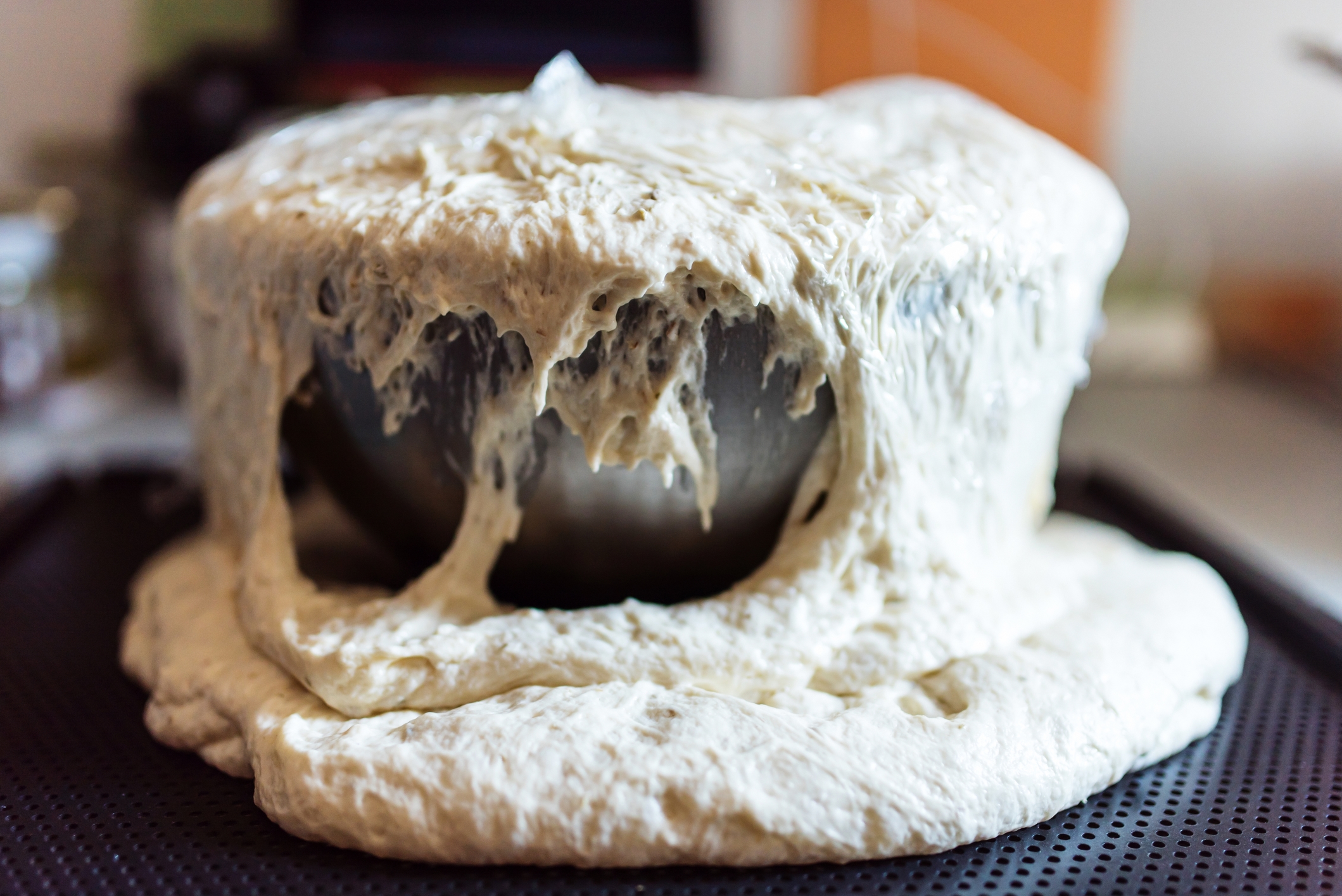
The Hebrew word for sour is related to chametz, leavened grains. Fermented breads in the ancient world were all sour dough types. Most often leavened grains (chametz) are figurative of the small foreign agents multiplying rapidly to puff up a person in pride or other sin. This makes one sour or defiled. Closely linked to this notion is the sense of sight, as one is to be watchful of the kneading bowl and thoroughly inspect the house during the days of Unleavened Bread. As Paul says, just a little leaven will infect the whole lump of dough![9]

1Cor. 5:7-8 (NASB)  Clean out the old leaven so that you may be a new lump, just as you are in fact unleavened. For Christ our Passover also has been sacrificed.  8  Therefore let us celebrate the feast, not with old leaven, nor with the leaven of malice and wickedness, but with the unleavened bread of sincerity and truth.
© Catalina Zaharescu Tiensuu | Dreamstime.com

There is no mistaking that Paul is comparing the sourness of leaven to the actions (and words) of people in the context of the chapter above. The people he references are believers, not those lost to the world. Recall the original Passover and Unleavened Bread. Israel’s first stop was Marah with its bitter waters. If one fails to search out the leaven of the heart, the sour chametz will puff up like the chest of a wild beast of the field to create wickedness and eventually bitterness among even the Household of God. What’s the remedy?

1Cor. 5:11 (NASB) But actually, I wrote to you not to associate with any so-called brother if he is an immoral person, or covetous, or an idolater, or a reviler, or a drunkard, or a swindler—not even to eat with such a one.

Hopefully, being removed from the camp will spring up a well of repentance in such a person’s heart. Regardless, the yeast infection is stayed from infecting the rest of the local body. Our duty is to daily examine our own hearts for the sourness of pride. The indicators (fruits) are a dead giveaway as to what is truly growing in the soil. Check for the sweet attributes of the fruit of the Holy Spirit, and remove what doesn’t belong. In Psalm 34, David tells us to taste and see that the LORD is good. Taste, in order to “see” properly. This is also true for our words. Taste your words before you spit them out. Don’t let the putrid smell of decaying flesh be on your breath. May your lips drip with the fragrant honey of the Word and fruit (words and action) of the Spirit.

Salty

Lev. 2:13 (NASB)  ‘Every grain offering of yours, moreover, you shall season with salt, so that the salt of the covenant of your God shall not be lacking from your grain offering; with all your offerings you shall offer salt.

Eliminate salt from your diet and discover how mundane and boring eating and tasting can become. Salt adds life and delight to any type of food; even the best dessert needs a pinch of salt to bring out the richness and sweetness. Salt CHANGES the taste of food (it never works the other way around). It makes food and drink palatable and yummy. All sacrifices are offered with salt. Salt was not only a great commodity in the ancient world, but was a symbol of covenant in the near east.[10] Salt and a meal between families bound them together.

Too little salt and the taste is not as appealing. Too much salt, and something can hardly be swallowed, and can even result in poisoning. But with the right amount, flavor bursts in the mouth causing delight. This is what we are to be to other people; the thing that causes them to rejoice and crave more.

Col. 4:5-6 (NASB) Conduct yourselves with wisdom toward outsiders, making the most of the opportunity.  6  Let your speech always be with grace, as though seasoned with salt, so that you will know how you should respond to each person.

© Jiri Hera | Dreamstime.com

Salt is a great cleanser and food preservative. It prevents decay and kills many harmful bacteria. Interestingly, Elisha purified the waters in Jericho with salt. (2 Kings 2) The bottom line is that salt can kill or heal. We must discern a healthy amount to use both literally and figuratively. Messiah said:

Mat. 5:13 (NASB) “You are the salt of the earth; but if the salt has become tasteless, how can it be made salty again? It is no longer good for anything, except to be thrown out and trampled under foot by men.

Salt also causes thirst. Our speech should cause others to hunger and thirst for righteousness, not suffer dehydration. Living Waters are to flow like a river from our innermost being. This IS the Holy Spirit, a river of Life and of Eden. If we have become salt that is no longer salty, or a pillar of salt that continually longs for the world, there is no life. We are a dry well. May Abba cast such a one into His watery refining fires of cleansing and renewal. May He sprinkle fresh water upon your soul.

Ezek. 36:24-27 (NASB)  “For I will take you from the nations, gather you from all the lands and bring you into your own land.  25  “Then I will sprinkle clean water on you, and you will be clean; I will cleanse you from all your filthiness and from all your idols.  26  “Moreover, I will give you a new heart and put a new spirit within you; and I will remove the heart of stone from your flesh and give you a heart of flesh.  27  “I will put My Spirit within you and cause you to walk in My statutes, and you will be careful to observe My ordinances.

Asher

Taste and see! In conclusion, there is one last association for the month of Shevat that ties into the theme of taste. The tribe of Shevat is Asher. Asher means to be happy, blessed, to advance and walk straight. Perhaps Jacob and Moses’ blessings over this son and tribe will have a deeper meaning considering the faculty of taste just explored.

Gen. 49:20 (NASB) “As for Asher, his food shall be rich (fat), And he will yield royal dainties.”

Dt. 33:24-25 (NASB)  Of Asher he said, “More blessed than sons is Asher; May he be favored by his brothers, And may he dip his foot in oil.  25  “Your locks will be iron and bronze, And according to your days, so will your leisurely walk be.

Asher’s food (fruit) is fat and rich, a feast fit for a King and his court. He is a picture of one that offers the thirsty, hungry, and battle weary true refreshment. He spreads happiness and revitalizes the weak. This is how he yields “royal dainties.” He serves from the King’s table. Does this remind you of the wedding supper of the Lamb?

Moses, through the inspiration of the Ruach HaKodesh, blesses the tribe of Asher last. He is the eleventh-hour tribe (of the eleventh month). Moses says Asher is the MOST blessed of the sons. When his fruit is pressed (tested), his walk (foot) is revealed to be dipped in the sweet oil of the Holy Spirit. Verse 25 above uses the English word “locks” to describe the Hebrew word man’al, meaning sandal or shoe latches or the thing that secures one’s shoes. To have your “feet shod with the preparation with the Gospel of Peace,” remember the happiness of Asher. (Eph. 6:15)

Is. 52:7 (NASB)  How lovely on the mountains Are the feet of him who brings good news, Who announces peace And brings good news of happiness, Who announces salvation, And says to Zion, “Your God reigns!”

Asher is a reminder of the happiness to come in the fullness of the Kingdom of God and his banquet table of royal dainties. Asher has the oil from holy trees that others come to “purchase.” His delicacies make him favored among the brethren because they can “taste and see” the richness of the Holy Spirit in the actions and words that drip like oil and honey from his lips. They are a balm of healing and delight, a reminder of the King’s Table. May you be like Asher as a holy tree of life, and not the Asherim of deaf and dumb idols.

May this new month bring renewal and blessings upon you and your households. May it truly be a New Year for Trees (people) in your assemblies. May your tongue be used as a wise discerner of truth. May you be happy like Asher with the richness of the bread (Word) of God, and may you yield a banquet fit for the King and His Kingdom.

© Costin79 | Dreamstime.com


Update: After reading this article, a dear reader sent me the following song by Andrew Peterson. It’s called “The Sower’s Song.” I can’t express the magnitude of how much Adonai is glorified in it! Enjoy!


[1] The word Shevat (שְׁבָט) is also phonetically related to Shabbat (שַׁבָּת). The letters tet and tav, both letters of the tongue, can be interchangeable.

[2] http://www.monell.org/news/fact_sheets/monell_taste_primer

[3] http://jcb.rupress.org/content/jcb/27/2/263.full.pdf

https://www.ncbi.nlm.nih.gov/pmc/articles/PMC4647210/

[4] Learn more here.

[5] Flavor is a combination of taste plus smell, which is how your brain registers scent when you  eat something. I hope to explore flavor and smell in a later in post.

[6] For example, see: Dt. 20:19, Is. 65:22, Jer. 17:8, & Psalm 1

[7] See also James 3 on the tongue.

[8] Consider Jonah 3:7

[9] 1 Cor. 5:6-8, Gal. 5:9

[10] For more on this see Clay Trumbull’s Salt Covenant.
Categories: Biblical Symbols, new moon, Study Helps | Tags: , , , , , , , , | 16 Comments

The Biblical Role of Women Part IX

Role of Women Main Page

Builder or Destroyer?

In Part VIII, we looked at how men are the strong foundation of the House, but our focus was on women as “builders.” A woman builds with the Holy Spirit of Binah or understanding –discernment. (Is. 11:2) She builds upon the firm foundation of the Word, the Son of Man, and her husband. Once again, here is the Proverb’s verse that speaks to this:

The wise woman builds her house, But the foolish tears it down with her own hands. (Pr. 14:1)

Before we look at the first builders of the Torah and the Gospel, I would be remiss if I didn’t deal with the second half of this verse in Proverbs. If a woman is not a builder of the house, she can only be one other thing — a fool that “tears the house down with her own hands.” I’ve mentioned the duality found in the female before. Dr. Alewine deals with this concept extensively in her Creation Gospel workbooks.

In the Bible, we are often faced with two women, one righteous and one wicked. A Bride and a Harlot. The problem is that as humans, we have a difficult time discerning which is which. These women are easy to confuse if we are ignorant of the written Word, are immature in the faith, or if we operate in pride. (That latter one is nearly inescapable; we must diligently search our hearts for pride.)

But do not be deceived! Even a sincere follower of the God of Israel can confuse the two — just ask Judah about Tamar. One very important concept that will help us to grasp the difference between the two is to realize that when we are acting contrary to the Word of God, we ARE the harlot. It also may be helpful to research the term “harlot” in a concordance. Most of its references are used to refer to God’s wayward people. And much of the time, the people actually believed that they were righteous —everything was “okay” in their own eyes. We become the fools if we think it is any different for us today.

I believe this why our verse in Proverbs refers to the woman that “tears down” her house as a fool. She doesn’t realize what she is doing. A woman that tears down is actually a destroyer. Does this indicate who her master might be? It definitely reveals what “spirits” light her lamp. They are the seven abominations of Proverbs 6:16-19. If I’ve learned anything from studying the seven Spirits of God and the seven abominations, it is this: our hearts are desperately wicked. We are ALL capable of operating in the wicked lamp. (Pr. 6:16-19) Our “good intentions” can often just be a cover so that our flesh can get what it desires. But wisdom is still calling from every corner. She knows the Way to our freedom.

“Wisdom has built her house, She has hewn out her seven pillars.” (Pr. 9:1)

Wisdom’s seven pillars are the seven Spirits of God and the seven Holy Moedim (feasts). If you want to know what fuels your lamp, you must take an honest look at your own heart. This exercise must be an ongoing endeavor. The moment we think we’ve “arrived” or have it all figured out, is the moment pride (the first wicked spirit) has entered our hearts. Both the harlot and the righteous woman (wisdom) call to us daily. We must learn the difference between the two. One appeals to your desires, your lower nature. Her call is very pleasing and can be good. But like the tree of knowledge of good and evil — she cannot produce LIFE.

Keep the notion of the woman being a contranym (a word that can mean its own opposite) at the forefront of your mind. We will continue unpacking the duality of the woman throughout this series. For now, remember that as a woman you are either a builder or a destroyer. Men do not get to escape this duality, because both men and women are found within the woman, the wife, the harlot, the virgin, or the bride. At the end of our days, we will be revealed as righteous or wicked.

There is one other important point to grasp in this duality. It is not happenstance that God compares His people to a “woman.” Both men and women are meant to deal with the body like a mother deals with an infant. If tender mercies and nurturing the immature fails to shine through our Torah keeping, then we are not “builders.” How many young (new-to-Torah) in the faith have been “destroyed” by Torah terrorists? I suspect far too many. These “terrorists” may have a lot of “knowledge,” but they do not operate with the Holy Spirit of Da’at (sacrificial love). The Holy Spirit of Da’at is willing to die for wayward sheep like Moses and Yeshua. (Ex. 32:32; Rom. 5:8) The righteous or unrighteous stance of the people isn’t what mattered. They were willing to die for those even in their sin. The question is: are you?

How far are you willing to go? Will you leave the 99 sheep to rescue the one? Can you reserve judgment when necessary? Do you know the difference? There is not a black and white answer to these questions. God is love. Binah (the Spirit that builds the House) requires you to discern the difference between compromise and love. Our lower (nephesh/flesh) nature will choose judgment and justice over mercy every time. It likes to point the finger. It secretly relishes in condemning others. It’s much easier to be a destroyer. But beloved, you are called to build! You can be LONG suffering and merciful without compromising, never let anyone tell you any different.

If you struggle with your past, bad circumstances, pain, contentment, depression, self-pity, or the like, my article  Repairer of the Breach will offer some realistic solutions to repair or rebuild what has been breached.

Key #1 You are either a builder or a destroyer of God’s House. 
Often, the difference is difficult to discern.

Women, the First to Receive the Torah?

Interestingly, in Jewish tradition and understanding, the women were the first to receive the Torah from Moses.[1] Their reasoning is two-fold. First, notice how the Torah words the following verse:

Moses went up to God, and the LORD called to him from the mountain, saying, “Thus you shall say to the house of Jacob and tell the sons of Israel:” (Ex. 19:3)

The Sages explain that the phrase “house of Jacob” refers to the women; whereas, the “sons of Israel” refers to the men. Based on what we discovered in Part VIII, you should be able to discern with a Hebraic lens why they make this inference from the text. Women are associated with the HOUSE. But, why would the Torah reference the women before the men? Ah, that’s the other side of their reasoning and there are conflicting opinions as to “why” this is so. Below, is an example from Mechilta on Exodus 20:1.

G-d told Moses to relate the “general principles” of the Torah to the women, and its “exacting particulars” to the men. The woman relates to the Torah’s all-inclusive essence, while the man relates to the detail, specific law and particular applicationMoses went to the women first because the Torah’s revelation unfolds from the general to the particular, from the supra-spatial point of concept to the breadth and depth of the law.

Pay very close attention to the bolded print from the above quote. The Sages believe that the women received the Torah first because there is a natural process of how people learn and grow. In Part VIII, we essentially deduced the same conclusion. Babies (physical and spiritual) require their mother’s “milk” before they can eat the “meat” at the Father’s table. This in no way diminishes the intellectual capacity of women or their ability to eat meat for themselves. But what it does imply is that women are endowed with the unique ability to ingest MEAT and then transform it into a substance (milk) that can give a baby the nourishment it needs to thrive.

This natural/physical reality is also true in the spiritual realm. The writer of the Book of Hebrews, Peter, and Paul all mention the “milk” of the Word in the Brit Chadashah (N.T.). They associate those that need milk with immature infants. What makes it obvious that they are spiritual babies? Look at these passages:

And I, brethren, could not speak to you as to spiritual men, but as to men of flesh, as to infants in Christ. I gave you milk to drink, not solid food; for you were not yet able to receive it. Indeed, even now you are not yet able, for you are still fleshly. For since there is jealousy and strife among you, are you not fleshly, and are you not walking like mere men? (1 Cor. 3:1-3 NASB)

For though by this time you ought to be teachers, you have need again for someone to teach you the elementary principles of the oracles of God, and you have come to need milk and not solid food. For everyone who partakes only of milk is not accustomed to the word of righteousness, for he is an infant. But solid food is for the mature, who because of practice have their senses trained to discern good and evil. Therefore leaving the elementary teaching about the Christ, let us press on to maturity, not laying again a foundation of repentance from dead works and of faith toward God, of instruction about washings and laying on of hands, and the resurrection of the dead and eternal judgment. (Heb. 5:12 – 6:2)

Since you have in obedience to the truth purified your souls for a sincere love of the brethren, fervently love one another from the heart, for you have been born again not of seed which is perishable but imperishable, that is, through the living and enduring word of God… Therefore, putting aside all malice and all deceit and hypocrisy and envy and all slander, like newborn babies, long for the pure milk of the word, so that by it you may grow in respect to salvation. (1 Pet. 1:22- 2:2)

Spiritual babies haven’t learned how to allow the Spirit to rule over their nephesh (flesh). In other words, they are controlled by their feelings, emotions, and personal experiences (past). The evidence is found in outbursts of jealousy, anger, strife, malice, deceit, hypocrisy, envy, and slander. Emotion and personal feelings are king to a toddler, but they are also king to immature Believer.

Gen. 4:3-8 (NASB) So it came about in the course of time that Cain brought an offering to the LORD of the fruit of the ground. 4 Abel, on his part also brought of the firstlings of his flock and of their fat portions. And the LORD had regard for Abel and for his offering; 5 but for Cain and for his offering He had no regard. So Cain became very angry and his countenance fell. 6 Then the LORD said to Cain, “Why are you angry? And why has your countenance fallen? 7 If you do well, will not your countenance be lifted up? And if you do not do well, sin is crouching at the door; and its desire is for you, but you must master it.” 8 Cain told Abel his brother. And it came about when they were in the field, that Cain rose up against Abel his brother and killed him.

Cain was the firstborn son of Adam and Chavah. He is the archetype of the (firstborn) flesh nature of every human being, epitomized by jealous anger toward God and the second born son, Abel, which leads him to become the first murderer. One’s countenance  is their faces (paniym), plural. This is a Hebrew idiom for one’s emotions, which are revealed through many facial expressions.

It is very easy to become a destroyer when emotions rule one’s heart. A spiritual mother teaches one with a mindset of Cain, that if he/she does well (learns discernment, personal responsibility, and self sacrifice [da’at]), it will go well for them. But if they choose to persist in their “feelings” of unfairness, jealousy, and anger, sin will master them, leading to a literal or figurative murder.

The “milk” verses were written to encourage these babies to GROW, learn to OBEY, PRACTICE training their SENSES, and to seek after genuine love for the brethren. Once these precious ones learn (through practice) to overcome and tame the beast (their flesh), only then can they truly walk in the maturity of Da’at or sacrificial love.

According to the Rabbis, women have a natural ability to help these “babies” mature. If the details, particulars, and depth of the Torah is placed in the hands of the immature, judgment will be levied without the tender mercies learned by receiving the mother’s milk first. This brings destruction, not growth. Rabbi Yaakov Hillel, in Ascending Jacob’s Ladder, puts it this way:

“If you learn Torah, it will make you big. But in what it will make you big depends upon what you plant. If you plant seeds of good middot [character traits] Torah will make you a great tzaddik [righteous one]. If you don’t work on your middot [character traits], Torah will make you big — but you will be a big monster.” (Brackets and bolding mine.)

The middot are character traits. By studying and practicing the attributes of God, one learns to become more like Him. Without this type of intentional living, a disciple will live life based on animal-like instincts. But, from the beginning, God has ordained that we rule over this side of our nature. The Jewish exercise of building godly character traits is called mussar. I wrote a little introduction to mussar here.

The whole point of practicing mussar is to gain the upper hand over your nephesh (flesh). Rabbi Hillel already knows what those returning to Torah are just starting to understand: an immature (flesh ruled) person that learns Torah will grow, but instead of growing in righteousness (salvation), only his monster (beast) will get bigger.

This makes him a destroyer, not a builder. Mussar is practiced throughout one’s lifetime. As a human, your lower nature will always seek the upper hand. But, if you do well, shall you not be accepted? and if you do not well, sin lies at the door. And to you shall be his desire, and you shall rule over him. (Gen. 4:7)


Key #2 The Torah was first received and taught by the women, 
the House of Jacob.
Key #3 Learning Torah will make you big. 
Will you be a big tzaddik or a big monster?

Women, the First to Proclaim the Gospel?

It is important to note right here that my pointing out or alluding to women being the “first” (at anything) is in no way meant to disparage men or their role. God has painted a masterpiece with the two genders. Sadly though, we often miss the true beauty of His work because we constantly want to separate what He has meant to be ONE. (Unified)

Both men and women are revealed in “the woman” in the Bible. (Think: wife, bride, virgin.) For century after century women have been oppressed and silenced. If this is true in the natural, then it is also true in the spiritual realm. By living according to the design of the Creator instead of perpetuating the curse, women are elevated to their coequal status with men. In this process, men are edified and made whole in ways that we never imagined. The bottom line is that if women are bound, then men (as the other half) are also bound.

The Bible is full of stories and parables that hint at this “hidden” reality. The Holy Spirit is revealing these things in our day because the time is short. One little nugget that opens up this truth is to simply look at the gospels anew. This time, pay very close attention to the women.

It was the women who first proclaimed the good news of “He is Risen!” I reblogged a post by Jane Diffenderfer on this very topic called: Firstfruits and the Women Who First Preached the Good News.  I encourage you to read it.

Why does it matter that Yeshua entrusted women with the gospel first? Does it have any significance? After all, even the disciples didn’t “believe” the report of the women, so why should we? Are women unreliable witnesses? Are women prohibited from proclaiming the Good News? Did Yeshua make a mistake by giving this vital message to the women first?

We must answer these questions. Your tradition, upbringing, culture, and personal opinions about the proper role of women (and men) will be reflected back to you if you honestly seek the answers from the Word of God. You will find yourself either aligned with the Word or aligned with what you want the Word to say. And then, you have to answer one last question: What is it that I fear will happen if women are coequal with men?

I’ve witnessed men actually leave the room when a woman gets up to bring forth the Good News to the assembly. They really believe that it is sinful to listen to her. But isn’t that exactly what the disciples did with the report of the women from the tomb? By not listening to these women, they remained in unbelief UNTIL Messiah Himself appeared to them. One thing is certain: Yeshua charged the women first to proclaim the Good News! Carefully read His words and then consider the reaction of His disciples:

Now after He had risen early on the first day of the week, He first appeared to Mary Magdalene, from whom He had cast out seven demons. She went and reported to those who had been with Him, while they were mourning and weeping. When they heard that He was alive and had been seen by her, they refused to believe it. (Mark 16:9-11)

I believe that everything Yeshua did was intentional. He consistently challenged tradition and cultural norms. He wasn’t surprised that the women were the first to find the empty tomb, and He certainly didn’t make a mistake by entrusting them with the Gospel. The message He gave to the women was meant to reveal the hearts of His disciples. Notice that Mary Magdalene had had SEVEN demons cast from her. Could these have been the seven wicked abominations of Proverbs 6: 16-19? Regardless, she was a new creation through Messiah Yeshua, yet the disciples refused to believe her report. Here is the same account from Luke:

And as the women were terrified and bowed their faces to the ground, the men said to them, “Why do you seek the living One among the dead? He is not here, but He has risen. Remember how He spoke to you while He was still in Galilee, saying that the Son of Man must be delivered into the hands of sinful men, and be crucified, and the third day rise again.” And they remembered His words, and returned from the tomb and reported all

Photo by salia on Unsplash

these things to the eleven and to all the rest. Now they were Mary Magdalene and Joanna and Mary the mother of James; also the other women with them were telling these things to the apostles. But these words appeared to them as nonsense, and they would not believe them. (Luke 24: 5-11)

I wonder how many treasures YHWH has entrusted to His daughters that men have considered nonsense throughout the centuries? History does repeat itself, and there is nothing new under the sun. My hope is that by reconsidering these two accounts in the Gospels that it has pricked your heart to reevaluate the numerous other accounts in the Bible regarding women. The last thing we would desire is to not believe a report given by our Master because we deem the vessel of His choice unworthy or less than optimal.

It’s time to build and not destroy. We each have various materials, textiles, and tools to build up the House of Adonai. All are needed.


Key #4 The Gospel was entrusted to the women first, 
but the apostles failed to believe their report.

Part X and the Repairer of the Breach. You can access past articles in this series here.

Recap of the four keys in this post:

Key #1 You are either a builder or a destroyer of God’s House. Often, the difference is difficult to discern.

Key #2 The Torah was first received and taught by the women, the House of Jacob.

Key #3 Learning Torah will make you big. Will you be a big tzaddik or a big monster?

Key #4 The Gospel was entrusted to the women first, but the apostles failed to believe their report.


[1] See this “Ask Moses” article for more information: http://www.askmoses.com/en/article/108,2217159/Ladies-First.html#articlepageinformation:

Categories: Women | Tags: , , , , , , | 11 Comments

The Biblical Role of Women Part VIII

IMG_2794

Role of Women Main Page

It’s been a while since I’ve written under this title. Actually, I had planned to leave the original series with seven posts; but further study and the popularity of this series, has led me to conclude two things:

  1. The Creator, in these latter days, is restoring the role of women to HIS original design.
  2. Women are desperately seeking the freedom to live out their God-given purpose within the perfect and holy boundaries of the Torah (Bible).

I’ve received many emails in regard to my original seven posts. Some were cries of elation and jubilation at the prospect of real freedom and balance. Others were notes of skepticism or a fear of women taking over the assemblies. And a few were a mixture of both, but with a heart set on openness — a sort of  “let’s wait and see.”

In light of this, I am compelled to continue with this series. While I certainly don’t have all the answers (in fact, I have more questions than anything else) I do have a heart to share my journey with you.

Woman, Builder of the House

 The wise woman builds her house, But the foolish tears it down with her own hands. (Pr. 14:1)

 Have you ever thought of yourself or the women in your life as “builders?” I imagine that most of us naturally think of men when construction comes to mind. After all, they are usually our contractors, carpenters, plumbers, and electricians. But, in Biblical and Hebraic thought, it is the women that build the House of Israel. Let’s once again consider the story of Ruth. Notice the words that the people and the elders at the city gate use when they bless the union of Ruth and Boaz:

 All the people who were in the court (gate), and the elders, said, “[We are] witnesses. May the LORD make the woman who is coming into your home like Rachel and Leah, both of whom built the house of Israel; and may you achieve wealth in Ephrathah and become famous in Bethlehem. (Ruth 4:11)

© Harshit Srivastava
| Dreamstime.com

While men may be the primary builders of physical houses, women build the house of their husbands and the House of the LORD. Obviously, men play a very important role in this process as well, but our focus is to explore how it is that women build. Do you recall how YHWH created the woman? In Part I, we looked at how YHWH formed/molded Adam. (He literally came from the dust of the earth.) In the beginning, both man and woman were within the one Adam.

In the eyes of the Creator, this wasn’t good or tov. So, you know the story, He took a rib from Adam and built (banah) Chavah (Eve). As a quick aside, notice that she came from his SIDE, not his feet where she would be “beneath” him. Nor did she come from his head, implying that she would be “above” him. She came forth from Adam’s side (tsala) as a perfect and coequal partner.

YHWH built Chavah. This Hebrew word for build, banah, is the same word used in both of the verses I quoted above in Proverbs and Ruth. The one who was built is the one who builds. She does this in several ways that I will enumerate shortly. But in order to grasp why this is true, we must first remember God’s design and function for women. In Part V, we discussed that women are a living parable of the Holy Spirit. Likewise, men will reflect the characteristics of our Heavenly Father. Together, they are conformed into the image of Yeshua. But as I’ve mentioned multiple times, God is One. Thus, we are NOT trying divide God into male and female. However, the ONE God did sovereignly choose to reveal Himself in ways that our little peon brains can understand.

What do we see in the witness of Creation? Nearly every creature on earth comes together as male and female to produce life. The natural things are meant to teach spiritual truths. (I Cor. 15:46) Therefore, it should not be surprising that in Hebrew, the Holy Spirit and all of His manifestations are in the feminine. Likewise, all the references to God being our Father and Husband are masculine. The One true God is neither male or female, He is a Spirit. But in order for finite humans to reflect His magnificence, it takes both a male and female.

I only belabor this point because there are some that think it is evil or some type of goddess worship to refer to God in the feminine. This is a result of ignorance of the Hebrew language. People fear what they do not understand and they like to throw stones at those that challenge the high places of their minds (tradition). Many false gods are male; does this make referring to God in the masculine something akin to Baal worship? Of course not, but the converse is also true.

To take a line from Brad Scott, if we would just look outside our window to see the natural everyday things of Creation, many of our theological debates could finally be put to rest. The natural IS a picture of the spiritual. Moreover, Scripture declares that God’s Creation does indeed testify of His power and divine nature:

For since the creation of the world His invisible attributes, His eternal power and divine nature, have been clearly seen, being understood through what has been made, so that they are without excuse. (Rom 1:20)

 In order to build and not “tear down,” a woman must walk in the Seven Spirits of God (Is.11:2). Wisdom is the first of the seven, which implies raw materials, innocence, immaturity, and potential. English speakers usually think of knowledge as the building blocks to wisdom; but in Hebrew, wisdom comes before knowledge. Wisdom leads one to the maturity of knowledge. Knowledge (da’at) is self-sacrificing, intimate, and capable of reproduction. (See the Creation Gospel for a more in depth analysis of the Seven Spirits of Adonai. Or click here for an audio introduction)

The second Spirit is binah or understanding. (Is. 11:2) Binah takes the raw materials of wisdom and begins to separate and distinguish like kind. In other words, binah begins to banah (build). As you’ve probably guessed, the Hebrew root of banah has the same consonants as the word binah. You can think of binah as organizing and counting the costs for a home construction. It is in this spirit that a woman builds.

 Key 1: A woman begins to build with the spirit of binah,
 -- the spirit that separates and discerns.

Upon What Does She Build?

Pro 4:5-9 (NASB) Acquire wisdom! Acquire understanding! Do not forget nor turn away from the words of my mouth. 6 Do not forsake her, and she will guard you; love her, and she will watch over you. 7 The beginning of wisdom is: acquire wisdom; and with all your acquiring, get understanding. 8 Prize her, and she will exalt you; she will honor you if you embrace her. 9 She will place on your head a garland of grace; she will present you with a crown of beauty.

© Stephen Coburn
| Dreamstime.com

The Spirit of Binah compels a righteous woman to discern between good and evil. But without a strong foundation, she cannot expand the House. This is where her counterbalance (the male) becomes a necessity. Men and women were meant to work and labor together in marriage and in the assembly. Each is a part of the whole. The man, being the image of the Father, is like the woman’s rock or foundation stone.

Consider the Hebrew word for rock, eben. This word is pictographically the Father (av) and the Son (ben) put together. There is no firmer foundation than that! Any other foundation would be like building upon sand.[1] Upon this foundation, a woman begins to build the home of her husband. She guards the home against evil and expands the tent with fruit (children). She is a nurturer, comforter, encourager, teacher, and revealer – all qualities of the Holy Spirit.

In Biblical thought, the tent is expanded with the birth of sons. It is sons that go forth and carry on the name of their father. But the daughters are what build upon these firm foundations. We can see this in the natural with an analogy of human reproduction. A man provides the seed (Word). The seed finds the egg (pierced heart) and once united, life begins to grow or “build” inside the womb. Both the “works” of the male and the female are necessary for life. Dr. Alewine has some brilliant insight into the “choosiness” of women in this process. It seems as though the woman’s body uses the Spirit of Binah to discern whether and if an embryo will be carried to full term. (All without the conscious knowledge of the woman!)

To carry this analogy a step further, consider the millions of seeds (words) a man gives a woman to choose from. Out of what seems to be an infinite number of possibilities, she (usually) only picks one seed (idea/word) at a time. She then devotes her full attention to see it nourished, protected, and brought to maturity. Are you beginning to see how the Spirit of Binah operates?

A woman takes the unlimited possibilities and potential of a man and surrounds it like the Holy Spirit. She is the container for his strength, his seed. Together they build their house and the House of Adonai.

Dr. Diana Dye also has some great teachings on how a “woman builds.” You can find them here and here. She uses the imagery of the Tabernacle and Temple to further the analogy we’ve been building upon (pun intended). It’s quite a fascinating prospect. The very first letter of the Bible is an enlarged bet, the pictograph for a tent or house. From the very first letter of the Bible, the Creator has made known His intent and purpose in creating us and giving us His Word.

His top desire is to enlarge, expand, and BUILD His House. In my Father’s house are MANY mansions. The Holy Spirit went through great pains to carefully delineate how the Father’s House is to be constructed. Studying the Tabernacle and the Temple gives one a foretaste in not only how to approach the King, but in how to build (or rebuild) one’s body, family, and assembly. It’s really powerful.

For our purposes here, consider the fact that the House must be carefully maintained, repaired, cleaned, and at times, even rebuilt from the foundation up. This teaches one that our homes and our temples (bodies) will require this same diligent care. This might manifest in various areas and stages of child rearing, marriage building/counsel, financial/support/growth, or even physical/spiritual cleansing. Think of all the areas that are the “house.” Working from the inside out, this is your physical body, your family, your assembly, and the greater body of God’s people. Sometimes a demolition is what is necessary in order to rebuild upon the Rock. Do you need a fresh start? A clean slate? Remove everything that offends and rebuild; it’s never too late. Rebuild your marriage. Rebuild your relationship with that family member, coworker, or assembly leader. Restore the House.

Key 2: A woman builds upon the firm foundation 
of the man (especially the Son of Man).
Key 3: Sometimes the house must be rebuilt.

What Fills the House?

As a living example of the Holy Spirit, a woman will (usually) be what sets the tone for the atmosphere of the home, assembly, and workplace. Far more than men, women determine whether the house is filled with shalom or has a lack thereof. “If mama ain’t happy, ain’t nobody happy” is a saying that speaks a truth that has not escaped the masses. As a picture of the Holy Spirit, women are called to be long-suffering with their husbands, children, and the greater assembly. They are meant to be the ones that can bring correction and instruction with tenderness, sensitivity, and gentleness. This is the very reason that YHWH entrusts women with the most fragile of all human lives: infants.

Women are designed to lead, guide, and teach the immature with patience, love, and mercy. This physical picture is also true in the spiritual realm (think: spiritual babies). The lost, seekers, new believers, and those that haven’t grown past the formative years of the faith usually respond with growth (building) when the message is delivered with the tender mercies of the feminine aspect of God. Obviously, both men and women can operate with this quality through the empowerment of the Holy Spirit. However, the natural representation of this is revealed in the female.

The Holy Spirit is commonly said to be the “wooer” of our souls. It is gentle, merciful, and tender.[2] From the heart of the Most Holy Place, the Presence of God would fill the Tabernacle/Temple of God. This “Presence” is often referred to as the “Shekinah Glory,” another feminine term that expresses the One True God. We will look more closely at the Shekinah and other feminine aspects of Elohim in a later post. For now, let’s think of the correlation between the Holy Spirit filling God’s House and a woman filling her home with her presence. There is a reason that we say “a woman is the heart of the home.” Consider the Temple:

 Now when Solomon had finished praying, fire came down from heaven and consumed the burnt offering and the sacrifices, and the glory of the LORD filled the house. (2 Chron. 7:1)

 In a similar way, a woman will fill her house, but she will be tested in the matter of what “spirit” she fills it with. Will it be the Ruach HaKodesh or will it be another spirit? A woman must choose (it’s always a choice!) to walk as a victor over her nephesh (flesh), emotions, hormones, and circumstances. When you choose to be the “victim” instead of the “victor,” you are in effect stepping on the blood of Messiah. He has either provided the Way or He hasn’t. His grace is sufficient or it isn’t. I know it doesn’t always “feel” this simple. But the truth is that we always have a choice even in areas where we feel completely out of control.

Every time a woman is able to exercise self-control over her lower nature (flesh/nephesh), she reflects the image of God as she was designed. She becomes a holy witness to her husband, children, family, friends, and assembly. Like the Holy Spirit, her presence “woos” people to the Father. Under her tender care, the immature feel safe to explore, learn, and prosper. This stage is necessary for every believer in the God of Israel to grow into maturity. If they are built up as strong panels in the house by the Spirit, they understand (binah) why the flesh must be put on the altar (death). The Father’s instructions require maturity in the Spirit, because the letter kills (the flesh). This is liberty! And it produces humble and gracious vessels that desire to set other captives free.

 The Torah is spiritual, but we are carnal. (Rom. 7:14) In order to bring liberty to the captives, we must be free from bondage. Prisoners only propagate more prisoners. Thus, allowing the letter of the law to kill anything and everything but the flesh only leads to bondage or a “Torah Terrorist.” Flesh focuses on flesh, not the Spirit.

In order to be a (spiritual) light, one must allow people the freedom to grow into the Father’s commandments. This spiritual work of the Spirit is uniquely portrayed in the natural by the nurturing aspect of women. A woman builds the House…

 That our sons may be as plants grown up in their youth; that our daughters may be as corner stones, polished after the similitude of a palace. (Ps. 144:12 KJV)


Key 4: The Holy Spirit fills the House of Adonai. 
The woman fills her house with a “spirit” as well. 
A wise woman will build with the Holy Spirit 
which brings the liberty needed to grow and mature.

 The Voice of Wisdom

 Wisdom shouts in the street, She lifts her voice in the square; At the head of the noisy [streets] she cries out; At the entrance of the gates in the city she utters her sayings: “How long , O naive ones, will you love being simple-minded? And scoffers delight themselves in scoffing And fools hate knowledge? Turn to my reproof, Behold, I will pour out my spirit on you; I will make my words known to you. (Pr. 1:20-23)

  Turning toward the feminine voice of God (as manifested through His daughters) enables one to be filled with the Spirit. And, it makes the Father’s words to be made known unto us. In other words, there is intimacy, not just rules. The sixth Spirit of God is knowledge (Da’at). (Is. 11:2) It is a mature spirit of sacrificial love. No longer is the focus on what the Lamb has done for me, but what I am willing to do for the Lamb. In order to reach this place of maturity, a person must first learn to move through and with the first Spirit of Adonai, Wisdom (chokhmah).[3] Da’at is so intimate that it causes reproduction (both physical and spiritual). Knowing this should give one a deeper understanding (binah) of Yeshua’s words in Matthew.

 “Not everyone who says to Me, `Lord, Lord,’ will enter the kingdom of heaven, but he who does the will of My Father who is in heaven will enter. “Many will say to Me on that day, `Lord, Lord, did we not prophesy in Your name, and in Your name cast out demons, and in Your name perform many miracles?’ “And then I will declare to them, `I never knew you; DEPART FROM ME, YOU WHO PRACTICE LAWLESSNESS.’ “Therefore everyone who hears these words of Mine and acts on them, may be compared to a wise man who built his house on the rock.” (Mt. 7:20-24)

 Can you see both the masculine and the feminine clues in these verses? Look at these keys words.

Masculine:                         Feminine:

  • Fruit (seed inside)             Prophesy
  • Words                                  Hears
  • Action                                  Casting out demons
  • Father                                  Performing Miracles
  • Heaven                                Wisdom
  • Lord                                     Building
  • Rock                                     House

These verses strongly hint at how the House of the LORD is built with strength. How will it remain when the storms come? The House must be operating with both the masculine and the feminine working together. Only together, as one, can the true image of Elohim be displayed in the natural realm. That is where life comes forth. This is a House of Strength. The above example in Matthew is just one testimony of the truth that was birthed in the beginning.

 God created man in His own image, in the image of God He created him; male and female He created them. God blessed them; and God said to them, “Be fruitful and multiply, and fill the earth, and subdue it; and rule over the fish of the sea and over the birds of the sky and over every living thing that moves on the earth,” (Gen. 1:27-28)

Key 5: A woman filled with the Holy Spirit enables 
the immature to hear (know) the Words of Adonai.


Have you ever noticed that most of the denominations that are leery of (or against) the Spirit’s activity such as gifts and miracles are also usually against women operating in any “seen/outward” role in the home or assembly? Do you believe that this is a coincidence? The Holy Spirit is THE feminine expression of God. If natural women are silenced, is it surprising that the supernatural Spirit is also quenched? The Spirit (feminine) is what brings the intimacy of “I know you.” She is shouting from every corner; will we heed her voice?

But the converse is also true. Those that forsake the masculine, forget that the foundation IS the Word, the Rock. The Spirit doesn’t supersede the written Word. Ignoring what has been solidly penned beforehand for our instruction (Torah) is just as detrimental to “building.” Without the hard and firm masculine foundation, one builds on sand, as a mere “hearer” only. This is what it means to be a practicer of “lawlessness.” How many assemblies do you know of that embrace the works of the Holy Spirit on the one hand, but speak evil of the law (Torah) on the other?

Without the balance of the Father’s instructions, one can become intimate with an unholy spirit. This spirit may imitate what is holy unto YHWH, but in reality only comes to steal, kill, and destroy. Only by building upon the foundation of “it is written,” will one be able to discern (binah) the difference between the harlot and the righteous woman.

 Balance is the answer. Working SIDE by SIDE as male and female, we reflect the image of Elohim. Real godly fruit increases and the tent (House) expands. The WISE woman (Bride) builds her house…

In Part IX, we will take this building aspect of women one step further by looking at those that FIRST received the Torah and the Gospel.

Here is a recap of the  5 Keys:

 Key 1: A woman begins to build with the spirit of binah — the spirit that separates and discerns.

 Key 2: A woman builds upon the firm foundation of the man (especially the Son of Man).

Key 3: Sometimes the house must be rebuilt.

Key 4: The Holy Spirit fills the House of Adonai. The woman fills her house with a “spirit” as well. A wise woman will build with the Holy Spirit which brings the liberty needed to grow and mature.

Key 5: A woman filled with the Holy Spirit enables the immature to hear (know) the Words of Adonai. Like the Holy Spirit, she brings intimacy to the relationship.


For previous articles click here; the next article in this series is Part IX.


[1] Mt. 7 and Lk. 6. Interestingly, the context of Yeshua’s parable is about being both a hearer and a DOER of His Word. This same message is repeated in the Proverbs 4 chapter that I suggested for you to read.

[2] But like a concerned mother, the Holy Spirit can also manifest with great power and fierceness. We will look at this aspect of the Spirit in a later post.

[3] See Isaiah 11:2 and The Creation Gospel workbook one by Dr. Hollisa Alewine.

Categories: Women | Tags: , , , , , , , , | 10 Comments

The Teaching of Balaam

This article was originally a Torah commentary. Because of the flow of the story, it actually involves three portions, Balak, Pinchas, and Mattot. You can see all the scripture references in this footnote.[1] The entire focus of this study is on the Teaching of Balaam. Thus, I felt it was better suited as topical article. I fully believe that the teachings of Balaam are alive and well in our assemblies and we are unaware. My desire here is to look at what the Word has to say on this subject so that we are empowered to remove this wickedness from our own hearts and assemblies. Those of you familiar with Dr. Alewine’s Creation Gospel model will also find this article helpful as it is the foundation behind my thinking.

The Story

Near the holy place, where the Ark dwelt, an Israelite sees a beautiful woman. Her eyes tell him everything he wants to know. He approached her; and as they say,

© Maryna Kriuchenko | Dreamstime.com

the rest is history.” Out of nowhere, a holy man named Pinchas bounds toward the couple with a spear raised high in the air. The couple, already in the throes of passion, doesn’t even see him coming. Pinchas releases the spear with great force and it skewers the couple like a human kabob; first the Israelite and then the woman beneath his naked body. The deadly plague grinds to a halt and the masses are spared.

Torah portion Balak ends like the scene out of a graphic action/drama movie. It’s pretty explicit, but that’s exactly how the drama is presented to us in the Hebrew text. This Bible story is definitely for mature audiences only!

Yet this brazen act by Pinchas not only stayed the plague that had broken out on the people, but earned him a permanent covenant of peace and a covenant of perpetual priesthood before YHWH. Wow. The seriousness of the peoples’ sin is illustrated by the harsh and detailed judgment mete out by Pinchas. Thankfully, we know who and what placed Israel in this position. Balaam could not curse what YHWH had blessed, but he sure knew how to work around the system or find the loopholes.

If you only read parsha Balak, it may not be very clear exactly what the prophet Balaam did that was horrible enough to earn him a name that is forever associated with wickedness. (Micah 6:5, 2 Peter 2:1-22, Jude 11, Revelation 2:14-15) After all, YHWH did let Balaam go to Balak and he only blessed the Children of Israel. Surely, there is more to this prophet than hearing a talking ass. So, what happened? We learn the rest of the story two portions later in Mattot.

Num. 31:15-16  And Moses said to them, “Have you spared all the women?  (16)  “Behold, these caused the sons of Israel, through the counsel of Balaam, to trespass against the LORD in the matter of Peor, so the plague was among the congregation of the LORD.

At some point in his dealings with Balak, Balaam gave him some wicked advise. The fees for divination and recognition are indeed a mighty snare. Balaam found a way (so he thought) to have his cake and eat it too. Balaam could truly hear the voice of YHWH, but he did not fear or reverence the Holy One. He obviously told the Midianite king how to get around the Word of YHWH. What do you do when you want to curse what God has blessed? You put a stumbling block before the other person’s feet; a temptation that is almost irresistible. And there has never been a greater temptation for a man than a scintillating woman.

Causing a brother or sister to stumble, especially on purpose, is equivalent to high treason in YHWH”s economy. Balaam may have earned the respect and the wealth of a pagan king, but YHWH brought judgment to his door rather swiftly. Again from Torah portion Mattot:

Num. 31:8  They killed the kings of Midian along with the rest of their slain: Evi and Rekem and Zur and Hur and Reba, the five kings of Midian; they also killed Balaam the son of Beor with the sword.

Jos 13:22  The sons of Israel also killed Balaam the son of Beor, the diviner, with the sword among the rest of their slain.

The Israelites ended up killing Balaam with the sword. Now, let’s fast forward all the way to Book of Revelation. Yeshua has some interesting things to say to the assembly at Pergamum.[2] This is a little lengthy, but I urge you to read each verse and notice the parallels of word usage.

Rev 2:12-17  “And to the angel of the church in Pergamum write: The One who has the sharp two-edged sword says this:  (13)  ‘I know where you dwell, where Satan’s throne is; and you hold fast My name, and did not deny My faith even in the days of Antipas, My witness, My faithful one, who was killed among you, where Satan dwells.  (14)  ‘But I have a few things against you, because you have there some who hold the teaching of Balaam, who kept teaching Balak to put a stumbling block before the sons of Israel, to eat things sacrificed to idols and to commit acts of immorality.  (15)  ‘So you also have some who in the same way hold the teaching of the Nicolaitans.  (16)  ‘Therefore repent; or else I am coming to you quickly, and I will make war against them with the sword of My mouth.  (17)  ‘He who has an ear, let him hear what the Spirit says to the churches. To him who overcomes, to him I will give some of the hidden manna, and I will give him a white stone, and a new name written on the stone which no one knows but he who receives it.’

What sort of judgment comes to our door when we go the way of Balaam? A quick and piercing double edged sword. The sword of Truth is in Yeshua’s mouth; it is the Holy Word of God.

Heb. 4:11-12  Therefore let us be diligent to enter that rest, so that no one will fall, through following the same example of disobedience.  (12)  For the word of God is living and active and sharper than any two-edged sword, and piercing as far as the division of soul and spirit, of both joints and marrow, and able to judge the thoughts and intentions of the heart.

The corrupt couple was pierced by the Word of YHWH (sword) by the hand of Pinchas. Balaam received the same judgment as those he placed a stumbling block before and it came swiftly. There was no mercy for either party. Wow, that all sounds so harsh. I’m not writing to put an unholy fear in your bones, but to point out the actual sin and penalty that occurred in these portions. The Holy One included quite few verses warning us about the teaching of Balaam; therefore, His desire is that we learn from these examples in order to avoid this type of judgment.

So, what did Balaam teach?

Yeshua says he taught the people to “eat food sacrificed to idols and to commit acts of immorality.” Fortunately, we have more clues given to us in 2 Peter and Jude.

2Pe 2:15-17  forsaking the right way, they have gone astray, having followed the way of Balaam, the son of Beor, who loved the wages of unrighteousness;  (16)  but he received a rebuke for his own transgression, for a mute donkey, speaking with a voice of a man, restrained the madness of the prophet.  (17)  These are springs without water and mists driven by a storm, for whom the black darkness has been reserved.

Balaam wanted a REWARD. He had a problem with a lust for recognition and wealth. This lust caused the prophet to try and profit off the people of YHWH. Let’s look at the metaphors that Peter uses to describe the followers of Balaam. What is a spring without water? It is a natural well that fails to give forth the waters of Life. Wells, springs, and water are all idioms for the Holy Spirit, Wisdom, and the righteous woman (Bride). In other words, there is indeed a spirit at play here; it’s just not the Holy Spirit. It brings death rather than life. Mists driven by a storm gives us a similar picture. Jude uses equivalent expressions in his warning; thus, the action/spirit we are to avoid is definitely cohesive in the minds of the writers of the Holy Bible.

Jude 1:11-13  Woe to them! For they have gone the way of Cain, and for pay they have rushed headlong into the error of Balaam, and perished in the rebellion of Korah.  (12)  These are the men who are hidden reefs in your love feasts when they feast with you without fear, caring for themselves; clouds without water, carried along by winds; autumn trees without fruit, doubly dead, uprooted;  (13)  wild waves of the sea, casting up their own shame like foam; wandering stars, for whom the black darkness has been reserved forever.

Again, we see that reward or pay is what drives the spirit of Balaam. But what is scary is that these followers of Balaam are not outside the assembly; they are in the midst of even our feast celebrations! These people lack sacrificial love and only really care for themselves. Like Peter, Jude compares them to something that should bring life and water, but they do not. They are “clouds without water”. Instead of being driven by the wind of the Ruach HaKodesh, they are powered by another wind/spirit. Thus, they are incapable of producing holy fruit. They are not the “stars” of Abraham’s seed; in fact, they are the tares among the wheat — ready to be burned and reserved for black darkness.

So, if all this is true, we should be able to pick a follower of Balaam out in heartbeat, right? Wrong. If it were that easy, there would be no need for all the warnings given to us in Scripture. I believe there is a very specific reason why it is so difficult. And, most of you won’t like my answer. The difficulty we have, or you might say our lack of discernment in this area, is because we each struggle with the same temptations that are encompassed in Balaam. I will let Jude explain:

Jude 1:14- 19 (14)  It was also about these men that Enoch, in the seventh generation from Adam, prophesied, saying, “Behold, the Lord came with many thousands of His holy ones,  (15)  to execute judgment upon all, and to convict all the ungodly of all their ungodly deeds which they have done in an ungodly way, and of all the harsh things which ungodly sinners have spoken against Him.”  (16)  These are grumblers, finding fault, following after their own lusts; they speak arrogantly, flattering people for the sake of gaining an advantage.  (17)  But you, beloved, ought to remember the words that were spoken beforehand by the apostles of our Lord Jesus Christ,  (18)  that they were saying to you, “In the last time there will be mockers, following after their own ungodly lusts.”  (19)  These are the ones who cause divisions, worldly-minded, devoid of the Spirit.

I don’t know about you, but I’ve ran into many grumblers, fault finders, and divisions in those groups returning to YHWH’s Torah. As a matter of fact, I have to admit that in my earlier years of this walk, I even participated in such things all in the name of holiness. I know it’s terrible, but it’s the sad truth. At the time, I would have thought I was anything but a follower of Balaam!

What I have learned (and often write about) is this very dichotomy between the Truth and a Lie. Between a man and the beast. Between the harlot and the righteous woman. Between the Spirit and the flesh/evil inclination or a wicked spirit. Between a Prophet and a Diviner. Between a Sheep and Goat. Between the Wheat and Tare. You get the point. As it turns out, the difference is often “subtle” and the battle ground is most often within — not outside of a person.

Close, But No Cigar

There are seven wicked spirits that counterfeit the seven holy spirits of YHWH (Pr. 6:16-19, Is. 11:2). In Holy Writ, we are constantly forced to deal with two brothers, two women, two houses, two “ways”. One is always righteous and one is always wicked. Nevertheless, they often can be found in the same places, doing similar things, wearing similar clothes, and calling to the same people. King Solomon the Wise, tried in earnest to teach his son and us this very simple truth. The enemy truly masquerades as an angel of light. (2 Cor. 11:14)

But what is not always immediately apparent is that this duplicity is within us! Overt wickedness is easy to detect if you know the Word. But, a heart set on self-righteousness, pride, and grandeur is not always so obvious. This is because we cannot escape our flesh or nephesh — the part of us that is shared with the beasts of field. Like them, we have instincts and a desire to survive at all costs. We get hungry, thirsty, tired, and sexually aroused and seek to gratify these appetites. At our core, the flesh seeks to preserve self.

Contrary to the old Greek philosophers, this does not mean that the nephesh is evil. It serves a godly purpose even in the lives of a holy people. Without it, we’d be no earthly good. We must eat, drink, sleep, and procreate or our species would die off. But, these passions are not to be what rules a child of the Most High; the Holy Spirit must sit at the helm of our ships.

Balaam was ruled by an unholy spirit fueled by his flesh/nehpesh. Though there was a part of him that could hear YHWH’s voice, the desire to please his own desires was much stronger. Have you ever “given in” to the desires of your flesh? I know I have and sadly sometimes still do. No one is exempt from this dilemma. It is a daily battle.

Let’s take the story of Balaam for example. How many of you read this story, realized the utter wickedness of his actions, and associated YOURSELF with Balaam? I would gander that very few, if any, of you did. Our nephesh always makes excuses or justifies its actions. It’s never wrong in its own eyes. This is why it’s so hard to come to a place of repentance or even “hear” the gospel unto salvation. The flesh is always concerned that it will be uncomfortable, restricted, or robbed of pleasure and fun.

The real lesson we are to learn from Balaam is to recognize these “negative” attributes in ourselves, correct them, and help others to do the same. The Bible brings correction, but it is mostly to us as individuals. Rarely is our job to point the finger at another. There is a time for this (which we see in Pinchas), but having a burning desire to do so more often exposes a nephesh ruled person. The nephesh always wants negative attention to be on someone else, because self-preservation is all it really cares about.

Thus, I put together the following chart for your personal introspection. If all you can “see” when perusing it is someone else’s sin, then you’ve just revealed the one seated on the throne of your heart. Here’s a clue, it’s not the Holy Spirit; it is the beast (nephesh). But fret not, you are not alone. Kick the beast down and bring it into obedience to the Ruach HaKodesh!

Balaam/Beast                                                                   vs.                             Holy Spirit/Man

Lusts for profit


Seeks to produce godly fruit


Desires recognition from others


Seeks to please YHWH


Looks for loopholes to obedience


Hears and obeys because of love


Urges others to compromise or conversely to be rigid and merciless (in the name of holiness) Strong sensations of either greasy grace, or a controlling Torah Terrorist. Extremist on either side of the scale.
Urges others to obey, but is tempered with compassion, mercy, and patience. Constantly seeking balance in all things. Allows freedom within the boundaries of Torah.

Killed by the Sword


Lays flesh on the altar by allowing the Sword of the Word to purify the heart.


Tries to get YHWH do go along with his desires/will.


Accepts the will of the Sovereign of the Universe and knows it is best even if it hurts.


Appears righteous (clouds without rain)


Does righteousness (joins the great cloud of witnesses)


Speaks blessings to others, but counsels curses in the dark.


Speaks blessings to others and means it.


Hears and turns into the way of the harlot.


Hears and turns into the way of wisdom (righteous woman).


Takes pleasure in immorality. May even participate behind closed doors. (hidden/dark)


Runs from immorality. (Like Joseph)


Uses flattery for personal gain/promotion.


Speaks truth, allows YHWH to promote them.


Grumbles and Complains (gossip/slander) which drags others into their derision against people, leadership, and assemblies. This happens under the banner of no compromise, holiness, and righteousness.


Turns from gossip/slander/lashon Hara. Knows that complaining about the way things are done, the leadership, other people, or families is only following the way of Cain, Korah, and Balaam.


Brings strife and division as a result of the above. Seeks to attract others unto themselves. Desires cookie cutter versions of belief and thought with Self as the head. They split and divide families, friends, and assemblies in the name of holiness. No unity. The house is continually being torn down. New group often latter splits again as a result of the same spirit at work. Strong sensation of feeling unwelcome, unholy, and condemnation. Run!


Seeks mercy, compassion, loving-kindness, and patience with family, friends, leadership, and assembly. Manages to disciple and mature new comers rather than condemn them for ignorance in matters of obedience. Seeks to build others up. (A wise woman builds her house) There is an overt sense of love, belonging, and warmness in these groups. Critical and judgmental spirits are not welcome.


Loves the wages of unrighteousness. Loves being right. Loves putting others in “their place”. Looks for ways to profit from the sheep.


Loves YHWH and the Body. Seeks to produce the fruit of the Spirit: love, joy, peace, patience, kindness, goodness, faithfulness, gentleness, and self-control.


In a nutshell, Balaam teaches you to turn in to the house of the harlot[3] by appeasing the appetites of the flesh. What feels good and right is truth to a Balaam. Going the way of Balaam is serving or demanding to have your own preferences, desires, wants, and gain. It is the opposite of a humble, caring, patient, and loving servant of the Most High.

If we recognize the teaching of Balaam in our own lives (no matter how miniscule), we need to repent and put YHWH back on the throne of our hearts. I have found a great tool that helps me to keep the “beast” or nephesh/flesh in its proper place. That tool is the Jewish practice of Mussar. If you’ve ever used a Chesbon Nephesh (accounting of the Soul) chart to help you find hidden or forgotten sin in your life before Yom Kippur, then you have had a tiny taste of Mussar.

Mussar means correction and is a simple daily practice that guides you to develop or strengthen godly traits such as gratitude, compassion, honor, simplicity, generosity, loving-kindness, responsibility, trust, faith, etc. It only takes a few minutes a day, but the payoff is immense! Hopefully by now, you have a much better understanding of what the teaching of Balaam actually was/is. In closing, I will link to some Mussar resources that are sure to keep Balaam at bay! Don’t wait until you have to hear it from an ass…

Websites:

Riverton Mussar

Aish.org 

Books:

Everyday Holiness by Dr. Alan Morinis

Mussar with the Messiah by Vickie Howard

Expect to see more articles from me on the teachings of mussar in the future. (:


[1] Balak: Num. 22:2- 25:9; Micah 5:6- 6:8; 2Pet. 2:1-22; Jude 11; Rev. 2:14-15

Pinchas: Num. 25:10- 29:40; 1 Kings 18:46-19:21; Ps. 106; John 2:13-22

Mattot: Num. 30:1 -32:42, Jer. 1:1- 2:3, Mt. 5:33-37

[2] Note to Creation Gospel students: Notice that Pergamum is the 2nd assembly. It is on the stem of “separation”. The question becomes, separated unto what? Balaam causes separation unto division — leading to death. We know that separation is only good if it leads to gathering like the third day of creation and the spirit of resurrection.  We see this same picture with the sharp double edged sword. The Word separates the righteous unto life and the wicked, like Balaam, unto death.

[3] Proverbs 7

Categories: Messianic Issues, Torah Portions | Tags: , , , , , , , , | 7 Comments

Blog at WordPress.com.