The Light of the World Part I


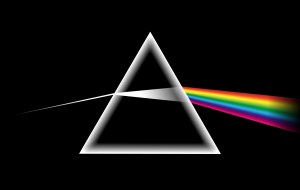
Science and nature will not deny that every living thing depends on light either directly or indirectly to maintain life. This natural parable has a mighty lesson to teach us about the immense spiritual world around us. So, what is light? I hope to show you through the scientific exploration of  light and the Scriptures that our Elohim (God) is truly the “Light of the World.”[1]

What is Light?

Scientists give varied answers. Even with the many technological advantages that we have today, light remains a scientific mystery.[2] As soon as scientists think they’ve figured it out, light surprises them again. Perhaps this is what provoked Albert Einstein to say:

“For the rest of my life I want to reflect on what light is.”

© Tomert
| Dreamstime.com

Quantum physics and the theory of Relativity, two of modern physics great paradigm shifts, started from anomalies in the behavior of light. Both thoughts led to radical new understandings of the nature of light. It seems that light occupies a very special place in the universe. In some ways, it is more fundamental than space, time or matter. The biggest question of light is whether it is a wave, a particle, or both. The classical description of light defines it as an electromagnetic wave. This means that it is a varying electric and magnetic field, which spreads out from one place to another. Light doesn’t have physical mass; instead, it is “energy.” The modern quantum mechanical description says that light can also be considered to be particles called photons. These photons carry energy and momentum but they have no mass.

Science defines light as having no physical substance or mass, yet it is carried by a very real and observable means. Adonai described Himself as “Light” thousands of years before modern science knew anything about how light functions. Like light, Adonai has no physical substance; He is a Spirit.[4] Yet, He has also given us an “observable” substance: His Word. It is the Word that took upon flesh to show us His Light in the form of Yeshua.[5]

Ps. 27:1 The LORD is my light and my salvation…

Jn. 8:12  Then spake Yeshua (Jesus) again unto them, saying, I am the light of the world…

1Jn. 1:5  This then is the message which we have heard of him, and declare unto you, that God is light, and in him is no darkness at all.

Jn. 4:24  God is a Spirit: and they that worship him must worship him in spirit and in truth.

Quantum mechanics teaches that matter cannot exist without light and all matter consists of invisible particles. Thus, light is necessary not only for life, but for any form of matter. The first recorded speech of Elohim (God) in our Bible’s is “Let there be Light.” This is the Hebrew word אור “ohr.” It shares its root with the Hebrew word for order and box. In Hebrew thought, a box helps keep things in order. Therefore, light is also necessary to maintain order.[6] Even the English word order begins with this same sound “ohr.” Thus, light is a sort of containment for the structure of our universe. As good science teaches, light is what “holds” quanta particles together and all matter consists of invisible particles. Thus, light literally holds our universe together.

Rom. 1:20  For the invisible things of him from the creation of the world are clearly seen, being understood by the things that are made, even his eternal power and Godhead; so that they are without excuse:

Col. 1:17  And he (Yeshua) is before all things, and by him all things consist[7] [are held together].

According to Wikipedia, “Light is electromagnetic radiation of a wavelength that is visible to the human eye (in a range from about 380 or 400 nanometers to about 760 or 780 nm). In physics, the term light sometimes refers to electromagnetic radiation of any wavelength, whether visible or not.[8]

Light is a form of what we call radiation. The electromagnetic waves produced by light move in a manner similar to the waves produced by a stone dropped in a pool of water. The transverse waves of light from a light source spread out in expanding circles much like the waves in a pool. However, the waves in the pool are very slow and awkward in comparison with light, which travels approximately 186,000 miles per second.

Scientists have come to the conclusion that the speed of light has not only observed to be constant, but that it does not even make any sense to say that it varies.[9] The speed of light is constant or eternal, because it never stops traveling.[10] Thus, our God of Light is also constant or eternal and does not vary. Natural light teaches us about the spiritual reality of Adonai.

Dt. 33:27  The eternal God is thy refuge, and underneath are the everlasting arms: and he shall thrust out the enemy from before thee; and shall say, Destroy them.

Mic. 5:2  But thou, Bethlehem Ephratah, though thou be little among the thousands of Judah, yet out of thee shall he come forth unto me that is to be ruler in Israel; whose goings forth have been from of old, from everlasting.

Einstein’s theories of Special and General Relativity also describe light in respect to time and space. Time is relative to the observer. As an object accelerates, time slows down relative to that object. In other words, time and speed come together at the speed of light. We can imagine this if we think of a person riding a beam of light. Relative to everyone else, he would appear to be frozen in time. He could travel for several million years without aging a single second. However, to himself, time appears normal; it’s just that the rest of the universe seems to be aging infinitely quickly. Like God, anything traveling at the speed of light does not change. Just as God exists outside of the laws of time and space, time as we know it does not exist at the speed of light.

Ps. 90:1-4 [[A Prayer of Moses the man of God.]] Lord, thou hast been our dwelling place in all generations. Before the mountains were brought forth, or ever thou hadst formed the earth and the world, even from everlasting to everlasting, thou [art] God. Thou turnest man to destruction; and sayest, Return, ye children of men. For a thousand years in thy sight [are but] as yesterday when it is past, and [as] a watch in the night.

Mal.  3:6 For I [am] the LORD (Yahweh), I change not; therefore ye sons of Jacob are not consumed.

2 Pt. 3:8 But, beloved, be not ignorant of this one thing, that one day [is] with the Lord as a thousand years, and a thousand years as one day.

Dan. 2:22 He revealeth the deep and secret things: he knoweth what [is] in the darkness, and the light dwelleth with him.

Jas. 1:17-18 Every good gift and every perfect gift is from above, and cometh down from the Father of lights, with whom is no variableness, neither shadow of turning. Of his own will begat he us with the word of truth, that we should be a kind of firstfruits of his creatures.

I am not a scientist by any means, so those of you that are more scientifically minded may find my post very elementary, sorry. My husband is highly intrigued by the scientific world and it is my understanding of his studies that I offer here. As he digs deeper into the natural things, we are always amazed by the accuracy of Scripture. The heavens and creation never fail to declare the glory of the LORD! And the natural things really are a witness of the Creator and the spiritual realm.

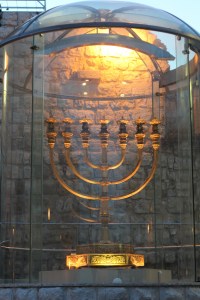
In future posts, I hope to cover the electromagnetic spectrum, the menorah, rainbows, and much more. Read more in Part II.


[1] John 8:12; 9:5

[3] Yahweh, the four letter tetragrammaton in Hebrew (yod, hey, vav, hey). This is the Most Holy Name of God. Often translated as The LORD in English bibles.

[4] John 4:24

[5] Read all of John chapter 1

[6] See Jeff Benner’s Ancient Hebrew Lexicon of the Bible under entry H216

[7] See Strong’s number G4921

[10] This is proved by Einstein’s theory of Special Relativity.

Categories: Biblical Symbols, Creation Gospel, Musings | Tags: , , , , , , , | 7 Comments

Torah Portion: Korach

Numbers 16:1-18:32; 1 Sam. 11:14-12:22; 2 Tim. 2:8-21; Jude 1-25   (K. Gallagher 2011)


Korach’s Rebellion

Do we sometimes feel that YHWH has been unfair to us? I shamefully have at times. We know from reading the p’shat or literal meaning of this portion that Korach’s desire is wicked and rebellious. Yet, Korach felt that he was a better choice to lead the people. I’ve been around people like Korach; they desire a form of the priesthood also. They are those that always find fault with leadership and as a result they begin to vocalize their opinions to others in the congregation. Whether they realize it or not, like Korach, they are drawing others unto themselves.

Those that participate in such activities usually do so under the banner of holiness or righteousness. They accuse the leadership in place of not being as righteous or as holy as they should be. Perhaps they accuse the leadership of not being as Torah observant as themselves. They forget that those leaders have been allowed to operate and function by YHWH Himself. Sure there are some legitimate reasons to confront a leader – like when there is proof of blatant or unrepentant sin. However, far more often than not, that leader is functioning just as YHWH has planned. Among Messianics, there is usually a family or group of families that comes against the leadership because of particular halachah (specific ways a community keeps a commandment) and not sin. And thus, I must wonder if they are in the rebellion like Korach.

Korach felt that he and all Israel were holy. While it is true that those that follow the Elohim of Israel and keep His commandments are holy, the real question is holy for what? In Hebrew the word for holy is “kadosh;” it means to be set-apart for something. But that something can be good or wicked. Kadosh doesn’t function like our English word for holy. This is why in Hebrew a harlot is also called holy; she is set apart for her task or god. The question is to what or to whom are you set apart? We must strive to be “kadosh l’YHWH,” Holy unto Adonai. There is a big difference.

One striking thing that cannot be overlooked is the condition of the camp at the time this rebellion took place. Last week, the Israelites learned that their lack of fear and trust in the God of Israel would cost their generation the Promised Land. They believed the report given by the 10 negative spies and once again grumbled against Moses and Aaron. The consequences of their sin must have seemed unbearable. Emotions had to be running high in the camp as they pondered their predicament: They would spend the rest of their earthly lives in the wilderness.

With a judgment like that looming over your head, Korach’s message would have been enticing to say the least. Thoughts would race through your mind possibly like the following: “Perhaps, Moses heard wrong. Maybe Korach is right. YHWH loves us too, right? He said we were holy. Look where Moses and Aaron have gotten us—nowhere! It’s not as if Moses and Aaron are perfect. They make mistakes too! Perhaps He will start all over with us! Yes, that’s it! We will get to the Promised Land; glory to God, A-men!” And on and on it would go. You see, it would feel like the right thing to do because it would make your flesh feel better about your lot in life. When YHWH says we don’t get to go somewhere or we don’t get to do something – He means it. We must learn to rest in His sovereignty and FEAR Him and Him alone. YHWH always has us right where He wants us. Whether or not we like it doesn’t matter. Our duty is to fear Him and Keep His commandments and to do so with a spirit of joy! It is possible… with Him. (Mt. 19:26)

Back Up

Let’s rewind this story a bit and ensure that we don’t find ourselves wearing the shoes of rebellion. The first spark of dissent happens after the people (20 years and older) realize that their dreams of entering the Land will NEVER be grasped. People that have had their dreams or agendas crushed are dangerous. Sadly, their fate is a consequence of their own making (sin). Instead of accepting the Creator’s sovereign ruling, the people want someone to blame. They look to the earthly leadership and plan a mutiny, even though the real culprits are their own evil inclinations and mistakes. Do you suppose that we are any different today?

Moses realizes the enormity of the people’s actions and humbly tries to quiet their emotions by bowing with his face to the ground before Adonai (he has a servant heart!) and reasoning with the people. He then devises a plan for all those in rebellion and the current leadership to offer incense before YHWH. By this, Adonai would affirm His choice of leadership. But Moses’ words of wisdom do not appease the people. As a matter of fact, they have become so prideful that they continue the onslaught of accusations against Moses and refuse to come when he requests their presence. (vs. 12)

Instead of looking at the real problem (their own evil hearts), they blame Moses. I believe this occurs again and again in our own assemblies. And, in other areas of our life. In 16:13-14, it becomes obvious that the people have deluded themselves into believing that their punishment is Moses’ fault. While it is most apparent to us that their accusations are completely unwarranted, the people feel justified in their actions.

When issues of halachah surface in our assemblies, often the accusers are simply rebelling as Korach did. They refuse to submit to the ruling of the leadership under the guise of “holiness.” These people, like Korach, really believe that their interpretation of halachah is more divine or biblical than the community’s current standards. And somehow they feel that it is their duty to “set everyone else straight.” They become the Torah police, controlling the people. When the leadership humbly tries to reason with the accusers, they puff-up in pride and usually spew verbal bullets (scripture proof texts) in retaliation. Is this not exactly what Korach and his company did?

You see, like Korach and his cohorts, we often react in similar fashion when we don’t get our way. Like little children, we kick and scream and blurt out false accusations toward leadership. Our evil inclinations can conjure up a myriad of threats, allegations, and blame. If the accused tries to humbly squelch the outrage, the people usually respond as Dathan and Abriam and refuse to make amends. I believe that by this point, pride has such a hold on the person or persons that they cannot repent. Like Korach, pride has completely blinded them to the truth and to reason. Sadly, what results is usually a sharp division of fellowship. But, the leadership cannot allow this spirit to proliferate. Like Moses, they must turn them over to YHWH.

The thing I don’t want you to miss is how “subtle” Korach’s initial argument was. In 16:3, everything Korach said about the people was true: the people were holy and YHWH was in their midst. This was the hook Korach used to drag the people away in his revolt. In reality, the people and Korach didn’t like the judgment YHWH made about their sin. They wanted to leave the wilderness and enter the Land. Realizing that they would never get there with “Moses” as leader, they decided that just perhaps, another leader would get them there.

In our assemblies today, this same thing plays out again and again. The “people” have a set desire (and that desire may not be wrong in and of itself). Upon realizing that the current leadership is not going to get them there or submit to what they perceive is the best halachah; they begin mouthing these things to other assembly members. Some with similar aspirations become carried away with the Korachs. Eventually, there is a “meeting” challenging the leadership. If the leadership refuses their demands, they throw a tantrum and leave the assembly, usually dragging others with them.

This saddens me very deeply. Even worse, looking back, I realize that I have been a cohort with a Korach before. I was so blinded by my “righteous” aspirations that I failed to recognize the authority that YHWH had placed in our midst. What resulted was a split and broken relationships. And guess what? When YHWH’s timing was right, that assembly did walk out the very thing that we aspired to! So the real lacking was my own humility and patience. We forget how powerful pride actually is. Pride’s favorite disguise is a form of godliness, holiness, and righteousness. Rarely is it overtly evil.

Since I’ve had a bad experience with a Korach, I really have to check myself when things aren’t done the way “I” believe they should be. When emotions are running high, we are primed for the enemy to slither in and plant seeds of dissent. We can be so zealous for YHWH, His Torah, and Mashiach, that we often forget the two most vital keys to unity: humility and authority. When everyone is his own master, serving others is nonexistent.

We must get to a place where loving YHWH and loving others trumps our pet doctrines and halachah. This is not compromise, it is humility. Too often our desire to be right far exceeds our desire to love, exercise mercy, and live in unity. Moreover, we have a real issue with authority. Where are the people that are willing to commit, lift up, serve, and stand with today’s leaders? Sure they aren’t perfect; yes they will make some mistakes. If you think (like Korach) that you would be a better leader — you are deluded by your own pride and rebellion.

Or perhaps you believe that you must isolate yourself and family from the main assemblies. Many that do this fear contamination, opposing doctrine. or halachah. This, too, is pride, because the negative side of pride is fear of man and circumstances.

This may sound harsh, but when I look around our “movement”, instead of seeing steadfast believers walking in unity, I see too many fickle and inconsistent people. Today, I doubt that their would be an Aaron or a Hur to help Moses hold his hands up to defeat an Amalek[1]

This is to our shame. My prayer is that we wake-up and mature. We have to accept the fact that we are each in different places in our restoration. We cannot demand that everyone be exactly where we are in our walk. Nor can we demand that everyone become a cookie-cutter version of ourselves in matters of halachah. If you dislike diversity (in halachah), then you need to reevaluate the creation and get over yourself. Prayerfully find an assembly. Stick with them. Support the leadership. Be steadfast. Serve the community with humility. Crucify your own desires and agendas and flow with the camp.

For which do you believe that YHWH will judge more harshly: having incorrect halachah and submitting to an imperfect leader or refusing to serve and love His people in unity?


[1] Ex. 12:8-13

Categories: Torah Portions | Tags: , , , , , , , , , , , , | 2 Comments

Women in Slavery

In my research and studies about women, I have stumbled across a reality that has shaken me to my core. If you’ve read my posts on The Biblical Role of Women, you are aware that Chavah’s (Eve’s) curse entails man’s propensity to the dominate women. This wasn’t God’s original design; instead, it is the result of the fallen nature.

Little did I know how rampant this facet of the fallen nature manifests in today’s world. If I asked you what the extreme expression of the fallen nature of Adam is toward Eve, what would it be? I believe Adonai has shown me the answer even though I never asked the question. The extreme form of the “curse” is abject slavery. More often than not, it is sexual slavery.

© Karl Daniels
| Dreamstime.com

Did you know that there are more people in slavery today than at any other time in human history?[1] Did you know that it is estimated that 80 percent of those in bondage are women and children? How does this make you feel? The more I read and learn about this harsh reality, the more I want to do something about it.

It all started (for me) when I came across a book called Half the Sky[2] by Nicholas D. Kristof and Sheryl WuDunn. These New York Time’s reporters noticed a sickening trend in many of the countries they were reporting from and decided to do something about it. Their book is a passionate call to arms against our era’s most pervasive human rights violation: the oppression of women and girls in the developing world. They also made a documentary[3] by the same name. If you only read or watch one documentary this year, let this be the one!

Now, I’m not completely naïve. I was fully aware that sex trafficking and slavery are alive and well in the world. But, I was oblivious to how pervasive it actually is. There are an estimated 27 million people in slavery today… TODAY. That’s roughly double the population of New York City, Los Angeles, and Chicago combined.

I can’t even begin to comprehend that figure. Although slavery is illegal in every country of the world, we have more slaves today than there were 1860.[4] Half the Sky put faces on these numbers. Little girls as young as three are subjected to the vilest forms of sexual abuse and rape. They are bought and sold as if they were a used car; rode and driven and, then discarded for a newer model. Girls rescued from this hell are empty shells of what a child should be. Their distant eyes only reflect apathy, indifference, and emptiness. It’s as if their soul was stripped from their bodies along with their innocence. And this is the daily reality of millions of women, girls, and boys. Can we stand by and do nothing?


The average cost of a slave today is $90 U.S. dollars. Can you imagine $90 standing between you and your freedom and that amount feeling like an impossible dream? I can’t. I can’t even imagine the life of suffering and abuse these millions of people face every day.

I’ve never felt more sick and passionate about a cause before. If I want to walk as Yeshua walked, my heartache and compassion compels me to “set the captives free.”

And the book of the prophet Isaiah was handed to Him. And He opened the book and found the place where it was written, “THE SPIRIT OF THE LORD IS UPON ME, BECAUSE HE ANOINTED ME TO PREACH THE GOSPEL TO THE POOR. HE HAS SENT ME TO PROCLAIM RELEASE TO THE CAPTIVES, AND RECOVERY OF SIGHT TO THE BLIND, TO SET FREE THOSE WHO ARE OPPRESSED, TO PROCLAIM THE FAVORABLE YEAR OF THE LORD.” (Luke 4:17-19)

The Spirit of the Lord GOD is upon me, Because the LORD has anointed me To bring good news to the afflicted; He has sent me to bind up the brokenhearted, To proclaim liberty to captives And freedom to prisoners; To proclaim the favorable year of the LORD And the day of vengeance of our God; To comfort all who mourn, To grant those who mourn in Zion, Giving them a garland instead of ashes, The oil of gladness instead of mourning, The mantle of praise instead of a spirit of fainting. So they will be called oaks of righteousness, The planting of the LORD, that He may be glorified.  (Is. 61:1-3)

I’m still learning about ways I can fight this battle. From what I’ve discovered so far, one of the biggest obstacles to change is lack of awareness. There are way too many people who are like I was: ignorant of slavery’s pervasiveness. We can’t stick our head in the sand this time. This is an issue that touches every nation, tribe, and tongue. It crosses all political and racial boundaries.

I plan on writing more about this issue that has become very dear to my heart. But for now, I leave you with a list of links that can help you educate yourself. We simply must refuse to do nothing.[5]

Links

Half the Sky Movement

Not For Sale

Free the Slaves

Hope For Justice

Responsible Sourcing Tool (Ensure that human trafficking isn’t in your goods supply chain.)

Love 146


[1] This is according to the research done by Free the Slaves:  https://www.freetheslaves.net/SSLPage.aspx

[4] In 1860, there were an estimated 25 million slaves.

[5] This is a reference to a book I’m currently reading on the topic called, Refuse to Do Nothing: Finding Your Power to Abolish Modern-Day Slavery by Shayne Moore and Kimberly McOwen Yim. Available at Amazon.

Categories: Women | Tags: , , , | 6 Comments

Torah Portion: Shlach L’cha

Torah Portion for June 1st, 2013

Numbers 13:1-15:41; Joshua 2:1-24; Heb. 3:7-19

Hebrew Names

Anytime there is a long list of Hebrew names or genealogies given in scripture, many are tempted to just skip over them and move on to the “meat” of the story. How sadly mistaken they are! Hebrew names have meaning and they usually tell a beautiful story. The list of names given for the spies is no exception. First, the tribes are not listed in their birth order, a hint that should stand out to the reader. Here is the list with the corresponding Hebrew meaning.

  • Shamua —-  Name, character
  • Shaphat —-   To judge
  • Caleb —-     Like the heart
  • Yigal —-     He redeems
  • Hoshea —-   Salvation; saves
  • Palti —-  My deliever
  • Gadiel —-  El (God) of the assembly; troop; army
  • Gadi —- My good fortune
  • Amiel —-  El (God) of my people
  • Setur —- Hidden, concealed
  • Nakhbi —- Refuge
  • Geuel —- El (God) is exalted; lifted high

This is the story hidden in the Hebrew names of the 12 spies.

The Name of the judge of our hearts redeems and saves, for He is our deliverer. The God of our assembly is our good fortune. The God of our people conceals us in His refuge. Exalted be our El (God)!

Thus, Hebrew never ceases to amaze me….

The Spies and a Pinch of Fear

Shlach L’cha literally means “send for yourself.” In this case, it refers to Moses sending out twelve men to “spy out” the land of Canaan. The Hebrew word for “spying out” in verse two is “toor” (tav, vav, reysh). It would be better defined as “seeking out, touring, or exploring.” In fact, our English word “tour” sounds exactly like the Hebrew word in question. Could it be derived from “toor”? Perhaps. Consider for a moment the difference between touring or exploring and spying. The latter implies something much more strategic and militant while the former implies something much more casual.

The irony is that Moses actually did send the men out as “spies” on a military reconnaissance mission regardless of the true meaning of the Hebrew “toor.” (Num. 13:17-20) This mission will end up costing Israel a 40 year longer stay in the wilderness. What I hope to show you is that this mission was doomed from the start. While our portion seems to be unclear as to whose idea this mission is attributed to, Deuteronomy 1:22-23 gives more details. Once again, it was the people’s lack of faith in the promises of YHWH that cost them dearly. Even though YHWH had told them to go and take possession of the land and to do so without FEAR, they did exactly the opposite. (Just as we often do!)

Even Moses was caught up in their “fear.” In Dt. 1:23, Moses says their idea of a recon mission also pleased him. The problem was that their spiritual eyes were closed. In the natural, the people of Canaan were strong and many. Their cities were large and fortified. Yet the land was good, flowing with milk and honey, just as YHWH had promised. But, the majority couldn’t see past the obstacles. There was a GIANT stumbling block in their path: the enemy. The problem seemed too large and too difficult for them to overcome.

How often do we feel this way about various circumstances and problems in our own lives? How often are we like the ten spies after taking a survey of our own circumstances? Things seem impossible from our perspective. We justify our lack of faith by telling ourselves or saying that we are being sensible or realistic. Perhaps we even conclude that the promise isn’t really for us.

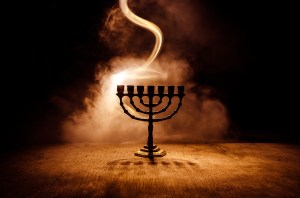
The real enemy is FEAR. This Shavuot (Pentecost 2011), Dr. Hollisa Alewine taught our congregation The Creation Gospel. One point that really stuck out for me was the seventh branch on the menorah. This branch in her thematic study corresponds to the seventh day of creation (Shabbat), the feast of Sukkot, the Spirit of Yirat Adonai (Fear of YHWH), and the church of Laodicea in the Book of Revelation. She pointed out that when we fear anything other than YHWH, we are operating from the wicked lamp.[1] In other words, when we fear man or circumstance we can only produce rotten fruit.

How I struggle with this! There is fear of the unknown, fear for the future, fear for our children, fear for our nation, fear for our finances, fear for our health, fear of death, fear of what others think, fear of ridicule, fear of weather, fear of government, fear of our enemies, fear of…  you name it. I personally suffer from occasional anxiety. This is a form of fear whether it begins with physical imbalances or not. But, we are called to be overcomers and we are told over and over in scripture to “fear not!” I dare say that this is one commandment that even Torah keepers struggle with regularly. Sadly, ungodly fear is usually justified one way or another. As Dr. Alewine said on Shavuot, “There are boogers around every corner!”

Once again we find ourselves wearing the very shoes of our Israelite counterparts. We are just like them. Although we like to think that we are like Caleb or Joshua, we really are more likely to be one of the ten bringing a bad report and causing even more of our brothers and sisters to falter with us.

There is only one remedy of our malady: we must learn to fear YHWH and fear Him alone. After all, the beginning of wisdom is the fear of YHWH. (Ps. 111:10; Pr. 9:10)

Creation Gospel’s Seventh Branch

Shabbat

This portion has caused me to mediate on the menorah and the thematic counterparts to Yirat Adonai (Fear of YHWH). I’d like to begin with Shabbat. Shabbat is the day YHWH set apart for rest. It is holy, it is a sign, and it is the seventh day of the week. Yeshua declares Himself  “Adonai (Lord) of the Shabbat day” (Mt. 12:8; Mk. 2:28; Lk. 6:5) What are we really resting in on this day? The finished work of Messiah. There can be no fear when we are resting in Him. Selah. There is nothing like entering in to worship the King of the Universe at His appointed time: Shabbat. Sure we can experience sweet worship any day and at any time, but there is something different about that worship when He appoints it, when He has declared that time sacred. There is absolutely no fear (of man & circumstance) when we adore and show our love to our King. (1 Jn. 4:18)

Sukkot

Sukkot (Feast of Tabernacles) is the seventh feast and it lasts for  seven days. Therefore, it is thematically linked to the 7th branch of the menorah and Shabbat, in The Creation Gospel model. It is not a coincidence that this feast commemorates the children of Israel living in tents or booths in the wilderness. Since the setting of our portion is the wilderness and the sin of the evil report by the ten spies, it becomes even more apparent that we need to learn from their example. (Heb 4:11; 1 cor. 10:5-6; Heb. 3:8-10)

Sukkot is also called the Season of our Joy. It is the last of the 3 pilgrimage feasts and looks forward to the future millennium when the overcomers shall rule and reign with Yeshua for 1000 years. This is pictured in Caleb and Joshua. We desire to persevere and come into the Promised Land! We cannot do this without Yirat YHWH.

Yirat YHWH

The seven spirits of God are given in:

Is. 11:1-2  And there shall come forth a rod out of the stem of Jesse, and a Branch shall grow out of his roots:  (2)  And the spirit of YHWH shall rest upon him, the spirit of wisdom and understanding, the spirit of counsel and might, the spirit of knowledge and of the fear of YHWH

These are the attributes of the one Spirit of God. As stated earlier, the fear of YHWH is the beginning of wisdom. Therefore, we cannot reach the last branch of the menorah without first experiencing the first branch: wisdom. This branch is thematically linked to Pesach (Passover), day one of creation, and the church at Ephesus. We all must first apply the lamb’s blood to our doorposts to begin our journey of redemption, sanctification, and eventual restoration.

Fear of anything other than YHWH is of the enemy. It is a lack of trust and faith in our Adonai. The following quote comes from the corresponding Deuteronomy text for our portion. Moses is recapping the mistake of the spies.

Dt. 1:28-32  Whither shall we go up? our brethren have discouraged our heart, saying, The people is greater and taller than we; the cities are great and walled up to heaven; and moreover we have seen the sons of the Anakims there.  (29)  Then I said unto you, Dread not, neither be afraid of them.  (30)  YHWH your God which goeth before you, he shall fight for you, according to all that he did for you in Egypt before your eyes;  (31)  And in the wilderness, where thou hast seen how that YHWH thy God bare thee, as a man doth bear his son, in all the way that ye went, until ye came into this place.  (32)  Yet in this thing ye did not believe YHWH your God

If the children of Israel had feared YHWH and not the inhabitants of the land, things would have been much different. How often would our circumstances have been different if we had only trusted in our God, YHWH? Perhaps we too are often left in our own wildernesses for an extended amount time when our breakthrough was just past the Canaanites that we were too afraid to fight.

Laodicea

Laodicea was the seventh and last assembly written to in Revelation. Please read Revelation 3:14-22. Laodicea means “justice of the people”. Already we have a problem; YHWH/Yeshua is our law-giver, He is our judge, and He metes out the only righteous judgment. Laodicea is thematically linked to Shabbat, Sukkot, and the spirit of the Fear of YHWH.

Notice that Yeshua mentions no clean works for this assembly. Instead, He says they are neither hot nor cold and this makes Him want to vomit. Wow. Essentially, they are lukewarm; lukewarm is a mixture of hot and cold. The Laodiceans probably feel they are “just right” or very comfortable. As a matter of fact they say just that:

Rev. 3:17-19  For you say, I am rich, I have prospered, and I need nothing, not realizing that you are wretched, pitiable, poor, blind, and naked.  (18)  I counsel you to buy from me gold refined by fire, so that you may be rich, and white garments so that you may clothe yourself and the shame of your nakedness may not be seen, and salve to anoint your eyes, so that you may see.  (19)  Those whom I love, I reprove and discipline, so be zealous and repent.

The assembly of Laodicea believes she is prospering and doing well. Sadly, she is seriously mistaken and is quite blind. Because this assembly has material wealth, their every need is met by their own works or prosperity. Having great prosperity is synonymous with godliness in the eyes of this church. (Sound familiar, America?) Yet, Yeshua couldn’t commend them on even one clean or good work.

Their worldly desire for prosperity had actually left them wretched, miserable, poor, blind, and naked. Yet they didn’t even know it!! Think about this. Yeshua is obviously speaking of their spiritual condition. They think all is well and they don’t even have clothes to wear! He encourages this church to buy “gold” (a play on their worldly lust for $$) refined by His fire.

What is this gold Yeshua speaks of?

Ps. 19:7-10    The law (Torah) of YHWH is perfect, converting the soul: the testimony of YHWH is sure, making wise the simple. (8)The statutes of YHWH are right, rejoicing the heart: the commandment of YHWH is pure, enlightening the eyes.  (9)  The fear of YHWH is clean, enduring for ever: the judgments of YHWH are true and righteous altogether.  (10)  More to be desired are they than gold, yea, than much fine gold: sweeter also than honey and the honeycomb.

It was almost as if David wrote this Psalm just for the Laodiceans. He tells us what is perfect and converts our souls: YHWH’s Law (Torah). This is because the Torah defines what sin is. Therefore, one may turn and repent. What is the remedy for blind eyes? According to David, it is the commandments of Adonai. It is apparent so far that even though the Laodiceans believed that they were “good” and lacked nothing, they didn’t have YHWH’s Torah in their hearts. Otherwise, their eyes would be open to their sin and they would realize their wretched condition and repent.

Moreover, this Psalm speaks of YHWH’s judgments. The very name of this assembly (Laodicea means “justice of the people”) speaks volumes about their source of authority: the people. The people decide what is best, what is good, what is prosperous. But, they are blind! YHWH is the only righteous judge. He decides what is good, not us. He decides what is holy, not us. He decides how He is to be worshipped, not us. Doing things His way, walking out His Torah (instructions), fearing Him and not man, and setting Him as our judge and not man or religious institutions is more desirable than much fine gold and sweeter than honey. Repent! Turn back to Him, His ways, His Torah, and receive fresh white garments and salve for your eyes.

Yeshua has more to say to Laodicea. He stands at the door and knocks and desires to “dine” with the Loadiceans. In Hebrew thought, this is a direct reference to a covenantal meal. What meal does Yeshua desire to eat with us? The marriage Supper of the Lamb at a future Sukkot. This meal is also thematically linked to the Pesach (Passover) seder, the beginning of our redemption where a meal is first shared. Passover is our redemption, Shavuot is our betrothal, and  Sukkot is our marriage and consummation. This is all three pilgrimage festivals.

Rev. 22:14  Blessed are they that do his commandments, that they may have right to the tree of life, and may enter in through the gates into the city.

Rev. 22:17  And the Spirit and the bride say, Come. And let him that heareth say, Come.

Caleb & Joshua

Caleb and Joshua saw the exact same things as the other ten spies, yet their report was positive. They tried to quiet the fear of the people with their optimism, but the people would rather wallow in their own fears. They even  prepared to stone Caleb and Joshua  just to get them to shut-up. (14:10) Misery truly does love company, and Caleb and Joshua were uninvited guests. But the people didn’t govern the lives of Caleb & Joshua; YHWH did, and it was His glory that came to their rescue.

Again, we are just like the Israelites. I know many people that truly wish to shut the mouths of those that are eternally optimistic. They would rather discuss the new scary booger they spotted on the internet and the big booger in the White House or the millions of boogers in the Middle East. Some think that big black helicopter boogers are watching their every move; others are worried about one world boogers, and even more fear famine and stock pile so green slimly boogers never touch them. Boogers are everywhere and they are big, they have fortified cities, and they even live in the Land of milk and honey. Just change booger to Canaanites or name your own favorite scary booger. They are all fear of man or circumstance.

One thing is certain: Caleb and Joshua were more afraid of YHWH than big, slimly, green boogers. They are our positive model and example. In order to be like Caleb and Joshua, we don’t have to walk around with our head in the clouds; we see everything the other ten see. The difference is in whom we fear most. If we fear YHWH more than men or our circumstances our spiritual eyes will be open and we too will say, “We should by all means go up and take possession of it, for we will surely overcome it!” (13:30)

We will also encourage our brethren, “Only do not rebel against YHWH. And do not fear the people of the land, for they are bread for us. Their protection is removed from them, and YHWH is with us; do not fear them.”

If we would fear YHWH, that obstacle would become our “bread.” It will feed us! It will give us strength and sustain us. Why? Because any time we trust YHWH we exercise our faith, which prospers one spiritually. Hence, our faith removes the shadow of protection from our enemies and we become victorious.

I know I still have much to learn in this area, but I desperately want to be like Caleb and Joshua. We can’t let our eyes deceive us or focus on what “appears” to be happening in the natural. Just because I can see that big gooey booger hanging over my head doesn’t mean that it’s there to harm me. If I start telling everyone that any day that booger is going to fall on my head, well then, it just might! I fear the booger more than YHWH.

However, if I believe YHWH loves me and has my best interest at heart and that He would never let a booger hang there day after day without a GOOD reason, then my fear is alleviated, I’m not spreading fear to my fellows, and one day YHWH might just show me that the booger was the glue that kept the chandelier from falling on my head. In this way, it sustained me (it became my bread).

The truth is that anything we fear we have made holy. We have set that thing apart. Think about something you fear or worry about often. By focusing on the circumstance and not Elohim, we have made that thing holy or set apart. It has displaced YHWH’s rightful place in our lives. When we are tempted to dwell on our circumstances we must remind ourselves that YHWH sits on the throne, not our past, not our finances, not our health, not our job, not our enemies, and not our families.

There is one last important detail about this story. After the ten evil spies died from a plague sent by YHWH, the people repented and decided they would now do what YHWH had said and take possession of the Land. BUT, the consequence to their sin was forty more years in exile in the wilderness. Actually, their lack of faith cost them the Promised Land altogether; in as much as those twenty years and older would die in the desert before their children would enter the Land.

I think this happens with us as well. YHWH tells us to do something. We are afraid. We take a survey of the situation and we are even more afraid. Boogers are everywhere; we’ll never make it. We begin telling others of the booger danger. We are out of line and in sin. We suffer because of our lack of trust. Suffering brings us to our senses and we repent. Now we think we will go and do what YHWH said. But, it’s too late. YHWH is no longer with us in this matter. He has moved on to something else. If we go anyway, the boogers will beat us down as far as Hormah. (14:45)

Tzit-tziot

We must follow the cloud. Turn when it turns, stay when it stays. In the last part of this Torah portion, the commandment of wearing the tassels, fringes, or tzit-tziot are given. This is a physical commandment about an article one wears on the four corners of their garment. YHWH is clear as to “why” He initiates this statute.

Speak to the sons of Israel, and tell them that they shall make for themselves tassels on the corners of their garments throughout their generations, and that they shall put on the tassel of each corner a cord of blue. “It shall be a tassel for you to look at and remember all the commandments of the LORD, so as to do them and not follow after your own heart and your own eyes, after which you played the harlot, so that you may remember to do all My commandments and be holy to your God. “I am the LORD your God who brought you out from the land of Egypt to be your God; I am the LORD your God.”(Num. 15:38-41)

Do you remember the Hebrew word “toor” translated as “spies” at the beginning of our portion? The high-lighted text above uses the same Hebrew word “toor” for seek, follow after, search, or go about. Moses sent men to “spy” out the land of Canaan. YHWH issues us a command to wear a cord of blue on the four corners of one’s garment, so that in seeing the blue cords one is reminded NOT to “spy” with their own hearts and eyes. Doing so makes one a harlot. When we fear anything other than YHWH it becomes our god, thus we commit spiritual adultery.

Though our eyes and hearts might perceive boogers or enticing lusts, we mustn’t stray from our God or His commandments. Wearing tzit-tziot is a physical reminder of a spiritual reality. The blue cord is a reminder of the heavenly tabernacle, our heavenly high priest, and our heritage as a kingdom of priests. Priests are witnesses to YHWH, not boogers. We can choose to see boogers or we can choose to fear YHWH our Elohim.

It is important also to realize that when we trust in YHWH our savior, He protects us. He is truly our deliverer and our refuge. Remember the story told in the Hebrew names of the spies? YHWH conceals us from all the boogers. We are His special treasure, if we will learn to fear Him.

If we look at Caleb and Joshua’s names in Hebrew, the message of the good spies is clear. Joshua is a cognate of the Hebrew word Yeshua or “salvation.” Caleb’s name (kalev) is a contraction of two words: kal, meaning all and lev meaning heart. If we put these names together, we get “Yeshua, salvation, is for all hearts.”

Caleb’s name has even deeper implications. The lev in Hebrew is not the physical blood-pumping heart but is more akin to the mind. Truly it is our minds that need saving. Joyce Meyers is right about one thing: the battle truly does begin in the mind. A saved mind CAN overcome as Joshua and Caleb did!

Even more interesting is that the name kalev (Caleb) is a derivative of the Hebrew word for ‘dog’ (kelev). Remember, Caleb’s name means “all heart.” You see, Caleb followed YHWH wholly with all his heart. Caleb’s name certainly fits his character. Is that not also the nature of (good) dogs? They always come back to their master, ready to serve Him with all their heart. Where He goes, they go, without nary a complaint.

While dogs often have negative connotations in scripture, this sheds new light on Yeshua’s comments about the “dogs eating the crumbs that fall from the master’s table.[2] Could this be an allusion to the fact that no matter who you are or where you are from, if you seek the Master with all your heart, you too, will have bread from the Master’s table? And, what about our two “good” spies, Caleb and Joshua? They are two faithful witnesses. Only their tribes, Judah and Ephraim/Israel, are mentioned by name in the New Covenant.[3] Together, their names suggest that YHWH’s witnesses follow Yeshua with all their heart!

May we become a generation of Caleb’s and Joshua’s!


[1] Proverbs 6:16-19

[2] Mt. 15:22-28; Mark 7:24-30

[3] Jer. 31:31; Hebrews 8:8 I’m not implying here that the other tribes or even those from among the nations are lost and don’t have a covenant, but rather as these verses attest, that we are joined (grafted-in) with one of these two houses of Israel which the Father is making into one New Man. (Rom. 11; Eph. 2)

Categories: Torah Portions | Tags: , , , , , , , , , , , , , , , , , , , , , | 3 Comments

Blog at WordPress.com.