
Musings

Like the Days of Noah

© Radek Procyk | Dreamstime.com

The Haftarah Cycle: A Brief Introduction

In this new Torah cycle,[1] I’m devoting special attention to the prophetic portion or the haftarah. Thus, I will share little nuggets with my readers when I have time. But first, I offer a review of the history of the haftarah for those new to the Torah cycle.

Haftarah comes from a Hebrew root that means to end or conclude. (It does not mean “half!”) The haftarah portion is a selection of verses from the prophets or the writings in the Tanakh.[2] This selection is thematically connected to the weekly Torah Portion about a third of the time, but there are special haftarot (pl.) related to the calendar such as Feast days or Rosh Chodesh, or for historical events such as the destruction of the Temples and the subsequent exile.

For example, from the first Sabbath after Tammuz 17th, until the turn of the year at Rosh Hashanah, the haftarah portions shift from being thematically connected to the Torah Portions to reflecting the historical events that occurred at that season. (For more information see: The Three Weeks or watch “The Dire Straits: This Season in Tradition,” a message I delivered at Revive 2020.)

The institution of the haftarah cycle varies, depending on the source. There are several theories about how this custom began. The most common one suggests that it began during the reign of Antiochus Epiphanes, who outlawed Jews from reading the Torah, but allowed the other writings. Another theory says that the haftarah was established in response to the Samaritans, who denied the inspiration of the prophets and writings, but followed the Law of Moses.

Interestingly, the oldest reference to the haftarah cycle is found in the Brit Chadashah (New Testament). In the first century, there was a custom to read from the Torah and the Prophets on the Sabbath day in the synagogues:

Luke 4:16-21 (TLV) And He came to Natzeret, where He had been raised. As was His custom, He went into the synagogue on Shabbat, and He got up to read. 17 When the scroll of the prophet Isaiah was handed to Him, He unrolled the scroll and found the place where it was written, 18 “The Ruach Adonai is on me, because He has anointed me to proclaim Good News to the poor. He has sent me to proclaim release to the captives and recovery of sight to the blind, to set free the oppressed, 19 and to proclaim the year of Adonai’s favor.” 20 He closed the scroll, gave it back to the attendant, and sat down. All eyes in the synagogue were focused on Him. 21 Then He began to tell them, “Today this Scripture has been fulfilled in your ears.”

Acts 13:14-16 (NASB) But going on from Perga, they arrived at Pisidian Antioch, and on the Sabbath day they went into the synagogue and sat down. 15 After the reading of the Law and the Prophets the synagogue officials sent to them, saying, “Brethren, if you have any word of exhortation for the people, say it.” 16 Paul stood up, and motioning with his hand said, “Men of Israel, and you who fear God, listen.”

While the yearly Torah cycle covers every word in the Torah or Books of Moses, only a small selection from the prophets and writings are read through each year. In fact, only two prophetic books are read completely as haftarot in the modern order: The Book of Obadiah and the Book of Jonah.

There are differences between the reading selections of haftarot in Ashkenazi, Sephardi, and Yemenite communities, though they are similar. Historically, though the Jewish people had a custom of reading from the prophets after the Torah portion, there wasn’t a set order. Until more recent times, random selections were chosen. Moreover, in the old triennial (3 year) Torah cycle, there were naturally many more haftarah portions. So, those that suggest that the Jewish people purposeful removed certain prophecies from Isaiah to keep people away from Yeshua are completely ignorant of the haftarah’s history. Don’t fall into their traps.

There are traditional blessings recited before reading the haftarah, and afterwards.

Blessing Before Reading Haftarah

Barukh attah Adonai eloheinu melekh ha’olam asher bachar binvi’im tovim ve-ratzah ve-divreihem hane’emarim be’emet. Barukh attah Adonai ha-bocher ba-torah uv’Moshe avdo uv-Yisra’el amo, uvinvi’ey ha-emet va-tzedek.

Blessed are you, O LORD, our God, King of the universe, Who has chosen good prophets, and was pleased with their words spoken in truth. Blessed are you, LORD, who has  chosen the Torah, and his servant Moses, and his people Israel, and the prophets of truth and righteousness.

Blessing After Reading the Haftarah

Barukh attah Adonai eloheinu melekh ha’olam, tzur kol ha-olamim, tzaddik be-khol ha-dorot, ha-El hane’eman ha’omeir v’oseh, hamdabeir u’makiyem, shekol devarav emet ve-tzedek. Ne’eman attah Adonai eloheinu, ve-ne’emanim devarekha, ve-davar echad midevareykha achor lo yashuv reikam, ki El melekh ne’eman ve-rachaman attah. Barukh attah Adonai, ha-El hane’eman be-khol devarav.

Blessed are You, Adonai our God, King of the Universe, Rock of all eternities, righteous in all generations, the faithful God, who says and does, who speaks and fulfills, all of whose words are true. Faithful are you, LORD our God, and faithful are your words. Not one of your words turns back unfulfilled, for You, O God, are a faithful and compassionate King. Blessed are You, LORD, the God who is faithful in all His words.

Further Reading

The JPS Bible Commentary: Haftarot by Michael Fishbane

The Haftarah Commentary by W. Gunther Plaut

The Women’s Haftarah Commentary: New Insights from Women Rabbis on the 54 Weekly Haftarah Portions, the 5 Megillot & Special Shabbatot by multiple authors

The Book of Haftarot: An Easy-to-Read Haftarah Translation by Sol Scharfstein

Book of Haftaros – Gutnick Edition by Rabbi Chaim Miller


Like the Days of Noach

Prophetic Portion to Noach:[3] Isaiah 54:1 – 55:5

The context of this portion is decades of Babylonian captivity. Can you imagine spending decades in exile away from your land and your home? In a sense, we are currently in exile in a spiritual Babylon. Will Adonai leave us here forever?

© Javier Cruz Acosta | Dreamstime.com

This haftarah portion floods the reader with the theme of redemption from exile. God has not forgotten us or our children. In fact, He beckons us to partake freely of His water, bread, and wine – His teachings – because they are life. Our disgrace for disobedience has an end, and it is rapidly approaching. Adonai describes His anger as a momentary flood, but His chesed as everlasting.

Isaiah 54:8 (LITV) In a flood of wrath (be-shetzef ketzef) I hid My face from you for a moment; but I will have pity on you with everlasting kindness, says Jehovah your Redeemer.

It is in that context that He says this is “like the days of Noah to me.” Adonai’s anger (judgment) is like the waters that destroyed the earth in Noah’s day; but His promise to take Israel back is even more powerful than the great deluge. While the flood of His anger was temporary, His promises are forever. We can count on them to engulf us with His goodness.

Isaiah 54:9 (NASB) “For this is like the days of Noah to Me, When I swore that the waters of Noah Would not flood the earth again; so I have sworn that I will not be angry with you nor will I rebuke you.”

From Adonai’s perspective, “like the days of Noah” reminds Him not of His anger, but of His mercy and promise. Israel had sinned against her Maker, breaking the covenant agreed upon at Mt. Sinai. After enduring the curses for her unfaithfulness, Adonai promised Israel a new start just as He had promised Noah and his descendants. The entire prophetic portion floods an underserving Israel with God’s boundless chesed (loving-kindness).

Isaiah 54:10-14 (TLV) Though the mountains depart and the hills be shaken, My love will not depart from you, nor will My covenant of peace be shaken, says Adonai who has compassion on you. 11 Afflicted one, storm-tossed, unconsoled, behold, I set your stones in antimony, lay your foundations with sapphires, 12 make your pinnacles of rubies, your gates of crystal, and all your walls of precious stones. 13 All your children will be taught by Adonai. Your children will have great shalom. 14 In righteousness you will be established. You will be far from oppression—for you will not fear—and from terror—for it will not come near you.

The phrase “like the days of Noah” only occurs in a few places in Scripture. When Messiah uses this phrase in Matthew 24, most connect it with the judgment that Adonai wrought upon the whole earth because of the evil hearts of men, violence, and corruption. Hopefully, the link to Messiah’s words about the coming of the Son of Man, the end of days, and the evil that will be prevalent at that time is clear. He does not let the guilty go unpunished…

© Ronstik | Dreamstime.com

However, He also abounds in chesed and forgives iniquity, transgression, and sin. (Ex.34:4-9) This is a two-sided coin. And, “like the days of Noah” is a two-sided phrase. On the one hand, blatant disobedience and sin must be punished – like a flood of fiery wrath. On the other hand, God is gracious, merciful, and abounding in chesed – like a gushing river of life. Both are true.

Noach received favor or grace as a righteous one in his generation. His name (nun, chet), if read backwards, even spells grace (chen – chet, nun), which gives us a clue. Perhaps, the phrase “like the days of Noah” has dual meanings as well. After all, Biblical real estate is precious. There are no words or phrases that are superfluous. The prophetic portion of Noach nearly overwhelms the hearer with the gushing love of God. His promises flow out in a torrential down pour that sound too good to be true. Especially, to a people that have been unfaithful to her Maker and Husband.

How could it be that after all we have done, after all our unfaithfulness, after all our selfish choices, after multitudes of sins, derisions, and infidelities, that the Creator of the Universe, the God of Israel, Builder of Zion, will take us back to Himself? Can this be true? Peter compares God bringing Noach and his family through the flood waters to baptism and a clean conscience. (1 Peter 3:18-22) Adonai promises as sure as He promised to never flood the earth again that He WILL remove our disgrace, enlarge our tent, fill our wombs, comfort us, and quench our thirst and hunger. This is the Good News of the Kingdom!
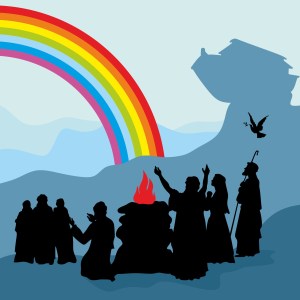
© Biblebox | Dreamstime.com

In this sense, “like the days of Noah” distinctly refers to God’s everlasting chesed, mercy, and love. He makes a Way where there is no way. Isaiah 53 precedes Isaiah 54. This is Adonai’s everlasting covenant of peace, and He is eager to share it with each one of us. Thus, when we read Matthew 24 or Luke 17 where the Messiah draws our attention back to “the days of Noah,” don’t just focus on the judgment or the flood of His wrath. Instead, look up for the Coming Kingdom and Promises fulfilled! These portions should bring us comfort in the days ahead, just as Noah’s father proclaimed:

Genesis 5:29 (TLV)  And he named him Noah saying, “This one will comfort us from our work and from the pain of our hands because of the ground which Adonai cursed.”


[1] First Fruits of Zion has a beautiful online and printable schedule for the yearly Torah cycle: https://torahportions.ffoz.org I also love their yearly calendar: https://ffoz.com/eretz-yisrael-wall-calendar.html

[2] Tanakh is an acronym that stands for the Torah (Books of Moses), the Nevi’im (Prophets), and the K’tuvim (Writings). Altogether, these three make up the complete Jewish Bible or the complete Old Testament for Christians.

[3] Torah Portion Noach (Noah): Gen. 6:9 – 11:32; Haftarah:  Is. 54:1 – 55:5
Categories: Musings, Torah Portions | Tags: , , , , , , , , | 12 Comments

The Vinedresser, the True Vine, and the Branches

The month of Elul is often called the month of repentance, as it is a time to prepare for the upcoming High Holy Days of Rosh HaShanah and Yom Kippur, and the last great festival of Sukkot. This traditional period of return is an opportunity to examine one’s life and the fruit that is being produced. What needs to be uprooted? What needs to be pruned? What needs to be nourished? It’s the season to set things right with Adonai and our fellowman. While these things should be a daily exercise, the moedim (feast days) direct the path of the righteous to dedicate this season, the time of harvest, to give an honest account of one’s soul.

© Feverpitched | Dreamstime.com

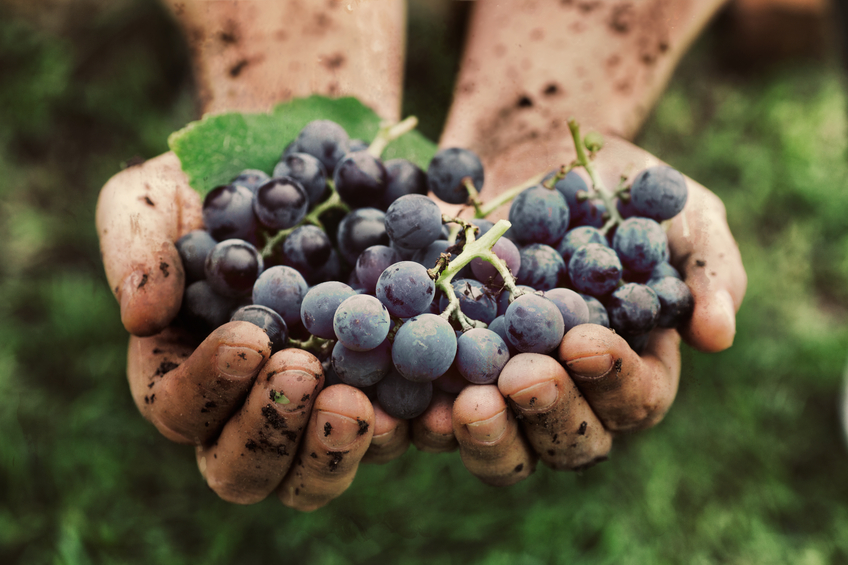
The moedim center around agriculture and harvest. During the month of Elul, Adonai our King is “in the field” and people are His planting. We are His vineyard, and He is looking for fruit that will be judged at the High Holy Days. While the King is in the field, He is particularly accessible, as near as a co-laborer and a friend. Yeshua says, “I am the vine, you are the branches; he who abides in Me and I in him, he bears much fruit, for apart from Me you can do nothing.” During Elul the vintage begins; may we submit to His tender affections, pruning, and cleansing before He returns to the Throne of Judgment on the High Holy Days. His desire is for us to enter Sukkot, the figurative end-time harvest and wedding feast, clean and sealed in Him with a heart that is altogether joyful.


John 15:1-15  “I am the true vine, and My Father is the vinedresser.  2  “Every branch in Me that does not bear fruit, He takes away; and every branch that bears fruit, He prunes it so that it may bear more fruit.  3  “You are already clean because of the word which I have spoken to you.  4  “Abide in Me, and I in you. As the branch cannot bear fruit of itself unless it abides in the vine, so neither can you unless you abide in Me.  5  “I am the vine, you are the branches; he who abides in Me and I in him, he bears much fruit, for apart from Me you can do nothing.  6  “If anyone does not abide in Me, he is thrown away as a branch and dries up; and they gather them, and cast them into the fire and they are burned.  7  “If you abide in Me, and My words abide in you, ask whatever you wish, and it will be done for you.  8  “My Father is glorified by this, that you bear much fruit, and so prove to be My disciples.  9  “Just as the Father has loved Me, I have also loved you; abide in My love.  10  “If you keep My commandments, you will abide in My love; just as I have kept My Father’s commandments and abide in His love.  11  “These things I have spoken to you so that My joy may be in you, and that your joy may be made full.  12  “This is My commandment, that you love one another, just as I have loved you.  13  “Greater love has no one than this, that one lay down his life for his friends.  14  “You are My friends if you do what I command you.  15  “No longer do I call you slaves, for the slave does not know what his master is doing; but I have called you friends, for all things that I have heard from My Father I have made known to you.


Deut. 16:11-15  and you shall rejoice before the LORD your God, you and your son and your daughter and your male and female servants and the Levite who is in your town, and the stranger and the orphan and the widow who are in your midst, in the place where the LORD your God chooses to establish His name.  12  “You shall remember that you were a slave in Egypt, and you shall be careful to observe these statutes.  13  “You shall celebrate the Feast of Booths seven days after you have gathered in from your threshing floor and your wine vat;  14  and you shall rejoice in your feast, you and your son and your daughter and your male and female servants and the Levite and the stranger and the orphan and the widow who are in your towns.  15  “Seven days you shall celebrate a feast to the LORD your God in the place which the LORD chooses, because the LORD your God will bless you in all your produce and in all the work of your hands, so that you will be altogether joyful.


Categories: Moedim, Musings | Tags: , , , , , , , | 3 Comments

I LUZ You and Almonds

I thoroughly enjoyed this post by my friend Tekoa (Bonnie) Manning, and I believe you will too! What is a “Luz” Bone? Do you have one? How does this relate to the resurrection of the dead and the Tallit (prayer shawl)? I think you’ll be surprised. We serve an amazing Elohim!


I LUZ You and Almonds by Tekoa Manning

Categories: Biblical Symbols, Musings | 2 Comments

Parched Ground

How do we display the image of Elohim (G-d) in the earth?

© Marina Bombina | Dreamstime.com

Recently, I participated in an online correspondence class with a rabbi. In it, he made mention of the davar (word) and its relationship to the midbar (wilderness/desert). I know many of you are already familiar with this connection, but for the sake of those who are not, I will briefly explore this notion. In Hebrew, the root of midbar (desert) is davar (word). In other words, the wilderness comes directly from the Word. Being in the desert is akin to receiving the Word. Or to be more precise, the wilderness is where Adonai’s Word is tested in us. In the Torah, the Book of Numbers chronicles the Children of Israel’s wanderings in the desert. Thus, quite fittingly, this book is called BaMidbar or “in the wilderness” in Hebrew.

When God miraculously removed ancient Israel from Egypt or when He rescued us from the figurative house of slavery (sin and death), where did He take them or us? Was it straight to the Promised Land? Or was it into the desert or wilderness? The fact that we all must face a literal or figurative desert upon being saved sounds counterintuitive at first. What do we need to learn in wilderness? I think Bill Cloud said it best (I’m paraphrasing Bill here): “God can remove us from Egypt, but we find that Egypt is still in us.” In other words, salvation, deliverance, and sanctification are ongoing processes. The desert becomes a type of threshing floor for our souls. All that offends is refined, purified, and threshed in the scorching sands of the desert. The Word that began a good work in us continues its commission to test and humble us. The difficulty and the pain of the wilderness “does good” for us in the end. For Abba, this is a labor of love.

“He led you through the great and terrible wilderness, with its fiery serpents and scorpions and thirsty ground where there was no water; He brought water for you out of the rock of flint. “In the wilderness He fed you manna which your fathers did not know, that He might humble you and that He might test you, to do good for you in the end. (Dt. 8:15-16)

But the desert has one more vital message to teach us. It is in our wilderness where G-d speaks. In the ups and downs of the desert, we learn to discern the difference between the Shepherd’s voice and the enemy’s crafty imitation. When we are stripped of all the comforts of Egypt, we finally reach the end of self. It is there, in the midst of what appears to us as chaos and disorder, that the G-d of order speaks kindly to us and lifts our weary heads. With no more worldly distractions, the Word reveals what is in our hearts. Each revelation offers us an opportunity to repent and return to the Master’s loving embrace.

Ones That Speak

While all the above is fascinating, even if a little scary, that’s not what struck me in the Rabbi’s lesson. He mentioned that one way we are like G-d is in the fact that we have the faculty of speech. We are the only creatures in His vast creation that, like Him, have words. We are medeber (ones that speak). Think about this for moment. In the same way that davar and midbar are connected, so is medeber. This means that we are not ONLY “ones that speak”, but “ones like a desert.

Have you ever thought of yourself as a desert? Maybe our souls have felt dry or parched during a great trial, in the midst of mourning, or while suffering for righteousness sake or on account of our own sins. But have you ever considered that our wilderness journey should be as close and familiar to us as speech?

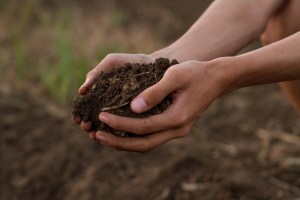
We were not only meant to speak, but we were meant to drink like the parched earth of a desert. Consider the many passages that urge us to partake of the Living Waters.[1] Or think about how the Word of G-d is figuratively referred to as rain or water.[2] We should be like the thirsty ground, eagerly waiting for the gentle rain of Abba’s Word. Considering that Adam was formed from the dust of the ground, this makes perfect sense. Mankind is essentially dirt or dust. And the ground NEEDS the heavenly rains like we NEED the words of our heavenly Elohim.

Dirt and Seeds

             © Nitsuki | Dreamstime.com

We are, at our core, the substance (dirt) in which seeds can be planted in order for New Life to grow. The Word is equivalent to a Seed in Scripture.[3] Coincidence? I don’t think so. If words are seeds, we should be careful what we allow to take root in our soil or dirt. I believe these words or seeds can come from three places: G-d, the enemy, and ourselves.

Thus, the enemy’s word is a seed. The words we speak are seeds. The words others speak are seeds. But the only Seed that is always truth and always produces life is the Word of YHWH. The question is how do we know, and I mean without a doubt know that we know, whether the seed we are receiving is G-d’s Seed?

This is where the dry, dirty side of our essence comes in to play. In order to hear or receive the Word of Adonai, we must become like a desert. All distractions and things that vie for our attention must be removed in order for us to really hear or shema YHWH. In the wilderness, our nephesh (flesh) is denied worldly pleasures and conveniences. One reason that fasting is so effective is because it strips the nephesh of gratification. Any time our nephesh (with all its thoughts, desires, and appetites) is ruled over by our younger (new) spirit-man, our connection to YHWH is strengthened. And our flesh serves us rather than us serving it.

Whose Voice?

Many times, we listen to the voice of our own desires rather than the Word of the LORD. Like the Tree of Knowledge, it speaks both good and evil. We know this voice so well that we often mistake it for the Holy Spirit (especially when it’s speaking “good”). Let’s face it, when it seems as if we will get to avoid suffering in a dry desert, our voice (or even the voice of the enemy) sounds like good counsel to our itching ears. This is why various people can all claim to be hearing from the One Holy Spirit, yet will have conflicting ideas, agendas, and doctrine. We are ones that speak, but rarely are we willing to become a desert. We must learn to submit to the wilderness and allow the Word to test us.

Emptying ourselves of our own desires (even those we deem good and profitable or even godly) is the key to becoming the image of Elohim in the earth. You want to love YHWH with all your heart and love your neighbor like yourself? It will cost you flesh and bone. Are we willing to suffer for YHWH and our neighbor?[4] Or would we rather cause others to suffer so that we can have things our way? Do we open our mouths and speak life (healing/shalom) to others or do we use our speech to persuade others to do things the way we like it or see it? Which voice is the Holy Spirit and which is the voice of our own nephesh (soul)?

The acquisition of treasures (desires of our hearts/flesh) by a lying tongue is a fleeting vapor, the pursuit of death. (Pr. 21:6 added parenthesis mine)

If anyone thinks himself to be religious, and yet does not bridle his tongue but deceives his own heart, this man’s religion is worthless. (Jam. 1:26)

Watch Your Mouth

He who guards his mouth and his tongue, Guards his soul from troubles. (Pr. 21:23)

Our mouths cause us more trouble than any other member of our bodies.[5] Is this because we only desire to be ones that speak and not ones like a desert? After all, you can’t speak AND drink at the same time! Interestingly, if we fail to choose to become a humble desert before YHWH, He will take us there kicking and screaming. Our only choice in the matter is the method of how we arrive and how we act once we get there. YHWH’s Word is ALWAYS tested in the wilderness/desert.[6] Consider the many judgments that result with the people and the land becoming desolate. In these cases, Abba’s judgment has in effect “shut our mouths”.[7]

Is Adonai just an angry tyrant or does He know something that we desperately don’t want to accept? The Bible says that G-d is Love and that He chastises those whom He loves.[8] He takes us to the desert because He knows that the testing of the wilderness will reveal our hearts. We need to face the serpent on the pole, so that we may be healed and saved. The serpent is the voice of our own selfish desires. It is the crafty forked tongue that whispers both good and evil. When we heed its voice rather than Adonai’s, we are stung with its venom and take the fast track toward death.

This is why we must die daily like the lamb offerings in the Tabernacle and the Temple. Our beast must be brought to the altar. Like all creatures, the beast doesn’t submit easily. It is excellent at convincing us (with its mouth) that all is well. The smooth words of the serpent appeals to our feelings of entitlement, self-righteousness, and piety. The beast does not like to identify with suffering or humility. But like Cain, we are told to MASTER this impulse.

We do this by becoming what we were created to be. We are a desert; a vast wilderness laid bare for all of heaven to see and judge. In this position, we are no longer mouths that speak to justify or coerce; rather, we become a sponge that soaks up the words of life. Though the Living Word kills the flesh, it quickens the spirit.

This is the key to humility, hearing from Abba, and loving our neighbor sacrificially. It is also what molds and shapes our clay vessels into the image of our great and loving Elohim. If we really got this we would no longer scorn our fiery trials or fear the seemingly empty places of life. Instead, we would prostrate ourselves under the heavens and allow the Word to truly divide between our soul (nephesh) and spirit.

For the word of God is living and active 
and sharper than any two-edged sword, and 
piercing as far as the division of soul and spirit,
 of both joints and marrow, and able to judge 
the thoughts and intentions of the heart. 
And there is no creature hidden from His sight, 
but all things are open and laid bare 
to the eyes of Him with whom we have to do. 
(Heb. 4:12-13)

[1] Jer. 2:13; 17:13, John 4:10-11, Rev. 7:38

[2] This post speaks about the early and latter rains.

“For as the rain and the snow come down from heaven, And do not return there without watering the earth And making it bear and sprout, And furnishing seed to the sower and bread to the eater; So will My word be which goes forth from My mouth; It will not return to Me empty, Without accomplishing what I desire, And without succeeding in the matter for which I sent it. (Is. 55:10-11)

“So let us know, let us press on to know the LORD. His going forth is as certain as the dawn; And He will come to us like the rain, Like the spring rain watering the earth.” (Hos. 6:3)

So that He might sanctify her, having cleansed her by the washing of water with the word. (Eph. 5:26)

[3] Luke 8:11

[4] Suffering for Righteousness’ Sake

To sum up, all of you be harmonious, sympathetic, brotherly, kindhearted, and humble in spirit; not returning evil for evil or insult for insult, but giving a blessing instead; for you were called for the very purpose that you might inherit a blessing. For, “THE ONE WHO DESIRES LIFE, TO LOVE AND SEE GOOD DAYS, MUST KEEP HIS TONGUE FROM EVIL AND HIS LIPS FROM SPEAKING DECEIT. “HE MUST TURN AWAY FROM EVIL AND DO GOOD; HE MUST SEEK PEACE AND PURSUE IT. “FOR THE EYES OF THE LORD ARE TOWARD THE RIGHTEOUS, AND HIS EARS ATTEND TO THEIR PRAYER, BUT THE FACE OF THE LORD IS AGAINST THOSE WHO DO EVIL.” Who is there to harm you if you prove zealous for what is good? But even if you should suffer for the sake of righteousness, you are blessed. AND DO NOT FEAR THEIR INTIMIDATION, AND DO NOT BE TROUBLED, but sanctify Christ as Lord in your hearts, always being ready to make a defense to everyone who asks you to give an account for the hope that is in you, yet with gentleness and reverence; and keep a good conscience so that in the thing in which you are slandered, those who revile your good behavior in Christ will be put to shame. For it is better, if God should will it so, that you suffer for doing what is right rather than for doing what is wrong. (1 Peter 3:8-17)

[5] James 3

[6] Think about Moses and Yeshua. Were they each not tested in the wilderness? What about Paul? Can you recall a period where he was tested in the desert? Consider the Children of Israel, Job, David, Jeremiah, John the Baptist, and others. Can you connect these righteous men with both suffering and the desert/wilderness? Does the Bible give us examples of those who willingly flee to the desert and those who are taken there against their will? What is the difference between these two experiences? What is similar about these experiences? It seems as though we ALL must experience the wilderness. The question is: Will we go willingly or by force?

[7] Now we know that whatever the Law says, it speaks to those who are under the Law, so that every mouth may be closed and all the world may become accountable to God. (Rom. 3:19)

[8] FOR THOSE WHOM THE LORD LOVES HE DISCIPLINES, AND HE SCOURGES EVERY SON WHOM HE RECEIVES.” (Heb. 12:6)

Categories: Musings | Tags: , , , , , , , , , , , , , , | 8 Comments

Blog at WordPress.com.