
Biblical Symbols

The Jezebel No One Talks About

© Stockeeco | Dreamstime.com

There are countless teachings that suggest that Jezebel is a controlling spirit, and can manifest in a man or woman. Like ancient Jezebel, there is an “Ahab” type of person that enables this spirit to thrive in a congregation as she wreaks havoc among the members, destroying foundations and relationships. My intention isn’t to uproot this insight, but to sharpen the focus using Yeshua’s message to the fourth church/congregation in Revelation, Thyatira.[1]

And to the angel of the church in Thyatira write: “The Son of God, who has eyes like a flame of fire, and His feet are like burnished bronze, says this: ‘I know your deeds, and your love and faith and service and perseverance, and that your deeds of late are greater than at first.'” (Rev. 2:18-19)

Yeshua stands as the One in the midst of the menorah,[2] and like this figurative picture of golden light, His eyes are a flame of fire and His feet like brilliant burnished bronze. He is the Light in the Temple of YHWH and the world.[3] The fourth branch is the very center of the menorah and the source pipe for the remaining 6 branches. This is the shamash or Servant candle. He addresses the fourth church as the central fourth branch of the menorah. All authority has been given to Him.[4]

Thyatira had been growing in deeds or works. They are commended for their love, faith, and perseverance. But there is an issue that our heavenly governor wants them to deal with, the woman Jezebel.

“But I have this against you, that you tolerate the woman Jezebel, who calls herself a prophetess, and she teaches and leads My bond-servants astray so that they commit acts of immorality and eat things sacrificed to idols. I gave her time to repent, and she does not want to repent of her immorality. Behold, I will throw her on a bed of sickness, and those who commit adultery with her into great tribulation, unless they repent of her deeds. And I will kill her children with pestilence, and all the churches will know that I am He who searches the minds and hearts; and I will give to each one of you according to your deeds.” (Rev 2:20-23)

Whether Jezebel was a real woman that this early church dealt with or a figurative picture is not the point of this post. I happen to believe both are likely true, but the message is the same either way. The Book of Revelation portrays two women, much like the Book of Proverbs. One is essentially a harlot and the other is a righteous (virtuous woman). These women simultaneously figure the wicked anti-Christ spirit and the Holy Spirit, and a wicked congregation (Body/House/Temple) and the righteous congregation (Body/House/Temple).

I will use Jezebel and the harlot interchangeably in this post as they have the same characteristics and depict the same theme. Ancient Jezebel was NOT a follower of the God of Israel. Thus, any teaching she is delivering to Messiah’s Body cannot be based in Torah. It is worldly and foreign, and likely rooted in the worship of false gods.

Jezebel calls herself a prophetess. She claims to have the spirit of prophecy, but Revelation says that the testimony of Yeshua is the real spirit of prophecy. (Rev. 19:10) Jezebel’s smooth words teach and lead “My bond-servants” astray. The people she is affecting (or infecting) are not just pew warmers. They are bondservants! These folks have a true relationship with Yeshua. And yet, they have become enticed by this message of the harlot. How can this happen?

How can a true follower of the Messiah be convinced to “commit acts of immorality” and “eat things sacrificed to idols?” It seems ludicrous, but I submit to you that it’s happening right under our noses, even in Torah communities. Jezebel isn’t as much about control as she is about perversion.

Everything the harlot appeals to is carnal, fleshly. We are all human and live in carnal bodies. We have flesh to contend with every day. Failing to put our pound of flesh on the holy altar to be consumed by the holy fire will result in some nagging nephesh issues. (I have my own daily battle!) What does flesh love most? Pleasure. Even eating a cupcake can be highly pleasurable (and no, cupcakes are not evil, just don’t eat five or one with every meal.)

There are two primary pleasure centers that are exceptionally intimate: food and sex. Jezebel is teaching an anti-Torah message on both fronts and has gained ground even among Yeshua’s bondservants.

  1. Acts of Immorality (fornication)
  2. Eating Food Sacrificed to Idols

What are acts of immorality? How does the Torah define this? The Greek word porneuo is often translated as immorality or fornication.[5] This is where the English word pornography originates.

Modern culture does not have the authority or right to define the parameters for lawful and unlawful sexual partners, nor can society define which creatures should be on one’s plate. Only the Word of YHWH can make such distinctions.

Leviticus 11, 18, 19, and 20 are a great place to start. In these chapters, we learn how unlawful sexual partners and eating certain creatures are described as detestable, wicked, abominations, profane, etc. It is within this context that YHWH says, “you shall be holy, for I am holy.”[6]

Jezebel teaches Yeshua’s bondservants that partaking in the intimate acts of eating such things and having depraved sexual encounters aren’t really against God. “Did God really say?” She appeals to one’s pleasure centers and seduces true disciples from the simplicity of Adonai’s Word.

Perhaps she divides the Word into “dispensations” or “covenants,” making none of Leviticus applicable to Yeshua’s followers. Suddenly, adultery, homosexuality, incest, unlawful marital unions, polygamy, pedophilia, gender confusion, and bestiality are no longer abominations, but the new progressive ideals of evolved Christians. Can any of these activities be found in the assemblies?

How does food dovetail into Jezebel’s message of sexual immorality? What does it mean to “eat things sacrificed to idols?” The vast majority of those that follow Yeshua assume that just because they aren’t literally offering and eating sacrifices to a foreign god that they aren’t participating in this depravity. Eating is as intimate as having sex. In Jewish writings, the altar is often called the Shulchan, or Table of Hashem. In the natural, consuming food sustains one’s health and keeps one alive. Eating spiritually, then provides one with the same benefits. It satiates, sustains, and gives (spiritual) life.

Food is not just physical, but also spiritual. “Man shall not live by bread alone.”[7] This is why we are told to “eat” Messiah’s Body and drink His blood. The symbol is partaking of God’s Table, His sacrifice, because it is LIFE. If YHWH has a “table,” then the enemy has a counterfeit. In fact, we are told that Jezebel indeed has her own shulchan:

When Ahab saw Elijah, Ahab said to him, “Is this you, you troubler of Israel?” He said, “I have not troubled Israel, but you and your father’s house have, because you have forsaken the commandments of the LORD and you have followed the Baals. Now then send and gather to me all Israel at Mount Carmel, together with 450 prophets of Baal and 400 prophets of the Asherah, who eat at Jezebel’s table.” (1 Kings 18:17-19)

Again, in this passage, the number four (450 and 400) is linked with Jezebel. Four is associated with government, authority, and fullness. Elijah was challenging the authority of Baal and Asherah. While Jezebel and her false prophets frightened Elijah, he knew that he served the only true God of heaven and earth. The Jezebels and false prophets of today are also striking fear in the hearts of this Elijah generation. Messiah later tells Thyatira to “hold fast” to what they have. This is His Word and one’s testimony of Him. This is how one overcomes Jezebel.

Consequently, those that continue to “eat” at Jezebel’s table will suffer unless they repent. The result is sickness and death. Jezebel’s “food” is poison.

“I gave her time to repent, and she does not want to repent of her immorality. Behold, I will throw her on a bed of sickness, and those who commit adultery with her into great tribulation, unless they repent of her deeds. And I will kill her children with pestilence, and all the churches will know that I am He who searches the minds and hearts; and I will give to each one of you according to your deeds.” (Rev. 2:21-23)

I would be remiss if I didn’t point out that certain creatures were never deemed by Adonai to be food in the first place. Pigs, rabbits, frogs, shellfish, and the like (Lev. 11) were never offered on the Holy Altar. Offering them would defile the altar. If our bodies are a form of the Temple of Adonai, should these creatures cross our “holy” lips?

“You are therefore to make a distinction between the clean animal and the unclean, and between the unclean bird and the clean; and you shall not make yourselves detestable by animal or by bird or by anything that creeps on the ground, which I have separated for you as unclean. Thus you are to be holy to Me, for I the LORD am holy; and I have set you apart from the peoples to be Mine.” (Lev. 20:25-26)

Peter reiterates this:

As obedient children, do not be conformed to the former lusts which were yours in your ignorance, but like the Holy One who called you, be holy yourselves also in all your behavior; because it is written, “YOU SHALL BE HOLY, FOR I AM HOLY.” (1 Peter 1:14-16)

Followers of Yeshua should make a distinction between their former lusts, desires, and appetites and the loving instructions of YHWH (the Torah). Though we will still contend with fleshly desires, we must allow the Holy Spirit to lead and guide our daily walk. Who you have sex with and what you consume with your mouth is deeply intertwined with the god that you serve. If we claim to be bondservants of Yeshua, then we must NOT tolerate Jezebel’s licentious doctrine. We mustn’t turn a blind eye to this type of immoral depravity. And, we certainly shouldn’t look for ways to twist the Word of YHWH to suite the desires of carnal flesh.

Yeshua relates these moral failings to knowing “the deep things of satan.” It’s important to remember that satan means adversary. Uncontrolled desires of the flesh are indeed a great enemy.

“But I say to you, the rest who are in Thyatira, who do not hold this teaching, who have not known the deep things of Satan, as they call them—I place no other burden on you. Nevertheless what you have, hold fast until I come. He who overcomes, and he who keeps My deeds until the end, TO HIM I WILL GIVE AUTHORITY OVER THE NATIONS; AND HE SHALL RULE THEM WITH A ROD OF IRON, AS THE VESSELS OF THE POTTER ARE BROKEN TO PIECES, as I also have received authority from My Father; and I will give him the morning star. He who has an ear, let him hear what the Spirit says to the churches.” (Rev. 2:24-29)

As the fourth church in Revelation, Thyatira stands in an authoritative position, one of governing (based on day four of creation). Considering this, Jezebel is the antithesis to the righteous or virtuous woman (bride). She is a false sun, moon, and stars. Her light is really darkness.[8] Jezebel doesn’t “give,” she takes as a thief would.

Her intimacy appeals to the carnal nature and pleasure. She is far more concerned about what feels good and right than true righteousness. Truth is relative to one’s personal appetites and desires which is contrary to the Word of YHWH.

Today, there is no lack of those that want to “be true to themselves,” “speak their truth,” “live their truth,” and “be free to be me.” After all, they were “born this way.” They want the whole world to bow down and tolerate the desires of their carnal flesh, feelings, and emotions. They want us to swallow this offering to an idol of their own making. Their lascivious rants have already infected millions in the Church.

Like Jezebel of old, those that speak against her agenda are viciously attacked and demonized. Thyatira was tolerant of Jezebel’s venomous message. I have to wonder: Are we? Has the Torah community become the proverbial Ahab that empowers Jezebel to operate? Are we being seduced by the words of a harlot? Are we turning a blind eye to sexual sin and adultery? If so, may we REPENT!


[1] This article is written within The Creation Gospel’s model of interpretation. Many of my conclusions are based upon the insight gleaned by studying the creation foundation for numbers, the 7 Spirits Adonai, and the 7 wicked spirits that counterfeit the former. (Is. 11:2, Pr. 6:16-19, Luke 11:35)

[2] Rev. 1:12-13

[3] John 9:5; 12:46, 1 John 1:5, Rev. 21:23-24

[4] Col. 2:9-10

[5] Strong’s G4203 πορνεύω porneuō From G4204; to act the harlot, that is, (literally) indulge unlawful lust (of either sex), or (figuratively) practise idolatry: – commit (fornication).

[6] Lev. 11:45; 20:25-26

[7] Dt. 8:3, Mt. 4:4

[8] Luke 11:35
Categories: Biblical Symbols, Messianic Issues | Tags: , , , , , , , , , , , , , | 11 Comments

I LUZ You and Almonds

I thoroughly enjoyed this post by my friend Tekoa (Bonnie) Manning, and I believe you will too! What is a “Luz” Bone? Do you have one? How does this relate to the resurrection of the dead and the Tallit (prayer shawl)? I think you’ll be surprised. We serve an amazing Elohim!


I LUZ You and Almonds by Tekoa Manning

Categories: Biblical Symbols, Musings | 2 Comments

Tu B’Shevat

15th of Shevat (eleventh month)

February 11th, 2017 (begins at sundown on the 10th)

Rosh HaShannah La’ilanot

© K. Gallagher

As of late, I’ve been reading a very interesting book called, The Hidden Life of Trees by Peter Wohlleben. While this isn’t a spiritual book, I cannot help but notice once again how the natural things teach spiritual truths. In the book, Mr. Wohlleben explains the marvelous activities of trees in life, death, and regeneration. Trees (in forests) live, communicate, support, and tend to one another. They detect and warn others of parasites and insects that cause harm, and can even release toxins to kill such threats. Deep in the soil, their roots work with fungi, creating a biological internet to communicate and share vital nutrients with sick trees and even the stumps of fallen family members, keeping them alive. However, trees can also shun other trees, robbing them of nutrients and sunlight. They tend to share only with those that are direct family members.

Interestingly, humans could not survive on earth without trees. They produce most of the oxygen that people and animals breathe. There would be no rain without trees, since trees absorb water from the soil and release it through evapotranspiration back into the air in the form of clouds. Forests are earth’s air filters, without which, we’d all die from pollutants. Trees prevent topsoil erosion, break the force of wind and rain, and their decaying leaves enrich the soil for other trees and plants.

In the Bible, trees (etz) were created on the third day, linking them with the Spirit of Counsel (Etzah), the Feast of early Firstfruits, and resurrection. The Biblical imagery of trees and their direct comparison to people is astounding. In fact, the only person that required a second touch from Yeshua for healing exclaimed, I see men like trees, walking.” (Mark 8:24 NKJV) Yeshua actually spit in this blind man’s eyes. I am of the opinion that Yeshua’s saliva “over-healed” this man, if you will, and he saw too well (spiritual), requiring an additional touch (a tamping down) to see as a man.

People have trunks and limbs. They grow roots, have seeds, and produce fruit. Trees and people feel pain and bleed when wounded. Both breathe and sway (move) when the wind (ruach) blows upon them. The growth of trees and people are deeply affected by the type of soil, the volume of water, and the amount of sunlight that they receive. Even the House (Temple) of YHWH is built with both trees and people. (2 Chron. 2, 1 Cor. 6:19) Thus, it is no wonder that the Scriptures abound with analogies, metaphors, similes, and puns that compare mankind to the majestic trees of the forest.

In this post, I hope to illuminate the surprising connections between the month of Shevat, trees (seed to fruit), Messiah, resurrection, water, and Torah. My hope is that you will be inspired to explore Judaism’s traditional New Year for Trees with fresh eyes, like the healed blind man. Tu B’Shevat or Shevat 15th is not mentioned in the Torah. However, it is mentioned in the Mishnah, where it is called the New Year for Trees.[1] Why in the world do trees need a new year and what benefit is this for a follower of Messiah?

First, it is helpful to understand the four different Rosh Hashanim[2] or New Years celebrated in Judaism. They are the following:

  • Nisan 1st is Rosh Hashanah for the months and the festival or feast calendar. (Ex. 12:2) It is also Rosh Hashanah for calculating the years of the reign of the Kings of Israel. No matter when a king was crowned, his first year ended and his second year began on that day. Thus, if a king was anointed in the month of Adar, the following month of Nissan would be the beginning of the second year of his reign.
  • Elul 1st is Rosh Hashanah for the tithing of animals. A farmer is obligated to tithe his livestock, consecrating every tenth animal. The 1st of Elul became the mark to separate the year for tithing cattle.
  • Tishrei 1st is Rosh Hashanah for years, Sabbatical years, and Jubilees. It is also marks the “change,” and judgment of mankind.
  • Shevat 15th or Tu b’Shevat is Rosh Hashanah for trees. The sages designated the fifteenth of Shevat as the boundary between one year and another regarding fruit trees for tithing purposes. All fruits which blossom before Shevat 15 are a product of the rains of the previous year, and are tithed together with the crops of the previous year. Fruits that grow after this date are produce of the new year. Like Elul 1st and the new year for cattle, this demarcation was instituted so one could tithe without confusion. This also helps one determine whether it is a permissible year to consume fruit from a tree (the first three years a tree produces, the fruit may not be eaten[3].
dsc_0687

© K. Gallagher

Below, we will briefly examine the following relationships:

  • The Early and Latter Rains (Water and Torah)
  • Pesach and Sukkot (Trees, People, and Torah)
  • Celebrating Tu B’Shevat (Seder: Wine, Seeds/Nuts, & Fruit)


Early and Latter Rains

The roots for Tu B’Shevat are found four months prior when Sukkot is celebrated. One of the major themes for the Feast of Tabernacles is water, especially in the form of rain. Prayers are offered up for rains in their season, which is a direct reference to the early rains in Israel.

“It shall come about, if you listen obediently to my commandments which I am commanding you today, to love the LORD your God and to serve Him with all your heart and all your soul, that He will give the rain (matar) for your land in its season, the early (yoreh) and late rain (malqosh), that you may gather in your grain and your new wine and your oil. (Dt. 11:13-14)

Rain in season is essential for trees that will bloom in spring. Thus, the prayers and water ceremonies from Sukkot look forward to the future feast and harvest cycles of the coming festival New Year of Nisan. The timing of the early and latter rains in Israel can be confusing to a westerner. We tend to associate the early part of the year with January or spring, but in Hebraic thought the civil year begins in the fall with the 1st of Tishrei. Thus, when the Bible speaks of the early rains, it is implying the time just after Sukkot in the fall. The latter rains fall near Pesach (Passover).

So rejoice, O sons of Zion, And be glad in the LORD your God; For He has given you the early rain for your vindication. And He has poured down for you the rain, The early and latter rain as before. (Joel 2:23 NASB) 

In Hebrew, the word for “early rain” in the underlined phrase above is moreh (H4175). This is also the word for TEACHER. The actual word for early rain is yoreh as used in Deuteronomy above. However, Joel chose to use one of its cognates, moreh, to ensure that we didn’t miss his connection between rain and teaching. They both share the Hebrew root yarah, meaning to cast or throw (like an arrow). This is also the root word for Torah.

The Torah of Adonai is like an arrow being shot at its target. It delivers precise information from teacher to student. It is also like the gentle rains that fall from heaven to soften up the soil (hearts) to receive His Seed.

“Let my teaching drop as the rain, My speech distill as the dew, As the droplets on the fresh grass And as the showers on the herb. (Dt. 32:2)

The NASB of Joel 2:23 states that YHWH gives the Teacher or early rains for our vindication, but the Hebrew texts actually says it is for our tzedakah or righteousness. Perhaps Young’s Literal Translation of this verse will put this into perspective:

And ye sons of Zion, joy and rejoice, In Jehovah your God, For He hath given to you the Teacher for righteousness, And causeth to come down to you a shower, Sprinkling and gathered—in the beginning. (Joel 2:23 YLT)

Very simply, the early rains are associated with the Teacher of Righteousness and His Word, the Torah. Why? Because the Word is a Seed and seeds require rain or water to sprout and grow and eventually produce fruit that has more of the same seed within it. The early rains (Torah) also soften the hard earth after a long, hot summer, allowing seeds to be planted in favorable soil.

Tu B’Shevat occurs between the early and latter rains. At this point, sap begins to rise through the veins of trees, pricking them to awaken from their winter sleep. This mirrors resurrection, new life, and renewal. Dormant seeds know that the time to spring from their earthly graves is near. Thus, the month of Shevat, the time between Sukkot and Pesach, is pregnant with the energy of new life. In fact, the sages teach that on the 15th of Shevat, a unique wave of Divine energy flows through all of creation as a forerunner to restoration and rebirth (in spring).

dsc_0773

© K. Gallagher

It was on the first day of the Hebrew month of Shevat that Moses recited the book of Deuteronomy to the people of Israel. Once again, this links Shevat with receiving the Seed and the Rain, YHWH’s divine instructions:

These are the words which Moses spoke to all Israel across the Jordan in the wilderness, in the Arabah opposite Suph, between Paran and Tophel and Laban and Hazeroth and Dizahab. It is eleven days’ journey from Horeb by the way of Mount Seir to Kadesh-barnea. In the fortieth year, on the first day of the eleventh month, Moses spoke to the children of Israel, according to all that the LORD had commanded him to give to them. (Dt. 1”1-3)

Sukkot and Pesach

The Teacher of Righteousness (Messiah) was given to Israel in the season of the early rains, as He was born during Sukkot. He was also the Living Waters and the Lamb needed at Passover in the spring when the latter rains saturate Israel. If this still seems a little backwards to you, consider that time is a cycle or circle in Hebraic thought and that Passover and Sukkot mirror one another.

For example, Pesach and Sukkot are exactly six months apart and like Tu B’Shevat they always occur on the 15th of their respective month. This means that all three dates occur on the full moon when there is the most physical and spiritual light in the darkness. Both Passover and Sukkot commemorate the exodus from Egypt, slavery, and bondage. Moreover, they are the only two festivals that the Torah specifically calls a chag rather than a moed in Leviticus 23. The Hebrew word chag means to make a cycle or circle with your feet.[4]

© Dreamstimelirika
| Dreamstime.com

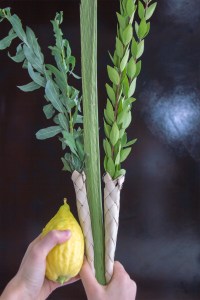
One of the most astounding links between Tu B’Shevat and Sukkot are the commanded four species that are waved during the festival.

On the first day you are to take choice fruit of trees, branches of palm trees, boughs of leafy trees, and willows of the brook, and rejoice before Adonai your God for seven days. (Lev. 23:40 TLV) 

Have you ever wondered why trees are used to commemorate the Israelite’s trek through the desert? We know that their diet consisted of manna from Heaven and water from a Rock. Could it be that the trees (Lulav and Etrog) that are waved at Sukkot represent the people? The Torah asks us a rather odd question in Deuteronomy 20:19, “Is the tree of the field a man?” While the context deals with war and is meant to define which trees can be cut down as tools to besiege a city, the association with men and trees are found elsewhere. Consider these verses:

But I—I am like an olive tree flourishing in the House of God. I trust in God’s lovingkindness forever and ever. (Ps. 52:10 TLV) 

 The righteous man will flourish like the palm tree, He will grow like a cedar in Lebanon. Planted in the house of the LORD, They will flourish in the courts of our God. They will still yield fruit in old age; They shall be full of sap and very green. (Ps. 92:12-14 NASB)

“They will not build and another inhabit, They will not plant and another eat; For as the lifetime of a tree, so will be the days of My people, And My chosen ones will wear out the work of their hands. (Is. 65:22)

Does Sukkot’s mirror, Passover, have any associations with trees? Yes! The people were to take hyssop branches to apply the blood of the lamb upon their doorposts and lintels. (Ex.12:22) Many centuries later, on another Passover, Yeshua was crucified on a tree. When death was nearly upon him, he said, “I thirst.” They took a hyssop branch with a sponge on the end of it and soaked it in vinegar and myrrh. They lifted it up to his mouth, but Yeshua refused it. (Mt. 27:34, Mark 15:23, John 19:29) The hyssop tree is also mentioned along with the Torah, water, people and the blood of the covenant:

For when every commandment had been spoken by Moses to all the people according to the Law, he took the blood of the calves and the goats, with water and scarlet wool and hyssop, and sprinkled both the book itself and all the people, saying, “THIS IS THE BLOOD OF THE COVENANT WHICH GOD COMMANDED YOU.” (Heb. 9:19-20)

Trees are intrinsic to both the beginning and the end. In Genesis, we see both the Tree of Life and the Tree of Knowledge of Good and Evil. In Revelation, Trees of Life line the banks of the River of Life. In Proverbs 3, the Spirit of Wisdom is a Tree of Life to those that cling to her. In Jewish tradition, the large spindles that carry Torah scrolls are called Trees of Life and the many sections of parchment are called its leaves.

The holy seven-branched menorah is also a Tree of Life, and is modeled after the almond tree. Interestingly, almond trees are the first trees to “wake-up” and bloom in Israel. The imagery of light, oil, buds, blossoms, and, eyes all add to the heavenly pattern of the menorah/tree being a symbol of resurrection and the power of the Holy Spirit. Moreover, the Hebrew word for tree, etz, is the same word for counsel, etzah. Thus, we find wise counselors like Abraham and Deborah near trees.

dsc_0701

© K. Gallagher

Messiah compares our ability to understand and discern His truth with four different types of soil receiving Seed[5], which are amazingly similar to the four-species waved at Sukkot. According to Yeshua, it is entirely possible to hear and see and not understand. Understanding is another Spirit of G-d, Binah.

Our good works and outward treatment of others is likened to fruit. Since we cannot possibly know the heart of another person, Yeshua reminds us that a tree is known by its fruit, for it reveals the seed from which it sprouted. (Mt. 12:33-37) YHWH even gave specific instructions for fruit trees in the Torah:

‘When you come into the land, and have planted all kinds of trees for food, then you shall count their fruit as uncircumcised. Three years it shall be as uncircumcised to you. It shall not be eaten. But in the fourth year all its fruit shall be holy, a praise to the LORD. And in the fifth year you may eat its fruit, that it may yield to you its increase: I am the LORD your God. (Lev. 19:23-25 NKJV)

Thus, discernment is key. For even if the fruit we see and taste came from good seed, it can still be uncircumcised and unfit for consumption in its sour immaturity. People are inherently connected with seeds, trees, and fruit. Hopefully, the tree we choose to partake of is the Tree of Life and not the one that simply makes one wise with the knowledge of good and evil. We must choose life.

The counterfeit tree is deceitful and its fruit enticing. Nebuchadnezzar had a dream of himself and his kingdom that YHWH equated to a mighty tree. (Dan. 4:10-16) Moreover, the wicked are planted in the earth like tree:

I have seen a wicked, violent man Spreading himself like a luxuriant tree in its native soil. (Ps. 37:35)

Israel is to be like the precious fruit trees that grow from the Seed of the Torah (Messiah) into a flourishing plant that gives sustenance and shade to others. Birds, like the sweet dove of the Holy Spirit, will nest in such branches. (Mt. 13:31-32) Notice the imagery and links between counsel, Torah, water, trees, leaves, and fruit that the psalmist uses in Psalm 1:

How blessed is the man who does not walk in the counsel of the wicked, Nor stand in the path of sinners, Nor sit in the seat of scoffers! But his delight is in the law of the LORD, And in His law he meditates day and night. He will be like a tree firmly planted by streams of water, Which yields its fruit in its season And its leaf does not wither; And in whatever he does, he prospers. The wicked are not so, But they are like chaff which the wind drives away. Therefore the wicked will not stand in the judgment, Nor sinners in the assembly of the righteous. For the LORD knows the way of the righteous, But the way of the wicked will perish. (Psalm 1)

In Romans 11, the Jewish people are called the holy, natural branches of an olive tree. Those of the nations are grafted into this tree and receive the same rich sap from its Root. Paul warns the grafted-in wild branches to not become arrogant against the natural branches, but rather to FEAR. Judah indeed holds a scepter of authority over the House of YHWH.[6] Not coincidently, the Hebrew word for scepter is shevet, the very name of this month (Shevat)![7] It also means a scion (graft), branch, rod, shepherd’s staff, and even a tribe.

In modern times, Jews have been planting trees in the land of Israel to honor righteous Gentiles such as Oscar Schindler and Corrie ten Boom, who helped save Jewish lives during the Holocaust.[8] These trees are planted in Jerusalem at the Holocaust museum in the Garden of the Righteous at Yad Vashem.

As you can see, the connections with people and trees are many. I have only briefly explored this concept. If nothing else, I hope you are inspired to research trees in Scripture during this season of transition. I pray that you bloom in the rich soil in which Adonai has planted you and that you continue to draw life giving nutrients from our Root, Yeshua.

Trees

By Joyce Kilmer

I think that I shall never see 
 A poem lovely as a tree. 
 A tree whose hungry mouth is prest 
 Against the earth's sweet flowing breast; 
 A tree that looks at God all day, 
 And lifts her leafy arms to pray; 
 A tree that may in summer wear 
 A nest of robins in her hair; 
 Upon whose bosom snow has lain; 
 Who intimately lives with rain. 
 Poems are made by fools like me, 
 But only God can make a tree.


Celebrating Tu B’Shevat

How can we make Tu B’Shevat meaningful? Consider some of the following activities:

  • Plant a tree! Or start some seeds for the spring.
  • Give the gift of fruit (or money) to the needy. Or volunteer to help feed or nurture them.
  • Study trees, tithing and/or the seven species of Israel in the Bible (Dt. 8:8)
  • Prepare a meal that includes various seeds, leaves, and fruit. Discuss with your family.
  • Take a walk or hike through forested land and thank the Creator for the mighty trees.
  • Recite Psalm 104.[9] Or the Psalms of Accent (120-134).
  • Host a Tu B’Shevat Seder. (Explained below.)

Intriguingly, the rabbis have developed a seder, complete with haggadah, to lead the family through the new year for trees, further linking Tu B’Shevat to Passover. Like the Passover haggadah, there many versions to choose from. A basic outline is as follows:

The service often begins by singing Psalm 133 or the “Hinei Ma Tov”. This song recalls our familial connections to Israel’s family TREE. During the ceremony, each participant will drink 4 cups of wine (or juice), starting with white wine, mixing increasing amounts of red wine with white, ending with a glass of red wine. YHWH is blessed before each cup by reciting Kiddush. These four cups symbolize the cycle of life in four seasons:

  • Pure White —represents the winter and the (seeming) void of life. It also symbolizes Day One of creation when divine light is separated from darkness.
  • Pale Pink (white with a few drops of red) —represents the approach of spring, and the splash of red signifies the emergence of color. It also symbolizes Day Two of creation when the earthly (red) and heavenly (white/fire) waters are separated from one another.
  • Dark Pink (a mixture of white and red) —represents the progression of spring. The ground has warmed to allow the seeds to take root, and the plants have started to grow. It also symbolizes Day Three when the waters (white) are gathered and dry land (red) appears with the life of seeds, trees, and fruit.
  • Pure Red (or with drops of white) —represents the arrival of summer. The trees are in full bloom and filled with fruit, ready for harvest. It also symbolizes Day Four when the sun, moon, and stars were given to govern our clocks and calendars to worship the King in proper seasons (moedim).

In between the cups of wine, participants eat a total of fifteen (or seven) types of nuts and fruits from three categories: fruits/nuts with shells, fruits with pits, and fruits edible inside and out. (Recall the Lulav and Etrog and the Parable of the Sower.) Each type of fruit represents a type of person and is intended to stimulate discussion around the table. The fourth element or fruit is spiritual and is not eaten. To represent the spiritual fourth fruit (Holy Spirit), the fragrance from cloves, cinnamon, rosemary or any other pleasant spice is inhaled by the participants. The entire seder is meant to increase awareness of Tu B’Shevat through nature, prayer, song, story, and dialogue.

The following links may be helpful in creating a meaningful Tu B’Shevat Seder.[10]

My jewish Learning

The Coalition on the Environment and Jewish Life (COEJL)

“My beloved responded and said to me, ‘Arise, my darling, my beautiful one, And come along. ‘For behold, the winter is past, The rain is over and gone. ‘The flowers have already appeared in the land; The time has arrived for pruning the vines, And the voice of the turtledove has been heard in our land. ‘The fig tree has ripened its figs, And the vines in blossom have given forth their fragrance. Arise, my darling, my beautiful one, And come along!'” (SOS 2:10-13 NASB)


[1] Rosh HaShana 2a: Chapter I, Mishnah. “There are four new years. On the first of Nissan is new year for kings and for festivals. On the first of Elul is new year for the tithe of cattle. R. Eleazar and R. Simeon, however, place this on the first of Tishri. On the first of Tishri is new year for years, for release and Jubilee years, for plantation and for [tithe of] vegetables. On the first of Shevat is new year for trees, according to the ruling of Beth Shammai; Beth Hillel, however, place it on the fifteenth of that month.”

[2] Shanah, the Hebrew word for year, is a feminine noun. It is one of the “rule breakers” in Hebrew grammar. In the plural, shanah takes the masculine ‘im ending rather than the usual feminine ‘ot.

[3] Lev. 19:23-25

[4] We use our feet to make cyclical pilgrimages to the mountain of YHWH in Jerusalem, hence they are called “foot-festivals.” Chag is also related to the circle dancing or whirling of worship.

[5] And He *said to them, “Do you not understand this parable? How will you understand all the parables? (Mark 4:13 NASB)

[6] Gen 49:10  “The scepter shall not depart from Judah, Nor the ruler’s staff from between his feet, Until Shiloh comes, And to him shall be the obedience of the peoples.

[7] H7626 שֵׁבֶט  shêveṭ  From an unused root probably meaning to branch off; a scion, that is, (literally) a stick (for punishing, writing, fighting, ruling, walking, etc.) or (figuratively) a clan: –  X correction, dart, rod, sceptre, staff, tribe.

[8] Moody, Valerie. The Feasts of Adonai: Why Christians Should Look at the Biblical Feasts. Lubbock, TX: Gibbora Productions, 2009. Print. p.143

[9] Psalm 104 is traditionally read on Rosh Chodesh (the new moon), but it’s filled with all the rich imagery we just explored.

[10] Linking to these sites does not suggest that I agree with all their content.

Categories: Biblical Symbols, Moedim | Tags: , , , , , , , , , , | 10 Comments

Hebrew Numbers 11-30

This is another reference post to help with Bible study, symbolism, dream interpretation, etc. Related articles can be found on the Misparim page. For numbers 1-10, click here. Studying Dr. Hollisa Alewine’s The Creation Gospel has been extremely helpful in making many of these determinations. I hope you will take the time to learn her material for yourself. You will see her work reflected in numbers 1-7 in regard to the seven creation days, seven Spirits of Adonai, seven Feast days, seven Churches, and in the seven abominations. 


© David Castillo Dominici | Dreamstime.com

Eleven achat esre [f.] echad asar [m.] Eleven is a tricky number, and the one in which I receive the most questions. People have a tendency to notice the clock when it is 11:11, and wonder what it means. If one feels plagued by seeing the number eleven, I suggest a careful read of Deuteronomy 1. From Mt. Sinai to the Promised Land was an eleven day journey, but due to Israel’s rebellion, they were in the wilderness for a total forty years. This message was reiterated to them in the eleventh month, Shevat, in the fortieth year. Hence, the full redemption and entry into the “Land” is connected to the number eleven, but also what prevents it.

So, eleven requires one to discern between the spirit of anti-messiah and the Messiah – remaining in rebellion or submitting to the King of kings. For example, Joseph was the eleventh son born to Jacob, and is a type of the Messiah – the Redeemer. Joseph was called the “master of dreams,” or mysteries/secrets. His life depicts many aspects of Yeshua with the number eleven playing a role in his prophetic dreams. (The sheaves and stars that bowed to Joseph were eleven. – Gen. 37) In the life of Yeshua, eleven disciples witnessed and revered the resurrected Messiah. Judas betrayed Him and then killed himself before the resurrection, making the disciples number eleven. (Mt. 28:16, Mark 16:14, Luke 24:9,23)

Most often, eleven has negative connotations. Stories with this number often revolve around rebellion, disorder, judgment, betrayal, idolatry, bribery, lack of trust in YHWH, being incomplete, and false authority/government. For example, lack in (12-1) or excess (10+1), both signify imperfection. There is an eleven day difference between the lunar and solar year (cycles). The lunar year is eleven days shorter and the solar year is eleven days longer. Interesting, considering the Jewish calendar favors neither, as it lunisolar. Esau produced eleven chieftains. He is characterized by the excess of eleven as he ruled by his appetite for more than he needs. One driven to amass wealth or excess of any kind needs to recognize that this beast/fleshly behavior actually achieves less, not more in the spiritual realm. Poor in the natural is akin to being rich in the spiritual realm; and being rich in the natural figures being poor in the spiritual realm. Messages of prosperity are dangerous for the Body as it leads to the spiritual depravity and lack of Esau, who is willing to sell his birthright for a bowl of “red stuff.” This concept is emphasized in the brother’s views:

Genesis 33:9-11 And Esau said, I have plenty, my brother. Let what you have be to yourself. [10] And Jacob said, No, please, if I now have found favor in your eyes, take my present from my hands. For I have seen your face, like seeing the face of God; and you are pleased with me. [11] Please take my blessing which has been brought to you, because God has favored me, and because I have everything. And he urged him; and he accepted.

Most translations use the same English word (typically: enough) in the bolded phrases in the above passage. But, Esau and Jacob use two different words to express their abundance. Esau says, “I have rav.” Whereas, Jacob attributes his wealth to God’s blessing and favor and says, “I have kol.” Having abundance, much or plenty alludes to the conclusion that there is still more to be gained. That was Esau’s choice of words. Whereas Jacob declared he had everything. This implies he had no lack and no need to strive for more due to God’s blessing and favor. There is a world of a difference between these two perspectives and ideologies. Again, which one describes you?

Eleven can also figure transition (moving back to 10 or ahead to 12). Consider the curtains that covered the Holy and Most Holy Place. There were FOUR curtains. The first (innermost) was made of linen, the second of goats’ hair, the third of rams’ skins, and the fourth of badgers’ (KJV) or marine animal skins. The second (goat’a hair) layer had eleven total curtains. (See Exodus 26.)

Exodus 36:14-16 (NASB) Then he made curtains of goats’ hair for a tent over the tabernacle; he made eleven curtains in all. [15] The length of each curtain was thirty cubits and four cubits the width of each curtain; the eleven curtains had the same measurements. [16] He joined five curtains by themselves and the other six curtains by themselves.

These four coverings were over the Holy and Most Holy Place of the Mishkan (Taberncale). What is the significance of the second layer having eleven curtains? The extra (excess) curtain in this case (the linen underneath had ten curtains) was doubled so it hung down and over the front and back of the Tabernacles. In this way, it concealed in the inner linen curtains. Linen figures holiness, righteousness, and purity. The covering of goat’s hair is reminiscent of one’s flesh, something that conceals the former. When a hairy Esau and his eleven chieftains submit themselves to Adonai, it is a very beautiful thing. The old nature must die for this this occur, like the goat’s that became part of the Mishkan.

Hence, eleven can figure the prophetic realm, but also its counterfeit, divination. Eleven often signals that one is doing what is “right in your own eyes,” the extreme opposite of the Holy Place. It’s action based on “I feel,” not “It is written.” It is ego and power driven to get one’s way. The Tabernacle teaches the opposite: dying to self.

In Daniel 7, a “little horn” arises from the ten horns of the terrible fourth beast, making it the 11th horn. This horn was epitomized in evil Antiochus Epiphanes, which is a type of the beast and antichrist, and the abomination that makes desolation. According to Daniel, this man and the spirit of the anti-christ seeks to CHANGE the times and law, that is the Torah and the Feast Days.

‘He will speak out against the Most High and wear down the saints of the Highest One, and he will intend to make alterations in times and in law; and they will be given into his hand for a time, times, and half a time. (Dan 7:25) 

These are the “changes” that Antiochus decreed for Israel:

You shall profane the Sabbath.
You shall profane the festivals and holy days.
You shall set up idols.
You shall eat unclean animals.
You shall not circumcise your sons.
You shall forget the Torah.

Thus, if the “prophetic” word one receives mirrors the actions of Antiochus and seeks to abrogate God’s Holy Law or His Holy Feast Days… run! It is not a Word from the LORD. It is a message for itching ears that seeks to please the appetites and lusts of the flesh. (A hairy Esau.)

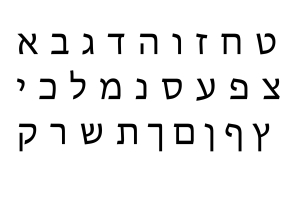
Eleventh Hebrew Letter: Khaf Numerical value of twenty. Pictograph meaning an open hand or container, like a cup or a spoon. As a suffix, it shows possession or ownership. An open hand is one that receives, kabbalah. It’s interesting that Jewish mysticism or kabbalah depicts both sides of the number eleven. There are true prophetic things in kabbalistic teachings, but there is also a much more popular form that is mere divination. The number/letter also can mean similar. Our job is to discern the difference between two similar, yet different ideologies. Keter, the Hebrew word for crown, begins with the letter khaf, hinting at the place of authority. Who is the authority/crown of your life? Messiah or anti-messiah? The root of the Hebrew word for spoon is kafaf, which means to bend. Who are we bending/bowing to? In this sense, khaf has to do with submission.

  • Jacob had to face Esau while his family was incomplete with 11 sons (Benjamin wasn’t yet born). He had to fight an “Angel of the LORD” all night long.
  • Esau’s chieftains were eleven (Gen. 36:40-43) compared to Jacob’s twelve. Just reviewing the history of Esau’s lineage (Edom) makes it abundantly clear that he is associated with rebellion and living by the nephesh (beast/flesh).
  • The wilderness journey was only eleven days, but rebellion cost Israel forty more years in the desert. Moses recounted this punishment to them on the first day of the eleventh month (Dt. 1).
  • Eleven disciples were incomplete until a twelfth was chosen. (Acts 1:21-26)
  • Story of rebellion in building the Tower of Babel occurs in Genesis 11, which resulted in the confusion of tongues/languages – babble.
  • Delilah betrayed the judge Samson by taking the bribe of 5 lords of the Philistines. Each offered her 1100 pieces of silver. (Jud. 16:6, 3:3)
  • Right after Samson’s story in Judges, the remaining chapters (17-21) depict the moral and political decay of Israel. All of it is contrary to God’s order. And amazingly, it all begins with a story about another 1100 pieces of silver. Here are the highlights and I believe they are indicative of the number 11:

The word to describe the state of affairs in these chapters is “confusion“: Stolen money is used for idols, the Lord is invoked to bless the thief, individual shrines replace worship at the tabernacle, Levites and common people are consecrated as priests, idols are used in the worship of Jehovah. And Micah supposed the Lord would bless him in all of this! Moreover, as the story continues, A Levite’s concubine is raped to death, a civil war ensues, and the tribe of Benjamin is almost wiped out. This verse begins and ends the entire series of chapters: In those days there was no king in Israel; everyone did what was right in his own eyes. (Jdg. 17:6 & 21:25)

  • 5 + 6 = 11. Look back at the meaning of numbers five and six. If power and strength (5) is added to man and beast (6), a twisted counterfeit emerges unless that man (or woman) is ruled by the Spirit of Adonai. In the case of the latter, eleven can symbolize a place of godly transition. Sadly, many believe that Adonai rules them, but it is their nephesh/flesh that really has the upper hand. Where this is true, their life will be characterized by confusion, disorder, an extreme of lack or excess, duplicity, corruption, divination, and the like.
  • Messiah was “cut off” (crucified) because of our rebellion (sins) when He was about 33 years old (3 x 11). (Dan. 9:26) In His case, this was obviously a godly “transition” as He overcame the grave!
  • There are 22 Hebrew letters in the alephbet. (2×11). Overcoming and proper discernment come from the Word of Adonai, which is composed of 2×11 letter in the Holy Language of Hebrew.

Twelve shtayim esre [f.] shnayim asar [m.] perfect government, order, organization, united, perfect subdivisions of time (12 hours in day, 12 months in a year, 12 primary constellations) and of people (12 tribes of Israel, 12 Disciples/Apostles). This demonstrates a holy people serving a holy God based on the Creator’s clock and calendar.

  • Twelfth Hebrew Letter: Lamed Numerical value of thirty. Pictographic meaning shepherd’s hook/staff, teaching, learning, goading, protection, yoke, bind. Infinitive prefix for verbs, meaning to or for or belonging to.
  • 12 foundations in the heavenly Jerusalem
  • 12 Gates
  • 12 Pearls
  • At age 12, Yeshua first appears in public and engages with the teachers in Jerusalem. (Luke 2:42, He was at Bar Mitzvah age.)
  • In Luke 8, a woman that had an issue of blood for 12 years touches Yeshua’s tzit-tzyiot (tassels/fringes) and she is healed. This occurred while He was on His way to heal a 12 year girl.
  • 2×10= 12. If we look at the ideal for numbers two and ten, then we can see that 12 is about a united (2) and perfect congregation (10).
  • 3×4=12. Again, looking at the ideal for numbers three and four, we can see that when the seed is ripened (3) with the Holy Spirit (4), it produces resurrection life (3) that is powered by divine government (4).
  • 2×6=12. If we review numbers two and six, twelve will ideally picture a unified relationship (2) that is serving in the image of Elohim (6). The beast is being ruled by the two in one flesh of restored Adam (mankind).
  • Multiples of twelve, such as 24 or 144,000 will carry these same ideas.

Thirteen shlosh esre [f.] shlosha asar [m.] Thirteen is associated with the mercies of God, love, unity (oneness), and eternity. It is the 6th prime number, so it will have some of the same meanings as the number six. Thirteen has the stigma of being an “unlucky” number. I don’t believe in luck, nor do I believe that thirteen ONLY has negative connotations. The idea that the number 13 is bad luck comes from pagan influences. The Hebrew word for love (ahavah) and oneness (echad) share the numerical value of 13. Thus, one would expect to see 13 linked with love and unity, and a careful look shows that it is. However, on the negative side, there are connections to the opposite of love, which is not hate, but apathy, indifference, and fear.

  • Thirteenth Hebrew Letter: Mem Numerical value of forty. Pictographic meaning of water, chaos, immersion, womb, blood. Mem is the “center” of the Hebrew alefbet. Mem has two forms: the open and closed (final/sofit), depending on where it appears in a word. Mystically, mem is associated with Moses and Messiah (both begin with the letter mem), and the revelation of God’s instructions (Torah). As such, Moses is represented by the open mem, as the revelation is open or revealed; whereas, Messiah represents the closed mem or the revelation of that which is concealed. This is mirrored in the imagery of the womb: it is both open and closed, depending on the stage of a child’s development. In grammar, mem shows the masculine plural for nouns. As a prefix, is the preposition from, out of, or the means by which. In light of this, what is the means by which love and unity (13)  are accomplished? Perhaps some of the following points will help demonstrate the answer.
  • God expresses His glory with 13 attributes. (Ex. 34:6-7, Micah 7:18-20)[1]
  • In Hebrew, the combined letters in the names of the 3 patriarchs (Abraham, Isaac, and Jacob) reduce to 13.
  • In Hebrew, the combined letters in the names of the 4 matriarchs (Sarah, Rebekah, Rachel, and Leah) reduce to 13.
  • The Tetragrammaton (Yod, hey, vav, hey) equals the number 26, or 13 x 2.
  • 13 is considered the age of a youth for becoming a Bar and Bat Mitzvah (son and daughter of the commandments). In other words, this is point at which a child should be mature enough to take on more responsibility for their own spiritual welfare.
  • There are 13 rules of Torah interpretation in Jewish hermeneutics.
  • There are 12 tribes of Israel, yet there are 13 if one counts Ephraim and Manasseh instead of Joseph.
  • There are 12 Hebrew months, but occasionally there is an added 13th month to keep the lunar-solar Hebrew calendar in sync.
  • There are 613 Torah commandments. (600 + 13). Six is the number of a man made in the image of Elohim and 13 is the number of love. Truly, all the commandments hang on one: LOVE – ahavah = 13 (First God, and then your neighbor as yourself, because we are truly to be One – echad = 13).
  • The thirteenth chapter of 1 Corinthians teaches one about the actions of  LOVE.
  • 6+7=13. The ideal for the number 6 (man expressing the image of God and sacrificial love) added to the number 7 (divine rest, completeness, and reverence), produces both love and unity.
  • The negative side of 6 (man following the image of the beast) added to 7 (one who separates or causes strife between brothers), produces rebellion, destruction, and apathy. It is fear based, rather than being rooted in perfect love. This is best depicted by the seventh church of Revelation: Laodicea (The people lack love; they are apathetic, indifferent, or “lukewarm.”)

Fourteen arbah esre (f) arba’ah asar (m) Multiple of SEVEN, a double measure. The number of the Messiah. To reproduce, recreate, disciple, servant, bond-servant. The moon is nearly full on the fourteenth day of each Hebrew month, symbolizing fullness, revelation, and increased (spiritual) light.

  • Fourteenth Hebrew Letter: Nun Numerical value of 50. Pictographic meaning life, fish, seed, heir, productiveness, continuity, permanence, prophetic, multiplication.
  • Jacob served Laban for fourteen years to marry Leah and Rachel. (Gen. 31:41)
  • After the rebellion of Korah, the people accused Moses of killing the LORD’s people. A plague then consumed 14,700 of them. (Notice the 7s). (Num. 16:49)
  • Every day of Sukkot (Tabernacles), a 7-day feast, 14 lambs were offered. (Num. 29)
  • Solomon celebrated Sukkot for fourteen days when he dedicated the first Temple of YHWH. (1 Kings 8)
  • The genealogy of the Messiah is divided up and given in two sets of fourteen (Mt. 1). David’s name has a numeric value of 14 (dalet, vav, dalet). This is one way that Matthew connected Messiah with David in his gospel.
  • Paul says that he waited fourteen years to go up to Jerusalem a second time to meet with the Jerusalem council in Acts 15. (Gal. 2:1) This speaks to one being patient and gaining wisdom and experience before pushing ahead with an agenda — even if it is from Elohim!

Fifteen chamesh esre (f) chamish’a asar (m) A multiple of FIVE. The short or poetic form of God’s most holy Name (Yahyohd, hey) has a numerical value of fifteen. Because of this, the number fifteen is not written out in its most straight forward form (yohd [10] + hey [5] = 15) in order to not desecrate a holy Name of Adonai. Instead, it is written as tet [9] + vav [6] = 15.

Fifteen implies salvation, healing, redemption, prolonging, stepping up, ascending, and fullness (like the LIGHT of the full moon). The number fifteen also represents the elevation from the physical to the spiritual. For example, the Pesach Seder has fifteen steps, and there are fifteen stanzas of Dayenu. The Aaronic Benediction (Priestly Blessing) consists of fifteen Hebrew words. (Num. 6:24-26) One had to ascend fifteen steps to enter the Temple. There are fifteen Shir Haamalot (Psalms of Ascent, Psalms 120-134)

  • Fifteenth Hebrew Letter: Samech Numerical value of 60. Pictographic meaning thorn, to surround, support, protect, wheel, snake.
  • There are fifteen Psalms of Ascent. (Ps. 120-134) These Psalms were sung as travelers made their way to the three pilgrimage festivals in Jerusalem. In the Holy Temple courtyard, there was an ultra wide stairway that consisted of fifteen large, semi-circular steps that “ascended” into the inner section of the courtyard. The Levites would play music on these steps and sing these fifteen Psalms.
  • YHWH prolonged the life of King Hezekiah by healing him and adding fifteen years to his life. (2 Kings 20, Is. 38:5)
  • Hosea redeemed his wife with fifteen shekels of silver. (Hos. 3)
  • The fifteenth day of (biblical lunar) months always falls on the full moon. The most LIGHT in the night sky occurs when the moon is full. The first day of Unleavened Bread, and the first day of Sukkot, both begin when the moon is full. (See more on this in Moonbeams and the Moedim.)
  • When a man (ish) becomes one with a woman (ishsha), Yah is (should be) at the heart of their marriage. Thus, fifteen (Yah -15) is the bond between a man and wife in holy matrimony. Without Yah, they are left with fire. (See the linked article.)

Sixteen shesh esre (f) shisha asar (m) Multiple of eight. Without boundaries or limits. New beginning. Olam Olam. Outside of time as we know it. Lingering with the Father. Can also picture the completeness of seven (16= 1+6=7) that leads to new beginnings. Covenant. (See eight for more information.)

  • Sixteenth Hebrew Letter: Ayin Numerical value 70. (70 is the number of the nations.) Pictographic meaning eye, well (of water), vision (literal and prophetic), perception, seven Spirits of God (as eyes roaming to and fro).

Seventeen shva esre (f) shiv’a asar (m) Seventeen is the 7th prime number, thus some meanings will mirror seven. 7+10=17 indicates the meaning of the number ten will also inform seventeen. While completeness, divine order, and a congregation are related to this number, the Scriptures also reveal that even those that are called to walk in these attributes can act presumptuously in their immaturity. Joseph was seventeen when he brought the evil report about his brothers to his father Jacob. (Gen. 37:2) Seventeen is close to adulthood (age 20), but not quite. Thus, immaturity, childishness, underdevelopment, and naivety can be indicative of seventeen as pictured in young Joseph and King Rehoboam.

  • Seventeenth Hebrew Letter: Peh Numerical value of 80. Pictographic meaning of mouth, opening, speech, blow, scatter. Thus, the mouth reveals whether one is mature or immature.
  • Jacob lived in Egypt for seventeen years, at the end of his life, reunited with his son Joseph. In this case, things had come full circle, a restoration (maturity).
  • The Flood of Noah’s day (judgment): fountains of the great deep and the floodgates of the sky opened up on the 17th of the second month. This a judgement from above and below, a complete cycle. The restoration began in like fashion: on the 17th of the 7th month, the Ark rested on Mt. Ararat, but the mountaintops couldn’t be seen until the 10th month.
  • King Rehoboam reigned for 17 years in Jerusalem as the first king over the southern kingdom of Judah. His immature, selfish actions resulted in rebellion and the split of the united Israel.
  • The 17th of Tammuz begins the mourning period for the destruction of the 1st and 2nd Temples, ending on the 9th of Av. This three week period is called the “Dire Straits.”

Gen. 47:27-28 (LITV) And Israel lived in the land of Egypt, in the land of Goshen. And they owned in it, and were fruitful, and multiplied exceedingly.  28  And Jacob lived in the land of Egypt seventeen years. And the days of Jacob, the years of his life were a hundred and forty seven years.

This shows the full circle of completion that seventeen implies. When the immature grows to maturity, reunification and restoration (7) are figured. It results in the use of the “peh” or mouth for a promise:

Gen. 47:29-31 (LITV) And the days of Israel to die drew near. And he called to his son Joseph and said to him, Now if I have found favor in your eyes, please put your hand under my thigh, and do kindness (chesed) and truth (emet) with me. Please do not bury me in Egypt;  30  but let me lie with my fathers, and carry me from Egypt, and bury me in their burying place. And he said, I will do according to your words.  31  And he said, Swear to me. And he swore to him. And Israel bowed on the head of the bed.

Eighteen shmoneh esre (f) shmonah asar (m) In Hebrew, the word for LIFE, chai (chet, yohd) is also the number eighteen. Both prayer and Temple worship are related to the number eighteen. Meanings are related to life, prayer, worship, devotion, offerings, charity, being loosed or freed, and sacrifice. Conversely, when one is rebellious to YHWH, it can relate to the opposite of life: judgment, destruction, captivity, and bondage.

  • Eighteenth Hebrew Letter: Tzaddi Numerical value of 90. Pictographic meaning trail, journey, hunt, righteous (upright) one, justice.
  • In Jewish law, Matzah (Unleavened Bread) is baked for no more than eighteen minutes to be considered Kosher for Pesach (Passover).
  • The Amidah or the Shemoneh Esrei is a standing prayer with eighteen benedictionsThese prayers were formulated to correspond to the daily (continual) offerings at the Temple. These are the “calves of our lips.” (Hosea 14:2)
  • The future New Jerusalem (from Ezekiel’s vision) will be 18,000 cubits: “The city shall be 18,000 cubits round about; and the name of the city from that day shall be, ‘The LORD is there.'” (Ezek. 48:35)
  • In Luke 13:4, the Tower of Siloam fell on eighteen people in judgement. 
  • Yeshua healed a woman bound with an infirmity that caused her to be bent over for eighteen years (Luke 13:10-17). Someone “bent over” with an infirmity is figuratively the opposite of someone “upright” or righteous. Yeshua released (loosed) this woman from the bondage of the enemy. Whatever was preventing her from walking uprightly for 18 long years was removed.
  • The Israelites were punished for periods of eighteen years for idolatry and rebellion in the time of the Judges. (Judges 3:14; 10:8; 20:44)

Nineteen tsha esre (f) tish’a asar (m) 10+9=19, meanings of ten and nine will inform the number nineteen. Divine order, judgment, truth revealed or concealed. Nineteen is the 8th prime number, which also indicates links to the number eight.

  • Nineteenth Hebrew Letter: Koof Numerical value of one hundred. Pictographic meaning sun on the horizon, time, imitation (of God or enemy), circle.
  • Chavah or Eve has a Gematria value of 19. (See how the woman is associated with the number nine here.)
  • The Jewish calendar follows a 19 year (Metonic) Cycle. 19 solar years are equivalent to 235 lunar months.

Twenty esrim (n) Manhood. The age of accountability for those counted among the people for service, war, and worship. (Ex. 30:14; 38:26, Lev. 27:3, Num. 1, 1 Chron. 23:24; 27:23. Doubling of the number ten. Maturity, accountability, being counted, expectation.

  • Twentieth Hebrew Letter: Reish Numerical value of two hundred. Pictographic meaning a man’s head, authority, beginning, first, top.
  • Humans have 10 fingers and ten toes, which together are 20 and symbolize a person’s deeds and walk (lifestyle/where they go).
  • 1 shekel is equal to 20 gerahs. (Ex. 30:13)

Twenty-One esrim v’achat (f) esrim v’echad (m) Can denote a tripling of seven (3×7=21). This can be good as in a multiplication of rest, holiness, or the seven Spirits of God, but can also depict judgment and the spirit of anti-messiah as seen in the triplets of sevens from the Book of Revelation. Can also represent delay or to stand against as seen in Daniel below.

  • Twenty First Hebrew Letter: Shin Numerical value of three hundred. Pictographic meaning of teeth, to devour, chew on, destroy, think about, ponder, fire, tongues of fire, sharpen, press, eat, consume.
  • The Prince of Persia delayed the message Daniel had prayed about for twenty-one days. Then he said to me, “Do not be afraid, Daniel, for from the first day that you set your heart on understanding this and on humbling yourself before your God, your words were heard, and I have come in response to your words. “But the prince of the kingdom of Persia was withstanding me for twenty-one days; then behold, Michael, one of the chief princes, came to help me, for I had been left there with the kings of Persia. (Daniel 10:12-13) The message was about the latter or end days (vs. 14).

Twenty-Two esrim v’shtayim (f) esrim v’shnayim (m) There are 22 letters in the Hebrew alphabet; hence this encompasses the whole of the Word of God, the beginning and the end, the aleph and the tav, and the alpha and the omega. It also represents the LaShon HaKodesh (Holy Tongue). On the negative side, it can picture something wholly wicked as the doubling of eleven (disorganization, doing what is right in your own eyes, anti-christ). Likewise, 22 can picture something highly prophetic or something divined by sorcery. Either way, positive or negative, sacred or profane, it involves WORDS. Other positive meanings: totality, creation, life, and order. Other negative meanings: disorder, destruction or break down, missing components, distress, banishment.

  • Twenty Second Hebrew Letter: Tav Numerical value of four hundred. Pictographic meaning the seal (of God) or the mark of the enemy, completion, signal, symbol, monument. As a multiple of four, government and authority (whether holy or wicked) are also insinuated.
  • YHWH spoke the Universe into existence. He used Words and words are made from letters. Thus, the Hebrew letters are the building blocks to all life.
  • The 22 letters are like human DNA. Each cell has Twenty-two pairs of chromosomes, called autosomes, with an additional pair of sex chromosomes.  The sex chromosomes are the only difference between males and females. Females have XX, while males have XY.
  • David used an acrostic featuring all 22 Hebrew letters when he penned Psalm 119. Eight verses are devoted to each of the Hebrew letters to praise YHWH for His Torah, commandments, and precepts. It’s as if he were “counting the ways” of his love for YHWH and His WORD.


Twenty-Three esrim v’shalosh (f) esrim v’shlosha (m) Based on the few Biblical passages that refer to this number, it appears that twenty-three has much to do with immorality, stubbornness, grumbling, complaining, wickedness, idolatry, etc. 

  • Jeremiah preached repentance to an obstinate people for 23 years as the Word of YHWH came to him. (Jer. 25:3, Read this passage for context)
  • Paul reminds about the fall of 23,000 in the wilderness: Now these things happened as examples for us, so that we would not crave evil things as they also craved. Do not be idolaters, as some of them were; as it is written, “THE PEOPLE SAT DOWN TO EAT AND DRINK, AND STOOD UP TO PLAY.” Nor let us act immorally, as some of them did, and twenty-three thousand fell in one day. Nor let us try the Lord, as some of them did, and were destroyed by the serpents. Nor grumble, as some of them did, and were destroyed by the destroyer. (1 Cor. 10:6-10)

Twenty-Four esrim v’arba (f) esrim v’arba’a (m) Multiple of twelve. Heavenly government and worship, dividing of time (24hrs in a day), priesthood, watchmen, all parts working together in service to YHWH. On the negative end are those that oppose the government, authority, and worship of the true God. The giant with 24 fingers and toes described below best depicts this.

  • The priests were divided into 24 courses to perform their service in the Tabernacle/Temple. (1 Chron. 24)
  • There are 24 elders around the heavenly throne in John’s vision in the Book of Revelation. (Doubling of 12)
  • Time is daily divided into 24 hour periods.
  • Watchmen (Levites, but not priests) were divided into 24 orders to guard the sanctity of the Holy Mount.
  • The Holy Land was divided into 24 districts.
  • The word shalom (peace) is found 24 times in the Torah.
  • There are 24 books in the Tanakh (Old Testament).  [Christians divide the same books differently to form 39. For example, Jews lump all twelve of the Minor Prophets together into one “book”.]
  • 24,000 died by plague for playing the harlot with the daughters of Moab before Pinchas intervened. (Num. 25)
  • In tradition, 24,000 of Rabbi Akiva’s students died of plague during the Omer Count for not honoring and respecting one another.
  • David’s nephew, Jonathan, killed a giant with 24 fingers and toes. This meant that the giant had 6 fingers on each hand and 6 toes on each foot. Since this giant opposed YHWH and His anointed, it’s safe to assume that he followed the image of the beast (6) both inside and out. Again there was war at Gath, where there was a man of great stature who had twenty-four fingers and toes, six fingers on each hand and six toes on each foot; and he also was descended from the giants. When he taunted Israel, Jonathan the son of Shimea, David’s brother, killed him. (1 Chron. 20:6-7)

Twenty-Five esrim v’chamesh (f) esrim v’chamisha (m) Related to five, as in 5 squared or 5×5. Has to do with strength and power to go the distance to spread the Seed or the Good News. This is demonstrated by the age of the priesthood apprenticeship beginning at age 25. Negatively, it is multiplied feet set to do evil and give wicked counsel. Ezekiel’s vision below is an example of this.

  • Chanukah (Feast of Dedication & Light) is on Kislev 25th. The 25th word in the Hebrew Bible is אור “ohr” which is LIGHT. Light & Seed are equivalent expressions.
  • Levites began to apprentice or learn their service to YHWH at the age of twenty-five. (Num. 8:24) [Their ministry doesn’t officially begin until age thirty.]
  • Ezekiel saw 25 men in a vision with their backs toward the Temple and faces toward the sun (false worship). Later, Ezekiel discovers who these men are and what their judgment will be. (Ezek. 8:16; 11:1-13)

Twenty-Six esrim v’shesh (f) esrim v’shisha (m) The numerical value of the Divine and Most Holy Name: YHWH (yohd, hey, vav, hey) is twenty-six. The Torah was given on Mt. Sinai in the 26th generation of mankind. (There were 10 generations from Adam to Noach, 10 generations from Noach to Abraham, and another 6 generations from Abraham to Moses.) Means oneness (YHWH is One [Dt. 6:4]), but also carries ideas associated with the number four (The most holy Name has four letters): dominion, authority, fullness, giving of Torah and Holy Spirit.

  • 2×13=26, denoting that 26 is related to thirteen. Thirteen means covenant, love, and unity.
  • Mankind is created in the image of YHWH (26). Not coincidently, the Bible begins to describe the creation of mankind in the 26th verse on the Torah scroll in Hebrew. This is true even in English Bibles: Gen. 1:26 Then God said, “Let Us make man in Our image, according to Our likeness; and let them rule over the fish of the sea and over the birds of the sky and over the cattle and over all the earth, and over every creeping thing that creeps on the earth.”

Twenty-Seven esrim v’sheva (f) esrim v’shiv’a (m) Three cubed equals twenty-seven. Thus, review the number three for more details as to how 27 is an exponential picture of this. To gather, resurrect, seeds, trees, fruit, counsel, dry land, chaos adverted, firstfruits, harmony, and balance. 3 x 9 = 27, thus the significance of the number nine reveals traits of twenty-seven. Based on the Scripture references below, it appears that 27 is linked also to things hidden being revealed and the Seed of the Woman, which is the mystery of the Gospel (nations being coheirs with Israel).

  • Sarah lived 127 years (Gen. 23:1). She is the “mother of nations.”
  • The Persian King Ahasuerus and Esther the Jewess ruled 127 provinces [nations] (Esther 1:1). As a descendant of Sarah, Esther was truly a “mother of nations.”

Twenty-Eight esrim v’shmoneh (f) esrim v’shmonah (m) 4×7=28, indicating that twenty-eight is linked to both four and seven. As mentioned in Hebrew Numbers 1-10, four and seven are indeed connected and picture many of the same things. 14+14  equals 28, linking Messiah to this number as well. A full lunar month can occur in only 28 days. Jewish thought associates 28 with seasons as seen below. Thus, 28 has to do with holy time and the calendar.

  • King Solomon enumerated 28 times, seasons, or purposes for everything under Heaven (Ecc. 3:1-8).

Twenty-Nine esrim ve tesha (f) esrim ve tish’a (m)
 The number of accountability and expectation (20) plus the number of judgment, fruitfulness, and multiplication (9). It also has connotations of potential.

Thirty shloshim (n) Represents the life cycle in miniature. Perfect order (3 x10), maturity for official ministry or service, price of bondservant, time of mourning a life.

  • Joseph was thirty years old when he stood before Pharaoh (Gen. 41:46).
  • King David began to reign when he was thirty years old (2 Sam. 5:4).
  • Messiah was thirty years old when His ministry began (Luke 3:23).
  • Aaron was mourned for thirty days (Num. 20:29).
  • Moses was mourned for thirty days (Dt. 34:8).
  • Priests that handled the most holy things began their official service at age thirty. (Num. 4)
  • The redemption price for a bondservant gored by an ox is 30 shekels of silver (Ex. 21:32).
  • Zechariah prophetically asks Judah to estimate his value. He is valued at 30 shekels of silver (Zech 11:12-13).
  • Judas betrays Messiah for 30 shekels of silver. (Mt. 26:15)
  • Samson had thirty Philistine companions when he went to marry his wife. He put a riddle to them, offering them thirty changes of clothes if they could figure it out. But his new bride tricked Samson into revealing the riddle, so Samson slew thirty men to fulfill his wager. (Judges 14 — multiples of 3 reign in Samson’s story.)

[1] Ex. 34:6-7 And the LORD passed by before him, and proclaimed, The LORD, The LORD God, merciful and gracious, longsuffering, and abundant in goodness and truth, Keeping mercy for thousands, forgiving iniquity and transgression and sin, and that will by no means clear the guilty; visiting the iniquity of the fathers upon the children, and upon the children’s children, unto the third and to the fourth generation.

For more references, see the footnotes under the page Misparim.

Categories: Biblical Symbols, Study Helps | Tags: , , , , , | 42 Comments

Blog at WordPress.com.