Haftarah Miketz: Cutting the Baby in Half

Miketz (At the End) Genesis 41:1-44:17, I Kings 3:15-4:1

In some years, this prophetic portion coincides with Chanukah in which case the reading is Zechariah 2:13–4:7. This year (2020), Chanukah concluded before Shabbat (parsha Miketz).

In the Torah and Haftarah portion, Pharaoh and Solomon awake, yayiykatz, from a dream. In Hebrew, a dream is chalom; spelled like shalom, but with a chet rather than a shin. Chalom, much like shalom, refers to being strengthened and restored to health. Indeed, God used the dreams of both men to impart His wisdom for proper ruling and justice, the latter given through Joseph’s interpretation. (For more on dreams click here.)

The above is an oversimplification of the relationship of the two narratives. However, the word yayiykatz caught my attention regarding current events. One of the buzz words in modern culture is being “woke.” If you haven’t researched the origin from which this term was coined, I highly suggest investigating Critical Theory (CT). This paradigm or ideology is the primary message being taught in our universities and has spread to every area of government and business, and is now replacing the Biblical worldview in some churches.

© Romolo Tavani | Dreamstime.com

Wearing this lens distorts Biblical justice while purporting to be the epitome of justice itself. CT proposes to unify various groups and bring about equality and equity, which sounds wonderful, especially to those that have been marginalized. Yet, the whole ideology segregates people into categories based on group identity in the areas of race, class, sexuality, and gender identity. (Notice that none of these are about inward morality.) One is taught to judge a person based on the “box” in which CT places them. They are either an oppressor or one of the oppressed. This is NOT how the Bible deals with issues of judgment, justice, or equity.

Worst of all, proponents are conditioned to base truth on lived experience and feelings rather than logic, critical thinking, and facts. At its core, the worldview of CT has its own versions of original sin (they call it oppression) and morality (which is anything but godly). CT’s plan of salvation is not the shed blood of Messiah and faith in God, but activism and overthrowing power structures that oppress the aforementioned groups in various ways. They call this “social justice,” which will be dealt with below. Once one accepts the tenets of CT, and “sees” the oppression he has suffered and desires to remedy it, he is considered a “woke” person.

Biblical justice, righteous justice, is akin to “wisdom from above.” The Torah and Haftarah both use the terms discerning (navon) and wisdom (kamoka/chakham) to describe King Solomon and Joseph. This is what being AWAKE, not woke, refers to in our portion. The case of the two women in 1 Kings drives this point completely home. These two women can be likened to the dichotomy between the spirit and the flesh, the good and evil inclination, or the righteous woman and the harlot (wicked woman). If one is discerning and wise in the Biblical sense, they will allow the Word to rule or master (mashal) their thoughts, mind, and heart, not earthly social dogma. In doing so, they are awake, not woke.

James 3:13-18 (NASB) Who among you is wise and understanding? Let him show by his good behavior his deeds in the gentleness of wisdom. 14 But if you have bitter jealousy and selfish ambition in your heart, do not be arrogant and so lie against the truth. 15 This wisdom is not that which comes down from above, but is earthly, natural, demonic. 16 For where jealousy and selfish ambition exist, there is disorder and every evil thing. 17 But the

Does this message align with “wisdom from above?” Photo © Ciaobucarest | Dreamstime.com

wisdom from above is first pure, then peaceable, gentle, reasonable, full of mercy and good fruits, unwavering, without hypocrisy. 18 And the seed whose fruit is righteousness is sown in peace by those who make peace.

I chose to quote James because not only does he teach the twelve tribes of Israel about godly wisdom and understanding (discernment), but he specifically addresses the trials of poverty and oppression experienced by the poor in his letter. (Jas. 1:9-11; 5:1-6; 2:5-6) These trials are championed by CT proponents and their solutions are diametrically opposed to James’ message. First, consider the case brought before the wise king:

1 Kings 3:16-24 (NASB) Then two women who were harlots came to the king and stood before him. 17 The one woman said, “Oh, my lord, this woman and I live in the same house; and I gave birth to a child while she was in the house. 18 It happened on the third day after I gave birth, that this woman also gave birth to a child, and we were together. There was no stranger with us in the house, only the two of us in the house. 19 This woman’s son died in the night, because she lay on it. 20 So she arose in the middle of the night and took my son from beside me while your maidservant slept, and laid him in her bosom, and laid her dead son in my bosom. 21 When I rose in the morning to nurse my son, behold, he was dead; but when I looked at him carefully in the morning, behold, he was not my son, whom I had borne.” 22 Then the other woman said, “No! For the living one is my son, and the dead one is your son.” But the first woman said, “No! For the dead one is your son, and the living one is my son.” Thus they spoke before the king. 23 Then the king said, “The one says, ‘This is my son who is living, and your son is the dead one’; and the other says, ‘No! For your son is the dead one, and my son is the living one.'” 24 The king said, “Get me a sword.” So they brought a sword before the king.

The king asks for a sword. It is by the Sword of the Word, righteous judgment, that he will rule in this matter. Both women are referred to as a zanah, usually a harlot. But, there are many cases where a harlot ends up proving herself to be the righteous woman. For example, consider Tamar or Rahab. This case is once again challenging one to discover which woman is which. Sometimes, we must challenge our own hearts, inclinations, motives, and desires to discover the same. James’ wisdom from above and wisdom from below teaches one the difference. (Also see the Book of Proverbs.)
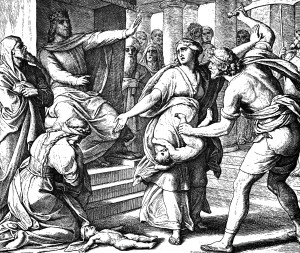
© Pavel Kusmartsev | Dreamstime.com

I cannot help but to feel great compassion for the woman that accidently smothered her newborn in the night. What a horrible tragedy, regardless if one is wicked or righteous! Any mother that has lost a child can relate to the unbearable agony and seeming unfairness of this great loss. In desperation, such a one would do just about anything to remedy her pain. And, that’s exactly what she did. She saw an opportunity and took it. Though it was rooted in bitter jealousy, selfish ambition, pride, and lack of concern for her neighbor, she stood by her choice and ended up before the highest judge in the Land.

For onlookers, the case was not clear. Which woman did the child belong to? Who was telling the truth? How would the king rule? King Solomon, grasping his sword, proclaimed:

“Divide the living child in two, and give half to the one and half to the other.” 1 Kings 3:25 (NASB)

That’s equity: equal outcomes. And, this decision satisfied the woman that lost the child. She felt this was justice. Why should the other woman get to enjoy raising a son when she was robbed of this pleasure? It’s not fair. If I can’t have a child, why should she have this privilege?

1 Kings 3:26 (NASB) Then the woman whose child was the living one spoke to the king, for she was deeply stirred over her son and said, “Oh, my lord, give her the living child, and by no means kill him.” But the other said, “He shall be neither mine nor yours; divide him!

King Solomon’s sword cut through to the heart of the matter without ever taking a swing. The woman whose child was living had great racham, tender mercies, like the womb (rechem) for her son. She was willing to give the wicked woman her son if only he could live. She was more concerned about the life of another person than for the great injustice the other woman was exercising against her. She was willing to endure jealousy, robbery, and great loss than to see her son perish. This is humility, the opposite of the arrogant spirit operating in the other woman.

That’s how Solomon’s sword divided between wisdom from above and wisdom from below. Earthy, fleshy wisdom seats SELF on the Throne. It abhors God’s sovereignty, especially in tragedy and “unfairness.” Like a toddler, it views the trials, hardships, and unfairness of life as an affront to her wellbeing and happiness. She is too immature to consider that God uses such situations as goads to grow and mature one into the image of Messiah. It’s a painful and humbling process to be sure. Being threshed like wheat against a stone “feels” bad to the flesh and to the sensibilities of the earthy man.

In a similar way, CT cannot deal with the sovereignty of God. It just doesn’t fit into their worldview. The God of the Bible would be considered the greatest oppressor of all, since He and He alone allows people to be hurt, oppressed, injured, rejected, and marginalized. Indeed, this IS the problem that most atheists have with God. They cannot fathom His goodness in this fallen, broken world. They accuse Him of being a tyrant, when in reality, it is the free will of man and sin that brings chaos, division, oppression, and evil into our world.

Consider the woman with the dead child again. Her answer to unfairness and pain was to cause another woman to suffer. In her mind, this was justice. It evened the playing field, something critical theorists champion. If I can’t have it, no one can. That is the heart of social justice today. It is saturated in covetousness, the tenth of the Ten Words (Commandments). If everyone is the same, then maybe I won’t be jealous or yearn for something they have. This is greed, which Yeshua calls the “evil eye.” (Matthew 6:19-34)

Mark 7:21-23 (NKJV) “For from within, out of the heart of men, proceed evil thoughts, adulteries, fornications, murders, 22 thefts, covetousness, wickedness, deceit, lewdness, an evil eye, blasphemy, pride, foolishness. 23 All these evil things come from within and defile a man.”

Matthew 20:14-16 (NKJV) Take what is yours and go your way. I wish to give to this last man the same as to you. 15 Is it not lawful for me to do what I wish with my own things? Or is your eye evil because I am good? 16 So the last will be first, and the first last. For many are called, but few chosen.

Adonai desires that we wake up or be awake and sober, not woke. To be spiritually sober, one cannot mix another spirit or worldview with His truth of “it is written.” The earthly waters of man’s wisdom will never mix with the heavenly oil of the Holy Spirit. Dreams from God (and righteous justice) are restorative for every person involved, despite worldly “social” statuses. But, restoration often requires painful soul correction. It is deeply personal, not social. Righteous correction is healing and brings shalom, not condemnation. (The latter being a primary fruit of CT.)

Justice of the People

© Romolo Tavani | Dreamstime.com

The seventh assembly in the Book of Revelation is called Laodicea. Interestingly, the name Laodicea is mentioned seven times in Scripture. If you recall, she was the most wicked of the bunch even though she bore the perfect number seven. Her completeness was in wickedness, not righteousness. And, her name only exemplifies her character. Laodicea means, “Justice of the People” or “Place of People of Common Fairness.”[1] It is a compound of laos (people, group, tribe) and dike (justice). Dike was the goddess of avenging justice in Greek mythology. She is often called “Lady Justice.”

Dike judged “based on socially enforced norms and conventional rules, human justice.”[2] This is easily compared to “wisdom from below.” She is often depicted as a young woman holding a balance scale, while her Roman counterpart is also blindfolded, figuring impartiality in justice. The irony is that Yeshua called the Laodicean’s blind and in need of eye salve. Apparently, the social justice they championed was anything but righteous justice.

Revelation 3:14-22 (NASB) To the angel of the church in Laodicea write: The Amen, the faithful and true Witness, the Beginning of the creation of God, says this: 15 I know your deeds, that you are neither cold nor hot; I wish that you were cold or hot. 16 So because you are lukewarm, and neither hot nor cold, I will spit you out of My mouth. 17 Because you say, “I am rich, and have become wealthy, and have need of nothing,” and you do not know that you are wretched and miserable and poor and blind and naked, 18 I advise you to buy from Me gold refined by fire so that you may become rich, and white garments so that you may clothe yourself, and that the shame of your nakedness will not be revealed; and eye salve to anoint your eyes so that you may see. 19 Those whom I love, I reprove and discipline; therefore be zealous and repent. 20 Behold, I stand at the door and knock; if anyone hears My voice and opens the door, I will come in to him and will dine with him, and he with Me. 21 He who overcomes, I will grant to him to sit down with Me on My throne, as I also overcame and sat down with My Father on His throne. 22 He who has an ear, let him hear what the Spirit says to the churches.

The pride of the Laodiceans is so thick that it is easy to choke on it. Perhaps, that is why Yeshua says He will vomit them from His mouth. Imagine an entire community that believes their justice for the people has made them ALL wealthy, rich, and in need of nothing. Perhaps, they redistributed all their wealth equally or based the shares upon one’s social identity. They smugly believe that they have solved the world’s great injustices – all those things that are visible on the outside. (Cutting the baby in half is never the right answer!)

Over and over again, Yeshua is concerned about the inner man, not the outside of the cup or outward appearances or social groups/identities. The latter focus makes one wretched, miserable, poor, blind, and naked, like Dike.  Jewish wisdom stresses that those who respect God should not show partiality toward people – for any reason. Literally, this means not to, “accept the face of people.” Outward appearances and identities are wisdom from below, earthy of man, not God.

The refined gold, white garments, and eye salve cannot be purchased with worldly goods or morals. They are spiritual, and very costly to the ego and flesh nature. They involve great self-sacrifice. In the natural, earthy realm James and godly wisdom challenges one to endure tests and trials of the flesh, hardships, and even sufferings, because we CAN trust in the sovereignty and goodness of Adonai. He promises great rewards for overcoming this “momentary affliction.”

2 Corinthians 4:17-18 (NASB) For momentary, light affliction is producing for us an eternal weight of glory far beyond all comparison, 18 while we look not at the things which are seen, but at the things which are not seen; for the things which are seen are temporal, but the things which are not seen are eternal.

In James’ day, the zealots and revolutionaries promoted a paradigm of violent retaliation, which they claimed to be religious and wise, but James urged the poor and oppressed to respond by waiting on God. (James 5:7-11) Godly wisdom isn’t violent or threatening or riotous. (Acts 19:21-41) It doesn’t lash out or slay with words or deeds.

At the end, miketz, despite their debauchery and hypocrisy, Yeshua loves the Laodiceans. He reminds them that He rebukes, corrects, admonishes, and educates/disciplines those whom He loves. By repenting of their false sense of justice, there is great reward. For those that overcome, there is a place at His table and on His Throne. Suffering isn’t a message that anyone’s flesh wants to hear, but it is the very thing that produces oil for one’s lamp.
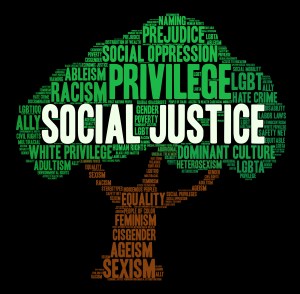
© Arloofs | Dreamstime.com

While we should certainly stand in the gap for the marginalized people of the earth, feed the poor, tend to the sick, and champion liberty for all captives, we must ensure that bitterness over injustices hasn’t mingled or leavened our dough. (Pro. 31:8-9) Fruit reveals the seed, and the tree. The seed whose fruit is righteousness is sown in peace by those who make peace.

Don’t fall for the false gospel of CT. Man’s problem isn’t oppression; it’s SIN. The tree of knowledge of good and evil offered hidden “wisdom” that Chavah (Eve) thought she was lacking. The fruit was “pleasing to her eyes.” CT offers to enlighten and open one’s eyes by viewing the world through the lens of the oppressor or the oppressed. It allows one to relish in their judgment of other people and justify their hatred. Once you partake of the fruit, you become “woke” – just like Adam and Chavah.

Genesis 3:7 (NASB) Then the eyes of both of them were opened, and they knew that they were naked; and they sewed fig leaves together and made themselves loin coverings.

Like Laodicea, their wokeness only revealed that they were naked. The wisdom the tree offered was earthy, natural, demonic. The first Adam (man and woman) tried to make their own coverings of sown fig leaves. They basically covered themselves in the leaves of the tree of wisdom from below. In other words, they trusted it more than God. Hence, their fear of Him in the next few verses.

The Torah of Adonai is called a “tree of life” and its parchment sections are called leaves. When one covers their person with its wisdom, it produces clean, white linen garments of righteousness. In the Book of Revelation, it is THIS tree whose leaves will bring healing to the nations. God’s Way is the Only Way. His Truth is the only thing that will lead one to Life, Restoration, and Wholeness. No wisdom of man, no matter how clever or cunning, can do that. Look at the fruit – seeing some good doesn’t mean that there isn’t also evil present. Do not be deceived.

Meanwhile, when faced with a decision in righteous justice, ask yourself, “Which woman am I? What am I fighting for? Am I speaking and fighting from a place of pain and loss? Will me receiving the justice I think I deserve cause an injustice for someone else?” Don’t cut the baby in half.

James 4:1-12 (NASB) What is the source of quarrels and conflicts among you? Is not the source your pleasures that wage war in your members? 2 You lust and do not have; so you commit murder. You are envious and cannot obtain; so you fight and quarrel. You do not have because you do not ask. 3 You ask and do not receive, because you ask with wrong motives, so that you may spend it on your pleasures. 4 You adulteresses, do you not know that friendship with the world is hostility toward God? Therefore whoever wishes to be a friend of the world makes himself an enemy of God. 5 Or do you think that the Scripture speaks to no purpose: “He jealously desires the Spirit which He has made to dwell in us”? 6 But He gives a greater grace. Therefore it says, “GOD IS OPPOSED TO THE PROUD, BUT GIVES GRACE TO THE HUMBLE.” 7 Submit therefore to God. Resist the devil (diablos – false accuser/slanderer) and he will flee from you. 8 Draw near to God and He will draw near to you. Cleanse your hands, you sinners; and purify your hearts, you double-minded. 9 Be miserable and mourn and weep; let your laughter be turned into mourning and your joy to gloom. 10 Humble yourselves in the presence of the Lord, and He will exalt you. 11 Do not speak against one another, brethren. He who speaks against a brother or judges his brother, speaks against the law and judges the law; but if you judge the law, you are not a doer of the law but a judge of it. 12 There is only one Lawgiver and Judge, the One who is able to save and to destroy; but who are you who judge your neighbor?


[1] Thayer Definition: Laodicea = “justice of the people.” 1) a city of Phrygia, situated on the river Lycus not far from Colosse. It was destroyed by an earthquake in 66 A.D. and rebuilt by Marcus Aurelius. It was the seat of the Christian church. Part of Speech: noun proper locative. A Related Word by Thayer’s/Strong’s Number: from a compound of G2992 and G1349

More on Laodicea: https://www.abarim-publications.com/Meaning/Laodicea.html#.X90WoC2cZN0  “Henry George Liddell and Robert Scott’s A Greek-English Lexicon lists what appears to be a variant or at least a related term: Λαοδικος (laodikos), meaning tried by the people.” Indeed, people love to be the judge. May we NOT be like Laodicea.

[2] https://www.greekmythology.com/Other_Gods/Minor_Gods/Dike/dike.html

Categories: Torah Portions | Tags: , , , , , , , , , , , , , | 2 Comments

Tevet Notes 5781

© K. Gallagher

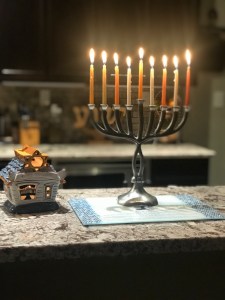
Heading to our new moon meeting for Tevet 5781 (2020). These are my notes for our locals. I thought some of my readers would find them helpful for the new month. May your homes been filled with Light and Yeshua!

Happy Chanukah!

Categories: new moon | Tags: , , , | 2 Comments

Kislev: Light & Identity

© Zoom-zoom | Dreamstime.com

  • Month: Nine
  • Name: Kislev, meaning trust, security, hope[1]
  • Tribe: Benjamin
  • Tribal Banner: Wolf
  • Sense: Sleep
  • Mazel: Sagittarius/Keshet (Bow)
  • Organ: Belly/Stomach/Loins
  • Letter: Samekh (60)
  • Themes: Month of Dreams, Festival of Lights/Dedication
  • Torah Portions: Toldot – Generations, Vayetze – And He Went Out, Vayishlach – And He Sent, Vayeshev – And He Settled, and in some years Miketz – At the End

The Light Always Gives[2]

Kislev and Tevet, the 9th and 10th Hebrew months, are the darkest months of the year in the northern hemisphere. Since the natural is a picture or shadow of the spiritual realm[3], what is occurring in nature at this season is mirrored in one’s spiritual life. Less light and more darkness is sensed by both the physical and spiritual aspects of man. For example, when the days grow shorter and colder, some people experience seasonal affective disorder (SAD).[4] Light therapy is a common treatment for this type of depression.

Nature is a great teacher, and a firm witness of God’s truth. Thus, by examining creation, we can learn spiritual patterns in the cycle of seasons, days, months, and years. The luminaries of day four of creation GIVE both natural and spiritual light to the earth and earth beings. They govern the day and the night and separate the light from the darkness.[5] Mankind has a proclivity to confuse light and darkness, at least spiritually speaking.[6] The intent of this article is to remind the reader of this reality, and to help one discover how Adonai uses this season every year to refine and prepare one for the next growing season.

All the points at the beginning of this post are important themes that weave together to create the “big picture” view of Kislev. My video on Kislev in 2018 explained most of these themes. But this year, I want to concentrate on the theme of Light and the primary feedback that I have received in the “dark” months over the years.

Identity

During Kislev and Tevet, I receive more emails and messages about identity than anything else. People tend to struggle with their purpose, who they are, and what they should be doing. And, conversely, social media often teems with those that question or challenge the identity of Messiah. Regarding the former, I receive questions at this season that look something like this:

  • Who am I, really?
  • What is my purpose?
  • Is all my work for nothing?
  • Am I toiling in vain?
  • Does God even care?
  • What should I really be doing?
  • How can I function in my gifts and callings?
  • I’m tired. What is the point?

If you find yourself struggling with your purpose or with discerning Adonai’s will for your life in the dark months, know that this is normal. Rather than falling into the malaise of depression, apathy, or condemnation, allow the creation and agricultural season to shed LIGHT on God’s purpose for this introspection. The late fall and winter months in Israel are crucial to the new growing season of spring. If this is true in the natural, it is also true in the spiritual realm.

Right now, it is still the time of the early rains (yoreh) in Israel. They begin after the turn of the year, just after the seventh month and the fall feast days. These rains sink into the hard, dry soil making it easy for farmers to plough the ground and prepare it to receive new seeds. As you read Smith’s Bible Dictionary’s entry on “rain” below, consider the figurative or spiritual application as well as the natural.

“In the Bible, “early rain,” signifies the rain of the autumn, Deu 11:14, and “latter rain,” signifies the rain of spring. Pro 16:1; Pro 16:5. For six months in the year, from May to October, no rain falls, the whole land becomes dry, parched and brown. The autumnal rains are eagerly looked for, to prepare the earth for the reception of the seed. These, the early rains, commence about the latter end of October and continuing through November and December. January and February are the coldest months, and snow falls, sometimes to the depth of a foot or more, at Jerusalem, but it does not lie long; it is very seldom seen along the coast, and in the low plains. Rain continues to fall, more or less, during the month of March, but it is very rare in April… the early and the latter rains, for which the husbandman waited with longing, seem rather to have implied the first showers of autumn — which revived the parched and thirsty soil and prepared it for the seed — and the later showers of spring, which continued to refresh and forward both the ripening crops, and the vernal products of the fields.” Jas 5:7; Pro 16:15.” (Emphasis mine.)

© Marina Bombina | Dreamstime.com

On the higher, spiritual level, the season of the early rains (October, November, December) coincides with the darker, colder, and less “light” time of the year. If the natural purpose is to soften dry, hardened soil for ploughing and planting seeds, then the spiritual purpose is the same in the heart of man. Can you see why it is at this season that people tend to question their purpose and progress, and reevaluate their goals? Especially, in regard to Kingdom work?

Beloved, there is a very real inward battle at this season. Your identity is firmly rooted in Messiah Yeshua. Period. But, that will not excuse one from testing. Testing is for our refinement and is the LORD’s tool to conform us to His image. The months and the moedim GIVE Light to the earth and earth beings. If you’ve been following the moonthly cycle of Adonai for some time, you already know that certain issues pop up at certain seasons EVERY year.

In the dark months, consider what is happening outside. The days are growing darker and colder. Life seems stagnant or even dead. Plants shrivel, trees lose their leaves, some animals crawl into a den of hibernation and SLEEP. All these things are literal surface observations. They do NOT depict what is occurring under the surface, within the trees, and in the soil. In this case, it’s what we can’t see with our natural eyes that matters most. Though one’s natural eyes can see that the environment is dark, cold, and lifeless, one with wisdom knows how VITAL this stage is for NEW GROWTH.

Shutterstock ID 1550162642 © Amanda Carden

Consider this time of inner reflection to be like a dark, watery womb[7] where you are receiving the early, nourishing
rains of Adonai. They are softening hard, callused attitudes and hearts. Or, think of yourself like a plant or tree. The struggle you face is meant for the betterment of your FUTURE. It is time not only for night dreams,[8] but waking dreams, hopes, and goals. What worked or didn’t work during the growth and harvest season last year? How will you plan your GARDEN for the upcoming season of Light, spring? How will you use these “dark” months? What will you birth or sprout in the spring?

I recommend that you journal any “identity” issues that surface in Kislev and Tevet. Pray and seek God for what He will have you plant, rearrange, uproot, and in what areas you should expand or reconsider altogether. These deep soul questions are normal, and Adonai’s desire is that they help you prepare for the next season. The enemy will use such questions to lead one to despair or condemnation. That is the perversion, and the battleground.

Light Gives

© K. Gallagher

With less natural light available, the spiritual light can also be obscured if one is not diligent to seek it out at this season. Perhaps, this why Adonai gave the Maccabees victory late in this month, as He knew it would be commemorated with the oil fueled light of the Chanukiah. Even if you don’t celebrate Chanukah, this is a good time to review the historical events and learn from them. Judah was fighting a type of spiritual darkness that mixed the holy with the profane, and outright forbid crucial elements of the Covenant between God and Israel such as circumcision, Shabbat and New Moon observance, and Torah study.

Knowledge of this reality is half of the battle. We do not grope in darkness, for there is light in Goshen. We are expected to be prepared in and out of season because we have the Light of the Word and Messiah.

2 Timothy 4:1-4 (NASB) I solemnly charge you in the presence of God and of Christ Jesus, who is to judge the living and the dead, and by His appearing and His kingdom: 2 preach the word; be ready in season and out of season; reprove, rebuke, exhort, with great patience and instruction. 3 For the time will come when they will not endure sound doctrine; but wanting to have their ears tickled, they will accumulate for themselves teachers in accordance to their own desires, 4 and will turn away their ears from the truth and will turn aside to myths.

Messiah warns about the confusion of light and darkness. There is a very real possibility that one can be full of darkness and actually think that they are full of light. In other words, there is a false light that deceives many.

Luke 11:33-36 (NASB) “No one, after lighting a lamp, puts it away in a cellar nor under a basket, but on the lampstand, so that those who enter may see the light. 34 The eye is the lamp of your body; when your eye is clear, your whole body also is full of light; but when it is bad, your body also is full of darkness. 35 Then watch out that the light in you is not darkness. 36 If therefore your whole body is full of light, with no dark part in it, it will be wholly illumined, as when the lamp illumines you with its rays.”


There is one key difference between true and false light. True light always gives. It does not take or steal or consume another in order to “shine.” False light, figured by natural fire, rapidly and hungrily devours its fuel source. Though it shines brightly, it can only do so as it gobbles up the essence and livelihood of another.

© Andrii Yalanskyi | Dreamstime.com

Today, it has become normal in western cultures to blame others or groups of others for one’s successes or lack thereof. Inner reflection, personal responsibility, and the Sovereignty of God are anathema in their equations. If you believe that you can only shine if and when others are brought low, consumed, silenced, or destroyed, it is time to “watch out that the light in you is not darkness.” The world has a false light, and it sounds very good to man’s passions, desires, lusts, and ego.

True light has no need to take from or consume another person or thing. It burns bright and true without destroying its fuel source. When Adonai called Moses to lead His people out of the bondage of Egypt, this is the first lesson he was taught. God’s light does not consume or destroy.

Exodus 3:2-4 (NASB) The angel of the LORD appeared to him in a blazing fire from the midst of a bush; and he looked, and behold, the bush was burning with fire, yet the bush was not consumed. 3 So Moses said, “I must turn aside now and see this marvelous sight, why the bush is not burned up.” 4 When the LORD saw that he turned aside to look, God called to him from the midst of the bush and said, “Moses, Moses!” And he said, “Here I am.”

© Ig0rzh | Dreamstime.com

Moses was told to bring the children to this same mountain where Adonai appeared to him in the burning bush, and this would be a sign that Adonai was with him. (Ex. 3:12) Later, when Moses did so, the children of Israel perceived the glory of Adonai on Mount Horeb (Sinai) as LIKE a consuming fire. But like the bush, it was not actually consumed.

Exodus 24:17 (NASB) And to the eyes of the sons of Israel the appearance of the glory of the LORD was like a consuming fire on the mountain top.

The Holy Spirit of fire that rests upon God’s people likewise doesn’t consume or destroy the person. Fleshly passions, burning lusts, and worldly desires are quenched, but the man remains. As you consider the “light in you,” review your passions. What fuels your desires? What do you battle for or against? Does your heart burn with the desire to consume others in some way? If we are truly citizens of the Kingdom of Adonai, our lamps will not consume the “wood” or “oil” of another, only foolish virgins think that way.

Rather, our work will GIVE to others. It will uplift, transform, fill up, and brighten the lives of those that Adonai brings into our sphere. Others should see the LIGHT of Messiah in us, which will compel them to turn aside, like Moses, and stop their normal activities to see this marvelous sight. It is so contrary to the natural order that it stuns people. It might even appear to be “foolishness” if one is immersed in worldly wisdom.

1 Corinthians 1:26-29 (NASB)  For consider your calling, brethren, that there were not many wise according to the flesh, not many mighty, not many noble; 27 but God has chosen the foolish things of the world to shame the wise, and God has chosen the weak things of the world to shame the things which are strong, 28 and the base things of the world and the despised God has chosen, the things that are not, so that He may nullify the things that are, 29 so that no man may boast before God.

One of the meanings of Kislev is foolishness or stupidity.[9] In the month of light and darkness, the question is in what or in whom does one trust? For that determines how this word is translated. Do we trust in wisdom or folly? Truth or Lies? In God’s Sovereignty or man’s government? The foolish harlot’s tongue drips honey laced with promises of worldly pleasure, wealth, and grandeur. She excuses and justifies all the destruction and ruin in her wake; and, it really does sound like “wisdom” to the one sprawled on her couch drenched in costly fragrances. “Let it all burn and we will rebuild it in our own image,” she whispers. “It is good.”

On the contrary, the supernatural light of God manifests like chesed (lovingkindness), which is also a GIVER. Chesed and the LIGHT of Adonai are spiritually discerned for those in darkness. It just doesn’t make sense to the natural, worldly mind. But, this “burning without consuming” is where God met with Moses and it is where He made the Covenant with Israel. The pattern is trustworthy. In order to lead others to the Mountain that burns without being consumed, we must first demonstrate the same. May it be so!

© Antonio Guillem | Dreamstime.com

Another journal activity for Kislev and Tevet is to consider your gifts. As the ultimate Giver, Adonai gives good gifts to His children. What spiritual gifts do you possess? How are you using them? If you are unsure of what gifts you have, ask other Believers that know you well. They likely see them better than you do. Pray and ask Adonai to reveal to you what they are and how you can serve Him with these talents. If you meet with others for the new moon, devote some time in prayer for those present in the areas of identity and gifts. Many struggle, especially at this season, with one or the other.

Meanwhile, be very careful with what ignites your flame. Next month, in Tevet, anger is the sense. Don’t allow your dream discoveries in Kislev to incite covetousness, rage, jealousy, or contempt. May Adonai bless you and keep you!


[1] See H3689 as used in Job 8:14; 31:24, Proverbs 3:26, Psalm 78:7 (Also see footnote 9.)

[2] Genesis 1:17-18 (NASB) God placed them [the luminaries] in the expanse of the heavens to give light on the earth, 18 and to govern the day and the night, and to separate the light from the darkness; and God saw that it was good.

[3] Col. 2:16-17, 1 Cor. 15:46

[4] https://www.nimh.nih.gov/health/publications/seasonal-affective-disorder/index.shtml

[5] See footnote 2.

[6] Job 17:12, Isaiah 5:20; 9:2; 59:9, Matthew 6:23, John 1:5, etc.

[7] This is the NINTH month, the number most associated with human gestation.

[8] Kislev is called the month of dreams, because most of the dreams recorded in the Torah are read during this month in the Torah cycle.

[9] Hebrew Word Definitions: כֶּסֶל kesel: A masculine noun meaning loins, confidence, stupidity. The first use can actually mean the waist area, the kidneys, etc. (Lev 3:4, Lev 3:10, Lev 3:15; Lev 4:9; Lev 7:4; Job 15:27). The second use is more ambiguous, meaning that in which one puts trust or confidence (Job 8:14; Job 31:24; Psa 78:7; Pro 3:26). The final usage is a false self-trust or stupidity (Psa 49:13 [14]; Ecc 7:25). See the related Hebrew verb kāsal (H3688) and Hebrew noun kislāh (H3690).

Categories: new moon | Tags: , , , , , , , , , , , , , , | 1 Comment

Haftarah: Vayera

Prophetic Portion to Vayera (And He Appeared)

Genesis 18:1-22:24, 2 Kings 4:1-37

This week’s haftarah portion covers two miraculous accounts performed by the prophet Elisha. Both center around women and their children, which not only relates to the Torah portion, but spiritually to the future and the prophetic realm.[1] Elisha asks each woman:

“What can I do for you?”

Read that again.

Let the question resonate with your spirit.

Macedonian Encyclopedia, MANU, 2009, p., Public domain, via Wikimedia Commons

I wonder how many long to hear those words from the “man of God.” What need, dream, or great desire of yours has not been met? In both the Torah and haftarah portions this week, God meets the needs and desires of women in extraordinary ways. He is FOR you, even when – especially when – things are impossible in the natural world.

I wonder how many tears Sarah, the widow, and the Shunammite shed over their predicaments? I suspect most of their pain was shielded from others with the mask of hard work, determination, and service to others. All three women exude a quiet strength in their narratives. They are not portrayed as women that easily give up or go silently into the night. But even the strongest and stalwart among us FEELS, and deeply so. Real strength doesn’t negate or despise feelings, dreams, and great hope for the future. Such things faith rests upon, and they are good, and lovely, and godly.

Hebrews 11:1-2 (NKJV) Now faith is the substance of things hoped for, the evidence of things not seen. 2 For by it the elders obtained a good testimony.

Sarah might have mockingly laughed at the prospect of having a son in her old age (the natural), but that doesn’t mean that she lacked the faith (spiritual) that God would give her this good pleasure. Upon the birth of Isaac, Sarah laughed again, and this time it was in wonderment and jubilation.

Genesis 21:6-7 (TLV) “God has made laughter for me! Everyone who hears will laugh with me.” 7 She also said, “Who would have said to Abraham, ‘Sarah has nursed children’? For I have given birth to a son in his old age!”

James Tissot, Public domain, via Wikimedia Commons

I imagine the widow and the Shunammite laughing with Sarah. In fact, I see every Eshet Chayil laughing at the future. Their laughter is not a mockery; it is a rejoicing in the goodness and faithfulness of God. They have trained their eyes to see past the veil of flesh. They know that this world is simply a shadow of the world to come. Though this present age is full of strife, pain, and disappointment, the Word and Promises of Adonai stand firm. They will never pass away. So, right now, in this momentary affliction, they open their mouth with Wisdom, and use their tongue to teach the Torah of Chesed (kindness).

Proverbs 31:25-26 (TLV) Strength and dignity are her clothing, and she laughs at the days to come. 26 She opens her mouth with wisdom—a lesson (Torah) of kindness is on her tongue.

Abraham and Sarah opened their tent with great hospitality. They welcomed, nourished, and taught so many that is said that they “made souls.” (Gen. 12:5) In other words, they were known for their great chesed, like the Proverbs 31 woman. They taught the world about faith, hope, and the future. They taught us to trust in the promises of God, even though they are not always manifest in our lifetime.

Hebrews 11:8-13 (NKJV) By faith Abraham obeyed when he was called to go out to the place which he would receive as an inheritance. And he went out, not knowing where he was going. 9 By faith he dwelt in the land of promise as in a foreign country, dwelling in tents with Isaac and Jacob, the heirs with him of the same promise; 10 for he waited for the city which has foundations, whose builder and maker is God. 11 By faith Sarah herself also received strength to conceive seed, and she bore a child when she was past the age, because she judged Him faithful who had promised. 12 Therefore from one man, and him as good as dead, were born as many as the stars of the sky in multitude—innumerable as the sand which is by the seashore. 13 These all died in faith, not having received the promises, but having seen them afar off were assured of them, embraced them and confessed that they were strangers and pilgrims on the earth.

Abraham was waiting for the city which has foundations, whose builder is God, the New Jerusalem. As sons and daughters of Abraham and Sarah, we await the same. They died in faith, as will many of us. And like them, our Torah of Chesed includes the message that we are strangers and pilgrims on the earth. Look up! His promise will come to pass.

So, how do the widow and the Shunammite proclaim this same truth?

The Widow and the Cruse of Oil

2 Kings 4 begins with a widow of the b’nei nevi’im, or sons of the prophets. Abraham was the first named prophet in the Bible. (Gen. 20:7) Thus, the hint is that she and her sons belong to father Abraham. She is destitute, and a creditor has threatened to take her two sons as slaves to satisfy the debt she and her late husband accrued. According to tradition, the woman is Obadiah’s widow. (Rashi)

Elisha, the man of God, tells her to ask her neighbors for “empty” vessels. Then, very specifically, she and her sons were to shut the door behind them. She poured while her sons brought vessel after vessel to fill from the one cruse of oil she had in the house. People are sometimes compared to vessels in Scripture.[3] An empty vessel is in desperate need of purpose, hope, and the filling of the Holy Spirit. Worse, an empty vessel can imply someone that is dead. This family thought they had nothing, when in fact, they had the oil of anointing, one cruse of oil that could light many, many lamps.

© Natushm | Dreamstime.com

Adonai deeply cares for the widows and the fatherless. Josephus and Rashi comment that this family’s debt was accrued because the late prophet Obadiah had borrowed money to feed the prophets that hid in the cave, and that the creditor was Jehoram the son of Ahab. If this is true, the chesed of Obadiah was great, and Elisha desired that chesed be returned upon Obadiah’s house. Hence, the miracle of oil.

In truth, we all have debt that we cannot pay back. We all have sons and daughters that have inherited the same fate. But we also have hope, even if all we have left is one little vessel of oil. If one finds herself in this this place, it is time to go into the House and shut the door. And then, pour every last drop of oil from your vessel into as many empty vessels as you can find. Oil and anointing is acquired through suffering. Olives must be pressed with a heavy Stone to produce oil. The widow and her son’s suffering turned into precious oil that paid off their debt, and provided sustenance for the future.

A wise virgin knows that Obadiah’s widow has the best oil in town. If you’re feeling sleepy, best get to her house as fast you can. Paying chesed to her will ensure that your vessel is full of golden liquid for the future when the Bridegroom comes calling.

The Great Woman from Shunem

The Shunammite’s story echoes Abraham and Sarah’s narrative in several ways.

  • Both were promised a son after showing chesed in the form of hospitality to a messenger of God.
  • Both reacted with astonishment and even a bit of unbelief at this prospect.
  • Both Abraham and the Shunammite’s husband were advanced in years.
  • Both were told that “at this season next year” you will have a son.
  • Both promised sons died (at least figuratively).
  • Both were resurrected (at least figuratively).

Thus, it is easy to see why this prophetic portion was chosen to accompany Vayera. But, this year, as I reread these passages, chesed leaped off the pages of Holy Writ like a neon sign. Adonai has been drawing my attention to chesed since Passover. Chesed is the exact opposite of the traits currently being lauded and paraded in media, social media, and educational institutions. And sadly, the result has been fear, hate, division, mockery, pride, and perverted justice.

Love is growing cold, and this ought not be so – especially if one claims to be a son or daughter of Abraham and Sarah. The father and mother of our faith were KNOWN for their great chesed, as was the Shunammite woman. Chesed is given to everyone – even those that do not deserve it. Especially to those that do not deserve it! Chesed is what woos one to turn back to Adonai. (Jer. 31:3) Chesed is what gives one a spirit of repentance. (Rom. 2:4) Chesed ALWAYS precedes truth and justice in Scripture. If we reverse that pattern, death and chaos reign.

Proverbs 10:12 (NASB) Hatred stirs up strife, but love covers all transgressions.

1 Peter 4:8-9 (NASB) Above all, keep fervent (zealous) in your love for one another, because love covers a multitude of sins. 9 Be hospitable to one another without complaint.

If chesed comes first – if it is the foundation – then, and only then, will one see the pattern conveyed in Vayera in one’s own life. Vayera means, “And He appeared,” a reference to Adonai appearing to Abraham after he was circumcised. It was the “heat of the day.” Likely, Abraham was in great pain and the sun was punishingly hot in the sky. Yet, he arose quickly to serve his guests. The three messengers were not only there to bring the good news that a son would be born to Abraham and Sarah, but to judge Sodom and Gomorrah. God chose to reveal His intentions toward these cities to Abraham.

Have you ever wondered why?

It certainly wasn’t to cause him distress. Or to seek his permission, God forbid. No, the reason God revealed His intentions was because:

Genesis 18:19 (NASB) “For I have chosen him, so that he may command his children and his household after him to keep the way of the LORD by doing righteousness and justice, so that the LORD may bring upon Abraham what He has spoken about him.”

John Martin, Public domain, via Wikimedia Commons

At first glance, this doesn’t seem to be a great reason to reveal to Abraham that He is going to judge the exceedingly great sin of Sodom and Gomorrah. But, carefully considering the above passage, Abraham and his descendants are to represent Adonai in the earth. They are the ones that keep the Way of the LORD by doing righteousness and justice.

If that is the legacy of Abraham, what his response? He pleaded for the innocent, the righteous, within these cities. He didn’t say, “Yeah! Go, take them all out.” (That was Jonah’s response even toward the repentant in Nineveh.) Instead, Abraham showed chesed toward these exceedingly wayward cities. It is highly likely that Adonai was testing the heart of Abraham in this matter. Would he lean toward chesed and mercy, or strict justice?

Abraham passed this test, and as his descendants, so should we. Chesed was the catalyst for not only miraculous births and supernatural provision, but also for resurrection! This demonstrates that acts of kindness are intricately woven into the garments of salvation and the robes of righteousness. They are the essence of the Creator of the Universe. In Jeremiah 3:2, God says, “I am gracious.” That is, chasid, the noun form of chesed. He is chesed!

The Chesed of the Shunammite

The Shunammite woman proves to be a true daughter of Abraham. Stories of women and children are typically prophetic. In this case, where a prophet is directly involved, the prophetic theme is intensified or “doubled.” A match for the prophet that received a double portion of his predecessor’s mantle, Elijah.

Now there came a day when Elisha passed over to Shunem, where there was a prominent woman, and she persuaded him to eat food. And so it was, as often as he passed by, he turned in there to eat food. She said to her husband, “Behold now, I perceive that this is a holy man of God passing by us continually. (2 Kings 4:8-9)

 The place where this great woman lived was called Shunem, meaning double resting place. It was located in Issachar, which implies that the Shunammite was from this tribe or had married a man of Issachar. She told her husband that she knew (ידע – yada) that Elisha was a holy man. She showed him great hospitality by ensuring that he had bread to eat, and by building a resting place for the prophet.

“Please, let us make a little walled upper chamber and let us set a bed for him there, and a table and a chair and a lampstand; and it shall be, when he comes to us, that he can turn in there.” One day he came there and turned in to the upper chamber and rested. Then he said to Gehazi his servant, “Call this Shunammite.” And when he had called her, she stood before him. (2 Kings 4:10-12)

The Shunammite is at the center of the narrative and activity. She is the one that recognizes the need of the prophet, feeds him, and requests a place be built for him. While her husband doesn’t oppose her efforts, and even fulfills her requests, he is content with his passive role in this story. Whether he simply had different gifting or preferred to serve with his hands, we don’t know. He might have had great faith or none at all. Either way, he doesn’t chastise his wife for her boldness, generosity, or more prominent public role. Instead, they work together in the strengths that they have. Thus, when the promise of a son comes, they both are the beneficiaries.

When the boy tragically dies, the Shunammite doesn’t tell her husband. Instead, she places his body on the bed they had made for Elisha, and then shuts the door behind him. This is interesting considering that Elisha told the widow a few verses earlier to do the same while she poured oil into the empty vessels.

2 Kings 4:21 (NASB) She went up and laid him on the bed of the man of God, and shut the door behind him and went out.

The Shunammite asks her husband to give her a servant and a donkey because she is going to see the man of God. This perplexes him and he asks:

“Why will you go to him today? It is neither new moon nor Sabbath.” And she said, “It will be well.” 2 Kings 4:23 (NASB)

The Shunammite had a custom of visiting the man of God on the new moon and the Shabbat, and this day was neither. It is intriguing that it is the woman, and not her husband, that had this custom. If you find yourself in a similar boat, take heart! Keep doing what you know to do as you serve the LORD. Adonai and the man of God recognized her kindnesses and her husband was blessed along with her. May it be so for you as well.

The Shunammite’s husband again fulfilled the request of his wife. She saddled her ass and headed to Mount Carmel. It was obvious to Elisha that she was distressed. When he learns that the boy is near death or dead, he sends Gehazi ahead with his staff to lay on the boy. But, the woman wouldn’t leave him. In fact, she quotes the same words that Elisha spoke to Elijah before the heavenly chariots took him:

2 Kings 4:30 (NASB) The mother of the lad said, “As the LORD lives and as you yourself live, I will not leave you.” And he arose and followed her.

The staff failed to awaken the boy, so Gehazi returned to them with this news. When Elisha entered his room, he shut the door behind them both and prayed to the LORD. This is the third time in this chapter that a door is shut behind the people inside.

2 Kings 4:33-35 (NASB) So he entered and shut the door behind them both and prayed to the LORD. 34 And he went up and lay on the child, and put his mouth on his mouth and his eyes on his eyes and his hands on his hands, and he stretched himself on him; and the flesh of the child became warm. 35 Then he returned and walked in the house once back and forth, and went up and stretched himself on him; and the lad sneezed seven times and the lad opened his eyes.

This is a very mystical passage, and there are many ways to analyze it. Since Elisha first prayed, I assume that Adonai told him what to do. He laid on top of the boy, eye to eye, mouth to mouth, hands to hands. It’s almost like a transference of life occurred, which even warmed the flesh of the child. After doing this once more, the lad sneezed seven times and woke up. Sneezes require deep inhalations of breath, and then powerful expulsions through the nose and mouth. This indicates a strong breath of life – emphasized by the number seven as he resurrects to life.

Both the Torah portion and the haftarah close with stories of sons who miraculously resurrect from the dead. While Isaac’s death is implied, the Shunammite’s son is explicit. God’s promises and His chesed prevails – even overcoming the grave! These are glimpses into the world to come, the olam haba, and the future of all of Abraham’s seed.

To conclude, think back to the three instances in the haftarah where a door is being shut behind those with faith. There are a couple of places in the Brit Chadashah that this phrase occurs. One is in the parable of the Ten Virgins. The other is in the message to the church at Philadelphia, the assembly of “brotherly love.” As you review them, notice the correlation with extra vessels of oil, and how the believers in Philadelphia follow the path of Abraham. They keep the Word of the LORD with patient endurance and have not denied His Name. What other connections do you see?

Matthew 25:1-13 (TLV) “Then the kingdom of heaven will be like ten virgins who took their lamps and went out to meet the bridegroom. 2 Five of them were foolish, and five were wise. 3 For when the foolish ones took their lamps, they took no oil with them. 4 But the wise ones took oil in jars along with their lamps. 5 Now while the bridegroom was taking a long time, they all got drowsy and started falling asleep. 6 But in the middle of the night there was a shout, ‘Look, the bridegroom! Come out to meet him!’ 7 Then all those virgins got up and trimmed their lamps. 8 Now the foolish ones said to the wise, ‘Give us some of your oil, since our lamps are going out.’ 9 But the wise ones replied, ‘No, there won’t be enough for us and for you. Instead, go to those who sell, and buy some for yourselves.’ 10 But while they were going off to buy, the bridegroom came. And those who were ready went in with him to the wedding feast, and the door was shut. 11 Now later, the other virgins came, saying, ‘Sir, Sir, open up for us!’ 12 But he replied, ‘Amen, I tell you, I do not know you.’ 13 Therefore stay alert, for you know neither the day nor the hour.”

Revelation 3:7-13 (TLV) To the angel of Messiah’s community in Philadelphia write: “Thus says the Holy One, the True One, who has the key of David, who opens and no one will shut, and who shuts and no one opens: 8 I know your deeds. Behold, I have set before you an open door that no one is able to shut—because you have little power, but you have kept My word and have not denied My name. 9 Behold, I will cause those of the synagogue of satan—who say they are Jewish and are not, but lie—behold, I will cause them to come and bow down before your feet, so that they acknowledge that I have loved you! 10 Because you have kept My word about patient endurance, I will also keep you from the hour of trial that is coming upon the whole world to test those who dwell on the earth. 11 I am coming soon—hold on to what you have, so that no one will take away your crown. 12 The one who overcomes, I will make him a pillar in the Temple of My God, and he will never leave it. And on him I will write the name of My God and the name of the city of My God—the New Jerusalem, which comes down out of heaven from My God—and My own new Name. 13 He who has an ear, let him hear what the Ruach is saying to Messiah’s communities.”


[1] Role of Women 

[2] 1 Th. 4:3-6, Rom. 9:21, 2 Cor. 4:7-14, 2 Tim. 2:20-26 

Categories: Torah Portions, Women | Tags: , , , , , , , , , , , , , | 8 Comments

Blog at WordPress.com.