Study Helps

Chodesh Shevat: Taste and See

Ps. 34:8 (NASB) O taste and see that the LORD is good; How blessed is the man who takes refuge in Him!

The eleventh Hebrew month is called Shevat in Zechariah 1:7. Shevat is a cognate of shevet; meaning branch, rod, scepter, scion, staff, and tribe.[1] In the Land of Israel, Shevat gives the first indicators of spring as the almond trees “wake up” and sprout green buds as a sign of new (resurrected) life. Tu’B’Shevat, the 15th of Shevat, commemorates the New Year for Trees in Jewish tradition. (Read more about that here.)

© Victor Torres | Dreamstime.com

Almond buds and blossoms are also associated with authority. Consider Aaron’s rod that budded and blossomed overnight with fully ripe almonds after Korah’s rebellion and the consequent plague upon the people. (Num.16-17) This sign (oht) revealed that Aaron was YHWH’s chosen high priest, and that he operated in the fullness of the Holy Spirit, as indicated by the fully ripe fruit on his rod. It wasn’t happenstance that the rod or branch of the almond was chosen to display this sign, as almond trees flower and bear fruit earlier than all the other fruit trees in Israel. Therefore, almonds are שָׁקֵד (sheked) in Hebrew; a word that also means to awake or watch (shakad).

Jer. 1:11-12 (NASB) The word of the LORD came to me saying, “What do you see, Jeremiah?” And I said, “I see a rod of an almond tree.” 12 Then the LORD said to me, “You have seen well, for I am watching over My word to perform it.”

The imagery of wakefulness, resurrection, counsel, correction, and authority are also symbolized in the design of the holy golden menorah. It too, has almond blossoms, buds, and even seven watery-like eyes filled with fiery olive oil. Traditionally, the eleventh month of Shevat merges these themes together with the human faculty of taste and the stomach, i.e. eating.

At first glance, this notion seems a little odd. Haven’t we clearly detected the connections of trees, especially almond trees, with the current season and (spiritual) sight? We could even add light, vision, the Word, and the fullness of the Holy Spirit to these ideas as both the almond tree and the menorah tree represent these concepts beautifully. So why then, do the rabbis suggest that Shevat is associated with taste?

Taste Buds

Contemplating this question led me to do a little research on the tongue and taste buds. The average human tongue is about three inches long with 2,000 to 4,000 taste buds. The tongue is made up of 8 different muscles that intertwine with each other creating a flexible matrix that work independently of the skeleton.

The tongue’s pink and white bumps that are visible to the human eye are called papillae. Each papilla contains 1 to 700 taste buds, depending upon its location on the tongue.[2] Taste buds have ten to fifty sensory cells that are intermittently renewed about every ten days.[3] The arrangement of these cells looks like the bud of a flower; hence, the name “taste buds.”[4]

Taste is some combination of sweet, salty, sour, bitter, and umami (savory).[5] Contrary to what many were taught in school, all areas of the tongue can detect each of these tastes. Like all of the human senses, taste enables one to discern the world around them. Taste (often along with the sense of smell) is how we discern what we are ingesting. But “eating” doesn’t begin with the tongue and one’s taste buds. We eat with our eyes first. Like Chavah (Eve), the fruit is first pleasing to the eyes before it is deemed good to eat.

Taste and Shevat

Now that the science lesson is over, how does this relate to the month of Shevat? People are often compared to trees in Scripture.[6] Humans have limbs, trunks, and grow roots. People can flourish or wither, and produce fruit. Fruit is an indicator of health and reproduction. Seeds reside inside the fruit, and have the potential to produce a whole new tree. Messiah compares man to trees:

Mat. 7:15-20 (NASB) “Beware of the false prophets, who come to you in sheep’s clothing, but inwardly are ravenous wolves.  16  “You will know them by their fruits. Grapes are not gathered from thorn bushes nor figs from thistles, are they?  17  “So every good tree bears good fruit, but the bad tree bears bad fruit.  18  “A good tree cannot produce bad fruit, nor can a bad tree produce good fruit.  19  “Every tree that does not bear good fruit is cut down and thrown into the fire.  20  “So then, you will know them by their fruits.

The appearance of the tree is not a good indicator of whether that tree (man) is good or evil. We are to look for proper fruit, as outlined by Paul in Galatians 5.

Gal. 5:22-23 (NASB)  But the fruit of the Spirit is love, joy, peace, patience, kindness, goodness, faithfulness,  23  gentleness, self-control; against such things there is no law.

No matter how appealing the outward appearance is to one’s eyes, human sight, like all senses, can be deceiving. Tasting fruit offers one an additional measure of discernment. What does your tongue tell you? Is the fruit sweet? Sour? Bitter? Salty? Is there a seed inside the fruit?

Taste buds look like a flower bud or blossom under the microscope. Do you think this is a coincidence? These little receptors receive what is ingested and send that signal to the brain as a form of warning or delight. Even if one’s eyes indicate that the fruit is a delight, the taste buds will know whether the fruit is bitter or sweet.

My mother expressed an insightful notion as we were discussing this the other night. She said, “Most people cannot accept the ‘seed’ we offer them because it is encased in a shell (fruit) of bitterness.” Their tongues reject our words and even truth because their senses of discernment are not getting the signals of love, joy, peace, patience, kindness, goodness, faithfulness, gentleness, and self-control. Thus, the bitterness is spit out; and with it, the truth we claim to be espousing.

Perhaps the problem isn’t that the fruit is bad, but immature. Young, unripe fruit has a sour taste that can cause intestinal distress. The Torah gives commandments for the appropriate time to consume fruit from trees, but what if trees are people?

Lev. 19:23-25 (NASB) ‘When you enter the land and plant all kinds of trees for food, then you shall count their fruit as forbidden. Three years it shall be forbidden to you; it shall not be eaten.  24  ‘But in the fourth year all its fruit shall be holy, an offering of praise to the LORD.  25  ‘In the fifth year you are to eat of its fruit, that its yield may increase for you; I am the LORD your God.

© Igor Dolgov | Dreamstime.com

The Torah further directs one in how to handle fruit trees in a time of war; they are not to be cut down or destroyed. Are we not in a very real and ongoing spiritual battle? Mind the fruit trees, please.

Dt. 20:19-20 (NASB)  “When you besiege a city a long time, to make war against it in order to capture it, you shall not destroy its trees by swinging an axe against them; for you may eat from them, and you shall not cut them down. For is the tree of the field a man, that it should be besieged by you?  20  “Only the trees which you know are not fruit trees you shall destroy and cut down, that you may construct siegeworks against the city that is making war with you until it falls.

Taste and See

Taste and then see the fruit of the trees (people). The Word offers some help for one’s taste buds. Sometimes, these tools of discernment need to be renewed, just as we do. Thankfully, Adonai’s design of the tongue enables it to do just that. Within weeks, one can have a mouth filled with new taste buds that crave the good and not the bad. But even then, some tastes require an extra measure of discernment. Consider the following:

Umami (savory)

An aged Isaac had trouble with his physical sight and his sense of taste. His discernment was off, leaving Rebekah to steer the circumstances back toward the instruction the LORD originally gave while she was pregnant. The older will serve the younger.

Gen. 25:28 (NASB) Now Isaac loved Esau, because he had a taste for game, but Rebekah loved Jacob.

Appetites are deceiving and can impair spiritual vision if one is ruled by these mighty impulses. In Isaac’s case, the result was a lack of sight and taste for Adonai’s plan for his younger son Jacob. Savory is a pleasant taste from animal fats and proteins. May that craving not be for wild game, but for the sacrifices of flesh laid upon the holy altar!

Bitter

As soon as Adonai redeemed Israel from the bondage of Egypt and walked them through the baptismal waters of the Reed (Red) Sea, their first stop was Marah, a place of bitterness.

Ex. 15:23-25 (NASB)  When they came to Marah, they could not drink the waters of Marah, for they were bitter; therefore it was named Marah.  24  So the people grumbled at Moses, saying, “What shall we drink?”  25  Then he cried out to the LORD, and the LORD showed him a tree; and he threw it into the waters, and the waters became sweet. There He made for them a statute and regulation, and there He tested them.

Can you imagine experiencing the ten mighty miracles in Egypt, plundering your Egyptian taskmasters, fleeing from Pharaoh and being protected by a pillar of cloud and a pillar of fire, walking through the parted Sea of Reeds on dry ground, and then watching as the waters returned, swallowing the enemy and his army? That’s the setting for the bitter waters of Marah. The people grumbled (lun – H3885) at Moses because the water was bitter to their taste buds. It’s hard to imagine, but I wonder if we don’t do this very thing.

God answered by showing Moses “a tree.” What do you suppose this tree was? Or more mystically, WHO was this tree? What or who sweetens the bitter waters? Bitterness is an unpleasant taste that warns the brain to reject (spit out) the substance. The writer of Hebrews reminds believers to pursue peace with all men and sanctification, so that a root of bitterness doesn’t take root in one’s heart that will defile not only the person, but those around them. (Heb. 12:13-15)

Even after salvation and redemption, sanctification is necessary. Failing to submit to this difficult process is akin to allowing bitterness to grow, which defiles the living waters.[7] The Book of Hebrews continues with an admonition to remember the ungodly appetites (tastes) of Esau. We need the counsel of the Tree of Life, the Holy Word, Yeshua the Messiah, to sweeten the waters as He tenderly leads us through the sanctification process.

Drinking bitter waters is also a test. Consider the Sotah, the woman accused of adultery in Numbers 5. She literally drinks a curse as she is bared before the priest. If she is guilty, she will suffer the curse; but if she is innocent, she will not be harmed and will go on to produce holy fruit.

Sweet

In the verses below, the LORD relates the Sabbath and the provision He provides to both sight and taste.

Ex. 16:28-31 (NASB) Then the LORD said to Moses, “How long do you refuse to keep My commandments and My instructions?  29  “See, the LORD has given you the sabbath; therefore He gives you bread for two days on the sixth day. Remain every man in his place; let no man go out of his place on the seventh day.”  30  So the people rested on the seventh day.  31  The house of Israel named it manna, and it was like coriander seed, white, and its taste was like wafers with honey.

Sabbath rest is a holy space in time, a refuge where Adonai provides bread for the whole man. It is like wafers and honey to the taste buds of the one that ingests its wondrous and heavenly flavor. Many are like ancient Israel and cannot fathom how this strange substance has worth. They declare, “What is it?” Eyes alone are deceiving.

Sometimes we confuse sweet and bitter:

Is. 5:20 (NASB) Woe to those who call evil good, and good evil; Who substitute darkness for light and light for darkness; Who substitute bitter for sweet and sweet for bitter!

This is because we have been tasting and ingesting the words (seeds/fruit) of the harlot or wicked woman instead of the Holy Spirit of Wisdom.

Pr. 5:3-4 (NASB)  For the lips of an adulteress drip honey And smoother than oil is her speech;  4  But in the end she is bitter as wormwood, Sharp as a two-edged sword.

Our taste buds need time to regenerate and heal to their proper function. This is why fasting is beneficial to both the natural and the spirit man.[8] When the flesh is denied the things that it craves, taste buds have time to renew and desire that which is truly good and helpful to the body and the spirit. Beastly scales fall from the eyes when the spirit rules over the lower nature. That is how one can proclaim with joy and gladness:

Ps. 119:103-104 (NASB) How sweet are Your words to my taste! Yes, sweeter than honey to my mouth!  104 From Your precepts I get understanding; Therefore I hate every false way.

But, there is another side to this coin, a holy mandate, that makes the sweet, bitter. The double-edged sword of the Word of the LORD slices through bone and marrow, soul (nephesh) and spirit, and judgment falls on those things that do not belong and on those that refuse to repent.

Ezek. 3:3,14 (NASB)  He said to me, “Son of man, feed your stomach and fill your body with this scroll which I am giving you.” Then I ate it, and it was sweet as honey in my mouth… So the Spirit lifted me up and took me away; and I went embittered in the rage of my spirit, and the hand of the LORD was strong on me.

Delivering the honey of the Word is a difficult task. One must endure many stings to extract its sweet amber. What is delightfully sweet to the taste buds of the righteous is bitter to the stomach of fleshly appetites and desire. YHWH gave Ezekiel a mission to be a watchman and prophet to rebellious Israel. He endured bitter circumstances to deliver the golden Words of the LORD’s judgment. John’s experience mirrored Ezekiel:

Rev. 10:9-11 (NASB) So I went to the angel, telling him to give me the little book. And he *said to me, “Take it and eat it; it will make your stomach bitter, but in your mouth it will be sweet as honey.”  10  I took the little book out of the angel’s hand and ate it, and in my mouth it was sweet as honey; and when I had eaten it, my stomach was made bitter.  11  And they *said to me, “You must prophesy again concerning many peoples and nations and tongues and kings.”

True prophets and prophecy requires dealing with the bitterness of God’s judgment on stinky flesh. The delivery vessel must suffer many tribulations for the sake of righteousness, a process that is very unpleasant to the stomach (appetites and desires of human flesh), but sweet to the taste buds of godly discernment. Only a Holy Spirit filled person could endure this bittersweet calling and mission. David, the anointed king, rejoiced in the judgments of YHWH:

Ps. 19:9-10 (NASB) The fear of the LORD is clean, enduring forever; The judgments of the LORD are true; they are righteous altogether.  10 They are more desirable than gold, yes, than much fine gold; Sweeter also than honey and the drippings of the honeycomb.

If your obedient service to YHWH is bittersweet, rejoice! For He is faithful and true! You are His planting, a mighty oak. Taste and See the liquid gold promises of Messiah:

Is. 61:1-3 (NASB) The Spirit of the Lord GOD is upon me, Because the LORD has anointed me To bring good news to the afflicted; He has sent me to bind up the brokenhearted, To proclaim liberty to captives And freedom to prisoners;  2  To proclaim the favorable year of the LORD And the day of vengeance of our God; To comfort all who mourn,  3  To grant those who mourn in Zion, Giving them a garland instead of ashes, The oil of gladness instead of mourning, The mantle of praise instead of a spirit of fainting. So they will be called oaks of righteousness, The planting of the LORD, that He may be glorified.

Sour

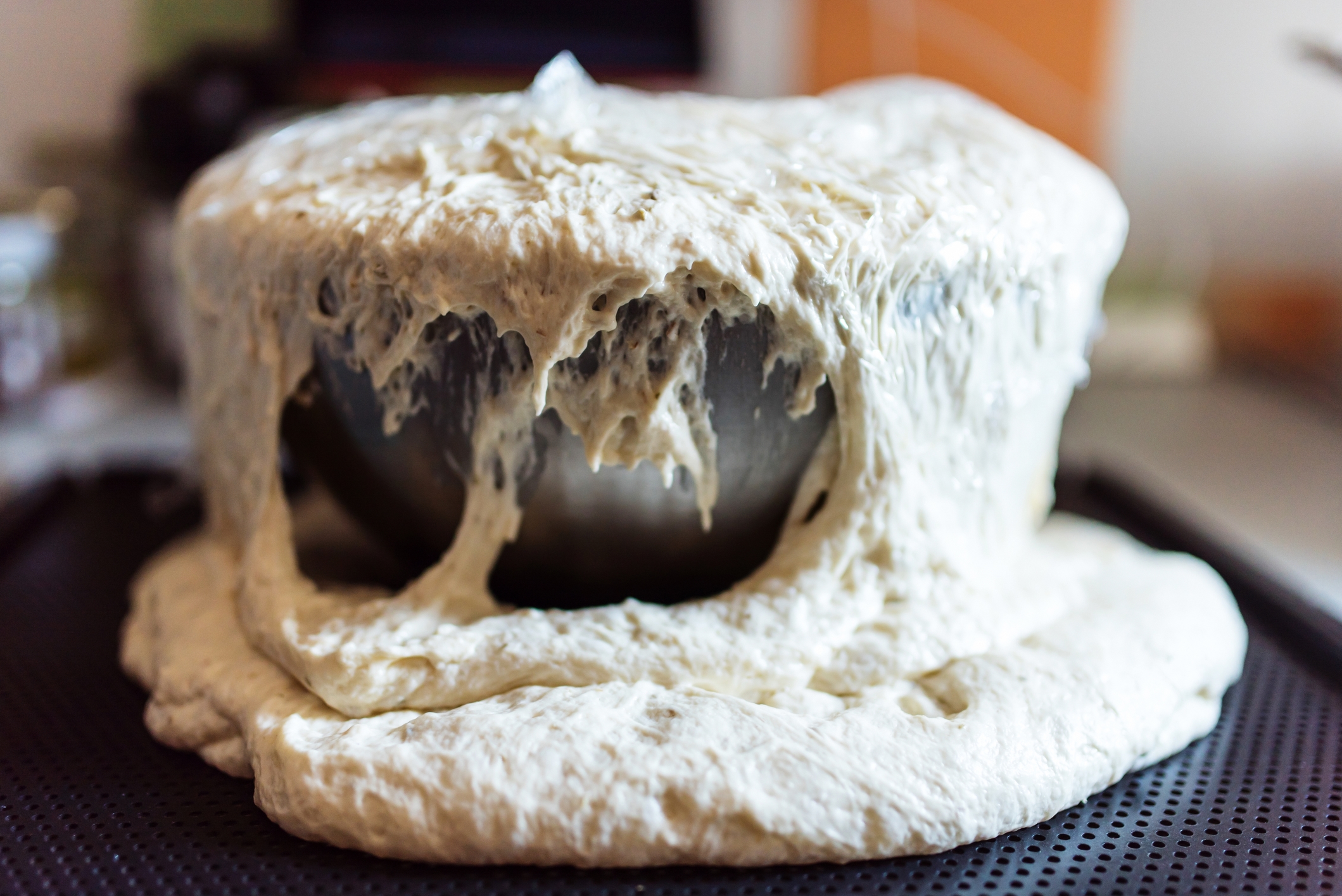
The Hebrew word for sour is related to chametz, leavened grains. Fermented breads in the ancient world were all sour dough types. Most often leavened grains (chametz) are figurative of the small foreign agents multiplying rapidly to puff up a person in pride or other sin. This makes one sour or defiled. Closely linked to this notion is the sense of sight, as one is to be watchful of the kneading bowl and thoroughly inspect the house during the days of Unleavened Bread. As Paul says, just a little leaven will infect the whole lump of dough![9]

1Cor. 5:7-8 (NASB)  Clean out the old leaven so that you may be a new lump, just as you are in fact unleavened. For Christ our Passover also has been sacrificed.  8  Therefore let us celebrate the feast, not with old leaven, nor with the leaven of malice and wickedness, but with the unleavened bread of sincerity and truth.
© Catalina Zaharescu Tiensuu | Dreamstime.com

There is no mistaking that Paul is comparing the sourness of leaven to the actions (and words) of people in the context of the chapter above. The people he references are believers, not those lost to the world. Recall the original Passover and Unleavened Bread. Israel’s first stop was Marah with its bitter waters. If one fails to search out the leaven of the heart, the sour chametz will puff up like the chest of a wild beast of the field to create wickedness and eventually bitterness among even the Household of God. What’s the remedy?

1Cor. 5:11 (NASB) But actually, I wrote to you not to associate with any so-called brother if he is an immoral person, or covetous, or an idolater, or a reviler, or a drunkard, or a swindler—not even to eat with such a one.

Hopefully, being removed from the camp will spring up a well of repentance in such a person’s heart. Regardless, the yeast infection is stayed from infecting the rest of the local body. Our duty is to daily examine our own hearts for the sourness of pride. The indicators (fruits) are a dead giveaway as to what is truly growing in the soil. Check for the sweet attributes of the fruit of the Holy Spirit, and remove what doesn’t belong. In Psalm 34, David tells us to taste and see that the LORD is good. Taste, in order to “see” properly. This is also true for our words. Taste your words before you spit them out. Don’t let the putrid smell of decaying flesh be on your breath. May your lips drip with the fragrant honey of the Word and fruit (words and action) of the Spirit.

Salty

Lev. 2:13 (NASB)  ‘Every grain offering of yours, moreover, you shall season with salt, so that the salt of the covenant of your God shall not be lacking from your grain offering; with all your offerings you shall offer salt.

Eliminate salt from your diet and discover how mundane and boring eating and tasting can become. Salt adds life and delight to any type of food; even the best dessert needs a pinch of salt to bring out the richness and sweetness. Salt CHANGES the taste of food (it never works the other way around). It makes food and drink palatable and yummy. All sacrifices are offered with salt. Salt was not only a great commodity in the ancient world, but was a symbol of covenant in the near east.[10] Salt and a meal between families bound them together.

Too little salt and the taste is not as appealing. Too much salt, and something can hardly be swallowed, and can even result in poisoning. But with the right amount, flavor bursts in the mouth causing delight. This is what we are to be to other people; the thing that causes them to rejoice and crave more.

Col. 4:5-6 (NASB) Conduct yourselves with wisdom toward outsiders, making the most of the opportunity.  6  Let your speech always be with grace, as though seasoned with salt, so that you will know how you should respond to each person.

© Jiri Hera | Dreamstime.com

Salt is a great cleanser and food preservative. It prevents decay and kills many harmful bacteria. Interestingly, Elisha purified the waters in Jericho with salt. (2 Kings 2) The bottom line is that salt can kill or heal. We must discern a healthy amount to use both literally and figuratively. Messiah said:

Mat. 5:13 (NASB) “You are the salt of the earth; but if the salt has become tasteless, how can it be made salty again? It is no longer good for anything, except to be thrown out and trampled under foot by men.

Salt also causes thirst. Our speech should cause others to hunger and thirst for righteousness, not suffer dehydration. Living Waters are to flow like a river from our innermost being. This IS the Holy Spirit, a river of Life and of Eden. If we have become salt that is no longer salty, or a pillar of salt that continually longs for the world, there is no life. We are a dry well. May Abba cast such a one into His watery refining fires of cleansing and renewal. May He sprinkle fresh water upon your soul.

Ezek. 36:24-27 (NASB)  “For I will take you from the nations, gather you from all the lands and bring you into your own land.  25  “Then I will sprinkle clean water on you, and you will be clean; I will cleanse you from all your filthiness and from all your idols.  26  “Moreover, I will give you a new heart and put a new spirit within you; and I will remove the heart of stone from your flesh and give you a heart of flesh.  27  “I will put My Spirit within you and cause you to walk in My statutes, and you will be careful to observe My ordinances.

Asher

Taste and see! In conclusion, there is one last association for the month of Shevat that ties into the theme of taste. The tribe of Shevat is Asher. Asher means to be happy, blessed, to advance and walk straight. Perhaps Jacob and Moses’ blessings over this son and tribe will have a deeper meaning considering the faculty of taste just explored.

Gen. 49:20 (NASB) “As for Asher, his food shall be rich (fat), And he will yield royal dainties.”

Dt. 33:24-25 (NASB)  Of Asher he said, “More blessed than sons is Asher; May he be favored by his brothers, And may he dip his foot in oil.  25  “Your locks will be iron and bronze, And according to your days, so will your leisurely walk be.

Asher’s food (fruit) is fat and rich, a feast fit for a King and his court. He is a picture of one that offers the thirsty, hungry, and battle weary true refreshment. He spreads happiness and revitalizes the weak. This is how he yields “royal dainties.” He serves from the King’s table. Does this remind you of the wedding supper of the Lamb?

Moses, through the inspiration of the Ruach HaKodesh, blesses the tribe of Asher last. He is the eleventh-hour tribe (of the eleventh month). Moses says Asher is the MOST blessed of the sons. When his fruit is pressed (tested), his walk (foot) is revealed to be dipped in the sweet oil of the Holy Spirit. Verse 25 above uses the English word “locks” to describe the Hebrew word man’al, meaning sandal or shoe latches or the thing that secures one’s shoes. To have your “feet shod with the preparation with the Gospel of Peace,” remember the happiness of Asher. (Eph. 6:15)

Is. 52:7 (NASB)  How lovely on the mountains Are the feet of him who brings good news, Who announces peace And brings good news of happiness, Who announces salvation, And says to Zion, “Your God reigns!”

Asher is a reminder of the happiness to come in the fullness of the Kingdom of God and his banquet table of royal dainties. Asher has the oil from holy trees that others come to “purchase.” His delicacies make him favored among the brethren because they can “taste and see” the richness of the Holy Spirit in the actions and words that drip like oil and honey from his lips. They are a balm of healing and delight, a reminder of the King’s Table. May you be like Asher as a holy tree of life, and not the Asherim of deaf and dumb idols.

May this new month bring renewal and blessings upon you and your households. May it truly be a New Year for Trees (people) in your assemblies. May your tongue be used as a wise discerner of truth. May you be happy like Asher with the richness of the bread (Word) of God, and may you yield a banquet fit for the King and His Kingdom.

© Costin79 | Dreamstime.com


Update: After reading this article, a dear reader sent me the following song by Andrew Peterson. It’s called “The Sower’s Song.” I can’t express the magnitude of how much Adonai is glorified in it! Enjoy!


[1] The word Shevat (שְׁבָט) is also phonetically related to Shabbat (שַׁבָּת). The letters tet and tav, both letters of the tongue, can be interchangeable.

[2] http://www.monell.org/news/fact_sheets/monell_taste_primer

[3] http://jcb.rupress.org/content/jcb/27/2/263.full.pdf

https://www.ncbi.nlm.nih.gov/pmc/articles/PMC4647210/

[4] Learn more here.

[5] Flavor is a combination of taste plus smell, which is how your brain registers scent when you  eat something. I hope to explore flavor and smell in a later in post.

[6] For example, see: Dt. 20:19, Is. 65:22, Jer. 17:8, & Psalm 1

[7] See also James 3 on the tongue.

[8] Consider Jonah 3:7

[9] 1 Cor. 5:6-8, Gal. 5:9

[10] For more on this see Clay Trumbull’s Salt Covenant.
Categories: Biblical Symbols, new moon, Study Helps | Tags: , , , , , , , , | 16 Comments

Hebrew Numbers 11-30

This is another reference post to help with Bible study, symbolism, dream interpretation, etc. Related articles can be found on the Misparim page. For numbers 1-10, click here. Studying Dr. Hollisa Alewine’s The Creation Gospel has been extremely helpful in making many of these determinations. I hope you will take the time to learn her material for yourself. You will see her work reflected in numbers 1-7 in regard to the seven creation days, seven Spirits of Adonai, seven Feast days, seven Churches, and in the seven abominations. 


© David Castillo Dominici | Dreamstime.com

Eleven achat esre [f.] echad asar [m.] Eleven is a tricky number, and the one in which I receive the most questions. People have a tendency to notice the clock when it is 11:11, and wonder what it means. If one feels plagued by seeing the number eleven, I suggest a careful read of Deuteronomy 1. From Mt. Sinai to the Promised Land was an eleven day journey, but due to Israel’s rebellion, they were in the wilderness for a total forty years. This message was reiterated to them in the eleventh month, Shevat, in the fortieth year. Hence, the full redemption and entry into the “Land” is connected to the number eleven, but also what prevents it.

So, eleven requires one to discern between the spirit of anti-messiah and the Messiah – remaining in rebellion or submitting to the King of kings. For example, Joseph was the eleventh son born to Jacob, and is a type of the Messiah – the Redeemer. Joseph was called the “master of dreams,” or mysteries/secrets. His life depicts many aspects of Yeshua with the number eleven playing a role in his prophetic dreams. (The sheaves and stars that bowed to Joseph were eleven. – Gen. 37) In the life of Yeshua, eleven disciples witnessed and revered the resurrected Messiah. Judas betrayed Him and then killed himself before the resurrection, making the disciples number eleven. (Mt. 28:16, Mark 16:14, Luke 24:9,23)

Most often, eleven has negative connotations. Stories with this number often revolve around rebellion, disorder, judgment, betrayal, idolatry, bribery, lack of trust in YHWH, being incomplete, and false authority/government. For example, lack in (12-1) or excess (10+1), both signify imperfection. There is an eleven day difference between the lunar and solar year (cycles). The lunar year is eleven days shorter and the solar year is eleven days longer. Interesting, considering the Jewish calendar favors neither, as it lunisolar. Esau produced eleven chieftains. He is characterized by the excess of eleven as he ruled by his appetite for more than he needs. One driven to amass wealth or excess of any kind needs to recognize that this beast/fleshly behavior actually achieves less, not more in the spiritual realm. Poor in the natural is akin to being rich in the spiritual realm; and being rich in the natural figures being poor in the spiritual realm. Messages of prosperity are dangerous for the Body as it leads to the spiritual depravity and lack of Esau, who is willing to sell his birthright for a bowl of “red stuff.” This concept is emphasized in the brother’s views:

Genesis 33:9-11 And Esau said, I have plenty, my brother. Let what you have be to yourself. [10] And Jacob said, No, please, if I now have found favor in your eyes, take my present from my hands. For I have seen your face, like seeing the face of God; and you are pleased with me. [11] Please take my blessing which has been brought to you, because God has favored me, and because I have everything. And he urged him; and he accepted.

Most translations use the same English word (typically: enough) in the bolded phrases in the above passage. But, Esau and Jacob use two different words to express their abundance. Esau says, “I have rav.” Whereas, Jacob attributes his wealth to God’s blessing and favor and says, “I have kol.” Having abundance, much or plenty alludes to the conclusion that there is still more to be gained. That was Esau’s choice of words. Whereas Jacob declared he had everything. This implies he had no lack and no need to strive for more due to God’s blessing and favor. There is a world of a difference between these two perspectives and ideologies. Again, which one describes you?

Eleven can also figure transition (moving back to 10 or ahead to 12). Consider the curtains that covered the Holy and Most Holy Place. There were FOUR curtains. The first (innermost) was made of linen, the second of goats’ hair, the third of rams’ skins, and the fourth of badgers’ (KJV) or marine animal skins. The second (goat’a hair) layer had eleven total curtains. (See Exodus 26.)

Exodus 36:14-16 (NASB) Then he made curtains of goats’ hair for a tent over the tabernacle; he made eleven curtains in all. [15] The length of each curtain was thirty cubits and four cubits the width of each curtain; the eleven curtains had the same measurements. [16] He joined five curtains by themselves and the other six curtains by themselves.

These four coverings were over the Holy and Most Holy Place of the Mishkan (Taberncale). What is the significance of the second layer having eleven curtains? The extra (excess) curtain in this case (the linen underneath had ten curtains) was doubled so it hung down and over the front and back of the Tabernacles. In this way, it concealed in the inner linen curtains. Linen figures holiness, righteousness, and purity. The covering of goat’s hair is reminiscent of one’s flesh, something that conceals the former. When a hairy Esau and his eleven chieftains submit themselves to Adonai, it is a very beautiful thing. The old nature must die for this this occur, like the goat’s that became part of the Mishkan.

Hence, eleven can figure the prophetic realm, but also its counterfeit, divination. Eleven often signals that one is doing what is “right in your own eyes,” the extreme opposite of the Holy Place. It’s action based on “I feel,” not “It is written.” It is ego and power driven to get one’s way. The Tabernacle teaches the opposite: dying to self.

In Daniel 7, a “little horn” arises from the ten horns of the terrible fourth beast, making it the 11th horn. This horn was epitomized in evil Antiochus Epiphanes, which is a type of the beast and antichrist, and the abomination that makes desolation. According to Daniel, this man and the spirit of the anti-christ seeks to CHANGE the times and law, that is the Torah and the Feast Days.

‘He will speak out against the Most High and wear down the saints of the Highest One, and he will intend to make alterations in times and in law; and they will be given into his hand for a time, times, and half a time. (Dan 7:25) 

These are the “changes” that Antiochus decreed for Israel:

You shall profane the Sabbath.
You shall profane the festivals and holy days.
You shall set up idols.
You shall eat unclean animals.
You shall not circumcise your sons.
You shall forget the Torah.

Thus, if the “prophetic” word one receives mirrors the actions of Antiochus and seeks to abrogate God’s Holy Law or His Holy Feast Days… run! It is not a Word from the LORD. It is a message for itching ears that seeks to please the appetites and lusts of the flesh. (A hairy Esau.)

Eleventh Hebrew Letter: Khaf Numerical value of twenty. Pictograph meaning an open hand or container, like a cup or a spoon. As a suffix, it shows possession or ownership. An open hand is one that receives, kabbalah. It’s interesting that Jewish mysticism or kabbalah depicts both sides of the number eleven. There are true prophetic things in kabbalistic teachings, but there is also a much more popular form that is mere divination. The number/letter also can mean similar. Our job is to discern the difference between two similar, yet different ideologies. Keter, the Hebrew word for crown, begins with the letter khaf, hinting at the place of authority. Who is the authority/crown of your life? Messiah or anti-messiah? The root of the Hebrew word for spoon is kafaf, which means to bend. Who are we bending/bowing to? In this sense, khaf has to do with submission.

  • Jacob had to face Esau while his family was incomplete with 11 sons (Benjamin wasn’t yet born). He had to fight an “Angel of the LORD” all night long.
  • Esau’s chieftains were eleven (Gen. 36:40-43) compared to Jacob’s twelve. Just reviewing the history of Esau’s lineage (Edom) makes it abundantly clear that he is associated with rebellion and living by the nephesh (beast/flesh).
  • The wilderness journey was only eleven days, but rebellion cost Israel forty more years in the desert. Moses recounted this punishment to them on the first day of the eleventh month (Dt. 1).
  • Eleven disciples were incomplete until a twelfth was chosen. (Acts 1:21-26)
  • Story of rebellion in building the Tower of Babel occurs in Genesis 11, which resulted in the confusion of tongues/languages – babble.
  • Delilah betrayed the judge Samson by taking the bribe of 5 lords of the Philistines. Each offered her 1100 pieces of silver. (Jud. 16:6, 3:3)
  • Right after Samson’s story in Judges, the remaining chapters (17-21) depict the moral and political decay of Israel. All of it is contrary to God’s order. And amazingly, it all begins with a story about another 1100 pieces of silver. Here are the highlights and I believe they are indicative of the number 11:

The word to describe the state of affairs in these chapters is “confusion“: Stolen money is used for idols, the Lord is invoked to bless the thief, individual shrines replace worship at the tabernacle, Levites and common people are consecrated as priests, idols are used in the worship of Jehovah. And Micah supposed the Lord would bless him in all of this! Moreover, as the story continues, A Levite’s concubine is raped to death, a civil war ensues, and the tribe of Benjamin is almost wiped out. This verse begins and ends the entire series of chapters: In those days there was no king in Israel; everyone did what was right in his own eyes. (Jdg. 17:6 & 21:25)

  • 5 + 6 = 11. Look back at the meaning of numbers five and six. If power and strength (5) is added to man and beast (6), a twisted counterfeit emerges unless that man (or woman) is ruled by the Spirit of Adonai. In the case of the latter, eleven can symbolize a place of godly transition. Sadly, many believe that Adonai rules them, but it is their nephesh/flesh that really has the upper hand. Where this is true, their life will be characterized by confusion, disorder, an extreme of lack or excess, duplicity, corruption, divination, and the like.
  • Messiah was “cut off” (crucified) because of our rebellion (sins) when He was about 33 years old (3 x 11). (Dan. 9:26) In His case, this was obviously a godly “transition” as He overcame the grave!
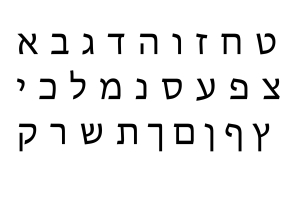
  • There are 22 Hebrew letters in the alephbet. (2×11). Overcoming and proper discernment come from the Word of Adonai, which is composed of 2×11 letter in the Holy Language of Hebrew.

Twelve shtayim esre [f.] shnayim asar [m.] perfect government, order, organization, united, perfect subdivisions of time (12 hours in day, 12 months in a year, 12 primary constellations) and of people (12 tribes of Israel, 12 Disciples/Apostles). This demonstrates a holy people serving a holy God based on the Creator’s clock and calendar.

  • Twelfth Hebrew Letter: Lamed Numerical value of thirty. Pictographic meaning shepherd’s hook/staff, teaching, learning, goading, protection, yoke, bind. Infinitive prefix for verbs, meaning to or for or belonging to.
  • 12 foundations in the heavenly Jerusalem
  • 12 Gates
  • 12 Pearls
  • At age 12, Yeshua first appears in public and engages with the teachers in Jerusalem. (Luke 2:42, He was at Bar Mitzvah age.)
  • In Luke 8, a woman that had an issue of blood for 12 years touches Yeshua’s tzit-tzyiot (tassels/fringes) and she is healed. This occurred while He was on His way to heal a 12 year girl.
  • 2×10= 12. If we look at the ideal for numbers two and ten, then we can see that 12 is about a united (2) and perfect congregation (10).
  • 3×4=12. Again, looking at the ideal for numbers three and four, we can see that when the seed is ripened (3) with the Holy Spirit (4), it produces resurrection life (3) that is powered by divine government (4).
  • 2×6=12. If we review numbers two and six, twelve will ideally picture a unified relationship (2) that is serving in the image of Elohim (6). The beast is being ruled by the two in one flesh of restored Adam (mankind).
  • Multiples of twelve, such as 24 or 144,000 will carry these same ideas.

Thirteen shlosh esre [f.] shlosha asar [m.] Thirteen is associated with the mercies of God, love, unity (oneness), and eternity. It is the 6th prime number, so it will have some of the same meanings as the number six. Thirteen has the stigma of being an “unlucky” number. I don’t believe in luck, nor do I believe that thirteen ONLY has negative connotations. The idea that the number 13 is bad luck comes from pagan influences. The Hebrew word for love (ahavah) and oneness (echad) share the numerical value of 13. Thus, one would expect to see 13 linked with love and unity, and a careful look shows that it is. However, on the negative side, there are connections to the opposite of love, which is not hate, but apathy, indifference, and fear.

  • Thirteenth Hebrew Letter: Mem Numerical value of forty. Pictographic meaning of water, chaos, immersion, womb, blood. Mem is the “center” of the Hebrew alefbet. Mem has two forms: the open and closed (final/sofit), depending on where it appears in a word. Mystically, mem is associated with Moses and Messiah (both begin with the letter mem), and the revelation of God’s instructions (Torah). As such, Moses is represented by the open mem, as the revelation is open or revealed; whereas, Messiah represents the closed mem or the revelation of that which is concealed. This is mirrored in the imagery of the womb: it is both open and closed, depending on the stage of a child’s development. In grammar, mem shows the masculine plural for nouns. As a prefix, is the preposition from, out of, or the means by which. In light of this, what is the means by which love and unity (13)  are accomplished? Perhaps some of the following points will help demonstrate the answer.
  • God expresses His glory with 13 attributes. (Ex. 34:6-7, Micah 7:18-20)[1]
  • In Hebrew, the combined letters in the names of the 3 patriarchs (Abraham, Isaac, and Jacob) reduce to 13.
  • In Hebrew, the combined letters in the names of the 4 matriarchs (Sarah, Rebekah, Rachel, and Leah) reduce to 13.
  • The Tetragrammaton (Yod, hey, vav, hey) equals the number 26, or 13 x 2.
  • 13 is considered the age of a youth for becoming a Bar and Bat Mitzvah (son and daughter of the commandments). In other words, this is point at which a child should be mature enough to take on more responsibility for their own spiritual welfare.
  • There are 13 rules of Torah interpretation in Jewish hermeneutics.
  • There are 12 tribes of Israel, yet there are 13 if one counts Ephraim and Manasseh instead of Joseph.
  • There are 12 Hebrew months, but occasionally there is an added 13th month to keep the lunar-solar Hebrew calendar in sync.
  • There are 613 Torah commandments. (600 + 13). Six is the number of a man made in the image of Elohim and 13 is the number of love. Truly, all the commandments hang on one: LOVE – ahavah = 13 (First God, and then your neighbor as yourself, because we are truly to be One – echad = 13).
  • The thirteenth chapter of 1 Corinthians teaches one about the actions of  LOVE.
  • 6+7=13. The ideal for the number 6 (man expressing the image of God and sacrificial love) added to the number 7 (divine rest, completeness, and reverence), produces both love and unity.
  • The negative side of 6 (man following the image of the beast) added to 7 (one who separates or causes strife between brothers), produces rebellion, destruction, and apathy. It is fear based, rather than being rooted in perfect love. This is best depicted by the seventh church of Revelation: Laodicea (The people lack love; they are apathetic, indifferent, or “lukewarm.”)

Fourteen arbah esre (f) arba’ah asar (m) Multiple of SEVEN, a double measure. The number of the Messiah. To reproduce, recreate, disciple, servant, bond-servant. The moon is nearly full on the fourteenth day of each Hebrew month, symbolizing fullness, revelation, and increased (spiritual) light.

  • Fourteenth Hebrew Letter: Nun Numerical value of 50. Pictographic meaning life, fish, seed, heir, productiveness, continuity, permanence, prophetic, multiplication.
  • Jacob served Laban for fourteen years to marry Leah and Rachel. (Gen. 31:41)
  • After the rebellion of Korah, the people accused Moses of killing the LORD’s people. A plague then consumed 14,700 of them. (Notice the 7s). (Num. 16:49)
  • Every day of Sukkot (Tabernacles), a 7-day feast, 14 lambs were offered. (Num. 29)
  • Solomon celebrated Sukkot for fourteen days when he dedicated the first Temple of YHWH. (1 Kings 8)
  • The genealogy of the Messiah is divided up and given in two sets of fourteen (Mt. 1). David’s name has a numeric value of 14 (dalet, vav, dalet). This is one way that Matthew connected Messiah with David in his gospel.
  • Paul says that he waited fourteen years to go up to Jerusalem a second time to meet with the Jerusalem council in Acts 15. (Gal. 2:1) This speaks to one being patient and gaining wisdom and experience before pushing ahead with an agenda — even if it is from Elohim!

Fifteen chamesh esre (f) chamish’a asar (m) A multiple of FIVE. The short or poetic form of God’s most holy Name (Yahyohd, hey) has a numerical value of fifteen. Because of this, the number fifteen is not written out in its most straight forward form (yohd [10] + hey [5] = 15) in order to not desecrate a holy Name of Adonai. Instead, it is written as tet [9] + vav [6] = 15.

Fifteen implies salvation, healing, redemption, prolonging, stepping up, ascending, and fullness (like the LIGHT of the full moon). The number fifteen also represents the elevation from the physical to the spiritual. For example, the Pesach Seder has fifteen steps, and there are fifteen stanzas of Dayenu. The Aaronic Benediction (Priestly Blessing) consists of fifteen Hebrew words. (Num. 6:24-26) One had to ascend fifteen steps to enter the Temple. There are fifteen Shir Haamalot (Psalms of Ascent, Psalms 120-134)

  • Fifteenth Hebrew Letter: Samech Numerical value of 60. Pictographic meaning thorn, to surround, support, protect, wheel, snake.
  • There are fifteen Psalms of Ascent. (Ps. 120-134) These Psalms were sung as travelers made their way to the three pilgrimage festivals in Jerusalem. In the Holy Temple courtyard, there was an ultra wide stairway that consisted of fifteen large, semi-circular steps that “ascended” into the inner section of the courtyard. The Levites would play music on these steps and sing these fifteen Psalms.
  • YHWH prolonged the life of King Hezekiah by healing him and adding fifteen years to his life. (2 Kings 20, Is. 38:5)
  • Hosea redeemed his wife with fifteen shekels of silver. (Hos. 3)
  • The fifteenth day of (biblical lunar) months always falls on the full moon. The most LIGHT in the night sky occurs when the moon is full. The first day of Unleavened Bread, and the first day of Sukkot, both begin when the moon is full. (See more on this in Moonbeams and the Moedim.)
  • When a man (ish) becomes one with a woman (ishsha), Yah is (should be) at the heart of their marriage. Thus, fifteen (Yah -15) is the bond between a man and wife in holy matrimony. Without Yah, they are left with fire. (See the linked article.)

Sixteen shesh esre (f) shisha asar (m) Multiple of eight. Without boundaries or limits. New beginning. Olam Olam. Outside of time as we know it. Lingering with the Father. Can also picture the completeness of seven (16= 1+6=7) that leads to new beginnings. Covenant. (See eight for more information.)

  • Sixteenth Hebrew Letter: Ayin Numerical value 70. (70 is the number of the nations.) Pictographic meaning eye, well (of water), vision (literal and prophetic), perception, seven Spirits of God (as eyes roaming to and fro).

Seventeen shva esre (f) shiv’a asar (m) Seventeen is the 7th prime number, thus some meanings will mirror seven. 7+10=17 indicates the meaning of the number ten will also inform seventeen. While completeness, divine order, and a congregation are related to this number, the Scriptures also reveal that even those that are called to walk in these attributes can act presumptuously in their immaturity. Joseph was seventeen when he brought the evil report about his brothers to his father Jacob. (Gen. 37:2) Seventeen is close to adulthood (age 20), but not quite. Thus, immaturity, childishness, underdevelopment, and naivety can be indicative of seventeen as pictured in young Joseph and King Rehoboam.

  • Seventeenth Hebrew Letter: Peh Numerical value of 80. Pictographic meaning of mouth, opening, speech, blow, scatter. Thus, the mouth reveals whether one is mature or immature.
  • Jacob lived in Egypt for seventeen years, at the end of his life, reunited with his son Joseph. In this case, things had come full circle, a restoration (maturity).
  • The Flood of Noah’s day (judgment): fountains of the great deep and the floodgates of the sky opened up on the 17th of the second month. This a judgement from above and below, a complete cycle. The restoration began in like fashion: on the 17th of the 7th month, the Ark rested on Mt. Ararat, but the mountaintops couldn’t be seen until the 10th month.
  • King Rehoboam reigned for 17 years in Jerusalem as the first king over the southern kingdom of Judah. His immature, selfish actions resulted in rebellion and the split of the united Israel.
  • The 17th of Tammuz begins the mourning period for the destruction of the 1st and 2nd Temples, ending on the 9th of Av. This three week period is called the “Dire Straits.”

Gen. 47:27-28 (LITV) And Israel lived in the land of Egypt, in the land of Goshen. And they owned in it, and were fruitful, and multiplied exceedingly.  28  And Jacob lived in the land of Egypt seventeen years. And the days of Jacob, the years of his life were a hundred and forty seven years.

This shows the full circle of completion that seventeen implies. When the immature grows to maturity, reunification and restoration (7) are figured. It results in the use of the “peh” or mouth for a promise:

Gen. 47:29-31 (LITV) And the days of Israel to die drew near. And he called to his son Joseph and said to him, Now if I have found favor in your eyes, please put your hand under my thigh, and do kindness (chesed) and truth (emet) with me. Please do not bury me in Egypt;  30  but let me lie with my fathers, and carry me from Egypt, and bury me in their burying place. And he said, I will do according to your words.  31  And he said, Swear to me. And he swore to him. And Israel bowed on the head of the bed.

Eighteen shmoneh esre (f) shmonah asar (m) In Hebrew, the word for LIFE, chai (chet, yohd) is also the number eighteen. Both prayer and Temple worship are related to the number eighteen. Meanings are related to life, prayer, worship, devotion, offerings, charity, being loosed or freed, and sacrifice. Conversely, when one is rebellious to YHWH, it can relate to the opposite of life: judgment, destruction, captivity, and bondage.

  • Eighteenth Hebrew Letter: Tzaddi Numerical value of 90. Pictographic meaning trail, journey, hunt, righteous (upright) one, justice.
  • In Jewish law, Matzah (Unleavened Bread) is baked for no more than eighteen minutes to be considered Kosher for Pesach (Passover).
  • The Amidah or the Shemoneh Esrei is a standing prayer with eighteen benedictionsThese prayers were formulated to correspond to the daily (continual) offerings at the Temple. These are the “calves of our lips.” (Hosea 14:2)
  • The future New Jerusalem (from Ezekiel’s vision) will be 18,000 cubits: “The city shall be 18,000 cubits round about; and the name of the city from that day shall be, ‘The LORD is there.'” (Ezek. 48:35)
  • In Luke 13:4, the Tower of Siloam fell on eighteen people in judgement. 
  • Yeshua healed a woman bound with an infirmity that caused her to be bent over for eighteen years (Luke 13:10-17). Someone “bent over” with an infirmity is figuratively the opposite of someone “upright” or righteous. Yeshua released (loosed) this woman from the bondage of the enemy. Whatever was preventing her from walking uprightly for 18 long years was removed.
  • The Israelites were punished for periods of eighteen years for idolatry and rebellion in the time of the Judges. (Judges 3:14; 10:8; 20:44)

Nineteen tsha esre (f) tish’a asar (m) 10+9=19, meanings of ten and nine will inform the number nineteen. Divine order, judgment, truth revealed or concealed. Nineteen is the 8th prime number, which also indicates links to the number eight.

  • Nineteenth Hebrew Letter: Koof Numerical value of one hundred. Pictographic meaning sun on the horizon, time, imitation (of God or enemy), circle.
  • Chavah or Eve has a Gematria value of 19. (See how the woman is associated with the number nine here.)
  • The Jewish calendar follows a 19 year (Metonic) Cycle. 19 solar years are equivalent to 235 lunar months.

Twenty esrim (n) Manhood. The age of accountability for those counted among the people for service, war, and worship. (Ex. 30:14; 38:26, Lev. 27:3, Num. 1, 1 Chron. 23:24; 27:23. Doubling of the number ten. Maturity, accountability, being counted, expectation.

  • Twentieth Hebrew Letter: Reish Numerical value of two hundred. Pictographic meaning a man’s head, authority, beginning, first, top.
  • Humans have 10 fingers and ten toes, which together are 20 and symbolize a person’s deeds and walk (lifestyle/where they go).
  • 1 shekel is equal to 20 gerahs. (Ex. 30:13)

Twenty-One esrim v’achat (f) esrim v’echad (m) Can denote a tripling of seven (3×7=21). This can be good as in a multiplication of rest, holiness, or the seven Spirits of God, but can also depict judgment and the spirit of anti-messiah as seen in the triplets of sevens from the Book of Revelation. Can also represent delay or to stand against as seen in Daniel below.

  • Twenty First Hebrew Letter: Shin Numerical value of three hundred. Pictographic meaning of teeth, to devour, chew on, destroy, think about, ponder, fire, tongues of fire, sharpen, press, eat, consume.
  • The Prince of Persia delayed the message Daniel had prayed about for twenty-one days. Then he said to me, “Do not be afraid, Daniel, for from the first day that you set your heart on understanding this and on humbling yourself before your God, your words were heard, and I have come in response to your words. “But the prince of the kingdom of Persia was withstanding me for twenty-one days; then behold, Michael, one of the chief princes, came to help me, for I had been left there with the kings of Persia. (Daniel 10:12-13) The message was about the latter or end days (vs. 14).

Twenty-Two esrim v’shtayim (f) esrim v’shnayim (m) There are 22 letters in the Hebrew alphabet; hence this encompasses the whole of the Word of God, the beginning and the end, the aleph and the tav, and the alpha and the omega. It also represents the LaShon HaKodesh (Holy Tongue). On the negative side, it can picture something wholly wicked as the doubling of eleven (disorganization, doing what is right in your own eyes, anti-christ). Likewise, 22 can picture something highly prophetic or something divined by sorcery. Either way, positive or negative, sacred or profane, it involves WORDS. Other positive meanings: totality, creation, life, and order. Other negative meanings: disorder, destruction or break down, missing components, distress, banishment.

  • Twenty Second Hebrew Letter: Tav Numerical value of four hundred. Pictographic meaning the seal (of God) or the mark of the enemy, completion, signal, symbol, monument. As a multiple of four, government and authority (whether holy or wicked) are also insinuated.
  • YHWH spoke the Universe into existence. He used Words and words are made from letters. Thus, the Hebrew letters are the building blocks to all life.
  • The 22 letters are like human DNA. Each cell has Twenty-two pairs of chromosomes, called autosomes, with an additional pair of sex chromosomes.  The sex chromosomes are the only difference between males and females. Females have XX, while males have XY.
  • David used an acrostic featuring all 22 Hebrew letters when he penned Psalm 119. Eight verses are devoted to each of the Hebrew letters to praise YHWH for His Torah, commandments, and precepts. It’s as if he were “counting the ways” of his love for YHWH and His WORD.


Twenty-Three esrim v’shalosh (f) esrim v’shlosha (m) Based on the few Biblical passages that refer to this number, it appears that twenty-three has much to do with immorality, stubbornness, grumbling, complaining, wickedness, idolatry, etc. 

  • Jeremiah preached repentance to an obstinate people for 23 years as the Word of YHWH came to him. (Jer. 25:3, Read this passage for context)
  • Paul reminds about the fall of 23,000 in the wilderness: Now these things happened as examples for us, so that we would not crave evil things as they also craved. Do not be idolaters, as some of them were; as it is written, “THE PEOPLE SAT DOWN TO EAT AND DRINK, AND STOOD UP TO PLAY.” Nor let us act immorally, as some of them did, and twenty-three thousand fell in one day. Nor let us try the Lord, as some of them did, and were destroyed by the serpents. Nor grumble, as some of them did, and were destroyed by the destroyer. (1 Cor. 10:6-10)

Twenty-Four esrim v’arba (f) esrim v’arba’a (m) Multiple of twelve. Heavenly government and worship, dividing of time (24hrs in a day), priesthood, watchmen, all parts working together in service to YHWH. On the negative end are those that oppose the government, authority, and worship of the true God. The giant with 24 fingers and toes described below best depicts this.

  • The priests were divided into 24 courses to perform their service in the Tabernacle/Temple. (1 Chron. 24)
  • There are 24 elders around the heavenly throne in John’s vision in the Book of Revelation. (Doubling of 12)
  • Time is daily divided into 24 hour periods.
  • Watchmen (Levites, but not priests) were divided into 24 orders to guard the sanctity of the Holy Mount.
  • The Holy Land was divided into 24 districts.
  • The word shalom (peace) is found 24 times in the Torah.
  • There are 24 books in the Tanakh (Old Testament).  [Christians divide the same books differently to form 39. For example, Jews lump all twelve of the Minor Prophets together into one “book”.]
  • 24,000 died by plague for playing the harlot with the daughters of Moab before Pinchas intervened. (Num. 25)
  • In tradition, 24,000 of Rabbi Akiva’s students died of plague during the Omer Count for not honoring and respecting one another.
  • David’s nephew, Jonathan, killed a giant with 24 fingers and toes. This meant that the giant had 6 fingers on each hand and 6 toes on each foot. Since this giant opposed YHWH and His anointed, it’s safe to assume that he followed the image of the beast (6) both inside and out. Again there was war at Gath, where there was a man of great stature who had twenty-four fingers and toes, six fingers on each hand and six toes on each foot; and he also was descended from the giants. When he taunted Israel, Jonathan the son of Shimea, David’s brother, killed him. (1 Chron. 20:6-7)

Twenty-Five esrim v’chamesh (f) esrim v’chamisha (m) Related to five, as in 5 squared or 5×5. Has to do with strength and power to go the distance to spread the Seed or the Good News. This is demonstrated by the age of the priesthood apprenticeship beginning at age 25. Negatively, it is multiplied feet set to do evil and give wicked counsel. Ezekiel’s vision below is an example of this.

  • Chanukah (Feast of Dedication & Light) is on Kislev 25th. The 25th word in the Hebrew Bible is אור “ohr” which is LIGHT. Light & Seed are equivalent expressions.
  • Levites began to apprentice or learn their service to YHWH at the age of twenty-five. (Num. 8:24) [Their ministry doesn’t officially begin until age thirty.]
  • Ezekiel saw 25 men in a vision with their backs toward the Temple and faces toward the sun (false worship). Later, Ezekiel discovers who these men are and what their judgment will be. (Ezek. 8:16; 11:1-13)

Twenty-Six esrim v’shesh (f) esrim v’shisha (m) The numerical value of the Divine and Most Holy Name: YHWH (yohd, hey, vav, hey) is twenty-six. The Torah was given on Mt. Sinai in the 26th generation of mankind. (There were 10 generations from Adam to Noach, 10 generations from Noach to Abraham, and another 6 generations from Abraham to Moses.) Means oneness (YHWH is One [Dt. 6:4]), but also carries ideas associated with the number four (The most holy Name has four letters): dominion, authority, fullness, giving of Torah and Holy Spirit.

  • 2×13=26, denoting that 26 is related to thirteen. Thirteen means covenant, love, and unity.
  • Mankind is created in the image of YHWH (26). Not coincidently, the Bible begins to describe the creation of mankind in the 26th verse on the Torah scroll in Hebrew. This is true even in English Bibles: Gen. 1:26 Then God said, “Let Us make man in Our image, according to Our likeness; and let them rule over the fish of the sea and over the birds of the sky and over the cattle and over all the earth, and over every creeping thing that creeps on the earth.”

Twenty-Seven esrim v’sheva (f) esrim v’shiv’a (m) Three cubed equals twenty-seven. Thus, review the number three for more details as to how 27 is an exponential picture of this. To gather, resurrect, seeds, trees, fruit, counsel, dry land, chaos adverted, firstfruits, harmony, and balance. 3 x 9 = 27, thus the significance of the number nine reveals traits of twenty-seven. Based on the Scripture references below, it appears that 27 is linked also to things hidden being revealed and the Seed of the Woman, which is the mystery of the Gospel (nations being coheirs with Israel).

  • Sarah lived 127 years (Gen. 23:1). She is the “mother of nations.”
  • The Persian King Ahasuerus and Esther the Jewess ruled 127 provinces [nations] (Esther 1:1). As a descendant of Sarah, Esther was truly a “mother of nations.”

Twenty-Eight esrim v’shmoneh (f) esrim v’shmonah (m) 4×7=28, indicating that twenty-eight is linked to both four and seven. As mentioned in Hebrew Numbers 1-10, four and seven are indeed connected and picture many of the same things. 14+14  equals 28, linking Messiah to this number as well. A full lunar month can occur in only 28 days. Jewish thought associates 28 with seasons as seen below. Thus, 28 has to do with holy time and the calendar.

  • King Solomon enumerated 28 times, seasons, or purposes for everything under Heaven (Ecc. 3:1-8).

Twenty-Nine esrim ve tesha (f) esrim ve tish’a (m)
 The number of accountability and expectation (20) plus the number of judgment, fruitfulness, and multiplication (9). It also has connotations of potential.

Thirty shloshim (n) Represents the life cycle in miniature. Perfect order (3 x10), maturity for official ministry or service, price of bondservant, time of mourning a life.

  • Joseph was thirty years old when he stood before Pharaoh (Gen. 41:46).
  • King David began to reign when he was thirty years old (2 Sam. 5:4).
  • Messiah was thirty years old when His ministry began (Luke 3:23).
  • Aaron was mourned for thirty days (Num. 20:29).
  • Moses was mourned for thirty days (Dt. 34:8).
  • Priests that handled the most holy things began their official service at age thirty. (Num. 4)
  • The redemption price for a bondservant gored by an ox is 30 shekels of silver (Ex. 21:32).
  • Zechariah prophetically asks Judah to estimate his value. He is valued at 30 shekels of silver (Zech 11:12-13).
  • Judas betrays Messiah for 30 shekels of silver. (Mt. 26:15)
  • Samson had thirty Philistine companions when he went to marry his wife. He put a riddle to them, offering them thirty changes of clothes if they could figure it out. But his new bride tricked Samson into revealing the riddle, so Samson slew thirty men to fulfill his wager. (Judges 14 — multiples of 3 reign in Samson’s story.)

[1] Ex. 34:6-7 And the LORD passed by before him, and proclaimed, The LORD, The LORD God, merciful and gracious, longsuffering, and abundant in goodness and truth, Keeping mercy for thousands, forgiving iniquity and transgression and sin, and that will by no means clear the guilty; visiting the iniquity of the fathers upon the children, and upon the children’s children, unto the third and to the fourth generation.

For more references, see the footnotes under the page Misparim.

Categories: Biblical Symbols, Study Helps | Tags: , , , , , | 42 Comments

Book Review: Know the Time Change Your World

Barry Miller Book

Is it just me, or does time seem to be moving at an accelerated speed? The summer has flown by in a blink of the eye. I know people say that time seems to move faster the older you get, but as of late, even young people have been expressing a sense of not having enough time. Perhaps we are all too busy? Or maybe time encompasses more than we realize.

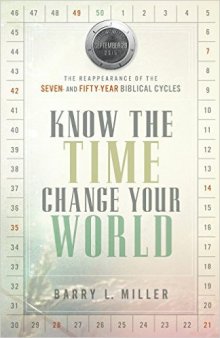
I’ve certainly had very little time for writing (for that I apologize), but I have managed to squeeze in some reading. And that’s what I want to bring to your attention today. Speaking of TIME, Barry Miller was kind enough to give me an advanced copy of his new book, Know the Time Change Your World: The Reappearance of the Seven and Fifty Year Biblical Cycles. (You can find a copy HERE on Amazon or HERE at Barnes Noble.)

I have enjoyed his book immensely and I’ve learned a lot. Those of you familiar with the Creation Gospel by Dr. Alewine will especially find Mr. Miller’s book intriguing. Know the Time Change Your World is based in the patterns and rhymes first given to us in the seven Creation days and extends into the feasts of the LORD. But where Dr. Alewine takes these cycles and actions deeper into the Spirit realm, everyday life, and Biblical interpretation, Mr. Miller reveals yet another facet in the business and financial aspects of life. For me, they are two sides of ONE coin. He teaches us not only how to discern these patterns in our own economy, but also in our personal finances.

I first met Mr. Miller through my blog and email correspondence. After visiting and reading his blog (see his new website here), I was amazed by how the Holy Spirit had been revealing the patterns of seven to Barry in a similar fashion as Dr. Alewine. Now, don’t misunderstand. The Creation Gospel and Barry’s book are VERY different. They are related because both use the Creation model for their foundation. (Which is where all good hermeneutics and teachings should begin… in the beginning.) Thus, one would expect to find connections because the ONE Holy Spirit has inspired, stirred, and moved the same way from Day One.

Many of us are searching for how to properly handle our finances and business dealings from a Hebraic (Biblical) perspective. Having spent years in the business sector and in Bible study, Barry Miller has some unique insights that should be appealing to not only Hebraic Roots followers but also to the Christian church at large. By giving friends and family members Know the Time Change Your World to help them make wiser financial choices, you will also be introducing them to the LORD’s Sabbath, calendar, and Torah. It’s a win-win in my opinion!

Have you ever wondered about the seven-year gap between the economic struggles of 2001 and 2008? What does Joseph have to teach us about personal finance today? Is YHWH’s (the LORD’s) calendar more than antiquated ritual? Does it have significance in not only my spiritual life but also in my secular life? Mr. Miller carefully takes us through the Bible and history to show us that the Beginning indeed has set the precedent for all time, even the end. (Is. 46:10)

The many “sevens” and even the greater cycles of “fifty” do matter just as much for us today as they did for ancient Israel. And I believe the church is becoming ripe for this message. Consider all the recent teachings and books on the blood moons and the Shemmitah years. Some are being called back to the cycles, patterns, and rhythms of our Creator. The unrest and immorality of the world are shaking many out of their complacency. And our great Elohim (God) is using people such as Mr. Miller to get His Word out to the masses.

As most of my readers are aware, obedience to the King of the Universe brings blessings. I haven’t met one person that doesn’t desire for the Creator to bless them in every aspect of their life. The problem is that too many of us are ignorant of the principles and laws set forth by YHWH (the LORD) that will cause us to reap such benefits.[1] We lack wisdom and thus make poor decisions that cause us setbacks in many areas of life, one of which is our finances.

After reading Miller’s book, I looked back through my life with the seven-year cycle in mind. I could clearly see how my lack of knowledge of the Creator’s calendar resulted in poor financial/business decisions. But not anymore. Know the Time Change Your World has sharpened the tools I already have acquired from Torah study. But even better, I have gained new ones!

Know the Time Change Your World is divided into three parts. In my opinion, Part III alone is worth the cost of the book. (But without the foundation of Part I and II, you’d be lost, lol!) Seven chapters will take you deep into the story of Joseph and the seven and fifty-year biblical cycles. It is EYE opening! Even seasoned Torah keepers will find a deeper revelation of not only Joseph but of themselves. Buy this book and share it with friends and family; you will not be disappointed!

Do you need an economic reset? Do you need to move from chaos to rest? Would you like to be able to make better decisions and have better discernment? God’s creation and His calendar have all the answers! Allow Barry Miller to give you the simple keys to this understanding in his new book.


See more about the book and Barry Miller at 7and50rhymes.com

[1] My people are destroyed for lack of knowledge. Because you have rejected knowledge, I also will reject you from being My priest. Since you have forgotten the law of your God, I also will forget your children. (Hosea 4:6)

Categories: News Flash, Study Helps | Tags: , , , , , , , | 1 Comment

The Flow of Love

The following model is a decidedly Greek one. Nevertheless, I have chosen this format because those of us raised and educated in Greek thought often have a hard time transitioning to a Hebraic mindset when studying the Scriptures. This is especially true when westerner’s think of God’s love, grace, and Spirit as being opposed to His commandments and Law. My hope is to show you that God’s Holy Law is in no way contrary to His love, mercy, or Spirit. In fact, the Law (Torah) properly applied is the epitome of His grace!

So then, the Law is holy, and the commandment is holy and righteous and good. (Rom. 7:12)

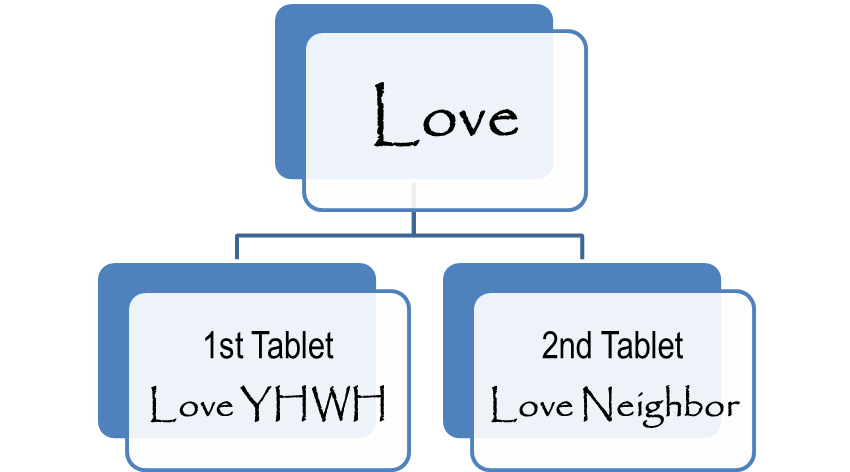
The flow chart in the figure below begins with LOVE.[1] It is love that is the greatest of all commandments and we know that God is love.[2]

And this is love, that we walk according to His commandments. This is the commandment, just as you have heard from the beginning, that you should walk in it. (2Jn. 1:6)

There are two branches that break off of the main heading of love. These two branches are what Yeshua called the greatest commandments.

Jesus answered, “The foremost is, ‘HEAR, O ISRAEL! THE LORD OUR GOD IS ONE LORD; AND YOU SHALL LOVE THE LORD YOUR GOD WITH ALL YOUR HEART, AND WITH ALL YOUR SOUL, AND WITH ALL YOUR MIND, AND WITH ALL YOUR STRENGTH.’ “The second is this, ‘YOU SHALL LOVE YOUR NEIGHBOR AS YOURSELF.’ There is no other commandment greater than these.” (Mark 12:29-31)

On these two commandments hang all the law and the prophets. (Mat. 22:40)

If we look closely at the Ten Commandments,[3] we see that the two tablets express the two greatest commandments in more detail. The first five teach us how to love Adonai[4] and the second five teach us how to love our neighbor. Do we need to be taught how to love God and our neighbor? Apparently, God thinks that we do.

Sometimes we assume that “love” is fully understood by all people. But, love is not always a universal concept. For example, a degraded or unregenerate mind can easily misconstrue love with lust and commit heinous acts of rape, incest, or pedophilia. This type of twisting can even happen on less disastrous levels when we simply “assume” that someone will like something merely by the fact that we ourselves do. In other words, do unto others as you would have them do unto you —- unless you are a pervert or degenerate! All kidding aside, it is reasonable to ask: “How do we love?”

How do we love YHWH (the LORD) and how do we love our neighbor? The Ten Commandments answer these questions. But even these ten can leave some ambiguity when we try to obey them. This is what the remaining 603 commandments in the Torah (Law) explain for us. The Rabbis have long counted out 613 distinct commandments within the Torah. There are 365 positive (do’s) and 248 negative (do not’s) commandments.

What?! There are 613 laws? Who could possibly keep that many statutes?[5] The English idea of “Law” is often thought of as harsh and rigid. So much so that grace is usually contrasted with Law. But perhaps we should allow the Bible to define our perception of God’s Law. The Hebrew word Torah,[6] translated as Law, actually means “instructions.” These are the instructions that Adonai sovereignly and lovingly gave His people. The Torah was never meant to burden God’s people; it was meant to bless and prosper them (and us).[7]

Confusion abounds when we misunderstand the function of the Law/Torah. Adonai never intended for His instructions or law to be the means by which He saved the children of Israel or us. There is a great analogy used by James[8] that we can use to express this. When you look into the mirror (the Law), it shows you your blemishes. You wouldn’t take the mirror off the wall and try to wash your face with it, would you?[9] The function of the mirror is to simply show you where the dirt is; it can never clean you. But, you have a choice of whether to wash your face or not. James compares those that are hearers and not doers of the word to someone who looks into the mirror (the Torah) and then does nothing about the dirt on his face.

In other words, salvation was NEVER the function of God’s Torah. It simply explains to you what sin is and is not. You choose to walk in holiness by being obedient, or you choose to walk contrary. God’s desire is for us to “see” where we have missed the mark and then adjust our walk accordingly. Repentance is not just saying, “I’m sorry.” It also requires one to align their life with Adonai’s standards. Nevertheless, there have always been some that try to use the mirror to wash their face. Adonai provided the soap (the Lamb) that cleanses us at the very beginning.

And all that dwell upon the earth shall worship him, whose names are not written in the book of life of the Lamb slain from the foundation of the world. (Rev. 13:8 KJV)

We should be rejoicing that our loving Heavenly Father cares enough about us that He gave us all the instructions we need to lead a blessed and holy life. But this gift can never save or wash us clean. So, if we find that we have animosity toward God’s instructions, perhaps we need to search our hearts for the root of this contempt; for it does not originate from the Holy Spirit. We should be able to agree with Paul and David:

Do we then nullify the Law through faith? May it never be! On the contrary, we establish the Law. (Rom. 3:31)

Your righteousness is an everlasting righteousness, And Your law (Torah) is truth. (Ps. 119:142)

 I long for Your salvation (Yeshua), O LORD, And Your law (Torah) is my delight. (Ps. 119:174)

Before we get to the flow chart, let’s establish a few more facts. Due to the nature of the commandments, no one person can keep every law. This is because some commandments deal particularly with men. If you are a woman, it is impossible to keep regulations that speak of night seminal emissions. Likewise, a man can never keep the commands relating to a woman’s menstrual flow. There are also many statutes that are directed to the Levitical priesthood. If you are not a Levite from the line of Aaron, many commandments simply aren’t applicable to you. Moreover, there are commandments that require a person to be living in the land of Israel with a functioning Temple in place for fulfillment. Believe it or not, these restrictions knock out a ton of the 613 mitzvot. Is the “yoke” feeling lighter?

Speaking of yokes, it is a very sad thing that we consider God’s Law to be an unbearable yoke. This must grieve our Father. I know it would grieve me if my son considered the rules of my house to be an “unbearable” yoke that only brought misery to his life. My house rules are outlined to protect my son because I love him. If only we could come to our Father as a little child and trust that He really does know what is best for us. And, that His desire is not to take all the fun out life, but to prosper and prolong our days.

For My yoke is easy and My burden is light.” (Mat. 11:30)

For this is the love of God, that we keep His commandments; and His commandments are not burdensome. (1Jn. 5:3)

So what is our real burden? What is a yoke that is “unbearable”? SIN! When we break or transgress God’s law, it brings terrible consequences into our lives. Moreover, any time we allow manmade laws and traditions to supersede the simplicity of the Word, we become yoked with other type of bondage. We see both of these “enemies” exposed and dealt with in the Brit Chadashah (N.T.). But, even God’s holy law can be used as weapon instead of a blessing if it is not applied properly. LOVE must be the motivation and the desire behind our obedience. Any time our motive is self-righteousness we have moved into the realm of sin.

This is also true when we are leading or teaching others about Adonai and His commandments. We can never demand obedience, for then the student’s motivation would be either to please us or their own fears. Yes, love is the greatest commandment of all.  Our flow chart begins like this:

Commandment chart

Now, let’s break our first branch (Love YHWH) down into the first five of the Ten Commandments.

1st Tablet (Love the LORD) Ex. 20:1-12


  1. Then God spoke all these words, saying, “I am the LORD your God, who brought you out of the land of Egypt, out of the house of slavery. (vs. 1-2)
  2. “You shall have no other gods before Me.”You shall not make for yourself an idol, or any likeness of what is in heaven above or on the earth beneath or in the water under the earth. “You shall not worship them or serve them; for I, the LORD your God, am a jealous God, visiting the iniquity of the fathers on the children, on the third and the fourth generations of those who hate Me, but showing lovingkindness to thousands, to those who love Me and keep My commandments. (vs. 3-6)
  3. “You shall not take the name of the LORD your God in vain, for the LORD will not leave him unpunished who takes His name in vain. (vs. 7)
  4. “Remember the sabbath day, to keep it holy. “Six days you shall labor and do all your work, but the seventh day is a sabbath of the LORD your God; in it you shall not do any work, you or your son or your daughter, your male or your female servant or your cattle or your sojourner who stays with you. “For in six days the LORD made the heavens and the earth, the sea and all that is in them, and rested on the seventh day; therefore the LORD blessed the sabbath day and made it holy. (vs. 8-11)
  5. “Honor your father and your mother, that your days may be prolonged in the land which the LORD your God gives you. (vs. 12) [Please refer to footnote number 4 for why this applies to loving God])

2nd Tablet (Love your Neighbor) Ex. 20:13-17  


  1. “You shall not murder. (vs. 13)
  2. “You shall not commit adultery. (vs. 14)
  3. “You shall not steal. (vs. 15)
  4. “You shall not bear false witness against your neighbor. (vs. 16)
  5. “You shall not covet your neighbor’s house; you shall not covet your neighbor’s wife or his male servant or his female servant or his ox or his donkey or anything that belongs to your neighbor.” (vs. 17)

Each of these commandments instructs in one way or another about HOW one is to “love” the LORD or our their neighbor. If we continued our flow chart, the remaining 603 commandments would fall under one of these two primary categories or headlines. For the sake of time, I haven’t categorized these commandments. (Perhaps, another day!) But, I have copied and pasted the full list of the 613 commandments. They are divided between the positive (do’s) and negative (do not’s) mitzvot. As you read through them, answer for yourself whether the commandment has to do with loving Adonai or loving your neighbor. Also, consider whether or not the commandment can be kept today or whether it is applicable to you. Rebuke any spirit that provokes you to try to justify NOT being obedient. Prayerfully ask the Ruach HaKodesh (Holy Spirit) to convict you of sin committed in ignorance and ask for His guidance in becoming more obedient for the sake of love.

The conclusion, when all has been heard, is: fear God and keep His commandments, because this applies to every person. (Ecc. 12:13)


The Complete List of the 613 Mitzvot (Commandments)

The 248 Positive Mitzvot: “The Do’s”

Relationship to God

  • 1          To believe in God. Shemot (Exodus) 20:2
  • 2          To acknowledge the Unity of God. Devarim (Deuteronomy) 6:4
  • 3          To love God. Devarim (Deuteronomy) 6:5
  • 4          To fear God. Devarim (Deuteronomy) 6:13
  • 5          To serve God. Shemot (Exodus) 23:25; Devarim (Deuteronomy) 11:13; 13:4
  • 6          To cleave to God. Devarim (Deuteronomy) 10:20
  • 7          On taking an oath by God’s Name. Devarim (Deuteronomy) 10:20
  • 8          On walking in God’s ways. Devarim (Deuteronomy) 28:9
  • 9          On Sanctifying God’s Name. Vayikra (Leviticus) 22:32

Torah

  • 10        Recite the Sh’ma each morning and evening. Devarim (Deuteronomy) 6:7
  • 11        Study and Teaching Torah. Devarim (Deuteronomy) 6:7
  • 12        Bind Tefillin on the head. Devarim (Deuteronomy) 6:8
  • 13        Bind Tefillin on the hand. Devarim (Deuteronomy) 6:8
  • 14        Make Tzitzit with thread of blue, garments corners. Bamidbar (Numbers) 15:38
  • 15        Affix a Mezuzah to doorposts and gates. Devarim (Deuteronomy) 6:9
  • 16        Assemble each 7th year to hear the Torah read. Devarim (Deuteronomy) 31:12
  • 17        A king must write a copy of Torah for himself. Devarim (Deuteronomy) 17:18
  • 18        Everyone should have a Torah scroll. Devarim (Deuteronomy) 31:19
  • 19        Praise God after eating, Grace after meals. Devarim (Deuteronomy) 8:10

Temple and the Priests

  • 20        On building a Sanctuary / (Tabernacle / Temple) for God. Shemot (Exodus) 25:8
  • 21        Respect the Sanctuary. Vayikra (Leviticus) 19:30
  • 22        On guarding the Sanctuary. Bamidbar (Numbers) 18:4
  • 23        On Levitical services in the Tabernacle. Bamidbar (Numbers) 18:23
  • 24        On Cohanim (Priests) washing hands and feet before entering Temple. Shemot (Exodus) 30:19
  • 25        On kindling the Menorah by the Cohanim (Priests). Shemot (Exodus) 27:21
  • 26        On the Cohanim (Priests) blessing Israel. Bamidbar (Numbers) 6:23
  • 27        On the Showbread before the Ark. Shemot (Exodus) 25:30
  • 28        On Burning the Incense on the Golden Altar twice daily. Shemot (Exodus) 30:7
  • 29        On the perpetual fire on the Altar. Vayikra (Leviticus) 6:13
  • 30        On removing the ashes from the Altar. Vayikra (Leviticus) 6:10
  • 31        On removing unclean persons from the camp. Bamidbar (Numbers) 5:2
  • 32        On honoring the Cohanim (Priests). Vayikra (Leviticus) 21:8
  • 33        On the garments of the Cohanim (Priests). Shemot (Exodus) 28:2
  • 34        On Cohanim (Priests) bearing the Ark on their shoulders. Bamidbar (Numbers) 7:9
  • 35        On the holy anointing oil. Shemot (Exodus) 30:31
  • 36        On the Cohanim (Priests) ministering in rotation / watches. Devarim (Deuteronomy) 18:6-8
  • 37        On the Cohanim (Priests) being defiled for dead relatives. Vayikra (Leviticus) 21:2-3
  • 38        On that Cohen haGadol (High Priest) may only marry a virgin. Vayikra (Leviticus) 21:13

Sacrifices

  • 39        On the twice Daily Burnt, tamid, offerings. Bamidbar (Numbers) 28:3
  • 40        On Cohen haGadol’s (High Priest) twice daily meal offering. Vayikra (Leviticus) 6:20
  • 41        On the Shabbat additional, musaf, offering. Bamidbar (Numbers) 28:9
  • 42        On the New Moon, Rosh Chodesh, additional offering. Bamidbar (Numbers) 28:11
  • 43        On Pesach (Passover) additional offering. Vayikra (Leviticus) 23:36
  • 44        On the second day of Pesach (Passover) meal offering of the Omer (Counting). Vayikra (Leviticus) 23:15
  • 45        On Shavuot (Pentecost) additional, musaf, offering. Bamidbar (Numbers) 28:26
  • 46        On the Two Loaves of bread Wave offering on Shavuot (Pentecost). Vayikra (Leviticus) 23:17
  • 47        On Rosh HaShannah (Head of Year) additional offering. Bamidbar (Numbers) 29:1-2
  • 48        On Yom Kippur (Day of Atonement) additional offering. Bamidbar (Numbers) 29:7-8
  • 49        On the service of Yom Kippur, Avodah. Vayikra (Leviticus) 16
  • 50        On Sukkot, musaf, offerings. Bamidbar (Numbers) 29:13
  • 51        On the Shemini Atzeret additional offering. Bamidbar (Numbers) 29:36
  • 52        On the three annual Festival pilgrimages to the Temple. Shemot (Exodus) 23:14
  • 53        On appearing before YHVH during the Festivals. Shemot (Exodus) 34:23
  • 54        On rejoicing on the Festivals. Devarim (Deuteronomy) 16:14
  • 55        On the 14th of Nisan slaughtering the Pesach (Passover) lamb. Shemot (Exodus) 12:6
  • 56        On eating the roasted Pesach (Passover) lamb night of Nisan 15th. Shemot (Exodus) 12:8
  • 57        On slaughtering the Pesach (Passover) Sheini, Iyyar 14th, offering. Bamidbar (Numbers) 9:11
  • 58        On eating the Pesach (Passover) Sheini lamb with Matzah and Maror. Bamidbar (Numbers) 9:11
  • 59        Trumpets for Feast sacrifices brought and for tribulation. Bamidbar (Numbers) 10:9-10
  • 60        On minimum age of cattle to be offered. Vayikra (Leviticus) 22:27
  • 61        On offering only unblemished sacrifices. Vayikra (Leviticus) 22:21
  • 62        On bringing salt with every offering. Vayikra (Leviticus) 2:13
  • 63        On the Burnt-Offering. Vayikra (Leviticus) 1:2
  • 64        On the Sin-Offering. Vayikra (Leviticus) 6:25
  • 65        On the Guilt-Offering. Vayikra (Leviticus) 7:1
  • 66        On the Peace-Offering. Vayikra (Leviticus) 3:1
  • 67        On the Meal-Offering. Vayikra (Leviticus) 2:1
  • 68        On offerings for a Court (Sanhedrin) that has erred. Vayikra (Leviticus) 4:13
  • 69        Fixed Sin-Offering, by one unknowingly breaking a commandment. Vayikra (Leviticus) 4:27
  • 70        Suspensive Guilt-Offering if doubt of breaking a commandment. Vayikra (Leviticus) 5:17
  • 71        Unconditional Guilt-Offering, for stealing, etc. Vayikra (Leviticus) 5:15
  • 72        Offering higher or lower value, according to ones means. Vayikra (Leviticus) 5:11
  • 73        To confess one’s sins before God and repent from them. Bamidbar (Numbers) 5:6-7
  • 74        On offering brought by a zav (man with a discharge). Vayikra (Leviticus) 15:13
  • 75        Offering brought by a zavah (woman with a discharge). Vayikra (Leviticus) 15:28
  • 76        On offering brought by a woman after childbirth. Vayikra (Leviticus) 12:6
  • 77        On offering brought by a leper after being cleansed. Vayikra (Leviticus) 14:10
  • 78        On the Tithe of one’s cattle. Vayikra (Leviticus) 27:32
  • 79        Sacrificing the First-born of clean (permitted) cattle. Shemot (Exodus) 13:2
  • 80        On Redeeming the First-born of man, Pidyon ha-ben. Shemot (Exodus) 22:29
  • 81        On Redeeming the firstling of an ass, if not… Shemot (Exodus) 34:20
  • 82        …breaking the neck of the firstling of an ass. Shemot (Exodus) 13:13
  • 83        On bringing due offerings to Jerusalem without delay. Devarim (Deuteronomy) 12:5
  • 84        All offerings must be brought only to the Sanctuary. Devarim (Deuteronomy) 12:14
  • 85        On offerings due from outside Israel to the Sanctuary. Devarim (Deuteronomy) 12:26
  • 86        On Redeeming blemished sanctified animal offerings. Devarim (Deuteronomy) 12:15
  • 87        On the holiness of substituted animal offerings. Vayikra (Leviticus) 27:33
  • 88        On Cohanim (Priests) eating the remainder of the Meal Offerings. Vayikra (Leviticus) 6:9
  • 89        On Cohanim (Priests) eating the meat of Sin and Guilt Offerings. Shemot (Exodus) 29:33
  • 90        Burn Consecrated Offerings that’ve become tameh/unclean. Vayikra (Leviticus) 7:19
  • 91        Burn remnant of Consecrated Offerings not eaten in time. Vayikra (Leviticus) 7:17

Vows

  • 92        The Nazirite letting his hair grow during his separation. Bamidbar (Numbers) 6:5
  • 93        Nazirite completing vow shaves his head and brings sacrifice. Bamidbar (Numbers) 6:18
  • 94        On that a man must honor his oral vows and oaths. Devarim (Deuteronomy) 23:21
  • 95        On that a judge can annul vows, only according to Torah. Bamidbar (Numbers) 30:8

Ritual Purity

  • 96        Defilement by touching certain animal carcasses, and… Vayikra (Leviticus) 11:8
  • 97        …by touching carcasses of eight creeping creatures. Vayikra (Leviticus) 11:29
  • 98        Defilement of food and drink, if contacting unclean thing. Vayikra (Leviticus) 11:34
  • 99        On Tumah (unclean) of a menstruant woman. Vayikra (Leviticus) 15:19
  • 100      On Tumah (unclean) of a woman after childbirth. Vayikra (Leviticus) 12:2
  • 101      On Tumah (unclean) of a leper. Vayikra (Leviticus) 13:3
  • 102      On garments contaminated by leprosy. Vayikra (Leviticus) 13:51
  • 103      On a leprous house. Vayikra (Leviticus) 14:44
  • 104      On Tumah (unclean) of a zav (man with a running issue). Vayikra (Leviticus) 15:2
  • 105      On Tumah (unclean) of semen. Vayikra (Leviticus) 15:6
  • 106      Tumah (unclean) of a zavah (woman suffering from a running issue). Vayikra (Leviticus) 15:19
  • 107      On Tumah (unclean) of a human corpse. Bamidbar (Numbers) 19:14
  • 108      Law of the purification water of sprinkling, mei niddah. Bamidbar (Numbers) 19:13
  • 109      On immersing in a mikveh to become ritually clean. Vayikra (Leviticus) 15:16
  • 110      On the specified procedure of cleansing from leprosy. Vayikra (Leviticus) 14:2
  • 111      On that a leper must shave his head. Vayikra (Leviticus) 14:9
  • 112      On that the leper must be made easily distinguishable. Vayikra (Leviticus) 13:45
  • 113      On Ashes of the Red Heifer, used in ritual purification. Bamidbar (Numbers) 19:2

Donations to the Temple

  • 114      On the valuation for a person himself to the Temple. Vayikra (Leviticus) 27:2
  • 115      On the valuation for an unclean beast to the Temple. Vayikra (Leviticus) 27:11
  • 116      On the valuation of a house as a donation to the Temple. Vayikra (Leviticus) 27:14
  • 117      On the valuation of a field as a donation to the Temple. Vayikra (Leviticus) 27:16
  • 118      If benefit from Temple property, restitution plus 1/5th. Vayikra (Leviticus) 5:16
  • 119      On the fruits of the trees fourth year’s growth. Vayikra (Leviticus) 19:24
  • 120      On leaving the corners (Peah) of fields for the poor. Vayikra (Leviticus) 19:9
  • 121      On leaving gleanings of the field for the poor. Vayikra (Leviticus) 19:9
  • 122      On leaving the forgotten sheaf for the poor. Devarim (Deuteronomy) 24:19
  • 123      On leaving the misformed grape clusters for the poor. Vayikra (Leviticus) 19:10
  • 124      On leaving grape gleanings for the poor. Vayikra (Leviticus) 19:10
  • 125      On separating and bringing First-fruits to the Sanctuary. Shemot (Exodus) 23:19
  • 126      To separate the great Heave-offering (terumah). Devarim (Deuteronomy) 18:4
  • 127      To set aside the first tithe to the Levites. Devarim (Deuteronomy) 14:29
  • 128      To set aside the second tithe, eaten only in Jerusalem. Devarim (Deuteronomy) 14:22
  • 129      On Levites’ giving tenth of their tithe to the Cohanim (High Priests). Bamidbar (Numbers) 18:26
  • 130      To set aside the poor-man’s tithe in 3rd and 6th year. Devarim (Deuteronomy) 14:28
  • 131      A declaration made when separating the various tithes. Devarim (Deuteronomy) 26:13
  • 132      A declaration made bringing First-fruits to the Temple. Devarim (Deuteronomy) 26:2
  • 133      On the first portion of the Challah given to the Cohen (Priest). Bamidbar (Numbers) 15:20

The Sabbatical Year

  • 134      On ownerless produce of the Sabbatical year (shemittah). Shemot (Exodus) 23:11
  • 135      On resting the land on the Sabbatical year. Vayikra (Leviticus) 25:4
  • 136      On sanctifying the Jubilee (50th) year. Vayikra (Leviticus) 25:10
  • 137      Blow Shofar on Yom Kippur (Day of Atonement) in the Jubilee and slaves freed. Vayikra (Leviticus) 25:9
  • 138      Reversion of the land to ancestral owners in Jubilee year. Vayikra (Leviticus) 25:25
  • 139      On the redemption of a house within a year of the sale. Vayikra (Leviticus) 25:24
  • 140      Counting and announcing the years till the Jubilee year. Vayikra (Leviticus) 25:8
  • 141      All debts are annulled in the Sabbatical year, but… Devarim (Deuteronomy) 15:3
  • 142      …one may exact a debt owed by a foreigner. Devarim (Deuteronomy) 15:3

Concerning Animals for Consumption

  • 143      The Cohen’s (Priest’s) due in the slaughter of every clean animal. Devarim (Deuteronomy) 18:3
  • 144      On the first of the fleece to be given to the Cohen (Priest). Devarim (Deuteronomy) 18:4
  • 145      (Cherem vow) one devoted thing to God, other to Cohanim (Priest). Vayikra (Leviticus) 27:21
  • 146      Slaughtering animals, according to Torah, before eating. Devarim (Deuteronomy) 12:21
  • 147      Covering with earth the blood of slain fowl and beast. Vayikra (Leviticus) 17:13
  • 148      On setting free the parent bird when taking the nest. Devarim (Deuteronomy) 22:7
  • 149      Searching for prescribed signs in beasts, for eating. Vayikra (Leviticus) 11:2
  • 150      Searching for the prescribed signs in birds, for eating. Devarim (Deuteronomy) 14:11
  • 151      Searching for prescribed signs in locusts, for eating. Vayikra (Leviticus) 11:21
  • 152      Searching for the prescribed signs in fish, for eating. Vayikra (Leviticus) 11:9

Festivals

  • 153      Sanhedrin to sanctify New Moon, and reckon years and seasons. Shemot (Exodus) 12:2
  • 154      On resting on Shabbat. Shemot (Exodus) 23:12 –
  • 155      On declaring Shabbat holy at its onset and termination. Shemot (Exodus) 20:8
  • 156      On removal of chametz (leaven), on (Nisan 14th) Pesach (Passover). Shemot (Exodus) 12:15
  • 157      Tell of Shemot (Exodus) from Egypt 1st night Pesach (Passover), (Nisan 15th). Shemot (Exodus) 13:8
  • 158      On eating Matzah the first night of Pesach (Passover), (Nisan 15th). Shemot (Exodus)12:18
  • 159      On resting on the first day of Pesach (Passover). Shemot (Exodus) 12:16
  • 160      On resting on the seventh day of Pesach (Passover). Shemot (Exodus) 12:16
  • 161      Count the Omer (Counting) 49 days from day of first sheaf, Nisan 16. Vayikra (Leviticus) 23:15
  • 162      On resting on Shavuot (Pentecost). Vayikra (Leviticus) 23:21
  • 163      On resting on Rosh HaShannah (Head of Year). Vayikra (Leviticus) 23:24
  • 164      On fasting on Yom Kippur (Day of Atonement). Vayikra (Leviticus) 16:29
  • 165      On resting on Yom Kippur. Vayikra (Leviticus) 16:29
  • 166      On resting on the first day of Sukkot. Vayikra (Leviticus) 23:35
  • 167      On resting on (the 8th day) Shemini Atzeret. Vayikra (Leviticus) 23:36
  • 168      On dwelling in a Sukkah (Booths) for seven days. Vayikra (Leviticus) 23:42
  • 169      On taking a Lulav (the four species) on Sukkot. Vayikra (Leviticus) 23:40
  • 170      On hearing the sound of the Shofar on Rosh HaShannah (Head of Year). Bamidbar (Numbers) 29:1

Community

  • 171      On every male giving half a shekel annually to Temple. Shemot (Exodus) 30:12
  • 172      On heeding the Prophets. Devarim (Deuteronomy) 18:15
  • 173      On appointing a king. Devarim (Deuteronomy) 17:15
  • 174      On obeying the Great Court (Sanhedrin). Devarim (Deuteronomy) 17:11
  • 175      On in case of division, abiding by a majority decision. Shemot (Exodus) 23:2
  • 176      Appointing Judges and Officers of the Court in every town. Devarim (Deuteronomy) 16:18
  • 177      Treating litigants equally / impartially before the law. Vayikra (Leviticus) 19:15
  • 178      Anyone aware of evidence must come to court to testify. Vayikra (Leviticus) 5:1
  • 179      The testimony of witnesses shall be examined thoroughly. Devarim (Deuteronomy) 13:14
  • 180      False witnesses punished, as they intended upon accused. Devarim (Deuteronomy) 19:19
  • 181      On Eglah Arufah, on the heifer when murderer unknown. Devarim (Deuteronomy) 21:4
  • 182      On establishing Six Cities of Refuge. Devarim (Deuteronomy) 19:3
  • 183      Give cities to Levites – who’ve no ancestral land share. Bamidbar (Numbers) 35:2
  • 184      Build fence on roof, remove potential hazards from home. Devarim (Deuteronomy) 22:8

Idolatry

  • 185      On destroying all idolatry and its appurtenances. Devarim (Deuteronomy) 12:2
  • 186      The law about a city that has become apostate / perverted. Devarim (Deuteronomy) 13:16
  • 187      On the law about destroying the seven Canaanite nations. Devarim (Deuteronomy) 20:17
  • 188      On the extinction of the seed of Amalek. Devarim (Deuteronomy) 25:19
  • 189      On remembering the evil deeds of Amalek to Israel. Devarim (Deuteronomy) 25:17

War

  • 190      Regulations for wars other than ones commanded in Torah. Devarim (Deuteronomy) 20:11
  • 191      Cohen for special duties in war. Devarim (Deuteronomy) 20:2
  • 192      Prepare place beyond the camp, so to keep sanitary and… Devarim (Deuteronomy) 23:14
  • 193      …so include a digging tool among war implements. Devarim (Deuteronomy) 23:13

Social

  • 194      On a robber to restore the stolen article to its owner. Vayikra (Leviticus) 6:4
  • 195      On to give charity to the poor. Devarim (Deuteronomy) 15:8
  • 196      On giving gifts to a Hebrew bondman upon his freedom. Devarim (Deuteronomy) 15:14
  • 197      On lending money to the poor without interest. Shemot (Exodus) 22:25
  • 198      On lending money to the foreigner with interest. Devarim (Deuteronomy) 23:20
  • 199      On restoring a pledge to its owner if he needs it. Devarim (Deuteronomy) 24:13
  • 200      On paying the worker his wages on time. Devarim (Deuteronomy) 24:15
  • 201      Employee is allowed to eat the produce he’s working in. Devarim (Deuteronomy) 23:24
  • 202      On helping unload when necessary a tired animal. Shemot (Exodus) 23:5
  • 203      On assisting a man loading his beast with its burden. Devarim (Deuteronomy) 22:4
  • 204      On that lost property must be returned to its owner. Devarim (Deuteronomy) 22:1
  • 205      On being required to reprove the sinner. Vayikra (Leviticus) 19:17
  • 206      On love your neighbor as yourself. Vayikra (Leviticus) 19:18
  • 207      On being commanded to love the convert / proselyte. Devarim (Deuteronomy) 10:19
  • 208      On the law of accurate weights and measures. Vayikra (Leviticus) 19:36

Family

  • 209      On honoring the old (and wise). Vayikra (Leviticus) 19:32
  • 210      On honoring parents. Shemot (Exodus) 20:12
  • 211      On fearing parents. Vayikra (Leviticus)19:3
  • 212      On to be fruitful and multiply. Bereshit (Genesis)1:28
  • 213      On the law of marriage. Devarim (Deuteronomy) 24:1
  • 214      On bridegroom devotes himself to his wife for one year. Devarim (Deuteronomy) 24:5
  • 215      On circumcising one’s son. Bereshit (Genesis)17:10
  • 216      If a man dies childless his brother marry widow, or… Devarim (Deuteronomy) 25:5
  • 217      …release her / the-widow Chalitzah. Devarim (Deuteronomy) 25:9
  • 218      A violator must marry the virgin / maiden he has violated. Devarim (Deuteronomy) 22:29
  • 219      The defamer of his bride is flogged and may never divorce. Devarim (Deuteronomy) 22:18
  • 220      On the seducer must be punished according to the law. Shemot (Exodus) 22:16
  • 221      Captive women treated according to special regulations. Devarim (Deuteronomy) 21:11
  • 222      The law of divorce, only be means of written document. Devarim (Deuteronomy) 24:1
  • 223      Suspected adulteress has to submit to the required test. Bamidbar (Numbers) 5:15

Judicial

  • 224      On whipping transgressors of certain commandments. Devarim (Deuteronomy) 25:2
  • 225      On exile to city of refuge for unintentional homicide. Bamidbar (Numbers) 35:25
  • 226      On punishment of transgressors of certain commandments. Shemot (Exodus) 21:20
  • 227      On strangling transgressors of certain commandments. Shemot (Exodus) 21:16
  • 228      On burning transgressors of certain commandments. Vayikra (Leviticus) 20:14
  • 229      On stoning transgressors of certain commandments. Devarim (Deuteronomy) 22:24
  • 230      Hang after execution, violators of certain commandments. Devarim (Deuteronomy) 21:22
  • 231      On burial on the same day of execution. Devarim (Deuteronomy) 21:23

Slaves

  • 232      On the special laws for treating the Hebrew bondman. Shemot (Exodus) 21:2
  • 233      Hebrew bondmaid married to her master or his son, or… Shemot (Exodus) 21:8, 9
  • 234      …allow the redemption to the Hebrew bondmaid. Shemot (Exodus) 21:9
  • 235      On the laws for treating an alien bondman. Vayikra (Leviticus) 25:46

Torts

  • 236      On the penalty for a person inflicting injury. Shemot (Exodus) 21:19
  • 237      On the law of injuries caused by an animal. Shemot (Exodus) 21:28
  • 238      On the law of injuries caused by an pit. Shemot (Exodus) 21:33
  • 239      On the law of punishment of thieves. Shemot (Exodus) 22:1
  • 240      On the law of a judgement for damage caused by a beast. Shemot (Exodus) 22:5
  • 241      On the law of a judgement for damage caused by a fire. Shemot (Exodus) 22:6
  • 242      On the law of an unpaid guardian. Shemot (Exodus) 22:7
  • 243      On the law of a paid guardian. Shemot (Exodus) 22:11
  • 244      On the law of a borrower. Shemot (Exodus) 22:14
  • 245      On the law of buying and selling. Vayikra (Leviticus) 25:14
  • 246      On the law of litigants. Shemot (Exodus) 22:9
  • 247      Save life of one pursued. Devarim (Deuteronomy) 25:1
  • 248      On the law of inheritance. Bamidbar (Numbers) 27:8

The 365 Negative Mitzvot: “The Don’ts”

Idolatry and Related Practices

  • 1          No other gods before me. Shemot (Exodus) 20:3
  • 2          Not to make graven images. Shemot (Exodus) 20:4
  • 3          Not to make an idol (even for others) to worship. Vayikra (Leviticus) 19:4
  • 4          Not to make figures of human beings. Shemot (Exodus) 20:4
  • 5          Not to bow down to an idol. Shemot (Exodus) 20:5
  • 6          Not to serve idols. Shemot (Exodus) 20:5
  • 7          Not to hand over any children to Molech. Vayikra (Leviticus) 18:21
  • 8          Not to seek after wizards. Vayikra (Leviticus) 19:31
  • 9          Not to regard them that have familiar spirits. Vayikra (Leviticus) 19:31
  • 10        Not to study idolatrous practices. Vayikra (Leviticus) 19:4
  • 11        Not to erect an image which people assemble to honor. Devarim (Deuteronomy) 16:22
  • 12        No figured stones to bow down to. Vayikra (Leviticus) 26:1
  • 13        Not to plant trees near the altar. Devarim (Deuteronomy) 16:21
  • 14        Make no mention of other gods. Shemot (Exodus) 23:13
  • 15        Not to divert anyone to idolatry. Shemot (Exodus) 23:13
  • 16        Not to try to persuade a Jew to worship idols. Devarim (Deuteronomy) 13:12, 13
  • 17        Not to love someone who seeks to mislead you to idols. Devarim (Deuteronomy) 13:8
  • 18        Not to relax one’s aversion to the misleader to idols. Devarim (Deuteronomy) 13:9
  • 19        Not to save the life of a misleader to idols. Devarim (Deuteronomy) 13:9
  • 20        Not to plead for (defend) the misleader to idols. Devarim (Deuteronomy) 13:9
  • 21        Not to oppress evidence unfavorable to the misleader. Devarim (Deuteronomy) 13:9
  • 22        No benefit from ornaments which have adorned an idol. Devarim (Deuteronomy) 7:25
  • 23        Rebuild not a city destroyed as punishment for idolatry. Devarim (Deuteronomy) 13:16
  • 24        Not deriving benefit from property of an apostate city. Devarim (Deuteronomy) 13:17
  • 25        Do not use anything connected with idols or idolatry. Devarim (Deuteronomy) 7:26
  • 26        Not prophesying in the name of idols. Devarim (Deuteronomy) 18:20
  • 27        Not prophesying falsely in the Name of God. Devarim (Deuteronomy) 18:20
  • 28        Listen not to one who prophesies in the name of idols. Devarim (Deuteronomy) 13:3
  • 29        Not fearing or refraining from killing a false prophet. Devarim (Deuteronomy) 18:20
  • 30        Imitate not the ways nor practice customs of idolaters. Vayikra (Leviticus) 20:23
  • 31        Not practicing divination (Devarim (Deuteronomy) 18:10). Vayikra (Leviticus) 19:26
  • 32        Not practicing soothsaying. Devarim (Deuteronomy) 18:10
  • 33        Not practicing enchanting. Devarim (Deuteronomy) 18:10
  • 34        Not practicing sorcery. Devarim (Deuteronomy) 18:10
  • 35        Not practicing the art of the charmer. Devarim (Deuteronomy) 18:11
  • 36        Not consulting a necromancer. Devarim (Deuteronomy) 18:10
  • 37        Not consulting a sorcerer. Devarim (Deuteronomy) 18:11
  • 38        Not to seek information from the dead, necromancy. Devarim (Deuteronomy) 18:11
  • 39        Women not to wear men’s clothes or adornments. Devarim (Deuteronomy) 22:5
  • 40        Men not wearing women’s clothes or adornments. Devarim (Deuteronomy) 22:5
  • 41        Not tattoo yourself, as is the manner of the idolaters. Vayikra (Leviticus) 19:28
  • 42        Not wearing a mixture of wool and linen. Devarim (Deuteronomy) 22:11
  • 43        Not shaving the temples or sides of your head. Vayikra (Leviticus) 19:27
  • 44        Not shaving the corners of your beard. Vayikra (Leviticus) 19:27
  • 45        Not making cuttings in your flesh over your dead. Vayikra (Leviticus) 19:28

Prohibitions Resulting from Historical Events

  • 46        Not returning to Egypt to dwell there permanently. Devarim (Deuteronomy) 17:16
  • 47        Not to follow one’s heart or eyes, straying to impurity. Bamidbar (Numbers) 15:39
  • 48        Not to make a pact with the Seven Canaanite Nations. Shemot (Exodus) 23:32
  • 49        Not to spare the life of the Seven Canaanite Nations. Devarim (Deuteronomy) 20:16
  • 50        Not to show mercy to idolaters. Devarim (Deuteronomy) 7:2
  • 51        No one serving false gods to settle in the Land of Israel. Shemot (Exodus) 23:33
  • 52        Not to intermarry with one serving false gods. Devarim (Deuteronomy) 7:3
  • 53        Not to enter the congregation, an Ammonite or Moabite. Devarim (Deuteronomy) 23:3
  • 54        Exclude not marrying a descendant of Esau if a proselyte. Devarim (Deuteronomy) 23:8
  • 55        Not to exclude marrying an Egyptian who is a proselyte. Devarim (Deuteronomy) 23:8
  • 56        Not permitted to make peace with Ammon and Moab nations. Devarim (Deuteronomy) 23:6
  • 57        Not destroying fruit trees, even in time of war. Devarim (Deuteronomy) 20:19
  • 58        Not fearing the enemy in time of war. Devarim (Deuteronomy) 7:21
  • 59        Blot out the remembrance of Amalek. Devarim (Deuteronomy) 25:19

Blasphemy

  • 60        Not blaspheming the Holy Name of God. Vayikra (Leviticus) 24:16
  • 61        Not violating an oath by the Holy Name. Vayikra (Leviticus) 19:12
  • 62        Not taking the Holy Name in vain. Shemot (Exodus) 20:7
  • 63        Not profaning the Holy Name of God. Vayikra (Leviticus) 22:32
  • 64        Not tempting God’s promises and warnings. Devarim (Deuteronomy) 6:16
  • 65        Do not destroy houses of worship or holy books of HaShem. Devarim (Deuteronomy) 12:3,4
  • 66        Leave not body of executed criminal hanging overnight. Devarim (Deuteronomy) 21:23

Temple

  • 67        Be not lax in guarding the Sanctuary. Bamidbar (Numbers) 18:5
  • 68        High Priest enter Sanctuary only at prescribed times. Vayikra (Leviticus) 16:2
  • 69        Cohen (priest) with blemish come near to Altar. Vayikra (Leviticus) 21:23
  • 70        Cohen (priest) with a blemish not to minister in the Sanctuary. Vayikra (Leviticus) 21:17
  • 71        Cohen (priest) with temporary blemish minister not in Sanctuary. Vayikra (Leviticus) 21:18
  • 72        Levites and Cohanim not to interchange in their functions. Bamidbar (Numbers) 18:3
  • 73        Drunk persons may not enter Sanctuary or teach Torah. Vayikra (Leviticus) 10:9
  • 74        A non-Cohen (priest) not to minister in Sanctuary. Bamidbar (Numbers) 18:4
  • 75        A unclean Cohen (priest) not to minister in Sanctuary. Vayikra (Leviticus) 22:2
  • 76        A defiled Cohen (priest), not to minister in Sanctuary. Vayikra (Leviticus) 21:6
  • 77        A leper not to enter any part of Temple. Bamidbar (Numbers) 5:2
  • 78        No unclean person may enter camp of Levites. Devarim (Deuteronomy) 23:11
  • 79        Build not an Altar of stones which were touched by iron. Shemot (Exodus) 20:25
  • 80        Not to have an ascent to the Altar by steps. Shemot (Exodus) 20:26
  • 81        Not to extinguish the Altar fire. Vayikra (Leviticus) 6:13
  • 82        Offer nothing, but specified incense, on Golden Altar. Shemot (Exodus) 30:9
  • 83        Not to make any oil the same as the Oil of Anointment. Shemot (Exodus) 30:32
  • 84        Anoint none with special oil except Cohen Gadol (High Priest) and King. Shemot (Exodus) 30:32
  • 85        Not to make incense same as burnt on Altar in Sanctuary. Shemot (Exodus) 30:37
  • 86        Not to remove the staves from their rings in the Ark. Shemot (Exodus) 25:15
  • 87        Not to remove the Breastplate from the Ephod. Shemot (Exodus) 28:28
  • 88        Make not any incision in Cohen haGadol’s (High Priest’s) upper garment. Shemot (Exodus) 28:32

Sacrifices

  • 89        Offer not sacrifices outside Sanctuary (Temple) Court. Devarim (Deuteronomy) 12:13
  • 90        Slaughter not consecrated animals outside Temple Court. Vayikra (Leviticus) 17:3-4
  • 91        Dedicate not a blemished animal to be offered on Altar. Vayikra (Leviticus) 22:20
  • 92        Not to slaughter a blemished animal as a korban (sacrifice). Vayikra (Leviticus) 22:22
  • 93        Not to dash the blood of a blemished beast on the Altar. Vayikra (Leviticus) 22:24
  • 94        Not to burn the inner parts of blemished beast on Altar. Vayikra (Leviticus) 22:22
  • 95        Not to sacrifice a beast with a temporary blemish. Devarim (Deuteronomy) 17:1
  • 96        Not to offer a blemished sacrifice of a gentile. Vayikra (Leviticus) 22:25
  • 97        Not to cause a consecrated offering to become blemished. Vayikra (Leviticus) 22:21
  • 98        Not to offer leaven or honey upon the Altar. Vayikra (Leviticus) 2:11
  • 99        Not to offer a sacrifice without salt. Vayikra (Leviticus) 2:13
  • 100      Offer not on Altar: “hire of harlot” or “price of dog”. Devarim (Deuteronomy) 23:18
  • 101      Not to slaughter an animal and its young on the same day. Vayikra (Leviticus) 22:28
  • 102      Not to put olive oil on the sin meal-offering. Vayikra (Leviticus) 5:11
  • 103      Not to put frankincense on the sin meal-offering. Vayikra (Leviticus) 5:11
  • 104      Not to put olive oil on the jealousy offering. Bamidbar (Numbers) 5:15
  • 105      Not to put frankincense on the jealousy offering. Bamidbar (Numbers) 5:15
  • 106      Not to substitute sacrifices. Vayikra (Leviticus) 27:10
  • 107      Redeem not the firstborn of permitted (clean) animals. Bamidbar (Numbers) 18:17
  • 108      Not to change sacrifices from one category to the other. Vayikra (Leviticus) 27:33
  • 109      Not to sell the tithe of the herd of cattle. Vayikra (Leviticus) 27:33
  • 110      Not to sell a devoted field. Vayikra (Leviticus) 27:28
  • 111      Not to redeem a devoted (by the Cherem vow) field. Vayikra (Leviticus) 27:28
  • 112      Not to split head of bird slaughtered for Sin-offering. Vayikra (Leviticus) 5:8
  • 113      Not to do any work with a dedicated beast. Devarim (Deuteronomy) 15:19
  • 114      Not to shear a dedicated beast. Devarim (Deuteronomy) 15:19
  • 115      Slaughter not Pesach (Passover) lamb with chametz (leaven). Shemot (Exodus) 34:25
  • 116      Leave not sacrificial portions of Pesach (Passover) lamb overnight. Shemot (Exodus) 12:10
  • 117      Allow not meat of Pesach (Passover) lamb to remain till morning. Shemot (Exodus) 12:10
  • 118      No meat of Nisan 14th Festive Offering remain till day 3. Devarim (Deuteronomy) 16:4
  • 119      No meat of 2nd Pesach (Passover) lamb Offering remain till morning. Bamidbar (Numbers) 9:12
  • 120      No meat of Thanksgiving Offering to remain till morning. Vayikra (Leviticus) 22:30
  • 121      Not to break any bones of Pesach (Passover) lamb offering. Shemot (Exodus) 12:46
  • 122      Not to break any bones of 2nd Pesach (Passover) lamb offering. Bamidbar (Numbers) 9:12
  • 123      Not to remove Pesach (Passover) offering from where it is eaten. Shemot (Exodus) 12:46
  • 124      Not to bake the residue of a meal offering with leaven Vayikra (Leviticus) 6:17
  • 125      Not to eat the Pesach (Passover) offering boiled or raw. Shemot (Exodus) 12:9
  • 126      Not to allow an alien resident to eat Pesach (Passover) offering. Shemot (Exodus) 12:45
  • 127      An uncircumcised person may not eat the Pesach (Passover) offering. Shemot (Exodus) 12:48
  • 128      Not to allow an stranger to eat the Pesach (Passover) offering. Shemot (Exodus) 12:43
  • 129      Tameh (ritually unclean) person may not eat holy things. Vayikra (Leviticus) 12:4
  • 130      Eat not meat of consecrated things that have become unclean. Vayikra (Leviticus) 7:19
  • 131      Not to eat sacrificial meat beyond the second day. Vayikra (Leviticus) 19:6,7
  • 132      Eat not sacrificial meat on third day. Vayikra (Leviticus) 7:18
  • 133      A stranger or non-Cohen may not eat of holy thing. Vayikra (Leviticus) 22:10
  • 134      A Cohen ‘s (Priest’s) sojourner or hired worker may not eat holy thing. Vayikra (Leviticus) 22:10
  • 135      An uncircumcised person may not eat holy thing. Vayikra (Leviticus) 22:10
  • 136      A Tameh (ritually unclean) Cohen may not eat terumah (holy things). Vayikra (Leviticus) 22:4
  • 137      A Bat-Cohen (priest’s daughter) if married to non-Cohen not to eat holy food. Vayikra (Leviticus) 22:12
  • 138      Not to eat the Meal-offering of a Cohen (Priest). Vayikra (Leviticus) 6:16
  • 139      Eat not Sin-offering meat sacrificed within Sanctuary. Vayikra (Leviticus) 6:23
  • 140      Not to eat consecrated animals that have become blemished. Devarim (Deuteronomy) 14:3
  • 141      Eat not unredeemed 2nd corn tithe outside Jerusalem. Devarim (Deuteronomy) 12:17
  • 142      Consume not unredeemed 2nd wine tithe outside Jerusalem. Devarim (Deuteronomy) 12:17
  • 143      Consume not unredeemed 2nd oil tithe outside Jerusalem. Devarim (Deuteronomy) 12:17
  • 144      Eat not an unblemished firstling outside Jerusalem. Devarim (Deuteronomy) 12:17
  • 145      Eat not sin or guilt offerings outside Sanctuary court. Devarim (Deuteronomy) 12:17
  • 146      Not to eat the meat of the burnt offering at all. Devarim (Deuteronomy) 12:17
  • 147      Eat not lesser sacrifices before blood dashed on Altar. Devarim (Deuteronomy) 12:17
  • 148      Azar / non- Cohen is not to eat the most holy offerings. Devarim (Deuteronomy) 12:17
  • 149      A Cohen (Priest) not to eat First Fruits outside Temple courts. Shemot (Exodus) 29:33
  • 150      Not giving 2nd tithe while in state of impurity. Devarim (Deuteronomy) 26:14
  • 151      Not eating the 2nd tithe while in mourning. Devarim (Deuteronomy) 26:14
  • 152      Not giving the 2nd tithe for the dead. Devarim (Deuteronomy) 26:14
  • 153      Not eating untithed produce. Vayikra (Leviticus) 22:15
  • 154      Not changing the order of separating the various tithes. Shemot (Exodus) 22:29
  • 155      Delay not payment of offerings, freewill or obligatory. Devarim (Deuteronomy) 23:21
  • 156      Go not to Temple on Passover, Pentecost and Tabernacles without offering. Shemot (Exodus) 23:15
  • 157      Not to break your word, even if without an oath. Bamidbar (Numbers) 30:2

Priests

  • 158      A Cohen (Priest) may not marry a harlot. Vayikra (Leviticus) 21:7
  • 159      A Cohen (Priest) marry not a woman profaned from the Priesthood. Vayikra (Leviticus) 21:7
  • 160      A Cohen (Priest) may not marry a divorcee. Vayikra (Leviticus) 21:7
  • 161      Cohen haGadol (high priest) may not marry a widow. Vayikra (Leviticus) 21:14
  • 162      Cohen haGadol (high priest) may not take a widow as a concubine. Vayikra (Leviticus) 21:15
  • 163      Cohen (Priest) may not enter the Sanctuary with uncovered head. Vayikra (Leviticus) 10:6
  • 164      Cohen (Priest) wearing rent garments may not enter Sanctuary. Vayikra (Leviticus) 10:6
  • 165      Cohanim (Priests) leave not Temple courtyard during the service. Vayikra (Leviticus) 10:7
  • 166      No Cohanim (Priests) must not be defiled for dead, except for his next of kin. Vayikra (Leviticus) 21:1
  • 167      Cohen haGadol (High Priest) may not be under one roof with dead body. Vayikra (Leviticus) 21:11
  • 168      Cohen haGadol (High Priest) must not be defiled for any dead person. Vayikra (Leviticus) 21:11
  • 169      Levites have not part in the division of Israel’s land. Devarim (Deuteronomy) 18:1
  • 170      Levites share not in the spoils of war. Devarim (Deuteronomy) 18:1
  • 171      Not to tear out hair for the dead. Devarim (Deuteronomy) 14:1

Dietary Laws

  • 172      Not to eat any unclean animal. Devarim (Deuteronomy) 14:7
  • 173      Not to eat any unclean fish. Vayikra (Leviticus) 11:11
  • 174      Not to eat any unclean fowl. Vayikra (Leviticus) 11:13
  • 175      Not to eat any creeping winged insect. Devarim (Deuteronomy) 14:19
  • 176      Not to eat anything which creeps on the earth. Vayikra (Leviticus) 11:41
  • 177      Not to eat creeping thing that is undefiled. Vayikra (Leviticus) 11:44
  • 178      Not to eat living creatures that goeth on belly. Vayikra (Leviticus) 11:42
  • 179      Not to eat any abominable creature. Vayikra (Leviticus) 11:43
  • 180      Not to eat any animal which died naturally, a nevelah. Devarim (Deuteronomy) 14:21
  • 181      Not to eat an animal which is torn or mauled, a treifah. Shemot (Exodus) 22:31
  • 182      Not to eat any limb taken from a living animal. Devarim (Deuteronomy) 12:23
  • 183      Not to eat the sinew of the thigh-vein, (gid ha-nasheh). Bereshit (Genesis) 32:32
  • 184      Not to eat blood. Vayikra (Leviticus) 7:26
  • 185      Not to eat certain types of fat of clean animal, chelev. Vayikra (Leviticus) 7:23
  • 186      Not to boil young male goat (meat) in its mother’s milk. Shemot (Exodus) 23:19
  • 187      Not to eat young male goat cooked in its mother’s milk. Shemot (Exodus) 34:26
  • 188      Not to eat the flesh of a condemned and to be stoned ox. Shemot (Exodus) 21:28
  • 189      Eat not bread made from grain of new crop, before bringing an offering. Vayikra (Leviticus) 23:14
  • 190      Eat not roasted grain of new crop, before bringing an offering. Vayikra (Leviticus) 23:14
  • 191      Eat not green ears of new crop, before bringing an offering. Vayikra (Leviticus) 23:14
  • 192      Not to eat of the fruit of trees till the forth year, orlah. Vayikra (Leviticus) 19:23
  • 193      Eat not growth of mixed vineyard planting, kilai hakerem. Devarim (Deuteronomy) 22:9
  • 194      Not to use wine libations for idols, yayin nesach. Devarim (Deuteronomy) 32:38
  • 195      No eating or drinking to excess, gluttony and drunkenness. Devarim (Deuteronomy) 21:20
  • 196      Not to eat anything on Yom Kippur (Day of Atonement). Vayikra (Leviticus) 23:29
  • 197      Not to eat chametz, leaven, on Pesach (Passover). Shemot (Exodus) 13:3
  • 198      Not to eat an admixture of chametz / leaven on Pesach (Passover). Shemot (Exodus) 13:7
  • 199      Not to eat chametz / leaven, after noon of 14th Nisan. Devarim (Deuteronomy) 16:3
  • 200      No chametz / leaven may be seen in our homes during Pesach (Passover). Shemot (Exodus) 13:7
  • 201      Not to possess chametz / leaven, during Pesach (Passover). Shemot (Exodus) 12:19

Nazirites

  • 202      A Nazirite may not drink wine or any beverage from grapes. Bamidbar (Numbers) 6:3
  • 203      A Nazirite may not eat fresh grapes. Bamidbar (Numbers) 6:3
  • 204      A Nazirite may not eat dried grapes. Bamidbar (Numbers) 6:3
  • 205      A Nazirite may not eat grape seeds / kernels. Bamidbar (Numbers) 6:4
  • 206      A Nazirite may not eat grape peels / husks. Bamidbar (Numbers) 6:4
  • 207      Nazirite may not rend himself tameh (unclean) for the dead. Bamidbar (Numbers) 6:7
  • 208      Nazirite must not become tameh entering house with corpse. Vayikra (Leviticus) 21:11
  • 209      A Nazirite must not shave his hair. Bamidbar (Numbers) 6:5

Agriculture

  • 210      Reap not a whole field without leaving corners for poor. Vayikra (Leviticus) 23:22
  • 211      Not to gather ears of grain that fell during harvesting. Vayikra (Leviticus) 19:9
  • 212      Not to gather the misformed clusters of grapes. Vayikra (Leviticus) 19:10
  • 213      Not to gather single fallen grapes during the vintage. Vayikra (Leviticus) 19:10
  • 214      Not to return for a forgotten sheaf. Devarim (Deuteronomy) 24:19
  • 215      Not to sow diverse kinds of seed in one field, kalayim. Vayikra (Leviticus) 19:19
  • 216      Not to sow grain or vegetables in a vineyard. Devarim (Deuteronomy) 22:9
  • 217      Not to crossbreed animals of different species. Vayikra (Leviticus) 19:19
  • 218      Work not with two different kinds of animals together. Devarim (Deuteronomy) 22:10
  • 219      Muzzle not animal working field to prevent from eating. Devarim (Deuteronomy) 25:4
  • 220      Not to cultivate the soil in the 7th year, shemittah. Vayikra (Leviticus) 25:4
  • 221      Not to prune the trees in the 7th year. Vayikra (Leviticus) 25:4
  • 222      Reap not self-grown plant in 7th year as ordinary year. Vayikra (Leviticus) 25:5
  • 223      Gather not self-grown fruit in 7th year as ordinary year. Vayikra (Leviticus) 25:5
  • 224      Not to till the earth or prune trees in Jubilee year. Vayikra (Leviticus) 25:11
  • 225      Reap not after-growths of Jubilee year as ordinary year. Vayikra (Leviticus) 25:11
  • 226      Not to gather fruit in Jubilee year as in ordinary year. Vayikra (Leviticus) 25:11
  • 227      Sell not one’s Eretz Yisrael land holdings permanently. Vayikra (Leviticus) 25:23
  • 228      Not to sell / change the open lands of the Levites. Vayikra (Leviticus) 25:33
  • 229      Not to leave the Levites without support. Devarim (Deuteronomy) 12:19

Loans, Business, and the Treatment of Slaves

  • 230      Not to demand payment of debts after 7th year Shmitah. Devarim (Deuteronomy) 15:2
  • 231      Not to refuse loan to poor because 7th year Shmitah is near. Devarim (Deuteronomy) 15:9
  • 232      Not to deny charity to the poor. Devarim (Deuteronomy) 15:7
  • 233      Not sending a Hebrew bondman away empty-handed. Devarim (Deuteronomy) 15:13
  • 234      Not demanding payment from a debtor known unable to pay. Shemot (Exodus) 22:25
  • 235      Not lending to another person at interest. Vayikra (Leviticus) 25:37
  • 236      Not borrowing from another person at interest. Devarim (Deuteronomy) 23:20
  • 237      Not participating in an agreement involving interest. Shemot (Exodus) 22:25
  • 238      Oppress not an employee by delaying paying his wages. Vayikra (Leviticus) 19:13
  • 239      Not taking a pledge from a debtor by force. Devarim (Deuteronomy) 24:10
  • 240      Not keeping a poor man’s pledge when he needs it. Devarim (Deuteronomy) 24:12
  • 241      Not taking any pledge from a widow. Devarim (Deuteronomy) 24:17
  • 242      Not taking one’s business utensils in pledge. Devarim (Deuteronomy) 24:6
  • 243      Not abducting a person. Shemot (Exodus) 20:13
  • 244      Not stealing. Vayikra (Leviticus) 19:11
  • 245      Not robbing. Vayikra (Leviticus) 19:13
  • 246      Not fraudulently altering land boundaries / landmarker. Devarim (Deuteronomy) 19:14
  • 247      Not usurping our debts and do not defraud. Vayikra (Leviticus) 19:13
  • 248      Not repudiating debts, denying receipt of loan / deposit. Vayikra (Leviticus) 19:11
  • 249      Not to swear falsely regarding another man’s property. Vayikra (Leviticus) 19:11
  • 250      Not wronging / deceiving one another in business. Vayikra (Leviticus) 25:14
  • 251      Not wronging / misleading one another even verbally. Vayikra (Leviticus) 25:17
  • 252      Not harming the stranger among you verbally. Shemot (Exodus) 22:21
  • 253      Not injuring the stranger among you in business / trade. Shemot (Exodus) 22:21
  • 254      Not handing over a slave who’s fled to Israel. Devarim (Deuteronomy) 23:15
  • 255      Take no advantage of a slave who’s fled to Israel. Devarim (Deuteronomy) 23:16
  • 256      Not afflicting the orphans and widows. Shemot (Exodus) 22:22
  • 257      Not employing a Hebrew bondman in degrading tasks. Vayikra (Leviticus) 25:39
  • 258      Not selling a Hebrew bondman. Vayikra (Leviticus) 25:42
  • 259      Not treating a Hebrew bondman cruelly. Vayikra (Leviticus) 25:43
  • 260      Not allowing a heathen to mistreat a Hebrew bondman. Vayikra (Leviticus) 25:53
  • 261      Not selling a Hebrew maidservant. and if you marry her… Shemot (Exodus) 21:8
  • …withhold not: food, raiment, or conjugal rights. Shemot (Exodus) 21:10
  • 263      Not selling a captive woman. Devarim (Deuteronomy) 21:14
  • 264      Not treating a captive woman as a slave. Devarim (Deuteronomy) 21:14
  • 265      Not coveting another man’s possessions or property, etc. Shemot (Exodus) 20:17
  • 266      Covet not another’s possessions, even the desire forbidden. Devarim (Deuteronomy) 5:21
  • 267      A worker is not to cut down standing grain during work. Devarim (Deuteronomy) 23:25
  • 268      A hired laborer not to take more fruit than he can eat. Devarim (Deuteronomy) 23:24
  • 269      Not ignoring lost property to be returned to its owner. Devarim (Deuteronomy) 22:3
  • 270      Refuse not to help man or animal collapsing with burden. Shemot (Exodus) 23:5
  • 271      Not cheating or defrauding with measurements and weights. Vayikra (Leviticus) 19:35
  • 272      Not to possess false or inaccurate weights and measures. Devarim (Deuteronomy) 25:13

Justice

  • 273      A Judge is not to commit unrighteousness. Vayikra (Leviticus) 19:15
  • 274      A Judge is not to accept bribes / gifts from litigants. Shemot (Exodus) 23:8
  • 275      A Judge is not to favor (be partial to) a litigant. Vayikra (Leviticus) 19:15
  • 276      Judge not avoid justice being in fear of wicked person. Devarim (Deuteronomy) 1:17
  • 277      A Judge not to decide in favor of poor man, out of pity. Vayikra (Leviticus) 19:15
  • 278      A Judge is not to discriminate against the poor. Shemot (Exodus) 23:6
  • 279      Judge not to pity one who killed or caused loss of limb. Devarim (Deuteronomy) 19:13
  • 280      A Judge not perverting justice due strangers or orphans. Devarim (Deuteronomy) 24:17
  • 281      Judge not to hear one litigant in absence of the other. Shemot (Exodus) 23:1
  • 282      Court may not convict by majority of one in capital case. Shemot (Exodus) 23:2
  • 283      Judge accept not colleague’s opinion, unless sure right. Shemot (Exodus) 23:2
  • 284      Not appointing an unlearned judge ignorant of the Torah. Devarim (Deuteronomy) 1:17
  • 285      Not bearing false witness. Shemot (Exodus) 20:16
  • 286      A Judge is not to receive a wicked man’s testimony. Shemot (Exodus) 23:1
  • 287      A Judge receive not testimony from litigant’s relatives. Devarim (Deuteronomy) 24:16
  • 288      Not convicting on the testimony of a single witness. Devarim (Deuteronomy) 19:15
  • 289      Not murdering a human being. Shemot (Exodus) 20:13
  • 290      No conviction based on circumstantial evidence alone. Shemot (Exodus) 23:7
  • 291      A witness must not sit as a Judge in capital cases. Bamidbar (Numbers) 35:30
  • 292      Not killing a murderer without trial and conviction. Bamidbar (Numbers) 35:12
  • 293      Not to pity or spare the life of a pursuer. Devarim (Deuteronomy) 25:12
  • 294      Not punishing a person for a sin committed under duress. Devarim (Deuteronomy) 22:26
  • 295      Not accepting ransom from an unwitting murderer. Bamidbar (Numbers) 35:31
  • 296      Not accepting a ransom from a wilful murderer. Bamidbar (Numbers) 35:32
  • 297      Hesitate not to save life of another person in danger. Vayikra (Leviticus) 19:16
  • 298      Not leaving obstacles on public or private domain. Devarim (Deuteronomy) 22:8
  • 299      Not misleading another by giving wrong advice. Vayikra (Leviticus) 19:14
  • 300      Inflict not more than assigned number lashes to guilty. Devarim (Deuteronomy) 25:2, 3
  • 301      Not to tell tales. Vayikra (Leviticus) 19:16
  • 302      Not to bear hatred in your heart toward your brethren. Vayikra (Leviticus) 19:17
  • 303      Not to put one another to shame. Vayikra (Leviticus) 19:17
  • 304      Not to take vengeance on another. Vayikra (Leviticus) 19:18
  • 305      Not to bear a grudge. Vayikra (Leviticus) 19:18
  • 306      Not to take entire bird’s nest, mother and her young. Devarim (Deuteronomy) 22:6
  • 307      Not to shave a leprous scall. Vayikra (Leviticus) 13:33
  • 308      Not to cut or cauterize (remove) other signs of leprosy. Devarim (Deuteronomy) 24:8
  • 309      Plow not a valley where slain body found, eglah arufah. Devarim (Deuteronomy) 21:
  • 310      Not permitting a witch / sorcerer to live. Shemot (Exodus) 22:18
  • 311      Take not bridegroom from home in first year of marriage. Devarim (Deuteronomy) 24:5
  • 312      Not to differ from or disobey the Cohanim and the Judge. Devarim (Deuteronomy) 17:11
  • 313      Not to add to the Mitzvot / commandments of Torah. Devarim (Deuteronomy) 12:32
  • 314      Not to detract from the Mitzvot / commandments of Torah. Devarim (Deuteronomy) 12:32
  • 315      Not to curse a judge. Shemot (Exodus) 22:28
  • 316      Not to curse a ruler. Shemot (Exodus) 22:28
  • 317      Not to curse any person. Vayikra (Leviticus) 19:14
  • 318      Not cursing parents. Shemot (Exodus) 21:17
  • 319      Not to strike parents. Shemot (Exodus) 21:15
  • 320      Not to work on Shabbat. Shemot (Exodus) 20:10
  • 321      Not to walk beyond permitted limits, eruv, on Shabbat. Shemot (Exodus) 16:29
  • 322      Not to inflict punishment on the Shabbat. Shemot (Exodus) 35:3
  • 323      Not to work on the first day of Pesach (Passover). Shemot (Exodus) 12:16
  • 324      Not to work on the seventh day of Pesach (Passover). Shemot (Exodus) 12:16
  • 325      Not to work on Shavuot (Pentecost). Vayikra (Leviticus) 23:21
  • 326      Not to work on Rosh HaShannah (Head of Year). Vayikra (Leviticus) 23:25
  • 327      Not to work on the first day of Sukkot (Booths). Vayikra (Leviticus) 23:35
  • 328      Work not 8th-day / Shemini-Atzeret, (after Hoshana Rabba). Vayikra (Leviticus) 23:36
  • 329      Not to work on Yom Kippur (Day of Atonement). Vayikra (Leviticus) 23:28

Incest and Other Forbidden Relationships

  • 330      No relations with one’s mother. Vayikra (Leviticus) 18:7
  • 331      No relations with one’s father’s wife. Vayikra (Leviticus) 18:8
  • 332      No relations with one’s sister. Vayikra (Leviticus) 18:9
  • 333      No relations with step-sister. Vayikra (Leviticus) 18:11
  • 334      No relations with one’s son’s daughter. Vayikra (Leviticus) 18:10
  • 335      No relations with one’s daughter’s daughter. Vayikra (Leviticus) 18:10
  • 336      No relations with one’s daughter. Vayikra (Leviticus) 18:10
  • 337      No relations with a woman and her daughter. Vayikra (Leviticus) 18:17
  • 338      No relations with a woman and her son’s daughter. Vayikra (Leviticus) 18:17
  • 339      No relations with a woman and her daughter’s daughter. Vayikra (Leviticus) 18:17
  • 340      No relations with one’s father’s sister. Vayikra (Leviticus) 18:12
  • 341      No relations with one’s mother’s sister. Vayikra (Leviticus) 18:13
  • 342      No relations with wife of father’s brother. Vayikra (Leviticus) 18:14
  • 343      No relations with one’s son’s wife. Vayikra (Leviticus) 18:15
  • 344      No relations with brother’s wife. Vayikra (Leviticus) 18:16
  • 345      No relations with sister of wife, during wife’s life. Vayikra (Leviticus) 18:18
  • 346      No relations with a menstruant. Vayikra (Leviticus) 18:19
  • 347      No relations with another man’s wife. Vayikra (Leviticus) 18:20
  • 348      Men may not lie with beasts. Vayikra (Leviticus) 18:23
  • 349      Women may not lie with beasts. Vayikra (Leviticus) 18:23
  • 350      A man may not lie carnally with another man. Vayikra (Leviticus) 18:22
  • 351      A man may not lie carnally with his father. Vayikra (Leviticus) 18:7
  • 352      A man may not lie carnally with his father’s brother. Vayikra (Leviticus) 18:14
  • 353      Not to be intimate with a kinswoman. Vayikra (Leviticus) 18:6
  • 354      A mamzer may not have relations with a Jewess. Devarim (Deuteronomy) 23:2
  • 355      No relations (harlotry) with a woman outside marriage. Devarim (Deuteronomy) 23:17
  • 356      Remarry not your divorced wife after she has remarried. Devarim (Deuteronomy) 24:4
  • 357      Childless widow marry none except late husbands brother. Devarim (Deuteronomy) 25:5
  • 358      Divorce not wife, that he has to marry after raping her. Devarim (Deuteronomy) 22:29
  • 359      Divorce not wife, after falsely slandering her. Devarim (Deuteronomy) 22:19
  • 360      Man unable of procreation (eunuch) not to marry Jewess. Devarim (Deuteronomy) 23:1
  • 361      Not to castrate a man or beast. Vayikra (Leviticus) 22:24

The Monarchy

  • 362      Not appointing a king who is not of the seed of Israel. Devarim (Deuteronomy) 17:15
  • 363      A king not to accumulate an excess number of horses. Devarim (Deuteronomy) 17:16
  • 364      A king not taking many wives. Devarim (Deuteronomy) 17:17
  • 365      A king may not amass great personal wealth. Devarim (Deuteronomy) 17:17


Click here for another list of the 613 commandments.


[1] 1 Cor. 13:13

[2] 1 Jn. 4:16

[3] Literally in Hebrew: the Ten Words (Utterances or Sayings)

[4] Don’t let the 5th commandment (to honor your father and mother) throw you off. The Sages teach that this commandment is indeed teaching one how to love Adonai as one’s parents are “co-creators” with HaShem to produce you. Moreover, their authority in your life is a picture of the relationship you should have with Adonai. So, after considering the role that parents play in the life of a child, it becomes clear that the 5th commandment does in fact deal with loving the LORD. “Speak to all the congregation of the sons of Israel and say to them, ‘You shall be holy, for I the LORD your God am holy. ‘Every one of you shall reverence his mother and his father, and you shall keep My sabbaths; I am the LORD your God. (Lev. 19:2-3, see also Mark 7:9-13)

[5] There are those that count over a thousand “commandments” in the Brit Chadashah (New Testament)! http://www.cai.org/bible-studies/1050-new-testament-commands

[6] Strong’s H8451; also be sure to look up the Hebrew root: H3384.

[7] “So keep and do them, for that is your wisdom and your understanding in the sight of the peoples who will hear all these statutes and say, ‘Surely this great nation is a wise and understanding people.’ “For what great nation is there that has a god so near to it as is the LORD our God whenever we call on Him? “Or what great nation is there that has statutes and judgments as righteous as this whole law (Torah) which I am setting before you today?

(Dt. 4:6-8)

[8] For if anyone is a hearer of the word and not a doer, he is like a man who looks at his natural face in a mirror; for once he has looked at himself and gone away, he has immediately forgotten what kind of person he was. But one who looks intently at the perfect law, the law of liberty, and abides by it, not having become a forgetful hearer but an effectual doer, this man will be blessed in what he does. (James 1:23-25ff)

[9] I first heard this great analogy from one of the many gifted teachers at Lamb Fellowship. Sadly, I cannot remember which one, though I believe it was Travis Berry. Whoever it was, I thank you for presenting this in such a simple yet profound manner. It certainly has stuck with me. (:

Categories: Study Helps | Tags: , , , , , , , , , , | 4 Comments

Blog at WordPress.com.