Between work, homeschooling, Passover week, and a vacation, I haven’t had a lot of time for writing. I actually started several posts on the Torah portions, but failed to complete them in time. ): This article was taken from my draft on portion Shemini and deals with Leviticus 11. Enjoy!
© Ecophoto | Dreamstime.com
Distinguishing Between the Clean and Unclean
There are many books and articles out today that are great apologetics for why we should follow God’s food laws as outlined in Leviticus 11 and Deuteronomy 14. (Some examples can be found in this footnote.[1]) After all, it is in the context of the dietary laws where YHWH commands us “you shall be holy, for I am holy”. (Lev. 11:45) To be holy is to be set apart. Adonai cares very much about what we put into our mouths and as the Creator of our bodies, I believe He knows exactly what that should and shouldn’t be.
We must consume food in order to stay alive. It is not just a desire, but a true need. Yet, people start squirming in their seats when you mix “diet” with “Bible.” Our nephesh/flesh wants to eat what it likes – period. “Ain’t nobody gonna make me give up my bacon.” (I’ve actually heard that one.) If you’ve ever worked in the food service industry, you know all too well how irrational and emotional people can get over their food not being just the way they like it. Perhaps this is because ingesting physical food is one of the areas where the nephesh/flesh gets to satisfy itself. It wants what it wants when it wants it. But like all other things pertaining to the flesh, the Creator in His immense wisdom has given us dietary boundaries to follow that will promote holiness and abundant life.
There are fewer things more intimate to us than food. We ooh and ahh over the sights, smells, and tastes of decadent desserts or succulent meats. We think about what we are going to eat at least three times in a day whether our stomachs growl or not. We imagine unique ways to mix things together to tantalize our taste buds in new and exciting ways. We even moan and close our eyes in bliss while tasting something scrumptious. We spend fortunes (at least in the U.S.) at the super market trying to feed our families and ourselves healthy, yet tasty meals. Yes, food is necessary for life, but like all functions of the nephesh, it can become a problem area. Sins related to eating can and do abound where the nephesh is in control. The nephesh will always tell you, “But I HAVE to eat or I will die.” Being the great justifier and exaggerator, the nephesh has certainly won this battle in the west.
Even so, that’s not what this post is about. I want to offer you a completely different take on the dietary laws than you may have ever heard before. You see, I was just talking about the desires of your flesh, which is your nephesh. As my readers are aware, this part of your humanity is shared with the beasts and animals created on day 6 with Adam and Eve. We each have a beast of desire like the animals. Like them, we desire to eat, sleep, play, procreate, and expand our territory. These things aren’t evil in and of themselves, but to be a HUMAN created in the image of God requires that we follow His instructions and live within the boundaries that He has set for us. Otherwise, we start to live like the beasts of the field and follow our own instincts and desires, which leads us to sin.
Have you ever looked through Leviticus 11 and considered the differences between the clean and unclean animals, birds, and fish? Most of us have contemplated that the creatures that are natural predators, trash collectors, and filters are on the “unclean” list. And those that are clean to eat are generally herd driven plant eaters. But have you ever compared these creatures with yourself, the Assembly, and the world? Leviticus 11 was written with more than the surface (literal) level examples of discerning between the holy and the profane. These animals can also teach us how to discern between clean and unclean people, attitudes, behaviors, and mindsets. Revelation in this area just might bring you to your senses when you realize the beastly behavior you’ve been portraying. (Think Nebuchadnezzar in Daniel 4.)
Are You a Beast?
Both man and beast were created on the same day of creation (6). I think that if we are open-minded, we will be able to find many similarities between them and us. Knowing this, let’s think back to the numerous Biblical comparisons where God likens mankind to particular animals. Off the top of my head, I can recall man being compared to the following creatures:
- A wild ass
- A lion’s whelp, lion, and lioness
- A wolf
- A dove
- A serpent/viper
- A sheep/lamb
- A goat
- A gazelle
- A hind
Why do you suppose that God uses the animal kingdom to describe His people or the nations? What lesson are we to learn from these comparisons? Is it possible that beyond the literal level of Leviticus 11 and Deuteronomy 14 there is an even deeper level that can reveal the heart of man?
When God compares us to the beasts of the field, context determines whether the analogy is positive or negative. Like all things Hebraic, animals (and we) are contranyms (a word meaning its own opposite). For example, the Messiah is called the Lion of Judah, an obvious reference to His power and authority. But the enemy is also compared to a lion, except it is one that devours and destroys. Both examples depict the nature of a lion; the question is which character trait is being portrayed? Our job is to look closely at the behavior of the creature, because like them, we also have a nephesh. In like manner, a donkey can be a beast of burden or a stubborn ass and a sheep can be a diligent disciple or a blind follower.
Thus, the nature of animals, including those declared clean and unclean in Leviticus 11, can teach us these same types of analogies. What are the primary differences in behavior between the clean and unclean animals? Which ones are harder to discern? And what lessons can we learn from this?
Chew On This
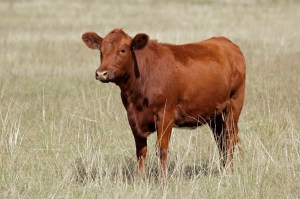
Since people have the most in common with the land dwelling animals, we will explore their characteristics in some detail. Land dwelling beasts must both chew the cud and have split hooves in order to be “clean” or fit for consumption. The cud is food that has been partly digested by the first stomach, but is then regurgitated into the mouth for further chewing. Ruminant animals such as cattle and sheep are all plant-eating creatures. They thoroughly chew their food instead of swallowing it whole like carnivores. (Check out the video at the end of this article for more information.)
The dense grasses they eat require several stages of digestion. Though they may fill up by grazing for hours, the plant matter must be regurgitated and chewed again. An analogy can easily be drawn for us in this process. Spiritually speaking, we may consume (graze) on the Word and become quite full in the process, but if we fail to then unpack, study, meditate, or chew on what we have received, we are not behaving like a “clean” creature.
© Yaroslaf | Dreamstime.com
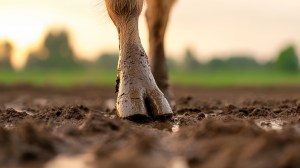
Having a split hoof can teach us a similar lesson. What do feet usually symbolize in Scripture? In Genesis chapter 3, the serpent strikes at the heels or feet. Feet are the lowest part of our bodies. They are what come into contact with the dirt and dust of the earth and they carry us in the way we walk. In other words, our feet are the epitome of our nephesh. As our lower (fleshy) nature, they are the beasts of burden that carry us where the HEAD leads. If ruled by our feet, we can be sure that they will run quickly to filth and evil. (Gen. 4:6-7, Pr. 6:18)
But why a cloven hoof? Is this division of toes not a picture of being separate? Remember it is in the context of Leviticus 11 that YHWH says, “Be holy (set-apart), for I am holy (set-apart)”. Our head must teach our feet to rightly divide the Word of Truth and then WALK in it. This is why the head (mouth) must chew or ruminate on what it ingests. It shouldn’t listen to the feet (nephesh); instead, it carefully chews the cud in order to separate the holy from the profane by the ruach (spirit). In a sense, both the head (mouth) and the feet are meant to discern between the flesh and the spirit.
This same line of thinking is Biblically depicted by the serpent. A serpent crawls on its belly and touches the dust of the earth, like our feet. The serpent lives solely by instinct and desire or the nephesh. It gives no regard to the ruach (spirit). The serpent deceived Chavah (Eve) by getting her to listen to her lower fleshy desires. As a result, she and Adam walked in the image of a beast, not Elohim (God). The serpent, perhaps, is easier to discern as an unclean animal because it neither chews the cud nor has cloven hooves. A snake might hiss out smooth and enticing words with its forked tongue, but if we are even remotely paying attention, we should be able to spot a viper. The same could be said of the sideways scampering of a crab, or the writhing motions of the alligator. Their “walk” does not follow a straight path like the well worn trails of the herds in pasture.
So what about creatures that meet some of Adonai’s requirements for being clean? Swine after all, do have cloven hooves, but they do not chew the cud. In my opinion, a pig is far more dangerous than a snake. Swine have the “appearance” of being holy if you aren’t paying attention. They SEEM to be able to “separate” or divide the Word of Truth with their nephesh (feet), but their head swallows anything and everything without ruminating. Dr. Hollisa Alewine says “the pig is like a serpent who walks and talks Torah out of context”. [2] She has a great commentary on parsha Shemini that will give you enough to chew on for weeks. For now, I hope you will use these few creatures as a model to compare and contrast the many others listed in Leviticus 11.
Wild or Tame
There is one more area I’d like you consider as you ruminate over the differences between the clean and unclean beasts. There are quite a few animals that God declared fit for food, but not for sacrifice. Again, using our head (mouth) to direct our nephesh (cloven feet), we are to discern the difference and learn a lesson. It doesn’t take much meditation to discover that the animals fit for the altar were easily domesticated. In other words, they weren’t wild or rebellious. They were tame and submissive. They didn’t buck against authority or need to declare themselves king of the mountain.
If we examine ourselves and the greater body, it becomes apparent that many of us, though clean, haven’t yet perfected our faith or love.[3] We must willingly SACRIFICE our flesh for God AND our brothers and sisters. We might be doing the first, but our constant state of divisions, bickering, unrighteous judgment, and foul treatment of one another is a testament to our lack of sacrificial love.
15 Let us therefore, as many as are perfect, have this attitude; and if in anything you have a different attitude, God will reveal that also to you; 16 however, let us keep living by that same standard to which we have attained. 17 Brethren, join in following my example, and observe those who walk according to the pattern you have in us. 18 For many walk, of whom I often told you, and now tell you even weeping, that they are enemies of the cross of Christ, 19 whose end is destruction, whose god is their appetite, and whose glory is in their shame, who set their minds on earthly things. 20 For our citizenship is in heaven, from which also we eagerly wait for a Savior, the Lord Jesus Christ; 21 who will transform the body of our humble state into conformity with the body of His glory, by the exertion of the power that He has even to subject all things to Himself. (Phil. 3:15-21 NASB)
Deer, gazelle, hind, elk, and the like are all clean beasts, but they were never sacrificed on the Holy Altar. Those that live like these creatures are wild. Some prefer to build their own kingdom or have their own excluded mountain. Others hate being penned in with the sheep. They long for the “perceived” freedom of the open range. Maybe they feel safer tucked away in the deep wilderness with a small herd. Perhaps, they’ve grown to love butting heads with the rams. Or maybe they believe the further they separate themselves the better.
But discernment, separation, and holiness that does not lead to gathering, can only lead to death. If you find yourself acting like any of the beasts we’ve mentioned in this article, I hope you will come to your senses like King Nebuchadnezzar. Actually, I believe every single one of us can be likened to one beast or another. I pray that we all become like obedient sheep, quickly heeding the Master’s Voice.
Meanwhile, may every morsel we consume be by the direction of the Word of God and rightly divided to fulfill the two most important commandments: Love Adonai, Love our Neighbor.
[1] Here are some great examples:
Online articles at Messianic Publications by Robert Roy
Did Jesus Declare All Foods Clean? A Hebraic Perspective on Mark 7:19
A Hebraic Perspective on Peter’s Vision (Acts 10)
Jim Staley’s Video
John K. McKee ‘s ebook
Kashrut: Kosher for Messianic Believers
[2] The Creation Gospel Workbook 5, The Torah Portions Volume 3, Vayikra. See portion Shmini, page 77. Many of the ideas I’ve outlined in this article were first introduced to me by Dr. Alewine either from her written material in the Creation Gospel or by speaking with her. I’ve been “ruminating” on these things for a while and hope that you will too. 🙂
[3] James 1, 1 John 4



 GRACE in TORAH